Several countries neighboring Iran announced being attacked in recent days amid heightened regional hostilities following joint strikes launched since Saturday by Israel and the United States on Tehran and other Iranian cities.
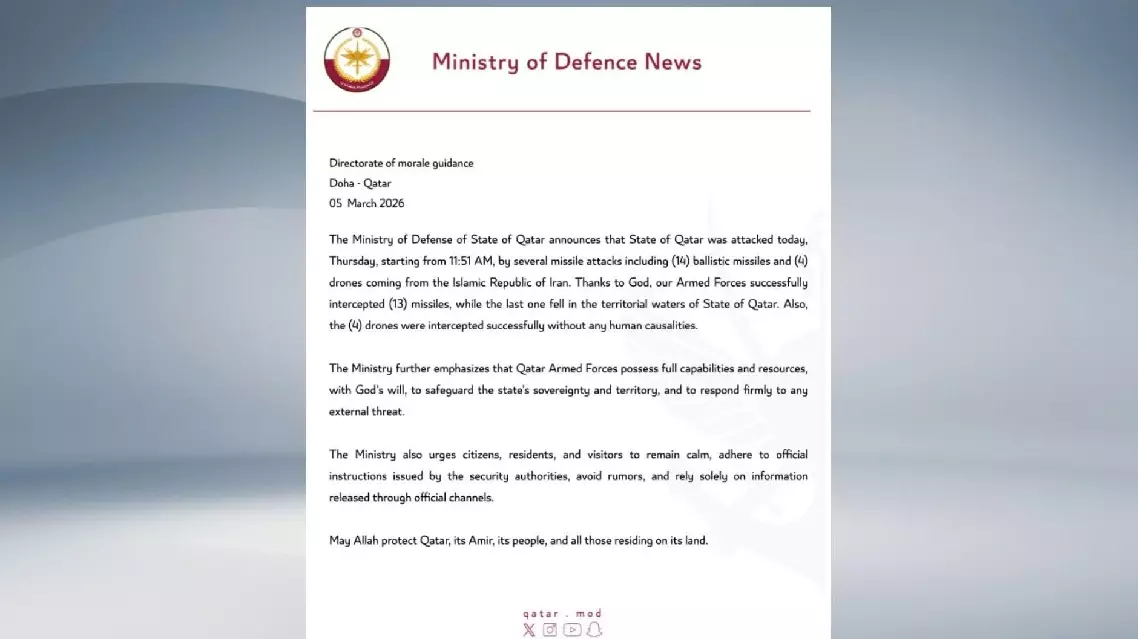
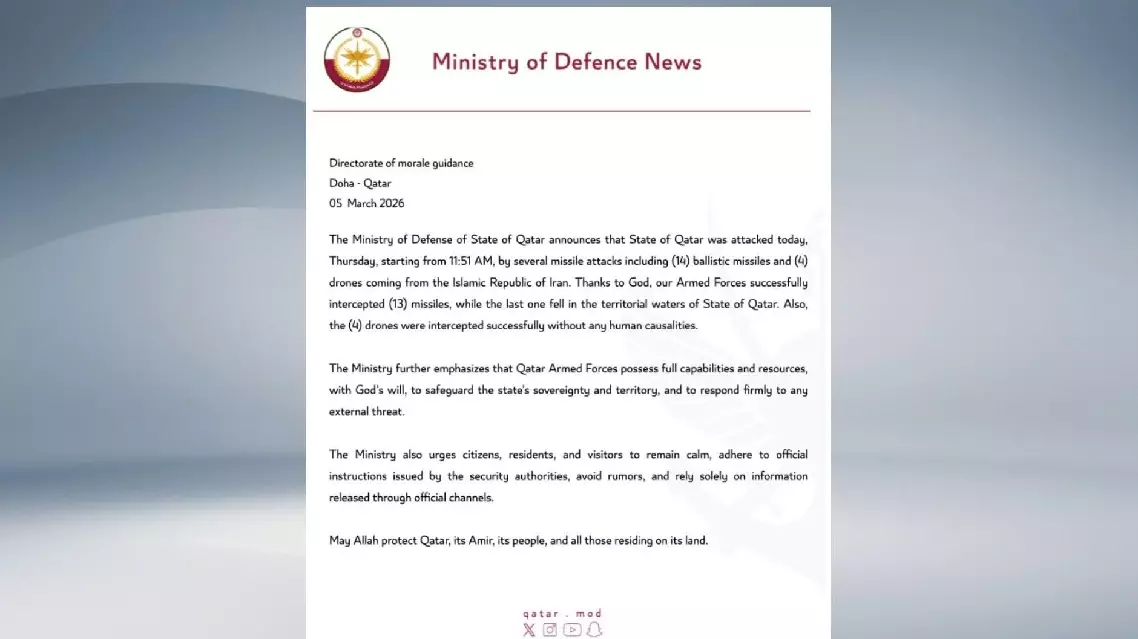
In a statement released on Thursday, the Qatari Ministry of Defense said that the country was hit by several missile attacks including 14 ballistic missiles and four drones coming from Iran.
Qatar's air defense system successfully intercepted 13 missiles, while the last one fell in the territorial waters of Qatar. The four drones were intercepted successfully without any human causalities.
Qatar's Ministry of Interior then issued a national security alert, stating that security threat level of the country was elevated, and everyone is required to remain indoor and stay away from windows and exposed areas in order to ensure public safety.
Azerbaijan's Foreign Ministry on Thursday accused Iran of launching drone attacks on the Nakhchivan Autonomous Republic from Iranian territory.
The ministry said the strikes, which occurred around midday, hit the terminal building of Nakhchivan International Airport, injuring two civilians and causing structural damage. Another drone reportedly fell near a school in the village of Shakarabad.
Azerbaijan strongly condemned the attacks as "in violation of the norms and principles of international law", warning that the actions could escalate regional tensions. The ministry also summoned the Iranian envoy in Baku to lodge a "strong protest" over the incident.
Meanwhile, Azerbaijan's Defense Ministry said it is "preparing the necessary retaliatory measures", adding that the attacks "will not go unanswered".
Iran on Thursday rejected accusations from Azerbaijan that it had launched drone strikes targeting its territory, while suggesting that Israel may be behind the attacks.
The General Staff of Iran's Armed Forces said that Iranian forces had not launched any drones toward Azerbaijan, emphasizing that Iran respects the sovereignty of all nations, particularly neighboring and Muslim countries, the official news agency IRNA reported.
It added that Israel has a history of carrying out such operations to sow discord among Muslim nations, asserting that investigations indicate the strikes were carried out by Israel to frame Iran.
Blasts were heard in Abu Dhabi, the capital of the United Arab Emirates (UAE), on Thursday evening as residents received mobile phone alerts warning of potential missile threats.
Similar alerts were issued across other emirates, including Dubai and Fujairah, by the UAE Ministry of Interior, urging residents and visitors to seek immediate shelter in the nearest secure building and to stay away from windows, doors, and open areas.
Bahrain on Thursday announced that a Bapco Energies refinery in Maameer was targeted in an Iranian missile strike.
Bahrain's National Communication Center stated that the fire has been fully contained, with no reported injuries, and refinery operations are continuing.
It added that an assessment of the damage is currently underway.
Earlier that day, the British Embassy in Bahrain issued a notice, announcing that in light of the current regional situation, some of its staff would be temporarily withdrawn from Bahrain.
In response to a query about rising regional tensions following military strikes against Iran by the United States and Israel, Mao Ning, a Chinese Foreign Ministry spokeswoman, said on Thursday at a daily press briefing that the protraction and escalation of the conflict serves no one's interest.
China believes that war and force cannot solve issues once and for all, dialogue and negotiation are the right solutions, and political and diplomatic settlement of disputes and differences should be upheld, she said.
China will continue working with all sides, including those involved in relevant conflicts in the Middle East, to maintain communication, step up mediation efforts and pool consensus, said the spokeswoman.
Iran's neighboring countries announce being attacked
Iran's neighboring countries announce being attacked