HELSINKI--(BUSINESS WIRE)--Mar 6, 2026--
Spatineo, a geospatial technology company, today announced the public launch of Spatineo Discovery®, an AI-powered search solution designed to transform how GIS professionals find and use geospatial data. As satellite, drone, and sensor data volumes continue to grow, relevant datasets are scattered across numerous portals and services. Analysts often spend significant time locating and validating data before they can begin meaningful analysis. Spatineo Discovery addresses this challenge by allowing users to describe their task in natural language and instantly discover and integrate spatial datasets directly within their GIS environment.
This press release features multimedia. View the full release here: https://www.businesswire.com/news/home/20260303783668/en/
"For years, we’ve seen GIS professionals struggle with fragmented data and inconsistent service reliability," said Oskari Häkkinen, CEO of Spatineo. "Over the past 15 years, we have built the world’s most extensive database of open geospatial services and continuously monitor service availability and reliability through Spatineo Monitor. Applying advanced AI-powered semantic search to that infrastructure allows us to remove friction from spatial data access and make it a seamless part of professional GIS workflows."
The tool has already been tested by more than 130 beta users across government, research, and enterprise organizations. The launch comes at a time when reliance on GIS platforms for critical decision-making is increasing across sectors such as emergency response, environmental monitoring, and urban planning. At the same time, advances in generative AI and GeoAI have reshaped expectations within the geospatial industry: professionals increasingly expect to interact with complex systems through natural-language instructions rather than manual queries. This shift has exposed a gap between abundant data and the tools available to efficiently discover and access it.
Unlike traditional keyword-based catalogs or manual portal searches, Spatineo Discovery uses a hybrid geospatial semantic search engine that interprets the intent behind a user’s request. The system combines AI-driven intent recognition with structured metadata queries and spatial filtering to surface contextually and geographically relevant services. This approach allows professionals to focus on their task rather than navigating fragmented data portals.
"The future of geospatial data discovery will be driven by agentic AI systems and highly streamlined GIS processes," Häkkinen added. "As intelligent systems increasingly assist professionals in finding, preparing, and analyzing spatial data, dependable data access becomes even more critical. Spatineo Discovery provides the data access layer these emerging workflows require."
Spatineo is a member of the Esri Partner Network and an active member of the Open Geospatial Consortium (OGC). In 2025, the company was selected among the Top 3 finalists in the Data Economy Innovation of the Year category at the AI Gala Awards, reflecting growing recognition within the geospatial and AI communities.
Spatineo Discovery is now publicly available at spatineodiscovery.ai.
About Spatineo
Founded in 2011 and headquartered in Helsinki, Finland, Spatineo Inc. specializes in spatial data infrastructure, geospatial web services, and API monitoring. The company develops software and provides expert consulting services to help organizations build reliable, standards-compliant geospatial data ecosystems. Spatineo has contributed to international geospatial standards, including ISO 19156, and is an active member of the Open Geospatial Consortium (OGC).
For more information, visit www.spatineo.com.

Oskari Häkkinen, CEO
Israeli airstrikes pounded the capitals of Iran and Lebanon as the U.S. apparently struck an Iranian drone carrier at sea, intensifying its campaign targeting the Islamic Republic’s fleet of warships.
Iran launched new retaliatory attacks early Friday against neighboring countries that host U.S. forces. There were no immediate reports of casualties.
The latest strikes mark a full week of attacks affecting countries across the Middle East.
The Israeli military said that the fighting has destroyed most of Iran’s air defenses and missile launchers, while U.S. Defense Secretary Pete Hegseth warned that strikes against Tehran were “about to surge dramatically.”
Tehran has warned of the destruction of the Middle East’s military and economic infrastructure, and the war has rattled financial markets.
Here is the latest:
Qatar has denounced an Iranian attack on Bahrain that targeted buildings housing elements of its forces there.
Doha says the attack targeted the unified military command of the Gulf Cooperation Council, a six-nation bloc in the region.
It says none of the Qatari sailors were hurt and called the assault “a direct threat to its security and stability and the security of the region.”
Prime Minister Nawaf Salam is calling on the international community to help Lebanon amid the ongoing Israel-Hezbollah war.
“A humanitarian disaster is looming” because of huge displacements of people, Salam said.
Salam criticized both Israel and Hezbollah over the current crisis saying that the Lebanese state and people “did not choose this war.”
Speaking to heads of diplomatic missions in Beirut, Salam appealed to the friends of Lebanon to support “us in this endeavor” and called on the international community to help stop Israel’s attacks and spare the country’s infrastructure.
Iranian state television announced a new missile attack, including the Islamic Republic firing off its larger Khorramshahr-4 missiles.
Air China, China Southern and a few other Chinese carriers are resuming direct flights to Saudi Arabia, Oman and the United Arab Emirates.
Air China resumed a flight from Beijing to Riyadh Thursday, state media reported.
China is also helping citizens evacuate from the region, saying it received a plane carrying 300 passengers from Dubai on Wednesday.
“We once again remind that the situation in the Middle East remains complex and severe, with considerable uncertainty,” Ministry of Foreign Affairs spokesperson Mao Ning said about the evacuations and flights.
Volker Türk, the U.N. high commissioner for human rights, says that “the world urgently needs to see steps to contain and extinguish this blaze.”
He lamented that “instead we are only seeing more inflammatory, bellicose rhetoric, more bombings, more destruction, killings and escalation, that fuels it further.”
Türk is urging the countries involved in the war “to take immediate steps to de-escalate, to give peace a chance.” And he says that other countries should “call clearly on those involved to pull back.”
He’s also “extremely concerned” about the situation in Lebanon following Hezbollah’s strikes on Israel and Israel’s counterstrikes.
Türk said he’s particularly worried about what he described as “blanket, massive displacement orders” by Israel to civilians in Lebanon.
“Obviously, this raises serious concern under international humanitarian law and in particular when it comes to issues around forced transfer," he said.
The Israeli military says it’s conducting new strikes on Beirut.
The Australian Greens party says Australian sailors’ presence aboard the U.S. submarine that torpedoed an Iranian warship made Australia “part of an illegal war.”
Australia’s government confirmed that three Australians were aboard a submarine that sank the Iranian frigate in the Indian Ocean near Sri Lanka this week, killing at least 87 people.
Sen. David Shoebridge, the influential party’s defense spokesperson, told reporters on Friday: “This makes Australia obviously, clearly, unambiguously, part of an illegal war.”
The Australians were aboard the boat as part of the trilateral U.S., Australian and British partnership known as AUKUS that will deliver Australia a fleet of submarines powered by U.S. nuclear technology.
The sound of explosions could be heard in Tel Aviv, Israel, after the warning about incoming missile fire from Iran, as air defense systems worked to intercept the barrage.
London police say four men have been arrested on suspicion of aiding Iran by spying on the Jewish community.
The suspects, one Iranian and three dual British-Iranian nationals, have been taken into custody on suspicion of assisting a foreign intelligence service, the Metropolitan Police said.
The force said the men, ages 22, 40, 52 and 55, were arrested at addresses in and around north London shortly after 1 a.m.
The men are suspected on spying on locations and individuals.
“We understand the public may be concerned, in particular the Jewish community, and as always, I would ask them to remain vigilant and if they see or hear anything that concerns them, then to contact us,” said Metropolitan Police Commander Helen Flanagan, who is in charge of counterterrorism policing in London.
The Israeli military is warning its public about incoming missile fire from Iran.
Mobile phone alerts sounded just before noon in Dubai, warning of a possible missile attack.
The Indonesian government is currently holding off on all discussions related to Trump’s Board of Peace as the country focuses on the safety of Indonesian nationals in the Middle East, officials said Friday.
Yvonne Mewengkang, spokesperson for Indonesia’s Foreign Affairs, said “any decision regarding Indonesia’s participation in any international mechanism will be based on the principle of Indonesia’s foreign policy and the most important thing, our national interests.”
More than 519,000 Indonesian nationals live across the Middle East, including 329 in Iran, mostly students.
Indonesia plans to begin evacuating its citizens from Iran on Friday.
Australia’s government revealed on Friday that three Australian personnel were aboard a U.S. submarine that sank an Iranian warship in the Indian Ocean this week, killing at least 87 people.
The Australians were part of the trilateral US, Australian and British AUKUS training program.
Neil James, executive director of the Australian Defense Association policy think tank, says it is “reasonably rare” for Australians embedded with another nation’s military to go to war against a country such as Iran that Australia wasn’t at war with.
James said an Australian would not have fired the torpedo that sank the Iranian ship.
South Korea says it reached an agreement with the United Arab Emirates to receive 6 million barrels of crude oil, aiming to stabilize energy prices spiked by the escalating war in the Middle East.
Kang Hoon-sik, chief of staff for South Korean President Lee Jae Myung, said in a briefing Friday that the emergency supplies are intended to curb fuel costs which surged this week.
Iran launched a new wave of missiles and drones targeting Tel Aviv, Israel, on Friday morning, the semiofficial ISNA news agency reported.
South Korea’s foreign minister told a legislative hearing that the United States has not requested military or non-military assistance from Seoul over the war in the Middle East, but declined to comment on reports that Washington could relocate some of its assets in South Korea to support the fighting.
When asked by a lawmaker about a media report that U.S. forces were moving some of its Patriot anti-missile defense systems to a major air base near Seoul, Cho Hyun said he couldn’t confirm details related to U.S. military operations.
Cho said Seoul and Washington were maintaining close communication and that the allies’ combined defense posture would not be affected by developments in the Middle East.
U.S. Forces Korea said in a statement it does not “comment on the movement, relocation, or potential repositioning of specific military capabilities or assets” for operational security reasons.
The USFK statement came in response to questions from The Associated Press about a Yonhap News report, citing anonymous sources, that said U.S. forces moved multiple Patriot systems from other bases in South Korea to Osan Air Base, where transport aircraft were also spotted.
Yonhap said it wasn’t immediately clear whether the movements were linked to the war or joint U.S.-South Korea military drills beginning Monday.
“United States Forces Korea remains focused on maintaining a strong, ready, and combat-credible force posture on the Korean Peninsula,” the USFK said.
Etihad Airways said it is restarting a “limited flight schedule” from its hub in the United Arab Emirates capital Abu Dhabi starting Friday.
The government-backed carrier has operated some flights in recent days, but its latest announcement suggests it is moving toward more regular operations.
Etihad said that previously booked passengers as well as new customers will be able to travel on the flights, assuming “all safety criteria are met.”
It listed more than 70 destinations it planned to fly to between Friday and March 19.
Saudi Arabia’s Defense Ministry reported the destruction of another drone near Riyadh, this one to its northeast.
The Saudi Defense Ministry said it destroyed three drones in the eastern areas of Riyadh.
The ministry said earlier Friday that it intercepted a cruise missile over the city of Kharj.
Iranian state television reported Friday that a leadership council in the country met and discussed how to hold a meeting of the country’s Assembly of Experts, which will select the nation’s new supreme leader.
The leadership council includes President Masoud Pezeshkian, judiciary chief Gholam Hossein Mohseni Ejehi and cleric Ayatollah Ali Reza Arafi.
The statement provided no timeline on the selection of the supreme leader, nor information on whether the Assembly of Experts would meet in person or remotely for the vote.
Buildings associated with the Assembly of Experts, an 88-member clerical panel, have been attacked during the Israeli-U.S. airstrike campaign.
Residents of Dubai have been receiving mass text messages warning them about their social media activity.
A message attributed to Dubai police said that “photographing or sharing security or critical sites, or reposting unreliable information, may result in legal action and compromise national security and stability.”
There was no elaboration in the message.
It comes as Bahrain issued a similar, but sterner warning as the Iran war rages on across the Mideast.
The United Arab Emirates is a federation of seven autocratic sheikhdoms home to Dubai and Abu Dhabi.
The UAE, while socially liberal in many regards compared with its Middle Eastern neighbors, has strict laws governing expression and bans political parties and labor unions.
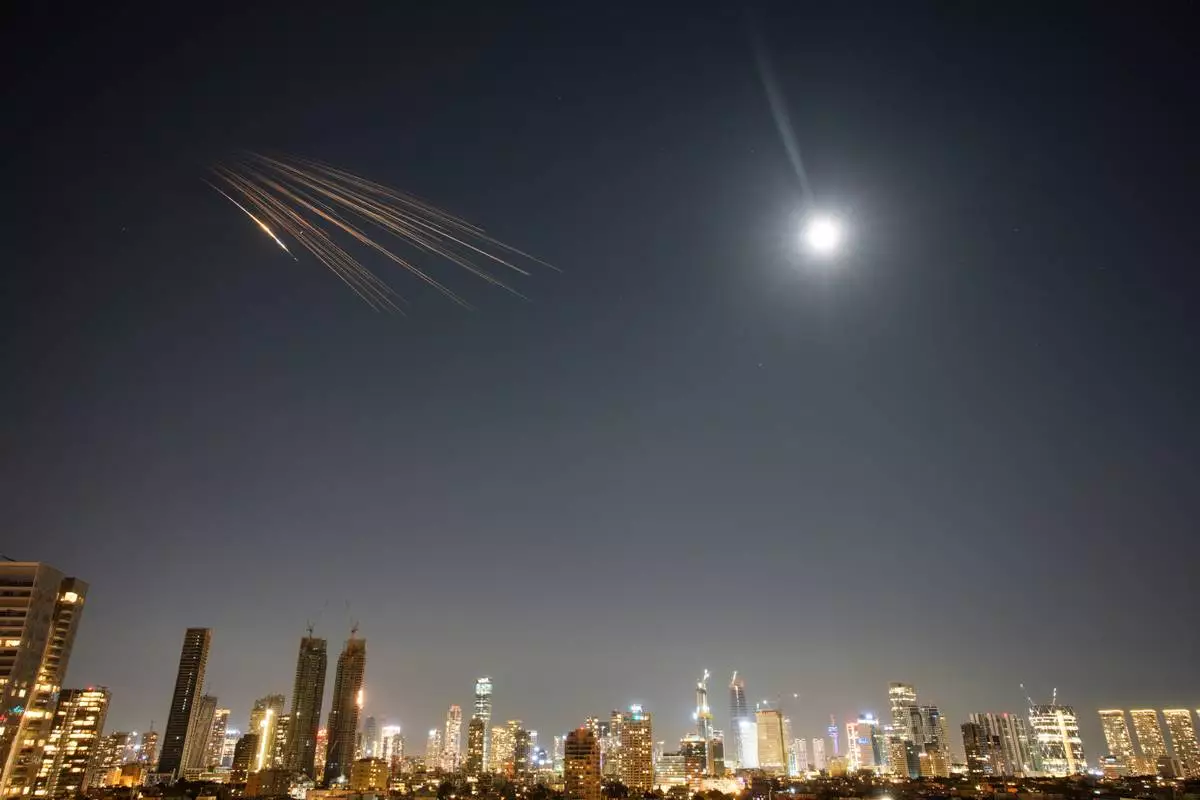
Missiles launched from Iran are seen in the sky over central Israel, Thursday, March 5, 2026. (AP Photo/Ohad Zwigenberg)
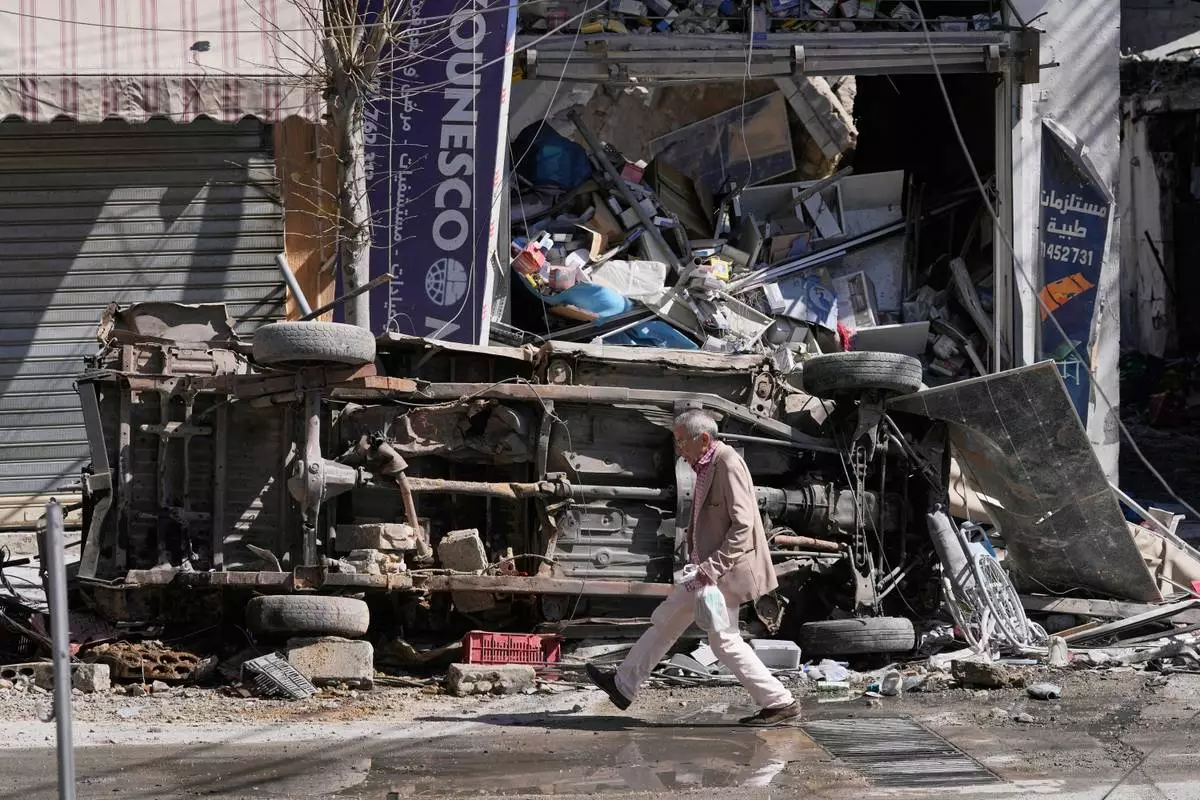
A man passes by a destroyed car and shop on a commercial street that was hit by Israeli airstrikes in Nabatiyeh town, south Lebanon, Thursday, March 5, 2026. (AP Photo/Mohammed Zaatari)
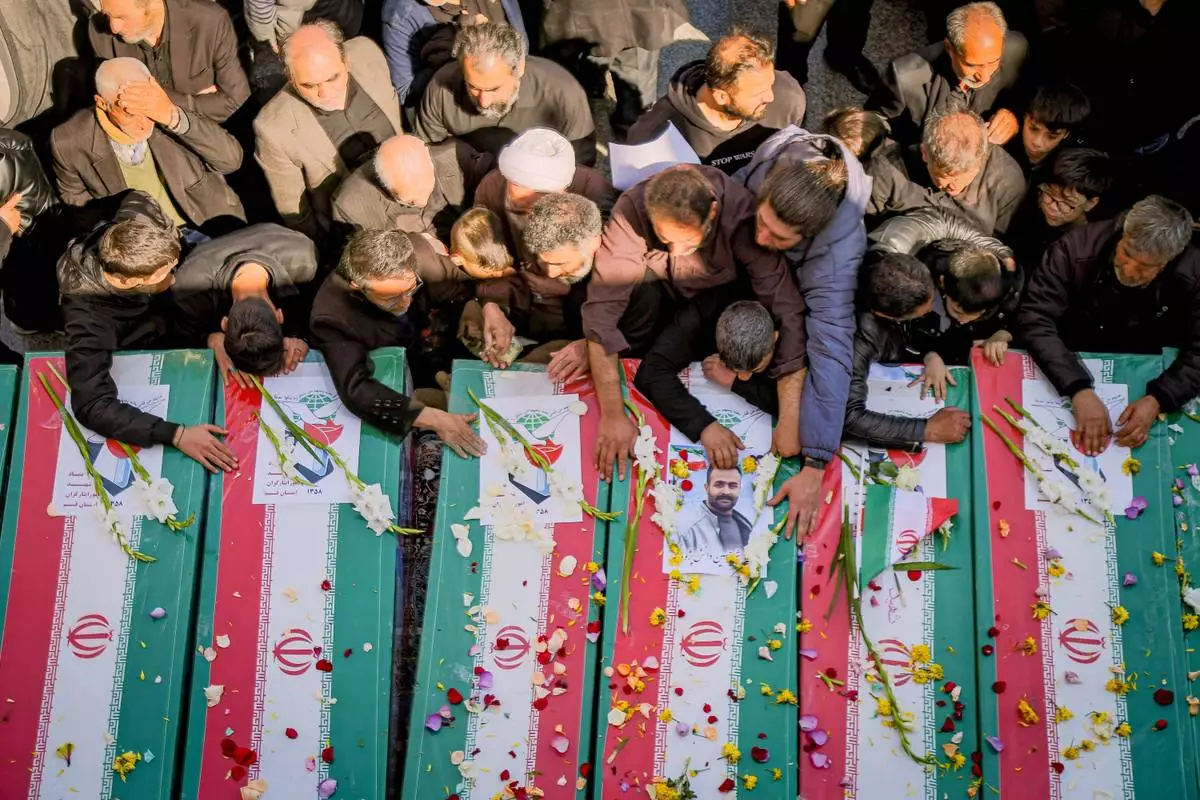
Mourners reach out to coffins during a funeral for people killed during the ongoing U.S.–Israeli military campaign in Qom, Iran, Thursday, March 5, 2026. (Seyyed Mehdi Alavi/ISNA via AP)
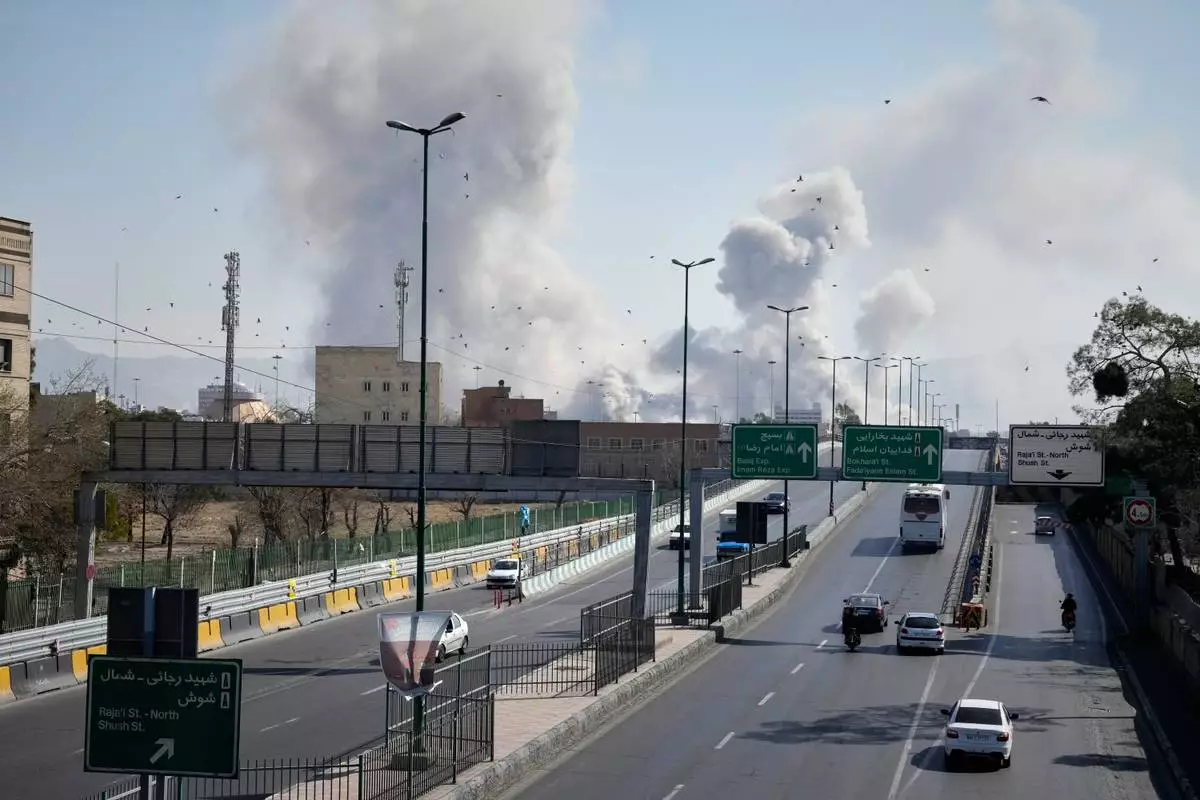
Plumes of smoke rise as strikes hit the city during the U.S.–Israeli military campaign in Tehran, Iran, Thursday, March 5, 2026. (AP Photo/Vahid Salemi)
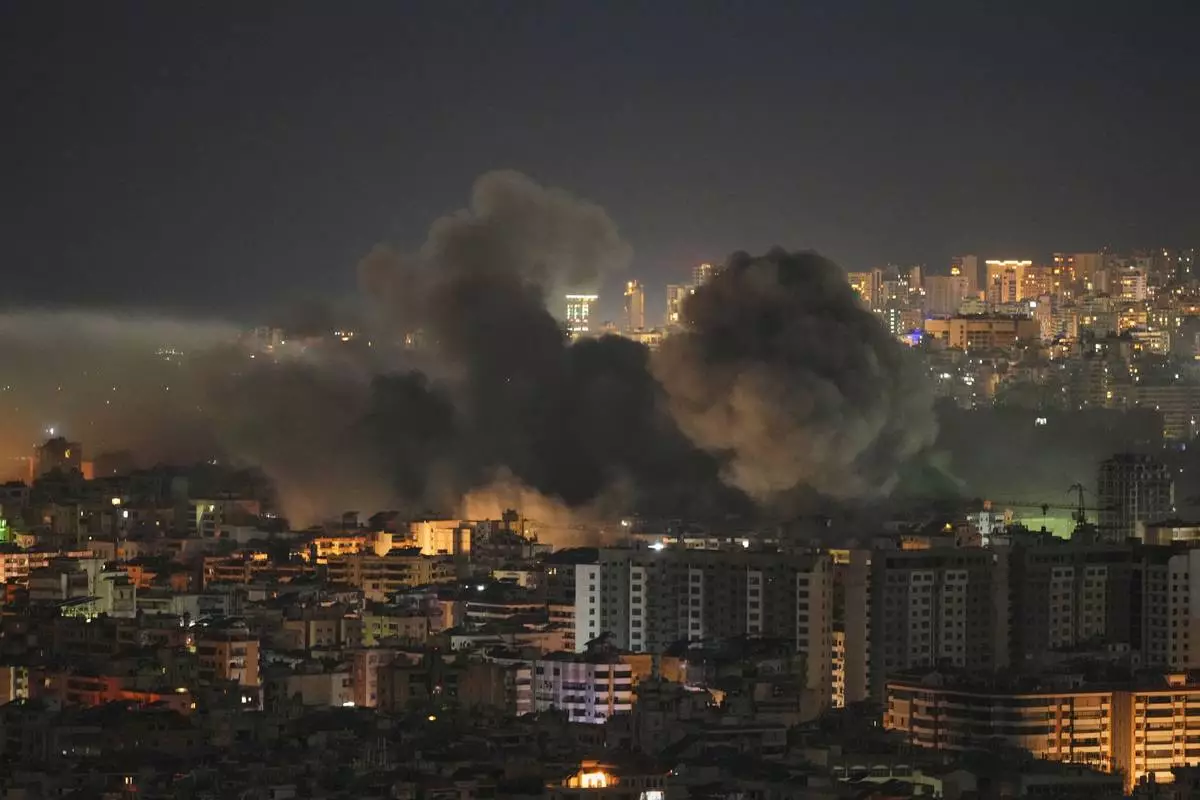
Smoke rises following an Israeli airstrike in the Dahiyeh area of Beirut, Thursday, March 5, 2026. (AP Photo/Hassan Ammar)