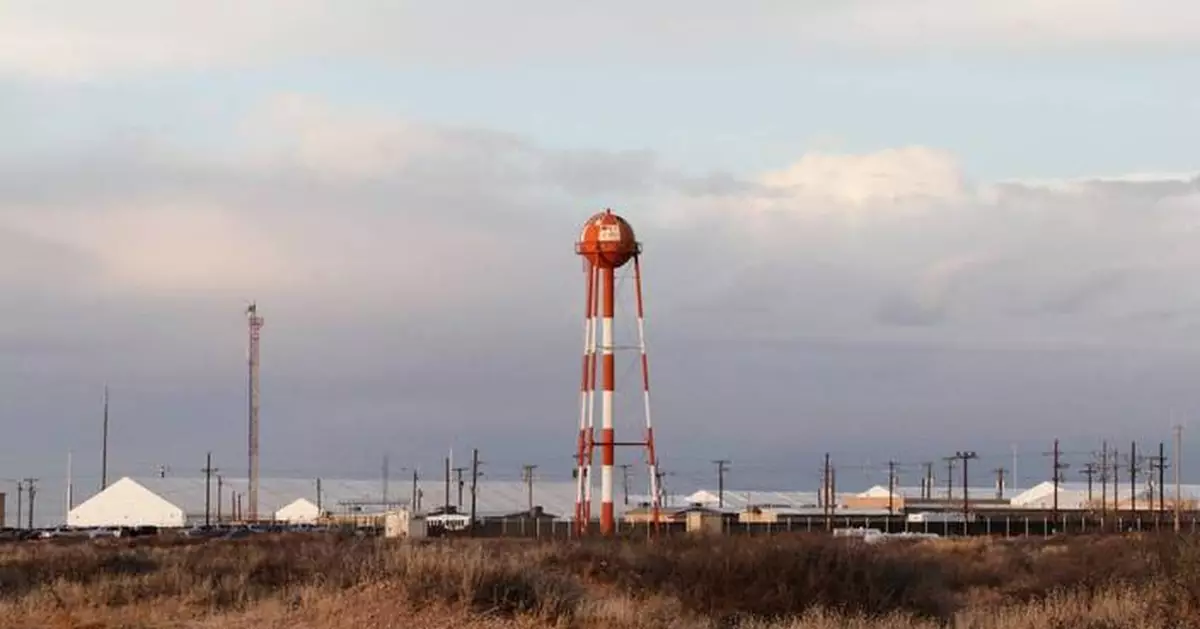
EL PASO, Texas (AP) — The calls to 911 poured in from staff at Camp East Montana in Texas, the nation's largest U.S. Immigration and Customs Enforcement detention facility, at a rate of nearly one a day for five months, each its own tale of pain and despair.
A man sobs after being assaulted by another detainee. Another bangs his head against the wall after expressing suicidal thoughts. A pregnant woman complained of severe back pain and also had coronavirus.
Click to Gallery
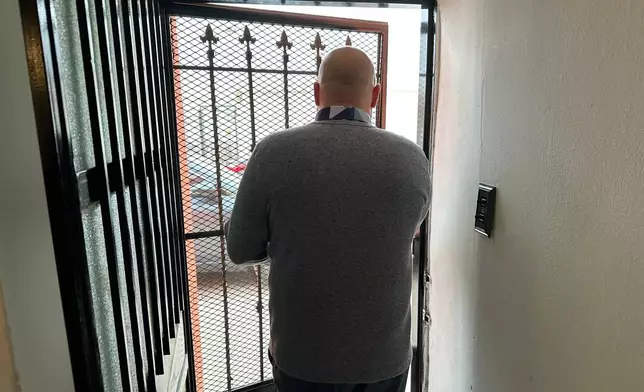
A Cuban man in his 50s, who spoke to The Associated Press on condition of anonymity for fear of reprisals, adapts to life in Ciudad Juárez, Mexico, Friday, Feb. 13, 2026, after agreeing to self-deport last year from the Camp East Montana detention center in El Paso, Texas, where he says he desperately requested medication to treat diabetes and high blood pressure and never received it. (AP Photo/Morgan Lee)

Owen Ramsingh, who spent months in Camp East Montana before his deportation to The Netherlands, poses for a portrait in his father's home in Utrecht, Netherlands, Sunday, March 1, 2026. (AP Photo/Bram Janssen)
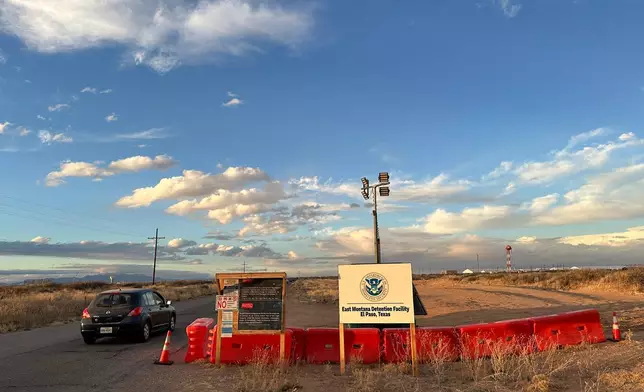
A sign marks the entrance to a series of hardened tents at the Camp East Montana immigrant detention center in the desert at a U.S. Army base on the outskirts of El Paso, Texas, Friday, Feb. 13, 2026. (AP Photo/Morgan Lee)
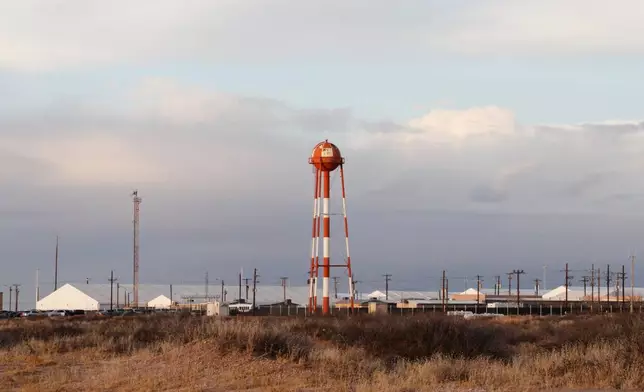
A series of hardened tents at the Camp East Montana immigrant detention center loom large in the desert at a U.S. Army base on the outskirts of El Paso, Texas, Friday, Feb. 13, 2026. (AP Photo/Morgan Lee)
“Every day felt like a week. Every week felt like a month. Every month felt like a year,” said Owen Ramsingh, a former property manager in Columbia, Missouri, who spent several weeks in the camp before his deportation in February to the Netherlands. “Camp East Montana was 1,000% worse than a prison.”
Fueled by billions of dollars in new funding, ICE operations across the nation have roiled communities, separated families and created a culture of fear in pursuit of President Donald Trump's vow to rid the country of unauthorized migrants.
EDITOR’S NOTE — This story includes discussion of suicide. If you or someone you know needs help, the national suicide and crisis lifeline in the U.S. is available by calling or texting 988. There is also an online chat at 988lifeline.org.
The mass arrests have swelled detention centers and set ICE off on a national chase for space to warehouse those who have been apprehended. Far from the “worst of the worst” that Trump vowed to deport, the data from ICE show that 80% at the camp had no criminal record and were instead caught up in a far-reaching dragnet.
Camp East Montana looks like a pop-up village, with six long tents along a stretch of the Chihuahuan Desert outside El Paso at the U.S. Army base Fort Bliss, once the site of an internment camp for Japanese Americans during World War II. Inside the hastily constructed camp, a series of communal living pods shelter thousands of immigrants in color-coded uniforms and Croc-style shoes.
But the stories of the conditions at the facility, revealed in data and recordings from more than a hundred 911 calls obtained by The Associated Press — in addition to follow-up interviews and court filings — offer a disturbing portrait of overcrowding, medical neglect, malnutrition and emotional distress.
The detainees describe a camp where an average of about 3,000 people have lived per day in loud and unsanitary quarters, diseases spread easily and sleep is a luxury. The center will be closed to visitors until at least March 19 because of a measles outbreak, according to U.S. Rep. Veronica Escobar.
Detainees struggle to obtain medication and health care, lose concerning amounts of weight because of a lack of food, and live in fear of private security guards known to use force to put down disturbances. The ceilings in the windowless tents leak when it rains, and detainees only see sunlight during brief outings once or twice a week to a cramped recreation yard.
In an email, a Department of Homeland Security spokesperson who did not provide their name rejected claims of subprime conditions, saying Camp East Montana detainees receive food, water and medical treatment in a facility that is regularly cleaned.
The agency said Tuesday that normal operations continue at the camp. The Washington Post reported Wednesday that ICE is considering a plan to close it.
Like other detainees, Ramsingh said that between cleanings the rooms, restrooms and showers were often filthy and infested with insects. He said detainees stole others’ food because everyone was hungry due to the small and sometimes inedible meals, which led to fights, and the conditions took a toll on his mental health.
At one point he said he overheard a security guard talking about bets made among the staff over which detainee would be next to die by suicide. The guard said he had paid $500 into a pool, with the total pot riding on the outcome. The talk was particularly jarring, he said, because he had contemplated suicide himself.
The DHS spokesperson said Ramsingh's account was false, though provided no indication of how the agency had sought to verify that.
Ramsingh said he heard of the betting pool after Jan. 3, when ICE said security guards responded after a 55-year-old Cuban man tried to harm himself and then used handcuffs and force to restrain him. A medical examiner ruled that Geraldo Lunas Campos’s death was a homicide caused by asphyxia.
On Jan. 14, staff reported that a 36-year-old Nicaraguan man died by suicide days after he was detained while working in Minnesota.
In addition to those cases, detainees attempted to harm themselves while expressing suicidal ideations on at least six other occasions that resulted in 911 calls, according to records from the City of El Paso obtained under the Texas public information law.
DHS said the facility's medical staff “closely monitors at-risk detainees,” provides mental health treatment and tries to prevent suicide attempts.
Ramsingh was a legal permanent resident brought to the U.S. at age 5, when his Dutch mom married a U.S. service member. He married a U.S. citizen in 2015.
But at the age of 45, immigration authorities detained him at Chicago O'Hare airport in September after he flew home from a trip to visit family in the Netherlands. They cited a drug conviction from when he was 16 years old, for which he served prison time decades ago. He was among the first detainees sent to Camp East Montana.
Other medical emergencies included seizures, chest and heart problems, according to AP's review of 130 calls made after the camp's opening in mid-August through Jan. 20.
“It’s not easy in here, psychologically,” said detainee Roland Kusi, 31, who said he fled Cameroon in 2022 to escape political violence. “You just keep thinking, like all the time, you’re thinking and thinking for a solution. … It’s really mentally draining.”
Immigration authorities arrested him in Chicago in September at an appointment with his wife, a member of the Army National Guard, to register their marriage in pursuit of legal residency for him. He was shipped quickly to El Paso.
A Cuban immigrant in his 50s told the AP he requested to receive his medication for diabetes, high blood pressure and an enlarged prostate during a six-week detention at Camp East Montana, but it never arrived. He spoke on the condition of anonymity for fear of reprisals.
Desperate, the man said he once refused to leave living quarters when a cleaning crew came. An immigration official offered him ibuprofen and urged him to consider leaving for another country.
“He says to me, ‘Look, there are a lot of detainees, we don’t have enough for everyone,'” he said. “The man from ICE says to me, ‘OK, why don’t you decide it’s better to leave? Leave for Mexico, go to Cuba. There you can have your medicine, have your things.’”
Fearing death, the man agreed to self-deport to Mexico to Ciudad Juárez — across the international border from his wife and their 11-year-old son in El Paso.
The detainees, mostly male, come from all over the world. Some have lived in the U.S. for decades.
The camp is intended for short-term stays before detainees are transferred or deported. The average stay there is only nine days, according to ICE data, but some detainees have been kept for months amid court cases or logistical issues related to deportation. Ramsingh said he got stuck there for weeks after his deportation was ordered because ICE lost his Dutch passport. His personal belongings, including gold jewelry, also went missing.
Advocates for detainees and some members of Congress have called for the camp’s closure, citing inhumane conditions.
“This facility should not be operational. It feels like this contractor is reinventing the wheel, and people are losing their lives in their experiment,” said Escobar, a Democrat from El Paso who has toured the camp several times.
She said the facility had temporarily cut its population below 1,900 when she visited last month after cases of measles and tuberculosis were reported.
On one visit, a female detainee showed Escobar a meager serving of scrambled eggs that was served still frozen in the middle. She learned that detainees protested after they had stopped receiving juice, fruit and milk with their meals.
Escobar also met with a detainee from Ecuador who said his arm had been broken during a violent arrest by immigration agents in Minnesota. Weeks later, he was still pleading for proper medical treatment, and the congresswoman could still see the fractured bones in his forearm poking up under the skin.
“I asked him, have you asked for help? And he said, ‘I ask every day, all day. And the only thing they give me is aspirin,’” she recalled.
The Washington Post reported in September that a required ICE inspection found conditions at the facility violated at least 60 federal standards for immigration detention, but that report has never been released publicly.
The DHS spokesperson did not explain why but called claims in the Post story false. The spokesperson said ICE's Office of Detention Oversight recently completed an inspection at Camp East Montana, but that report also has not been released.
The camp was hastily constructed last summer after the administration awarded a contract now worth up to $1.3 billion to Acquisition Logistics LLC, a Virginia contractor that had previously not operated an ICE facility.
The company uses subcontractors at Camp East Montana, including security firm Akima Global Services and medical contractor Loyal Source.
Escobar called for an investigation into the contractors, saying they were not delivering the services paid for by taxpayers.
“People should be moved by the abject cruelty, but if they’re not, I hope they’re moved by the fraud and corruption,” she said.
Akima didn't respond to messages seeking comment. Loyal Source declined comment.
Most of the 911 calls were made by the camp’s contract medical staff. At least 20 incidents were reported as seizures, including some that resulted in head trauma.
Some injuries stemmed from fights between detainees, including a man who said he had been kicked in the ear and battered in his ribs. Another man reported he could not move his left eye after he had been assaulted the day before.
A woman who was 12 weeks pregnant had not received any prenatal care before her arrival at Camp East Montana and was in intense pain, 911 calls revealed. She was among a small number of emergencies involving women, who make up less than 10% of the camp’s population.
The calls also revealed some staff discord. A doctor is heard berating another employee for seeking to take a suicidal detainee back into the detention facility rather than to the emergency room, only to then figure out they had confused two different patients.
After one detainee attempted suicide while in an isolation room, a doctor could be heard speaking with a shaken colleague. A security supervisor assured him, the doctor said, that incidents “like this shouldn't happen.”
Foley reported from Iowa City, Iowa, and Biesecker reported from Washington.
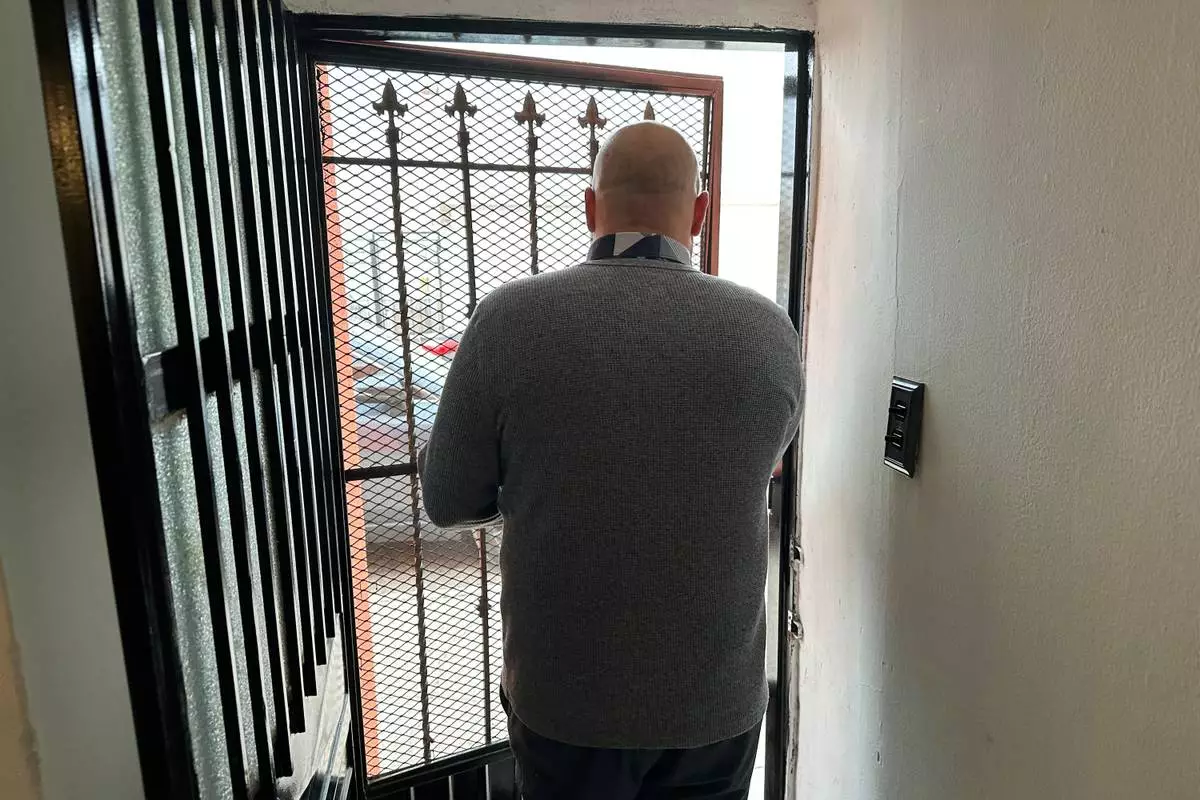
A Cuban man in his 50s, who spoke to The Associated Press on condition of anonymity for fear of reprisals, adapts to life in Ciudad Juárez, Mexico, Friday, Feb. 13, 2026, after agreeing to self-deport last year from the Camp East Montana detention center in El Paso, Texas, where he says he desperately requested medication to treat diabetes and high blood pressure and never received it. (AP Photo/Morgan Lee)

Owen Ramsingh, who spent months in Camp East Montana before his deportation to The Netherlands, poses for a portrait in his father's home in Utrecht, Netherlands, Sunday, March 1, 2026. (AP Photo/Bram Janssen)
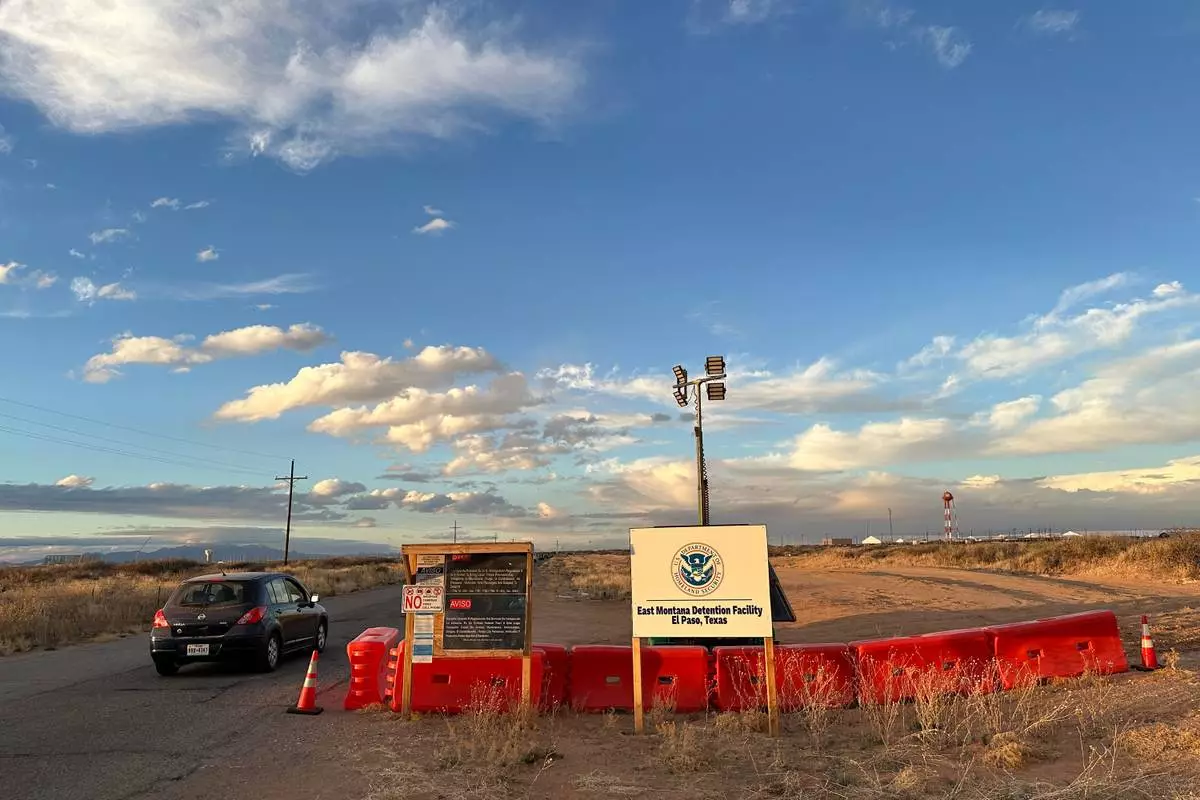
A sign marks the entrance to a series of hardened tents at the Camp East Montana immigrant detention center in the desert at a U.S. Army base on the outskirts of El Paso, Texas, Friday, Feb. 13, 2026. (AP Photo/Morgan Lee)
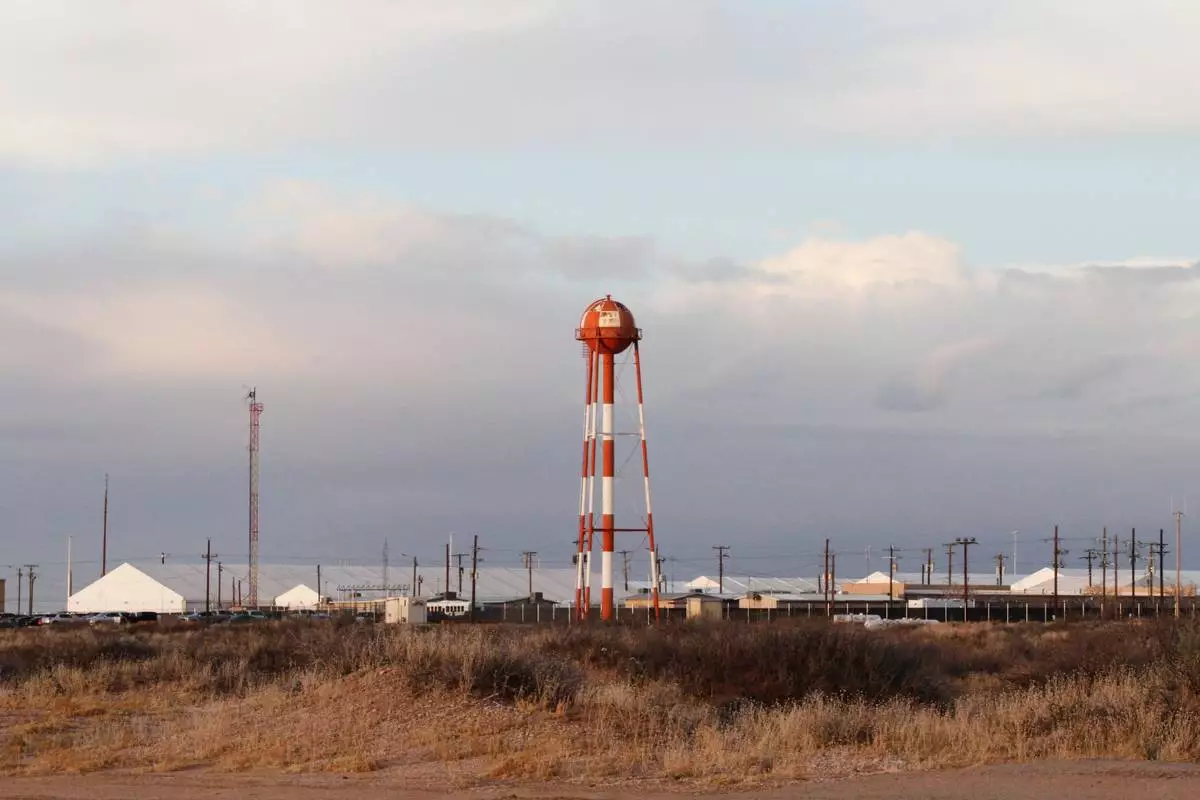
A series of hardened tents at the Camp East Montana immigrant detention center loom large in the desert at a U.S. Army base on the outskirts of El Paso, Texas, Friday, Feb. 13, 2026. (AP Photo/Morgan Lee)