ATLANTA & SAN FRANCISCO--(BUSINESS WIRE)--Mar 6, 2026--
Clari + Salesloft, the leader in Revenue Orchestration, today announced a strategic partnership with 1mind, a pioneer in AI-led growth. This collaboration integrates Clari + Salesloft's innovative Predictive Revenue System with 1mind's Superhumans — AI digital teammates designed to accelerate pipeline from first touch to close across the customer lifecycle. Together, they aim to redefine what’s possible for modern revenue teams by providing a unified framework that transforms buyer engagement and drives measurable impact.
This press release features multimedia. View the full release here: https://www.businesswire.com/news/home/20260306534285/en/
Addressing the Revenue Crisis: From "Graveyard" to "Heartbeat"
This announcement arrives as a recent Clari + Salesloft global survey conducted by Censuswide highlights a significant "Revenue Crisis," revealing that 87% of enterprises not utilizing Clari + Salesloft missed their revenue targets last year. This crisis stems from the "Revenue Graveyard"— traditional CRMs burdened by stagnant data and retrospective reporting, causing a detrimental lag between strategy and execution.
Clari + Salesloft is bridging this gap by replacing human guesswork with a dynamic, predictive platform. By transitioning from the Drift conversational marketing product to prioritize 1mind’s advanced AI sales capabilities, Clari + Salesloft empowers customers to move past legacy chat tools towards a more robust, intelligent multimodal engagement strategy.
Driving Growth in the Agentic Era
The partnership with 1mind enhances the momentum already present within the Clari + Salesloft platform. Clari + Salesloft has over 30 proprietary AI agents deployed more than 369,000 times, which have already unlocked over 1.1 million hours of productivity for revenue teams.
"We are thrilled to partner with 1mind, transforming the industry from merely observing revenue to actively engineering it," stated Steve Cox, CEO of Clari + Salesloft. "Our system serves as the 'heartbeat' of the enterprise. By partnering with and integrating 1mind, we provide our customers with a distinct competitive edge, turning fragmented buyer signals into high-fidelity intelligence essential for sustained success."
Transitioning to a New Era: Sunsetting Drift for 1mind’s Superhuman Capabilities
As part of this strategic partnership, Clari + Salesloft is announcing the gradual sunset of its Drift conversational marketing solution. This decision underscores Clari + Salesloft’s dedication to enhancing the Predictive Revenue System, ensuring clients gain access to the most advanced and impactful technology available.
Under an exclusive agreement with 1mind, Clari + Salesloft will refer existing Drift clients to 1mind as the successor to ensure a seamless transition. This integration allows Clari + Salesloft to embed 1mind’s AI signals directly into the Predictive Revenue System. This creates a closed-loop connection between AI engagement, human follow-up, and revenue forecasting, ensuring every buyer interaction moves seamlessly from first touch to closed-won.
Key Benefits of the Clari + Salesloft and 1mind Partnership:
"We are excited to partner with Clari + Salesloft, the leaders in Revenue Orchestration," said Amanda Kahlow, Founder and CEO of 1mind. "By merging Clari + Salesloft’s exceptional workflows with 1mind’s advanced AI capabilities, we empower companies to cut costs, scale their go-to-market teams, and ensure no lead is left behind—all while delighting every buyer."
About Clari + Salesloft
Clari + Salesloft is a category-transforming AI company for revenue, building the foundation for a Predictive Revenue System — a system that guides revenue teams to accelerate growth. The company combines the broadest dataset, capturing both structured and unstructured signals. End-to-end revenue orchestration capabilities unlock new levels of AI-driven productivity and predictability. Thousands of the world’s most successful companies — including Adobe, IBM, 3M, and Zoom — trust Clari + Salesloft to drive predictable revenue growth.
About 1mind
1mind is a platform that deploys GTM Superhumans for revenue teams. The Superhuman GTM brain is made up of an AI Context Graph + Action Orchestration layer built to function as autonomous employees operating across the entire customer lifecycle. They delight buyers, drive operational efficiency, and scale beyond human limitations—increasing revenue, shortening sales cycles, and increasing ACV. 1mind has years of market experience with its multi-modal platform. All 60+ Enterprise and mid-market customers are actively using the advanced technology, including Hubspot, Samsara, Nutanix, Alteryx, Pipedrive, ZoomInfo, Boston Dynamics, and Owner.com. Founded by Amanda Kahlow, founder and former CEO of 6sense, 1mind has raised $40 million from leading investors, including Battery Ventures, Primary Ventures, and Wing Venture Capital. For more information or to experience a Superhuman firsthand go to 1mind.com.
Clari + Salesloft and 1mind Partner to Advance AI-Driven Revenue Orchestration
NEW YORK (AP) — First-time Tony Award host Pink kicked off Sunday’s telecast by leading a crowded, exuberant version of “Lady Marmalade” and John Lithgow took home the first award for “Giant.” A blockbuster revival of “Death of a Salesman” was racking up awards even before the halfway mark.
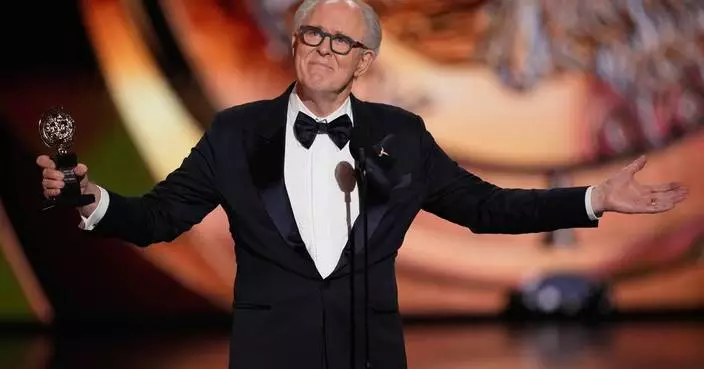
Lithgow won best lead actor in a play as children’s author Roald Dahl in Mark Rosenblatt’s production set in 1983, when the author is facing intense backlash to his antisemitic comments. The role earned Lithgow his first Olivier Award in London and now the Tony for lead actor in a play, his third.
The win puts Lithgow in an exclusive group of actors who have won in three separate acting categories. He previously won featured actor in a play for “The Changing Room” and lead actor in a musical for “Sweet Smell of Success.”
“Two Tony bookends with 53 years between them," he said. "In those years, I have worked with hundreds of just fantastic theater artists. I’ve had dozens and dozens of ecstatic moments on the stage, but I have to tell you right now, this moment has got to be one of the best.”
A revival of “Death of a Salesman” won at least five Tonys, nearing the record for most statuettes ever won by play revival, which is seven.
Laurie Metcalf won her third Tony for playing Willy Loman’s wife opposite Nathan Lane in “Arthur Miller’s Death of a Salesman,” which also won for lighting, scenic design and sound design. Joe Mantello won best director for a play.
Pink started the show spinning and then dangling uncomfortably from a harness over the stage, dressed like Peter Pan. Former host Neil Patrick Harris stepped in to suggest the first-time host just be herself. “You’re Pink, Pink. You can do anything,” he told her.
After lifting Harris off the stage with her legs, Pink relented to his suggestion of being “less Pan-ish” by taking off her harness, adding a top hat and leading an extended “Lady Marmalade” that included contributions from dozens of performers including Lea Michele and Megan Thee Stallion — plus some strange, new lyrics like “Gitchie, gitchie, Laurie Metcalf” — and ended with some 170 performers on stage and crowding the aisles.
In her opening remarks, Pink, who has not yet gotten a Broadway credit, called herself theater’s second-biggest fan after her teenage daughter, Willow. “I’m not here just to steal peoples’ wigs, although I will be doing that. I’m here to celebrate the hardest-working people in show business,” she said.
“Schmigadoon!” and “Death of a Salesman” each went into the main telecast with a lead of three Tonys after a pre-show on Pluto TV hosted by Laura Benanti and Tituss Burgess that announced the more technical awards. Qween Jean became the first openly trans Tony winner ever for making the costumes for “Cats: The Jellicle Ball.” Kai Harada, nominated twice for the sound design of a musical, didn’t initially know which one he had won for until told onstage — “Ragtime.”
Twenty-four Broadway shows are hoping to nab at least one win Sunday across the 26 Tony categories, which can mean the difference between keeping the doors open and pulling down the curtain.
There will be performances from the seven best new musical and best musical revival nominees: “The Lost Boys,” “Schmigadoon!,” “Titanique,” “Two Strangers (Carry a Cake Across New York),” “Cats: The Jellicle Ball,” “Ragtime” and “The Rocky Horror Show.”
Other performances include the original lead cast members of “The Book of Mormon” — Josh Gad, Andrew Rannells, Rory O’Malley and Nikki M. James — this year celebrating its 15th anniversary. Leslie Odom, Jr. will sing “Without You” from “Rent” during the In Memoriam section, in honor of that show’s 30th anniversary.
Another show celebrating a milestone, “Chicago” now at 30, will have a performance slot featuring Pink, as well as Queen Latifah, Jesse Tyler Ferguson, Alex Newell, Adrienne Warren, Julianne Hough, Whitney Leavitt and Dylan Mulvaney. Plus, “A Chorus Line,” which last year celebrated its 50th anniversary, will get a special tribute by Rachel Zegler.
The competition for best new musical is between four very different shows: “Two Strangers (Carry a Cake Across New York),” an opposites-attract rom-com; “The Lost Boys,” a stage adaptation of a 1987 teen movie vampire thriller; “Schmigadoon!,” which gently mocks Golden-Age Broadway shows; and “Titanique,” a camp musical comedy that reimagines the 1997 movie “Titanic.”
The two top best play nominees are “Giant,” exploring accusations of antisemitism against children's author Roald Dahl, and “Liberation,” about a consciousness-raising women’s group in the 1970s that explores inequality, gender roles and racism.
There are intriguing races in both the revival categories: A “Death of a Salesman” is competing for best play revival with a modern-set “Oedipus” led by Marc Strong and a sweet “Every Brilliant Thing” starring Daniel Radcliffe.
The best musical revival pits a new “Cats” reimagined as a “Pose”-like competition show, the sweeping American history show “Ragtime” and a rollicking, frisky “The Rocky Horror Show.”
For more coverage of the 2026 Tony Awards, visit https://apnews.com/hub/tony-awards.
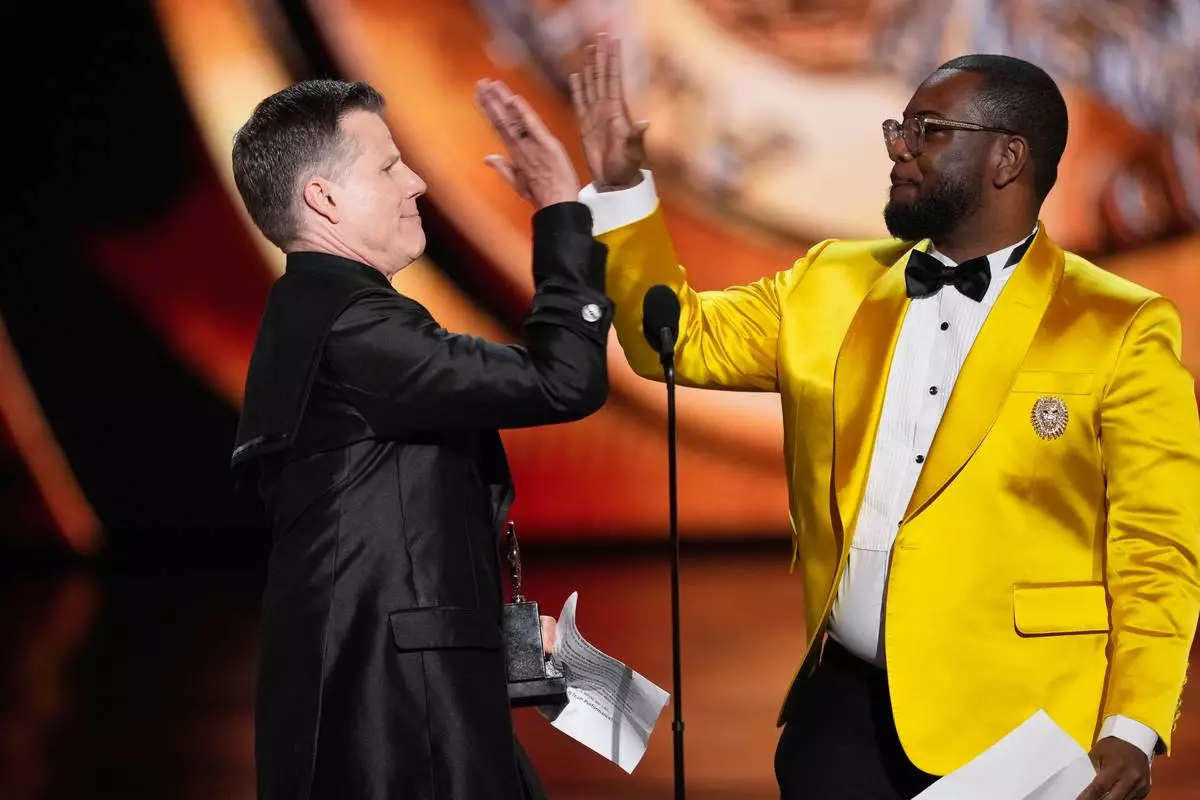
Bill Rauch, left, and Zhailon Levingston accept the award for best direction of a musical for "Cats: The Jellicle Ball" during the 79th Tony Awards on Sunday, June 7, 2026, at Radio City Music Hall in New York. (Photo by Charles Sykes/Invision/AP)
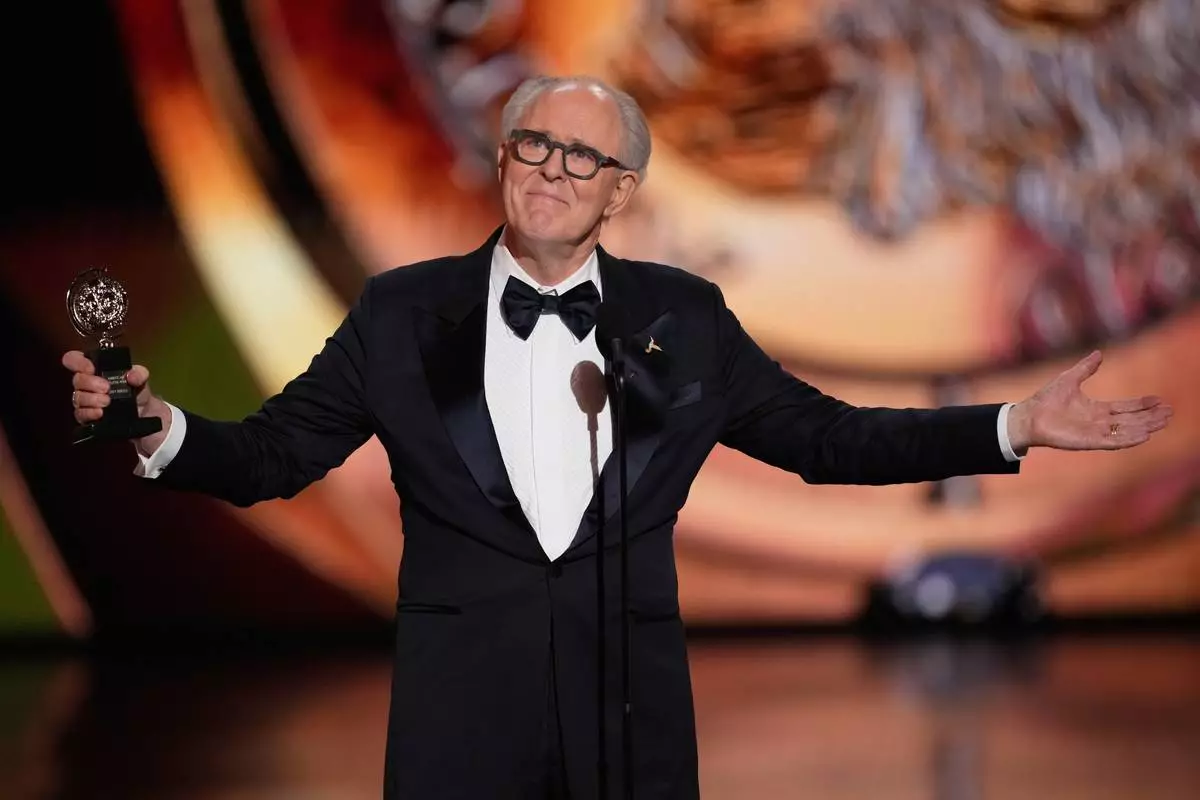
John Lithgow accepts the award for best performance by a leading actor in a play for "Giant" during the 79th Tony Awards on Sunday, June 7, 2026, at Radio City Music Hall in New York. (Photo by Charles Sykes/Invision/AP)
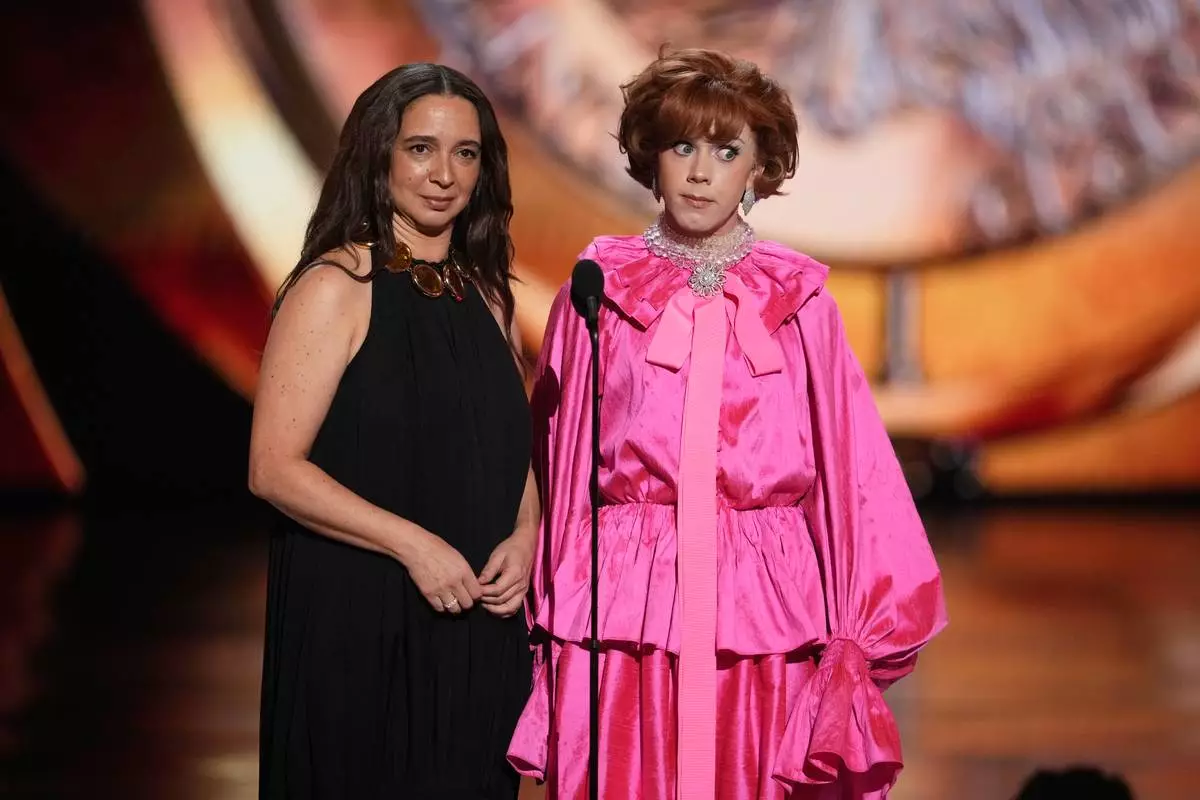
Maya Rudolph, left, and Cole Escola present the award for best performance by a leading actor in a play during the 79th Tony Awards on Sunday, June 7, 2026, at Radio City Music Hall in New York. (Photo by Charles Sykes/Invision/AP)
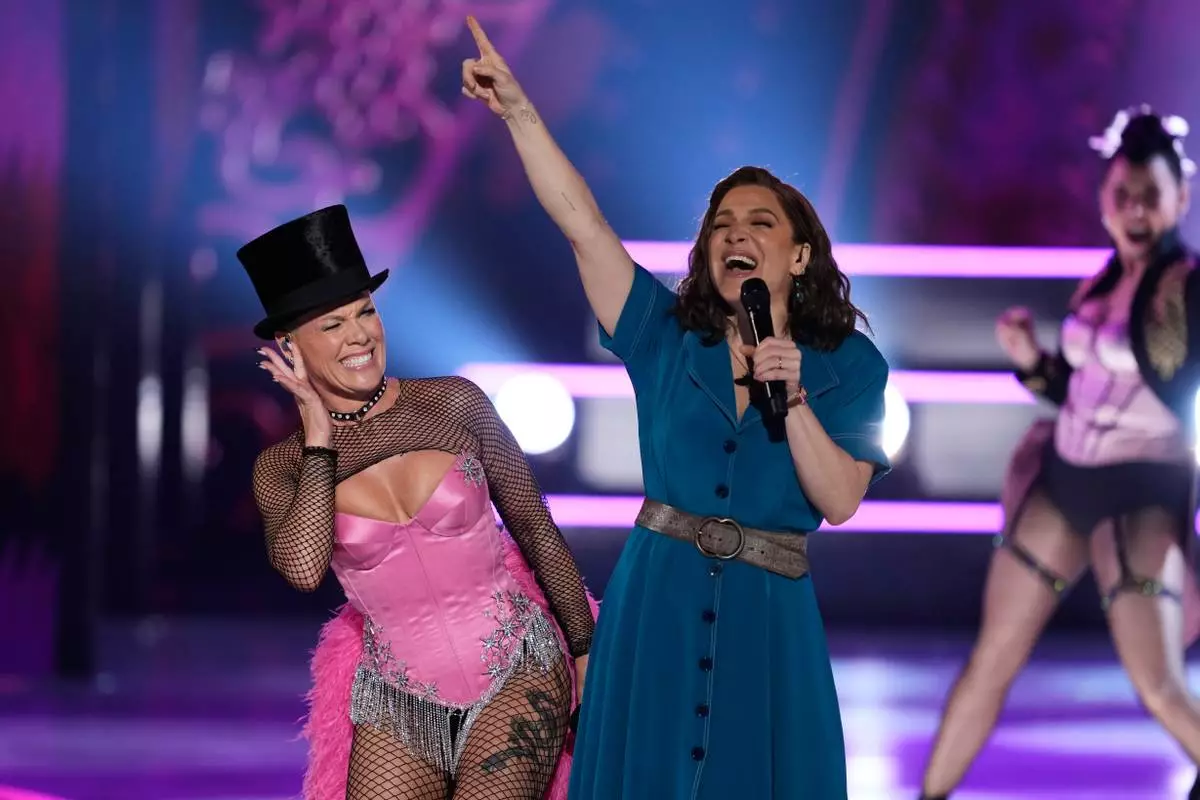
Host Pink, left, and Shoshana Bean perform during the 79th Tony Awards on Sunday, June 7, 2026, at Radio City Music Hall in New York. (Photo by Charles Sykes/Invision/AP)
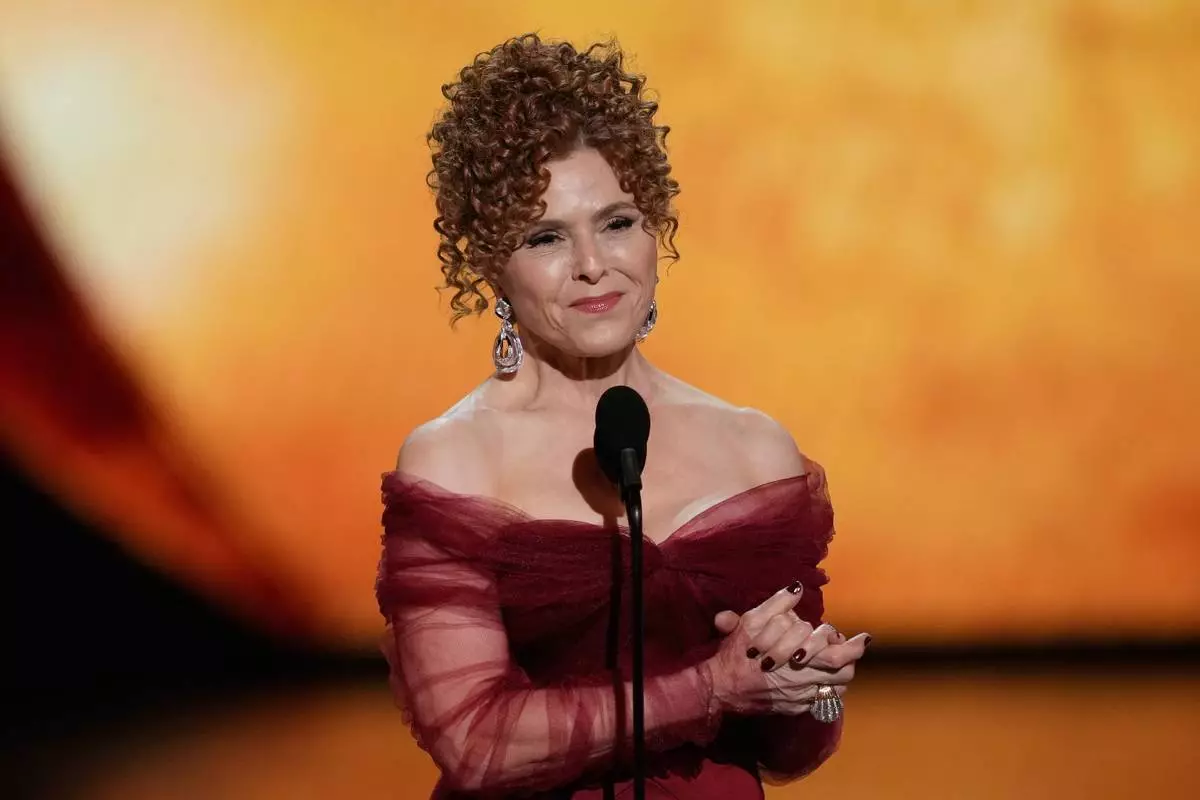
Bernadette Peters speaks during the 79th Tony Awards on Sunday, June 7, 2026, at Radio City Music Hall in New York. (Photo by Charles Sykes/Invision/AP)
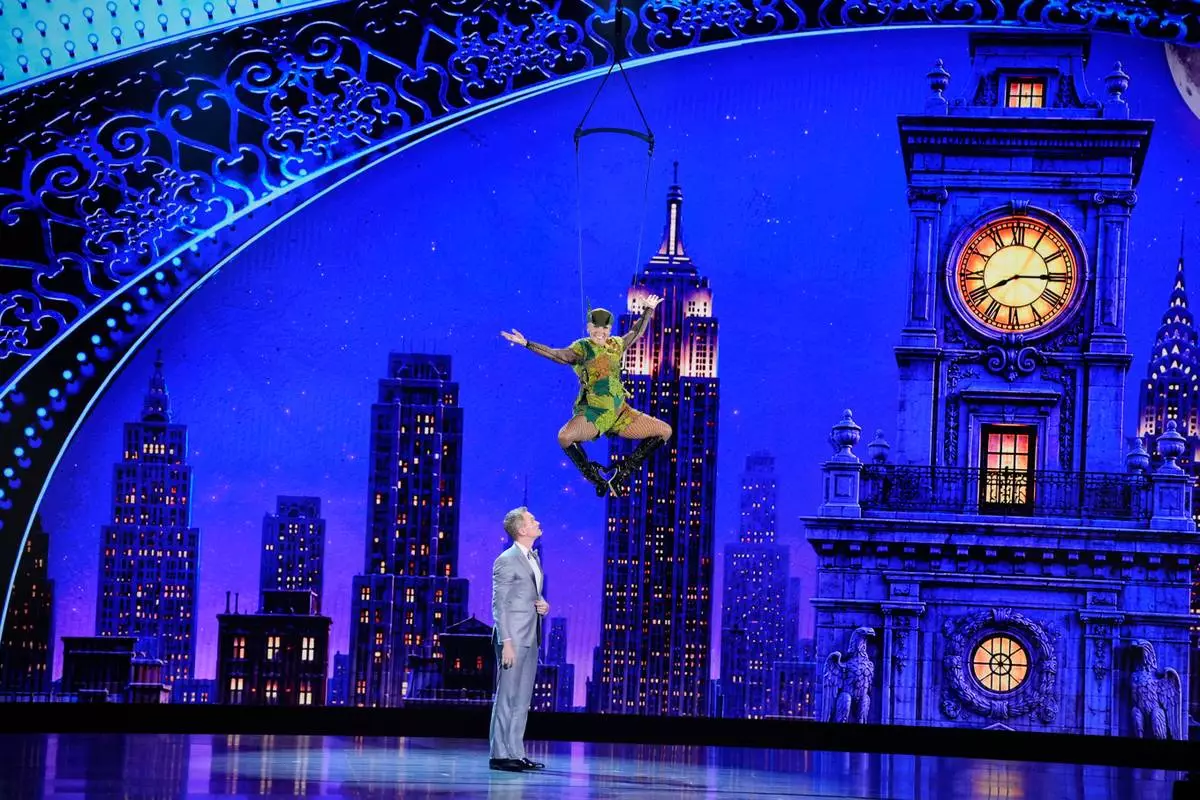
Neil Patrick Harris, left, and Host Pink perform during the 79th Tony Awards on Sunday, June 7, 2026, at Radio City Music Hall in New York. (Photo by Charles Sykes/Invision/AP)
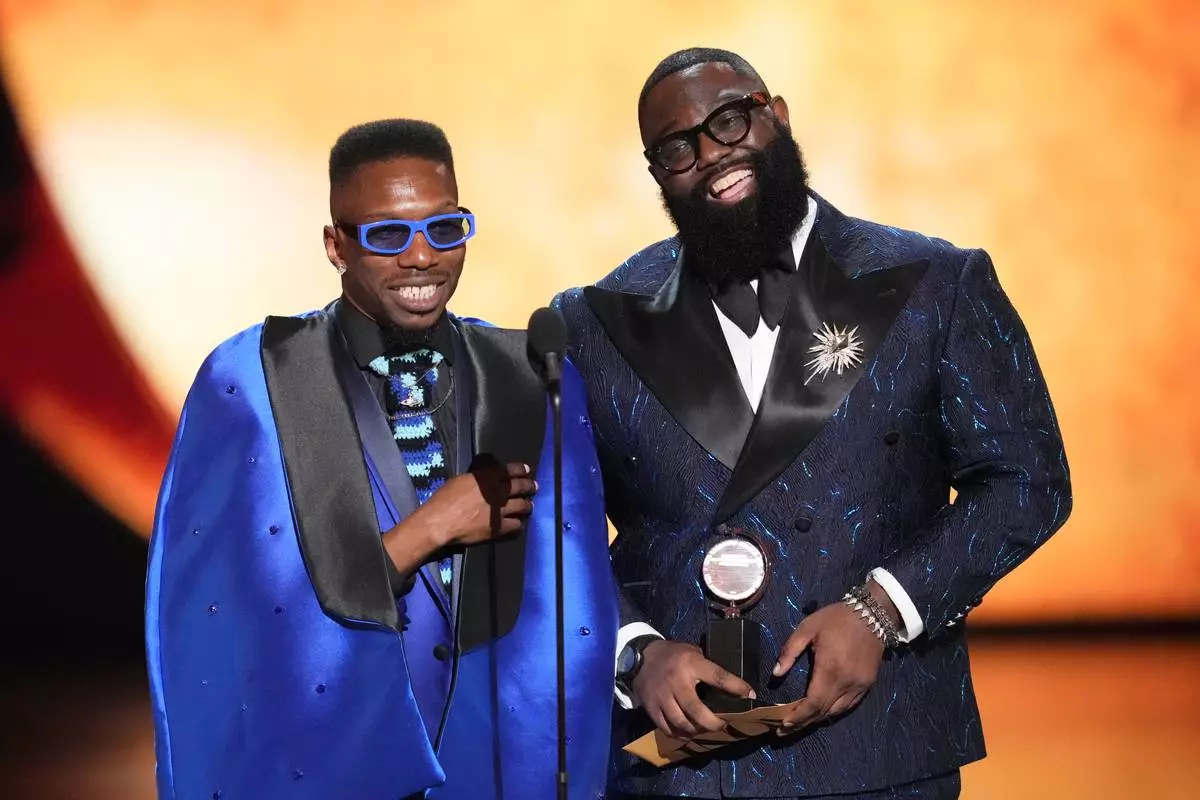
Omari Wiles, left, and Arturo Lyons accept the award for best choreography for "Cats: The Jellicle Ball" during the 79th Tony Awards on Sunday, June 7, 2026, at Radio City Music Hall in New York. (Photo by Charles Sykes/Invision/AP)
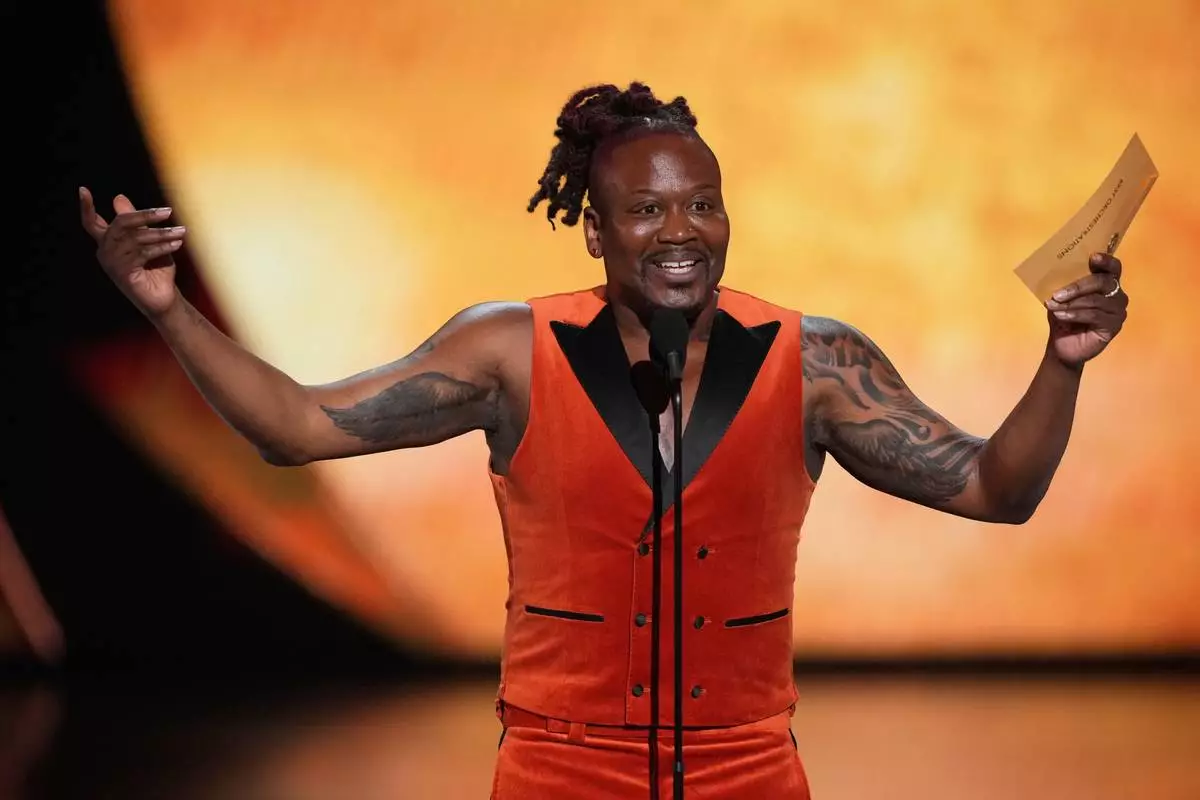
Host Tituss Burgess speaks during the 79th Tony Awards on Sunday, June 7, 2026, at Radio City Music Hall in New York. (Photo by Charles Sykes/Invision/AP)
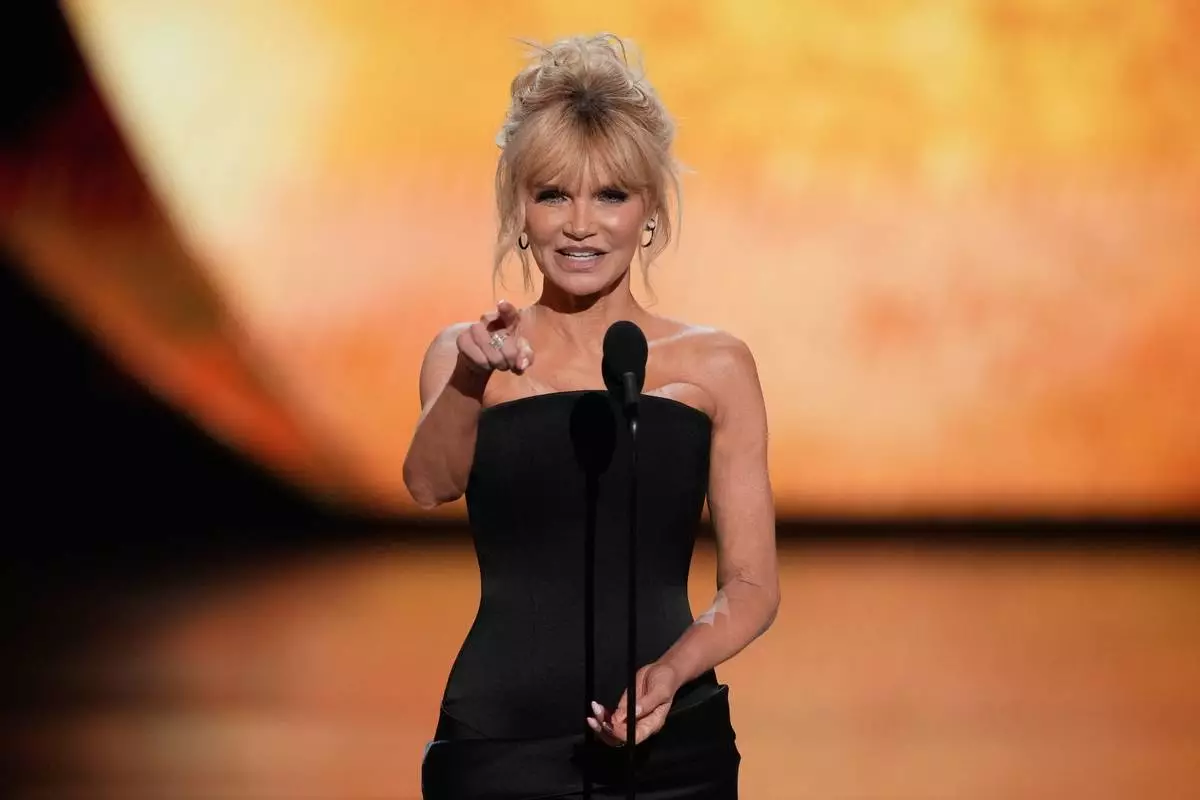
Kristin Chenoweth speaks during the 79th Tony Awards on Sunday, June 7, 2026, at Radio City Music Hall in New York. (Photo by Charles Sykes/Invision/AP)