Skip to Content Facebook Feature Image

Hegseth's comments are a reminder that government isn't always eager to show the human cost to war

ENT

Hegseth's comments are a reminder that government isn't always eager to show the human cost to war
ENT

ENT

Hegseth's comments are a reminder that government isn't always eager to show the human cost to war

2026-03-06 20:44 Last Updated At:20:50

Remarks by Defense Secretary Pete Hegseth that the American press emphasizes U.S. casualties in the Iran war because it “wants to make the president look bad” are a reminder of something that has endured across many decades and conflicts: the tension and trepidation about news that reminds Americans of the human cost of war.

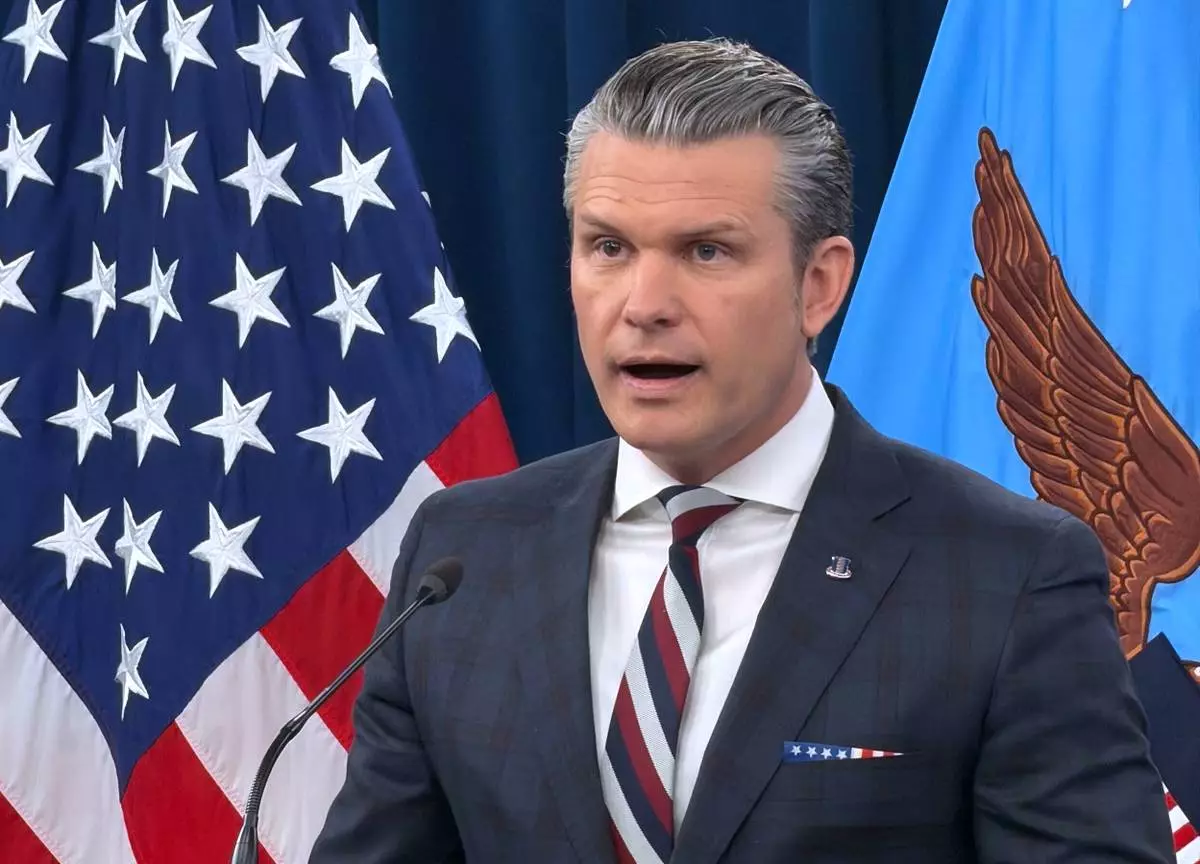
During his Pentagon briefing on the war on Wednesday, Hegseth bashed “fake news” while addressing the six U.S. Army reservists killed in an Iranian attack on an operations center in Kuwait.

“When a few drones get through or tragic things happen, it’s front-page news,” Hegseth said. “I get it. The press only wants to make the president look bad. But try for once to report the reality. The terms of this war will be set by us at every step.”

White House press secretary Karoline Leavitt, when questioned about the remark by CNN’s Kaitlan Collins at her own news conference later, doubled down. “You take every single thing this administration says and try to use it to make the president look bad,” Leavitt said. “That’s an objective fact.”

Memories of night after night of graphic images beamed into homes through a then-recent invention — television — were hard to shake for those who lived through the Vietnam War in the 1960s. Many believed the cumulative impact of seeing that suffering night after night turned Americans from supporters to skeptics.

Such vivid, intimate scenes of military action by Americans haven't been seen to that extent since, a legacy still in place with the war that President Donald Trump and Hegseth are waging right now on behalf of the United States.

“For many presidents, the lesson seemed to be: Don't allow the realities of war into people's living rooms if you can help it,” said Timothy Naftali, senior research scholar at Columbia University's School of International and Public Affairs.

Today, the images the public sees of warfare can resemble a video game — explosions seen lighting up the sky from afar — with the pain much more private.

Generations ago during World War II, journalists were embedded with the military, and many became household names — reporters Ernie Pyle and Walter Cronkite, photographers Robert Capa and Margaret Bourke-White. Those were the days before television, however.

Vietnam was arguably the most accessible American war for reporters. Journalists stationed in the country sent back a steady stream of death and destruction.

Cronkite, by then a CBS-TV anchorman of the most popular evening news program in the U.S., reported from Vietnam in 1968 and concluded the only rational way out was a negotiated peace. “If I’ve lost Cronkite,” President Lyndon Johnson said, “I’ve lost Middle America.”

During the Gulf War in 1991, President George H.W. Bush was angered by split-screen television images that showed the coffins of U.S. service members being returned to the United States while he, apparently unaware of the timing, was joking with reporters about another subject at the White House. The Pentagon banned coverage of these ceremonies, saying it was to protect the privacy of family members of the dead, although critics said it was to avoid showing pictures of coffins.

That ban, with a few exceptions, stayed in place until it was lifted by President Barack Obama in 2009.

Reporters who approached the battlefield in wars fought by the U.S. military in the 2000s were likely to have their movements restricted, if they were allowed at all. Jessica Donati, a reporter for The Wall Street Journal and Reuters who covered the war in Afghanistan, wrote for the Modern War Institute in 2021 that “it’s easier these days for journalists in Afghanistan to embed with the Taliban than with the U.S. military.”

The nature of this war — fought thousands of miles from the American homeland and not yet on the ground in Iran — has limited the number of American casualties and thus made them more newsworthy. Several journalists have pointed out that reporting about military casualties predates Trump's presidency. Hegseth's statement “is a warped way of looking at the world,” said CNN's Jake Tapper. “Ahistorical.”

“The news media covers fallen service members because they have made the ultimate sacrifice for their country,” he said. “It's a tribute. It's an honor.”

There has been relatively little coverage from the ground in Iran. A CNN team led by Frederik Pleitgen on Thursday became the first journalists from a U.S.-based television network to enter the country, and he spent the day racing across the country to Tehran.

Dan Lamothe, military affairs reporter for The Washington Post, posted on social media that Hegseth's comments won't stop him from continuing to cover the casualties of war — as has been done under presidents of both major political parties.

“These efforts haven’t always been perfect,” Lamothe wrote. “But they’ve highlighted sacrifices by American servicemembers and their families, and shortcomings that sometimes allowed these deaths to happen. We’ll continue to do so. It’s too important to stop.”

When Robert H. Reid was a top editor at Stars and Stripes between 2014 and 2025, he found that the newspaper's audience, primarily service members, wanted more than raw numbers when Americans were killed in military action. They wanted to know details about the lives of the people who served — where they grew up, who they left behind, what their passions were, he said.

In 10 or 20 years, many of these people will be forgotten by all but those who loved them. But for what they gave for their country, they deserve recognition for their lives, said Reid, an Associated Press international correspondent for most of his career.

“The public needs to know that war is not a video game,” Naftali said. “It affects people.”

This story has been corrected to show Obama lifted the Pentagon ban in 2009, not 2019.

David Bauder writes about the media for the AP. Follow him at http://x.com/dbauder and https://bsky.app/profile/dbauder.bsky.social.
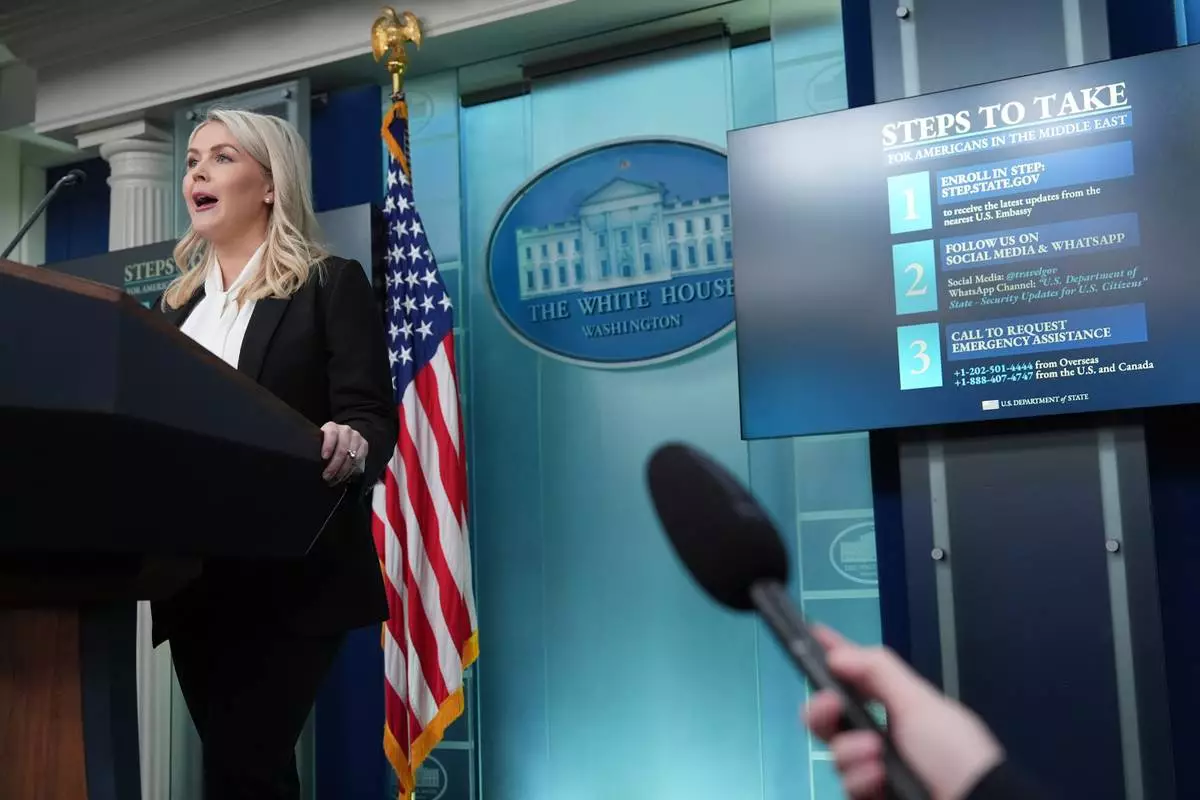
White House press secretary Karoline Leavitt speaks with reporters in the James Brady Press Briefing Room at the White House, Wednesday, March 4, 2026, in Washington. (AP Photo/Jacquelyn Martin)
White House press secretary Karoline Leavitt speaks with reporters in the James Brady Press Briefing Room at the White House, Wednesday, March 4, 2026, in Washington. (AP Photo/Jacquelyn Martin)

Defense Secretary Pete Hegseth speaks during a press briefing at the Pentagon, Wednesday, March 4, 2026, in Washington. (AP Photo/Konstantin Toropin)


Defense Secretary Pete Hegseth speaks during a press briefing at the Pentagon, Wednesday, March 4, 2026, in Washington. (AP Photo/Konstantin Toropin)
EL PASO, Texas (AP) — Serious medical and mental health emergencies have been routine at the nation’s largest U.S. Immigration and Customs Enforcement detention facility since its opening, according to records obtained by The Associated Press.

Data and recordings from more than a hundred 911 calls at Camp East Montana in El Paso, Texas, along with interviews and court filings, offer a disturbing portrait of overcrowding, medical neglect, malnutrition and emotional distress.

Current and former detainees describe a camp where about 3,000 people have lived per day in loud and unsanitary quarters. They say detainees struggle to obtain health care as disease spreads, lose weight because of a lack of food, and fear security guards known to use force to put down disturbances.

“Every day felt like a week. Every week felt like a month. Every month felt like a year,” said Owen Ramsingh, a former property manager in Columbia, Missouri, who spent several weeks in the camp before his deportation in February to the Netherlands. “Camp East Montana was 1,000% worse than a prison.”

EDITOR’S NOTE — This story includes discussion of suicide. If you or someone you know needs help, the national suicide and crisis lifeline in the U.S. is available by calling or texting 988. There is also an online chat at 988lifeline.org

A Department of Homeland Security spokesperson who did not provide their name rejected claims of subprime conditions, saying Camp East Montana detainees receive food, water and medical treatment in a facility that is regularly cleaned.

Here are some takeaways from AP’s reporting:

After its opening in mid-August, staff at the camp made nearly one 911 call per day in its first five months of operation, according to data covering 130 calls from the City of El Paso obtained by the AP.

In one call, a man is heard sobbing after being assaulted by another detainee. In another, a doctor says a man is banging his head against the wall while expressing suicidal thoughts. In a third, a nurse says a pregnant woman is in severe pain and has coronavirus.

The injured detainees ranged from a 19-year-old man who fell out of a bunk bed to a 79-year-old man struggling to breathe. At least 20 emergencies were reported as seizures, including some that resulted in serious head trauma.

The calls show detainees have repeatedly tried to harm themselves and expressed suicidal thoughts.

Two incidents have resulted in death. On Jan. 3, ICE said security guards responded after a 55-year-old Cuban man tried to harm himself and then used handcuffs and force to restrain him. A medical examiner ruled that Geraldo Lunas Campos’s death was a homicide caused by asphyxia.

On Jan. 14, staff reported that a 36-year-old Nicaraguan man died by suicide days after he was detained while working in Minnesota.

In addition to those cases, at least six other suicide attempts were reported, according to records from the City of El Paso.

The DHS spokesperson said the facility’s staff “closely monitors at-risk detainees” and provides mental health treatment.

The Washington Post reported in September that a required ICE inspection found conditions at the facility violated at least 60 federal standards for immigration detention. But that report has never been released, unlike dozens of other inspections at facilities posted on ICE’s website.

DHS has called claims of violations described in the Post story false without explaining why the inspection report was wrong. ICE’s current database on detention facilities indicates Camp East Montana has never been inspected but is scheduled for one this fiscal year.

A DHS spokesperson said ICE’s Office of Detention Oversight recently completed an inspection at Camp East Montana but provided no other information and the results have not been made public.

U.S. Rep. Veronica Escobar, an El Paso Democrat who has toured the camp several times, is calling for its closure.

“This facility should not be operational. It feels like this contractor is reinventing the wheel, and people are losing their lives in their experiment,” she said.

She said the facility had temporarily cut its population below 1,900 when she visited last month and will be closed to visitors temporarily because of a measles outbreak.

On one visit, a female detainee showed Escobar a meager serving of scrambled eggs that was served still frozen in the middle. She learned detainees protested after they had stopped receiving juice, fruit and milk with their meals.

Escobar met with a detainee from Ecuador who said his arm had been broken during a violent arrest by immigration agents in Minnesota. Weeks later, the congresswoman could still the fractured bones in his forearm poking up under the skin.

Escobar called for an investigation into contractor Acquisition Logistics LLC, which was awarded a contract worth up to $1.3 billion to build and operate the camp. She said the company, which didn't return messages, and its subcontractors were not delivering services paid for by taxpayers.

“People should be moved by the abject cruelty, but if they’re not, I hope they’re moved by the fraud and corruption,” Escobar said.

Foley reported from Iowa City, Iowa, and Biesecker reported from Washington.

A sign marks the entrance to a series of hardened tents at the Camp East Montana immigrant detention center in the desert at a U.S. Army base on the outskirts of El Paso, Texas, Friday, Feb. 13, 2026. (AP Photo/Morgan Lee)

A sign marks the entrance to a series of hardened tents at the Camp East Montana immigrant detention center in the desert at a U.S. Army base on the outskirts of El Paso, Texas, Friday, Feb. 13, 2026. (AP Photo/Morgan Lee)

Recommended Articles