Skip to Content Facebook Feature Image

Jarring alarms out, quieter alerts in. New firehouse dispatch systems aim to ease stress

News

Jarring alarms out, quieter alerts in. New firehouse dispatch systems aim to ease stress
News

News

Jarring alarms out, quieter alerts in. New firehouse dispatch systems aim to ease stress

2026-03-06 23:30 Last Updated At:23:40

DANBURY, Conn. (AP) — Until recently, a call coming into the Danbury Fire Department meant alarms and tones immediately blasting at high volume — startling the firefighters before they headed out to scenes that could get their hearts pumping even faster.

Capt. Kevin Lunnie said the effect could be “overwhelming.” He noticed a big jump in his heart rate when the alerts went off, which isn’t a good thing in a profession where heart problems are the leading cause of on-duty deaths.

More Images
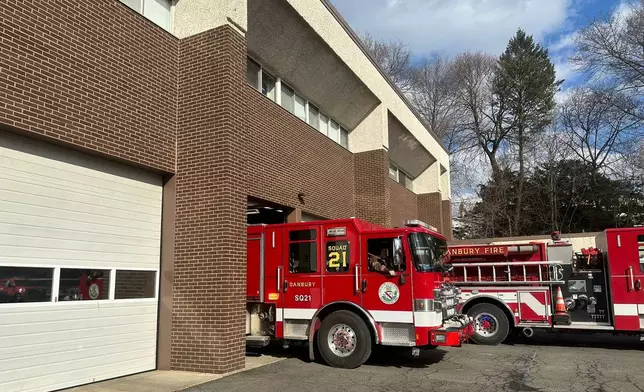
A Danbury Fire Department truck leaves the station, Sunday, Jan. 22, 2026, in Danbury, Conn. (AP Photo/Dave Collins)
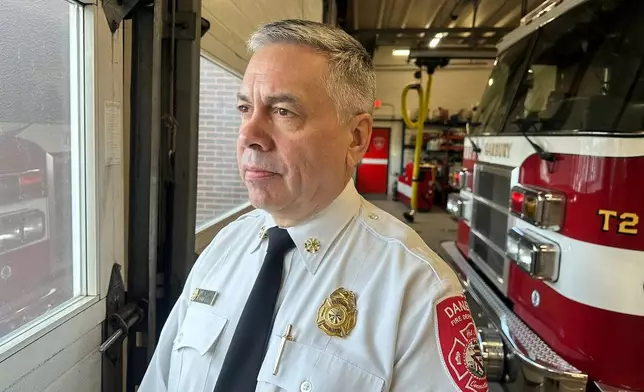
A Danbury Fire Department truck leaves the station, Sunday, Jan. 22, 2026, in Danbury, Conn. (AP Photo/Dave Collins)

Danbury Assistant Fire Chief William Lounsbury poses for a photo, Sunday, Jan. 22, 2026, at the Danbury Fire Department, in Danbury, Conn. (AP Photo/Dave Collins)

Danbury Assistant Fire Chief William Lounsbury poses for a photo, Sunday, Jan. 22, 2026, at the Danbury Fire Department, in Danbury, Conn. (AP Photo/Dave Collins)

A component of Danbury’s new Phoenix G2 alerting system flashes a red light during an alarm Sunday, Jan. 22, 2026, at the Danbury Fire Department, in Danbury, Conn. (AP Photo/Dave Collins)

A component of Danbury’s new Phoenix G2 alerting system flashes a red light during an alarm Sunday, Jan. 22, 2026, at the Danbury Fire Department, in Danbury, Conn. (AP Photo/Dave Collins)

A firefighter shows how the Danbury Fire Department’s new Phoenix G2 alerting system sends information to firefighters’ phones, Sunday, Jan. 22, 2026, at the station, in Danbury, Conn. (AP Photo/Dave Collins)
A firefighter shows how the Danbury Fire Department’s new Phoenix G2 alerting system sends information to firefighters’ phones, Sunday, Jan. 22, 2026, at the station, in Danbury, Conn. (AP Photo/Dave Collins)

The Danbury Fire Department's new Phoenix G2 alerting system receives a call, Jan. 22, 2026, at the station in Danbury, Conn. (AP Photo/Dave Collins)

The Danbury Fire Department's new Phoenix G2 alerting system receives a call, Jan. 22, 2026, at the station in Danbury, Conn. (AP Photo/Dave Collins)

But the city is now taking a gentler approach. A new system that went online in September includes alarms that start softer before gradually increasing in volume, while a computerized voice calmly announces the information the firefighters need to know about the incoming emergency.

“It’s much easier on your nervous system,” Lunnie said.

Danbury, a city of around 87,000 people in southwestern Connecticut, is using the new alerts in its five fire stations, joining thousands of other departments around the U.S. and world aiming to both reduce stress and improve response times.

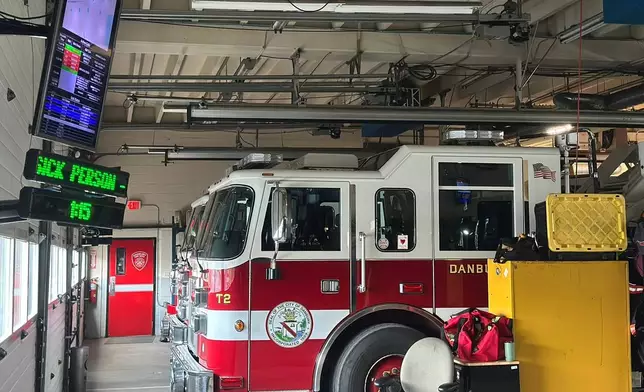
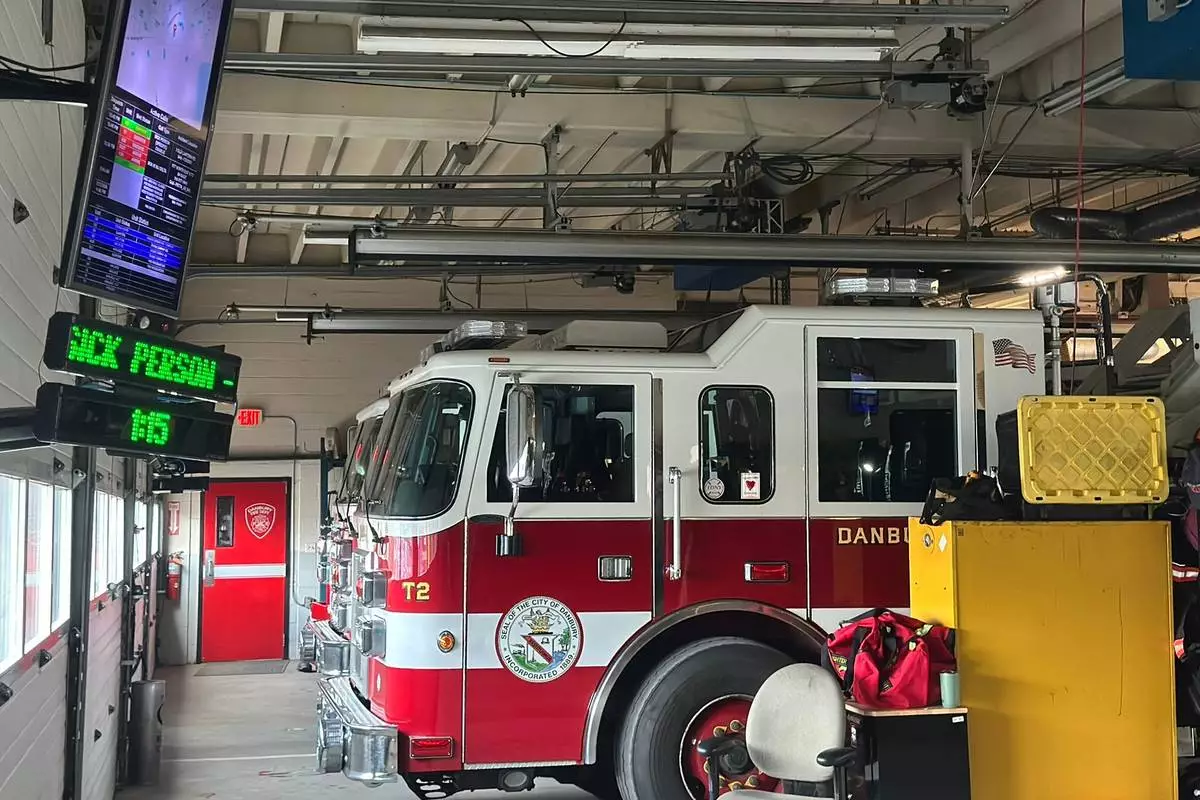
On a recent weekday, a call came into Danbury’s main fire station and the alert began with a single, soft tone. “Truck 1,” said the automated female voice. “Respond to sick person,” it said, giving the patient's address.

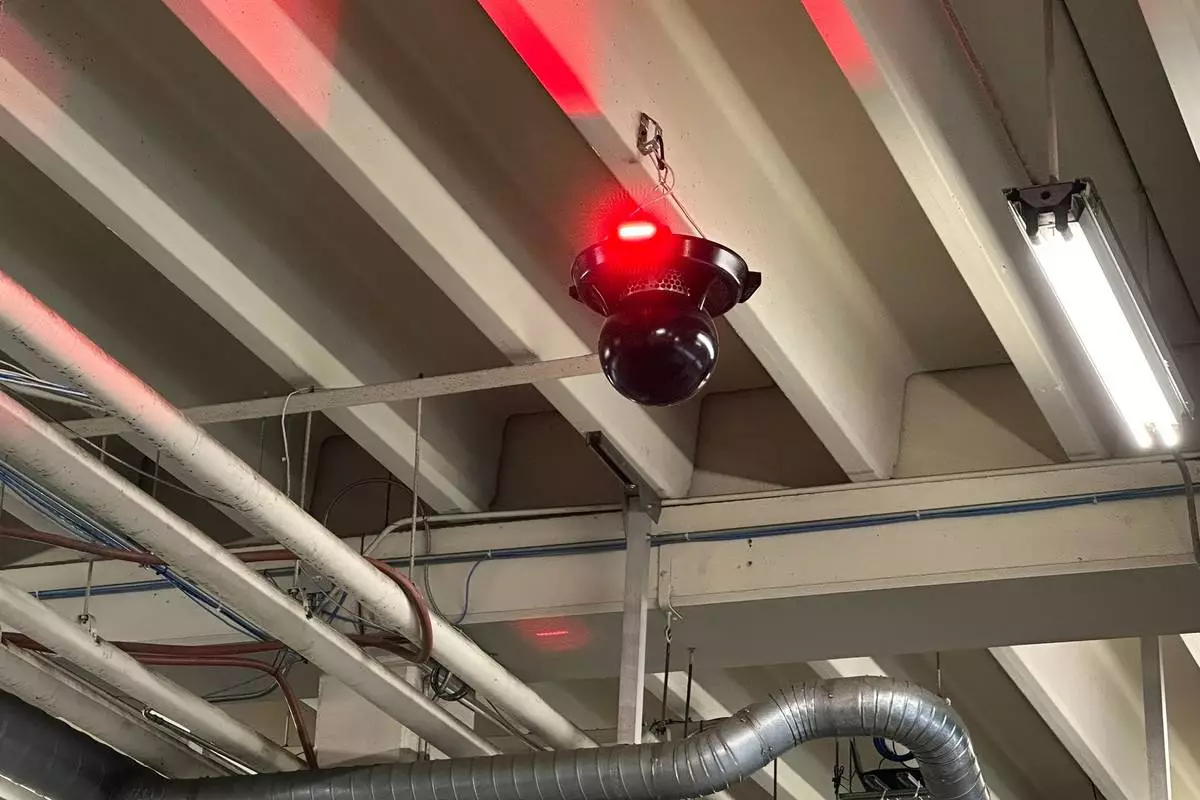
Around the firehouse, warm, red lighting flashed while monitors displayed the nature and location of the emergency. A timer display began to count down from two minutes, with the goal of firefighters leaving the station before the time ran out.

It’s both calmer and clearer than the old system, which began with full-volume single tones followed by cacophony of longer ones that fluctuated between high and low pitches. Dispatchers would previously announce the calls over the station speaker system, which firefighters said could be static-y and hard to understand.

“Most people found it very jarring,” Lunnie said of the system, which would jolt firefighters awake day or night.

The new setup is integrated into the computer-aided dispatching system. So when a dispatcher takes an emergency call and logs the initial information, it can alert the stations and units faster than department staff, while also sending the call information to firefighters’ phones and watches.

The result, according to Danbury Assistant Fire Chief William Lounsbury, is quicker response times.

Danbury tapped around $500,000 in funding from the 2021 American Rescue Plan Act to pay for the new Phoenix G2 system, made by Honeywell subsidiary US Digital Designs. That same system is in nearly 6,000 firehouses around the U.S., according to Honeywell.

Other companies make similar alerting systems that are in many stations nationwide.

Advocates of the gentler approach point to a decade-old study that found alert systems using an immediately loud sound increased firefighter heart rates by a median of seven beats a minute, compared with five beats a minute under a system that phased in the volume.

Although the difference was relatively small, researchers said it was statistically significant.

“When the alarm was used in a ramp-up fashion — so a gradual buildup on the alarm — the heart rate was lower to the alarm, so it put less stress on their body,” said Dr. Jay MacNeal, associate emergency medical services director for the Beloit Fire Department in Wisconsin and one of the study’s authors.

More than 40 Beloit firefighters took part in the study, which was published in the Journal of Occupational and Environmental Hygiene in 2016 by researchers at the Emergency Medicine Department at Mercyhealth in Janesville, Wisconsin, and Yale University in Connecticut.

According to the National Fire Protection Association, of the 51 on-duty firefighter deaths in the U.S. in 2024, 20 were caused by sudden cardiac death, the leading cause of the fatalities.

Last year, the NFPA issued new standards for fire station alerts that include using alarms and tones that start at lower volumes, as well as calm, computerized voices, citing the need to reduce stress.

The International Association of Fire Fighters, a union representing more than 360,000 firefighters and paramedics in the U.S. and Canada, also supports progressive-volume alerting systems. But it is seeking specific standards on how they are designed.

Research on the best way to alert firefighters to emergency calls is lacking, and each system now on the market is different, said Sean DeCrane, the IAFF's assistant to the general president for health and safety.

“We would like to see an industry standard that really starts to define the decibel levels, the intervals, the integration of turning on the lights, what that progression should be, and we believe the standard should be based on research,” DeCrane said.
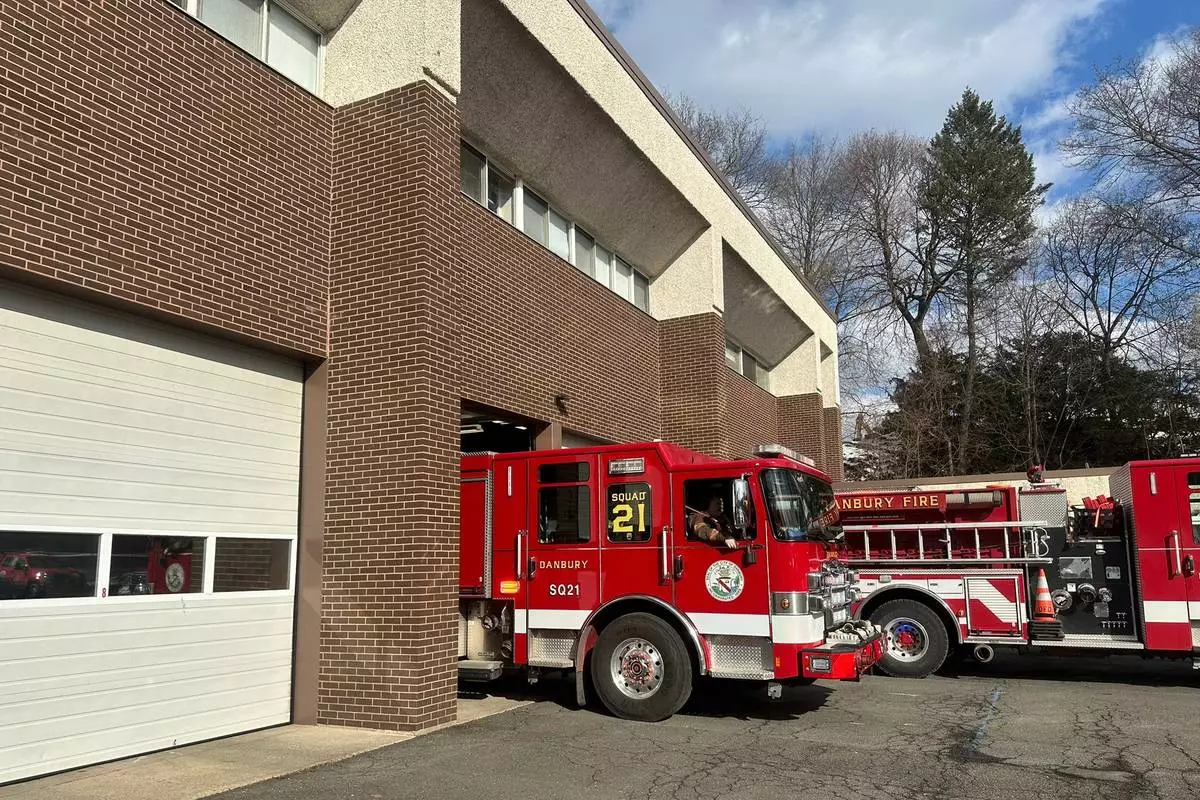
A Danbury Fire Department truck leaves the station, Sunday, Jan. 22, 2026, in Danbury, Conn. (AP Photo/Dave Collins)
A Danbury Fire Department truck leaves the station, Sunday, Jan. 22, 2026, in Danbury, Conn. (AP Photo/Dave Collins)

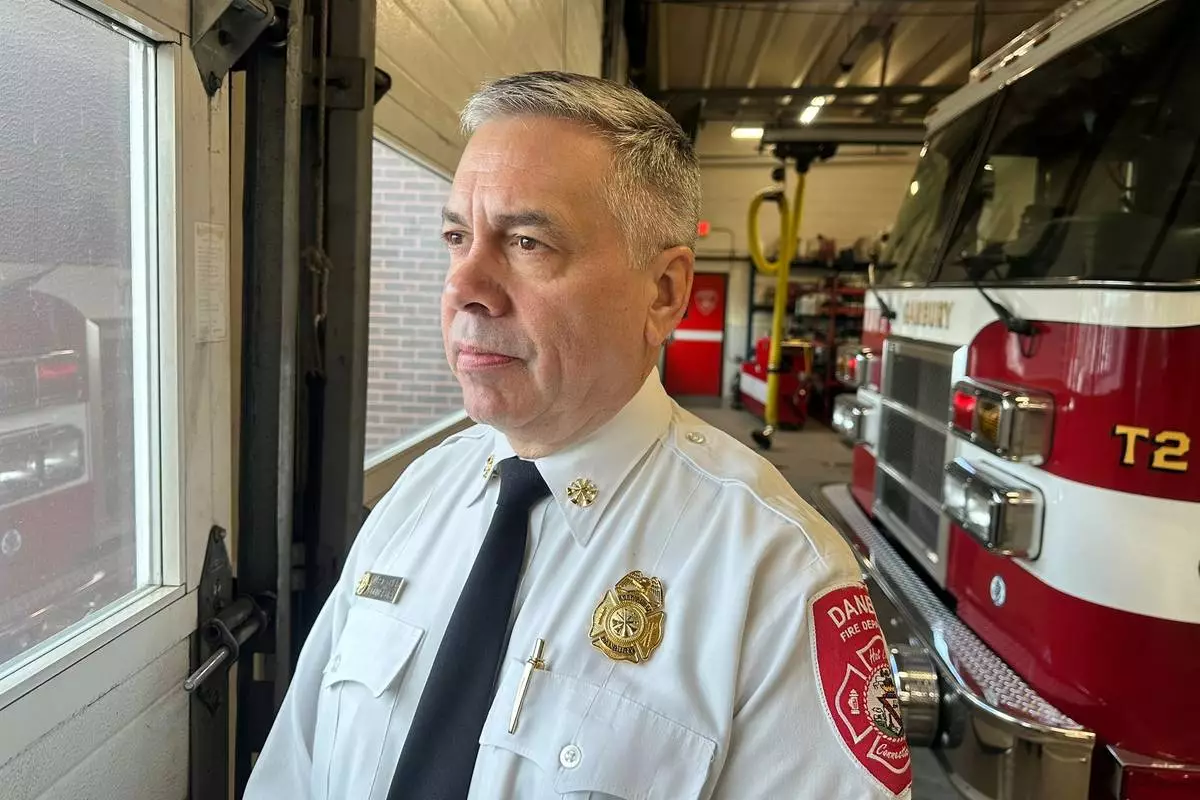
Danbury Assistant Fire Chief William Lounsbury poses for a photo, Sunday, Jan. 22, 2026, at the Danbury Fire Department, in Danbury, Conn. (AP Photo/Dave Collins)
Danbury Assistant Fire Chief William Lounsbury poses for a photo, Sunday, Jan. 22, 2026, at the Danbury Fire Department, in Danbury, Conn. (AP Photo/Dave Collins)

A component of Danbury’s new Phoenix G2 alerting system flashes a red light during an alarm Sunday, Jan. 22, 2026, at the Danbury Fire Department, in Danbury, Conn. (AP Photo/Dave Collins)

A component of Danbury’s new Phoenix G2 alerting system flashes a red light during an alarm Sunday, Jan. 22, 2026, at the Danbury Fire Department, in Danbury, Conn. (AP Photo/Dave Collins)

A firefighter shows how the Danbury Fire Department’s new Phoenix G2 alerting system sends information to firefighters’ phones, Sunday, Jan. 22, 2026, at the station, in Danbury, Conn. (AP Photo/Dave Collins)
A firefighter shows how the Danbury Fire Department’s new Phoenix G2 alerting system sends information to firefighters’ phones, Sunday, Jan. 22, 2026, at the station, in Danbury, Conn. (AP Photo/Dave Collins)

The Danbury Fire Department's new Phoenix G2 alerting system receives a call, Jan. 22, 2026, at the station in Danbury, Conn. (AP Photo/Dave Collins)
The Danbury Fire Department's new Phoenix G2 alerting system receives a call, Jan. 22, 2026, at the station in Danbury, Conn. (AP Photo/Dave Collins)
DUBAI, United Arab Emirates (AP) — Intense Israeli airstrikes pounded the capitals of Iran and Lebanon early Friday as the U.S. apparently struck an Iranian drone carrier at sea, intensifying its campaign targeting the Islamic Republic’s fleet of warships.

Iran launched new retaliatory attacks in the Middle East at the end of a full week of bombardment, which U.S. Defense Secretary Pete Hegseth warned was “about to surge dramatically.”

Israel’s military said Friday morning it had begun “a broad-scale wave of strikes” on Tehran, Iran’s capital. Witnesses described the Israeli airstrikes as particularly intense, shaking homes in the area. Others reported explosions around the Iranian city of Kermanshah in an area that is home to multiple missile bases.

The Israeli military said strikes have already destroyed most of Iran’s air defenses and missile launchers.

The war has escalated to affect countries across the Middle East and beyond. Early Friday, Iran fired missile and drone attacks into Kuwait, Qatar, Saudi Arabia and Bahrain, all countries that host U.S. forces. There were no immediate reports of casualties.

In Lebanon, where the war has intensified fighting between Israel and Iran-allied Hezbollah militants, Israel launched a series of airstrikes late Thursday into Friday in the southern suburbs of Beirut and other areas. Motorists jammed roads trying to flee or seek shelter.

The U.S. and Israel have battered Iran with nationwide strikes, targeting their military capabilities, leadership and nuclear program.

Iran’s attacks have targeted their Arab neighbors, disrupted oil supplies and snarled global air travel. The war has killed at least 1,230 people in Iran, more than 120 in Lebanon and around a dozen in Israel, according to officials in those countries. Six U.S. troops have been killed.

The U.S. military said early Friday that it struck an Iranian drone carrier, setting it ablaze.

The U.S. military’s Central Command released black-and-white footage of the burning carrier. The Iranian military did not immediately acknowledge the attack.

The drone carrier, the IRIS Shahid Bagheri, is a converted container ship with a 180-meter-long (yard) runway for drones. The vessel can travel up to 22,000 nautical miles without needing to refuel in ports, reports said at the time of its 2005 inauguration.

Adm. Brad Cooper, head of U.S. Central Command, described the carrier as “roughly the size of a World War II aircraft carrier.”

“And as we speak, it’s on fire,” Cooper told reporters.

Speaking alongside Cooper, Hegseth gave few details Thursday when he promised an upcoming surge.

“It’s more fighter squadrons, it’s more capabilities, it’s more defensive capabilities,” Hegseth said. “And it’s more bomber pulses more frequently.”

Qatar’s Defense Ministry reported early Friday it intercepted a drone attack targeting Al Udeid Air Base, which hosts the forward headquarters of the U.S. Central Command.

Saudi Arabia intercepted and destroyed three ballistic missiles fired early Friday toward Prince Sultan Air Base south of Riyadh, which hosts U.S. forces, said a spokesperson for Saudi Arabia’s Ministry of Defense.

Air raid sirens sounded in Bahrain, where the Interior Ministry said Iranian strikes targeted two hotels and a residential building. It said there were no casualties. In Kuwait, where the six U.S. soldiers were killed Sunday, the Kuwaiti army said its air defenses were activated when missile and drone attacks breached Kuwait’s airspace.

In brief remarks at the White House on Thursday, U.S. President Donald Trump again urged the Iranian people to “help take back your country.” This time he promised the U.S. would grant them “immunity” amid the war and ongoing dangers under the current Iranian regime.

“So you’ll be perfectly safe with total immunity,” Trump said, without giving any details about what that meant. “Or you’ll face absolutely guaranteed death.”

In an interview with the news website Axios, Trump said he should be involved in choosing Iran's new supreme leader to replace Ayatollah Ali Khamenei, who was killed in the opening strikes of the war. Trump spoke dismissively of Khamenei's son, Mojtaba Khamenei, being a front-runner to replace his father, calling him “a lightweight.”

“We want someone that will bring harmony and peace to Iran,” Trump said.

Iran has not requested talks with the U.S. to bring an end to the widening war, Iran’s ambassador to Egypt told the Associated Press on Thursday. Ambassador Mojtaba Ferdousi Pour denied comments by Trump that Iran wants to negotiate.

He said a lack of trust makes such engagement impossible after talks for a possible nuclear deal twice failed and ended with war.

“There will be no trust in Trump,” Ferdousi Pour said.

Meanwhile, Iranian Foreign Minister Abbas Araghchi accused the U.S. Navy of committing “an atrocity at sea” for sinking the Iranian frigate IRIS Dena in the Indian Ocean, killing at least 87 crew members.

The Iranian ship was returning from an exercise hosted by the Indian navy that the U.S. also joined. Sri Lankan authorities said 32 crew members were rescued. Araghchi said it had been carrying “almost 130” crew.

An Iranian cleric later called on state television for the shedding of both Israeli and “Trump’s blood.”

Israel carried out at least 11 airstrikes late Thursday and early Friday, targeting the southern suburbs of Beirut. Fires broke out near a gas station.

The Israeli army issued a warning Thursday evening, urging residents to “save your lives and evacuate your homes immediately.” Two hospitals evacuated patients and staff. No casualties were immediately reported.

The Lebanese health ministry said the death toll has risen to 123 since the resurgence of hostilities between Israel and Hezbollah, which struck Israel in the opening days of the war.

A spokesperson for the U.N. peacekeeping force in southern Lebanon, Tilak Pokharel, said Thursday that peacekeepers had seen and heard clashes, including ground combat, in southern Lebanon as more Israeli forces have moved across the border.

Bynum reported from Savannah, Georgia, and Abou AlJoud from Beirut, Lebanon. AP journalists around the world contributed.

Women hold Iranian flags and pictures of the late Iranian Supreme Leader Ali Khamenei as government supporters march against the ongoing U.S.-Israeli military campaign after Friday prayers at the Imam Khomeini Grand mosque in Tehran, Iran, Friday, March 6, 2026. (AP Photo/Vahid Salemi)

Women hold Iranian flags and pictures of the late Iranian Supreme Leader Ali Khamenei as government supporters march against the ongoing U.S.-Israeli military campaign after Friday prayers at the Imam Khomeini Grand mosque in Tehran, Iran, Friday, March 6, 2026. (AP Photo/Vahid Salemi)

Shiite Muslims shout slogans as they burn effigies of President Donald Trump and Israeli Prime Minister Benjamin Netanyahu during a protest against the killing of Iran's Supreme Leader Ayatollah Ali Khamenei, in Budgam, northeast of Srinagar, Indian controlled Kashmir, Friday, March 6, 2026. (AP Photo/Dar Yasin)

Shiite Muslims shout slogans as they burn effigies of President Donald Trump and Israeli Prime Minister Benjamin Netanyahu during a protest against the killing of Iran's Supreme Leader Ayatollah Ali Khamenei, in Budgam, northeast of Srinagar, Indian controlled Kashmir, Friday, March 6, 2026. (AP Photo/Dar Yasin)

Israeli soldiers work on tanks at a staging area in northern Israel near the border with Lebanon, Friday, March 6, 2026. (AP Photo/Ariel Schalit)

Israeli soldiers work on tanks at a staging area in northern Israel near the border with Lebanon, Friday, March 6, 2026. (AP Photo/Ariel Schalit)

Iranians attend Friday prayers in the courtyard of the Imam Khomeini Grand mosque in Tehran, Iran, Friday, March 6, 2026. (AP Photo/Vahid Salemi)

Iranians attend Friday prayers in the courtyard of the Imam Khomeini Grand mosque in Tehran, Iran, Friday, March 6, 2026. (AP Photo/Vahid Salemi)

Smoke rises following an Israeli airstrike in Dahiyeh, Beirut's southern suburbs, in Beirut, Lebanon, Friday, March 6, 2026. (AP Photo/Hussein Malla)

Smoke rises following an Israeli airstrike in Dahiyeh, Beirut's southern suburbs, in Beirut, Lebanon, Friday, March 6, 2026. (AP Photo/Hussein Malla)

Iranians attend Friday prayers at the Imam Khomeini Grand mosque in Tehran, Iran, Friday, March 6, 2026. (AP Photo/Vahid Salemi)

Iranians attend Friday prayers at the Imam Khomeini Grand mosque in Tehran, Iran, Friday, March 6, 2026. (AP Photo/Vahid Salemi)

Iranians attend Friday prayers at the Imam Khomeini Grand mosque in Tehran, Iran, Friday, March 6, 2026. (AP Photo/Vahid Salemi)

Iranians attend Friday prayers at the Imam Khomeini Grand mosque in Tehran, Iran, Friday, March 6, 2026. (AP Photo/Vahid Salemi)

Iranians attend Friday prayers at the Imam Khomeini Grand mosque in Tehran, Iran, Friday, March 6, 2026. (AP Photo/Vahid Salemi)

Iranians attend Friday prayers at the Imam Khomeini Grand mosque in Tehran, Iran, Friday, March 6, 2026. (AP Photo/Vahid Salemi)

A woman displays a picture of the late Iranian Supreme Leader Ali Khamenei as she arrives for Friday prayers at the Imam Khomeini Grand mosque ahead of a pro-government demonstration in Tehran, Iran, Friday, March 6, 2026. (AP Photo/Vahid Salemi)

A woman displays a picture of the late Iranian Supreme Leader Ali Khamenei as she arrives for Friday prayers at the Imam Khomeini Grand mosque ahead of a pro-government demonstration in Tehran, Iran, Friday, March 6, 2026. (AP Photo/Vahid Salemi)

Flames rise following an Israeli airstrike in Dahiyeh, Beirut's southern suburbs, Lebanon, Friday, March 6, 2026. (AP Photo/Hassan Ammar)

Flames rise following an Israeli airstrike in Dahiyeh, Beirut's southern suburbs, Lebanon, Friday, March 6, 2026. (AP Photo/Hassan Ammar)

Missiles launched from Iran are seen in the sky over central Israel, Thursday, March 5, 2026. (AP Photo/Ohad Zwigenberg)

Missiles launched from Iran are seen in the sky over central Israel, Thursday, March 5, 2026. (AP Photo/Ohad Zwigenberg)

Smoke rises following an Israeli airstrike in the Dahiyeh area of Beirut, Thursday, March 5, 2026. (AP Photo/Hassan Ammar)

Smoke rises following an Israeli airstrike in the Dahiyeh area of Beirut, Thursday, March 5, 2026. (AP Photo/Hassan Ammar)

A man passes by a destroyed car and shop on a commercial street that was hit by Israeli airstrikes in Nabatiyeh town, south Lebanon, Thursday, March 5, 2026. (AP Photo/Mohammed Zaatari)

A man passes by a destroyed car and shop on a commercial street that was hit by Israeli airstrikes in Nabatiyeh town, south Lebanon, Thursday, March 5, 2026. (AP Photo/Mohammed Zaatari)

Rescue workers check a destroyed building that was hit by an Israeli airstrike in Nabatiyeh town, south Lebanon, Thursday, March 5, 2026. (AP Photo/Mohammed Zaatari)

Rescue workers check a destroyed building that was hit by an Israeli airstrike in Nabatiyeh town, south Lebanon, Thursday, March 5, 2026. (AP Photo/Mohammed Zaatari)

A stranded passenger sleeps on the floor outside Dubai International Airport terminal as the airport resumes limited operations in Dubai, United Arab Emirates, Thursday, March 5, 2026. (AP Photo/Altaf Qadri)

A stranded passenger sleeps on the floor outside Dubai International Airport terminal as the airport resumes limited operations in Dubai, United Arab Emirates, Thursday, March 5, 2026. (AP Photo/Altaf Qadri)

A giant poster shows the late Hezbollah military commander Imad Mughniyeh, while workers check a destroyed building that was hit by an Israeli airstrike in Nabatiyeh town, south Lebanon, Thursday, March 5, 2026. (AP Photo/Mohammed Zaatari)

A giant poster shows the late Hezbollah military commander Imad Mughniyeh, while workers check a destroyed building that was hit by an Israeli airstrike in Nabatiyeh town, south Lebanon, Thursday, March 5, 2026. (AP Photo/Mohammed Zaatari)

Some holding pictures of the late Iranian Supreme Leader Ayatollah Ali Khamenei, mourners reach out to coffins during a funeral for people killed during the ongoing U.S.–Israeli military campaign in Isfahan, Iran, Thursday, March 5, 2026. (Payman Shahsanaei/ISNA via AP)

Some holding pictures of the late Iranian Supreme Leader Ayatollah Ali Khamenei, mourners reach out to coffins during a funeral for people killed during the ongoing U.S.–Israeli military campaign in Isfahan, Iran, Thursday, March 5, 2026. (Payman Shahsanaei/ISNA via AP)

Recommended Articles