Upon his arrival in Italy, Paralympic ski racer Patrick Halgren plastered a blue-and-yellow sticker in the bathroom of a popular restaurant.
The first of many stickers to be stuck somewhere.
Click to Gallery
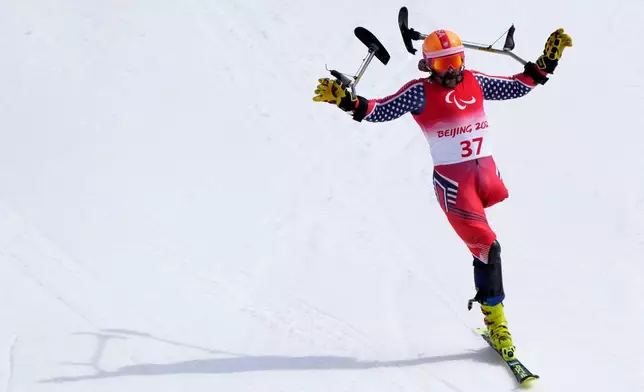
FILE - Patrick Halgren of the United States reacts after competing in the men's slalom, standing at the 2022 Winter Paralympics, Sunday, March 13, 2022, in the Yanqing district of Beijing. (AP Photo/Andy Wong, file)
FILE - Patrick Halgren of the United States reacts after competing in the men's slalom, standing at the 2022 Winter Paralympics, Sunday, March 13, 2022, in the Yanqing district of Beijing. (AP Photo/Andy Wong, file)
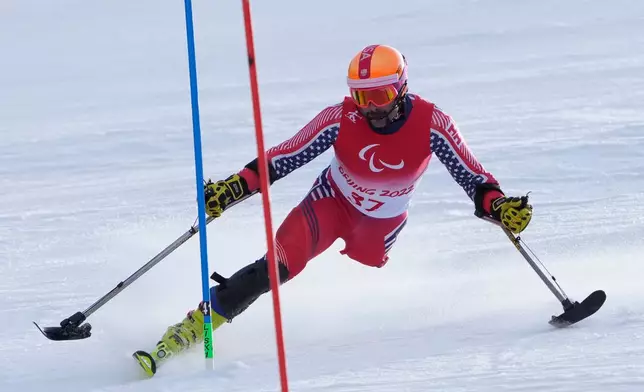
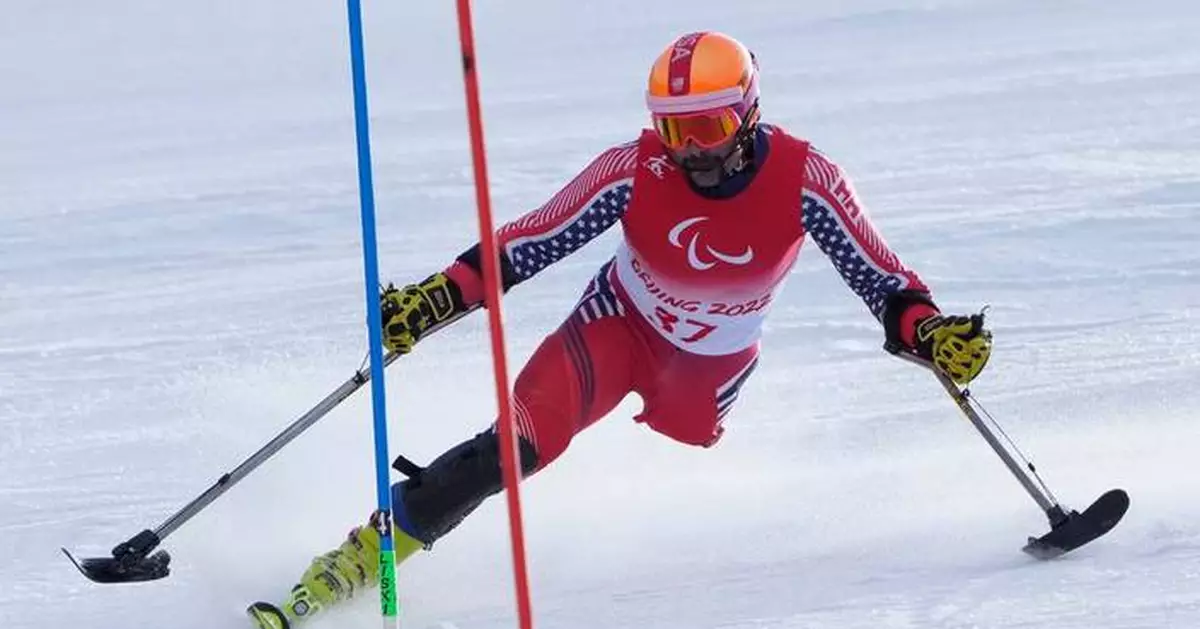
FILE - Patrick Halgren of the United States competes in the men's slalom, standing at the 2022 Winter Paralympics, Sunday, March 13, 2022, in the Yanqing district of Beijing. (AP Photo/Andy Wong, file)
FILE - Patrick Halgren of the United States competes in the men's slalom, standing at the 2022 Winter Paralympics, Sunday, March 13, 2022, in the Yanqing district of Beijing. (AP Photo/Andy Wong, file)
By the time the Milan Cortina Paralympics are over, those decals that read “ SvendIt ” will be spotted on chairlifts, water bottles and buildings all around Cortina d’Ampezzo, Italy. The phrase, a play on “send-it,” is Halgren’s mantra on life.
Even more, it's a way to honor his late twin brother, Lucas Sven Halgren, who went by Sven. He’s the one who encouraged Halgren to take up the sport after Halgren lost his left leg above the knee in a motorcycle crash in 2013. He's the reason why Halgren’s at his second Paralympics and about to compete in five different events over a busy week. Three years after Halgren's motorcycle crash, Sven, an avid skier who chased adventure all over the world, died in a motorcycle crash in New Zealand.
Halgren lives life to the fullest for his twin. Halgren, who lives part of the year out of his van, isn’t afraid to take chances, especially on the hill. Because the “SvendIt” attitude comes from the heart — and the belly, where he has the word tattooed.
“I’ve got a lot of really good friends messaging me and saying, ‘He’d be so proud of you,’” said Halgren, who was 20 minutes older than Sven. “When there’s a ray of sunshine (on the mountain), I’ve got to believe that it’s him up there … showing me the way.”
To be here, in Cortina, was a victory in itself. Halgren has been banged up all season from one crash after another. He’s qualified in the standing division of the downhill, super-G, giant slalom, slalom and Alpine combined. His mom, Kathy, and dad, Peter, flew in from Connecticut to watch.
To prepare, he's changing up his look. He'll keep his braids for Saturday's downhill race before dyeing his hair red and blue to go with the blonde for the super-G.
“Because blondes have more fun,” he cracked.
It's an adventure-filled existence for Halgren, who splits his time between living out of his Ford camper van and his home in Colorado Springs, Colorado. During ski season, he parks the van in the vicinity of Winter Park Resort, where he announces races for kids, helps repair fences, trains and just cuts loose. He's the self-described, "sheriff of the mountain, and I thank everybody for voting for me,” he joked.
Recently, he's been dabbling in the movie-making realm, too. He worked on a film titled “ Us and Them,” which showcases adaptive skiing from the perspective of athletes such as Halgren.
“We just wanted to shoot a short film with disabled people just doing cool stuff,” the 33-year-old Halgren said. “I feel like I have a super-power at the moment — being able to combat hate with love and spread it to those who have helped me really get here.”
Like his brother, who encouraged Halgren after his crash.
Halgren was running late to work in 2013 and racing to get there. He couldn't make a turn on his motorcycle and veered off the road.
“I thought, ‘I’m going to die,’" he recalled.
But there was a farm with a field and he steered that direction.
“I was like, ‘Oh, thank God. I’m going to probably walk away,’” he said. "I went flying into the field and that’s the last thing I remember.”
There were rocks surrounding a telephone pole that he hit going about 80 mph. He was pinned between the bike and the pole. The main artery in his pelvis was severed. The paramedics used a defibrillator to revive him before rushing him to the hospital.
They saved his life — he was in a coma for a month — but couldn’t save his left leg, which was amputated above the knee.
His brother, who went by Sven, was a volunteer at an adaptive sports program at Mount Snow in Vermont.
Sven urged his twin to give Para-skiing a try. Halgren listened — eventually.
First, though, wheelchair basketball. He didn't want to risk hurting his other leg. But as he got stronger, his desire to give skiing a try returned.
“Patrick got off the chairlift, goes to make a turn and he fell right over,” his dad recalled. "He’s a proud kid. He’s not happy. I said, ‘Pat, go down the hill, get some speed behind you, and let the skis do the work.’
“By the end of the day, he turned to me and said, ‘Dad, I’m going to be the best one-legged skier in the world.’ He’s on his way.”
Being in Cortina, for his second Paralympics, Halgren can't help but think about what his brother would make of all this. Sven, a glacier guide in New Zealand, died in December 2016 from injuries he sustained in a motorcycle crash.
“He wouldn't be surprised at all,” said Halgren, who competed in the slalom and giant slalom at the 2022 Beijing Paralympics. “He’d be just as excited as me, if not more."
As for medals: "We told him, ‘We don’t care about medals. Our hearts are so happy that we’re just here with you,'” his mom said.
And Sven.
Halgren carries the spirit of Sven in his heart at all times. The stickers are just another way to bring his brother along for the ride.
The “SvendIt” decals were the idea of a friend. They’re now plastered in spots all over the world, from Norway to Sweden to the top of a weather station in Colorado. And now, in the bathroom of an Italian restaurant.
“Basically, if you’re going to do something, you've just got to go for it,” Halgren explained. “Go have some fun and live your life. Have something to talk about later."
AP Winter Paralympics: https://apnews.com/hub/paralympic-games
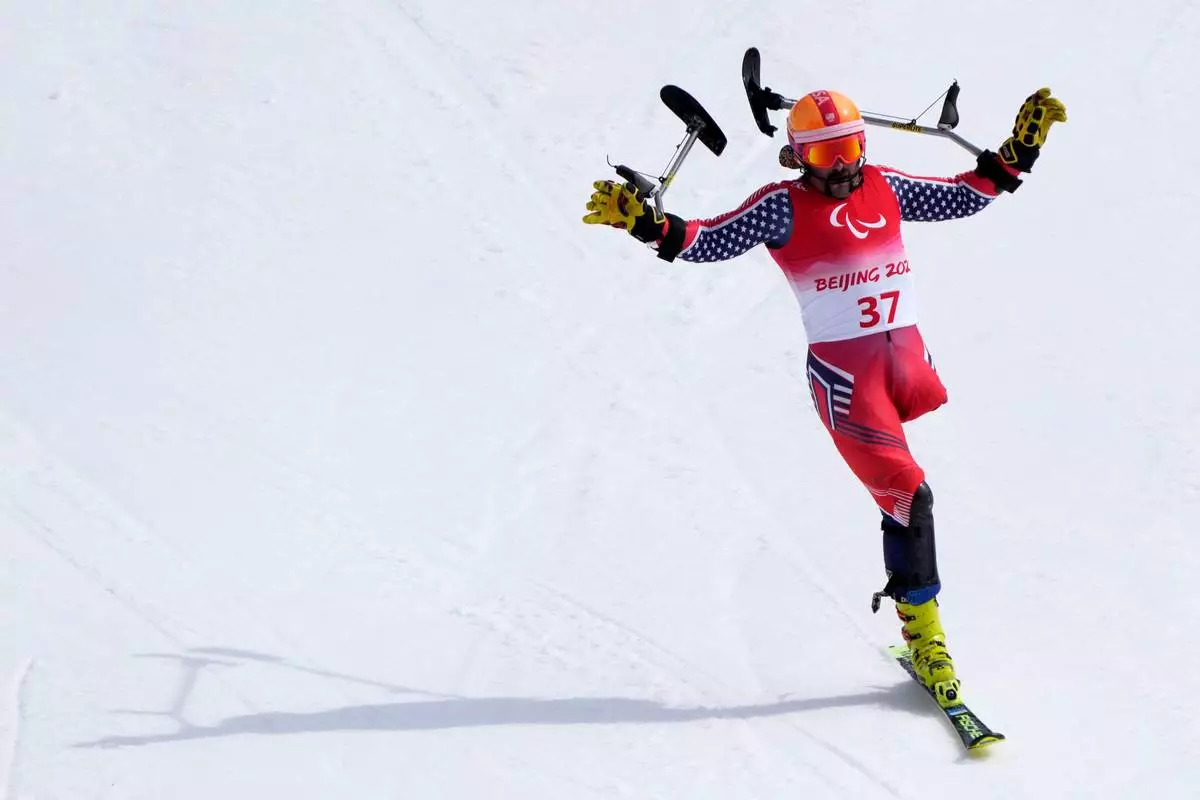
FILE - Patrick Halgren of the United States reacts after competing in the men's slalom, standing at the 2022 Winter Paralympics, Sunday, March 13, 2022, in the Yanqing district of Beijing. (AP Photo/Andy Wong, file)
FILE - Patrick Halgren of the United States reacts after competing in the men's slalom, standing at the 2022 Winter Paralympics, Sunday, March 13, 2022, in the Yanqing district of Beijing. (AP Photo/Andy Wong, file)
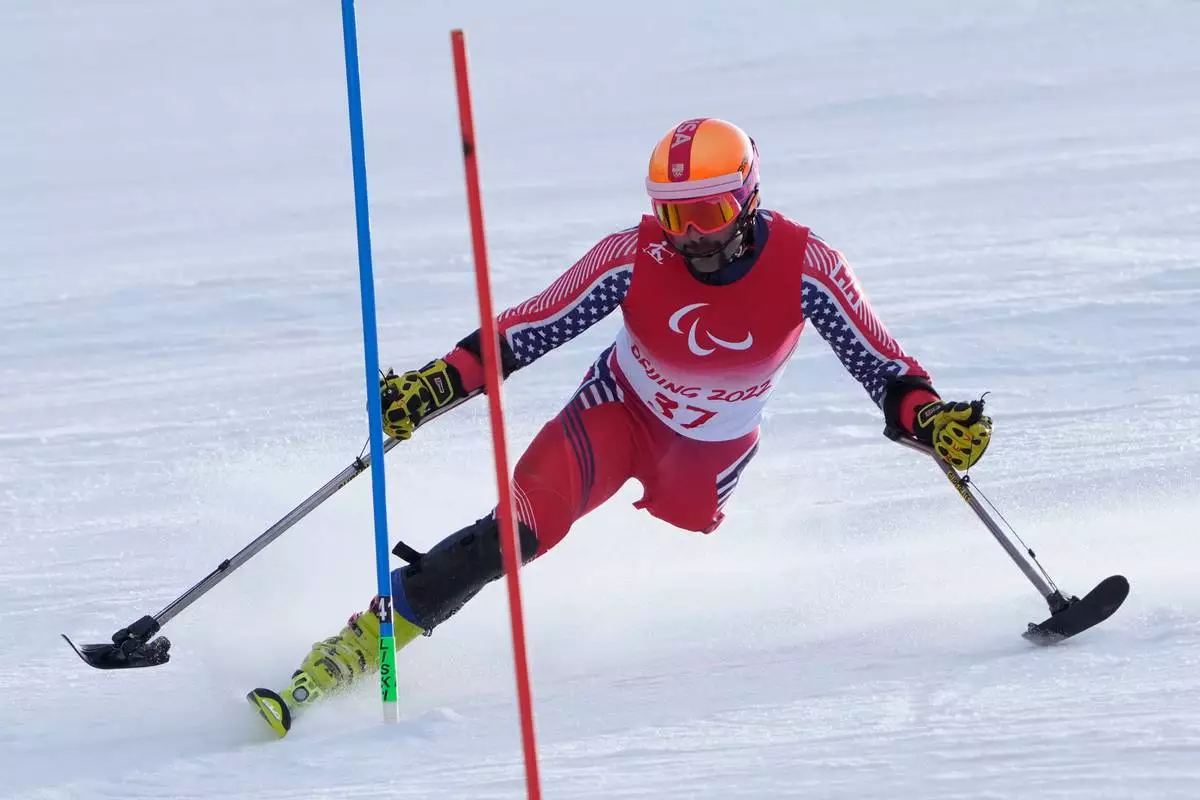
FILE - Patrick Halgren of the United States competes in the men's slalom, standing at the 2022 Winter Paralympics, Sunday, March 13, 2022, in the Yanqing district of Beijing. (AP Photo/Andy Wong, file)
FILE - Patrick Halgren of the United States competes in the men's slalom, standing at the 2022 Winter Paralympics, Sunday, March 13, 2022, in the Yanqing district of Beijing. (AP Photo/Andy Wong, file)