WASHINGTON (AP) — A U.S. submarine's deadly attack on an Iranian warship does not appear to have violated international or American military law, though it's not yet clear whether the sub took sufficient measures to rescue nearly three dozen survivors, legal experts said.
Legal questions are swirling about the underpinnings for the entire U.S.-Israeli military operation against Iran, and the aftermath of the torpedo attack on the IRIS Dena in the Indian Ocean, the experts said.
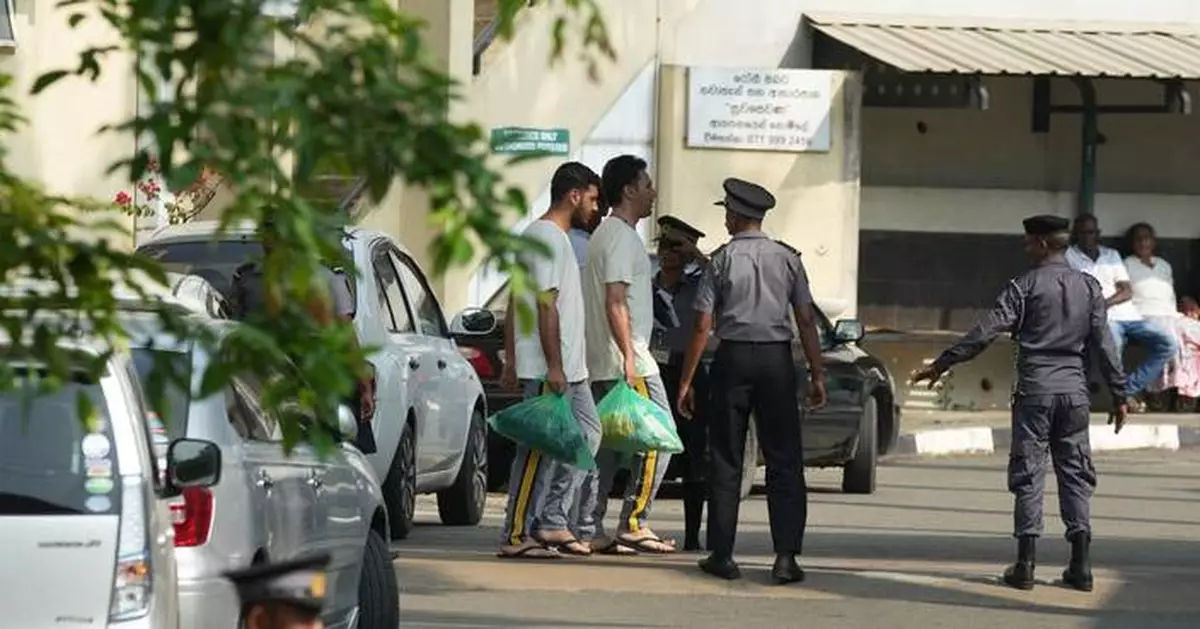
At least 87 people died and 32 Iranian sailors were rescued after the sub torpedoed the Dena in international waters near Sri Lanka.
While the attacks on Iran overall are “a clear violation of the UN charter,” the Dena was “a clear military target,” said Marko Milanovic, professor of international law at the University of Reading in Britain.
"Targeting a military vessel is not a war crime,” Milanovic said.
The vessel had just participated in naval exercises hosted by India and was heading into international waters on its way home, the Indian government said.
But neither its location far from the war zone nor its presence for the joint naval exercises affects the legality of the strike, said Rachel VanLandingham, a professor at Southwestern Law School and a retired lieutenant colonel in the U.S. Air Force who served as a judge advocate general.
“It doesn’t matter that it wasn’t firing at the time," she said of the Iranian ship. "It matters that it can be used to fire at American military assets.”
But what transpired after the torpedo struck the ship could raise concerns.
“The attack may not violate the law of war, but that’s only the start of the analysis,” said Brian Finucane, who served in the State Department's Office of the Legal Adviser for a decade. “What happens after the attack is another matter.”
International humanitarian law says the U.S. should have taken “all possible measures” to help search for and collect anyone who was wounded or shipwrecked.
U.S. naval forces have the same obligation under the Pentagon's rules as laid out in the Defense Department Law of War Manual. But the manual notes that “practical limitations,” including the cramped quarters of a submarine, could require it to alert other ships, airplanes or nearby authorities of the location of possible survivors.
Bringing people inside a submarine -- one of the most closely guarded platforms in the U.S. Navy -- also poses issues.
A U.S. official confirmed that following the strike, the United States contacted Sri Lankan authorities to provide them with the ship’s location for search and rescue efforts. The official spoke on condition of anonymity in order to discuss matters that were not authorized for release.
Sri Lanka's foreign minister, Vijitha Herath, told Parliament that Sri Lanka's navy received a distress signal from the stricken ship, and sent ships and planes on a rescue mission.
But by the time Sri Lanka’s navy reached the location, there was no sign of the ship, “only some oil patches and life rafts,” navy spokesman Commander Buddhika Sampath said. “We found people floating on the water.”
Finucane said that without more information, “it’s hard to evaluate whether there were possible measures they could have taken. But at a minimum, they should be explaining this.”
Eugene R. Fidell, who teaches military law at Yale Law School, said it “may be a long time before we have a full account of who did what and when in the aftermath of the attack. If as it appears, they alerted the coastal authorities, they did right to do so.”
But even then, difficult questions remain, Fidell said, principally whether rescuers were close enough to the scene. “So until we get more clarity, granular clarity, I think it’s premature to make any judgments,” he said. “I’m being circumspect, but I think It’s important to be circumspect.”
Quell reported from The Hague.
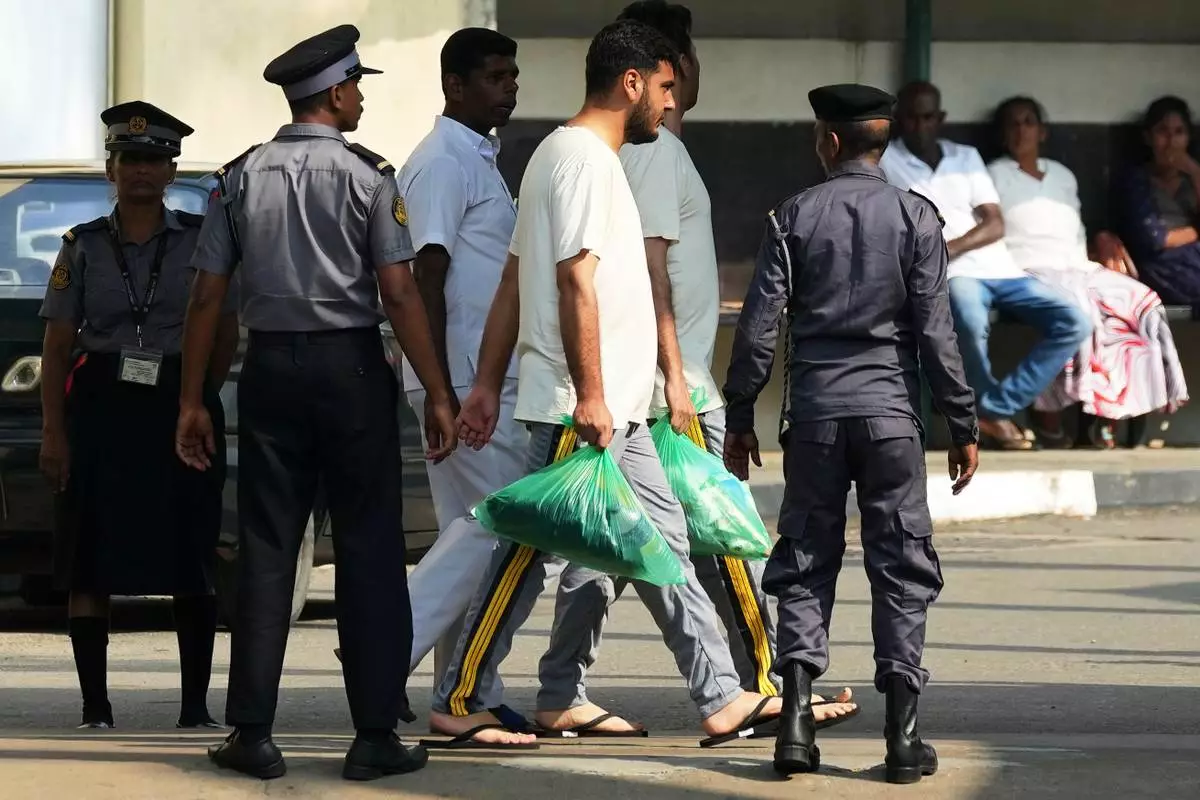
Two Iranian sailors, center, who were rescued from IRIS Dena warship by Sri Lanka's navy are escorted to a Judicial Medical Officer from the National Hospital, in Galle, Sri Lanka, Thursday, March 5, 2026. (AP Photo/Eranga Jayawardena)
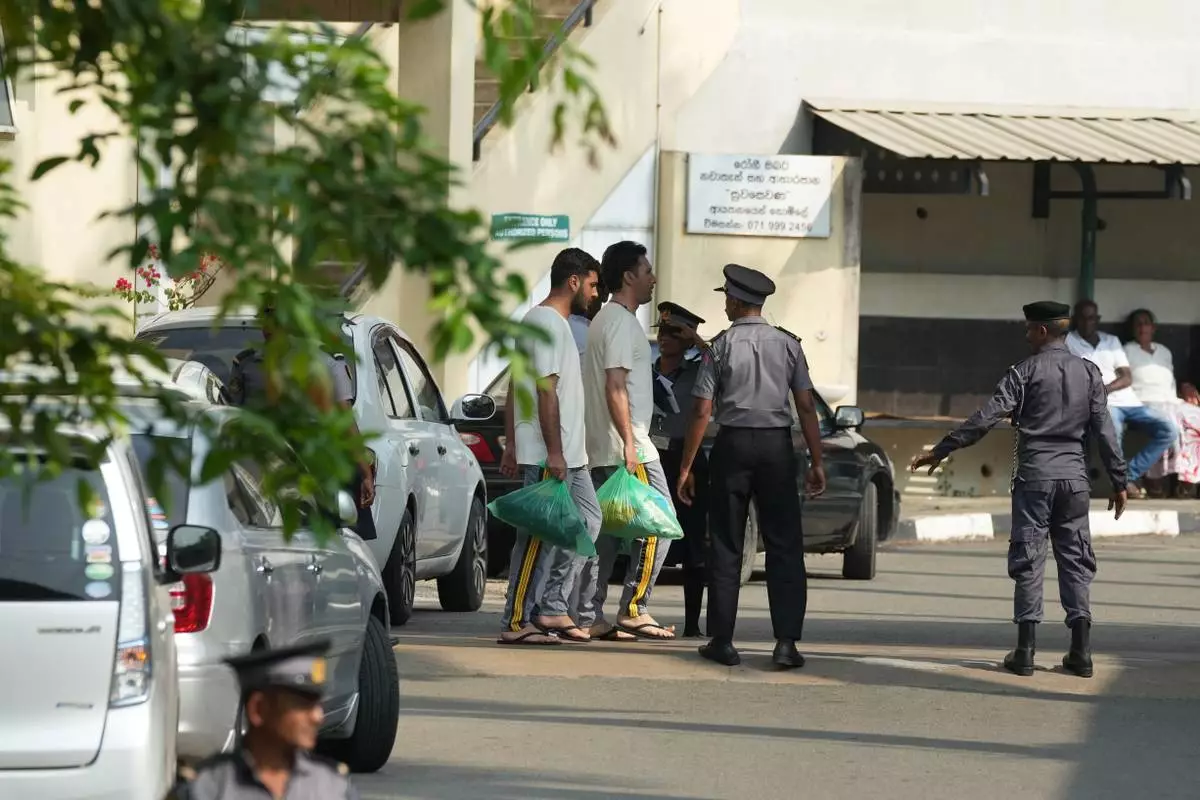
Two Iranian sailors, carrying green bags, who were rescued from IRIS Dena warship by Sri Lanka's navy are escorted to a Judicial Medical Officer from the National Hospital, in Galle, Sri Lanka, Thursday, March 5, 2026. (AP Photo/Eranga Jayawardena)
Kenneth Walker III is going back to Seattle with the undefeated Kansas City Chiefs to face the team he helped lead to the Super Bowl last season.
Walker, Patrick Mahomes and the Chiefs visit the Seahawks (3-3) on Sunday night.
Walker leads the NFL in rushing with 665 yards despite already taking a bye week while the Seattle has missed the Super Bowl MVP. The Seahawks are 18th in rushing and have averaged 3.9 yards per attempt.
Sam Darnold has seven interceptions in slightly more than four games and the Seahawks haven’t made up for Walker’s absence. But they have Jaxon Smith-Njigba, who leads the NFL with 717 receiving yards and seven touchdowns.
Walker has provided the Chiefs a balanced attack. They haven’t had a 1,000-yard rusher since Mahomes became the starter in 2018. Walker is on pace for 2,261 yards, which would set a single-season record.
Despite their struggles, the Seahawks are 2 ½-point favorites. Pro Picks likes the home team.
SEAHAWKS: 23-20
Line: Bears minus 3
Drake Maye has led the banged-up Patriots to three straight wins. A.J. Brown returned last week but dropped three passes. Caleb Williams was nearly flawless in his first game back, leading the Bears to 31 points. Chicago plays consecutive primetime games against last season's Super Bowl opponents, starting with the Thursday night matchup.
BEARS: 24-20
Line: Steelers minus 3
Aaron Rodgers led the Steelers back from a 13-point deficit in Tampa Bay, relying on DK Metcalf and rookie Germie Bernard. The Saints got their run game going in a win over the Giants. Both teams are spending the week in Paris before playing the NFL’s first regular-season game there. The Steelers have covered the spread four of the past five games.
STEELERS: 23-18
Line: Ravens minus 2 ½
Joe Burrow and the Bengals are coming off a bye. Their defense had a great start but has struggled against the run in the past three games. The Ravens still might not have Lamar Jackson so Tyler Huntley would start his third straight game. Baltimore is eighth in rushing and relying on Derrick Henry is a smart move if Jackson is out.
BENGALS: 22-17
Line: Browns minus 1 ½
Deshaun Watson led another fourth-quarter game-winning drive for the Browns, but the offense has struggled despite the team’s winning record. Tennessee’s offense is last in the NFL. The Titans beat the Colts for their first win, but Cam Ward had another rough outing.
UPSET SPECIAL: TITANS: 20-17
Line: Vikings minus 6 1/2
The Colts’ struggles cost general manager Chris Ballard his job. Coach Shane Steichen is clearly on the hottest of seats and the team has to find ways to win. The undefeated Vikings are coming off a bye. They’ve been winning on defense and special teams and need Kyler Murray to get the offense going.
VIKINGS: 23-18
Line: Jets minus 4 ½
The Jets haven’t won an AFC East game under coach Aaron Glenn, going 0-7. They have their best chance this week vs. Miami. The winless Dolphins are coming off a bye. QB Malik Willis has the worst passer rating (68.4) among starters.
JETS: 20-17
Line: Texans minus 10 ½
J.J. McCarthy is replacing Jameis Winston, who had a winning record after taking over for Jaxson Dart. McCarthy will face an underachieving defense stacked with talent. C.J. Stroud is playing great football for the Texans, who’ve won two in a row.
TEXANS: 26-17
Line: 49ers minus 3 ½
Christian McCaffrey vs. Bijan Robinson in a matchup of All-Pro backs who are close friends and train together. The undefeated 49ers keep winning despite losing key players because they have Brock Purdy. The Falcons lost two games to start the season, won two in a row and have now lost two straight. Atlanta is 3-2 ATS in past five games against San Francisco.
49ERS: 22-20
Line: Panthers minus 3 ½
Baker Mayfield is aiming to return for the Buccaneers, who have lost 12 of their past 15 games. The Bucs have played tough defense but their offense is among the bottom third. Bryce Young is playing his best football for the Panthers. He has 11 TDs and only two picks.
PANTHERS: 23-20
Line: Broncos minus 4 ½
Bo Nix is taking plenty of heat despite Denver’s winning record. Nix and the offense have to get on track. The Broncos have faced a tough schedule that doesn’t get easier after Arizona. The Cardinals beat the Rams on the road last week and have to carry that momentum into a difficult matchup.
BRONCOS: 24-16
Line: Lions minus 3
The Packers have won three in a row, the defense has been stout and Josh Jacobs is coming back to boost the offense with Micah Parsons working toward his return. The Lions have the league’s worst defense that’s sometimes offset by a prolific offense. This one should be a shootout.
LIONS: 30-26
Line: Rams minus 4 ½
The Rams haven’t played close to Super Bowl favorites. And, injuries are piling up with Davante Adams now going down for several weeks. But they still have Sean McVay, Matthew Stafford, Puka Nacua and Aaron Donald. The Raiders have lost three in a row but Kirk Cousins is playing well so hold off on Fernando Mendoza. A defense that’s allowed 30-plus points three straight games has been the problem.
BEST BET: RAMS: 31-20
Line: Cowboys minus 4 ½
The Cowboys have an opportunity in a wide-open NFC East, but have had issues on defense and now a dynamic offense has sputtered. The Eagles are reeling and won’t have Jalen Hurts likely for the rest of the season. Tanner McKee makes his second straight start for Philadelphia.
COWBOYS: 24-23
Last week: Straight up: 8-6. Against spread: 7-7.
Overall: Straight up: 55-37-1. Against spread: 45-45-2.
Best Bet: Straight up: 3-3. Against spread: 2-4.
Upset Special: Straight up: 2-4. Against spread: 2-4.
See AP’s full NFL coverage here
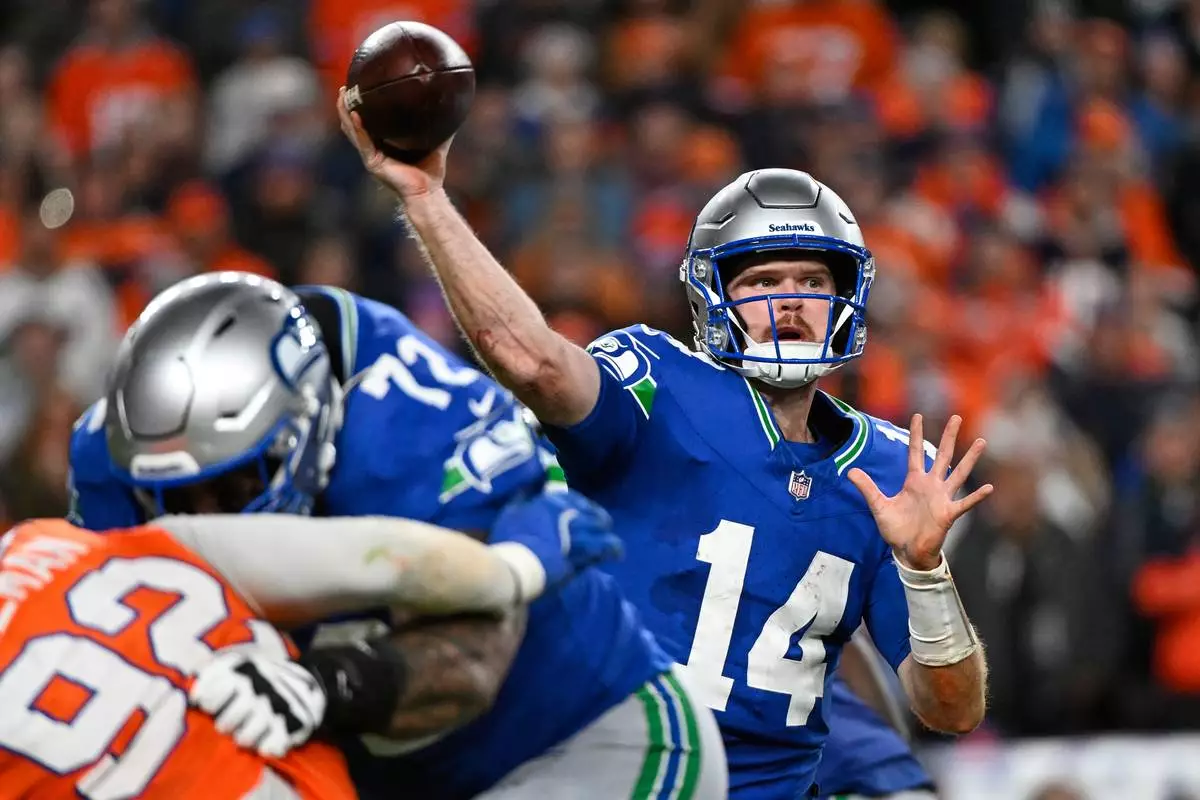
Seattle Seahawks quarterback Sam Darnold throws against the Denver Broncos during overtime in an NFL football game in Denver, Thursday, Oct. 15, 2026. (AP Photo/Geneva Heffernan)
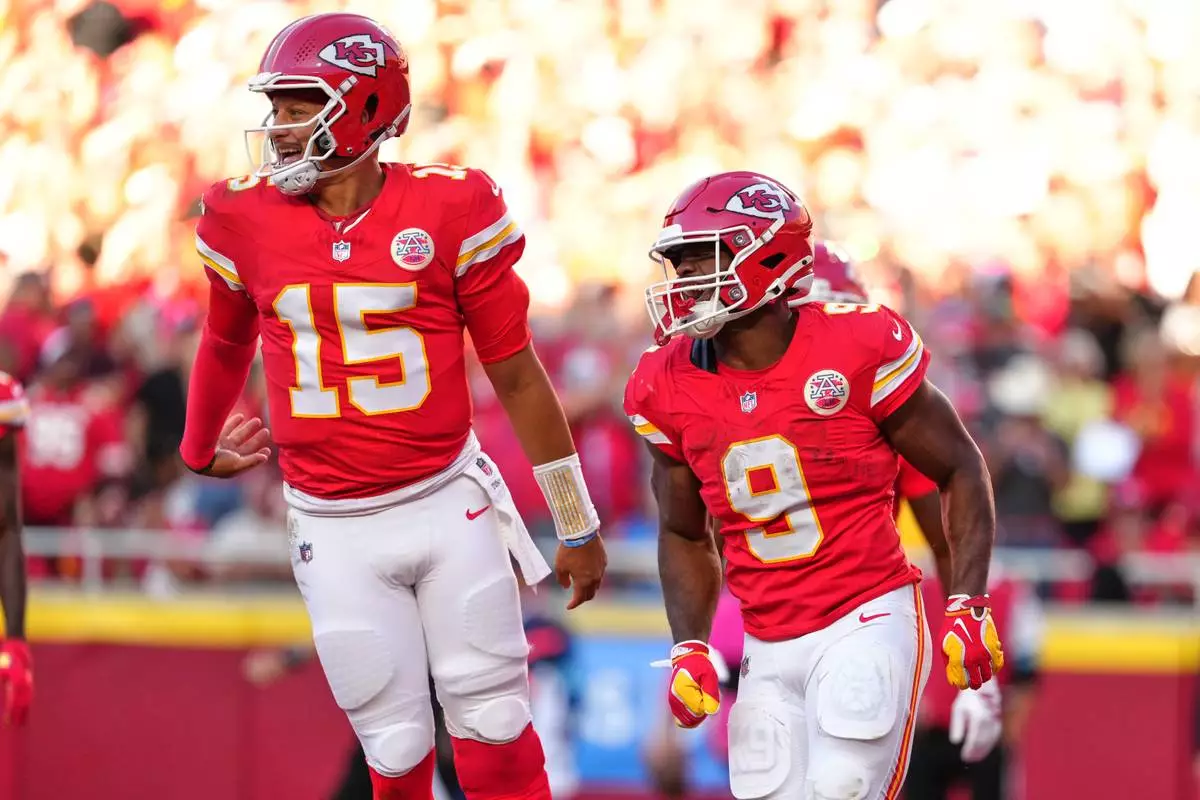
Kansas City Chiefs quarterback Patrick Mahomes (15) and Kenneth Walker III (9) celebrate a touchdown scored on a rushing play by Walker III during the first half of an NFL football game against the Los Angeles Chargers in Kansas City, Mo., Sunday, Oct. 18, 2026. (AP Photo/Ed Zurga)