Skip to Content Facebook Feature Image

Trump says 'whole educational system' could go out of business without fixes to college sports

News

Trump says 'whole educational system' could go out of business without fixes to college sports
News

News

Trump says 'whole educational system' could go out of business without fixes to college sports

2026-03-07 09:14 Last Updated At:09:20

President Donald Trump predicted the destruction not just of college sports but the entire U.S. collegiate system unless the industry is fixed quickly — something some sports leaders who joined him Friday at a White House summit agreed could only happen by raising more money to pay players.

Trump suggested he would write an “all-encompassing” executive order within a week in hopes it would spark action from Congress. He said he expected the order to trigger a lawsuit that could put the issue back in front of the court system that approved industry-changing payments to players for their name, image and likeness.

More Images
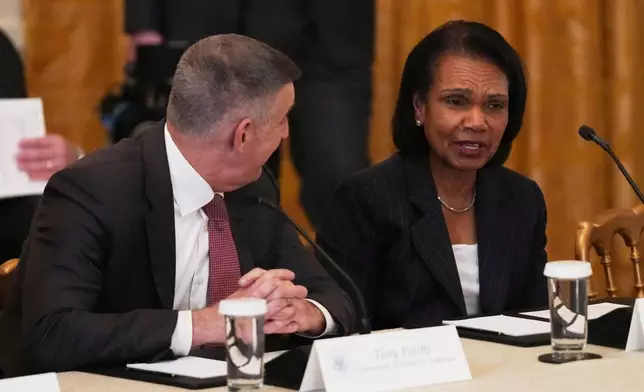
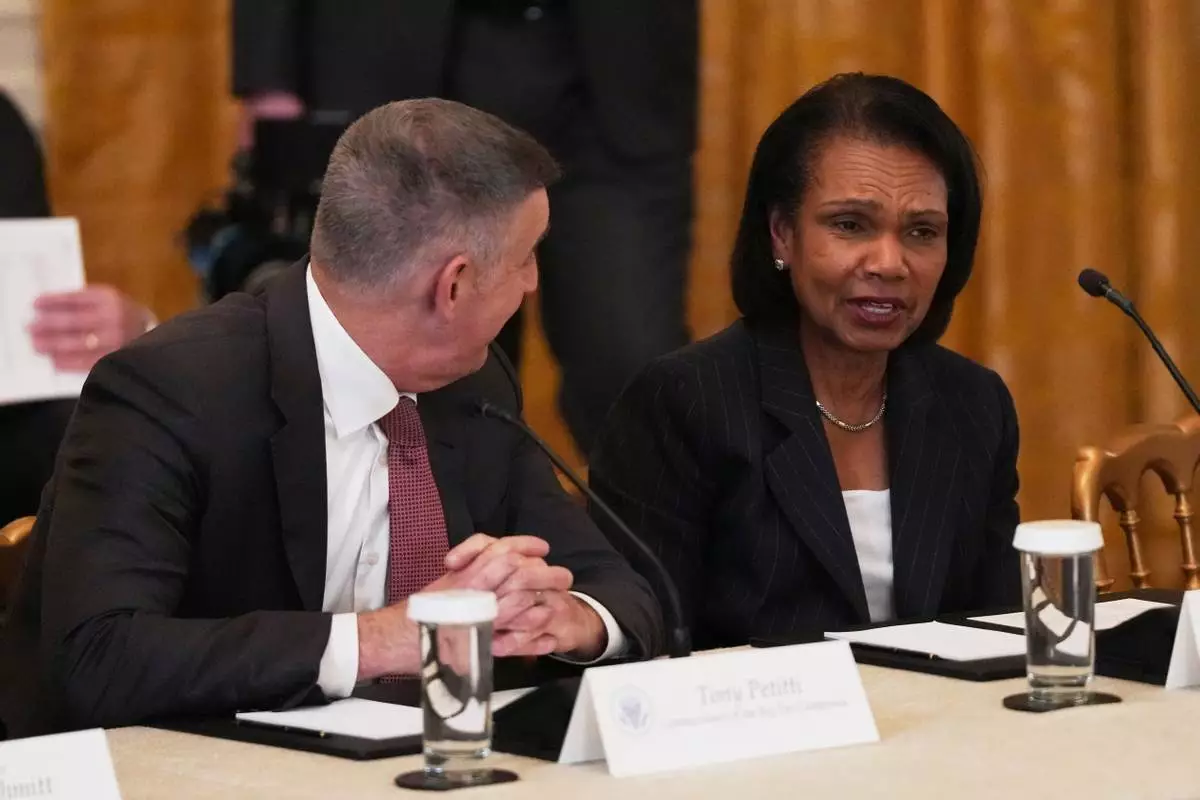
Big Ten Conference commissioner Tony Petitti, left, talks with former U.S. Secretary of State Condoleezza Rice before a roundtable discussion about college sports in the East Room of the White House, Friday, March 6, 2026, in Washington. (AP Photo/Julia Demaree Nikhinson)
Big Ten Conference commissioner Tony Petitti, left, talks with former U.S. Secretary of State Condoleezza Rice before a roundtable discussion about college sports in the East Room of the White House, Friday, March 6, 2026, in Washington. (AP Photo/Julia Demaree Nikhinson)
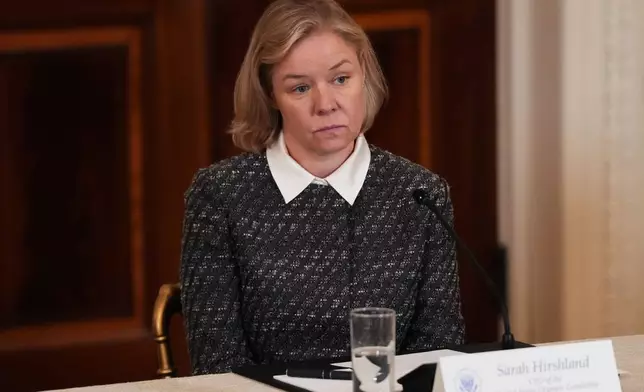
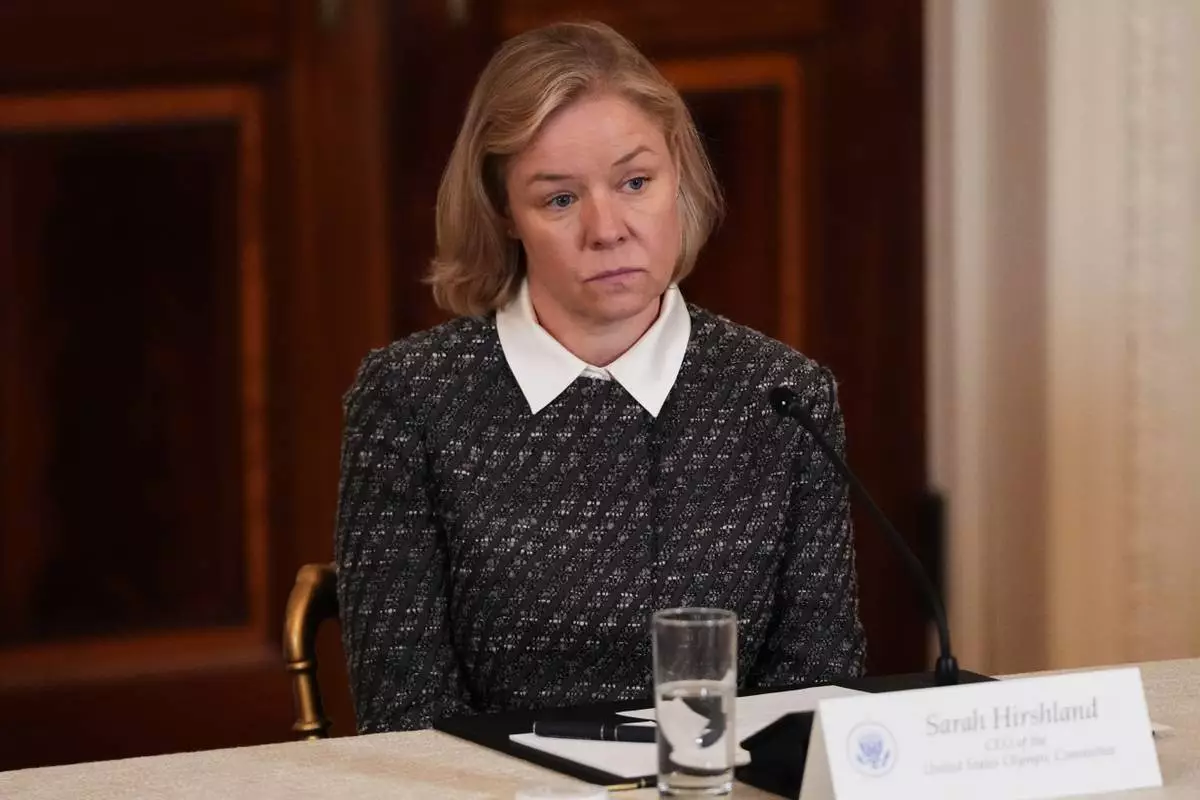
Chief Executive Officer of U.S. Olympic & Paralympic Committee Sarah Hirshland is seen during a roundtable discussion on college sports in the East Room of the White House, Friday, March 6, 2026, in Washington. (AP Photo/Julia Demaree Nikhinson)
Chief Executive Officer of U.S. Olympic & Paralympic Committee Sarah Hirshland is seen during a roundtable discussion on college sports in the East Room of the White House, Friday, March 6, 2026, in Washington. (AP Photo/Julia Demaree Nikhinson)
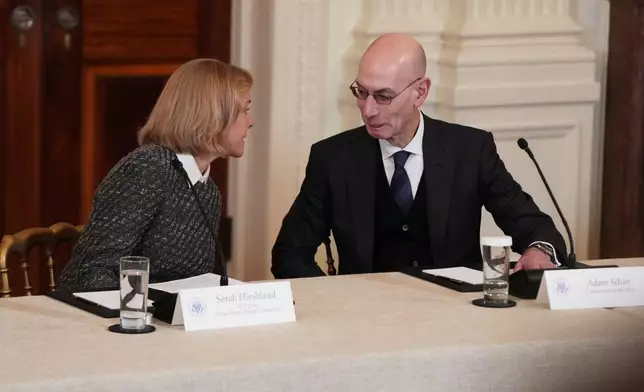
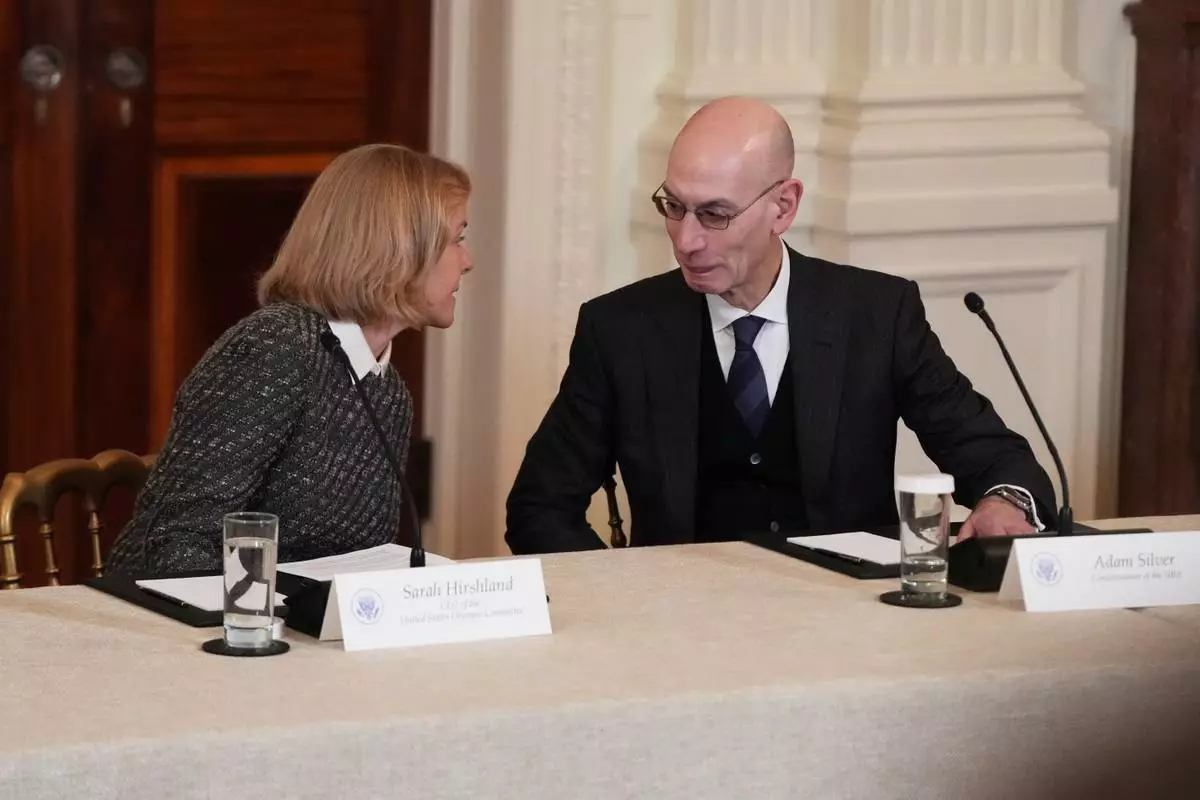
Chief Executive Officer of U.S. Olympic & Paralympic Committee Sarah Hirshland speaks with NBA commissioner Adam Silver before a roundtable discussion on college sports in the East Room of the White House, Friday, March 6, 2026, in Washington. (AP Photo/Julia Demaree Nikhinson)

Chief Executive Officer of U.S. Olympic & Paralympic Committee Sarah Hirshland speaks with NBA commissioner Adam Silver before a roundtable discussion on college sports in the East Room of the White House, Friday, March 6, 2026, in Washington. (AP Photo/Julia Demaree Nikhinson)

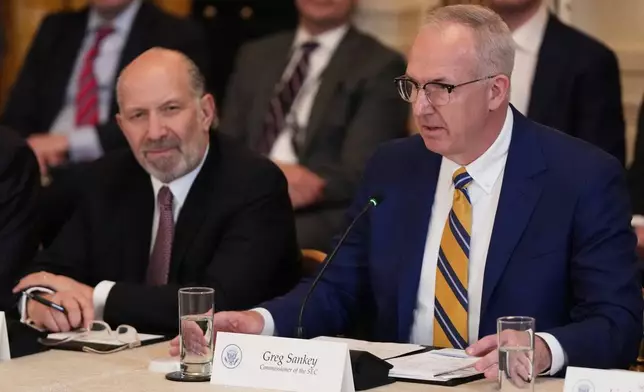
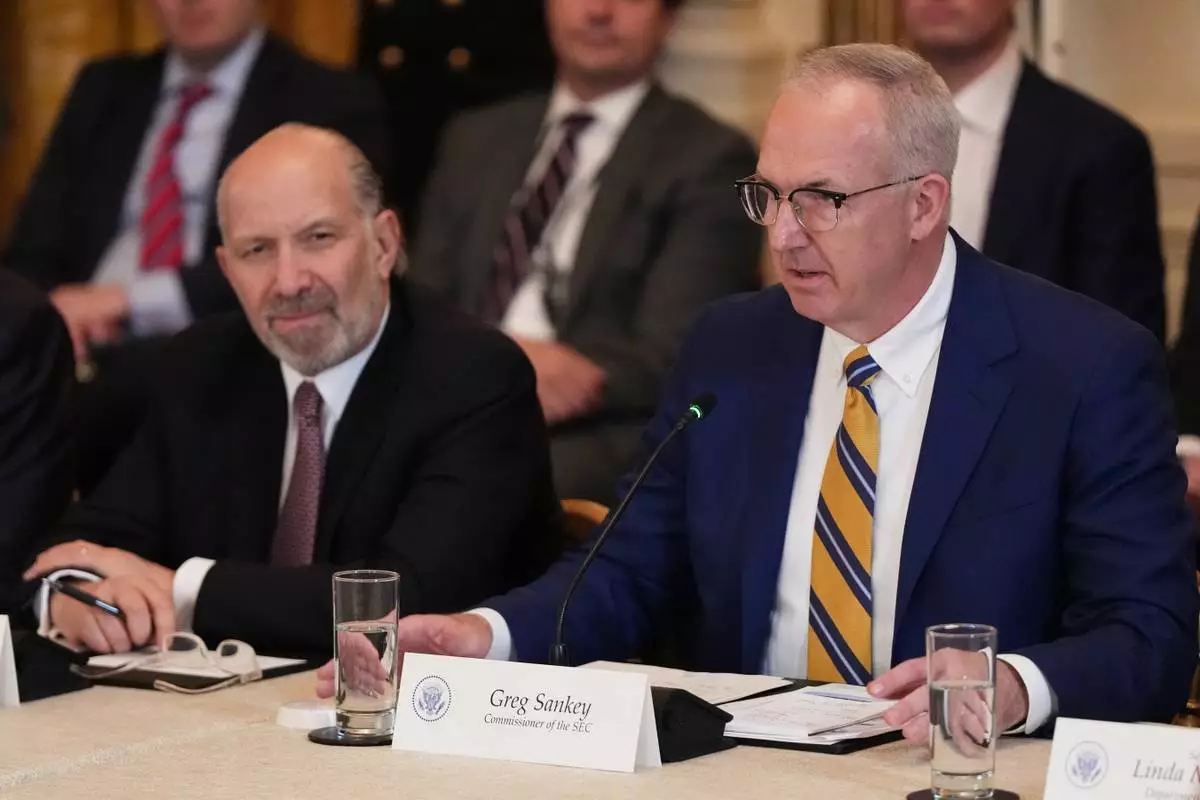
Commissioner of the Southeastern Conference Greg Sankey speaks during a roundtable discussion on college sports in the East Room of the White House, Friday, March 6, 2026, in Washington. (AP Photo/Julia Demaree Nikhinson)

Commissioner of the Southeastern Conference Greg Sankey speaks during a roundtable discussion on college sports in the East Room of the White House, Friday, March 6, 2026, in Washington. (AP Photo/Julia Demaree Nikhinson)

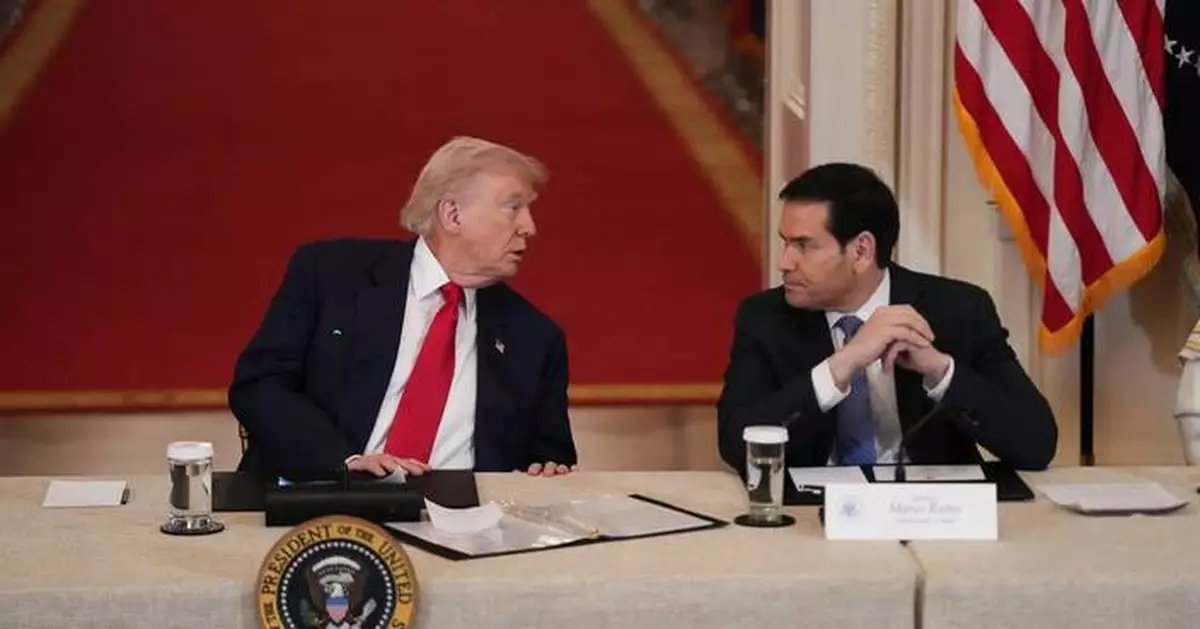
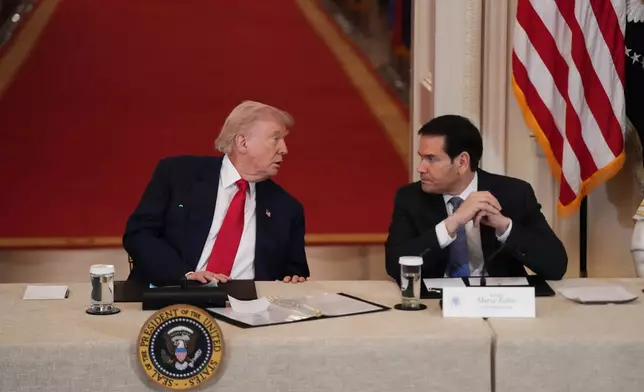
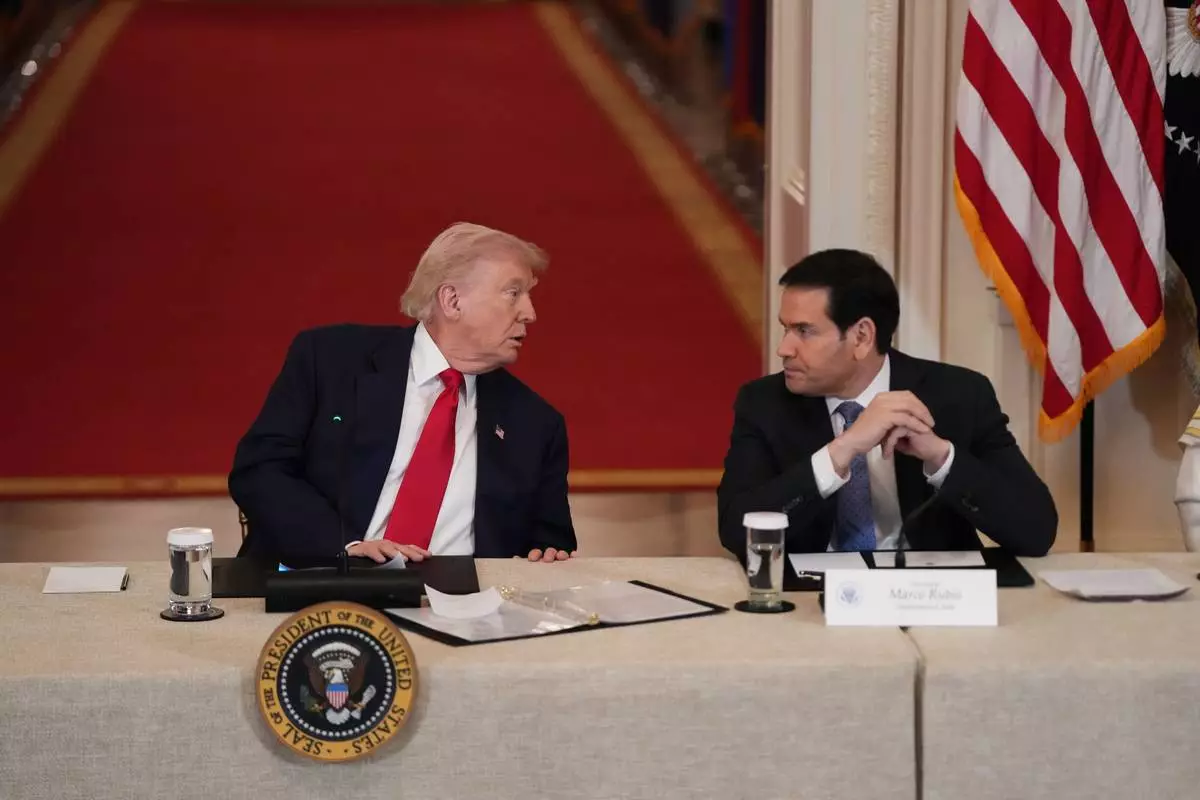
President Donald Trump speaks with Secretary of State Marco Rubio during a roundtable discussion on college sports in the East Room of the White House, Friday, March 6, 2026, in Washington. (AP Photo/Julia Demaree Nikhinson)

President Donald Trump speaks with Secretary of State Marco Rubio during a roundtable discussion on college sports in the East Room of the White House, Friday, March 6, 2026, in Washington. (AP Photo/Julia Demaree Nikhinson)

That new system has left many schools drowning in red ink, while rules governing their payments to players are only slowly taking hold.

“The whole educational system is going to go out of business because of this,” Trump explained, when asked why he was devoting time to college sports with the war in Iran and other issues dominating the headlines.

During the meeting in the East Room — which included lawmakers, conference commissioners, the president of the NCAA and CEO of the U.S. Olympic team but none of the NCAA's 550,000 college athletes — Trump said, “I thought the system of scholarships was great.” He was harkening to the recently ended era in which players received little to nothing beyond financial aid.

He said the “horrible” court settlement that led to the current system — a settlement that virtually everyone in the room agreed to — “threw the sports world and the college athletic world into ‘tithers.’”

Everyone at the meeting agreed that the industry needs to be saved from the spiraling costs associated with the onset of NIL payments.

They also mostly agreed that a bill called the SCORE Act that would provide the NCAA with a limited antitrust exemption (opposed by many Democrats) and would preempt state laws regarding NIL could be the base of any change. House Speaker Mike Johnson suggested the bill, which has struggled to get through the lower chamber, could now have enough support to pass.

An essay published earlier this week by the University of Louisville's president and athletic director went through an unflinching list of the way payments to players have recalibrated college sports and sent much of the industry spiraling into the red. It said Louisville’s athletic department is running a $12.5 million deficit and is hardly alone.

How to generate more revenue — and the wide differences that exist over how to fund the growth — received less attention at the White House meeting full of big-picture speeches about the perils facing college sports.

Shortly after the meeting, Sens. Eric Schmitt, R-Mo., and Maria Cantwell, D-Wash, reupped an idea that has been popular over the past several months. They plan to introduce a bill next week that would give conferences the option of pooling their media rights — a practice forbidden by the 1961 Sports Broadcasting Act.

“The revenue side is inextricably linked to the success of this,” Schmitt said. “I do think we can come together.”

Another key backer of that idea, Texas Tech regent Cody Campbell, was at the meeting and told Trump he would like to be part of a smaller working group that helps him draft his executive order.

Campbell has suggested pooling TV rights could raise another $6 billion, which could keep football, basketball and Olympic-sports programs solvent for decades. The Southeastern Conference and the Big Ten disagree with that conclusion.

Speaking to Trump, SEC commissioner Greg Sankey urged the Senate to act, but he wasn't focused on the broadcasting piece.

“This is not about revenue, this is about structures and national standards," he said before listing a number of issues the SCORE Act, as currently written, would address.

Sen. Ted Cruz, R-Texas, whose committee is key to getting a bill passed in the upper chamber, said lawmakers need to look at both the cost and revenues side in formulating a law.

“If we wait another year, wait another two years, the programs in your state are going away and the students in your state are losing their scholarships,” Cruz said. “It would be an absolute travesty if we let that happen.”

Trump repeatedly dogged U.S. District Judge Claudia Wilken — whom he called a “radical left judge” — for approving the so-called House settlement that put this system into play.

He seemed surprised that Wilken's decision — which was signed off on by the NCAA, the major conferences and the athletes themselves after a years-long legal process — had not been appealed.

He was also taken aback when told the Supreme Court in 2021, by a 9-0 ruling in a case called NCAA vs. Alston, had set things in motion to create the system now seen by many as in peril.

“So, the Supreme Court was responsible for this? Gee, that’s surprising,” Trump said.

But the president was crystal clear about the stakes involved in saving college sports.

He acknowledged that potentially the biggest losers in all this could be Olympic and women's sports, whose budgets in college athletic departments are funded via revenue generated by football and basketball programs across the country.

U.S. Olympic and Paralympic Committee CEO Sarah Hirshland told Trump the U.S. team has topped the medals table at eight of the last 10 Summer Olympics, largely on the strength of athletes developed in the college system.

“The economic pressures are unsustainable,” she said. “We've heard this several times and we know that Olympic-sport budgets inevitably rise to the top as the first to be cut. In some cases, it's women's sports, but also men's sports that could be eliminated. We must keep our eye on both."

AP sports: https://apnews.com/hub/sports
Big Ten Conference commissioner Tony Petitti, left, talks with former U.S. Secretary of State Condoleezza Rice before a roundtable discussion about college sports in the East Room of the White House, Friday, March 6, 2026, in Washington. (AP Photo/Julia Demaree Nikhinson)
Big Ten Conference commissioner Tony Petitti, left, talks with former U.S. Secretary of State Condoleezza Rice before a roundtable discussion about college sports in the East Room of the White House, Friday, March 6, 2026, in Washington. (AP Photo/Julia Demaree Nikhinson)
Chief Executive Officer of U.S. Olympic & Paralympic Committee Sarah Hirshland is seen during a roundtable discussion on college sports in the East Room of the White House, Friday, March 6, 2026, in Washington. (AP Photo/Julia Demaree Nikhinson)
Chief Executive Officer of U.S. Olympic & Paralympic Committee Sarah Hirshland is seen during a roundtable discussion on college sports in the East Room of the White House, Friday, March 6, 2026, in Washington. (AP Photo/Julia Demaree Nikhinson)
Chief Executive Officer of U.S. Olympic & Paralympic Committee Sarah Hirshland speaks with NBA commissioner Adam Silver before a roundtable discussion on college sports in the East Room of the White House, Friday, March 6, 2026, in Washington. (AP Photo/Julia Demaree Nikhinson)
Chief Executive Officer of U.S. Olympic & Paralympic Committee Sarah Hirshland speaks with NBA commissioner Adam Silver before a roundtable discussion on college sports in the East Room of the White House, Friday, March 6, 2026, in Washington. (AP Photo/Julia Demaree Nikhinson)
Commissioner of the Southeastern Conference Greg Sankey speaks during a roundtable discussion on college sports in the East Room of the White House, Friday, March 6, 2026, in Washington. (AP Photo/Julia Demaree Nikhinson)

Commissioner of the Southeastern Conference Greg Sankey speaks during a roundtable discussion on college sports in the East Room of the White House, Friday, March 6, 2026, in Washington. (AP Photo/Julia Demaree Nikhinson)
President Donald Trump speaks with Secretary of State Marco Rubio during a roundtable discussion on college sports in the East Room of the White House, Friday, March 6, 2026, in Washington. (AP Photo/Julia Demaree Nikhinson)
President Donald Trump speaks with Secretary of State Marco Rubio during a roundtable discussion on college sports in the East Room of the White House, Friday, March 6, 2026, in Washington. (AP Photo/Julia Demaree Nikhinson)

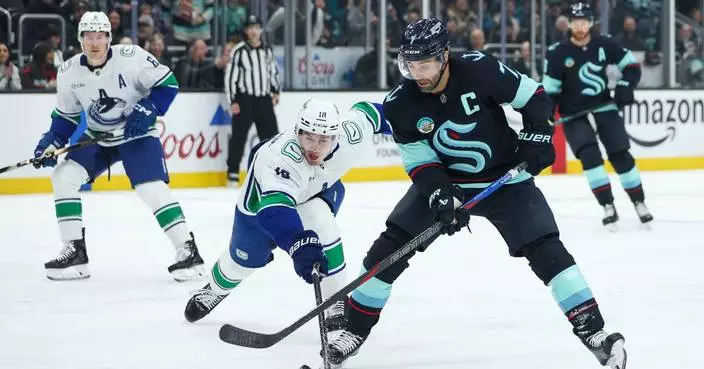
The NHL trade deadline showed that the race to succeed the Florida Panthers as Stanley Cup champions after they went back to back and fell short this season is wide open.

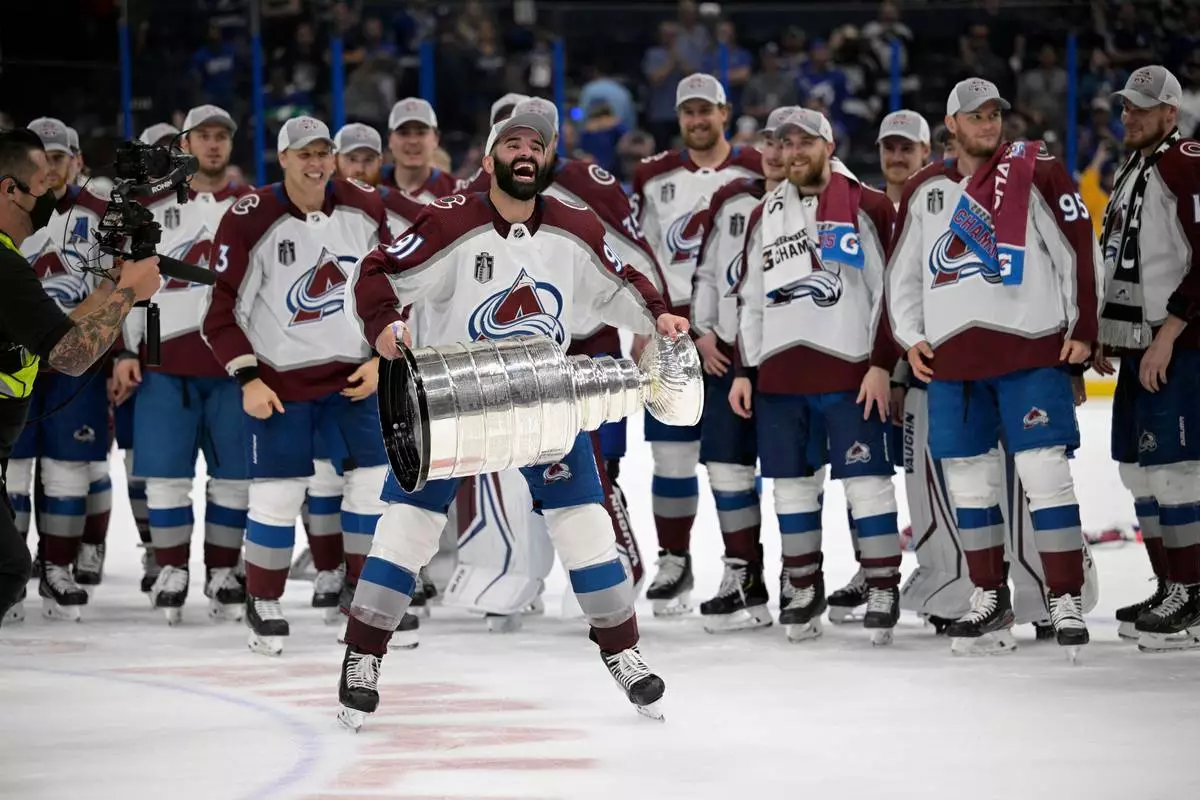
The Colorado Avalanche are rightfully the betting favorites, 5-2 on BetMGM Sportsbook, since they have been atop the league since October. Reacquiring center Nazem Kadri, who was part of their 2022 title run, while also shoring up forward and defensive depth only better positioned them for a deep playoff run.

But plenty of other contenders made trades to take a shot at hoisting hockey’s hallowed trophy, including the Central Division rival Dallas Stars and Minnesota Wild. The Eastern Conference-favorite Tampa Bay Lightning made a relatively minor addition but one that could help take them back to the final.

“There’s a lot of good hockey teams in the National Hockey League, and only one team is going to be happy at the end of it,” Avalanche general manager Chris MacFarland said. “We understand that has to happen on the ice. You can talk about it — the deadline, who wins this? Who wins that? None of it matters. It’s what happens on the ice.”

Colorado got Kadri from Calgary, at a reduced price because the Flames retained 20% of his $7 million salary, for forward Victor Olofsson, the rights to unsigned pick Max Curran, a conditional 2028 first-round pick and conditional 2027 second-rounder. The Avalanche even got a fourth-rounder with Kadri.

Dallas earlier this week fortified its defense by acquiring 6-foot-8 Tyler Myers from Vancouver, and filled a need up front by getting Michael Bunting from Nashville.

Minnesota's blockbuster move came back in December, winning the sweepstakes for Quinn Hughes. This week, Wild focused on adding depth with center Michael McCarron, forward Bobby Brink and defenseman Jeff Petry.

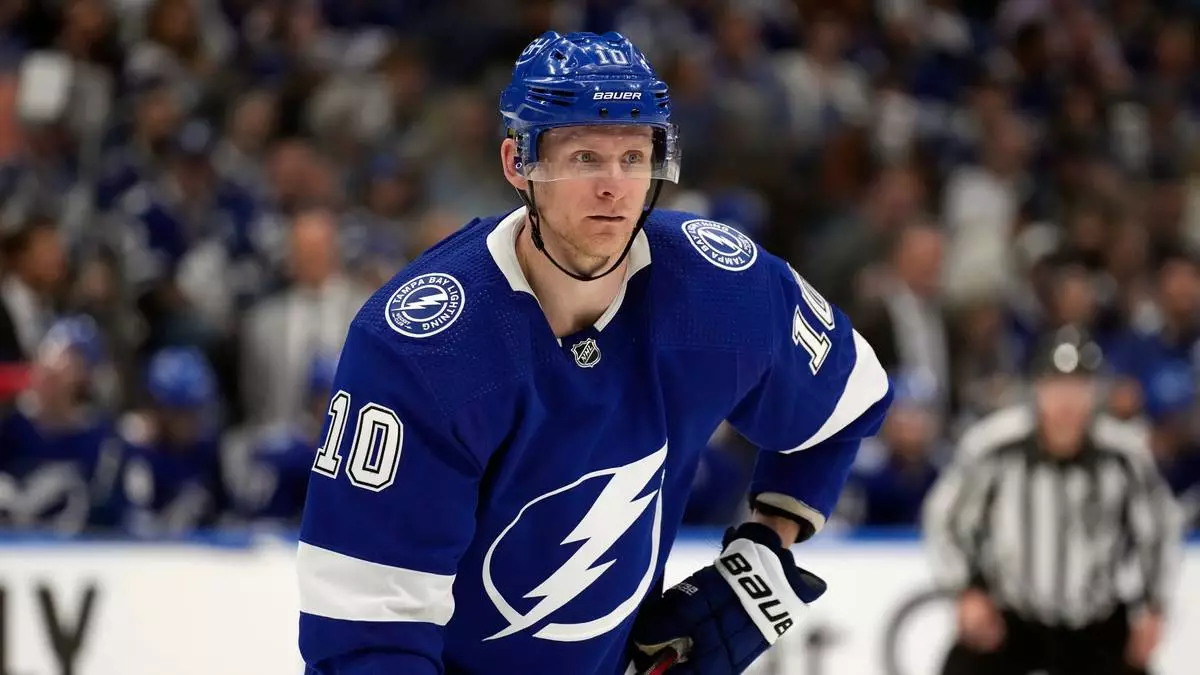
Tampa Bay got Corey Perry from Los Angeles, adding a winger with edge to a group brimming with talent. Carolina had skill and speed but lacked obvious toughness, so the Hurricanes sent a late, conditional draft pick to Philadelphia for modern-day enforcer Nicolas Deslauriers.

Vegas did its big-game shopping in January by landing defenseman Rasmus Andersson from Calgary. The Golden Knights would never bypass a deadline, though, and GM Kelly McCrimmon got shutdown center Nic Dowd from Washington.

Edmonton, which has made consecutive trips to the final and lost to Florida each time, made moves to try to keep the puck out of its own net. The Oilers paid a hefty price for forwards Jason Dickinson and Colton Dach and got defenseman Connor Murphy in a separate deal with Chicago.

The Buffalo Sabres came close to landing St. Louis forward Robert Thomas, in his prime at 26 and signed through 2031. They got even closer to adding big defenseman Colton Parayko, with a deal worked out with the Blues for him.

Neither happened.

“I don’t comment on unfinished business,” GM Jarmo Kekalainen said.

Parayko invoked his no-trade clause, nixing the trade. Kekalainen’s only regret in the trade falling through was how it might be perceived as a knock on Buffalo or the team, which is in position to snap an NHL-record 14-season playoff drought.

“Buffalo is a great city,” said Kekalainen, who arrived in Buffalo as a senior adviser in June and was promoted to GM when Kevyn Adams was fired in mid-December. “I’ve loved every second of it. We have a great hockey team that’s winning games and the fun atmosphere, electric building and I would think that our players are loving it here.”

The New York Rangers also held on to U.S. gold medal-winning center Vincent Trocheck, and Philadelphia did not trade Rasmus Ristolainen, who played defense at the Olympics for Finland. Those teams set asking prices high, and it was a seller's market in general.

“Sometimes, the ask for some of the elite players that were available, it wasn’t even a question that we’d do that as an organization because a year from now, it just wouldn’t make the organization any better,” Utah GM Bill Armstrong said.

Nick Foligno couldn’t help but think of his late mother, Janis, upon being traded to Minnesota on Friday to team up with his brother, Marcus, calling it a humbling move.

“Honestly, it feels like our mom’s got a little something to do with that, smiling down on us today," Foligno said, referring to their mother who died of breast cancer in 2009. "It’s something I don’t take for granted.”

While Nick and Marcus were reunited, another NHL brother tandem was involved in separate trades.

Luke Schenn went first, sent from Winnipeg to Buffalo early Friday morning. Younger brother Brayden went next, from St. Louis to the New York Islanders. Don't worry, they've gotten to experience what the Folignos are now: the Schenns played together with the Flyers for 3 1/2 seasons from 2012-16.

AP Sports Writers Pat Graham, Aaron Beard and Dan Gelston and AP freelance writer Denis Gorman contributed to this report.

AP NHL: https://apnews.com/NHL

FILE - Tampa Bay Lightning right wing Corey Perry (10) against the Toronto Maple Leafs during the second period in Game 4 of an NHL hockey Stanley Cup first-round playoff series, April 24, 2023, in Tampa, Fla. (AP Photo/Chris O'Meara, File)

FILE - Tampa Bay Lightning right wing Corey Perry (10) against the Toronto Maple Leafs during the second period in Game 4 of an NHL hockey Stanley Cup first-round playoff series, April 24, 2023, in Tampa, Fla. (AP Photo/Chris O'Meara, File)

FILE - Colorado Avalanche center Nazem Kadri (91) lifts the Stanley Cup after the team defeated the Tampa Bay Lightning in Game 6 of the NHL hockey Stanley Cup Finals, June 26, 2022, in Tampa, Fla. (AP Photo/Phelan M. Ebenhack, File)

FILE - Colorado Avalanche center Nazem Kadri (91) lifts the Stanley Cup after the team defeated the Tampa Bay Lightning in Game 6 of the NHL hockey Stanley Cup Finals, June 26, 2022, in Tampa, Fla. (AP Photo/Phelan M. Ebenhack, File)

Recommended Articles