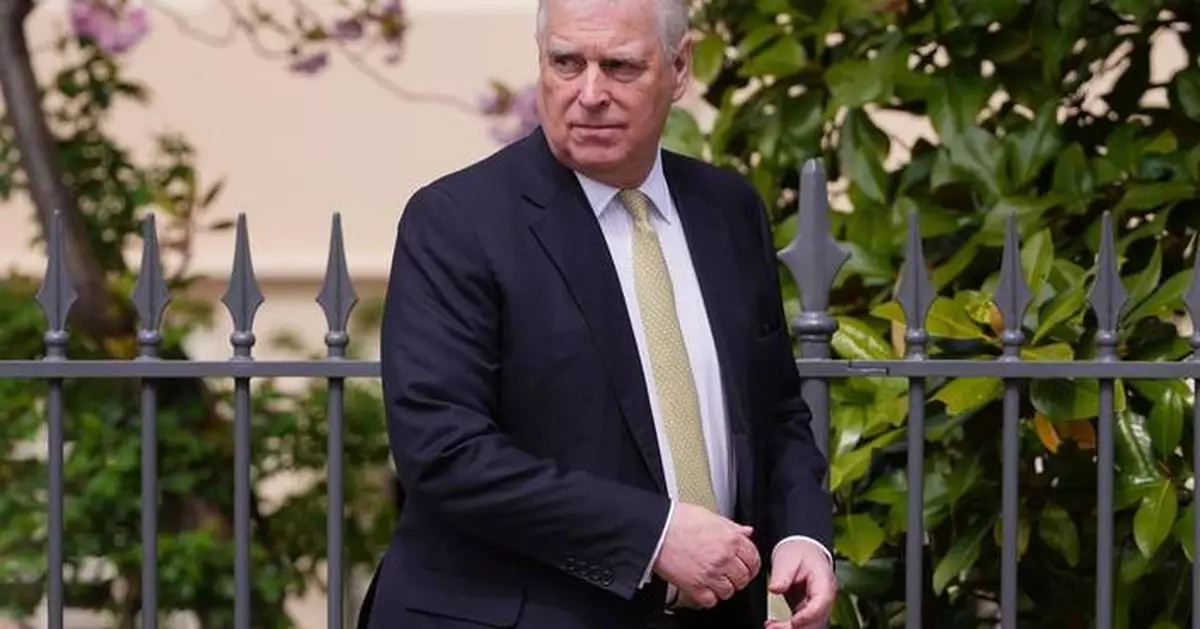
TOKYO (AP) — Canadian Prime Minister Mark Carney said Andrew Mountbatten-Windsor should be removed from the royal line of succession for his “deplorable” actions.
Speaking to reporters in Tokyo, Carney said the actions that have caused him to be stripped of his royal titles “necessitate” his removal from the line of succession.
Despite being stripped of his status as prince in October over his close links with the late convicted sex offender Jeffrey Epstein, the former Prince Andrew, King Charles III’s younger brother, remains eighth in line to become monarch.
King Charles III is the head of state in Canada, which is a member of the Commonwealth of former colonies.
Carney, a former governor of the Bank of England, said that even though Mountbatten-Windsor is “well down” the line of succession, the “point of principle stands.”
The prime minister said there is a process to remove someone from the line of succession, which he says should be followed.
Under the current line of royal succession, Charles’ son Prince William is heir to the throne and his three children — Prince George, Princess Charlotte and Prince Louis — are next.
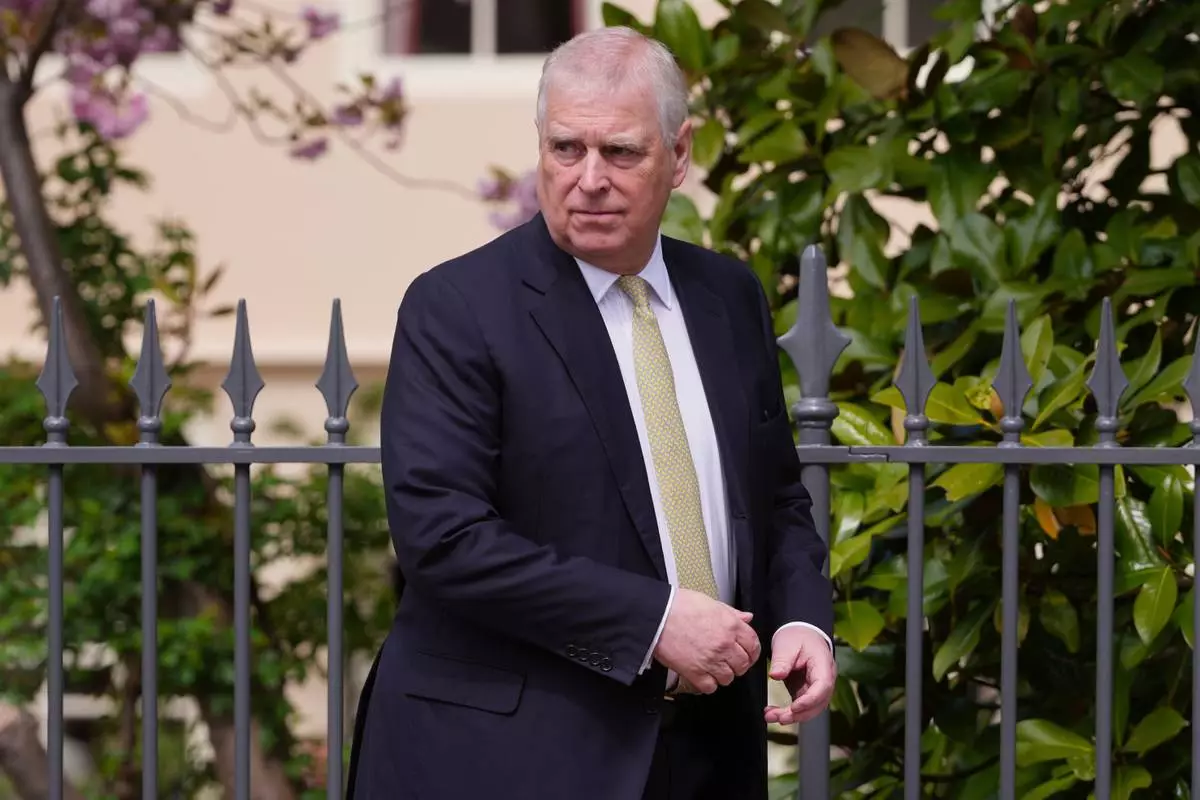
FILE - Britain's Andrew Mountbatten-Windsor, formerly known as Prince Andrew, looks round as he leaves after attending the Easter Matins Service at St. George's Chapel, Windsor Castle, England, April 20, 2025. (AP Photo/Kirsty Wigglesworth, File)
SEOUL, South Korea (AP) — A South Korean appeals court on Wednesday sentenced ousted President Yoon Suk Yeol to seven years in prison for resisting arrest and bypassing a legitimate Cabinet meeting before his brief imposition of martial law in December 2024.
The conviction for obstruction of justice and other charges comes on top of a life sentence he has already received on rebellion charges stemming from his baffling authoritarian push, which triggered the most serious crisis for the country’s democracy in decades.
Judge Yoon Sung-sik of the Seoul High Court said the conservative former president sidestepped a legally mandated full Cabinet meeting before declaring martial law, falsified documents to conceal the lapse, and deployed security officials “like a private army” to resist law enforcement efforts to arrest him in the weeks following his impeachment. Former President Yoon stood quietly as the verdict was delivered and made no comment.
A lower court in January sentenced Yoon to five years in prison but partially cleared him of abuse-of-power charges tied to the Cabinet meeting ahead of the martial law declaration, finding he was not responsible for the failure to attend of two members who were invited to attend.
The Seoul High Court reversed that acquittal, finding him guilty on all counts and ruling that he violated the rights of those two as well as seven other Cabinet members who weren’t notified by convening only a select few to simulate a formal meeting.
Though brief, Yoon’s Dec. 3, 2024 martial law decree threw the country into a severe political crisis, paralyzing politics and high-level diplomacy and rattling financial markets. The turmoil eased only after his liberal rival, Lee Jae Myung, won an early presidential election in June.
Yoon was suspended from office on Dec. 14, 2024 after being impeached by the liberal-led legislature and was formally removed by the Constitutional Court in April 2025.
Following his suspension from office, he refused to comply with a Seoul court's warrant to detain him for questioning, setting up a standoff in which dozens of investigators arrived at the presidential residence in early January 2025 but were blocked by presidential security forces and vehicle barricades. He was detained later that month, released by another court in March, and was then re-arrested in July.
He remained in custody after that as a series of criminal trials, which are continuing, began.
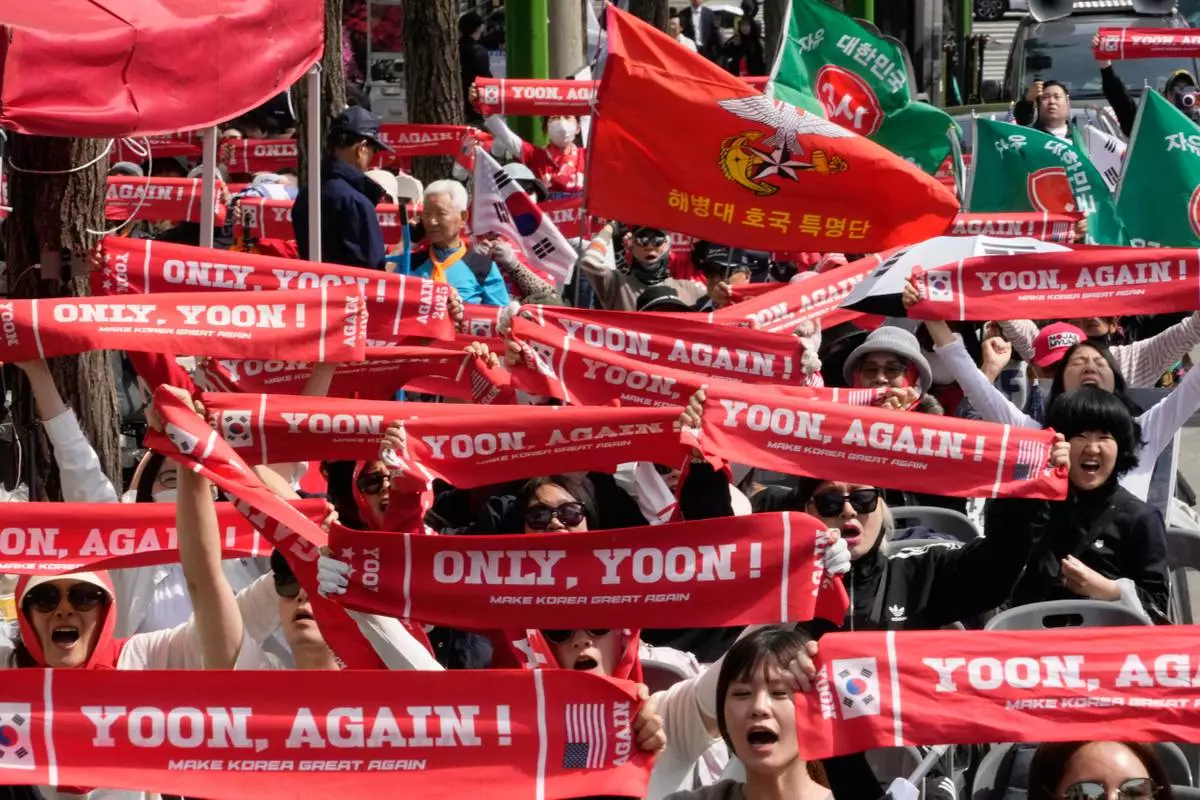
Supporters of former South Korean President Yoon Suk Yeol stage a rally outside of the Seoul High Court in Seoul, South Korea, Wednesday, April 29, 2026. (AP Photo/Ahn Young-joon)
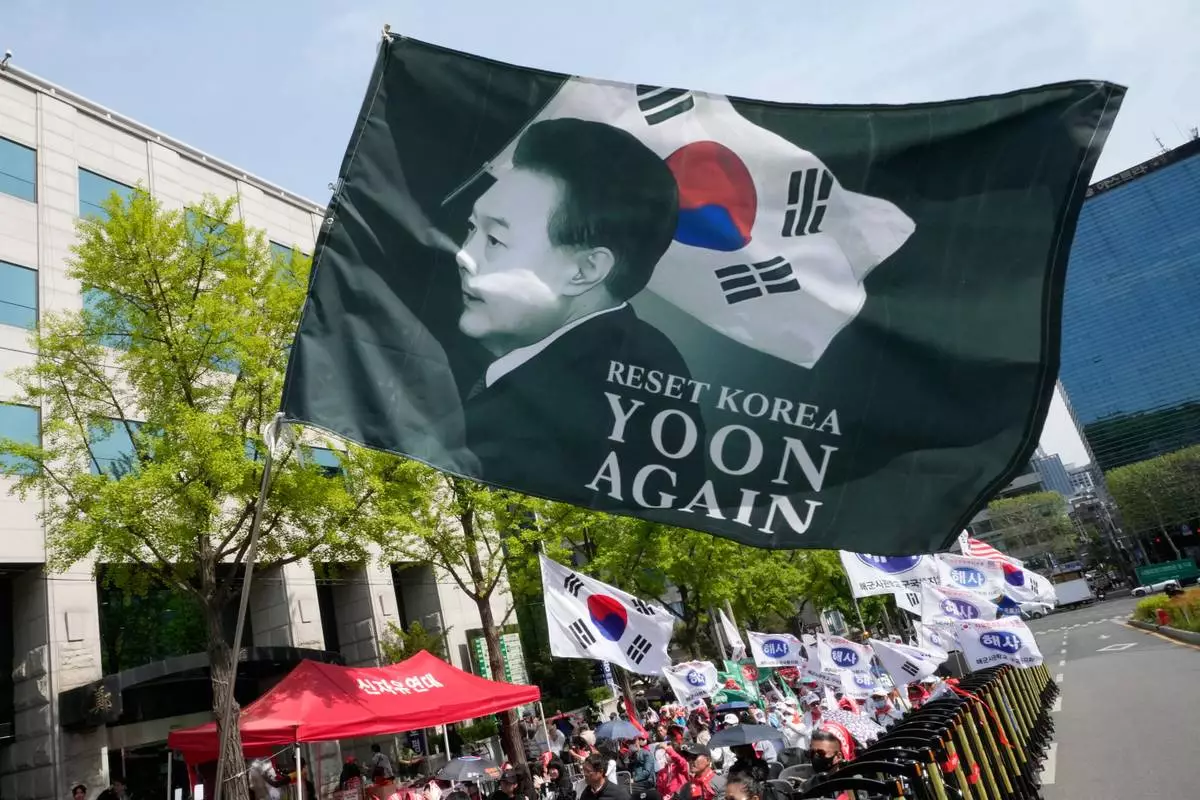
Supporters of former South Korean President Yoon Suk Yeol stage a rally outside of the Seoul High Court in Seoul, South Korea, Wednesday, April 29, 2026. (AP Photo/Ahn Young-joon)