SEOUL, South Korea (AP) — A South Korean appeals court on Wednesday sentenced ousted President Yoon Suk Yeol to seven years in prison for resisting arrest and bypassing a legitimate Cabinet meeting before his brief imposition of martial law in December 2024.
The conviction for obstruction of justice and other charges comes on top of a life sentence he has already received on rebellion charges stemming from his baffling authoritarian push, which triggered the most serious crisis for the country’s democracy in decades.
Click to Gallery
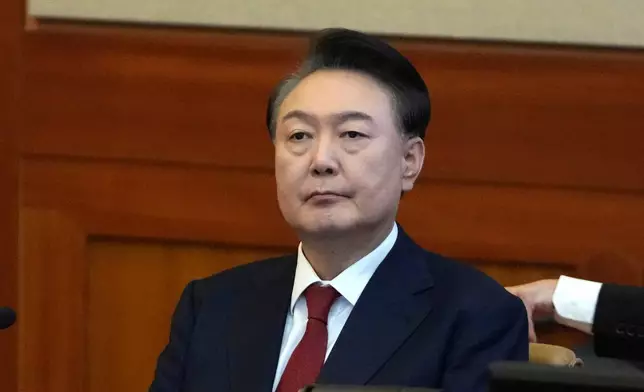
FILE - South Korea's impeached President Yoon Suk Yeol attends a hearing of his impeachment trial at the Constitutional Court in Seoul, South Korea, Feb. 11, 2025. (AP Photo/Lee Jin-man, Pool, File)
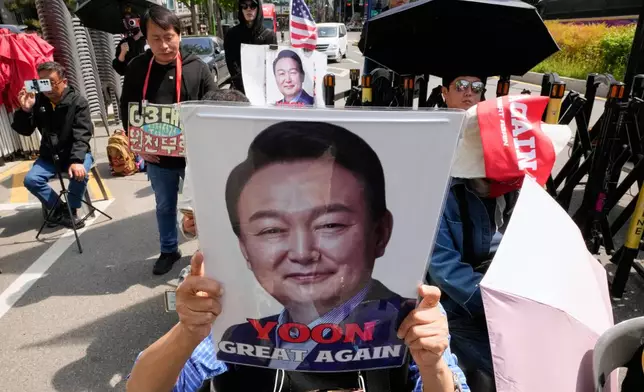
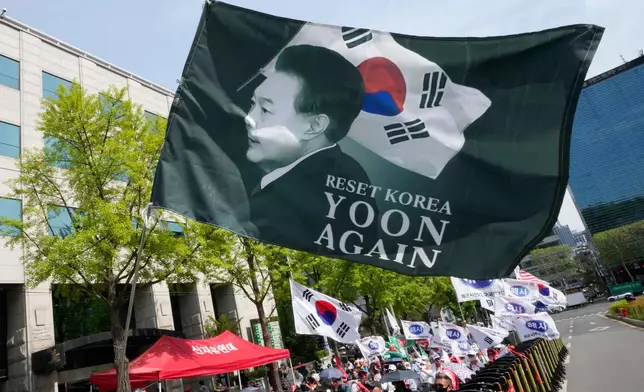
A supporter of former South Korean President Yoon Suk Yeol holds up his portrait during a rally outside of the Seoul High Court in Seoul, South Korea, Wednesday, April 29, 2026. (AP Photo/Ahn Young-joon)
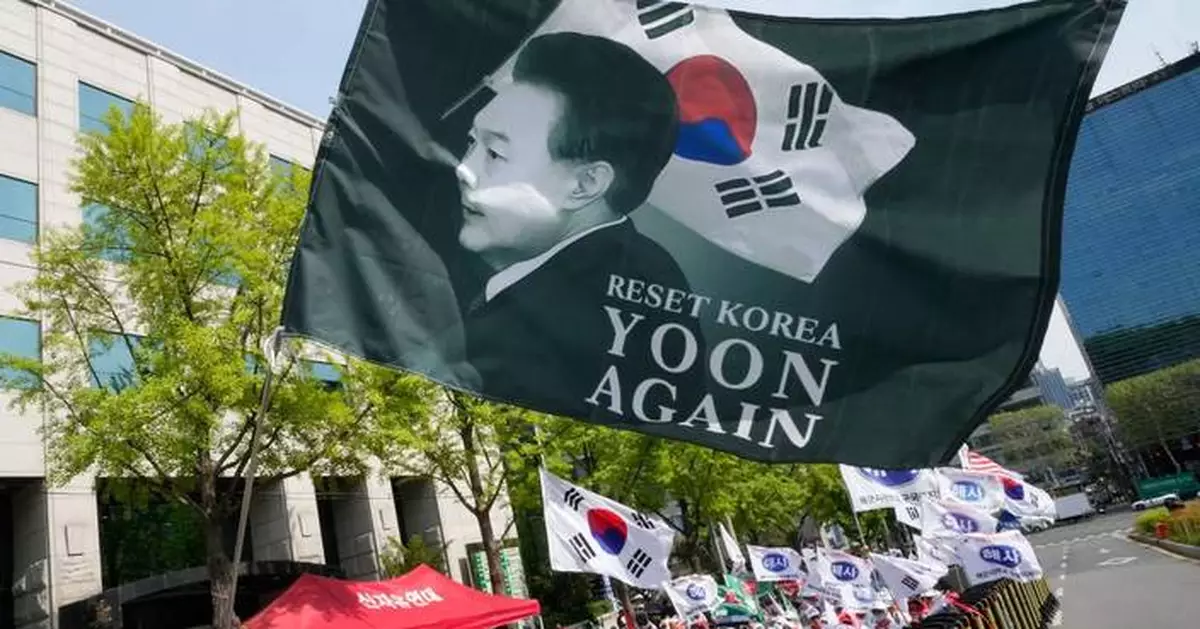
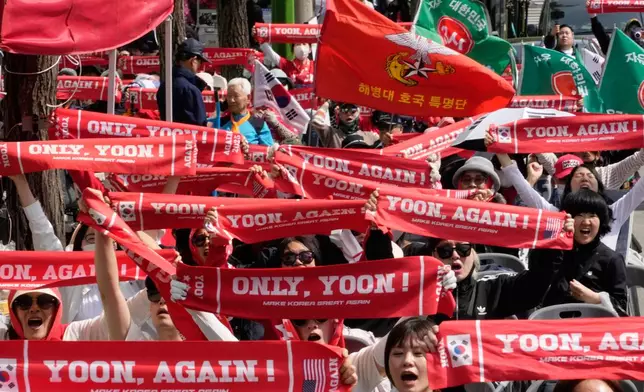
Supporters of former South Korean President Yoon Suk Yeol stage a rally outside of the Seoul High Court in Seoul, South Korea, Wednesday, April 29, 2026. (AP Photo/Ahn Young-joon)
Supporters of former South Korean President Yoon Suk Yeol stage a rally outside of the Seoul High Court in Seoul, South Korea, Wednesday, April 29, 2026. (AP Photo/Ahn Young-joon)
Judge Yoon Sung-sik of the Seoul High Court said the conservative former president sidestepped a legally mandated full Cabinet meeting before declaring martial law, falsified documents to conceal the lapse, and deployed security officials “like a private army” to resist law enforcement efforts to arrest him in the weeks following his impeachment. Former President Yoon stood quietly as the verdict was delivered and made no comment.
Yoo Jeong-hwa, one of Yoon’s lawyers, called the verdict “very disappointing” and said the legal team would appeal to the Supreme Court. Yoon has also appealed his life sentence.
A lower court in January sentenced Yoon to five years in prison but partially cleared him of abuse-of-power charges tied to the Cabinet meeting ahead of the martial law declaration, finding he was not responsible for the failure to attend of two members who were invited.
The Seoul High Court reversed that acquittal, finding him guilty on all counts and ruling that he violated the rights of those two as well as seven other Cabinet members who weren’t notified by convening only a select few to simulate a formal meeting.
Though brief, Yoon’s Dec. 3, 2024, martial law decree threw the country into a severe political crisis, paralyzing politics and high-level diplomacy and rattling financial markets. The turmoil eased only after his liberal rival, Lee Jae Myung, won an early presidential election in June.
Yoon was suspended from office on Dec. 14, 2024, after being impeached by the liberal-led legislature and was formally removed by the Constitutional Court in April 2025.
Following his suspension from office, he refused to comply with a Seoul court's warrant to detain him for questioning, setting up a standoff in which dozens of investigators arrived at the presidential residence in early January 2025 but were blocked by presidential security forces and vehicle barricades. He was detained later that month, released by another court in March, and was then re-arrested in July.
He remained in custody after that as a series of criminal trials, which are continuing, began.
Wednesday’s ruling came a day after the same court increased to four years the sentence of Yoon’s wife, Kim Keon Hee, for charges including accepting luxury gifts from the Unification Church, which sought political favors from Yoon’s government, and involvement in a stock price manipulation scheme.
Prosecutors in a separate trial last week also requested a 30-year prison term for Yoon over allegations that he deliberately tried to escalate tensions with North Korea in 2024 by ordering drone flights over Pyongyang as he sought to create justifiable conditions for martial law at home.
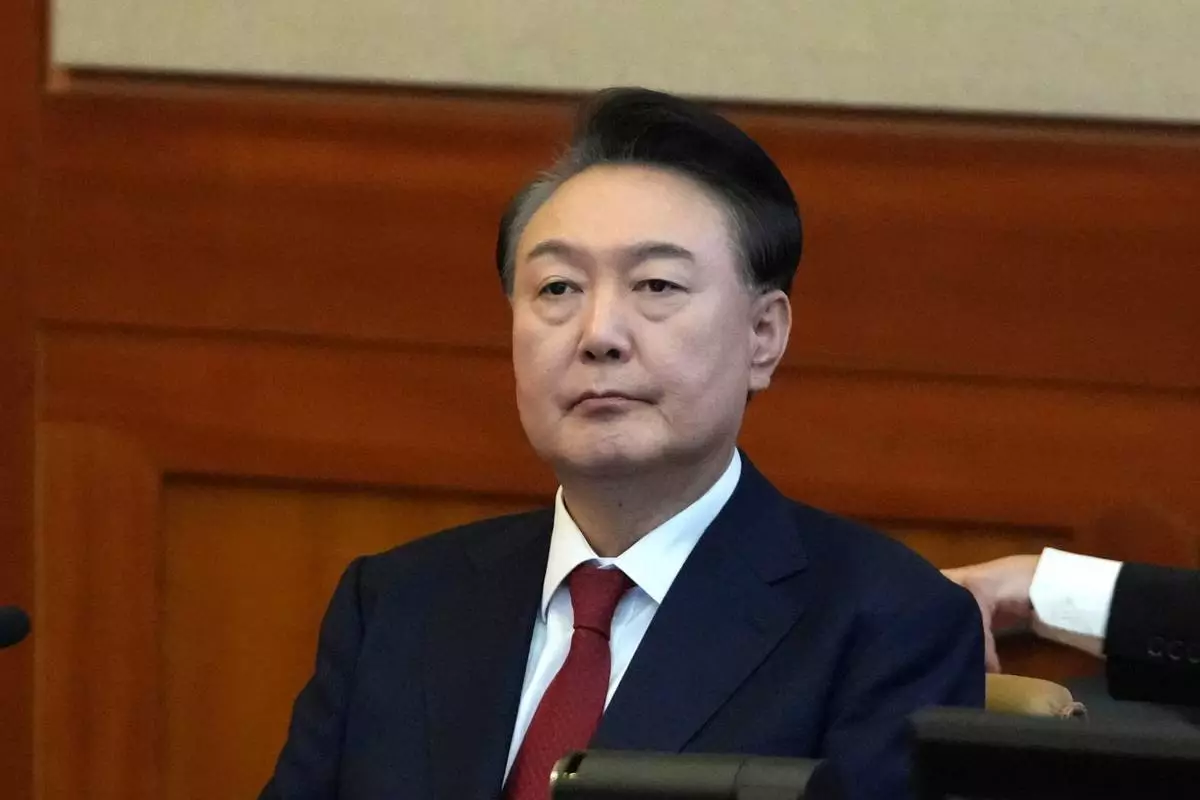
FILE - South Korea's impeached President Yoon Suk Yeol attends a hearing of his impeachment trial at the Constitutional Court in Seoul, South Korea, Feb. 11, 2025. (AP Photo/Lee Jin-man, Pool, File)
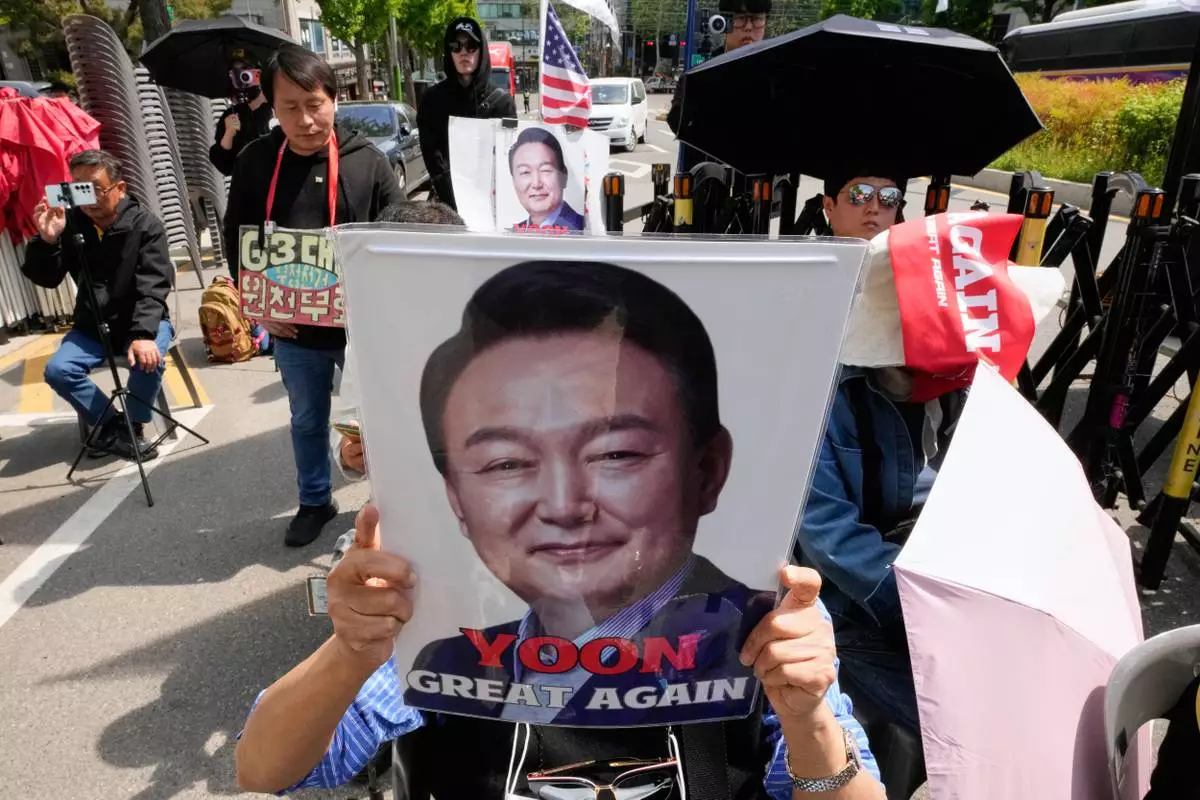
A supporter of former South Korean President Yoon Suk Yeol holds up his portrait during a rally outside of the Seoul High Court in Seoul, South Korea, Wednesday, April 29, 2026. (AP Photo/Ahn Young-joon)
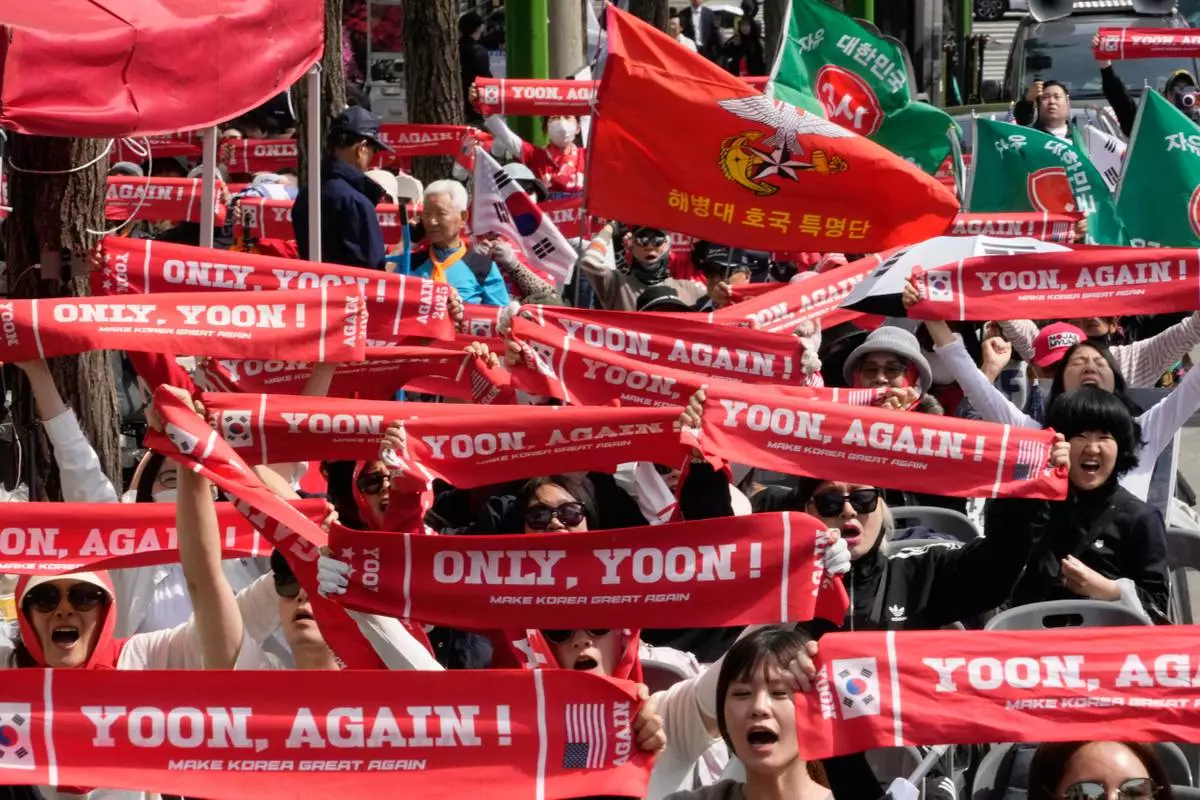
Supporters of former South Korean President Yoon Suk Yeol stage a rally outside of the Seoul High Court in Seoul, South Korea, Wednesday, April 29, 2026. (AP Photo/Ahn Young-joon)
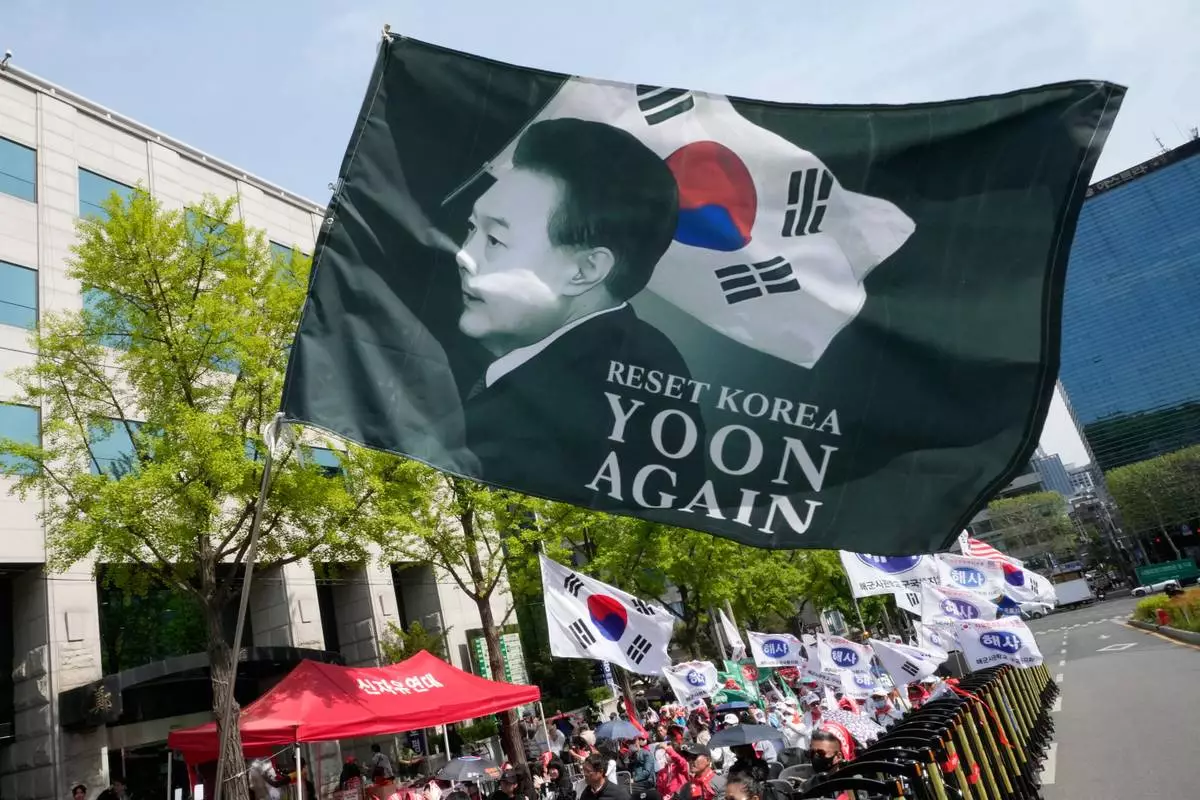
Supporters of former South Korean President Yoon Suk Yeol stage a rally outside of the Seoul High Court in Seoul, South Korea, Wednesday, April 29, 2026. (AP Photo/Ahn Young-joon)
JAKARTA, Indonesia (AP) — A trial opened in a military court on Wednesday for four Indonesian service members accused of carrying out an acid attack on a prominent human rights activist, in a case that has reignited concerns about military impunity.
Three Indonesian navy marines and one air force officer, all assigned to the intelligence agency of the Indonesian National Armed Forces, or TNI, are charged with serious premeditated assault in the March attack on Andrie Yunus, a human rights lawyer and senior activist with the Commission for the Disappeared and Victims of Violence, known as KontraS, who suffered severe injuries.
Those on trial in Jakarta are Sgt. Edi Sudarko, First Lt. Budhi Hariyanto Widhi Cahyono, Capt. Nandala Dwi Prasetya, and Air Force First Lt. Sami Lakka. The charges carry a sentence of up to 12 years in prison if convicted.
Prosecutors allege the four men acted together but described the motive as personal. They said the defendants attacked Yunus with acid “to teach him a lesson and deter him from making disparaging remarks about the TNI.”
“The actions of the defendants who threw chemical liquid on Andrie Yunus, resulting in the loss of sight in his right eye and severe burns with no hope of complete recovery, were inappropriate actions for members of the TNI,” military prosecutor Mohammad Iswandi told the court.
Human rights groups criticized the personal‑motive narrative and the decision to try the case in a military court instead of a civilian one.
“This case has been narrowed to just four individuals, without transparency, while the motive is framed as personal,” said Usman Hamid, executive director of A mnesty International Indonesia. He said there was no clear personal or professional relationship between Yunus and the accused, and alleged that official military assets were used in the attack.
“It is difficult to accept that state facilities were used solely for personal revenge,” Hamid said, warning the handling of the case risks undermining public trust.
After prosecutors finished reading the indictment, the defendants — two of whom also sustained minor facial and eye injuries from acid splashes during the attack — did not file objections to the charges.
Yunus, 27, was riding his motorcycle in central Jakarta on the evening of March 12 when assailants hurled a vial of hydrochloric acid at his face. Prosecutors said he suffered chemical burns to about 20% of his body and damage to roughly 40% of his right cornea.
Jakarta police initially handled the investigation before announcing that members of the Indonesian military were implicated in the attack. Six days later, military police arrested four suspects from the TNI’s Strategic Intelligence Agency.
The victim has undergone several surgeries and remains in recovery, which prevented him from attending the trial's opening, Iswandi said when asked by the three-judge panel about Yunus’ absence.
“It should be noted that as a citizen, Andrie Yunus is obliged to appear in this court, so we can ascertain his actual condition,” Presiding judge Fredy Isnartanto responded, “If not, I have the authority to compel his appearance.”
The judge adjourned the hearing to May 6, when the court will hear from witnesses.
Yunus is recognized for his advocacy against impunity in Indonesia, and his work on security sector reform and civil liberties. He was active in protests last year opposing proposed revisions to Indonesia’s military law that would expand the armed forces’ role in civilian affairs. Colleagues say he has faced repeated intimidation linked to that work.
The case has drawn comparisons to the 2004 murder of Munir Said Thalib, a leading human rights activist and founder of KontraS who was poisoned with arsenic on a flight to Amsterdam. Although several people were convicted, activists argue the mastermind was never fully revealed.
Mounting calls from civil society groups to reveal who ordered and financed the attack on Yunus prompted a response from President Prabowo Subianto, a former army general.
Prabowo has pledged to pursue those responsible and said he is considering an independent fact‑finding team. Rights groups say the Yunus trial will test the military’s post‑reform commitment to accountability.
Indonesia’s military formally withdrew from politics after the fall of dictator Suharto in 1998, leading to reforms aimed at strengthening civilian oversight.
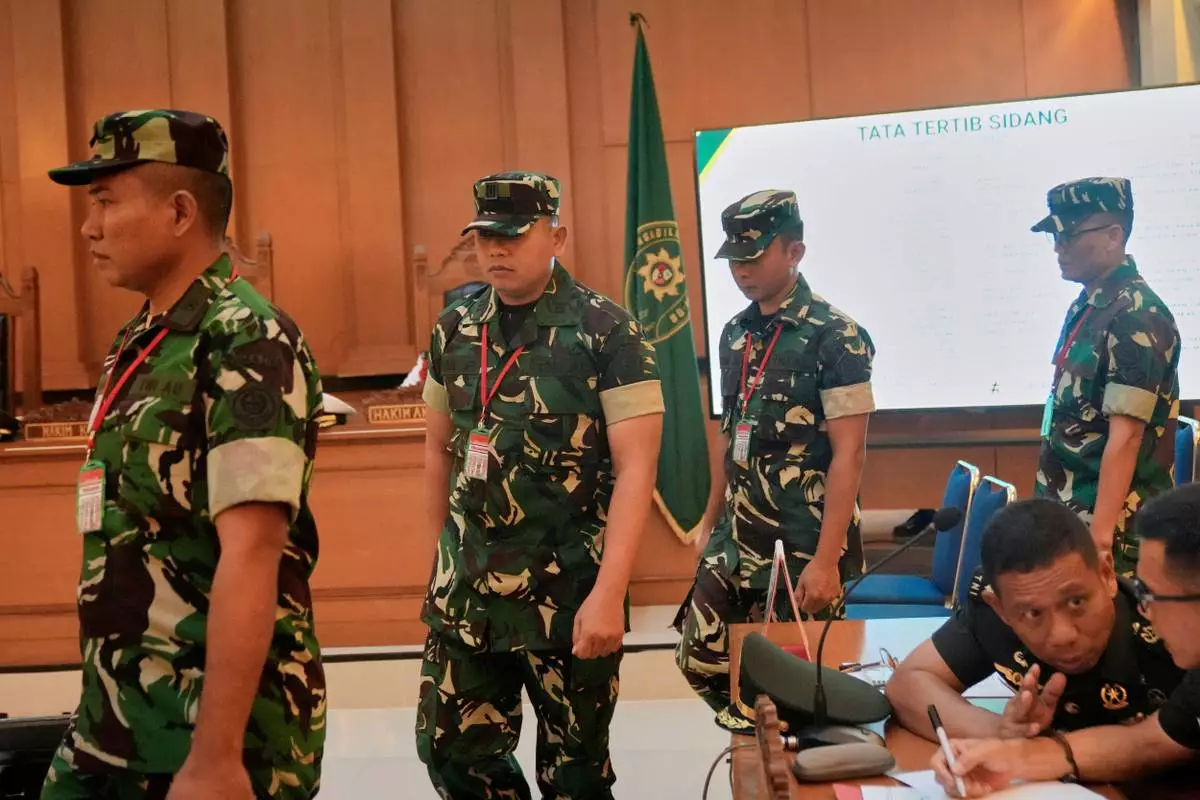
Indonesian military personnel, from left, Sami Lakka, Nandala Dwi Prasetya, Budhi Hariyanto Widhi Cahyono, and Edi Sudarko, accused of carrying out an acid attack on human right activist Andrie Yunus attend a trial at a military court in Jakarta, Indonesia, Wednesday, April 29, 2026. (AP Photo/Tatan Syuflana)
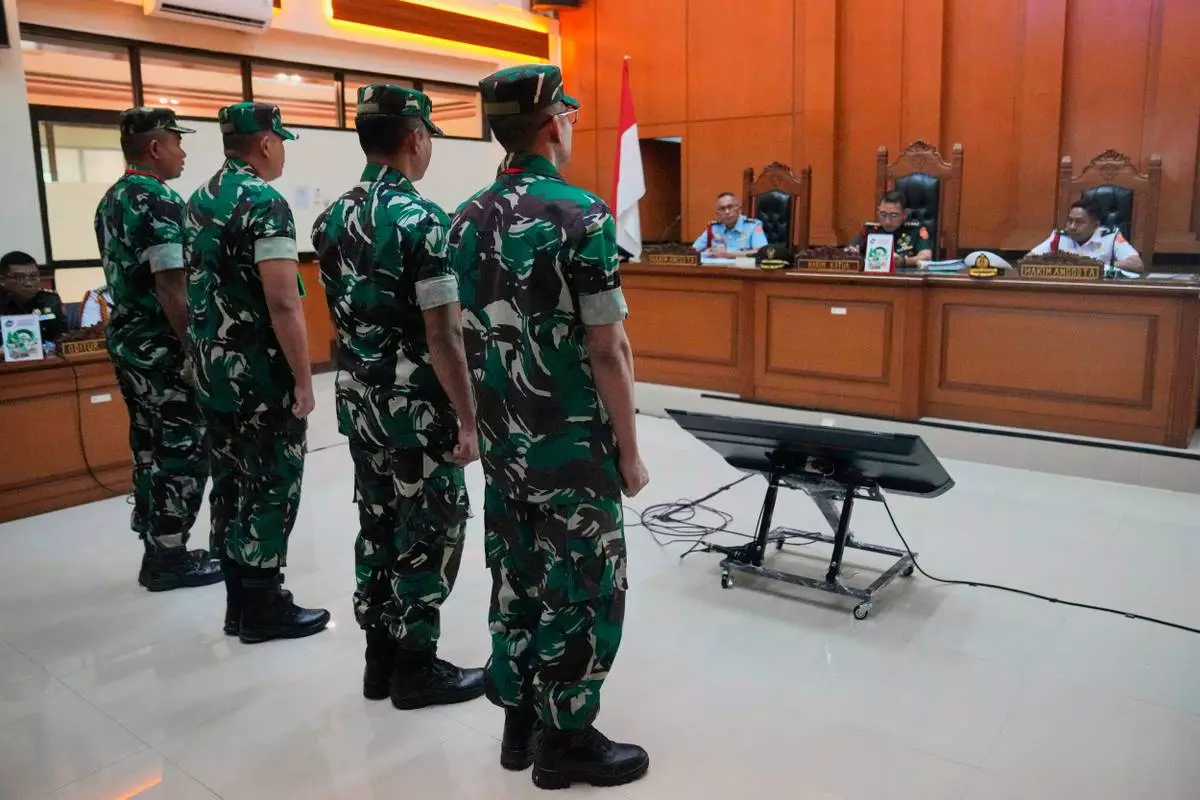
Indonesian military personnel, from left, Sami Lakka, Nandala Dwi Prasetya, Budhi Hariyanto Widhi Cahyono, and Edi Sudarko, accused of carrying out an acid attack on human right activist Andrie Yunus, stand in attention during their trial at a military court in Jakarta, Indonesia, Wednesday, April 29, 2026. (AP Photo/Tatan Syuflana)
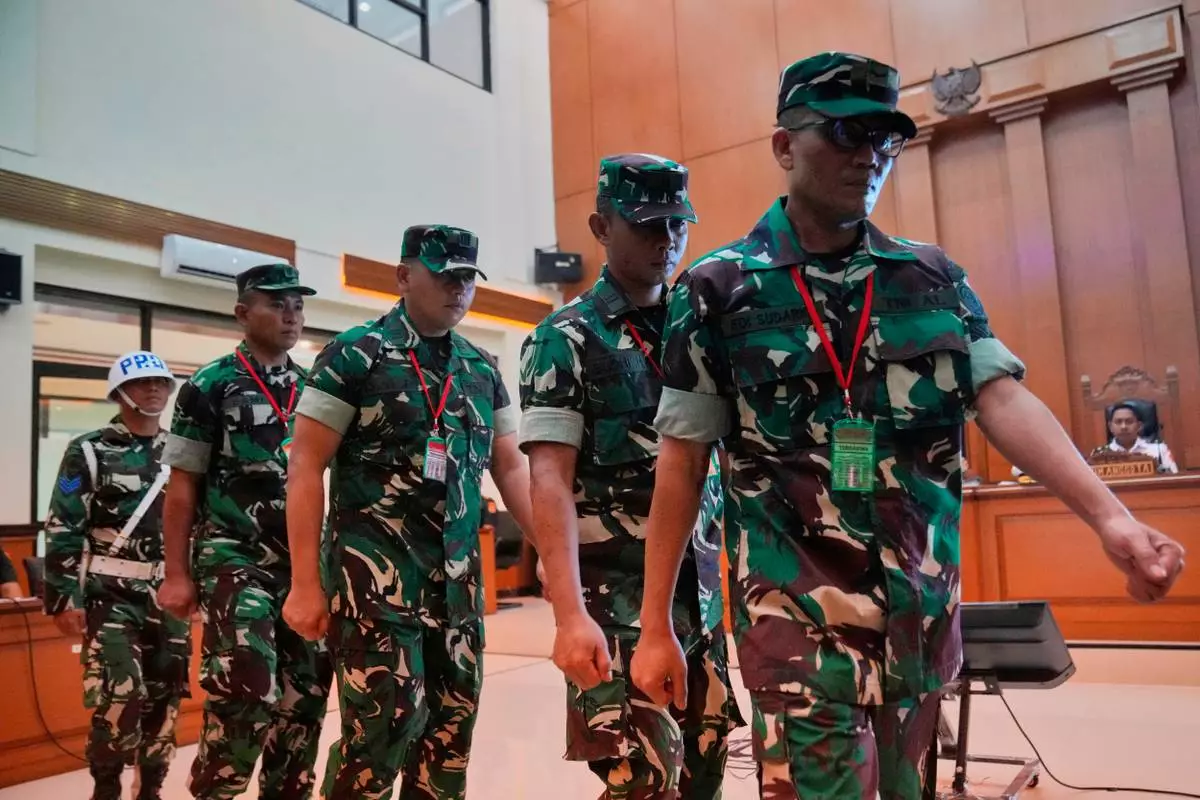
A military police person, far left, escorts Indonesian military personnel, from left, Sami Lakka, Nandala Dwi Prasetya, Budhi Hariyanto Widhi Cahyono, and Edi Sudarko, accused of an acid attack on human right activist Andrie Yunus, during trial at a military court in Jakarta, Indonesia, Wednesday, April 29, 2026. (AP Photo/Tatan Syuflana)