It’s delicate for any president to watch flag-draped transfer cases return home from overseas, a solemn tradition that honors the dead and shines a spotlight on the human costs of conflict.
Donald Trump’s visit Saturday to Dover Air Force Base, honoring the six American service members killed in the war in the Middle East, presented a potentially fraught moment for a president whose White House has done little to build public support for the conflict. He also has a record of controversy when it comes to talking about military service and sacrifice.
Trump can be reverential, such as when he recently awarded the Medal of Honor to troops for bravery during previous conflicts.
But he can also be terse or even dismissive. After launching attacks on Iran in coordination with Israel a week ago, Trump warned that there could be American casualties. When it comes to war, he said in a video message, “that's the way it is.”
On Saturday, Trump — wearing a blue suit, red tie and a white USA hat — did not speak during the transfer.
“It’s a very sad day,” Trump told reporters on Air Force One as he returned to Florida later Saturday afternoon, saying that he was “glad we paid our respects.”
The president frequently emphasizes the strength of U.S. armed services and stories of individual heroism.
“Today you entered the ranks of the bravest warriors ever to stride the face of the earth,” Trump told retired Command Sgt. Maj. Terry P. Richardson last week before presenting the Medal of Honor for actions during the Vietnam War that were credited with saving the lives of 85 other service members.
During his State of the Union address last month, Trump presented the same medal to Army Chief Warrant Officer 5 Eric Slover, a helicopter pilot who in Venezuela was shot four times but maintained control of the aircraft, saving the men on board.
“The success of the entire mission and the lives of his fellow warriors hinged on Eric’s ability to take searing pain," Trump said.
But when honoring injured service members, he sometimes interjects partisanship or other asides.
“Their valor gave us the freest, greatest and most noble republic ever to exist on the face of the earth," Trump said during a Memorial Day ceremony at Arlington National Cemetery last year.
Then he added a dig at his predecessor, Democrat Joe Biden, describing the country as "a republic that I am fixing after a long and hard four years.”
One of Trump's first controversies after entering politics involved criticism of Sen. John McCain's military service.
“He is a war hero because he was captured. I like people who weren’t captured,” he said in 2015.
McCain was tortured during more than five years as a prisoner of war in Vietnam, refusing an offer to be released ahead of other Americans because his father was a high-ranking Navy admiral.
Some former officials who served during Trump's first term have claimed the president disparaged fallen service members as “suckers” and “losers” when, they said, he did not want to travel in 2018 to a cemetery for American war dead in France. Trump denied the allegation, saying, “What animal would say such a thing?”
Former Trump aides also alleged that he did not want to be seen in the presence of military amputees, saying, "it doesn’t look good for me."
In 2017, he told the widow of a slain soldier that he “knew what he signed up for,” according to a Florida congresswoman who heard the call. The father of another slain soldier accused the president of going back on a promise to send a check for $25,000. The White House said the money was sent after controversy erupted.
And in 2020, Trump downplayed the severity of traumatic brain injuries service members suffered when Iran fired missiles at a U.S. base in Iraq in retaliation for a U.S. strike that killed Iran’s most powerful general, Qassem Soleimani.
“I heard that they had headaches and a couple of other things, but I would say and I can report it is not very serious,” Trump said.
Trump, who received deferments to avoid the draft during the Vietnam War, has remarked several times about wanting to receive military medals.
“I always wanted to get the Purple Heart. This was much easier,” Trump told a veteran who presented his medal to Trump during his 2016 campaign. The Purple Heart is awarded to service members wounded or killed from enemy action.
And at his Medal of Honor ceremony Monday, Trump again joked getting a medal for himself, calling it “a great honor.”
“I’ve tried numerous times to get one by myself,” Trump said. “I keep getting shut down. They say: ‘You can’t do it, sir. Bad protocol.’”
“Very bad, I would say the worst,” he added. “But I’m only kidding.”
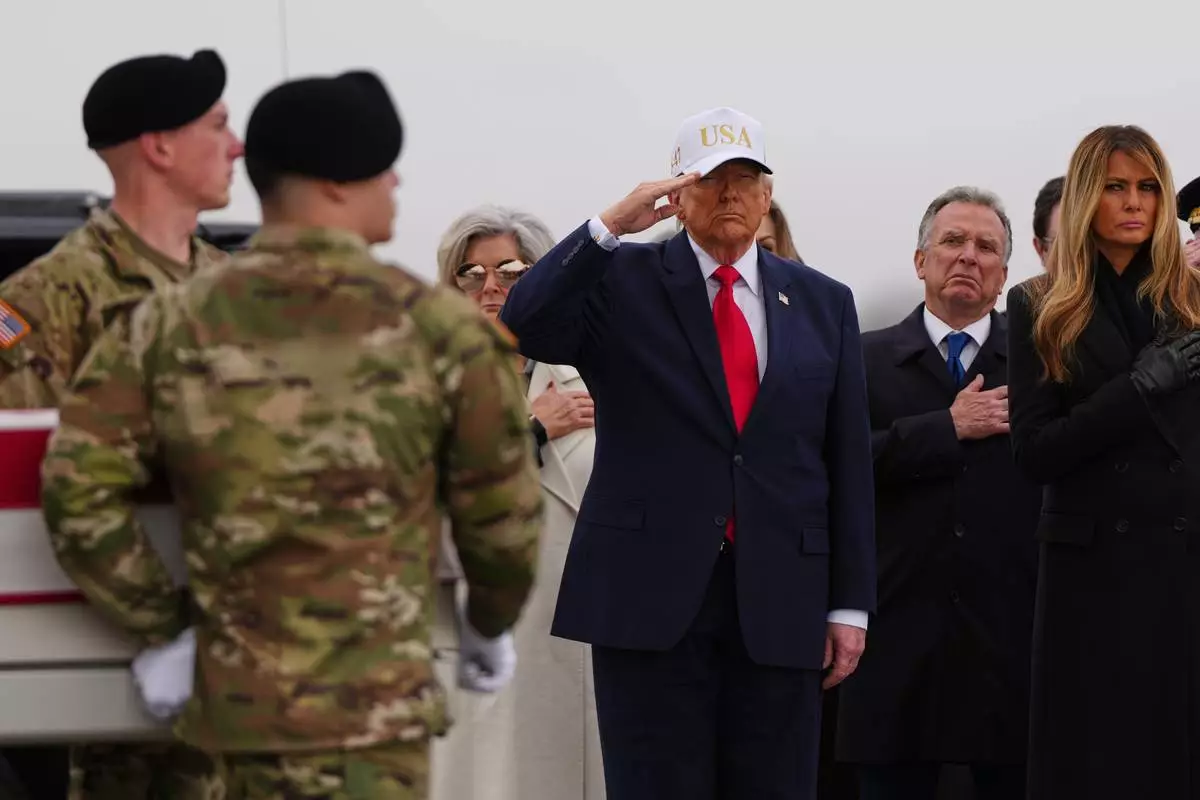
President Donald Trump salutes as an Army carry team moves the flag-draped transfer case containing the remains of U.S. Army Reserve Sgt. 1st Class Noah Tietjens, 42, of Bellevue, Neb., who was killed in a drone strike at a command center in Kuwait after the U.S. and Israel launched its military campaign against Iran, during a casualty return Saturday, March 7, 2026, at Dover Air Force Base, Del. At right is first lady Melania Trump and White House Special Envoy to the Middle East Steve Witkoff. (AP Photo/Julia Demaree Nikhinson)

Chris Edmonds, left, son of Master Sergeant Roderick Edmonds, with President Donald Trump, is presented the Medal of Honor on behalf of his father, during a ceremony in the East Room of the White House, Monday, March 2, 2026, in Washington. (AP Photo/Alex Brandon)

A Marine Corps carry team moves the transfer case containing the remains of U.S. Marine Corps Lance Cpl. Kevin Melendez of Fort Worth, Texas, Wednesday March 4, 2026, at Dover Air Force Base, Del. (AP Photo/Matt Rourke)
BELGRADE, Serbia (AP) — High turnout and gathering tensions marked a highly contested parliamentary election on Sunday in Serbia that is a showdown between the Balkan country’s strongman leader Aleksandar Vucic and a diverse movement of university students who have led protests against him for almost two years.
Though Serbia's 6.4 million voters can choose from 18 parties hoping to enter the 250-member Parliament, the election has taken shape as a referendum between Vucic's right-wing Serbian Progressive Party and the youth-backed Students' List.
The main contenders are believed to be polling neck-and-neck, making Sunday's election the most uncertain in recent years. More than half of registered voters cast ballots by mid-afternoon, suggesting high interest in the vote that observers said could favor the students.
Tensions built as voting progressed during the day. Police in anti-riot gear cordoned off an area in central Belgrade around the election commission headquarters. Local media reported several violent incidents throughout the country, and special police vehicles could be seen near a Belgrade park where Vucic's loyalists have been camping for over a year.
During a news conference less than two hours before polls closed, a student representative urged citizens to “stay calm and composed.”
While the increasingly authoritarian Vucic has routinely outplayed Serbia’s fractured opposition in the past, the leaderless youth movement has proved to be a tough opponent that rattled his firm grip on power in Serbia like no one else in the 14 years since his party took office.
A student victory would echo the recent electoral defeat of a Vucic ally in Hungary, where youth participation helped oust the autocratic Viktor Orbán after 16 years and bring in a new pro-European government. It would also likely resonate beyond Serbia as countries across Europe face youth and student protests.
Voters queued at polling places around the country from the early hours on Sunday as local election monitors noted relatively high participation. Monitors predicted that turnout could reach around 70%, unseen in Serbia since 2000.
Long queues also formed at polling stations around the world, some in the middle of the night after authorities tied voting hours to local Serbian time.
In the capital, Belgrade, Vucic stood in line alongside his wife for nearly two hours before casting his ballot. He told reporters he hopes for a peaceful election day and that he and his party will respect the result.
“The will of the people is the will of God: vox populi, vox dei,” Vucic said. “If we lose, we will recognize the electoral will. If we win, no one will take it away from us.”
Vucic said his camp will announce reliable projections about three hours after polls close at 8 p.m. local time (1900 GMT). Asked about whether the high turnout means people want change, he said: “Let’s wait for the result.”
Independent election monitors reported dozens of cases of irregularities on Sunday such as photographing of ballots that suggested pressure on voters and attempted vote buying.
Local media also cited several violent incidents across the country. Andreas von Beckerath, the European Union ambassador in Belgrade, said in a social media post that he was “deeply concerned” by such reports, and called “on all actors to remain calm, to act responsibly and refrain from violence and provocations.”
After casting his ballot in the northern Serbian city of Novi Sad, Ilija Srdanovic, a physician who is the first of 250 candidates for the youth movement, said the long lines heralded “record turnout in Serbia’s recent history.”
“I hope that this day will pass in a democratic atmosphere and in peace and that we will legitimately choose a new government in Serbia,” Srdanovic said.
At a polling station in Belgrade, voter Jovan Mitrovic said he hopes that “everything goes peacefully and that everything finishes nicely,” and that “the dawn finally rises in this country after many years.”
Recent elections have been marred by irregularities and the EU is closely watching the conduct of Sunday's vote in a candidate nation for the bloc's membership.
Both international and local election monitors already have expressed concern about the safety and fairness of an election campaign marked by detentions, near-total government control over the media and reports of surveillance and cyberattacks against activists.
Local elections earlier this year in 10 municipalities in Serbia saw violent attacks on journalists and activists. The previous parliamentary vote in 2023 was followed by opposition protests alleging fraud.
If his SNS party wins the most votes, Vucic will become the prime minister after serving two near-full terms as president. He resigned the presidency last month to lead the campaign.
Support for the populist has eroded since 16 people were killed in 2024 when a concrete canopy collapsed at a train station in Novi Sad. That set off a wave of youth protests that blamed the collapse on high-level corruption, cronyism and rampant graft during renovation work at the station.
Despite the protests, Vucic retains considerable support among Serbia's voters. Admirers view him as a capable leader who can steer the nation through global uncertainties — the image that was carefully crafted by the mainstream media.
The newly formed Students' List movement is shaped by university students but none are actually on the list. Instead, its candidates are little-known experts, athletes, farmers and artists.
This approach was meant to counter Vucic's one-man rule and restore a sense of community and solidarity. The students' message during the campaign focused on a non-partisan effort to rebuild Serbia's economy and restore its democracy.
The students have used youthful energy to attract voters who are disillusioned with local politicians. Vilified by pro-government media, they have cycled and walked through the country to reach voters in rural areas — Vucic's traditional strongholds.
Election surveys have shown varied results while both camps say they are ahead. Some analysts fear postelection instability in case of a close result.
Vucic has said that any protests that might erupt to claim fraud in case of his party's triumph would be immediately quashed. The state election commission is not expected to release the official tally before Monday.
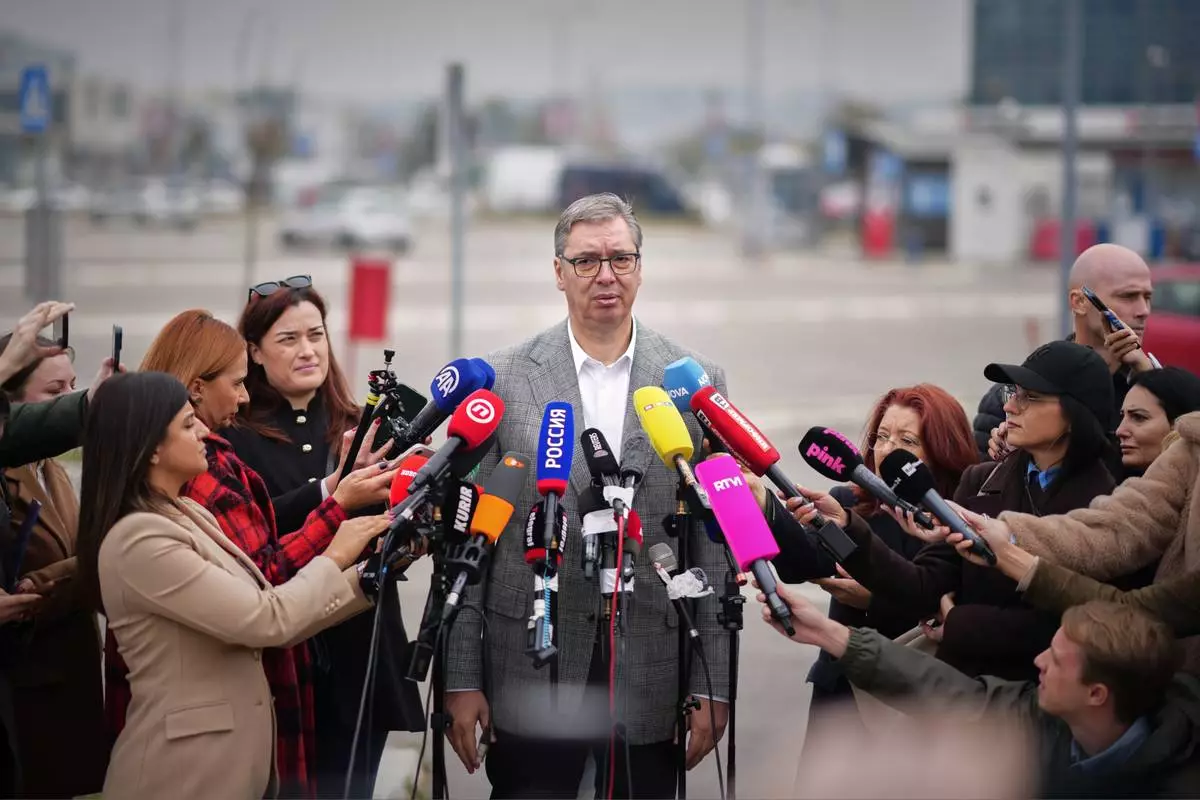
Aleksandar Vucic, leader of the right-wing Serbian Progressive Party (SNS), speaks to media after voting in a parliamentary election in Belgrade, Serbia, Sunday, Oct. 25, 2026. (AP Photo/Petr David Josek)
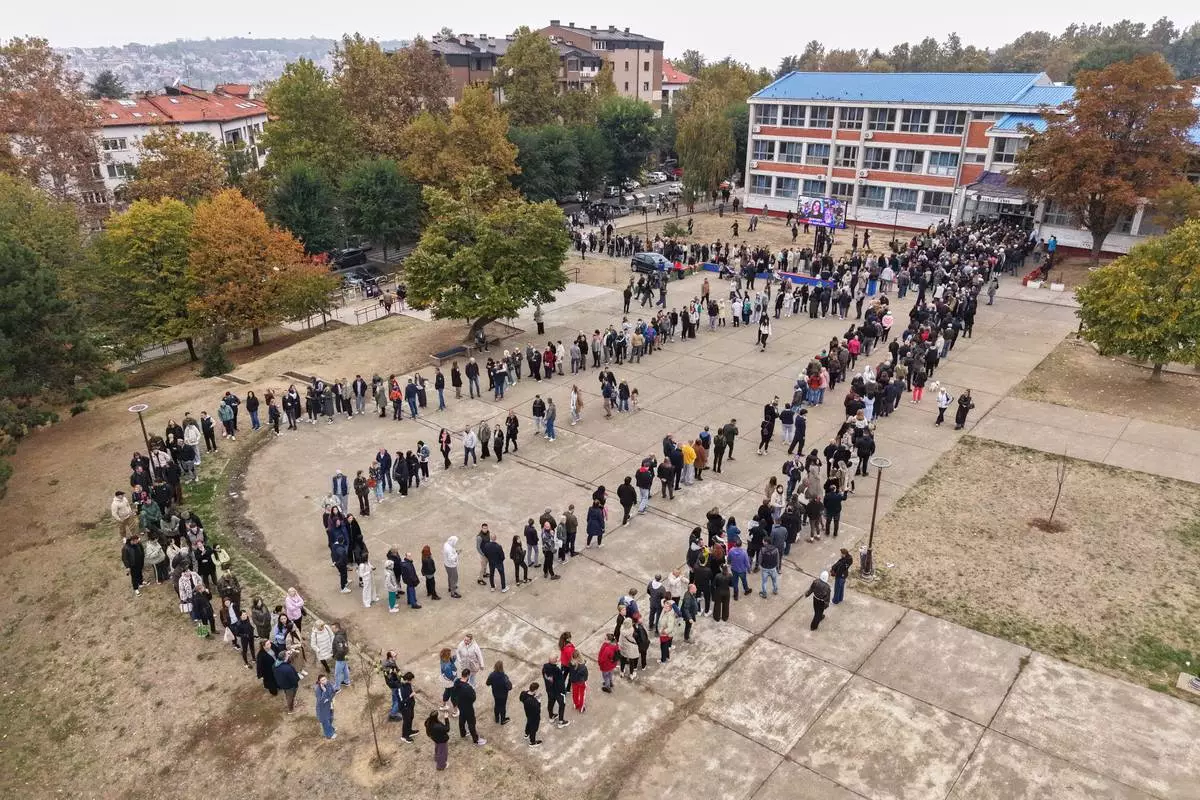
People wait in lines outside a polling station to cast their votes during a parliamentary election in Belgrade, Serbia, Sunday, Oct. 25, 2026. (AP Photo/Armin Durgut)
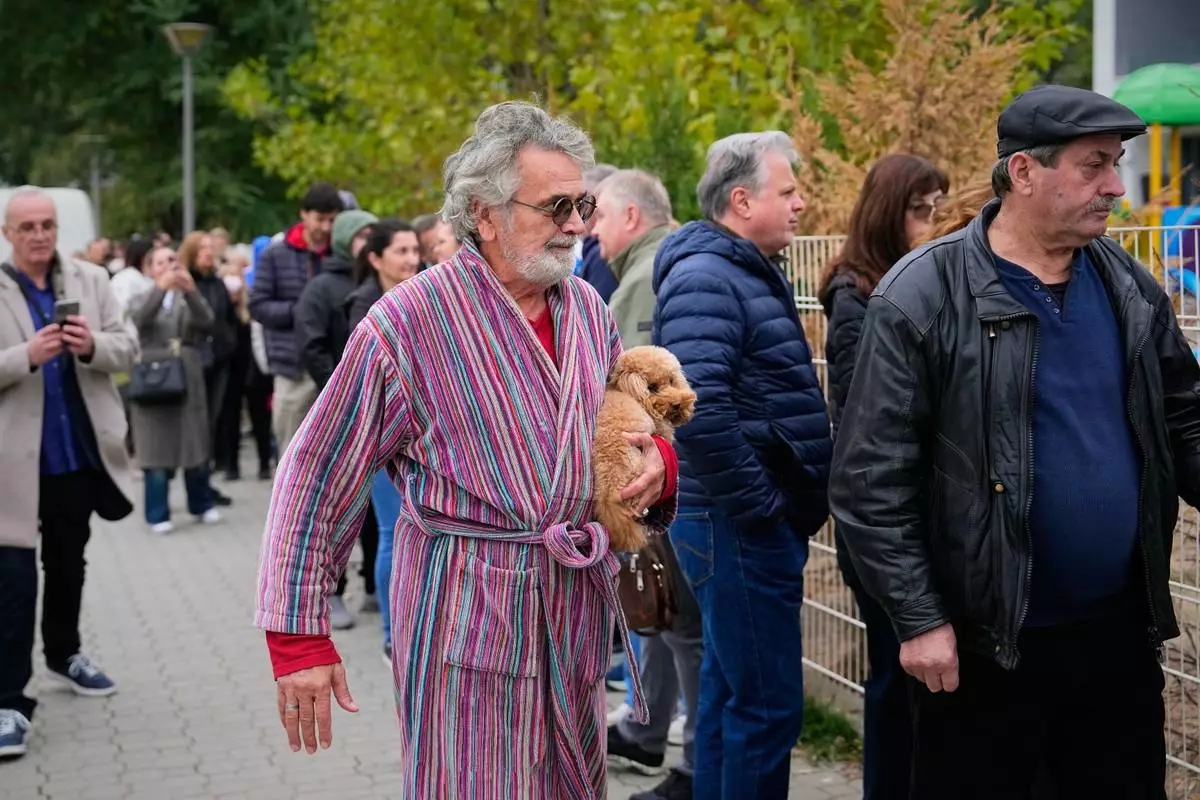
A man holds a dog while arriving at a polling station to vote in a parliamentary election in Belgrade, Serbia, Sunday, Oct. 25, 2026. (AP Photo/Petr David Josek)
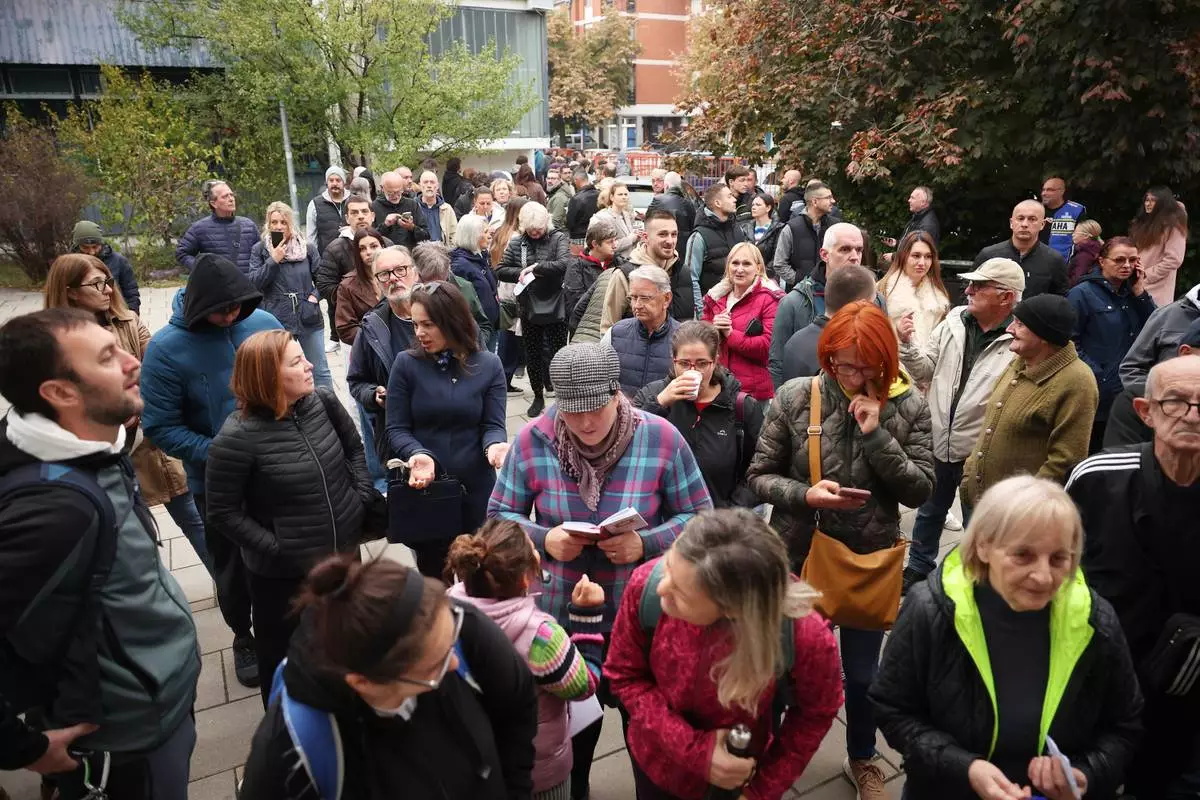
People wait outside a polling station before the start of voting in a parliamentary election in Novi Sad, Serbia, Sunday, Oct. 25, 2026. (AP Photo/Armin Durgut)
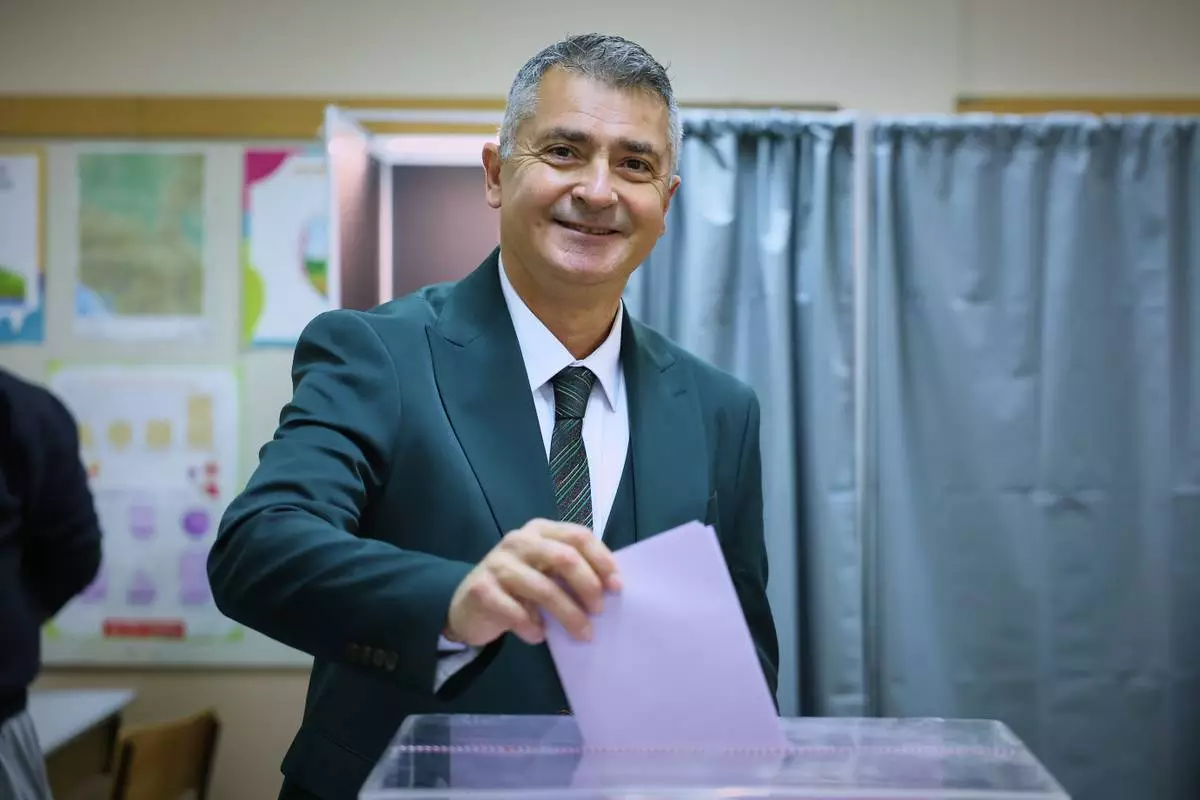
Students' List leader Ilija Srdanovic casts his vote in a parliamentary election in Novi Sad, Serbia, Sunday, Oct. 25, 2026. (AP Photo/Armin Durgut)
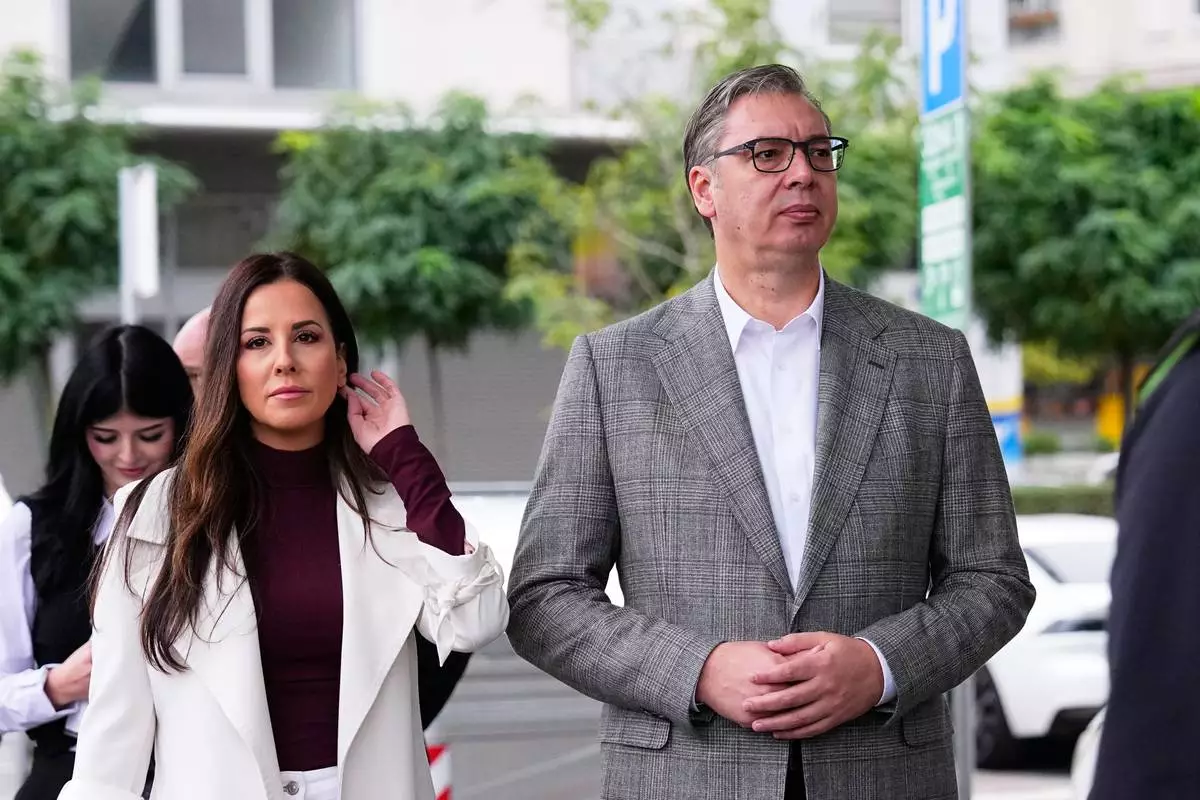
Aleksandar Vucic, leader of the right-wing Serbian Progressive Party (SNS), waits along with his wife Tamara to vote in a parliamentary election in Belgrade, Serbia, Sunday, Oct. 25, 2026. (AP Photo/Petr David Josek)
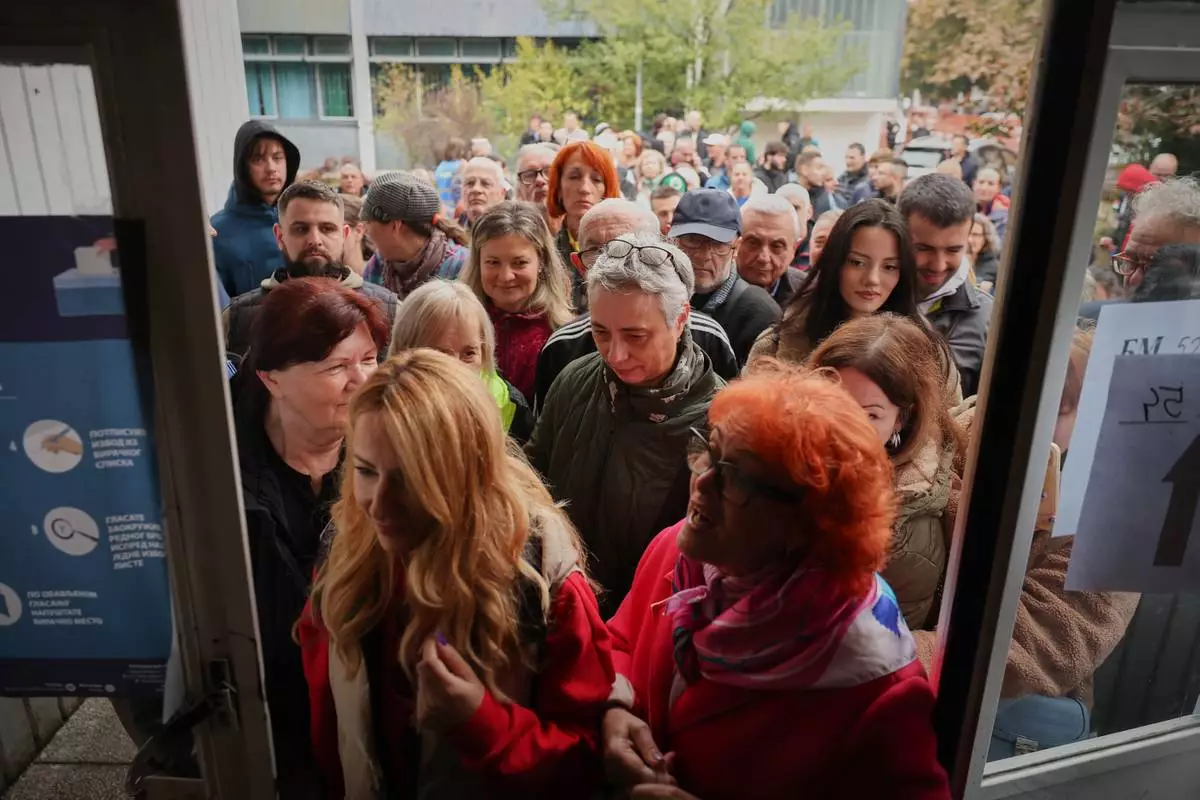
People enter a polling station that just opened its doors to cast their votes in a parliamentary election in Novi Sad, Serbia, Sunday, Oct. 25, 2026. (AP Photo/Armin Durgut)
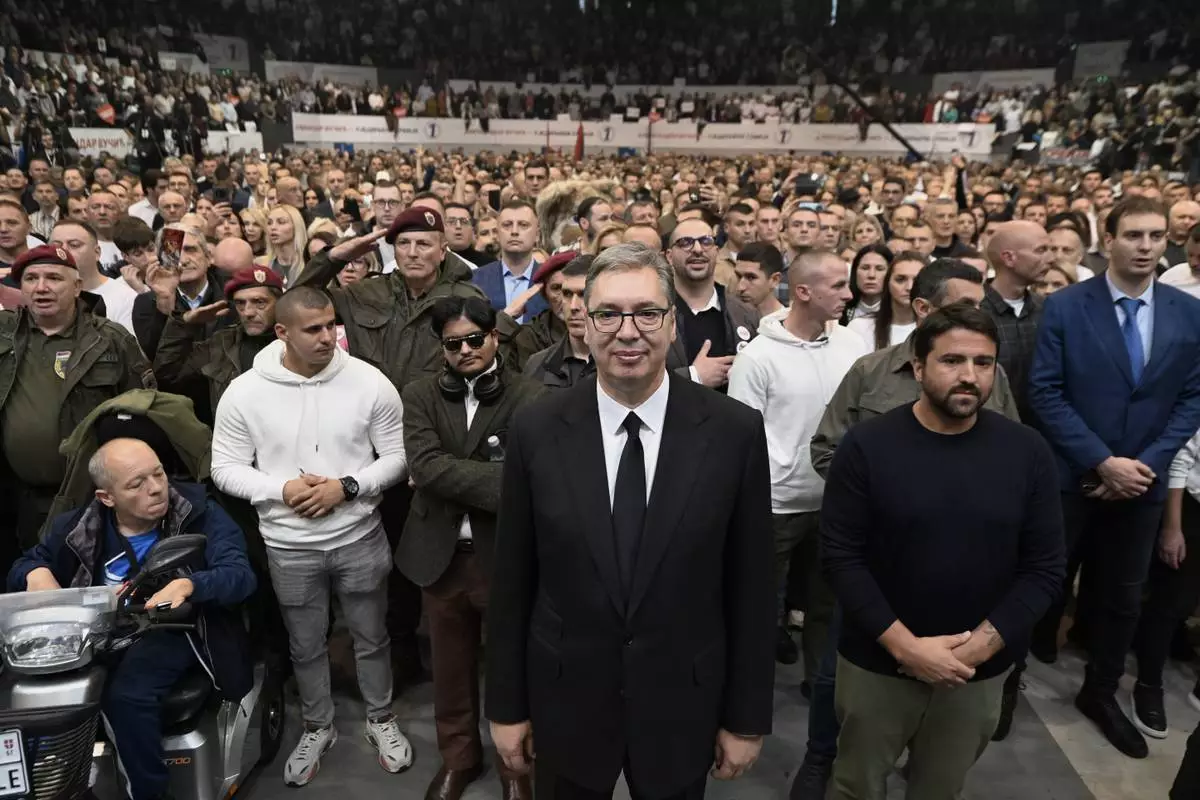
Serbia's populist leader Aleksandar Vucic, center, listens to the Serbian national anthem with supporters during a pre-election rally of his ruling Serbian Progressive Party ahead of the early parliamentary election scheduled for Oct. 25, in Belgrade, Serbia, Thursday, Oct. 22, 2026. (AP Photo)
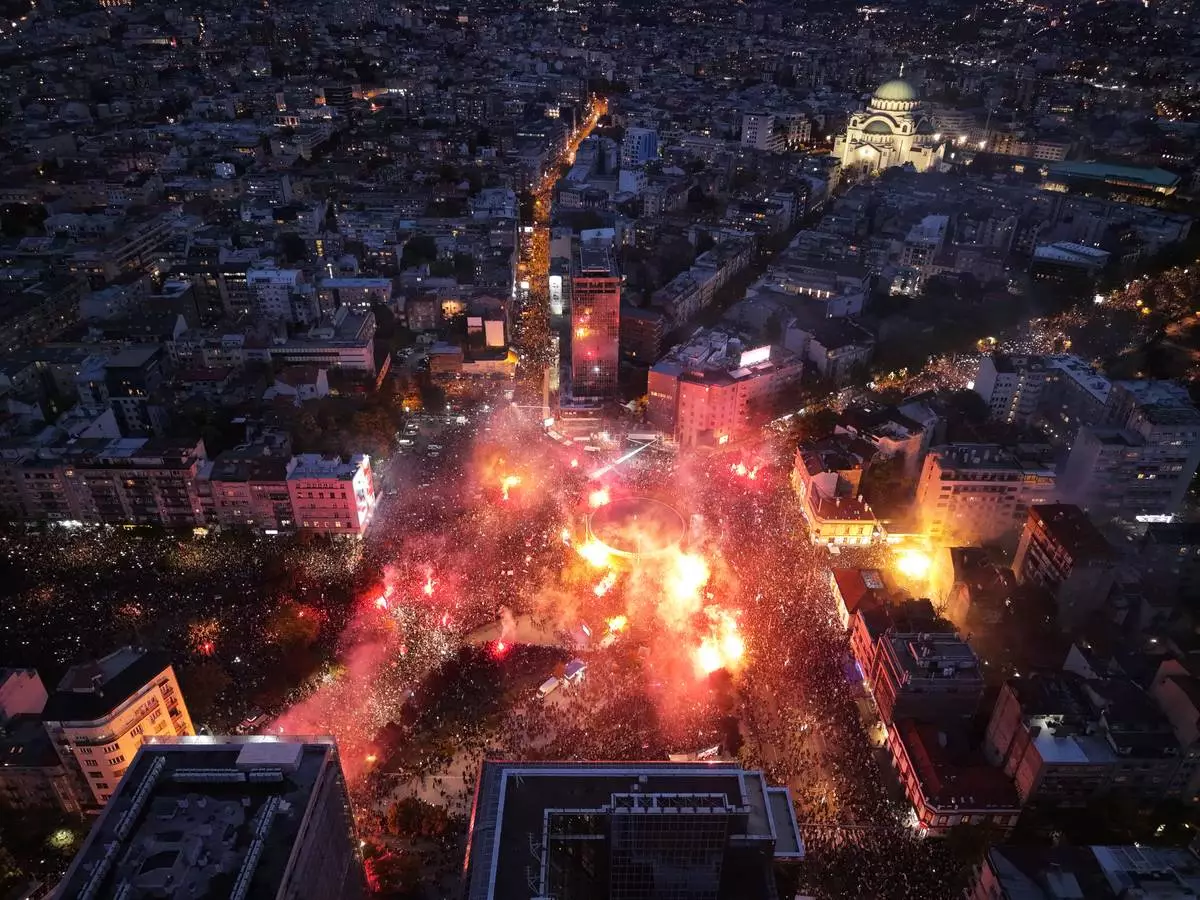
People shine the lights of their mobile phones and light flares during the final "Student List – Students Win" rally ahead of a parliamentary election in Belgrade, Serbia, Thursday, Oct. 22, 2026. (AP Photo/Armin Durgut)
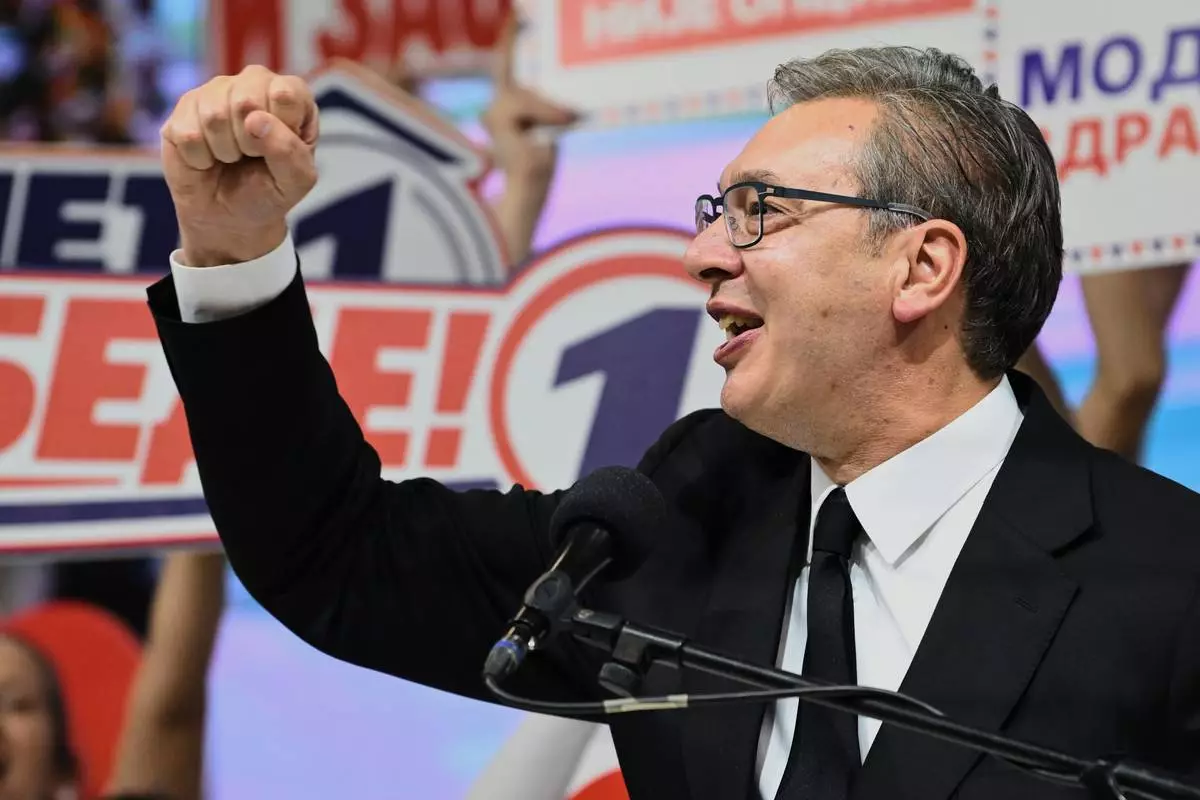
Serbia's populist leader Aleksandar Vucic gestures during a pre-election rally of his ruling Serbian Progressive Party ahead of the early parliamentary election scheduled for Oct. 25, in Belgrade, Serbia, Thursday, Oct. 22, 2026. (AP Photo)
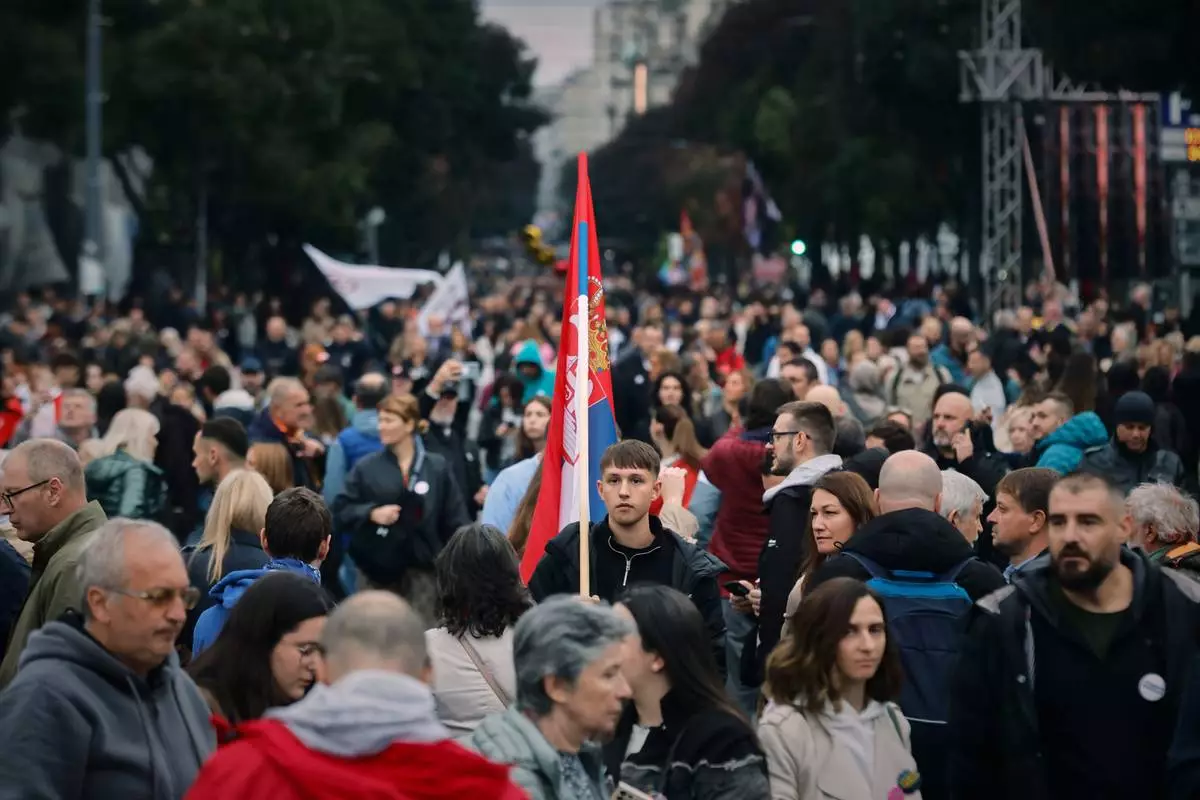
A young man holds a Serbian flag as people gather for the final "Student List – Students Win" rally ahead of a parliamentary election in Belgrade, Serbia, Thursday, Oct. 22, 2026. (AP Photo/Marko Drobnjakovic)