Chinese President Xi Jinping on Saturday stressed fully leveraging the unique strengths of enhancing political loyalty in the military, and called for concerted efforts to advance the modernization of national defense and the armed forces in a steady and sustained manner.
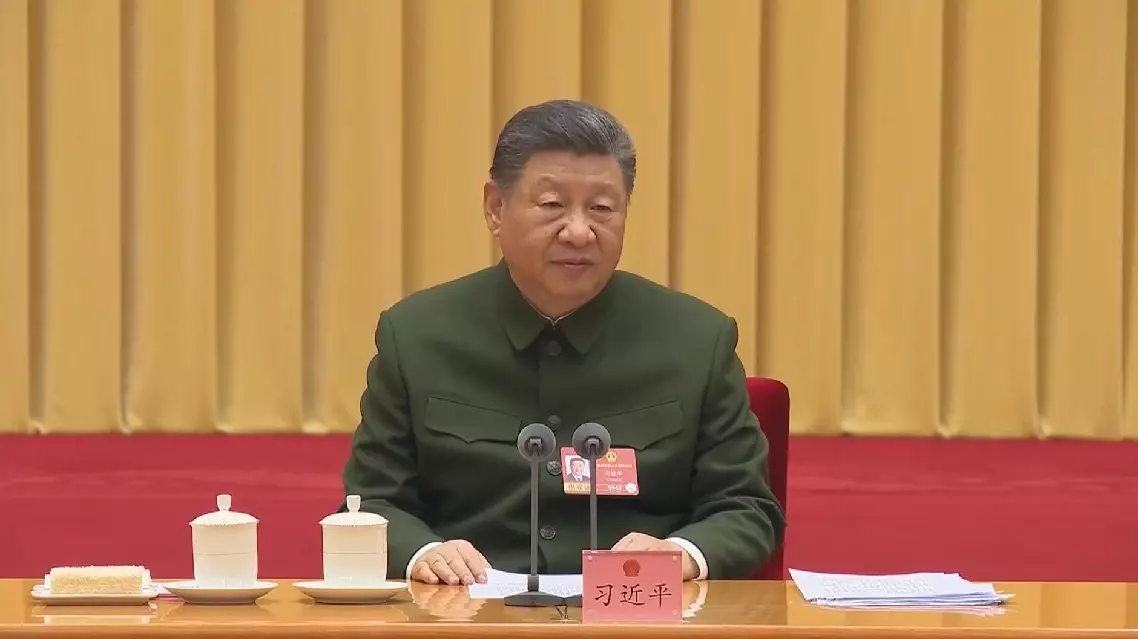
Xi, also general secretary of the Communist Party of China (CPC) Central Committee and chairman of the Central Military Commission, made the remarks while attending a plenary meeting of the delegation of the People's Liberation Army (PLA) and the People's Armed Police Force at the fourth annual session of the 14th National People's Congress, China's national legislature, underway in Beijing.
Six deputies spoke at the meeting. After hearing their remarks, Xi delivered an important speech.
Since the 18th CPC National Congress in 2012, the Party Central Committee has led the armed forces to improve political rectification and advance political loyalty in the military with unprecedented resolve and intensity, achieving significant results, Xi said.
There must be no place in the military for those who are disloyal to the Party, nor any place for corrupt elements, Xi warned, adding that the fight against corruption must be unwaveringly advanced.
At the very start of the 15th Five-Year Plan period (2026-2030) for national socioeconomic development, efforts must be made to establish rigorous rules for strict oversight, and closely monitor key areas such as fund flows, the exercise of power, and quality control, Xi said.
It is essential to fully strengthen the Party's leadership and Party building in the military, and make Party organizations at all levels even stronger, Xi said, stressing the need to translate the Party's leadership strength into development momentum.
It is important to consolidate the ideological foundation that ensures officers and soldiers follow the Party and its guidance, and ensure that modern weaponry and equipment are placed in the hands of politically committed personnel, Xi said.
Xi called for systematically training personnel for joint operations, new types of combat forces, high-level sci-tech innovation, and high-level strategic management.
He also highlighted the need to vigorously carry forward and promote the fine traditions of the Party and the military.
Zhang Shengmin, vice chairman of the CMC, participated in the meeting.
Xi stresses enhancing political loyalty in military to advance defense modernization
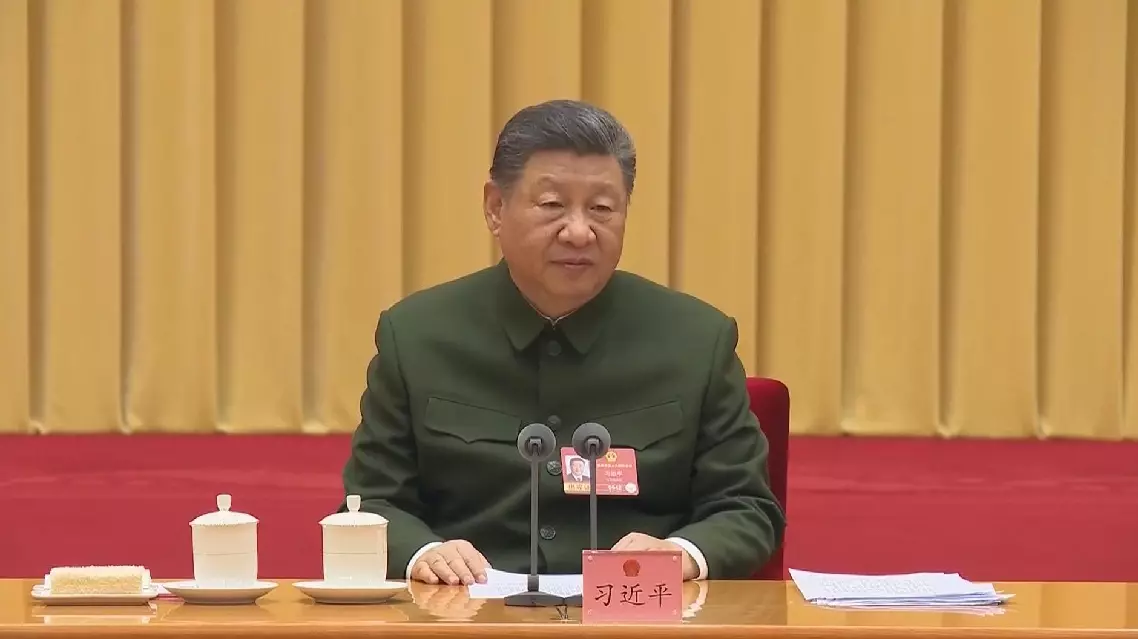
Xi stresses enhancing political loyalty in military to advance defense modernization
The 14th Chinese People's Political Consultative Conference (CPPCC) National Committee, China's top political advisory body, held the second plenary meeting of its 4th annual session in Beijing on Saturday.
Wang Huning, a member of the Standing Committee of the Political Bureau of the Communist Party of China Central Committee and chairman of the CPPCC National Committee, attended the meeting.
During the meeting, 14 members of the CPPCC National Committee shared their views. Liu Jiayi called for deepening reform to stimulate development, improving the people's livelihoods and ensuring that the benefits of development reach all people in a more extensive and equitable manner.
Huo Jinhua suggested accelerating the building of China into a manufacturing powerhouse, supporting technological innovation, and continuously increasing efforts and investment in core technology research and development.
Huang Qunhui suggested placing the development of new quality productive forces tailored to local conditions in a more prominent strategic position, increasing sustained and stable support for basic research, and attaching equal importance to investment in physical capital with investment in human capital.
Xie Dong said that efforts should be made to promote in-depth integration of technological innovation with industrial innovation, encourage leading enterprises to increase investment in basic research, and increase financial support for start-up technology enterprises.
Wang Jianjun called for consistently consolidating poverty alleviation achievements to promote common prosperity.
Jiang Liping suggested advancing high-quality development of the demonstration zone for cross-Strait integrated development, and stepping up policy support towards Taiwan compatriots.
Qi Xiangdong suggested enhancing the modernized industrial system's efficiency on security and development, actively and prudently advancing and achieving carbon peak goals, and building a solid foundation for the modernized industrial system through AI plus security.
Wang Junjin noted the need to implement the Private Sector Promotion Law effectively, stabilize long-term investor expectations, and guide private capital toward emerging and future industries.
Li Rongcan suggested increasing the intensity of pioneering trials in the Hainan Free Trade Port, fostering a modern industrial system with distinctive free trade port characteristics, and building a new credit-based regulatory mechanism.
Zhou Zhihua suggested optimizing the overall layout of scientific research in the artificial intelligence field, building an integrated innovative human resources training system while promoting the elimination of disciplinary barriers, and strengthening data governance.
Cheng Jianping called for fostering the collaborative paradigm that involves the family, the school and society in education, and utilize new technologies such as AI in education.
He Dan suggested optimizing fertility support policies and incentive measures, establishing and improving guarantee systems for maternity insurance and care services.
Tao Kaiyuan called for extending the research-teaching coordination from higher education to basic education and strengthening innovation-oriented educational goals.
Mo Rong suggested improving the employment support and public service system, and promoting better adaptation of human resources supply to AI technology development and the needs of industrial transformation and upgrading.
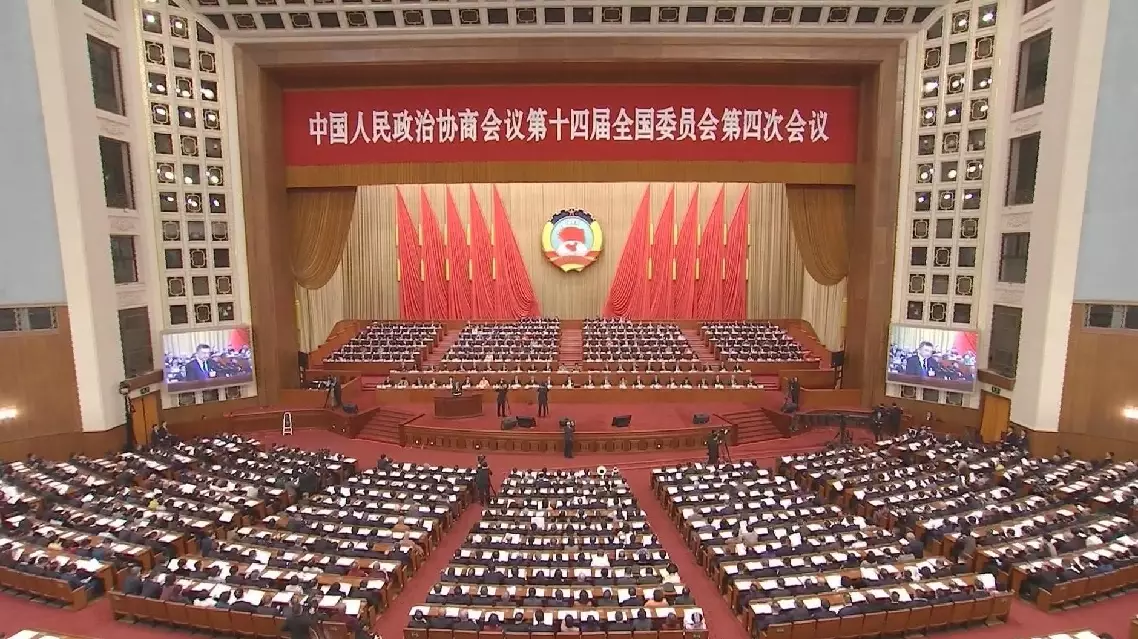
China's top political advisory body holds 2nd plenary meeting of annual session