China's commitment to its path of opening up will continue as a long-term national strategy and should increasingly be defined by inclusiveness, a national political advisor said Friday.
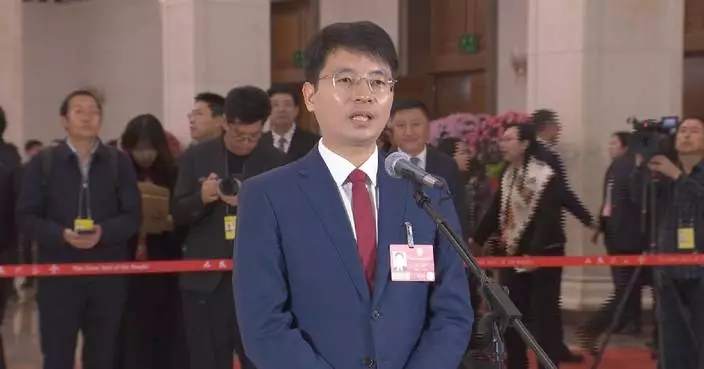
Zhou Hanmin, a member of the Standing Committee of the National Committee of the 14th Chinese People's Political Consultative Conference (CPPCC) and president of the Shanghai Public Diplomacy Association, made the remarks in an interview with China Media Group (CMG) during the annual political "two sessions" underway in Beijing.
"Opening-up is and has been a long-term national policy and a strategy ever since China opened itself up (to the world) some 48 years ago. Ever since China joined WTO (World Trade Organization), you could see it has fundamentally changed the formats of economic movements. So opening-up is a reference and also a driving force," he said.
Zhou stressed China must also invite less privileged nations to share in the prosperity of a more open world.
"Inclusiveness is one word that should be used to modify China's opening-up. I (previously) submitted a bill in CPPCC for the zero tariff for those least developed nations' exportation to China. Because for each and every China International Import Expo, you can see quite a large number of exhibitors coming from the least developed countries. We need to give them very genuine help. We are just in the situation of that. We just try to do not only with developed nations, but the Global South and rest of the countries, all together," he said.
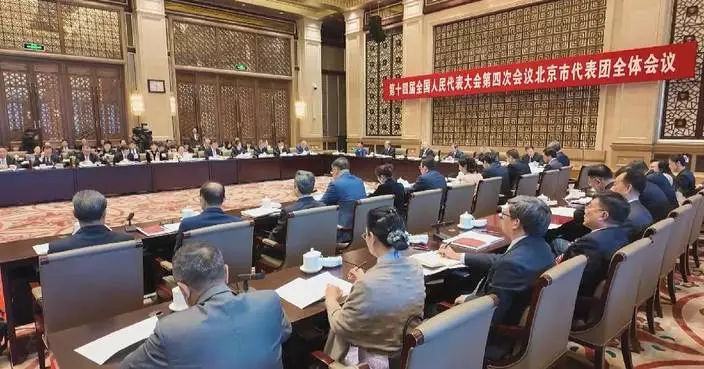
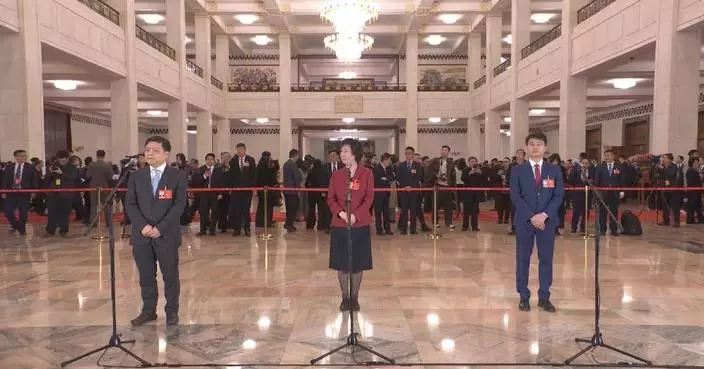
Zhou's comments come amid the ongoing "two sessions", the annual meetings of China's top legislature, the National People's Congress (NPC), and the top political advisory body, the National Committee of the CPPCC. Both bodies serve a five-year term and hold a plenary session each year, generally in March.
The fourth session of the 14th NPC and the fourth session of the 14th National Committee of the CPPCC kicked off in Beijing on Thursday and Wednesday, respectively. A main focus is the adoption of the country's 15th Five-Year Plan (2026-2030), a key blueprint guiding China's drive toward modernization. When asked about key signals from the plan that the international community should closely watch, Zhou outlined several key issues.
"We are now carrying on this Five-Year Plan in the most crucial period of time. We are going to generally modernize the country (in) another 10 years. In this five-year period of time, we need to focus more on creation. Creation not necessarily in the field of technology. Creation means the modernization of the governance, create lots of new things in the system and methods of governance. This is also important," Zhou said.
"The modernization of industrial systems, the further expansion of the ability of consumption, and we try to know very well the longevity, whatever solves people's daily needs. The last but not least, we try to understand fully international collaboration. Opening-up is still a driving force," he said.
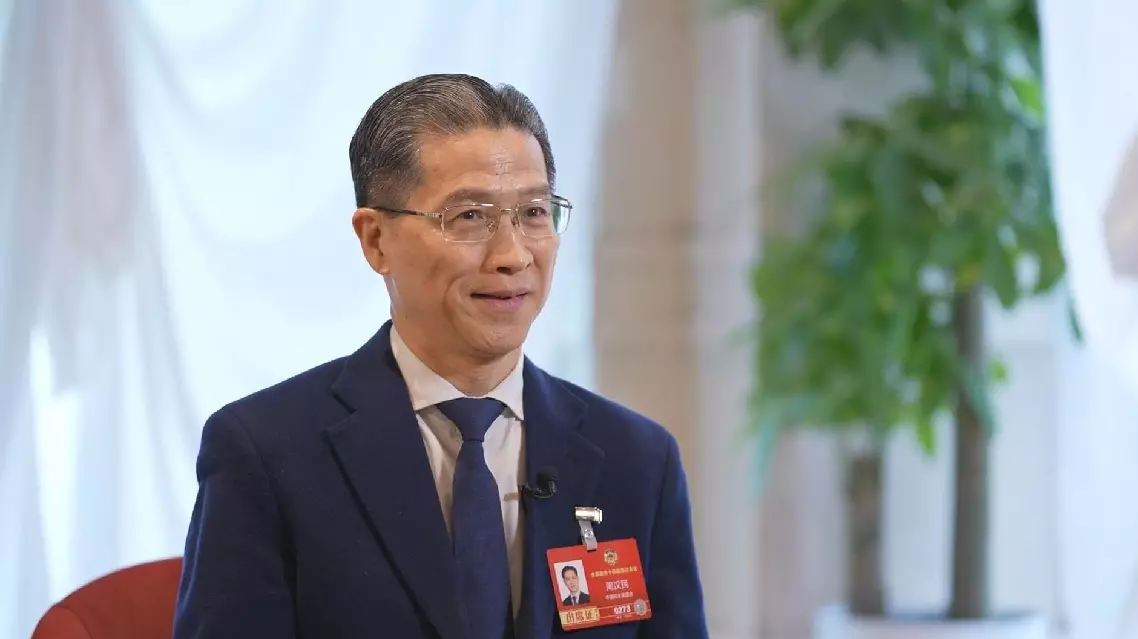
China's opening-up should continue path of inclusiveness: political advisor

China's opening-up should continue path of inclusiveness: political advisor
The 14th Chinese People's Political Consultative Conference (CPPCC) National Committee, China's top political advisory body, held the second plenary meeting of its 4th annual session in Beijing on Saturday.
Wang Huning, a member of the Standing Committee of the Political Bureau of the Communist Party of China Central Committee and chairman of the CPPCC National Committee, attended the meeting.
During the meeting, 14 members of the CPPCC National Committee shared their views. Liu Jiayi called for deepening reform to stimulate development, improving the people's livelihoods and ensuring that the benefits of development reach all people in a more extensive and equitable manner.
Huo Jinhua suggested accelerating the building of China into a manufacturing powerhouse, supporting technological innovation, and continuously increasing efforts and investment in core technology research and development.
Huang Qunhui suggested placing the development of new quality productive forces tailored to local conditions in a more prominent strategic position, increasing sustained and stable support for basic research, and attaching equal importance to investment in physical capital with investment in human capital.
Xie Dong said that efforts should be made to promote in-depth integration of technological innovation with industrial innovation, encourage leading enterprises to increase investment in basic research, and increase financial support for start-up technology enterprises.
Wang Jianjun called for consistently consolidating poverty alleviation achievements to promote common prosperity.
Jiang Liping suggested advancing high-quality development of the demonstration zone for cross-Strait integrated development, and stepping up policy support towards Taiwan compatriots.
Qi Xiangdong suggested enhancing the modernized industrial system's efficiency on security and development, actively and prudently advancing and achieving carbon peak goals, and building a solid foundation for the modernized industrial system through AI plus security.
Wang Junjin noted the need to implement the Private Sector Promotion Law effectively, stabilize long-term investor expectations, and guide private capital toward emerging and future industries.
Li Rongcan suggested increasing the intensity of pioneering trials in the Hainan Free Trade Port, fostering a modern industrial system with distinctive free trade port characteristics, and building a new credit-based regulatory mechanism.
Zhou Zhihua suggested optimizing the overall layout of scientific research in the artificial intelligence field, building an integrated innovative human resources training system while promoting the elimination of disciplinary barriers, and strengthening data governance.
Cheng Jianping called for fostering the collaborative paradigm that involves the family, the school and society in education, and utilize new technologies such as AI in education.
He Dan suggested optimizing fertility support policies and incentive measures, establishing and improving guarantee systems for maternity insurance and care services.
Tao Kaiyuan called for extending the research-teaching coordination from higher education to basic education and strengthening innovation-oriented educational goals.
Mo Rong suggested improving the employment support and public service system, and promoting better adaptation of human resources supply to AI technology development and the needs of industrial transformation and upgrading.
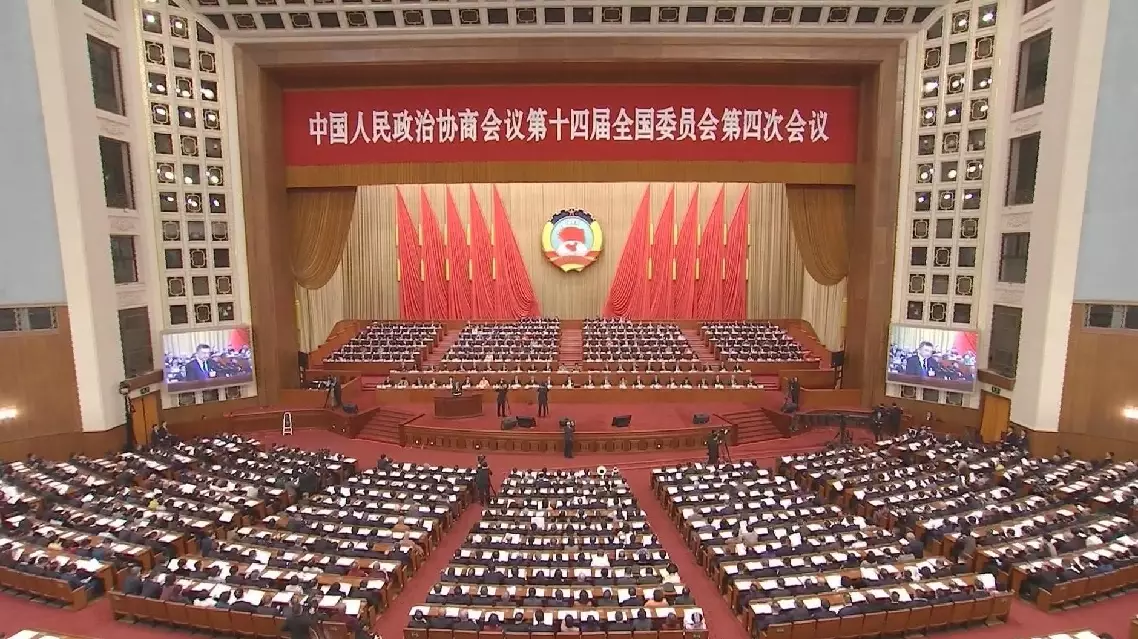
China's top political advisory body holds 2nd plenary meeting of annual session