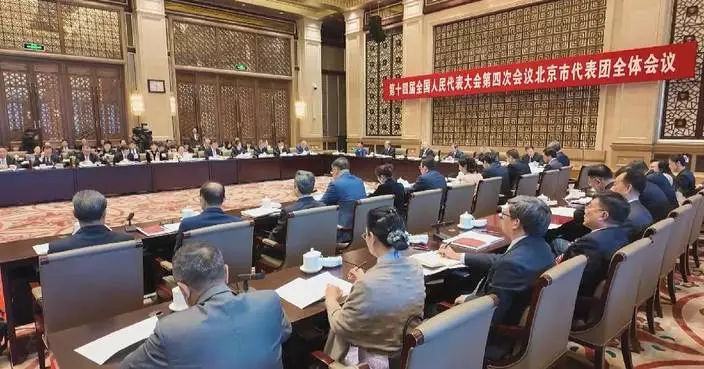
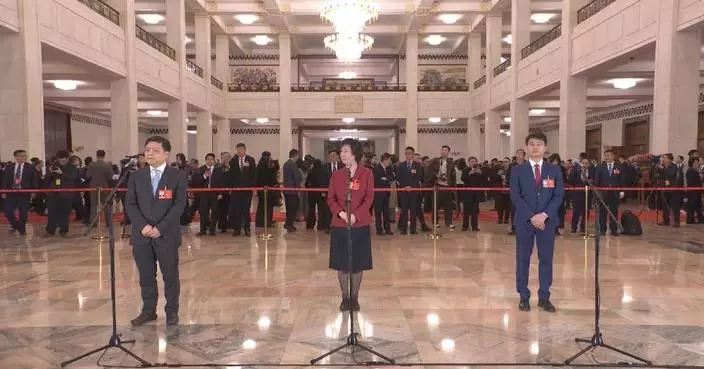
Deputies to the 14th National People's Congress (NPC) from northwest China's Xinjiang Uygur Autonomous Region gathered for panel discussions in Beijing on Friday, delving into the themes of development achievements and rural revitalization in the remote region over recent years.
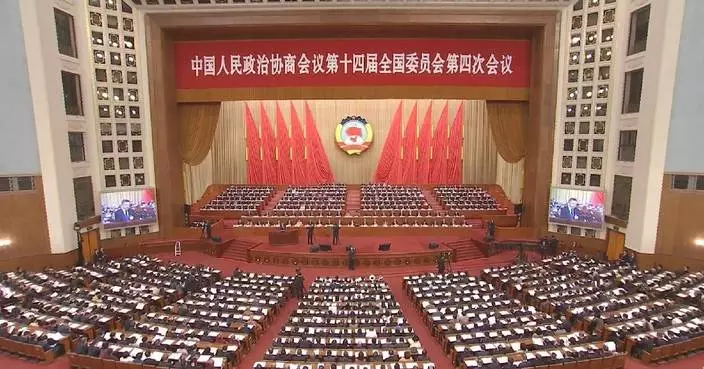
The NPC, China's top legislature, is holding its annual session from Thursday through March 12.
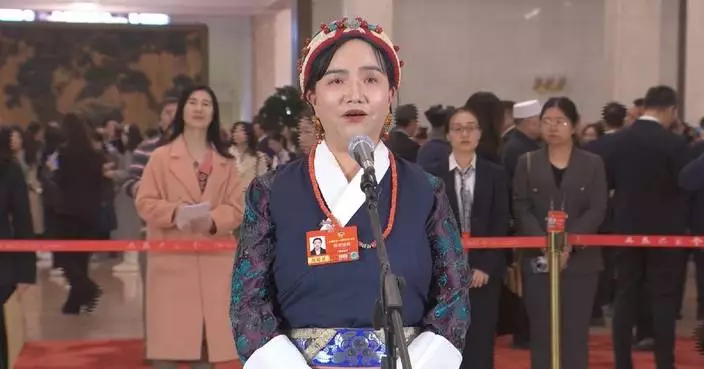
During the discussions, the deputies took journalists' questions on Xinjiang's economic and social achievements during the 14th Five-Year Plan period (2021-2025) for national socioeconomic development, including in public security, intangible cultural heritage preservation and rural revitalization.
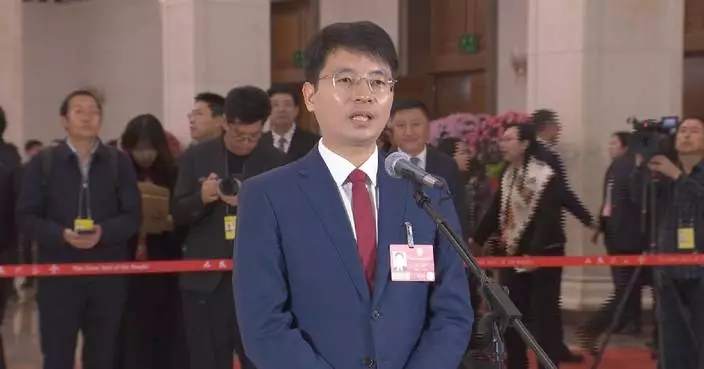
When asked about key practical issues resolved for the public during high-quality development of southern Xinjiang, deputy Abdimemet Obul provided vivid answers based on recent developments in his community.
"In the past, our village had bumpy roads, dim lighting, messy courtyards, and few opportunities to earn money. Now it's completely different. Paved roads reach every household and solar streetlights have been installed. Every house is clean and tidy. What makes us happiest is that our fellow villagers' wallets are getting thicker. We introduced new walnut varieties, learned advanced plum cultivation techniques, and establish a processing cooperative for the people, turning walnuts and plums into 'fruit of prosperity.' Last year, our village reaped a bountiful harvest of 42 mu (2.8 hectares) of premium plums. The fruit was snapped up by buyers as soon as it ripened. Some villagers now work at the processing cooperative, earning 3,000 yuan (nearly 435 U.S. dollars) to 4,000 yuan (nearly 580 U.S. dollars) monthly, balancing family life and work seamlessly," said Abdimemet Obul, also Communist Party branch secretary and villagers' committee director of Buguqi Village of Tuohula Town under Moyu County.
Throughout the event, the Xinjiang delegation's open, confident, and transparent atmosphere allowed journalists to sense the boundless potential for Xinjiang's future development.
"I've been there twice, so I'm deeply fascinated by Xinjiang's culture. If you want to understand it better, come experience it for yourself. Don't just listen to others -- come and discover it yourself. Seeing it with your own eyes will tell you everything," said China Arab TV reporter Derouiche Asma.
The fourth annual session of the 14th NPC is part of the annual political "two sessions" underway in Beijing, with the other being the fourth annual session of the 14th National Committee of the CPPCC.
Both the NPC and the National Committee of the CPPCC serve a five-year term and hold a plenary session each year, generally in March.
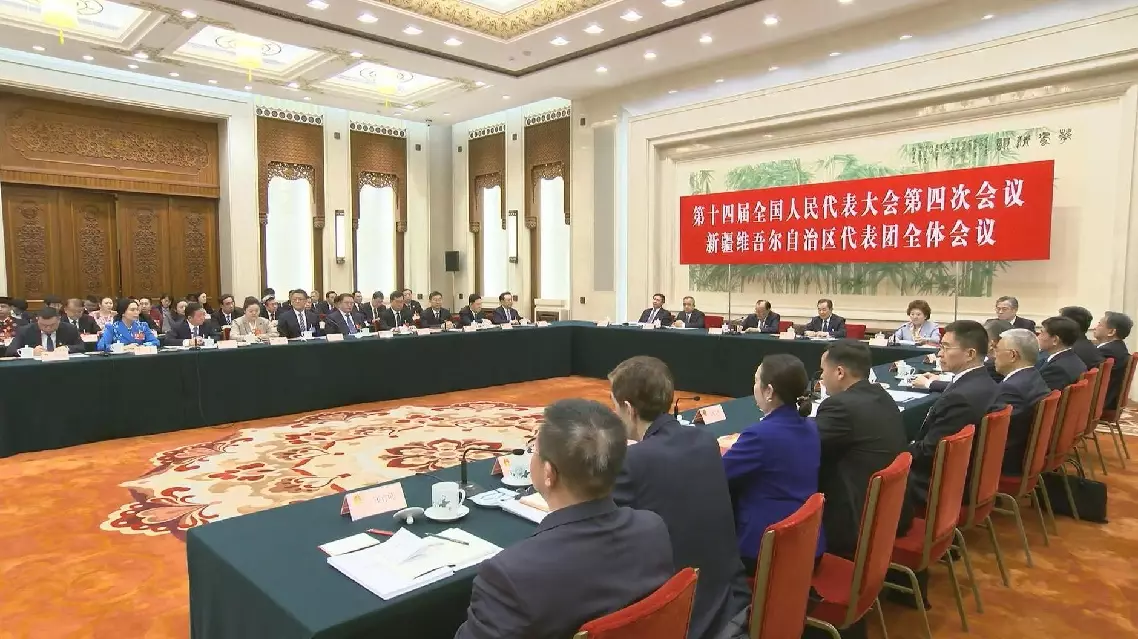
NPC deputies share Xinjiang's development feat at group meeting
China's commitment to its path of opening up will continue as a long-term national strategy and should increasingly be defined by inclusiveness, a national political advisor said Friday.
Zhou Hanmin, a member of the Standing Committee of the National Committee of the 14th Chinese People's Political Consultative Conference (CPPCC) and president of the Shanghai Public Diplomacy Association, made the remarks in an interview with China Media Group (CMG) during the annual political "two sessions" underway in Beijing.
"Opening-up is and has been a long-term national policy and a strategy ever since China opened itself up (to the world) some 48 years ago. Ever since China joined WTO (World Trade Organization), you could see it has fundamentally changed the formats of economic movements. So opening-up is a reference and also a driving force," he said.
Zhou stressed China must also invite less privileged nations to share in the prosperity of a more open world.
"Inclusiveness is one word that should be used to modify China's opening-up. I (previously) submitted a bill in CPPCC for the zero tariff for those least developed nations' exportation to China. Because for each and every China International Import Expo, you can see quite a large number of exhibitors coming from the least developed countries. We need to give them very genuine help. We are just in the situation of that. We just try to do not only with developed nations, but the Global South and rest of the countries, all together," he said.
Zhou's comments come amid the ongoing "two sessions", the annual meetings of China's top legislature, the National People's Congress (NPC), and the top political advisory body, the National Committee of the CPPCC. Both bodies serve a five-year term and hold a plenary session each year, generally in March.
The fourth session of the 14th NPC and the fourth session of the 14th National Committee of the CPPCC kicked off in Beijing on Thursday and Wednesday, respectively. A main focus is the adoption of the country's 15th Five-Year Plan (2026-2030), a key blueprint guiding China's drive toward modernization. When asked about key signals from the plan that the international community should closely watch, Zhou outlined several key issues.
"We are now carrying on this Five-Year Plan in the most crucial period of time. We are going to generally modernize the country (in) another 10 years. In this five-year period of time, we need to focus more on creation. Creation not necessarily in the field of technology. Creation means the modernization of the governance, create lots of new things in the system and methods of governance. This is also important," Zhou said.
"The modernization of industrial systems, the further expansion of the ability of consumption, and we try to know very well the longevity, whatever solves people's daily needs. The last but not least, we try to understand fully international collaboration. Opening-up is still a driving force," he said.
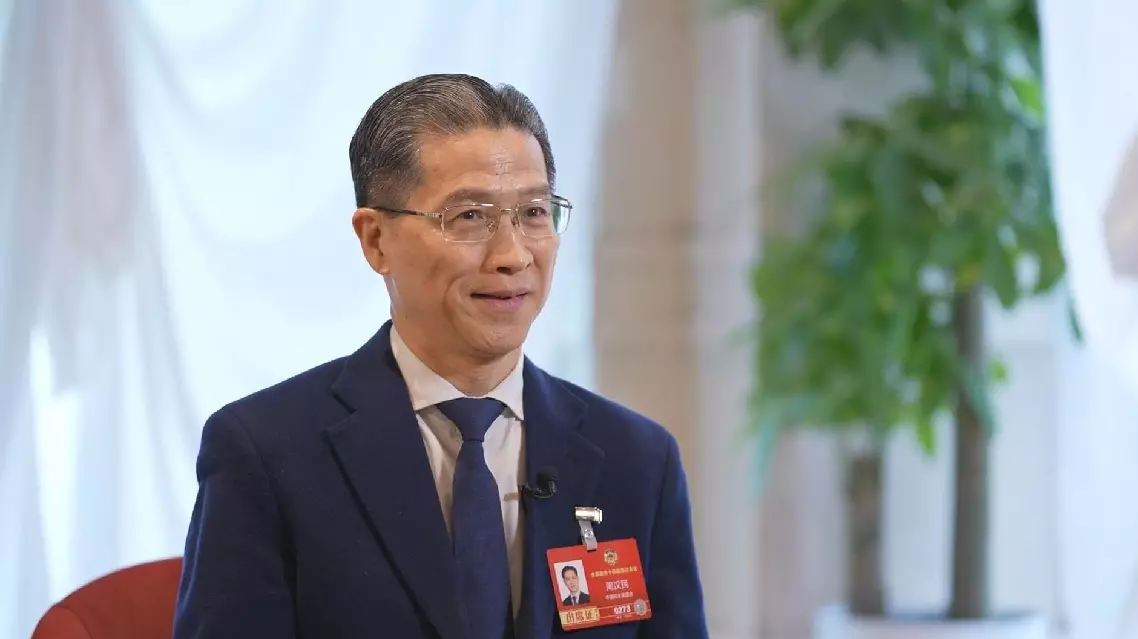
China's opening-up should continue path of inclusiveness: political advisor

China's opening-up should continue path of inclusiveness: political advisor