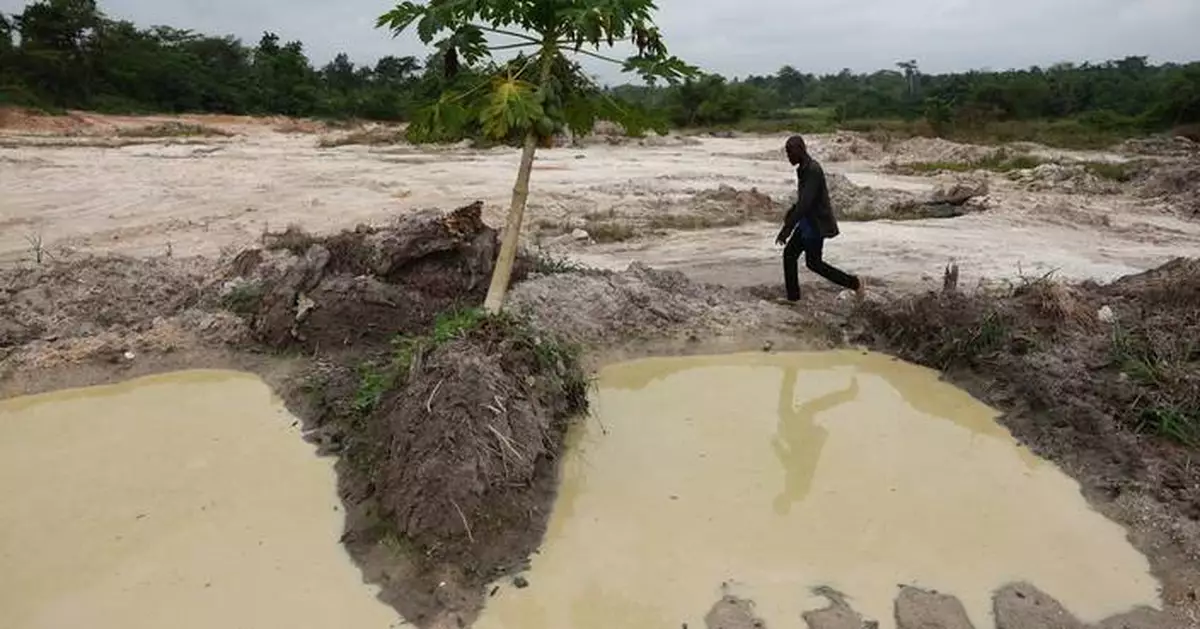
KONA, Ghana (AP) — Manu Yaw Fofie was born into the cocoa farming business, but the land bequeathed to him has become more of a burden than a blessing. A sharp fall in cocoa prices over the past year has left beans rotting in some West African warehouses, while global chocolate makers scramble for supplies and consumers seek their fix.
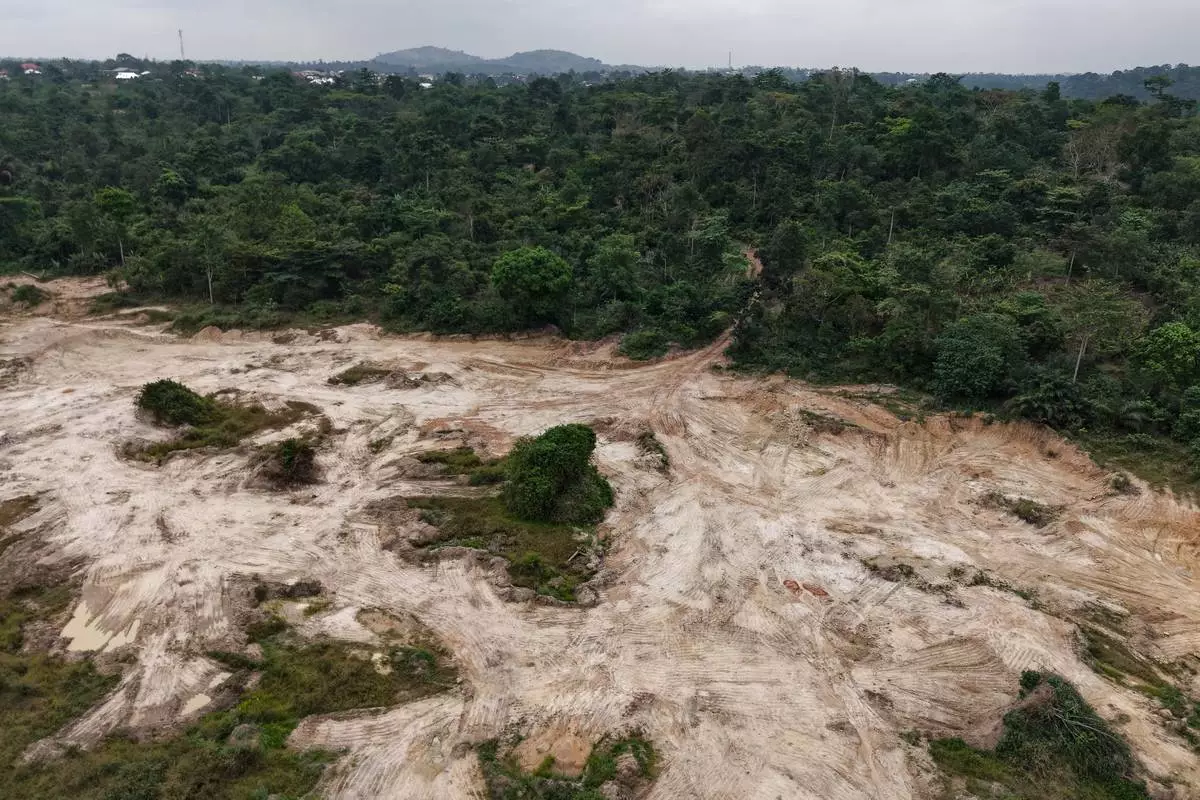
With less money coming in, the 52-year-old Fofie in Ghana has taken the desperate step of giving part of his land to illegal sand miners, a lucrative practice driven by high construction demand since sand is used in concrete.
Click to Gallery
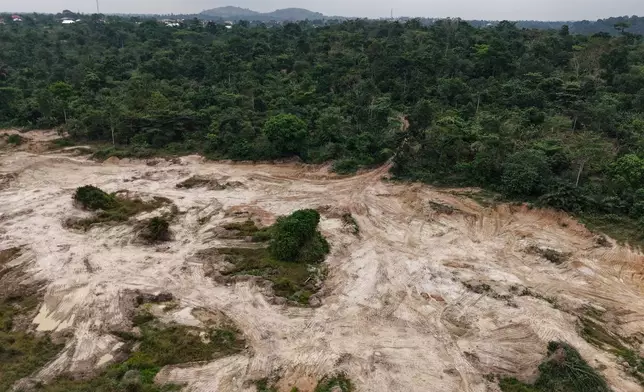
A drone view shows a section of a cocoa farm given over to sand mining in Kona, Ghana, Friday, March 6, 2026. (AP Photo/Tsraha Yaw)
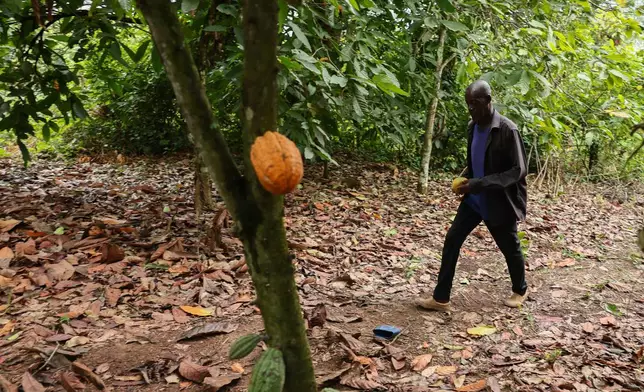
Manu Yaw Fofie, a cocoa farmer, walks through his farm in Kona, Ghana, Friday, March 6, 2026. (AP Photo/Tsraha Yaw)
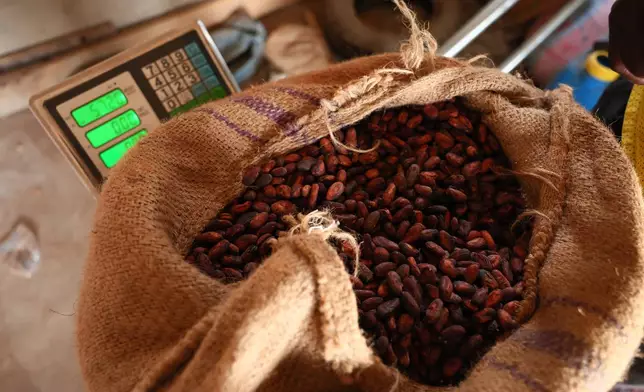
Cocoa beans in a storage facility in Kona, Ghana, Friday, March 6, 2026. (AP Photo/Tsraha Yaw)
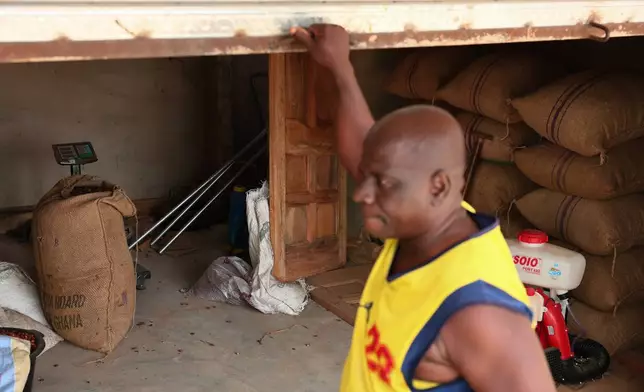
Bags of cocoa beans are stacked in a storage facility in Kona, Ghana, Friday, March 6, 2026. (AP Photo/Tsraha Yaw)
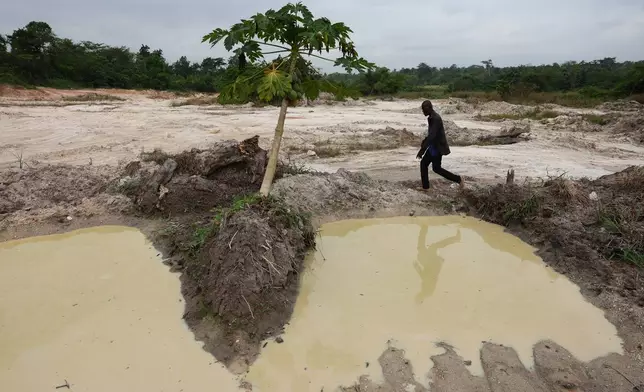
Manu Yaw Fofie, a cocoa farmer, walks through a section of his farm that has been given over to sand mining in Kona, Ghana, Friday, March 6, 2026. (AP Photo/Tsraha Yaw)
The cost is severe, however: the sand mining makes the land infertile.
Aware of the danger, Fofie said he had been left with little choice. He said annual cocoa bean yields has been declining over the years, from the past heyday of 300 bags to 50 bags in 2025, affected by factors including climate change.
Fofie is one of many cocoa farmers in Ghana and Ivory Coast — countries responsible for nearly 70% of the global cocoa bean supply — who are putting their land for other uses after the price of the once high-flying commodity crashed.
Ivory Coast, the world’s leading cocoa producer, had to purchase an excess supply of cocoa beans from farmers in January and this week slashed the price by more than half for 2026.
While a global commodity like cocoa beans is prone to occasional crisis, Ghanaian authorities were not prepared for one at this scale, said Edward Karaweh, former general secretary of the General Agricultural Workers Union.
“Preparation allows you to mitigate the crisis. It is not that you prevent the crisis altogether,” Karaweh said.
Hundreds of thousands of farmers in West Africa rely on cocoa farming for a living. In Ivory Coast, cocoa bean exports make up 40% of the total export revenue. In neighboring Ghana, they make up nearly 15%.
Government regulators set a fixed price for the cocoa bean at the beginning of every planting season, and the majority of the beans are sold through government-licensed parties to protect farmers from price fluctuations on the international market.
However, after a surge in cocoa futures in 2024 on international markets, the futures — a contract to buy a commodity at an agreed-upon price on a future date — reached more than $12,000 per metric ton, the highest in decades. Then it crashed to around $4,000 as supply outstripped demand.
The downturn in price meant global traders would run at a loss if they purchased cocoa beans from the two African countries.
That led to a mounting stockpile of rotting cocoa beans in warehouses, while farmers who already sold their stocks to governments have not been paid for months.
With structural issues, farmers said they missed out on benefiting from the original surge. The whiplash in prices made some decide enough was enough.
Walking through his cocoa trees in Ivory Coast, François N’Gbin pointed to blackened, dried-up pods caused by disease and a lack of rain.
He said he also has given up part of his land, for a fee, to illegal gold miners, then obtained a mining license out of fear of the authorities.
The mining area, partly filled with murky, yellowish water, covers at least 1,000 square meters (1,200 square yards) on his farm.
“Today, gold is more profitable than cocoa,” he said. “We get 1,500 CFA francs ($2.67) per gram of gold, and we’re about to negotiate an increase.”
Many other farmers are finding other uses for their farms, including leasing them to illegal gold miners, according to Moussa Koné, president of the Ivorian cocoa farmers’ union.
“Cocoa is not selling, but farmers still need money to feed their families,” he said.
Ghana has initiated efforts to loosen regulations on price controls, and in January slashed its fixed price for cocoa beans by 28% to 41,392 cedis ($3,881) per metric ton, in an attempt to make the beans more accessible to buyers.
This week, Ivory Coast also slashed the price paid to cocoa farmers by more than half to 1,200 CFA ($2.13) per kilogram ($0.97 per pound) for 2026.
Farmers say the price cut has left their profit margin very slim when they factor in the costs of production.
“Accepting the current price means my son will have to drop out of school,” said Mercy Amponsah, a 50-year-old cocoa farmer in Ghana. Shee was among the farmers who visited the capital, Accra, in January to protest the price cut.
Some cocoa producers elsewhere in the world — South America and Asia — have improved their supply but West Africa still makes up the bulk of production.
Farmers like Fofie say they must find other ways to survive, however.
“If I keep this cocoa farm for the next 10 years, I would die a poor man,” he said.
Adetayo reported from Lagos, Nigeria.
For more on Africa and development: https://apnews.com/hub/africa-pulse
The Associated Press receives financial support for global health and development coverage in Africa from the Gates Foundation. The AP is solely responsible for all content. Find AP’s standards for working with philanthropies, a list of supporters and funded coverage areas at AP.org.
A drone view shows a section of a cocoa farm given over to sand mining in Kona, Ghana, Friday, March 6, 2026. (AP Photo/Tsraha Yaw)
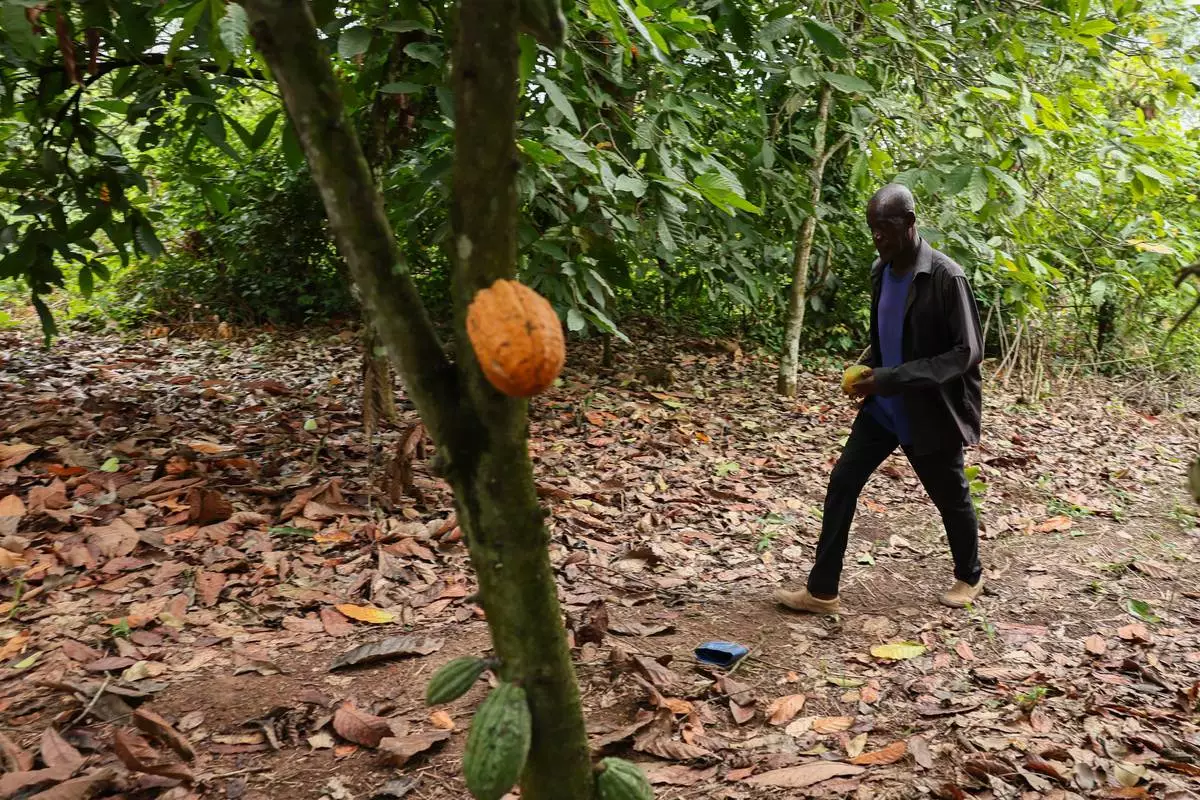
Manu Yaw Fofie, a cocoa farmer, walks through his farm in Kona, Ghana, Friday, March 6, 2026. (AP Photo/Tsraha Yaw)
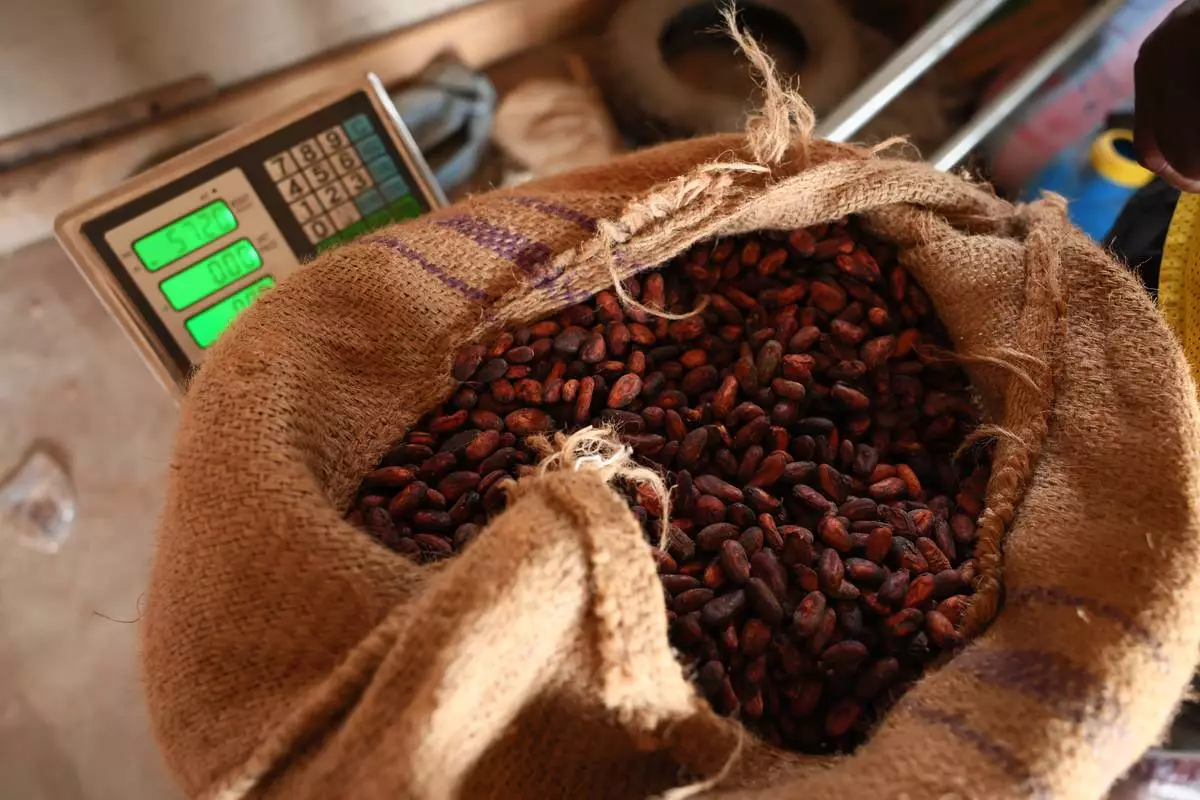
Cocoa beans in a storage facility in Kona, Ghana, Friday, March 6, 2026. (AP Photo/Tsraha Yaw)
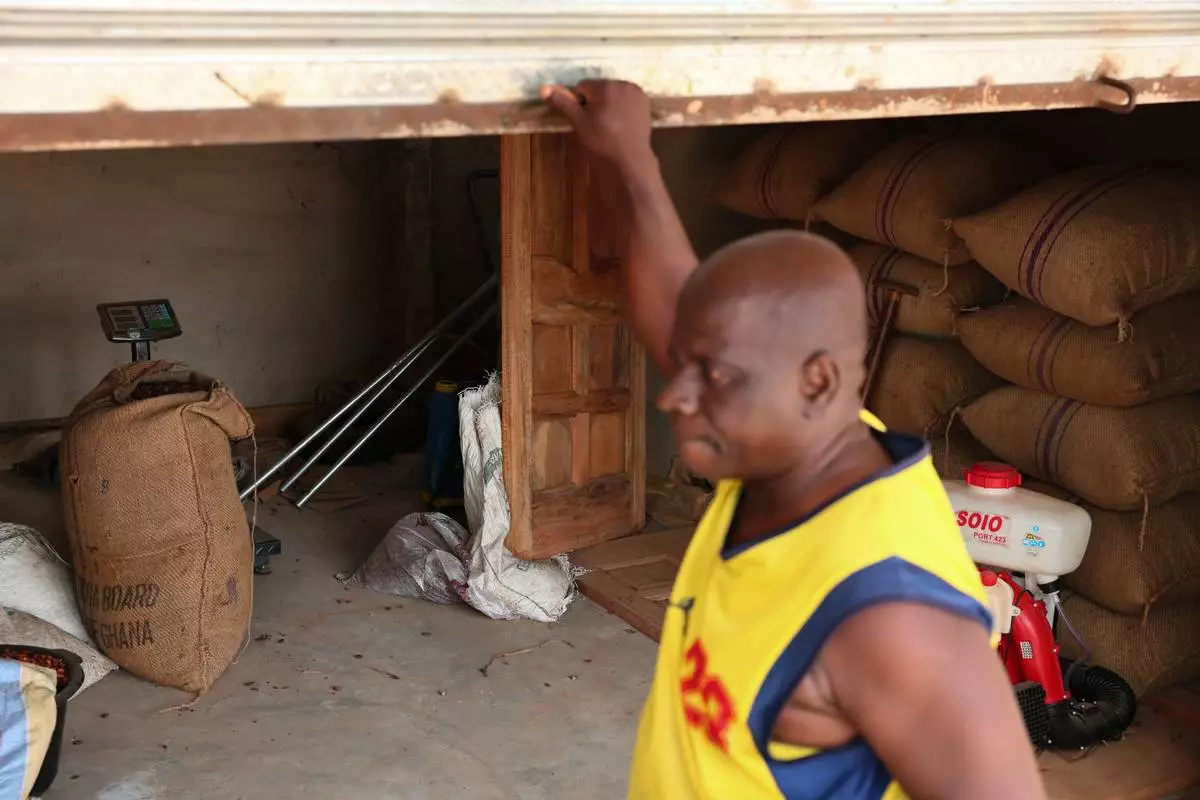
Bags of cocoa beans are stacked in a storage facility in Kona, Ghana, Friday, March 6, 2026. (AP Photo/Tsraha Yaw)
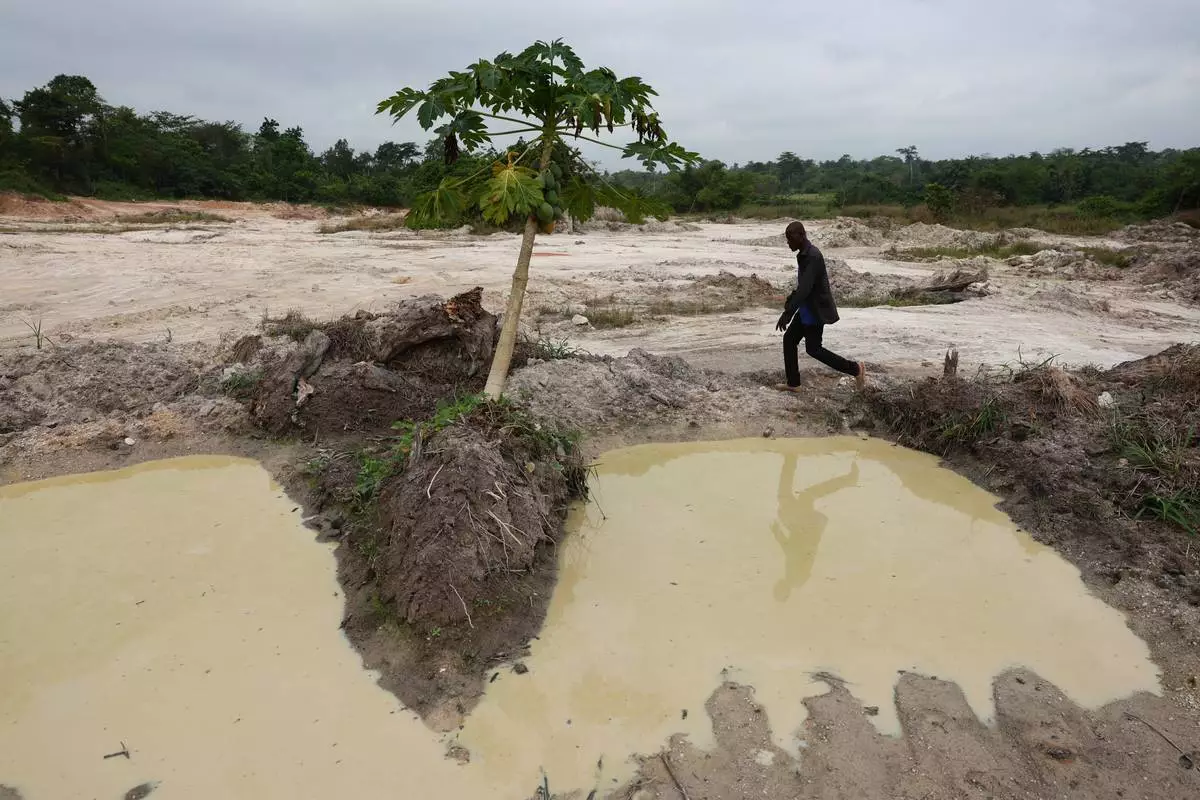
Manu Yaw Fofie, a cocoa farmer, walks through a section of his farm that has been given over to sand mining in Kona, Ghana, Friday, March 6, 2026. (AP Photo/Tsraha Yaw)