Skip to Content Facebook Feature Image

Artificial General Intelligence highlights self-value, autonomous decision-making: developer

China

China

China

Artificial General Intelligence highlights self-value, autonomous decision-making: developer

2026-03-08 20:19 Last Updated At:03-09 12:00

Artificial General Intelligence (AGI) -- the hypothetical intelligence of a machine that possesses the ability to understand or learn any intellectual task that a human being can -- highlights self-value and autonomous decision-making, according to a Chinese developer.

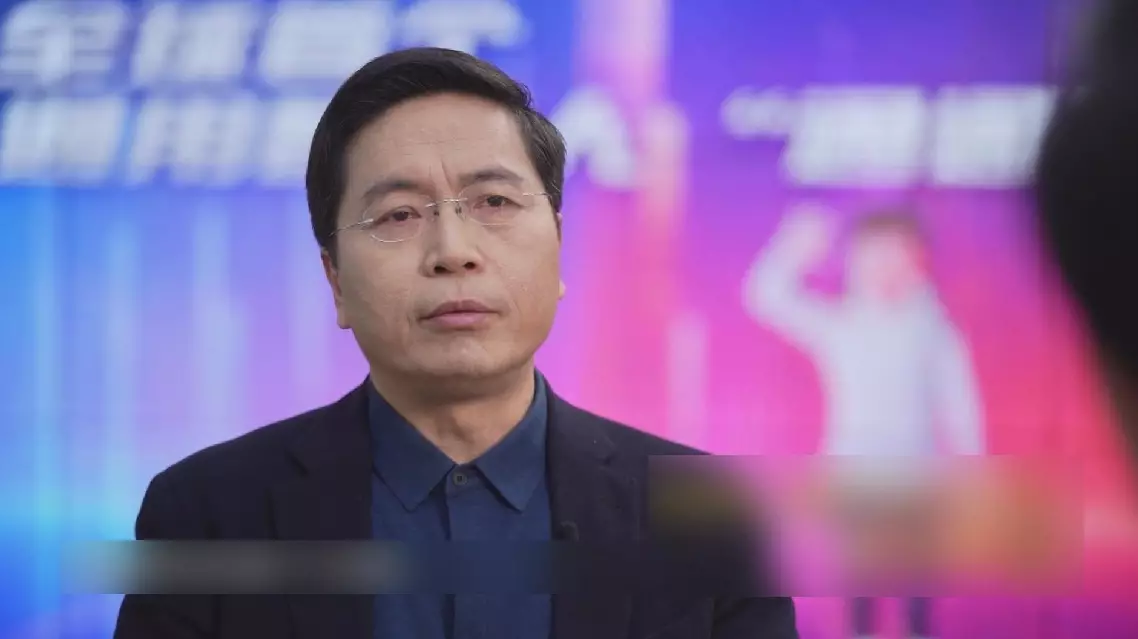
Compared with traditional artificial intelligence, the hallmark of AGI is the construction of its own value system, thereby possessing autonomous decision-making capabilities rather than passively executing instructions, explained Zhu Songchun, dean of the Beijing Institute for Artificial General Intelligence.

To redefine the path toward true AGI, Zhu and his team introduced "Tong Tong," the world's first AGI agent, featuring a young girl AI model capable of autonomous learning, reflection and growth, marking a significant milestone in AI technology development. The 2.0 version of the agent was officially launched in March 2025.

Zhu has been working in the field of AI for 38 years. The creation of Tong Tong began with his core exploration: to give machines a mindset, that is, to free machines from their dependence on massive amounts of data and instead build a cognitive architecture with causal reasoning and self-awareness.

In an interview with China Central Television, Zhu said that the hallmark of AGI is the ability to complete unlimited tasks and to make autonomous decisions, rather than passively executing instructions.

"First, it should be able to accomplish unlimited tasks. Second, it must act autonomously, instead of simply following instructions. Third, it must be driven by its own inner values, because it has an original intention and value, not based on what others say or do," Zhu said.

To support Tong Tong's authentic growth, Zhu and his team built a realistic 3D virtual world for it, allowing it to explore the world, learn basic life skills and social skills, and develop its cognition in a highly simulated physical and social environment, just like a human child.

"Judged superficially, this is called training, but from the technical perspective, it requires a certain structure in its mind before you can train it. So, the first step in social intelligence is that it needs to know what you're thinking, and the way it views others, so that it can begin to recognize value in others. On this basis, we assign it value at various levels," Zhu said.

"In fact, Tong Tong has task management capabilities. When we have different tasks, it will sort them out according to the importance and priority of the problem, as well as its own value, and then choose what to do," said engineer Mou Muyun.

In the global competition for artificial intelligence, hardware such as computing power and electricity are important competitive factors. However, Zhu said that the future will be determined not only by these external conditions, but also by the competition to build a fundamental intelligent architecture based on conscience and value immunity. Such an intelligent architecture can prevent AI from becoming a "tool without principles."

"Speaking of the safety issue of artificial intelligence, we aim to ensure that the value system of Tong Tong is kept safe throughout its development, and further determine ‘safety’ during the process. At the same time, it needs what we call a cognitive immune system, a value immune system, keeping it from accepting certain values or beliefs," Zhu said.

As a member of the 14th National Committee of Chinese People's Political Consultative Conference (CPPCC), Zhu brought his proposals to China's annual political "two sessions", aligning with the government's "AI Plus" initiative which aimed at large-scale deployment of intelligent agents across sectors.

The "two sessions" are the yearly meetings of the National People's Congress (NPC) and the National Committee of the CPPCC. The fourth session of the 14th NPC and the fourth session of the 14th National Committee of the CPPCC kicked off in Beijing on Thursday and Wednesday, respectively.

Zhu said he hopes that the AGI can enter every household and integrate into all walks of life in the future.

"In fact, Tong Tong is a brain, which is why we are going to Hubei, Chongqing, and other central and western regions, where they need us and opened up their industries to us. So we're combining Beijing's technological innovation advantages with their industrial innovation advantages. We have a smart body factory specifically designed to build this kind of platform, and during the 15th Five-Year Plan period (2026-2030) [for national socioeconomic development], we will further develop a large platform to help them build such smart bodies," he said.
Artificial General Intelligence highlights self-value, autonomous decision-making: developer

Artificial General Intelligence highlights self-value, autonomous decision-making: developer
Li Yuhua, a farmer-turned forest ranger from a mountainous village in Dulongjiang Town, southwest China's Yunnan Province, has spent nine years protecting the forests in her hometown while helping local people increasing their incomes.

Li's family was once a registered impoverished household, relying mainly on corn farming for living. Things began to change for her family in 2016 when China launched a policy allowing registered impoverished population to work as ecological forest rangers, and Li became one of the first ecological forest rangers in the town.

"When I first began to work as a forest ranger, it was hard for me even to climb mountains, let alone climb rocks and cross rivers. But I told myself that since the country gave me this opportunity, I must do it well. I worked hard to improve my physical fitness and learn new skills, always actively taking the missions of patrolling mountains," said Li.

As Li often wears a colorful, vibrantly striped "Dulong blanket," a traditional clothing of the Dulong ethnic group, the villagers call her the "rainbow ranger."

"I think the name 'Rainbow Ranger' is beautiful. It makes me feel like a rainbow for us women of Dulong ethnic group guarding our homeland," Li said.

Dulong is a mountain-dwelling ethnic group in southwest China. It is one of the least populous of China's 56 ethnic groups, and the people were known for "direct transition" from primitive life to the modern socialist society at the founding of the People's Republic of China in 1949.

Most Dulong people live in Dulongjiang Town, where an inhospitable mountainous terrain used to thwart the place's development for decades. The town remained to be one of the poorest areas in Yunnan Province and even in the entire country. Thanks to government inputs and the development of industries with local features, the Dulong people have been experiencing remarkable life changes. In 2018, the Dulong ethnic group shook off poverty as a whole.

Beyond safeguarding forests, Li took the lead in developing non-timber forest-based economy in the town, guiding local residents to grow plants like Chinese black cardamom and wild-simulated lingzhi mushrooms as well as raising cattle and bees.

In 2025, the total output value of the town's non-timber forest-based economy reached nearly 30 million yuan (around 4.3 million U.S. dollars), with the annual average income of 43 households increasing by more than 20,000 yuan (around 2,900 U.S. dollars) each.

Li also established a cooperative for Dulong blanket making, attracting more than 170 women to learn traditional weaving techniques. They have developed 12 types of cultural and creative products, including shawls and scarves, and sold them worldwide through livestreaming, generating wealth for themselves.

"In the past, we only wove blankets for our own use. Now she teaches us to make the cultural and creative products and sell them. Last year, I earned more than 4,000 yuan (around 580 U.S. dollars) from weaving. I spent the money on my children's school fees and new appliances for my house," said Mu Jianying, member of the cooperative.

Li's dedication to both forestry and rural revitalization has earned her widespread recognition. In 2024, she was honored as model of ethnic solidarity and progress and received the title certificate from President Xi Jinping. She was also awarded the title of National March 8 Red-Banner Pacesetter, the highest honor presented by the All-China Women's Federation to the country's outstanding women, ahead of the International Women's Day observed on March 8.

Li said her achievements are the result of collective efforts.

"I often think that one person's strength is very limited, but the strength of a group is great. There are 195 ecological forest rangers like me protecting this land in the Dulongjiang Grand Canyon," she said.

As a female forest ranger, Li shared a message for women ahead of the International Women's Day.

"To mark the International Women's Day, I want to say to all my sisters: No matter what position we are in, as long as we are willing to endure hardship and work hard, we will surely weave our own rainbow," she said.

Forest ranger dedicated to guarding green mountains in Yunnan

Forest ranger dedicated to guarding green mountains in Yunnan

Forest ranger dedicated to guarding green mountains in Yunnan

Forest ranger dedicated to guarding green mountains in Yunnan

Recommended Articles