Hundreds of thousands of citizens in Beirut, the capital of Lebanon, have been forced to flee their homes since the Israeli army on Thursday issued an unprecedented order for residents in Beirut's southern suburbs to evacuate immediately, marking the first full evacuation of the area.
The Israeli military also warned residents not to head to southern Lebanon, saying any movement in that direction could endanger their lives, adding that they would be informed when it is safe to return to their homes.
UNHCR, the U.N. Refugee Agency, has declared the situation in Lebanon a major humanitarian emergency.
Israel ordered the evacuation of the entire Lebanese territories south of the Litani River, and the entire southern suburbs of Beirut.
The Israeli command declared the areas an open war zone, where it can strike at will without prior warning.
About two million Lebanese people live in the specified locations. Fatima is one of them. She took her van and eight of her children and grandchildren to a government shelter in Beirut.
"Since the ceasefire in 2024, every day we in the south, whether a member of the resistance or not, have been subjected to killings with or without a reason, until Hezbollah responded. After being commanded to clear the south, thousands fled to the extent that the highway had no space for people to reach a hospital. I was a 22-year-old girl who gave birth in the street. What values are these? What justice is that?" she said.
More than 100,000 Lebanese citizens have so far registered their displacement, but the government estimates multiples of that figure are still unregistered or in transit.
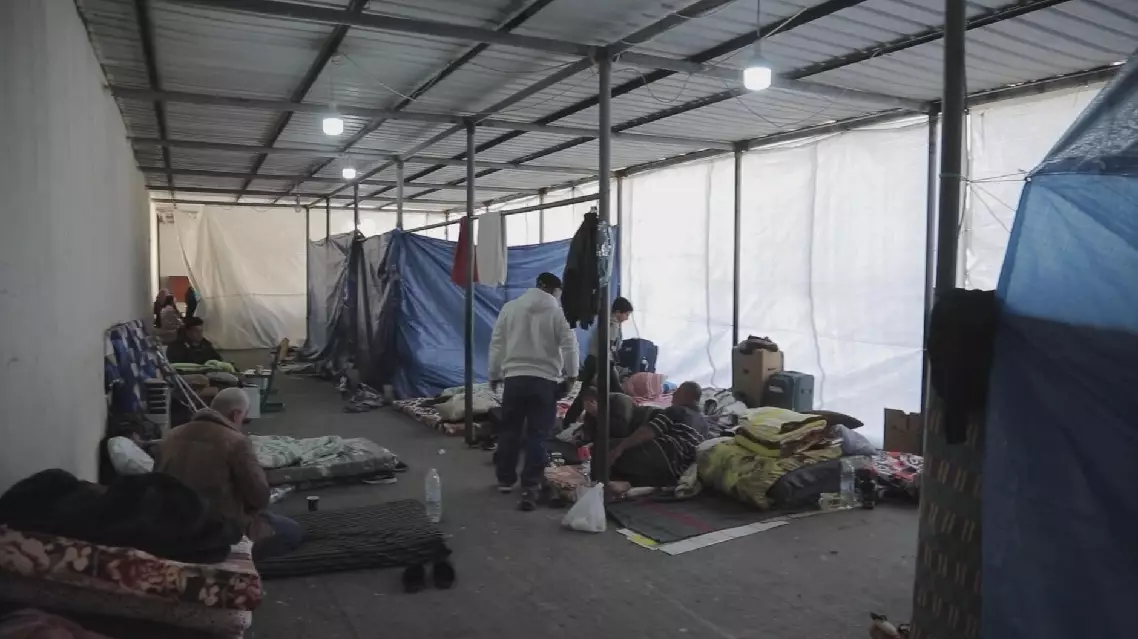
The sudden surge in the number of displaced people has put massive pressure on the government, which rushed to pause public education, turning schools and other government buildings into shelters.
"We've surpassed our maximum capacity. We were forced to open our big dining hall. There's no separation, no privacy. People are sitting there together because we can't say 'No' to anyone. Some prefer to sleep in their cars. We have a lot of needs. During this severe cold, what are the most important are sleeping bags, pillows and food, especially since we are in the holy month of Ramadan and people are fasting," said Farouk Al Haraki, manager of the government sheltering center.
The displaced people included seven-year-old Zahraa who came here with her mom, leaving the rest of their family, as well as 73-year-old Azhar Hussein who came with one of her sons and three grandchildren.
"We slept in the street in the ice cold weather. We didn't even have a jacket. What harm have they caused? As a grown-up, you can bear this. But what can children do? My daughter is not with me. She has two toddlers, and when the war started, they cried and screamed. She cried, too. Where would they go?" said Azhar Hussein.
In the southern city of Sidon, the scene is no different. Schools here have reached their maximum capacity. There is a tragic story behind each family. Their biggest hope is to survive the war.
Fewer Lebanese have been displaced this time compared to the 2024 October War, but the government is feeling the shock even more acutely. One key reason is that the entire region is in lockdown, leaving citizens with no option but to remain in Lebanon. And instead of issuing staggered evacuation warnings, the Israel Defense Forces ordered the people in the entire southern Lebanese territories to leave all at once.
Israeli evacuation order displaces hundreds of thousands in Beirut