JAKARTA, Indonesia (AP) — A massive avalanche of garbage at Indonesia’s largest landfill killed at least five people and left several others missing after heavy overnight rain triggered a rubbish dump collapse, officials said Monday.
More than 300 search-and-rescue personnel, using heavy machinery and sniffer dogs, were deployed to the sprawling dump site late Sunday at the Bantargebang Integrated Waste Treatment Facility in Bekasi, a city just outside the capital of Jakarta. Rescuers worked cautiously amid unstable heaps of waste, said Desiana Kartika Bahari, who heads Jakarta's Search and Rescue Office.
She said the victims included two garbage truck drivers and two food stall sellers who had been working or resting near the landfill, while four people managed to escape the disaster. Rescuers, including police, soldiers and volunteers, were still searching for at least three people reported missing, Bahari said.
“We had not ruled out the possibility of more victims,” she said, “We are still gathering data to confirm how many vehicles and workers were caught beneath the debris.”
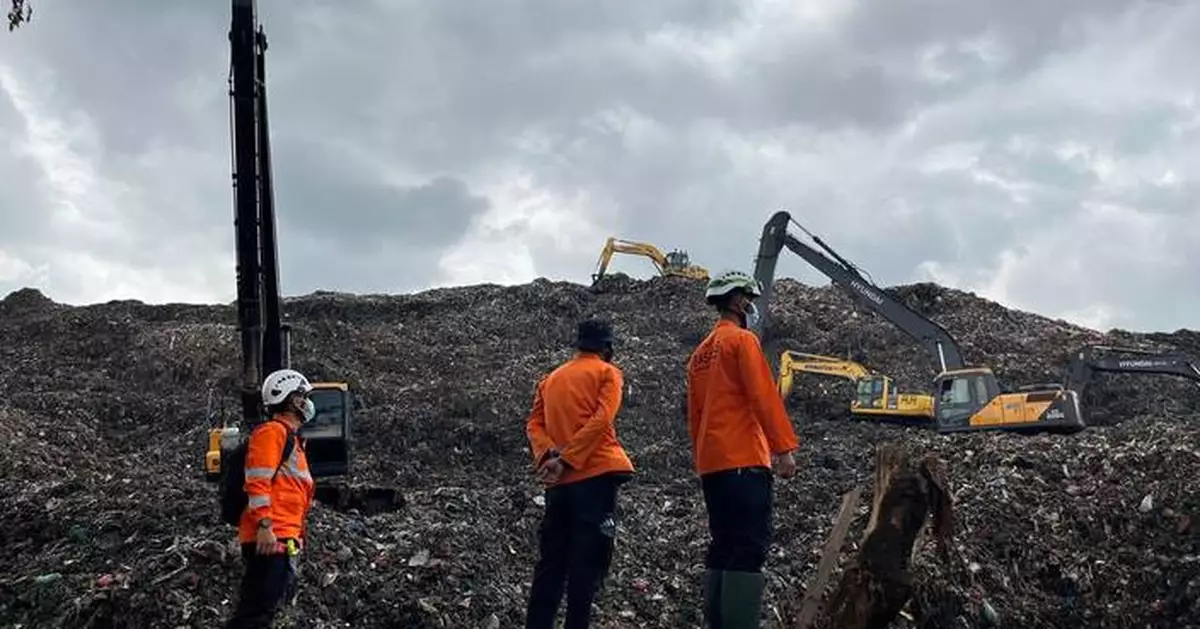
Photos and videos released by the National Search and Rescue Agency showed excavators digging through the collapsed mound, where several garbage trucks and small food stalls were buried.
The National Disaster Management Agency's spokesperson, Abdul Muhari, urged strict safety protocols during the ongoing search, noting that weather forecasts for the next two days indicate potential rain across Jakarta and its nearby satellite cities.
He warned that the unstable collapsed material could trigger additional ground movement, putting rescue teams at further risk.
Sunday's deadly collapse renewed scrutiny of Bantargebang, a critical but overwhelmed landfill that receives most of Greater Jakarta’s daily household waste. The site has faced repeated warnings about capacity, prompting national efforts to overhaul Indonesia’s waste management system.
In January, a similar collapse of garbage and debris buried or trapped workers in low-slung buildings at a landfill in the Philippines, killing at least four people, injuring a dozen and leaving more than 30 others missing.
In 2005, 31 people were killed and dozens went missing after a 7 meters (23 feet) rubbish dump collapsed following heavy rain, triggering a landslide that buried or damaged 60 houses in two West Java villages near the Indonesian city of Bandung.
Late last year, the government announced a two-year deadline to clear Bantargebang through an accelerated waste-to-energy project aimed at reducing chronic over reliance on open dumping. The initiative, backed by a new presidential regulation intended to streamline licensing and encourage investment, calls for converting refuse into electrical or thermal energy.
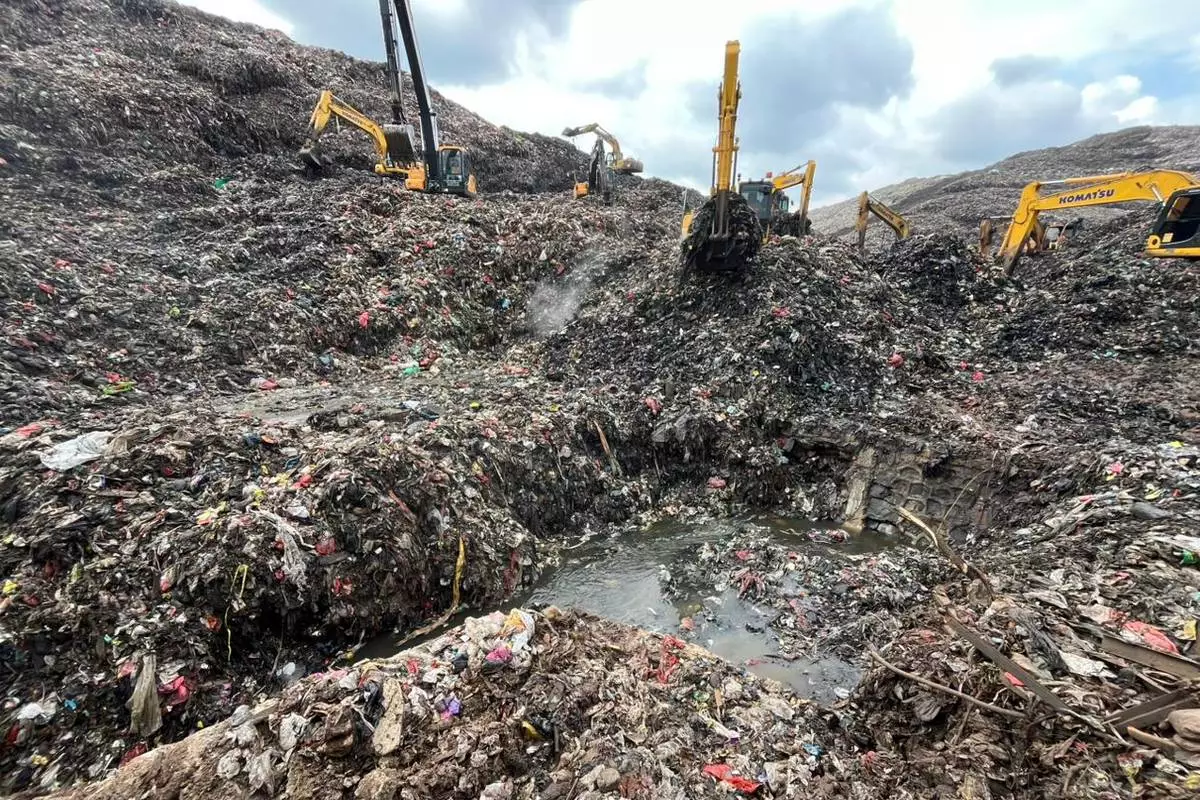
In this photo released by the Indonesian National Search and Rescue Agency (BASARNAS) on Monday, March 9, 2026, rescuers use heavy machines to search for victims of an avalanche of garbage that killed multiple people at a dump site in Bantargebang, West Java, Indonesia. (BASARNAS via AP)
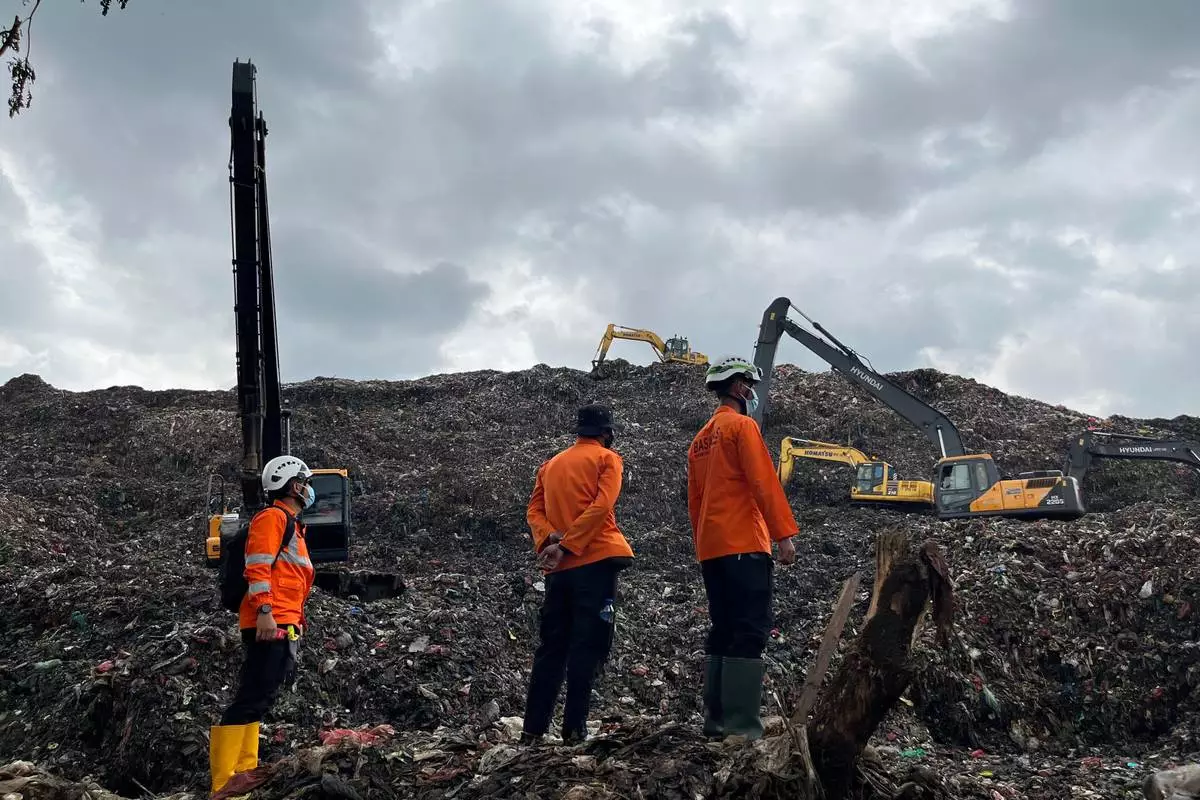
In this photo released by the Indonesian National Search and Rescue Agency (BASARNAS) on Monday, March 9, 2026, rescuers inspect the site of an avalanche of garbage that killed multiple people as heavy machines are used to search for victims at a landfill in Bantargebang, West Java, Indonesia. (BASARNAS via AP)
DUBAI, United Arab Emirates (AP) — Iran named Mojtaba Khamenei, a son of its late supreme leader, the Islamic Republic’s next ruler on Monday, putting a hard-line cleric in charge as the war spreading across the Middle East sent oil prices skyrocketing with Iran launching new attacks on regional energy infrastructure.
With Iran’s theocracy under assault by the United States and Israel for more than a week, the country’s Assembly of Experts chose the secretive, 56-year-old cleric with close ties to the country’s paramilitary Revolutionary Guard as the new supreme leader. The Guard has been firing missiles and drones at Israel and Gulf Arab states since the younger Khamenei’s father, Ayatollah Ali Khamenei, was killed Feb. 28 during the war’s opening salvo.
Iran's stranglehold on the Strait of Hormuz has also all but stopped tankers from using the shipping lane between the Persian Gulf and Gulf of Oman through which a fifth of the world's oil is carried. Brent crude oil, the international standard, surged to more than $114 a barrel on Monday, some 60% higher than when Israel and the United States first attacked Iran.
As global concerns grew over economic effect, U.S. President Donald Trump downplayed the spike in prices as temporary.
“Short term oil prices, which will drop rapidly when the destruction of the Iran nuclear threat is over, is a very small price to pay for U.S.A., and World, Safety and Peace," Trump wrote on social media.
Iran has been firing on Israel and American bases in the region since the start of the war, but has also been launching missiles and drones at energy and water infrastructure.
On Monday, a fire broke out at an oil facility that was attacked in Fujairah, United Arab Emirates, and Saudi Arabia said it had intercepted several drones attacking the Shaybah oil field.
Israel, meantime, said it was launching new airstrikes on central Iran.
The younger Khamenei, who had not been seen or heard from publicly since the war started, had long been considered a potential successor. That was even before the Israeli strike killed his father, and despite never being elected or appointed to a government position.
There appeared to be some dissension over his selection. Political figures within Iran criticized the idea of handing over the supreme leader's title based on heredity and thereby creating a clerical version of the rule of the shah, who was toppled during the 1979 Islamic Revolution. But top clerics in the Assembly of Experts likely wanted Khamenei to prosecute the war.
Khamenei, who is believed to hold views that are even more hard-line than his late father, now will be in charge of Iran's armed forces and any decision regarding Tehran's nuclear program.
While the country's key nuclear sites are in tatters after the United States bombed them during the 12-day Israel-Iran war in June, there's still highly enriched uranium in Iran that's a technical step away from weapons-grade levels. Khamenei could choose to do what his father never did — build a nuclear bomb.
Israel has already described him as a potential target, while Trump had called him “unacceptable.”
“We want someone that will bring harmony and peace to Iran,” Trump had said.
Iran's Revolutionary Guard issued a statement expressing support, as did the Iran-backed Lebanese militant group Hezbollah.
Top Iranian security official Ali Larijani, speaking to Iranian state television, praised the Assembly of Experts for “courageously” convening even as airstrikes continued in Tehran. He said the younger Khamenei had been trained by his father and “can handle this situation.”
Saudi Arabia lashed out at Iran following a thwarted drone attack on its massive Shaybah oil field, saying Tehran would be the “biggest loser” if it continues to attack Arab states.
The Foreign Ministry said Iranian attacks mean “further escalation which will have grave impact on the relations, currently and in the future.”
In addition to targeting energy facilities also in the UAE, Iran on Monday also attacked Kuwait, Qatar and Bahrain, where it hit a residential area wounding 32 people, including several children, according to authorities.
Bahrain has also accused Iran of damaging one of its desalination plants, though its electricity and water authority said supplies remained online. Desalination plants supply water to millions of residents in the region and thousands of stranded travelers, raising new fears of catastrophic risks in parched desert nations.
On Monday, Bahrain’s state oil company declared force majeure for its oil shipments, state-run Bahrain News Agency reported, a legal maneuver that releases a company of its contractual obligations because of extraordinary circumstances. It insisted that local demand could still be met.
In Iraq, air defenses show down a drone as it attacked a U.S. military compound inside the Baghdad International Airport, a security source told the AP on condition of anonymity because they were not authorized to speak to the press.
There were no reported injuries or damage and it was not immediately clear who was behind the attack, but Pro-Iranian Iraqi militias have previously targeted the base.
Elsewhere, the U.S. military had said a service member died of injuries from an Iranian attack on troops in Saudi Arabia on March 1. Seven U.S. soldiers have now been killed.
The U.S. State Department early Monday ordered nonessential personnel and families of all staff to leave Saudi Arabia following the escalation in attacks.
Eight other U.S. diplomatic missions have ordered all but key staff to leave: Bahrain, Iraq, Jordan, Kuwait, Lebanon, Qatar, the United Arab Emirates and the consulate in Karachi, Pakistan.
The war has killed at least 1,230 people in Iran, at least 397 in Lebanon and at least 11 in Israel, according to officials. Israel reported its first soldier deaths Sunday, saying two were killed in southern Lebanon, where its military is fighting Hezbollah.
Rising reported from Bangkok and Magdy from Cairo. Associated Press journalists Sam Metz in Ramallah, West Bank, Sally Abou AlJoud in Beirut, Lebanon, Aamer Madhani in Doral, Florida, and Qassem Abdul-Zahra in Baghdad contributed reporting.
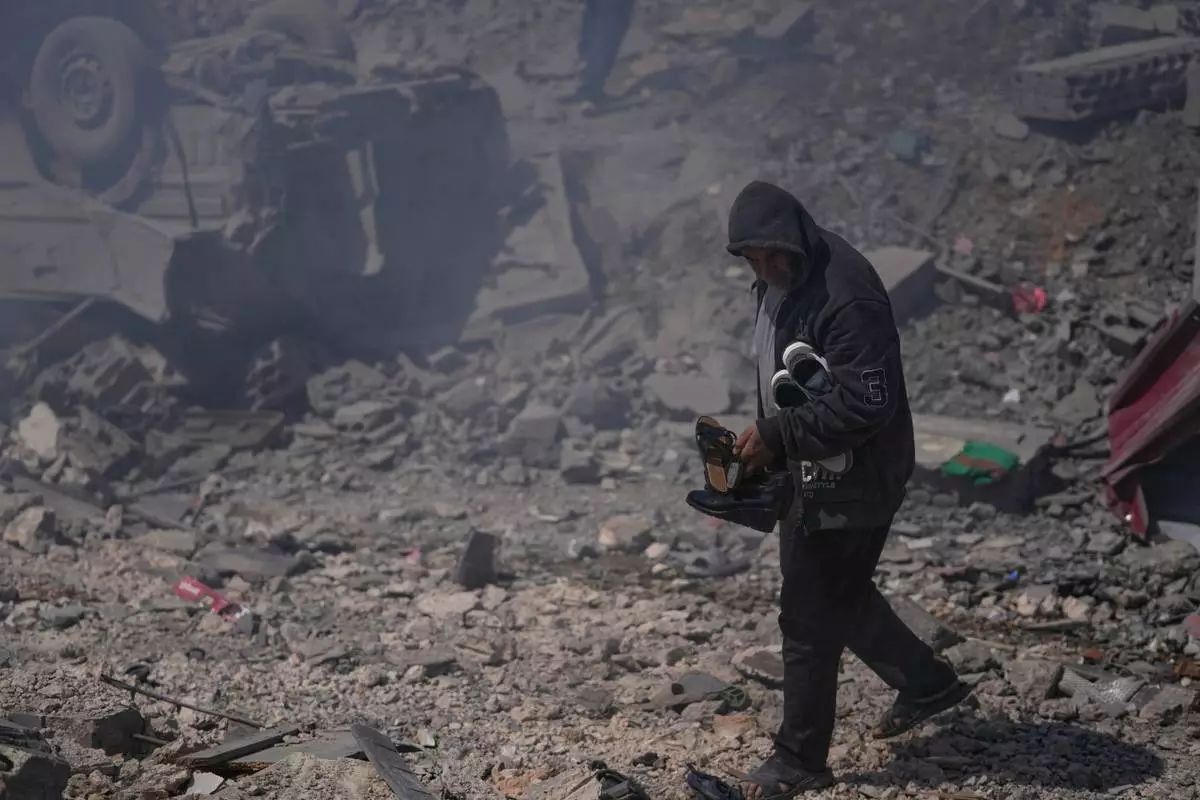
A man carries shoes from his destroyed house that was hit by Israeli airstrikes hit several houses in Sir al-Gharbiyeh village south Lebanon, Sunday, March, 8, 2026. (AP Photo/Mohammed Zaatari)
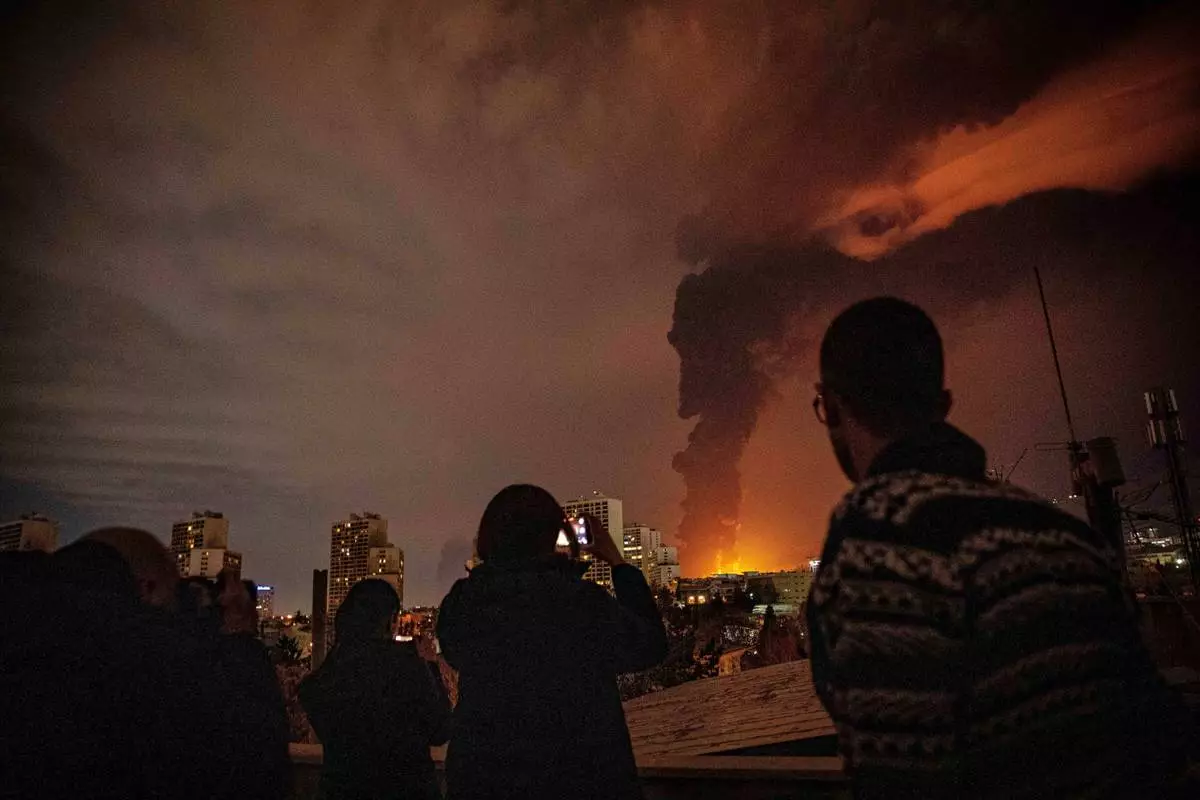
Residents look on and take pictures as flames and smoke rise from an oil storage facility struck as attacks hit the city during the U.S.–Israeli military campaign in Tehran, Iran, Saturday, March 7, 2026. (Alireza Sotakbar/ISNA via AP)
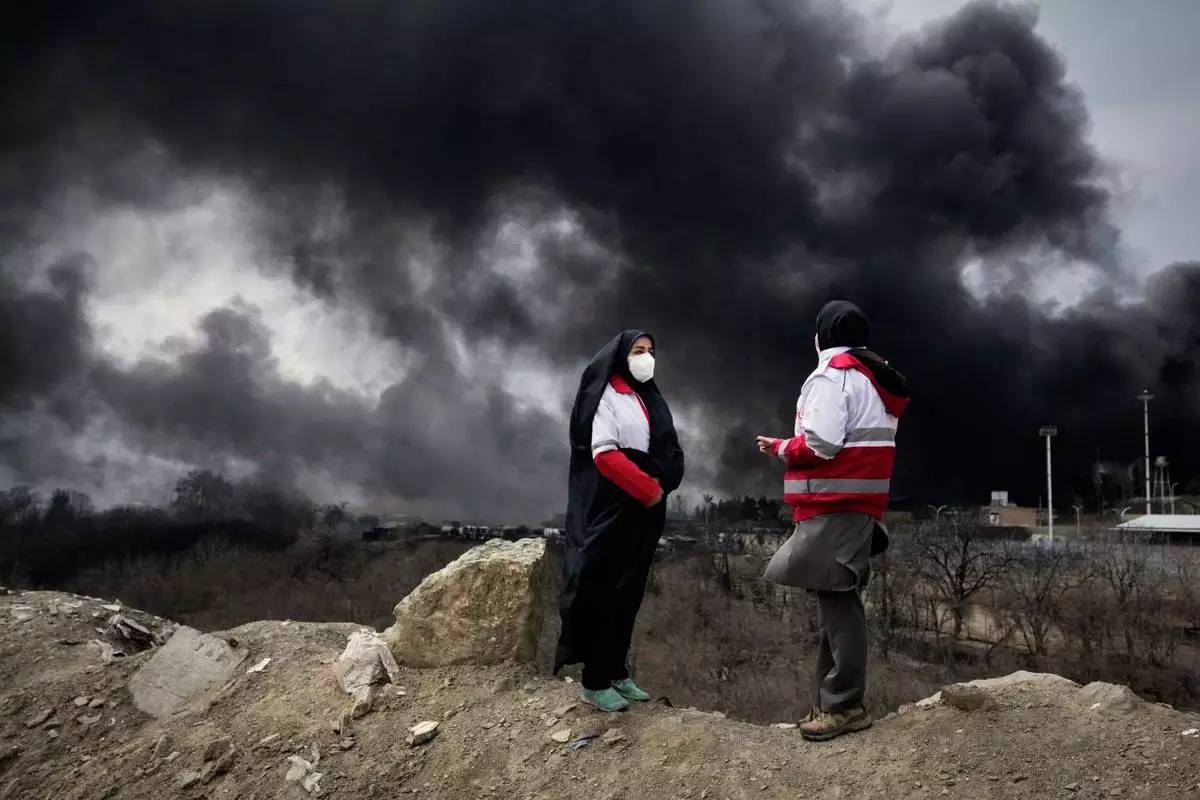
Two women from the Iranian Red Crescent Society stand as a thick plume of smoke from a U.S.-Israeli strike on an oil storage facility late Saturday rises in the sky in Tehran, Iran, Sunday, March 8, 2026. (AP Photo/Vahid Salemi)
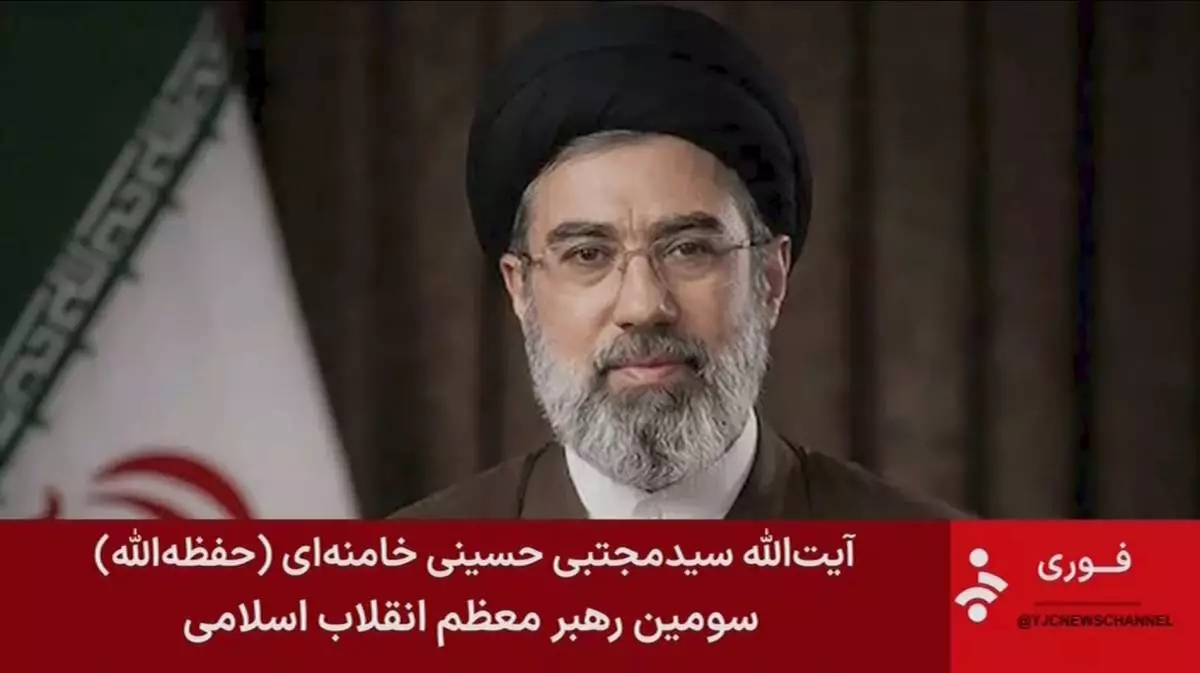
This image taken from video provided by Iran state TV shows Mojtaba Khamenei, a son of Iran's slain supreme leader, who has been named as the Islamic Republic's next ruler, authorities announced Monday, March 9, 2026. (Iran state TV via AP)