CORTINA D'AMPEZZO, Italy (AP) — Russia’s national anthem will ring out at the Paralympics for the first time in more than a decade after Para alpine skier Varvara Voronchikhina won gold on Monday.
Russian athletes are back competing under their own flag in the Winter Paralympics at Milan Cortina, after years of having to do so as neutral athletes because of the country’s doping violations and military conflicts.
The 23-year-old Voronchikhina, who claimed bronze in the downhill two days earlier, finished first in the women’s super-G standing competition on Monday and the medal ceremony was set to take place shortly.
It will be the first time Russia’s anthem will be played at a major global sporting event since the invasion of Ukraine in 2022 and the first time it is heard at the Paralympics since the 2014 Games in Sochi.
“It’s really special for me, I can see my flag (on the top of the podium)," Voronchikhina said. “Maybe now I can’t believe it, and I don’t understand what happened. Maybe I’ll see my gold medal and (believe)… it’s so special for me.
“It’s amazing. I have a big support of my family and friends and all the people in Russia.”
The Russian national anthem for a gold medal win has not been heard at any Olympics or Paralympics since the 2016 Rio de Janeiro Summer Games.
Russian athletes were initially banned because of a state-sponsored doping program, and the sanctions had continued after the invasion.
Russia arrived at Milan Cortina with six athletes. The International Paralympic Committee gave wildcard entries to Russian athletes, a decision that upset Ukraine and a few other nations that boycotted the opening ceremony on Friday.
AP Winter Paralympics: https://apnews.com/hub/paralympic-games

Varvara Voronchikhina, of Russia, stands on the podium after winning the bronze medal in the alpine skiing women's downhill standing competition at the 2026 Winter Paralympics, in Cortina d'Ampezzo, Italy, Saturday, March 7, 2026. (AP Photo/Emilio Morenatti)
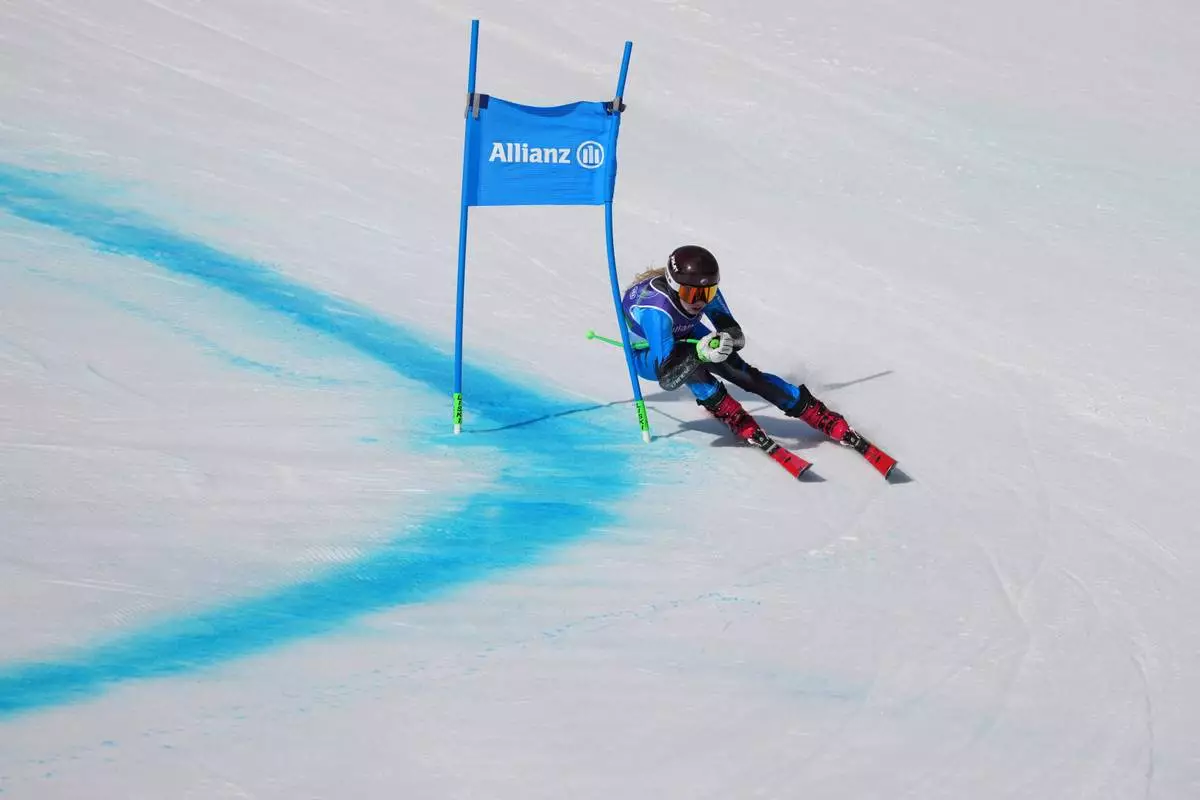
Varvara Voronchikhina, of Russia, competes in the alpine skiing women's super-G standing final at the 2026 Winter Paralympics, in Cortina d'Ampezzo, Italy, Monday, March 9, 2026. (AP Photo/Evgeniy Maloletka)
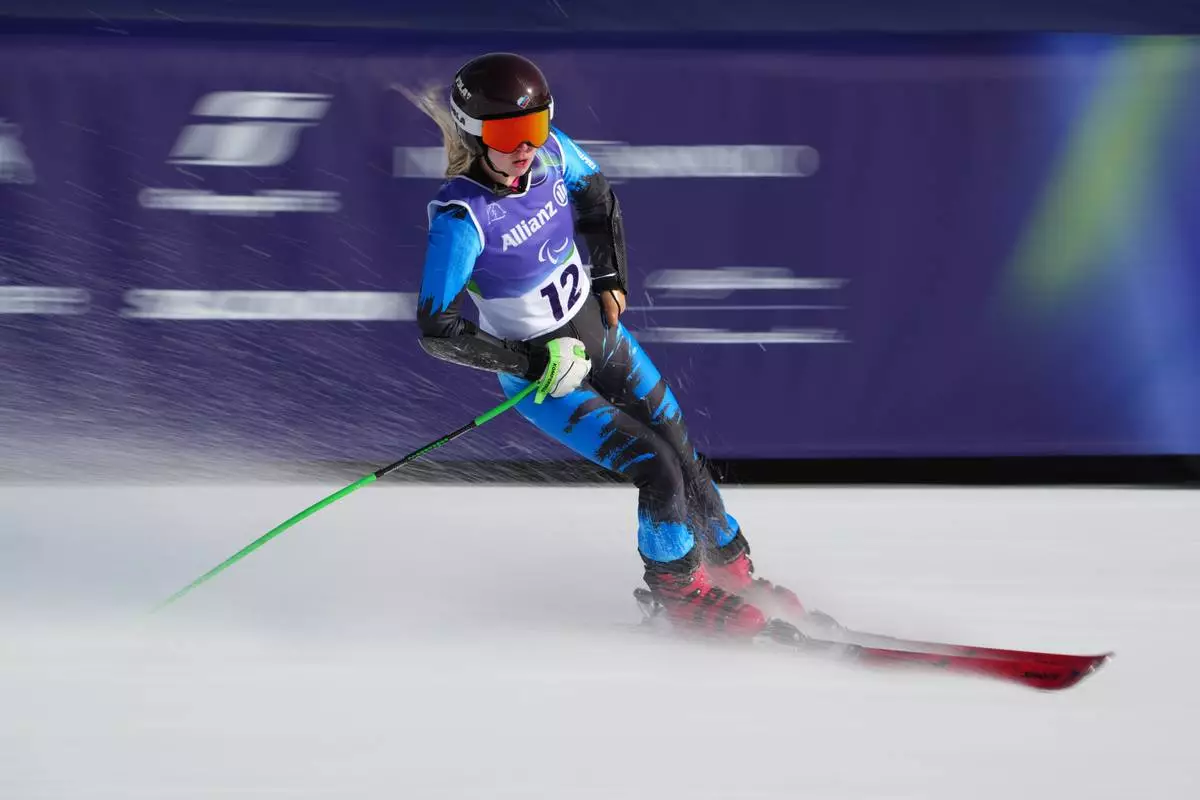
Varvara Voronchikhina, of Russia, crosses the finish line in the alpine skiing women's super-G standing final at the 2026 Winter Paralympics, in Cortina d'Ampezzo, Italy, Monday, March 9, 2026. (AP Photo/Emilio Morenatti)
BERLIN (AP) — Chancellor Friedrich Merz's party has made a disappointing start to a year packed with German state elections, suffering a narrow defeat in an important industrial region after a prominent candidate powered the environmentalist Greens to a come-from-behind victory.
Merz's center-right Christian Democratic Union was long confident of winning back the governor's office in Baden-Württemberg, a region of more than 11 million people in southwestern Germany that is home to automakers Mercedes-Benz and Porsche, among many other companies. The country's first and so far only Green governor, Winfried Kretschmann, is retiring after 15 years in charge of a traditional conservative heartland.
A CDU victory long looked likely despite the unpopularity of Merz's 10-month-old federal government, which has struggled to get Germany's stagnant economy moving. But the party's poll lead shrank ahead of Sunday's election thanks to a Green campaign focused on Cem Özdemir, a longtime federal lawmaker and former German agriculture minister.
Final results Monday showed the Greens taking 30.2% of the vote, just ahead of the CDU with 29.7% — a gain compared with five years ago but not enough for victory. The far-right Alternative for Germany nearly doubled its support to 18.8%, reflecting its gains in last year's national election. Merz's partners in the federal government, the center-left Social Democrats, lost half their support to poll an embarrassing 5.5%.
Özdemir, 60, touted his experience and leaned hard into the Greens' relatively conservative image in Baden-Württemberg — a contrast with the party's more left-wing approach nationally, where it is in opposition.
His 37-year-old CDU opponent, Manuel Hagel, was much less well-known and probably wasn't helped by a video from 2018 posted recently by a Green federal lawmaker in which Hagel talked about a visit to a school and a female student's “fawn-brown eyes.”
The two parties are expected to govern Baden-Württemberg together, as they have in a coalition for the past 10 years, with Özdemir as Germany's first state governor with Turkish roots.
Sunday's was the first of five state elections this year. The next, on March 22 in neighboring Rhineland-Palatinate, pits the national governing parties against each other. It has been led since 1991 by the Social Democrats, who are in a tight race with Merz's CDU for first place.
In September, there are elections in Berlin and two regions in the ex-communist east, where Alternative for Germany, or AfD, is particularly strong and hopes to get its first state governor.
Jens Spahn, the conservatives' parliamentary leader in Berlin, conceded that Sunday's result was “bitter” but pointed to his party’s gains and contended that Özdemir won by essentially hiding his Green credentials. He argued that the federal government's recent performance had been helpful, including “the chancellor's strong foreign policy performance.”
Merz, who has visited Washington and Beijing in the past two weeks, has sometimes drawn criticism for spending a lot of time on foreign policy, which he rejects.
“His foreign policy presence may be really good, but he can only gain popularity and the federal CDU can only gain in polls if things go better domestically,” Uwe Jun, a political science professor at the University of Trier, told Phoenix television.
“He needs significant improvements in the area of social and economic policy,” Jun said.
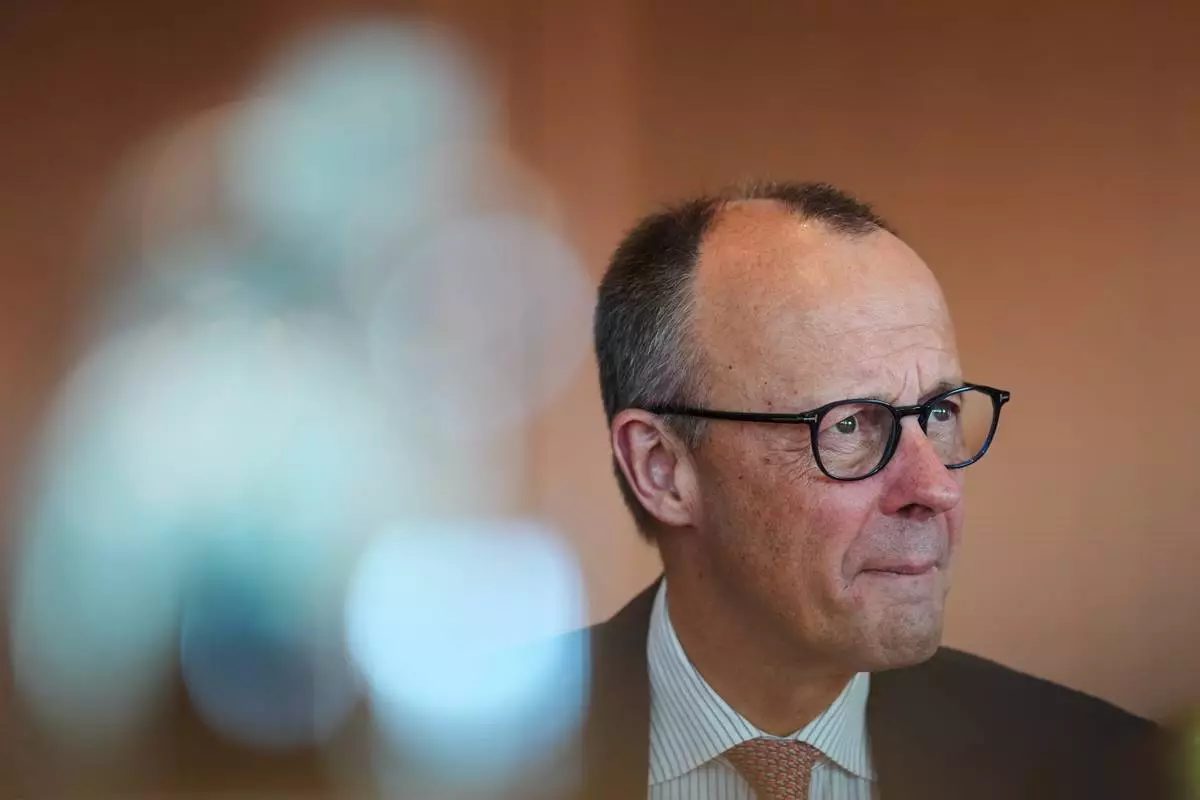
German Chancellor Friedrich Merz attends the cabinet meeting at the chancellery at the Chancellery in Berlin, Germany, Wednesday, March 4, 2026. (AP Photo/Markus Schreiber)
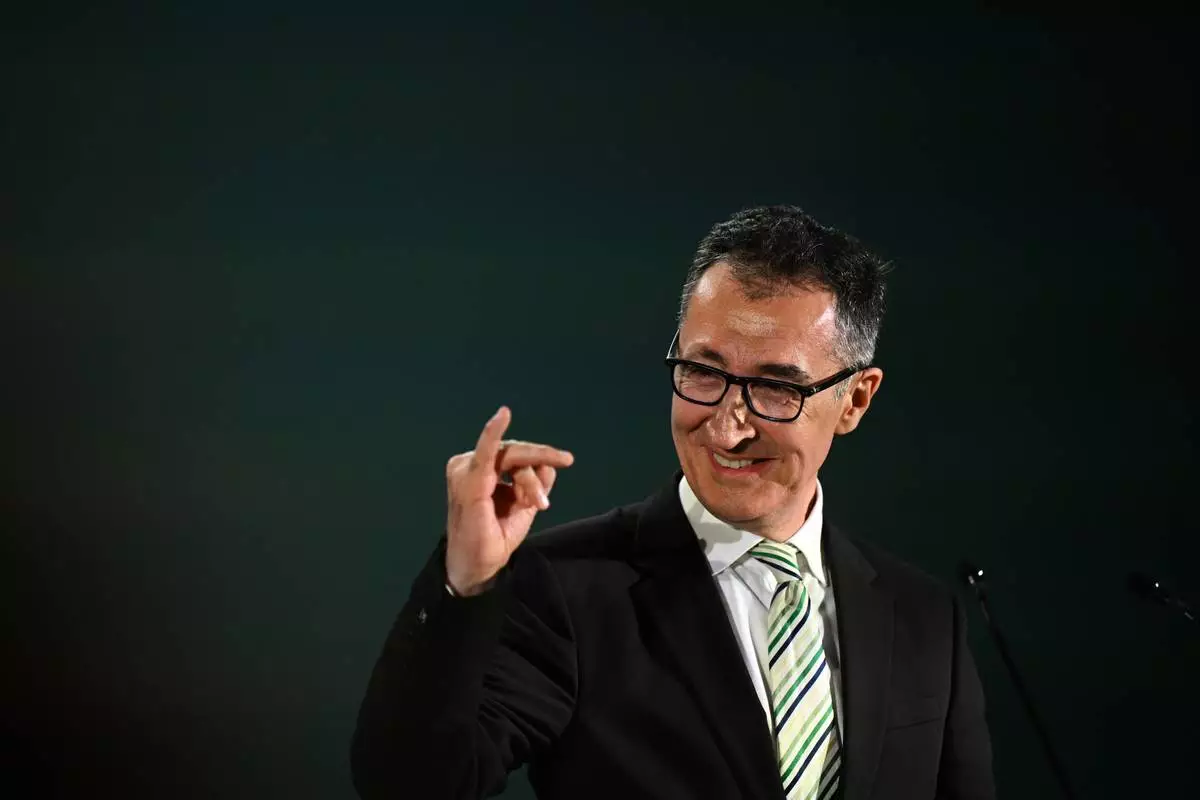
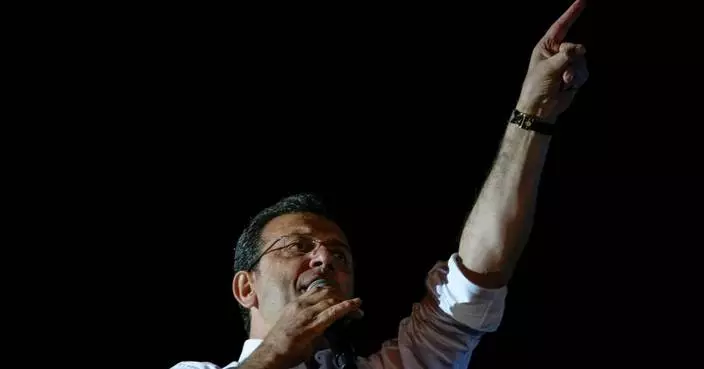
Cem Özdemir (Alliance 90/The Greens), top candidate in the Baden-Württemberg state elections, makes a gesture at his party's election party and stretches up the little finger of his right hand, in Stuttgart, Germany, Sunday, March 8, 2026. (Bernd Weißbrod/dpa via AP)