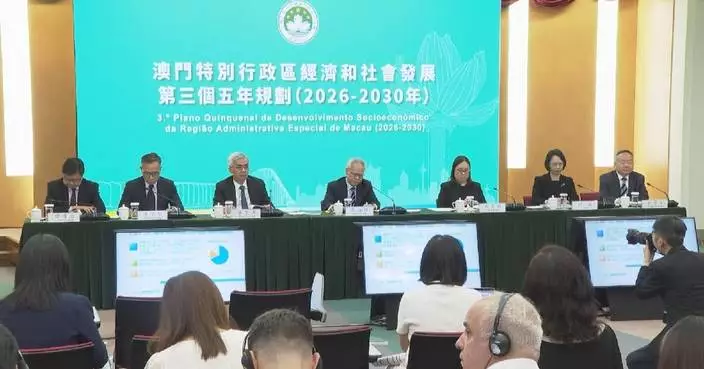
An increasing number of age-friendly products have hit the Chinese market and made life easier for senior citizens, as part of a nationwide effort to serve rapidly growing elderly population.
In an old residential building in Beijing's northern suburb, the first thing 78-year-old Gong Meilin does when she gets home every day is sitting on the armrest-equipped shoe-changing bench in the entryway, before standing up with the help of the handles.
"Every time I enter the house, I sit right here. I find this chair very convenient, and it has two armrests. When I get up, I can stand up easily by holding them," she said.
Previously, she used a small round stool instead, which, she said, was not quite unstable.
In addition to the armrest-equipped shoe-changing bench, a shower chair and toilet grab bars have been set up in Gong's house, which are very helpful, she said.
"Only after actually using them did I realize how convenient they are for elderly people, and they are truly necessary," she said.
According to Chinese Center for Disease Control and Prevention (China CDC), on average, three to four out of every 10 people over 65 years of age have experienced falls, with over half occurring in bathrooms or toilets.
Although home age-friendly modifications are becoming an urgent necessity, many seniors know little about the items, dare not buy them, or don't know where to buy.
To address the elderly consumers' concerns, Wang Youguang, chairman of Jiazi Elderly Care Services, opened an offline experience store displaying 15,000 age-friendly products in 10 major categories. Among them are mobility aids and cleaning supplies.
Customers can try using them, and feel their convenience. The items range from anti-slip shoes and handrails at dozens of yuan to nursing beds priced over 1,000 yuan.
"Look, this handrail is only 30 yuan, this one only 60 yuan. Basically, these are the most people-friendly prices in our industry," said Wang.
In 2025, six ministries including the Ministry of Commerce announced to include age-friendly products in the country's subsidy program, with some regions offering up to 30 percent subsidies for eligible elderly items.
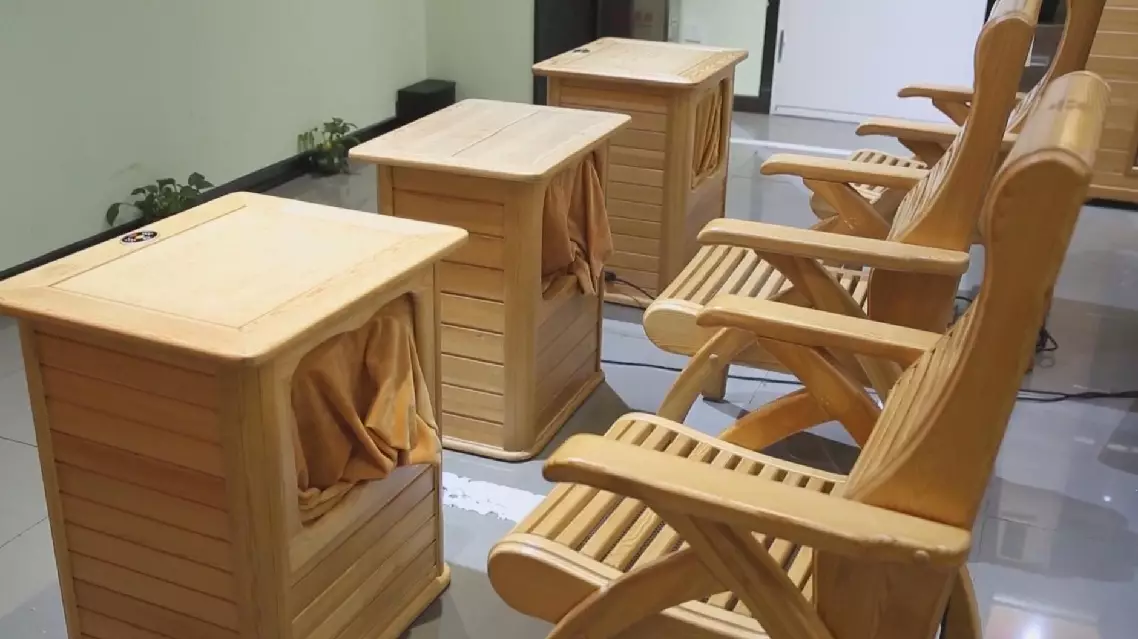
Age-friendly products make life easier for seniors
Days after a powerful 7.5-magnitude earthquake struck western Colombia on Aug 10, families in Cali, the worst affected city, are confronting heartbreaking obstacles simply to lay their loved ones to rest.
Cali's morgue sustained damage in the quake and was forced to close operations after part of the Hospital Universitario del Valle collapsed. As a result, recovered bodies must be transported to the neighboring town of Palmira, which escaped structural destruction.
The influx has severely overwhelmed Palmira's facilities, leaving them short on refrigeration capacity. Grieving relatives waiting outside must wear masks as they endure agonizing waits, caught in a system operating far beyond its designed capacity.
While some families have managed to bid a painful farewell and gained a measure of closure, such as the relatives of Maria Esmeralda Ordonez in Cali, countless others remain in painful limbo.
"Thankfully it's not turned out like it has for others who today are still fighting to rescue loved ones, people who are still lying beneath the rubble. The chances of survival are very slim, but miracles are happening," said Ivan Delgado, a relative of Maria Esmeralda Ordonez.
For many families whose relatives have been recovered, the ordeal is far from over. They must navigate the bureaucracy that comes with a death.
Securing the release of a body requires a prosecutor's order, an accompanying undertaker, and a considerable amount of paperwork -- a grueling process compounded by a system operating well beyond its capacity.
Camilo Mendez, a relative of victims, knew this pain firsthand after an agonizing three-day wait to claim the bodies of his aunt and grandmother.
"From the information we've gotten here and there, you can really tell we're not prepared for this kind of event. Moving the bodies, all of it, it was very slow, very disorganized. My grandmother and my aunt were in one place, then another. It was pretty chaotic, honestly," said Mendez.
To support the exhausted crowds, volunteers and psychologists have set up tents near the Palmira facility, offering comfort and counseling.
"It's an exhausting process. You're here waiting for an answer, and no one knows when it will come. There are people with one, five, six relatives they can't find. A body may be recovered today, another tomorrow, and that's how it's gone," said Alison Morales, a volunteer psychologist.
"The community has been extraordinary, all kinds of donations, the communal kitchen, water for the people waiting," she added.
Although Palmira itself was spared the worst of the earthquake -- sustaining cracks on a few buildings and no fatalities -- it has absorbed the profound, far-reaching grief of a region struggling to bury its dead.
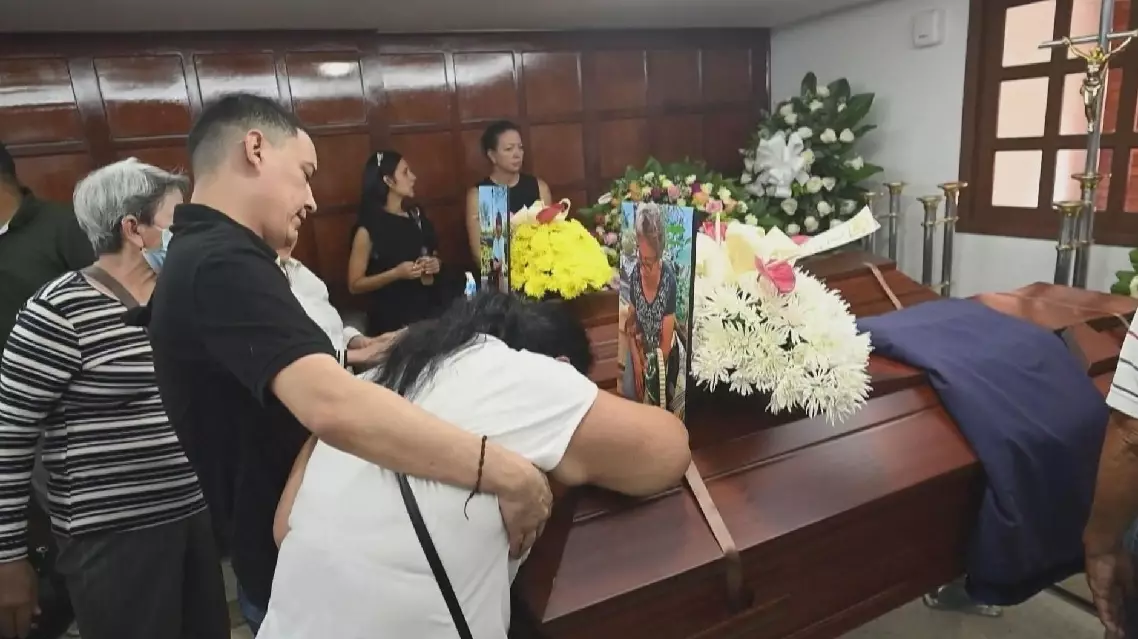
Families face heart-breaking delays burying victims of Colombian earthquake