COLUMBUS, Ohio (AP) — Ohio State University is investigating after President Walter “Ted” Carter Jr. resigned abruptly over the weekend following the disclosure of “an inappropriate relationship” with a woman seeking public resources for her personal business, the university said Monday.
Carter, 66, said in a statement that he had resigned voluntarily after informing the university's board of trustees of his error. He did not elaborate on the nature of the relationship and whether it was romantic; his statement indicated that he and his wife, Lynda, are still a couple.
“For personal reasons, I have made the difficult decision to resign from my role as president of The Ohio State University," he said. “I disclosed to the board of trustees that I made a mistake in allowing inappropriate access to Ohio State leadership.”
Board Chair John Zeiger accepted Carter's resignation in a letter dated Sunday, a day after trustees held a private executive session. Spokesperson Ben Johnson said Carter was not present at the session but that trustees were aware of the situation before they met.
“The Board was surprised and disappointed to learn of this matter and takes the situation and its potential impact on the university very seriously,” Zeiger wrote. “We respect your decision and appreciate your cooperation in supporting an orderly leadership transition.”
The board had been pleased with Carter's work overall. Trustees awarded him a more than $50,000 merit raise in August on top of his $1.1 million annual salary, as well as a nearly $400,000 bonus. His contract was supposed to run through 2028. Ohio State presidents also are provided residency at a roughly $3.6 million mansion in a tony Columbus suburb.
Johnson said that the university has opened an investigation into Carter's impropriety, as it also works to put in place a leadership transition plan. The latter could be detailed as soon as this week, he said.
In the absence of its president, the university’s daily operations will fall to members of Carter’s former cabinet, Johnson said, which includes a chief of staff, two executive vice presidents and seven senior vice presidents. In the event of an emergency, the school’s public safety professionals would take direct action, which is always the case.
Ohio State is the nation's sixth-largest university, with more than 60,000 students, over 600,000 living alumni and a highly ranked football team and medical center. Carter oversaw a fiscal year 2026 budget totaling $11.5 billion in revenues and $10.9 billion in expenditures — although it was not clear that the “resources” to which he availed the woman were monetary.
The university brought Carter on board in 2023 from the University of Nebraska system. He is also a former superintendent of the U.S. Naval Academy and a retired vice admiral who attended the Navy Fighter Weapons School, known as Top Gun. He holds the national record for carrier-arrested landings with over 2,000 mishap-free touchdowns.
He filled a vacancy at Ohio State left by the mid-contract resignation of President Kristina Johnson, which went largely unexplained. The engineer and former undersecretary of the U.S. Department of Energy had been chancellor of New York’s public university system before she joined the Buckeyes as president in 2020, succeeding President Michael Drake.
Jennifer Tisone Price, executive director of the Ohio conference of the American Association of University Professors, said Ohio State students, faculty and staff deserve better.
“This is OSU’s third president since 2020,” she said in a statement. “If the university wants to do better with the next one, it must have a transparent hiring process that honors shared governance which includes the input from faculty. Shared governance isn’t just a bureaucratic nicety. It’s how universities stay honest.”
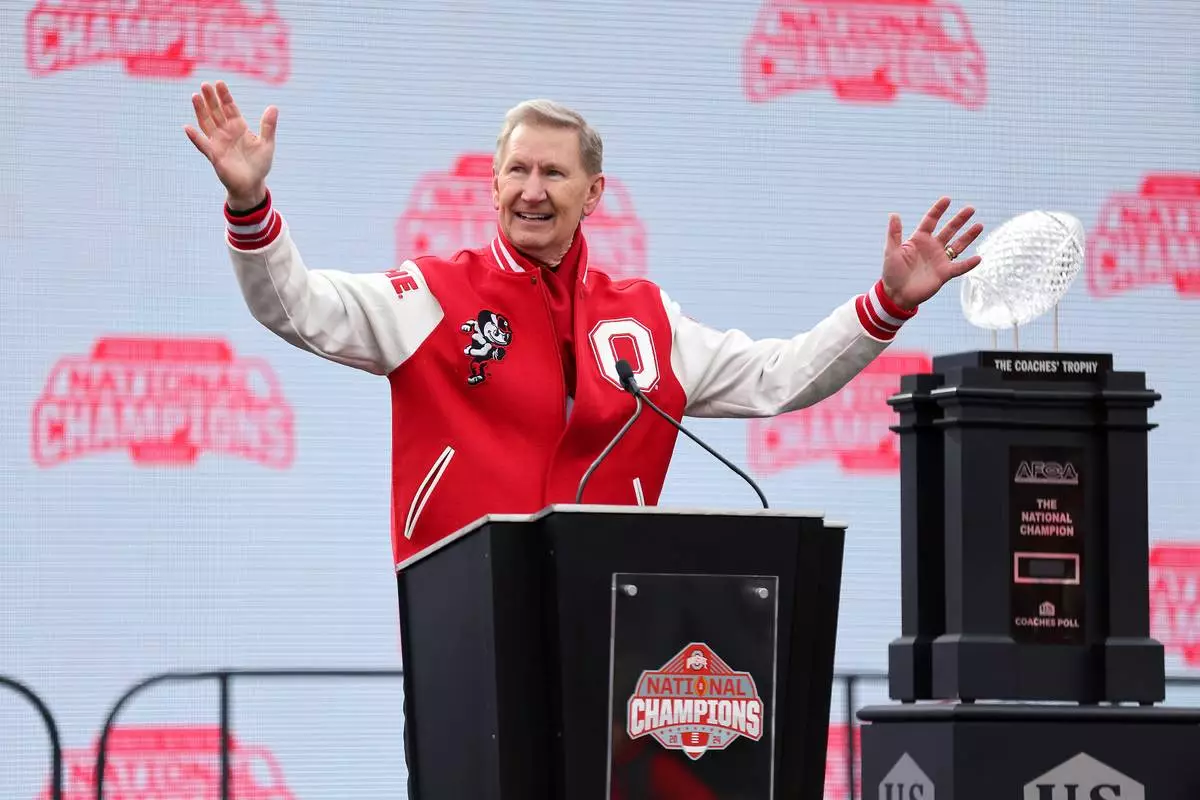
FILE - Ohio State University President Ted Carter speaks during the National Championship football celebration at Ohio Stadium in Columbus, Ohio, Jan. 26, 2025. (AP Photo/Joe Maiorana, file)
DUBAI, United Arab Emirates (AP) — Oil prices surged and markets slid Monday after hard-line Ayatollah Mojtaba Khamenei was chosen to succeed his late father as Iran's supreme leader, signaling that Iran was digging in 10 days into the war launched by the United States and Israel.
Oil prices later fell, and the U.S. stock market closed higher, amid hope that the war with Iran may not last that long as world leaders discussed options. U.S. President Donald Trump indicated to a group of lawmakers at his golf club near Miami that the conflict may end soon.
“We took a little excursion” to the Middle East “to get rid of some evil. And, I think you’ll see it’s going to be a short-term excursion," Trump said.
The war has choked off major supplies of oil and gas to world markets, led foreigners to flee from business hubs and prompted millions to seek shelter as bombs hit sites including military bases, government buildings, oil and water installations, hotels and at least one school.
Khamenei, a secretive 56-year-old cleric, is only the third supreme leader in the history of the Islamic Republic. He has close ties to the paramilitary Revolutionary Guard, which has been firing missiles and drones at Israel and Gulf Arab states since his father, Ayatollah Ali Khamenei, who had ruled since 1989, was killed during the war’s opening salvo.
The appointment suggests Tehran is not close to giving up on what it considers a fight for the Islamic theocracy's survival.
Thousands poured into a central square in the capital, Tehran, and other locations in a show of allegiance to the new supreme leader, waving flags and shouting phrases like “Death to America” and “Death to Israel.”
“America and Israel: You’ve failed, and you will drown in the swamp you are stuck in,” said Abbas Ali Saeedipoor, one of the demonstrators.
Iranian authorities have long encouraged public shows of support for the Islamic Republic while violently cracking down on dissent. Earlier this year, thousands of people were killed and tens of thousands detained during mass protests against the elder Khamenei.
The U.S. stock market careened through a manic Monday, going from a steep early loss to a solid gain as worries turned into hope that the war with Iran may not last that long. Oil prices whipped from nearly $120 per barrel, the highest since 2022, back toward $90.
Iran’s attacks in the Strait of Hormuz have all but stopped tankers from using the shipping lane through which a fifth of the world’s oil is carried, and Iranian drones and missiles have targeted oil and gas infrastructure in major producers. Attacks on merchant ships near the strait have killed at least seven mariners, according to the International Maritime Organization.
“There is not an oil shortage,” Trump wrote on Truth Social. “Prices will drop again soon,” he added, suggesting shipments from Venezuela to the U.S. could help offset the price spike.
Trump had a call Monday with Russian President Vladimir Putin to discuss the war and other issues, according to the Kremlin.
Putin’s foreign affairs adviser, Yuri Ushakov, described the hourlong conversation as “frank and businesslike." He said Putin “voiced a few ideas regarding a quick political and diplomatic settlement” of the conflict following his conversations with Gulf leaders and Iranian President Masoud Pezeshkian.
Secretary of State Marco Rubio said the United States is “well on our way” to achieving its objective, which he said was to eliminate Iran’s ballistic missile stockpile and its ability to produce and launch them. The administration has offered shifting rationales and timelines since the start of the conflict.
The White House said Trump would hold a news conference later Monday on the situation in Iran.
Kamal Kharazi, foreign policy adviser to the office of the supreme leader, told CNN on Monday that Iran is prepared for a long war. He said he sees no “room for diplomacy anymore” unless economic pressure prompts other countries to intervene and stop the “aggression of Americans and Israelis against Iran.”
Amid unrelenting Iranian drones and missiles Monday, sirens blared multiple times across Israel. A man was killed in central Israel in a missile strike, the first such death in Israel in a week, and a woman was wounded.
Israel said Monday that it was carrying out “a wide-scale wave of strikes” on the Iranian city of Isfahan, as well as Tehran and in southern Iran. The Israeli military said it hit dozens of infrastructure sites across Iran, including the drone headquarters of the Revolutionary Guard.
Since the start of the war, Israel has eliminated more than 1,900 Revolutionary Guard soldiers and commanders, an Israeli military spokesperson said at a press briefing without providing evidence.
Turkey, meanwhile, said NATO defenses had intercepted a ballistic missile that entered the country’s airspace for the second time since the war started.
The younger Khamenei, who has not been seen in public since the war started, was long considered a potential successor — even before the killing of his 86-year-old father. The younger Khamenei's wife, Zahra Haddad Adel, was killed in the same strike.
An Iranian state TV report suggested the younger Khamenei may have been wounded in that strike, though a state TV analyst later appeared to amend the report, saying he had been wounded in the 1980s Iran-Iraq war in which he served.
The younger Khamenei is seen as even less compromising than his late father. As supreme leader, he has the final say on all major policies, including Tehran’s disputed nuclear program.
Though Iran’s key nuclear sites are in tatters after the U.S. bombed them during the 12-day Israel-Iran war in June, it still has highly enriched uranium that’s a technical step away from weapons-grade levels. Khamenei could choose to do what his father never did — build a nuclear bomb.
Israel has already described Khamenei as a potential target, while Trump has called him “unacceptable” and a “lightweight.”
Saudi Arabia lashed out at Iran following the drone attack on its massive Shaybah oil field, saying Tehran would be the “biggest loser” if it continues to attack Arab states.
In the UAE, home to the futuristic city of Dubai, authorities said two people were wounded by shrapnel from the interception of Iranian missiles over the capital, Abu Dhabi. The Emirati Defense Ministry said 15 ballistic missiles and 18 drones were fired at the country on Monday.
Iran also attacked Kuwait, Qatar and Bahrain, where it hit a residential area, wounding 32 people, including several children, according to authorities. Another attack appeared to have started a fire at Bahrain's only oil refinery, sending up thick plumes of smoke.
The U.S. State Department early Monday ordered nonessential personnel and families of all staff to leave Saudi Arabia. Several other U.S. diplomatic missions have ordered all but key staff to leave.
The war has killed at least 1,230 people in Iran, at least 397 in Lebanon and 11 in Israel, according to officials. Israel reported its first soldier deaths on Sunday, saying two were killed in southern Lebanon, where it is fighting Hezbollah.
A total of seven U.S. service members have been killed.
Trump said Monday that family members of the soldiers told him during the transfer of their remains over the weekend in Dover, Delaware: “Make sure you win, sir."
Magdy reported from Cairo and Keaten from Geneva. Associated Press journalists around the world also contributed to this report.
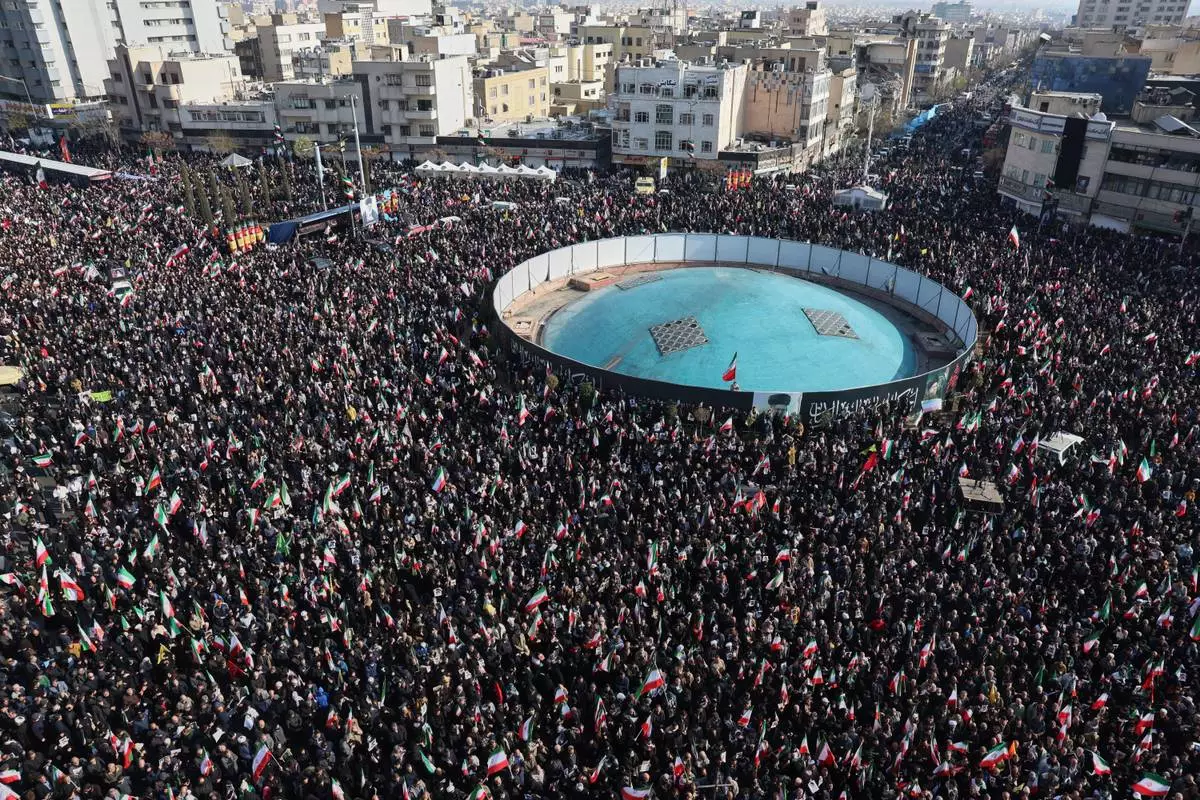
People gather in a rally to support Ayatollah Mojtaba Khamenei, the successor to his late father Ayatollah Ali Khamenei as supreme leader, in Tehran, Iran, Monday, March 9, 2026. (AP Photo/Vahid Salemi)
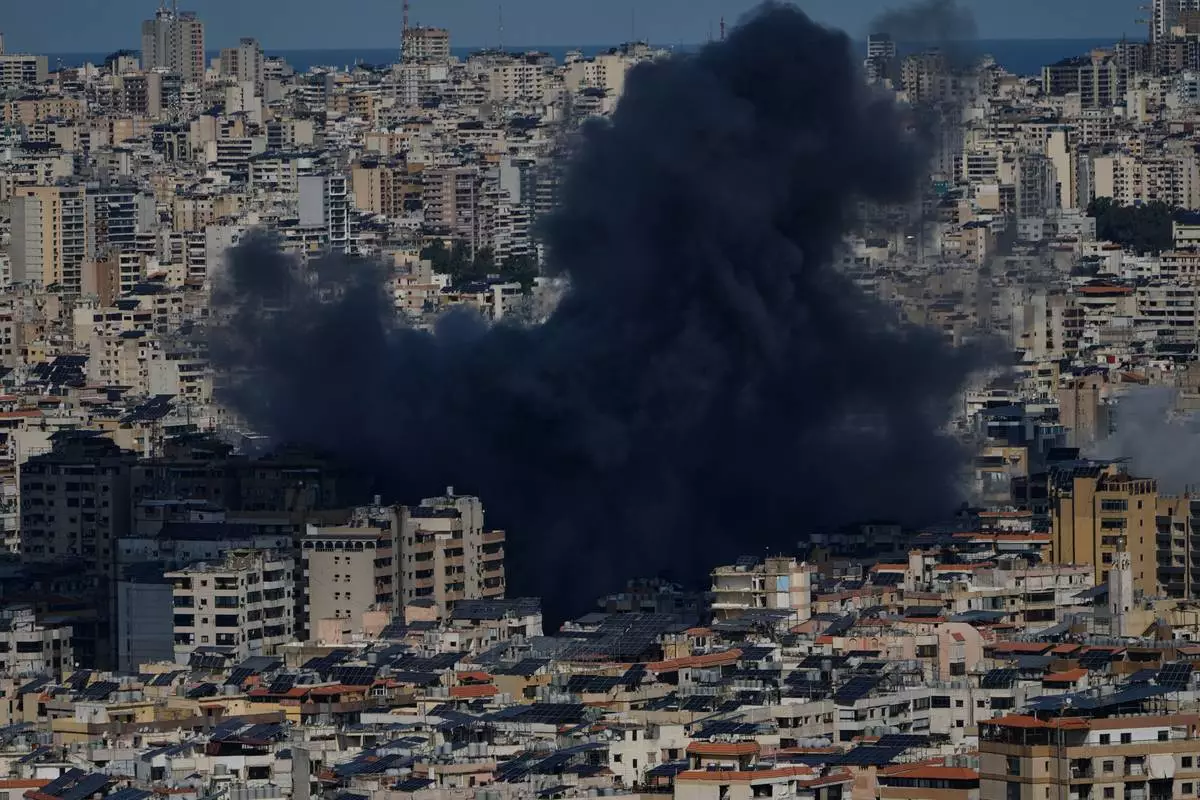
Smoke rises following an Israeli airstrike in Dahiyeh, Beirut's southern suburbs, Lebanon, Monday, March 9, 2026. (AP Photo/Bilal Hussein)
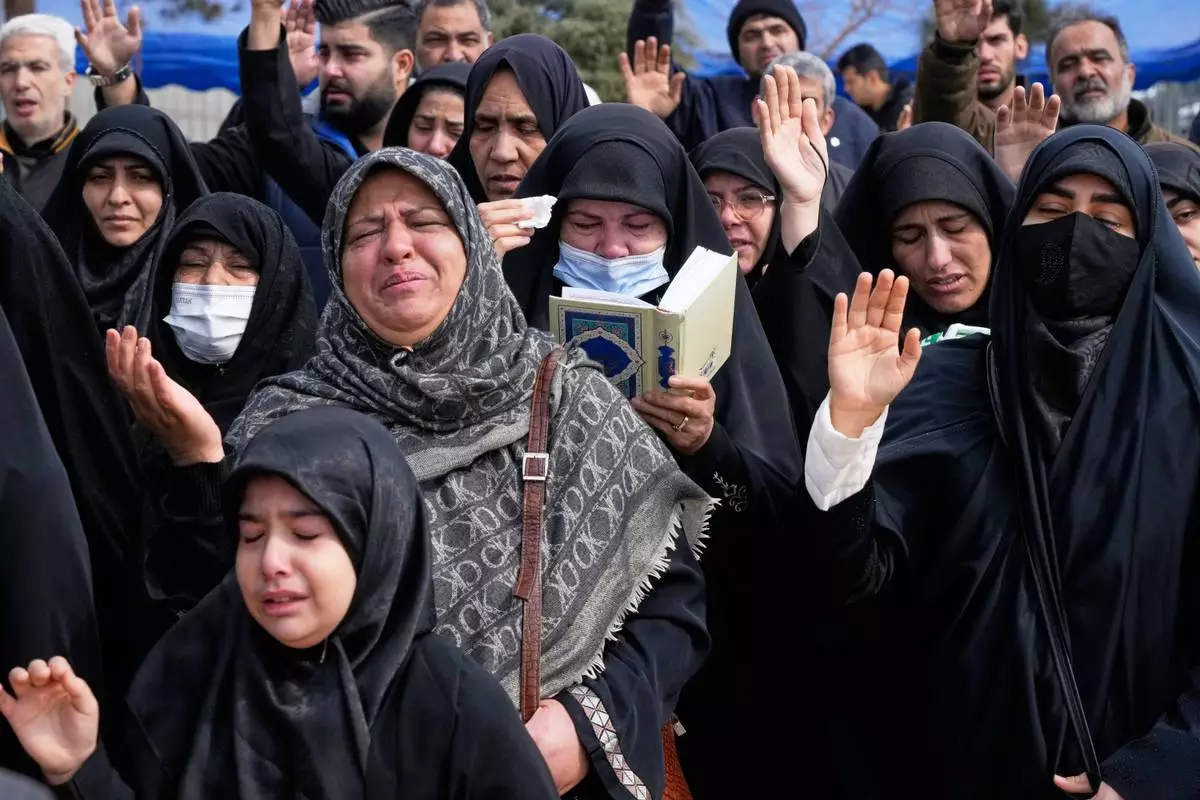
Mourners pray during the funeral of Mehdi Hosseini, a man killed in a U.S.-Israeli strike, at Behesht-e Zahra cemetery in Tehran, Iran, Monday, March 9, 2026. (AP Photo/Vahid Salemi)
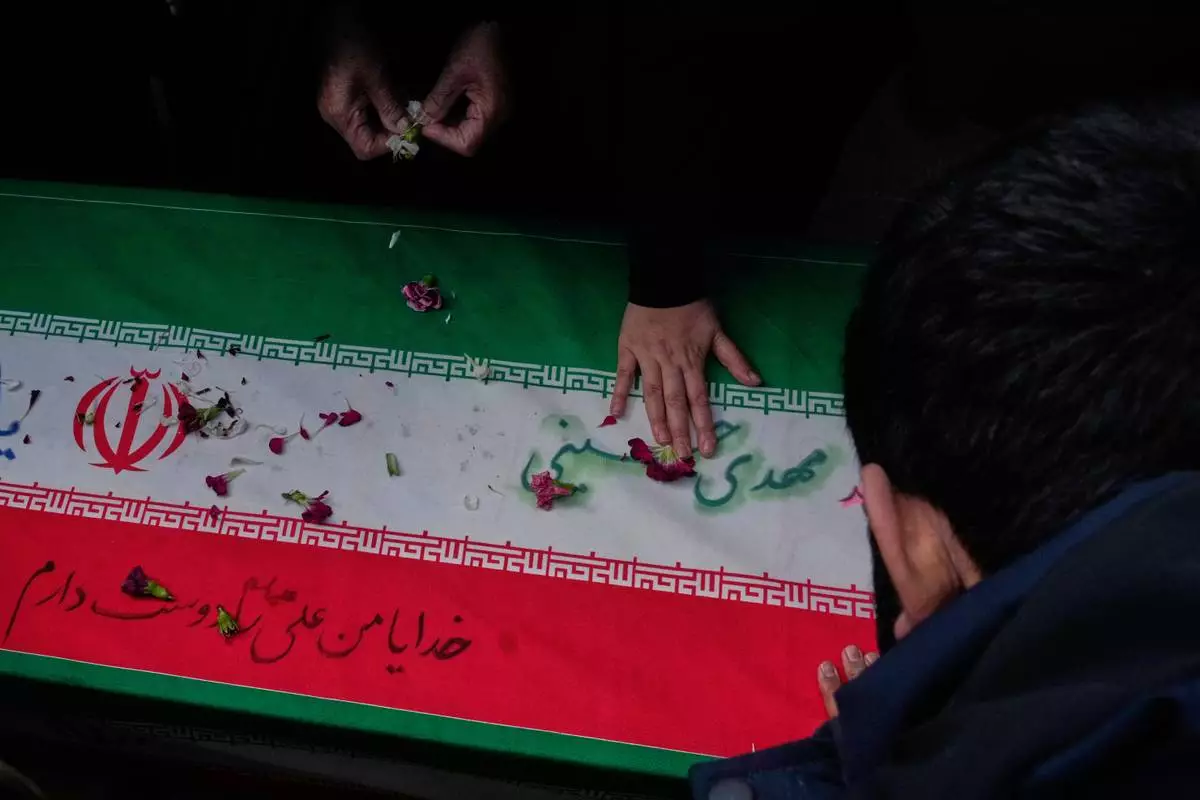
Relatives mourn over the flag draped coffin of Mehdi Hosseini who was killed in a U.S.-Israeli strike during his burial ceremony at Behesht-e Zahra cemetery in Tehran, Iran, Monday, March 9, 2026. (AP Photo/Vahid Salemi)
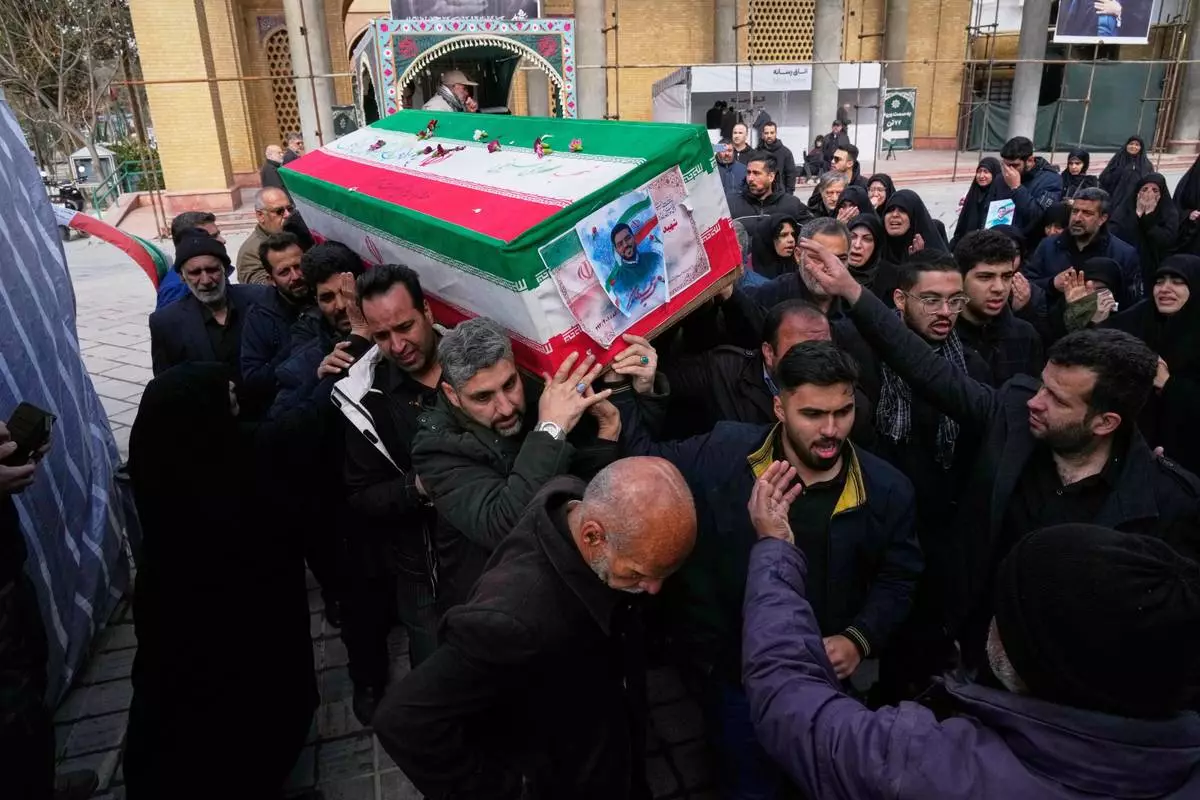
The coffin of Mehdi Hosseini, a man killed in a U.S.-Israeli strike, is carried for burial at Behesht-e Zahra cemetery in Tehran, Iran, Monday, March 9, 2026. (AP Photo/Vahid Salemi)
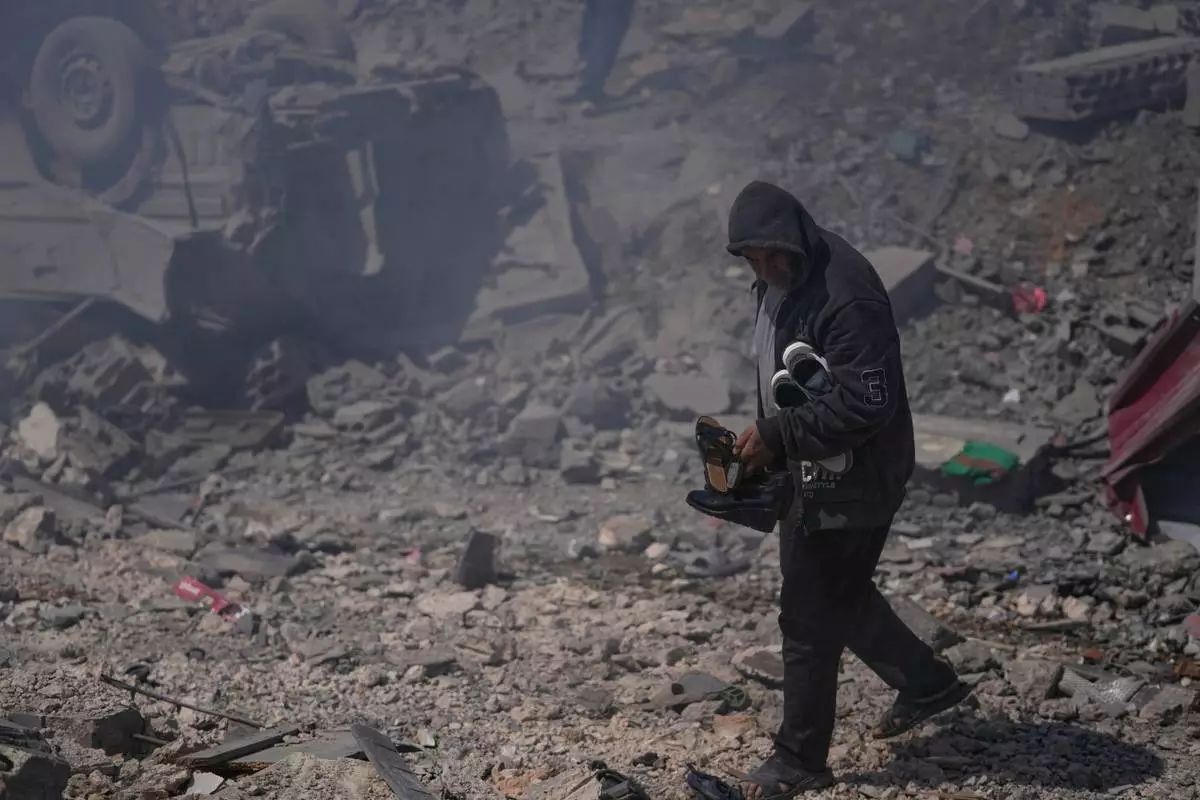
A man carries shoes from his destroyed house that was hit by Israeli airstrikes hit several houses in Sir al-Gharbiyeh village south Lebanon, Sunday, March, 8, 2026. (AP Photo/Mohammed Zaatari)
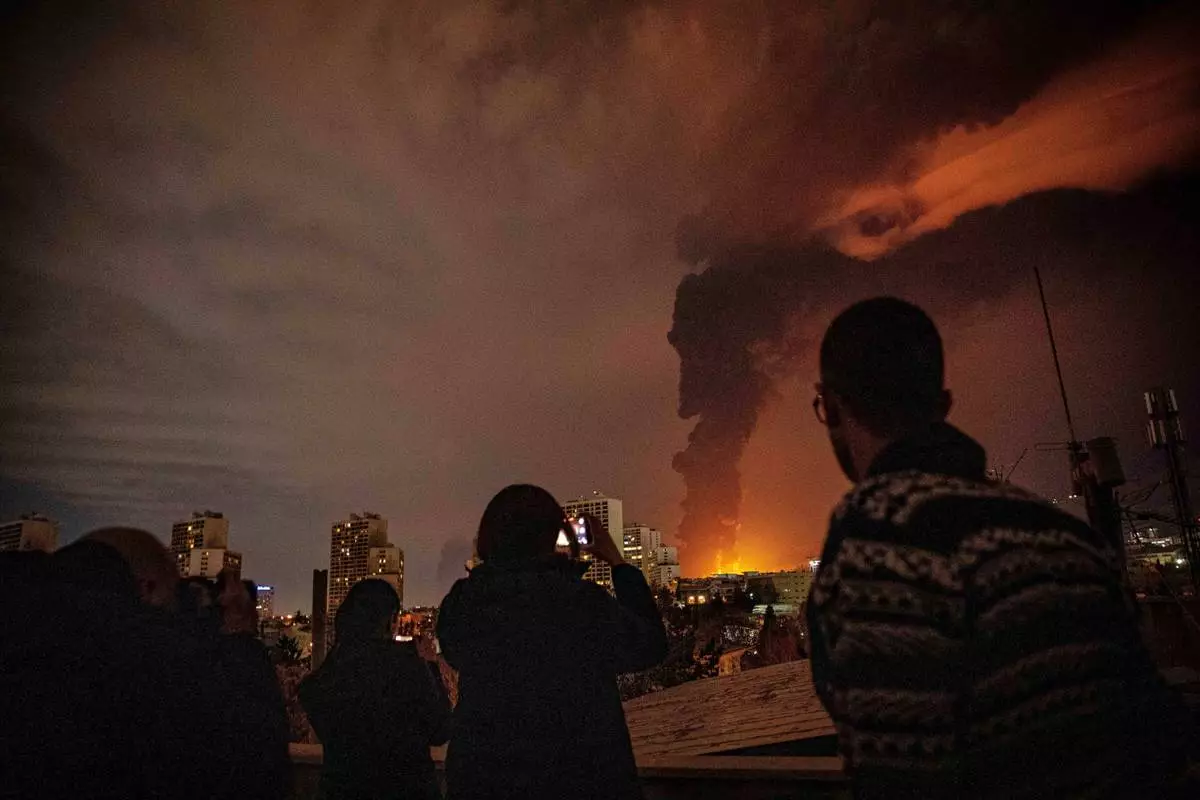
Residents look on and take pictures as flames and smoke rise from an oil storage facility struck as attacks hit the city during the U.S.–Israeli military campaign in Tehran, Iran, Saturday, March 7, 2026. (Alireza Sotakbar/ISNA via AP)
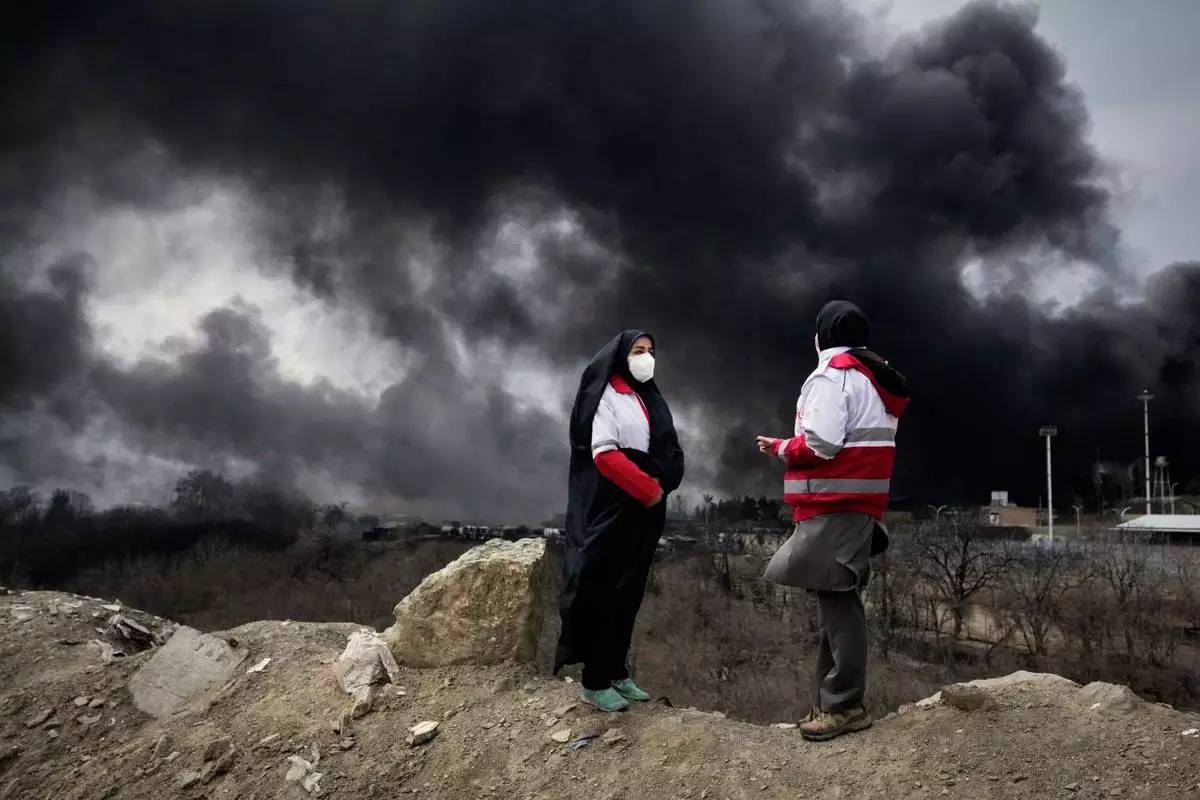
Two women from the Iranian Red Crescent Society stand as a thick plume of smoke from a U.S.-Israeli strike on an oil storage facility late Saturday rises in the sky in Tehran, Iran, Sunday, March 8, 2026. (AP Photo/Vahid Salemi)
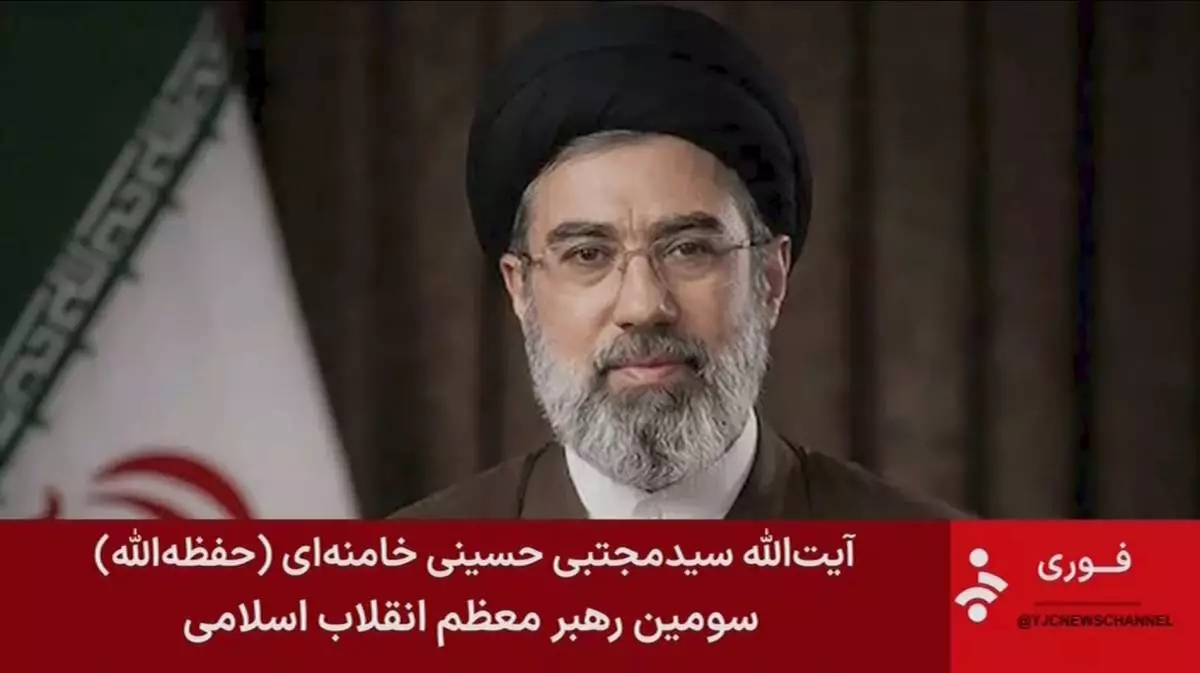
This image taken from video provided by Iran state TV shows Mojtaba Khamenei, a son of Iran's slain supreme leader, who has been named as the Islamic Republic's next ruler, authorities announced Monday, March 9, 2026. (Iran state TV via AP)