Attempting to rebound from a 5-12 season, the Washington Commanders are bringing back the anchor of their offensive line and spending big money in free agency to improve the NFL's worst-ranked defense.
The Commanders on Monday re-signed starting left tackle Laremy Tunsil and agreed to sign edge rusher Odafe Oweh, defensive tackle Tim Settle and cornerback Amik Robertson, according to a person with knowledge of the deals.
Oweh's contract is worth $100 million over four years, with $68 million guaranteed, according to a second person familiar with the signing. Settle and the Commanders came to terms on a three-year, $23 million deal, according to a third person familiar with that agreement.
The people spoke to The Associated Press on condition of anonymity because the moves had not been announced. Oweh, Settle and Robertson cannot sign until the new league year begins on Wednesday.
Oweh, 27, thrived with the Los Angeles Chargers last season after being traded from Baltimore in early October. He had 7 1/2 sacks in 12 games, following up on 10 with the Ravens in 2024.
Tunsil, who turns 32 on Aug. 2, was one of the highest-performing players at left tackle last season. He ranked second in pass blocking, according to Pro Football Focus, and allowed just two sacks and 15 quarterback pressures in 14 games.
A five-time Pro Bowl selection, Tunsil is now under contract through 2028. His new deal is reportedly worth $60.2 million with a $32.5 million signing bonus, the largest for an offensive lineman.
Washington paid a significant price to acquire Tunsil a year ago in a trade with Houston: a third- and a seventh-rounder last year and a second- and a fourth-rounder this year.
Bringing back Tunsil solidifies the offensive line to protect franchise quarterback Jayden Daniels, with versatile Nick Allegretti and Andrew Wylie also re-signing. Allegretti could move to center, with Wylie or Brandon Coleman at left guard, Sam Cosmi at right guard and 2025 first-round pick Josh Conerly at right tackle.
“I know that I can play center, right guard, left guard — whatever it is, I want to compete for a spot," Allegretti said on a video call with reporters. “Depending on what they do, if that center job is something I can compete for, that’s something that I want to do.”
Settle returns to the team that drafted him in the fifth round in 2018. He played his first four NFL seasons with Washington before two apiece with Buffalo and Houston.
Robertson, who turns 28 on July 6, replaces Marshon Lattimore, whom the Commanders released on Friday. Robertson spent the past two seasons with Detroit and had one interception over 34 games.
Backup QB Marcus Mariota also is re-signing with Washington on a one-year, $7 million contract that can be worth up to $11 million, according to a person with knowledge of that deal. The person spoke to the AP on condition of anonymity because the move had not been announced.
Mariota, now 32, has been with the team since before Daniels was selected with the second pick in the 2024 draft and served as a mentor. Mariota, who started eight games last season after Daniels was injured, had expressed a desire to return.
As part of the organizational overhaul just 14 months removed from an improbable run to the NFC championship game, coach Dan Quinn's staff has two new coordinators. David Blough was promoted from assistant quarterbacks coach to run the offense, and Daronte Jones was hired from Minnesota to take control of the defense.
AP Pro Football Writer Rob Maaddi contributed to this report.
AP NFL: https://apnews.com/hub/NFL
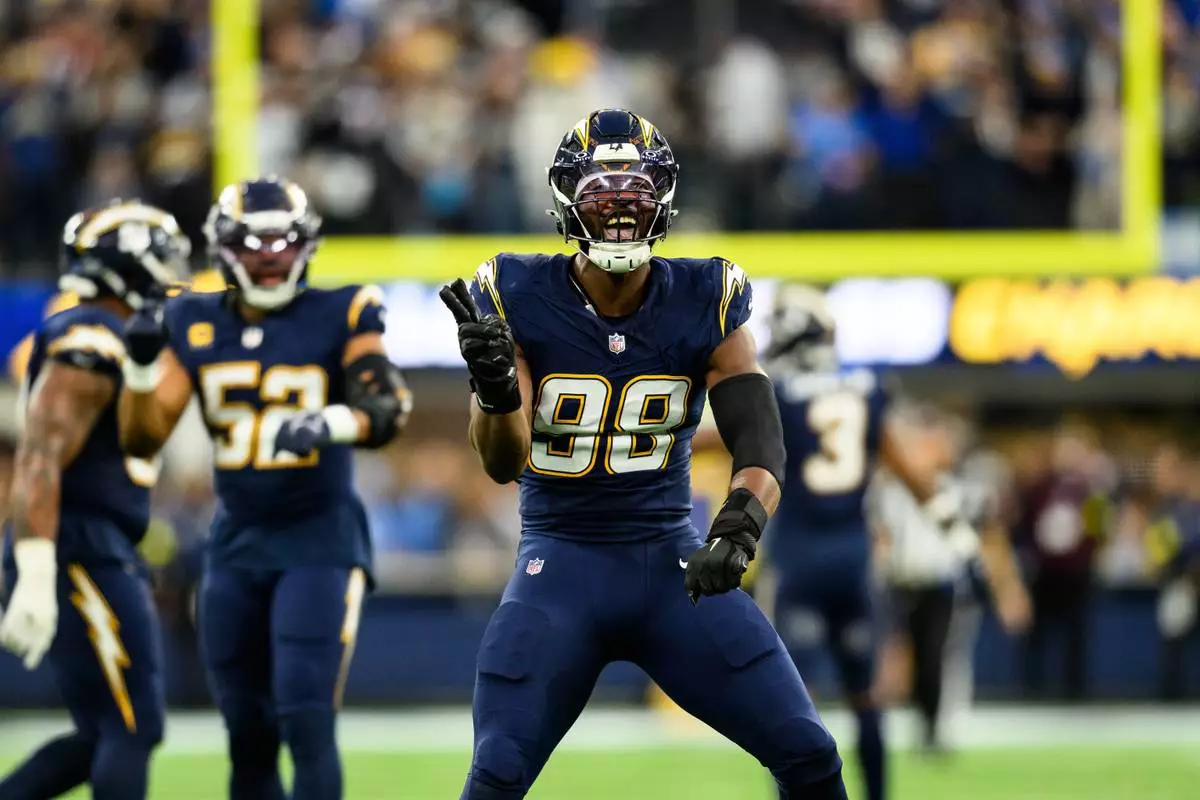
FILE - Los Angeles Chargers linebacker Odafe Oweh (98) gestures during an NFL football game against the Houston Texans, Saturday, Dec. 27, 2025, in Inglewood, Calif. (AP Photo/William Liang, File)
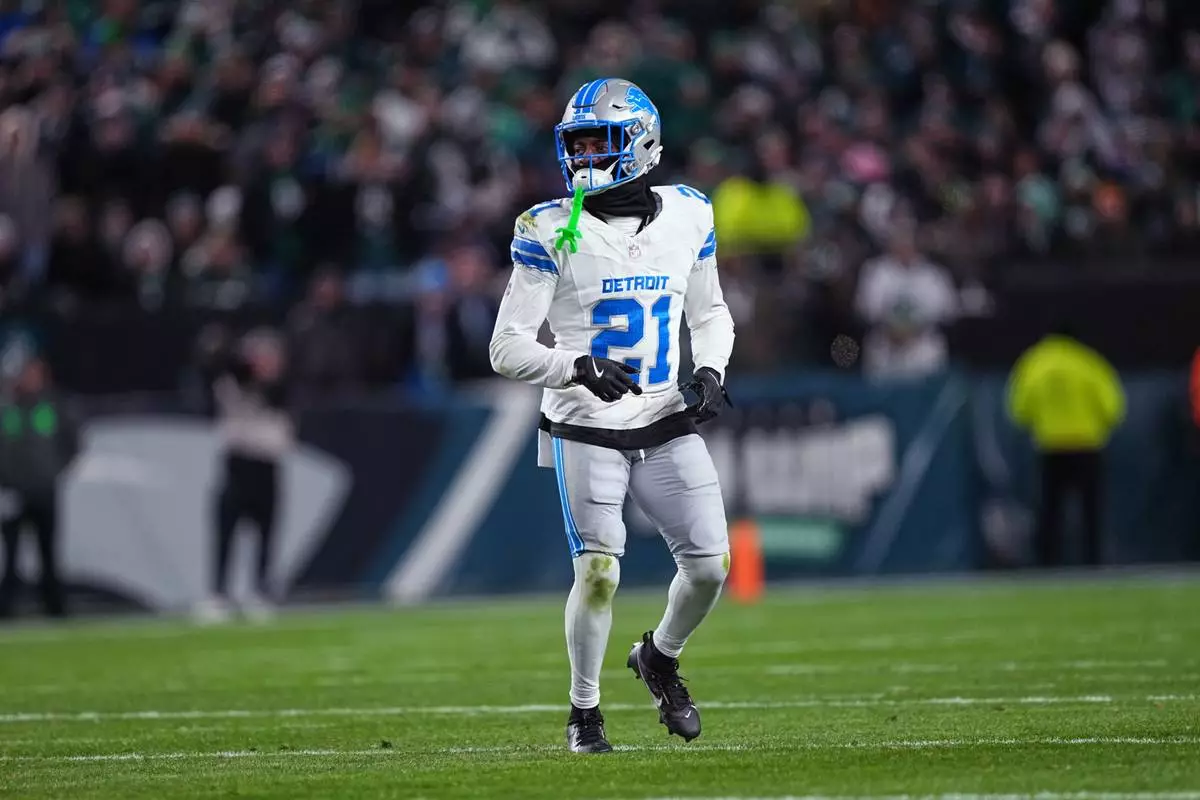
FILE - Detroit Lions' Amik Robertson in action during an NFL football game, Nov. 16, 2025, in Philadelphia. (AP Photo/Matt Rourke, file)
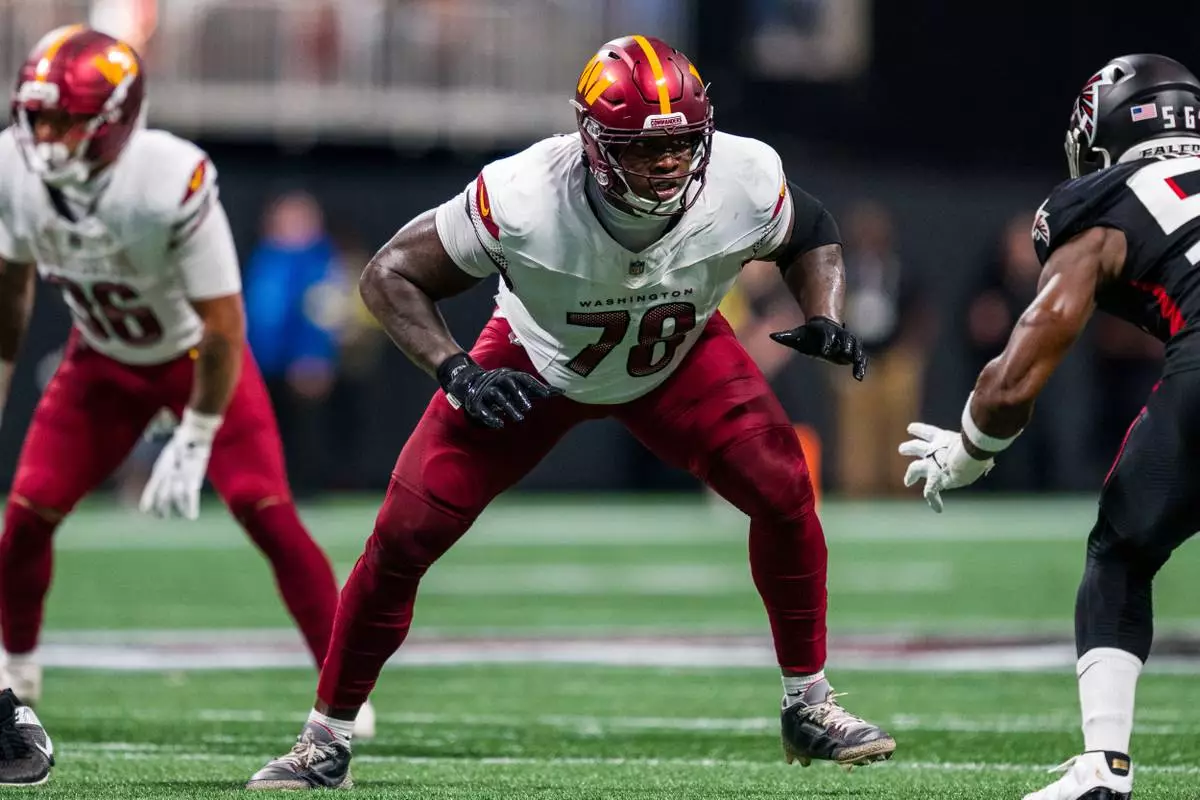
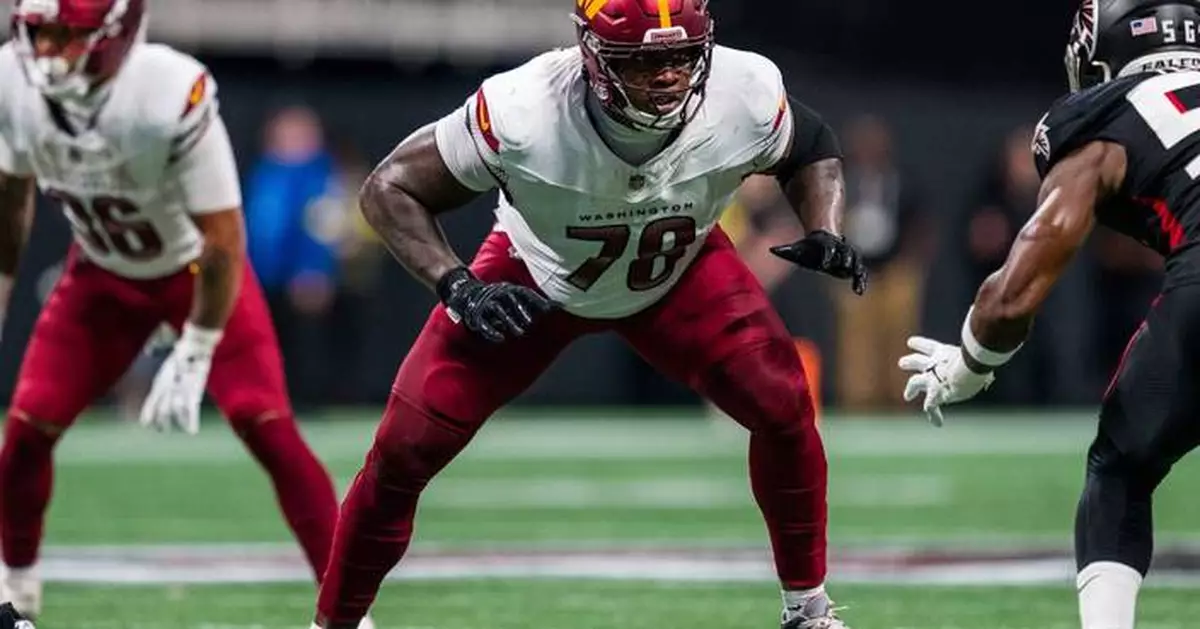
FILE - Washington Commanders offensive tackle Laremy Tunsil (78) works during the second half of an NFL football game against the Atlanta Falcons, Sep. 28, 2025, in Atlanta. (AP Photo/Danny Karnik, File)
WASHINGTON (AP) — The Justice Department touted a tentative settlement of its antitrust lawsuit against Ticketmaster and parent company Live Nation Entertainment on Monday as a victory for consumers that would end an illegal monopoly over live events in America, but over two dozen states planned to keep fighting the companies in court.
The negotiations leading up to the agreement drew criticism from the judge who would have to approve any deal as soon as a government lawyer revealed it in Manhattan federal court, where testimony began last week before a jury at an antitrust trial. Throughout the day, various state attorneys general issued statements criticizing the agreement.
A “term sheet” spelling out details of the pact said Live Nation had agreed to let venues reach deals that would let a certain portion of tickets be sold by entities other than Ticketmaster. It also would let up to 50% of all tickets to be sold through any ticketing marketplace at amphitheaters that Live Nation owns, operates or controls.
The term sheet also called for Ticketmaster to cap its service fees at those amphitheaters at 15% and to divest ownership or control of 13 amphitheaters, including venues in Milwaukee, Cincinnati, Syracuse, New York, and Austin, Texas. It said Live Nation will create a $280 million settlement fund to settle claims or pay civil penalties to states.
The settlement includes an eight-year extension of the company’s consent decree with the Justice Department, enabling continuing oversight.
A senior Justice Department official spoke effusively of the looming settlement on the condition of anonymity Monday during a phone call with journalists under terms set by the department to release some information about the proposed settlement. At least 10 states were expected to join the deal, the official said.
The official called it a “win-win for everybody,” bringing immediate relief to consumers and protecting venues from retaliation when they choose Live Nation’s competitors to handle tickets or promote events.
In a statement, Live Nation Entertainment said it was pleased with a settlement that will let other promoters decide how best to distribute up to 50% of tickets at some venues and limit ticketing service fees.
“We have never relied on exclusivity to drive our ticketing business, it has simply been the result of having the best products, services and people in the industry,” said Michael Rapino, president and CEO of Live Nation.
The process leading to the deal brought immediate criticism from Manhattan Judge Arun Subramanian, who called it “entirely unacceptable” that nobody told him what was going on until late Sunday, even after the term sheet was signed Thursday.
New York Attorney General Letitia James said in a statement that the pact “fails to address the monopoly at the center of this case."
“My attorney general colleagues and I have a strong case against Live Nation, and we will continue our lawsuit," James said.
A release containing her statements said other states rejecting the settlement included Arizona, California, Colorado, Connecticut, Illinois, Kansas, Maryland, Massachusetts, Michigan, Minnesota, Nevada, New Hampshire, New Jersey, New Mexico, North Carolina, Ohio, Pennsylvania, Rhode Island, Tennessee, Utah, Vermont, Virginia, Washington, Wisconsin, Wyoming and the District of Columbia.
North Carolina Attorney General Jeff Jackson called the agreement “a terrible deal” that was hidden from the states until the last minute.
"This case is about Live Nation and Ticketmaster harming consumers, trapping artists, and driving up ticket prices. We will see them back in court, shortly,” he said.
Washington State Attorney General Nick Brown said the bipartisan group of state attorneys general who joined the Justice Department's lawsuit in May 2024 would continue because the “case against Live Nation is strong, and the state coalition is committed to holding the company accountable for its illegal behavior, protecting consumers and restoring competition to this market.”
Stephen Parker, executive director of the National Independent Venue Association, said in a statement that the $280 million fine represented about four days of Live Nation's 2025 revenue.
“They could potentially make it back by this Friday,” Parker said, speaking for thousands of independent venues, festivals and promoters nationwide.
“The reported settlement does not appear to include any specific and explicit protections for fans, artists, or independent venues and festivals,” he said, calling the agreement “a failure of the justice system.”
Adam Gitlin, a lawyer for the District of Columbia, told Subramanian that several states had not decided what they would do, including Florida, Louisiana and Texas, which he said had expressed “serious concerns” about the deal.
In court, Subramanian told jurors of the agreement, saying the trial would resume next week with some states pressing the claims first brought under President Joe Biden ’s administration in 2024.
Now, states will be left to press claims that Live Nation was squelching competition and driving up prices for fans through threats, retaliation and other tactics to “suffocate the competition” by controlling virtually every aspect of the industry, from concert promotion to ticketing.
The states accuse Live Nation of engaging in a slew of practices to maintain a stranglehold over the live music scene. They say the company uses long-term contracts to keep venues from choosing rival ticketers, blocking venues from using multiple ticket sellers and threatening venues that they could lose money and fans if they don’t choose Ticketmaster.
Live Nation has maintained that artists and teams set prices and decide how tickets are sold.
Ticketmaster and Live Nation Entertainment, based in Beverly Hills, California, have a long history of clashes with major artists and their fans, including Taylor Swift and Bruce Springsteen.
Ticketmaster, which was established in 1976 and merged with Live Nation in 2010, is the world’s largest ticket seller across live music, sports, theater and more.
Neumeister reported from New York
FILE - The seal of the Dept of Justice is shown on the podium, Aug. 1, 2023, at an office of the Department of Justice in Washington. (AP Photo/J. Scott Applewhite, File)
FILE - The Ticketmaster logo is seen along the sideline of the field before an NFL football game, Sept. 15, 2024, in Jacksonville, Fla. (AP Photo/Phelan M. Ebenhack, File)