MEXICO CITY (AP) — For the second consecutive year, the hypercompetitive category of best international film at the Academy Awards includes a Brazilian film that has also earned a nomination for best picture, best acting and achievement in casting.
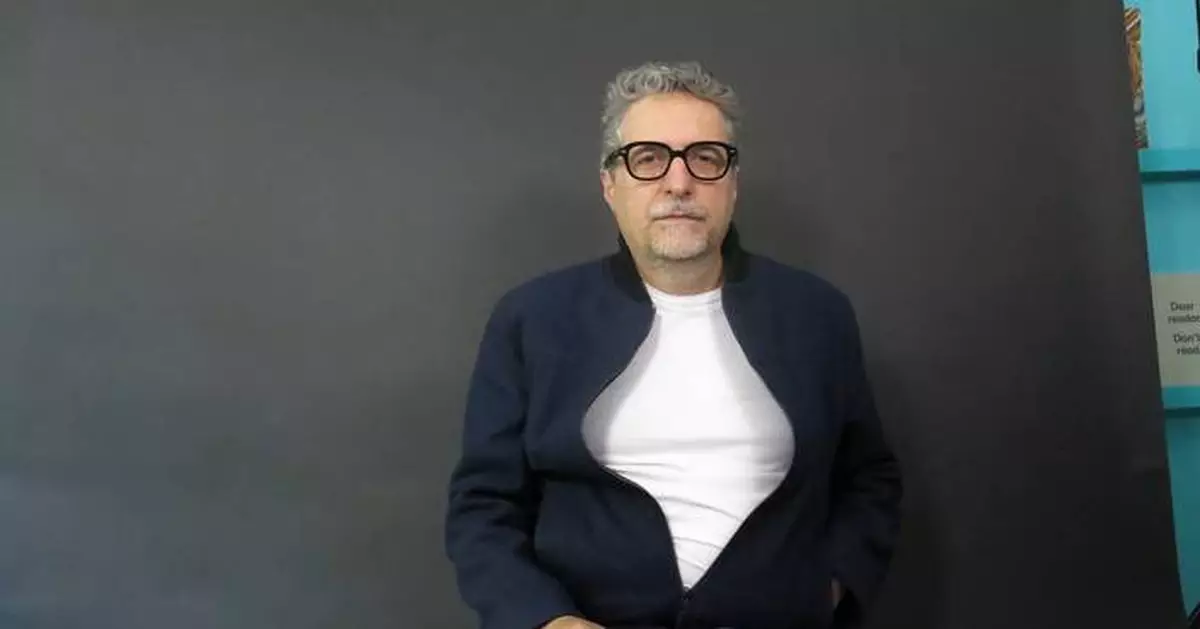
“The Secret Agent,” directed by Kleber Mendonça Filho, will compete for the award on March 15 in Los Angeles, a year after Walter Salles’ “I’m still here” won the statuette for best international film — and there is significant chance that it could secure a second triumph for Brazilian cinema.
“So many good things have happened to the film and it feels like it just keeps going,” Mendonça Filho said in an interview in Mexico City, where “The Secret Agent” is playing in theaters.
The director of films such as “Bacurau,” “Pictures of Ghosts” and “Aquarius,” credits this milestone for Brazilian cinema, in part, to public funding for cinematography in Brazil, which he said leads to diversity in production and highlights the talent available.
“What I want now, today talking to you, is that...there is a film being edited in Brazil by someone and maybe this film we will be talking about next year. That’s what I want,” he said.
Set in the northern city of Recife in 1977, “The Secret Agent” explores themes such as the loss of personal and collective memory. The character played by star Wagner Moura assumes a false identity to avoid his pursuers during the military dictatorship while obsessively searches public records for any trace of his mother. At the same time, he is at risk of vanishing from his own son’s memory.
“In my country memory is associated with class,” said Mendonça Filho. “For example, well-off families from the middle class, they all have family albums. But if you go to poor families ... they don't. It’s an incredibly strong theme to be discussed. And I think that’s what the film is about. The film is very much about not having existed. Not because of you, but because of society.”
Despite the risk of erasing memory, the film is anchored in the memories of Mendonça Filho and aided by the production design of Thales Junqueira and the costumes of Rita Azevedo, through fashion, buildings, cars, as well as an endearing cast, which includes the septuagenarian Tânia Maria in the role of Dona Sebastiana.
It is still a Brazilian film, so despite the misfortune, there are moments of comedy such as a “hairy leg” attack, a media hoax used to justify crimes, and nostalgic tributes to local theaters that once showed hits like “Jaws.”
“1977 is the first year I remember”, the director said. “I was already a little cinephile. I was very interested in cars. I don’t know anything about cars today, but cars at the time were really interesting for me. People I remember, clothes, colors. And when I was writing the script, I really felt myself crawling back into time, into myself.”
Mendonça Filho said he was looking for an exciting tone for the film, shot in Panavision, and that it would have a captivating sound, full of music.
“Much like the films from the past that made people want to see films in a cinema,” he said. “Sometimes it can be brutal, but it’s also full of love and it’s very much about life in Brazil and in Latin America”.
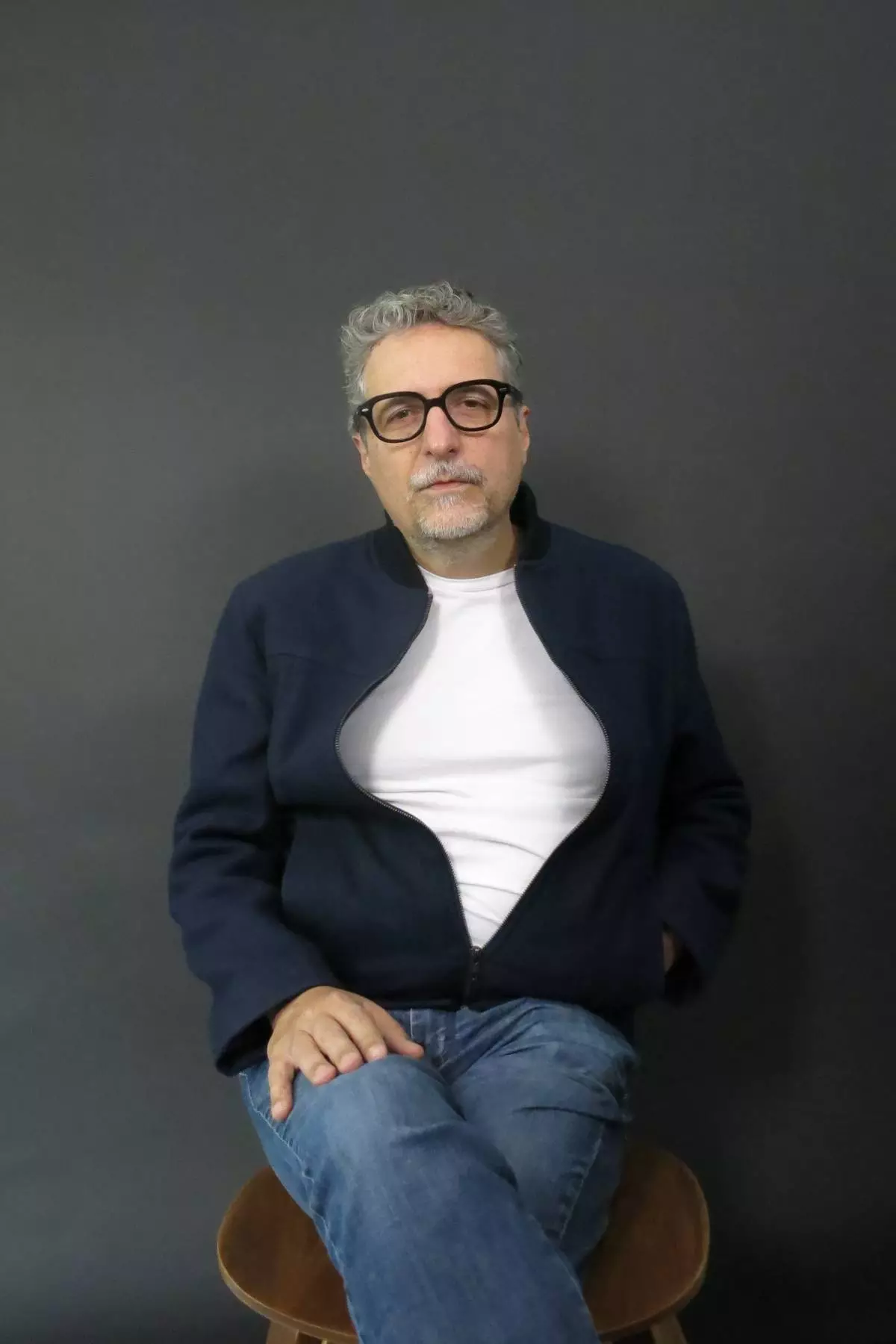
Brazilian filmmaker Kleber MendonÁa Filho, director of the Oscar nominated film The Secret Agent, poses for a portrait in Mexico City, Dec. 9, 2025. (AP Photo/Berenice Bautista)
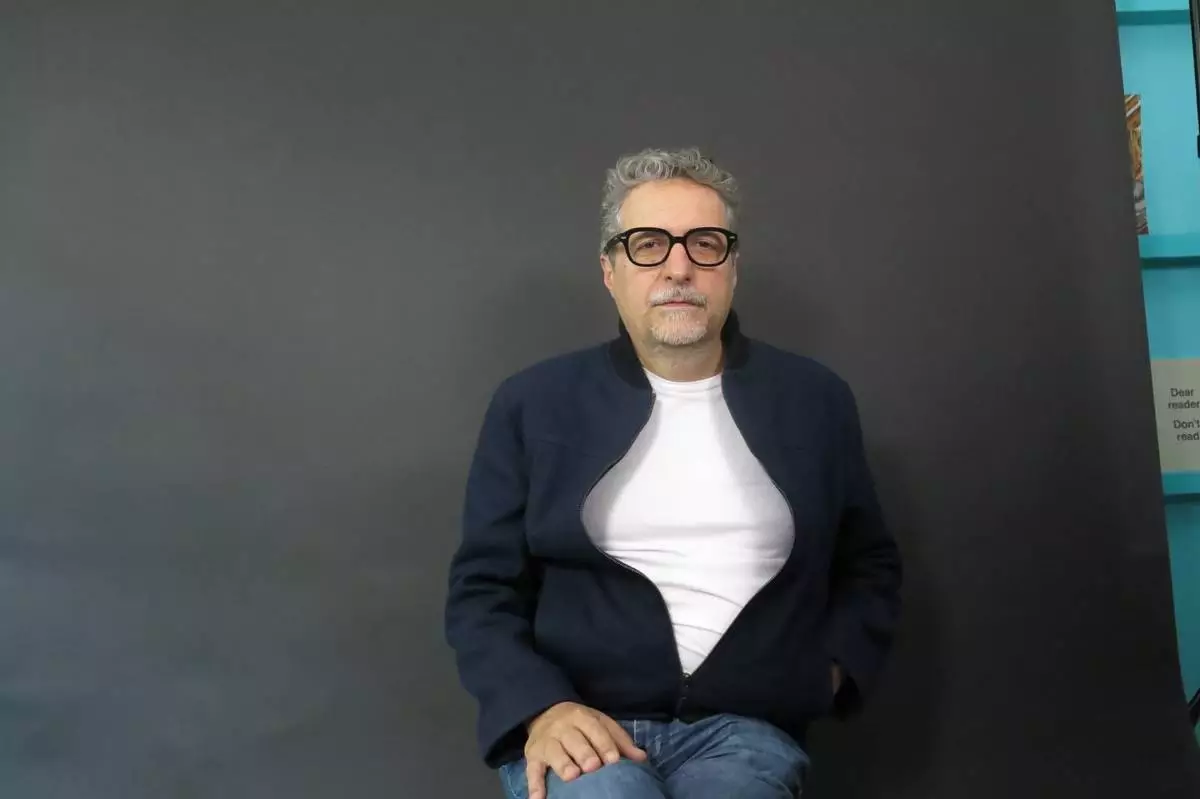
Brazilian filmmaker Kleber Mendonça Filho, director of the Oscar nominated film The Secret Agent, poses for a portrait in Mexico City, Dec. 9, 2025. (AP Photo/Berenice Bautista)
NEW YORK (AP) — A surge for Intel following a blowout profit report is leading technology stocks higher Friday, while oil prices keep swinging in the wait for what’s next with the Iran war.
The S&P 500 added 0.5% and rose above its all-time high set on Wednesday, even though the majority of stocks within the index fell. The Dow Jones Industrial Average was down 197 points, or 0.4%, as of 11:15 a.m. Eastern time, and the Nasdaq composite was 1.1% higher.
Intel led the way and is potentially heading for its best day since 1987. It jumped 23.9% after reporting much stronger results for the first three months of the year than analysts expected. CEO Lip-Bu Tan said the next wave of artificial-intelligence technology is increasing the need for Intel’s chips and products, and the company’s forecast for profit in the spring topped analysts’ estimates.
Such strong profit reports have helped Wall Street rally to records, and the S&P 500 has leaped more than 12% in a little under a month. Hopes have also built in financial markets that the United States and Iran can find a way to avoid a worst-case scenario for the global economy because of their war.
A ceasefire is tenuously in place between the two, but tensions between them are still keeping oil tankers from passing through the Strait of Hormuz to deliver crude from the Persian Gulf to customers worldwide.
Oil prices climbed this week on worries about the strait, but a potentially encouraging signal came Friday after Iran’s top diplomat said he was heading to Pakistan. That's where officials have been trying to get the United States and Iran to convene for a second round of ceasefire negotiations.
The price for a barrel of Brent crude to be delivered in June yo-yoed between roughly $103 and $107 in the morning and most recently was up 0.6% at $105.71. The price for a barrel of Brent oil delivered in July, which is where more of the trading is happening in the market, added 0.2% to $99.59.
On Wall Street, Procter & Gamble rose 3.9% after reporting stronger profit for the latest quarter than analysts expected. CEO Shailesh Jejurikar said it saw broad-based growth across regions and products, which include Bounty paper towels and Tide detergent.
That helped offset a drop of 23.7% for Charter Communications, whose profit for the latest quarter came in weaker than analysts expected. It lost 120,000 internet customers during the three months, more than some analysts expected.
Hartford Insurance Group fell 1.6% after reporting profit growth for the latest quarter that fell short of analysts’ expectations.
In the bond market, Treasury yields eased after a report said sentiment among U.S. consumers remains sour. A survey by the University of Michigan found weaker sentiment in April across political party, income, age, and education, though it improved a bit after the ceasefire in the war with Iran was announced earlier in the month.
The yield on the 10-year Treasury dipped to 4.31% from 4.34% late Thursday.
Investors are also betting again on the possibility that the Federal Reserve could resume its cuts to interest rates later this year. The path appeared to clear Friday for President Donald Trump's nominee to chair the Fed, Kevin Warsh, after the U.S. Justice Department ended its probe into the Fed's current chair, Jerome Powell.
Sen. Thom Tillis, a North Carolina Republican, has said he would oppose Warsh until the investigation was resolved, effectively blocking his confirmation. Warsh is the choice of Trump, who has been arguing loudly for lower interest rates.
In stock markets abroad, indexes were mixed across Europe and Asia. Japan’s Nikkei 225 rose 1%, and France’s CAC 40 fell 0.7% for two of the world’s bigger moves.
AP Business Writers Chan Ho-him and Matt Ott contributed to this report.
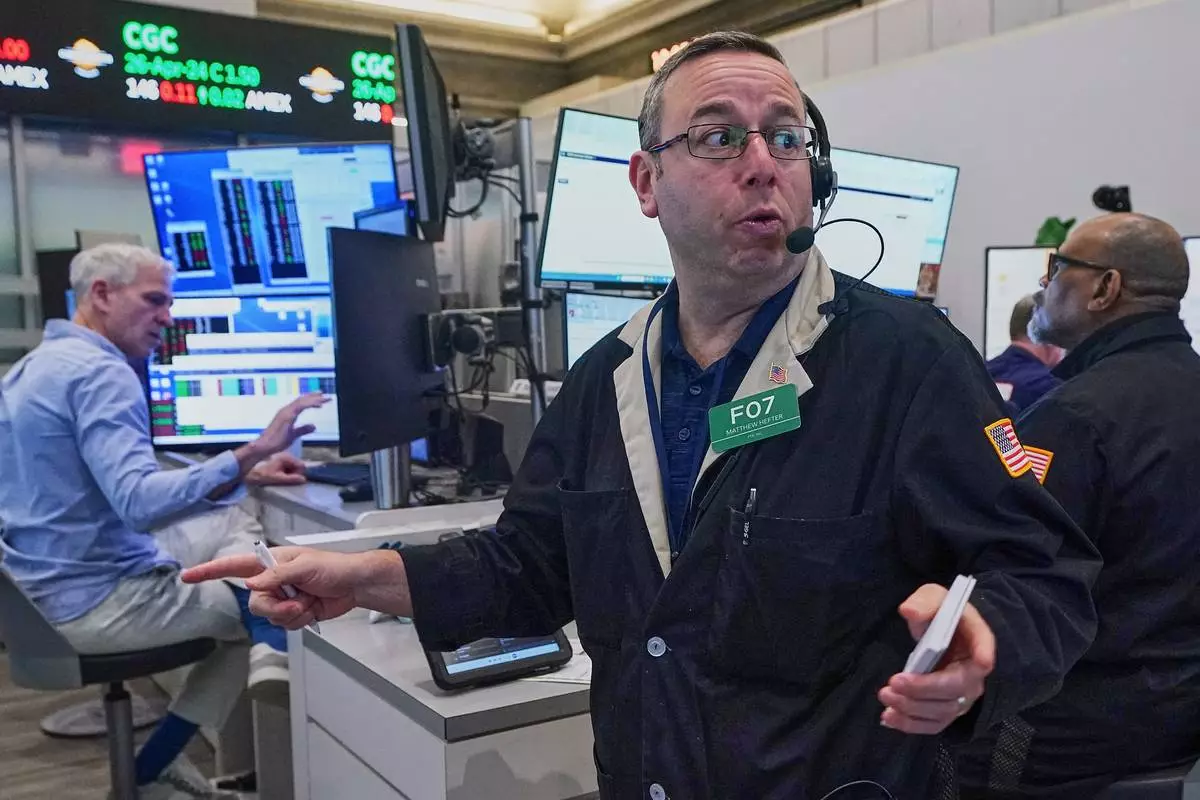
Options trader Matthew Hefter, center, works on the floor of the New York Stock Exchange, Thursday, April 23, 2026. (AP Photo/Richard Drew)
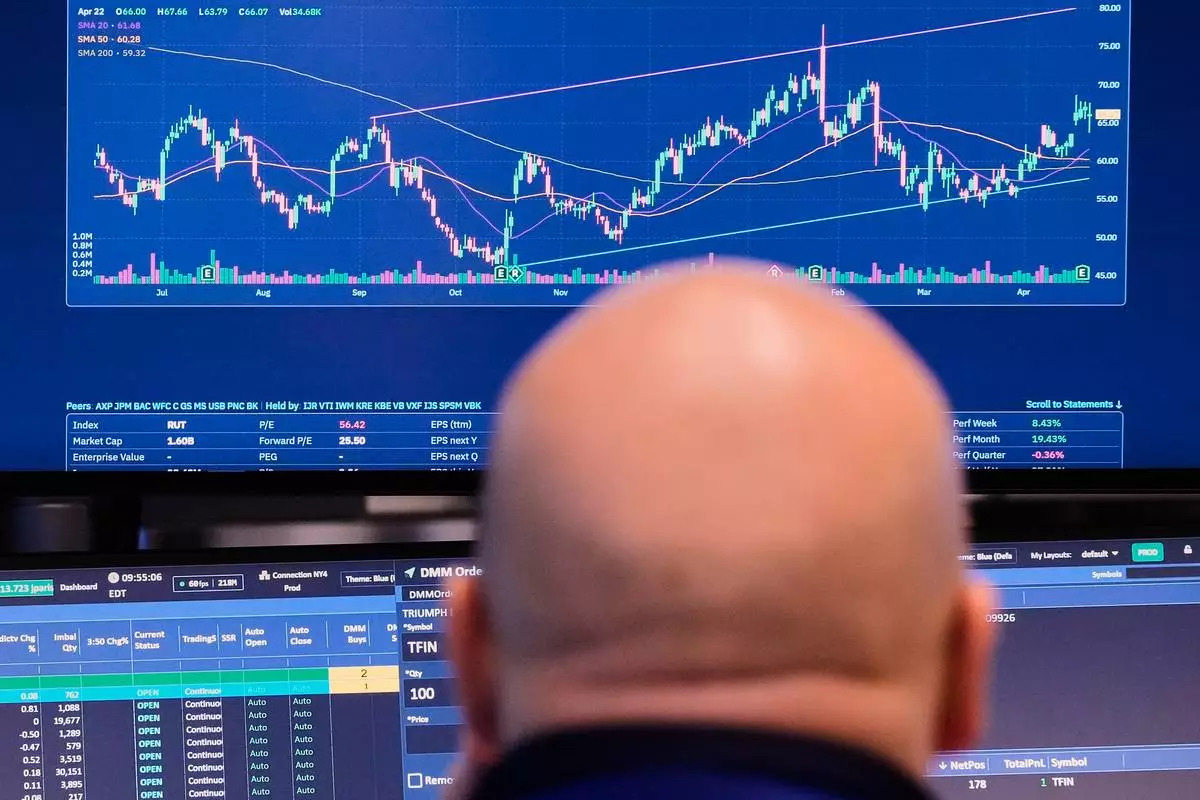
Specialist John Parisi works at his post on the floor of the New York Stock Exchange, Wednesday, April 22, 2026. (AP Photo/Richard Drew)
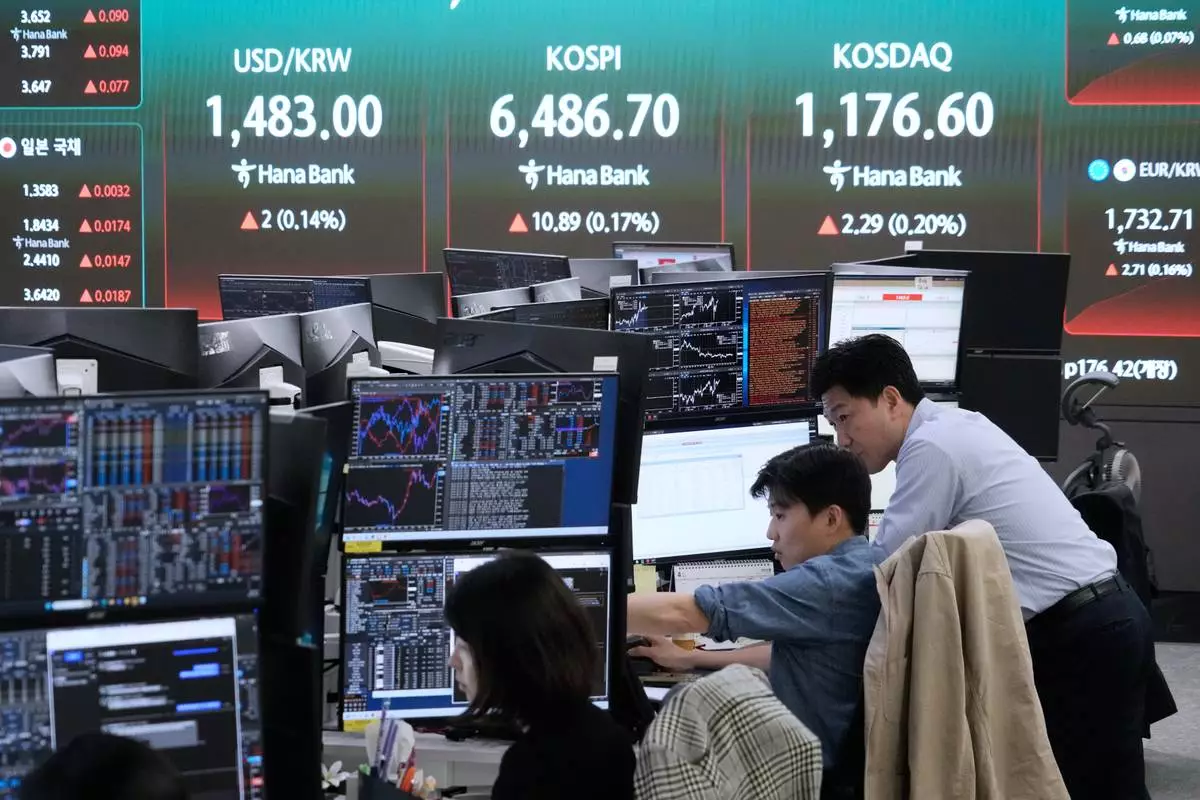
Currency traders watch monitors near a screen showing the Korea Composite Stock Price Index (KOSPI), top center, and the foreign exchange rate between U.S. dollar and South Korean won, top center left, at the foreign exchange dealing room of the Hana Bank headquarters in Seoul, South Korea, Friday, April 24, 2026. (AP Photo/Ahn Young-joon)
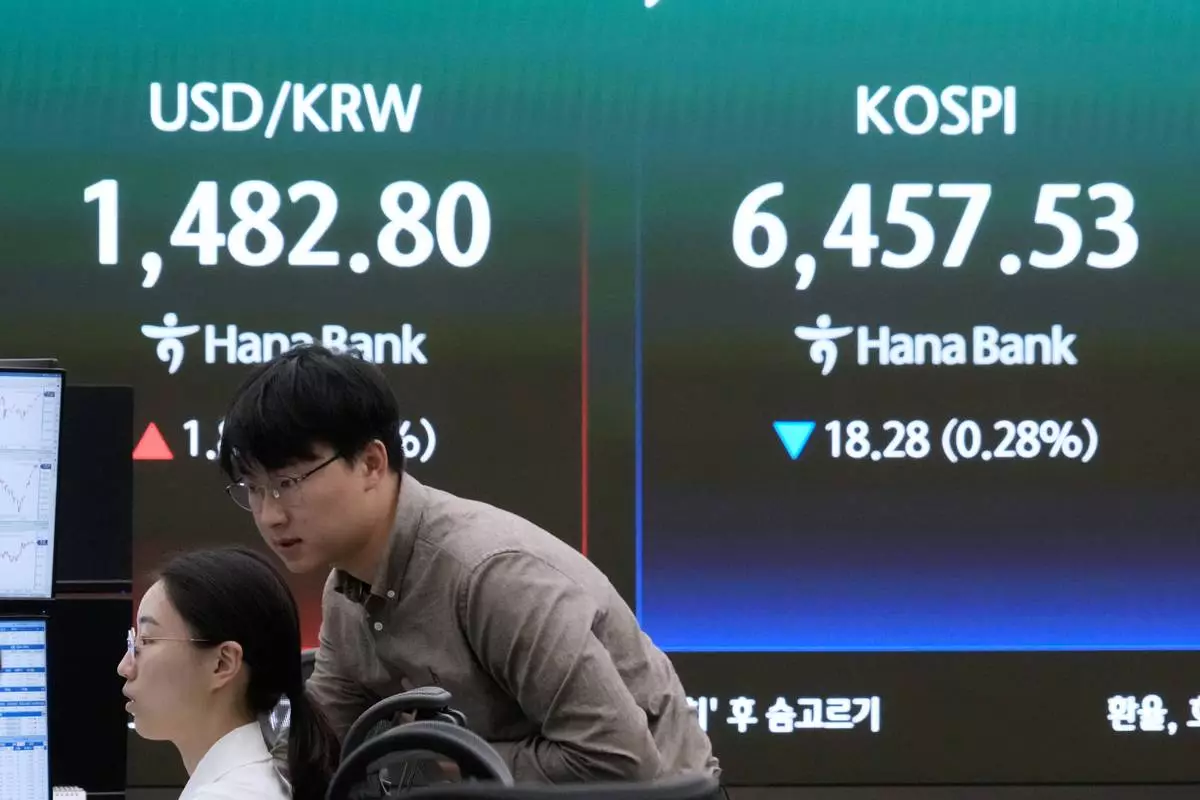
Currency traders work near a screen showing the Korea Composite Stock Price Index (KOSPI), right, and the foreign exchange rate between U.S. dollar and South Korean won at the foreign exchange dealing room of the Hana Bank headquarters in Seoul, South Korea, Friday, April 24, 2026. (AP Photo/Ahn Young-joon)
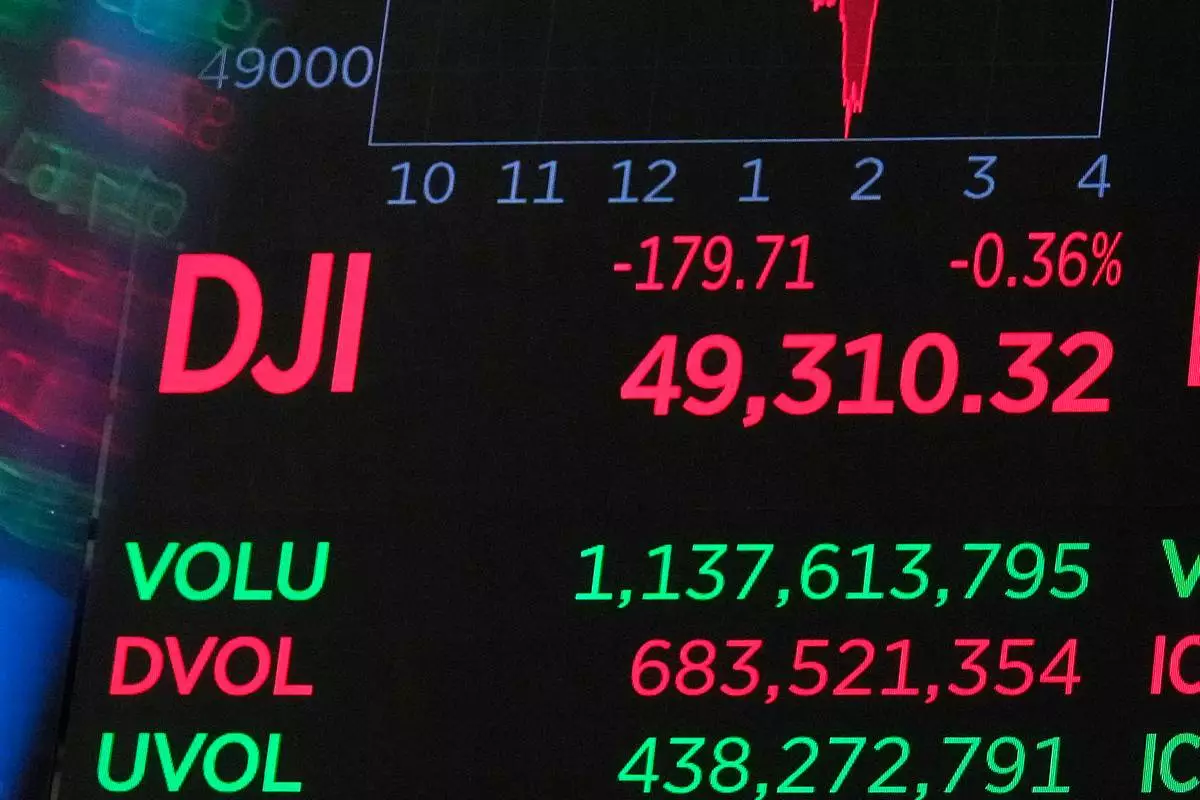
A board above the floor of the New York Stock Exchange displays the closing number for the Dow Jones industrial average, Thursday, April 23, 2026. (AP Photo/Richard Drew)
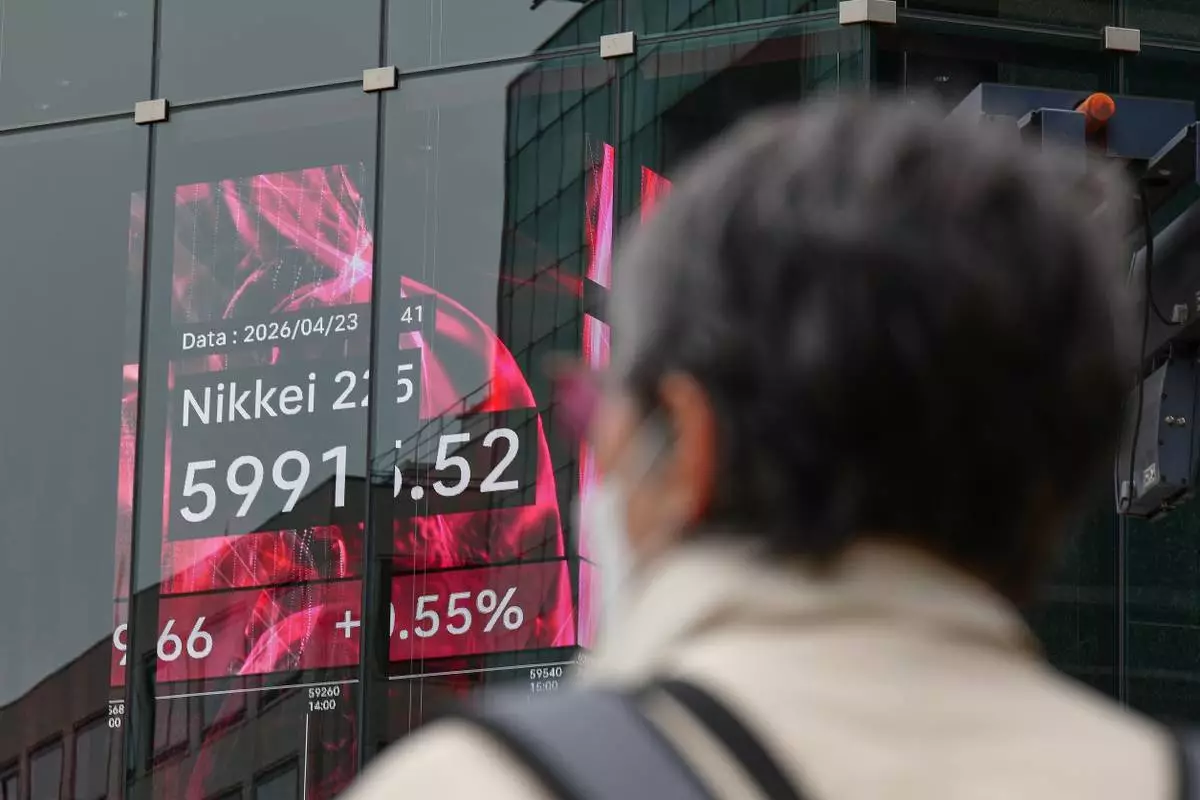
A person stands in front of an electronic stock board showing Japan's Nikkei index at a securities firm Thursday, April 23, 2026, in Tokyo. (AP Photo/Eugene Hoshiko)
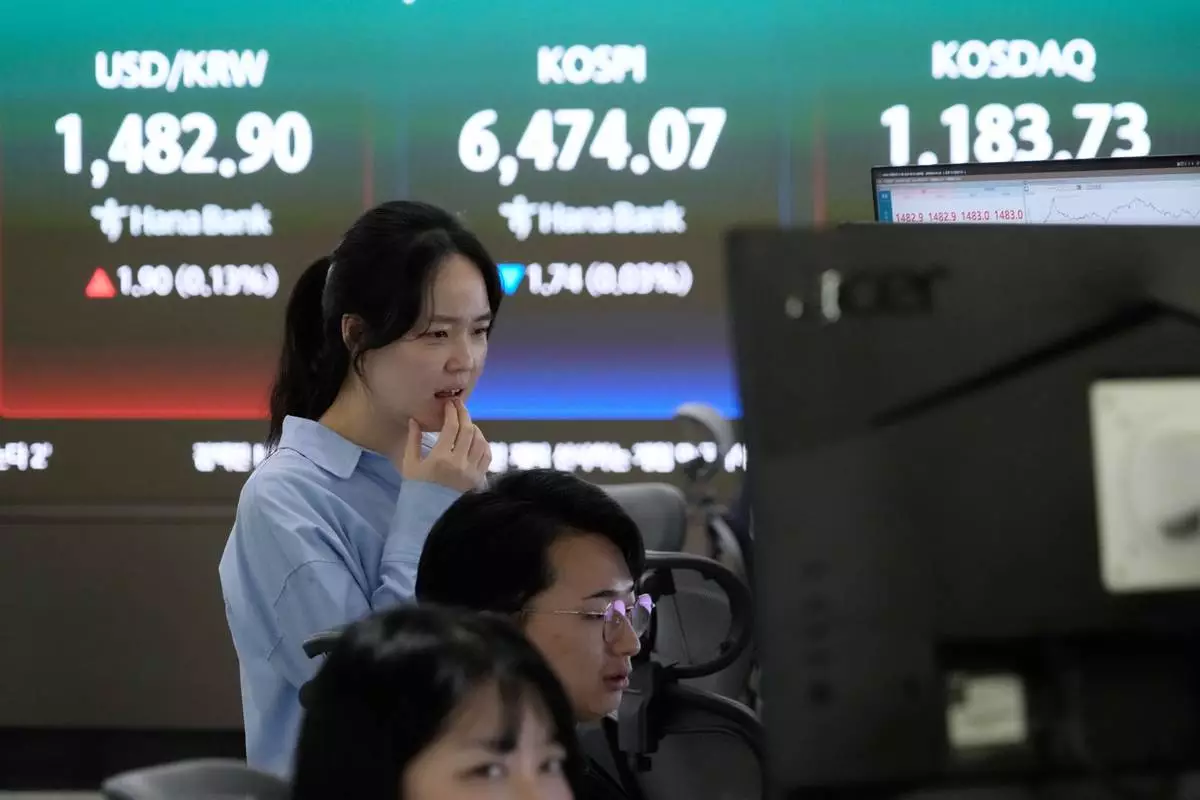
A currency trader watches monitors near a screen showing the Korea Composite Stock Price Index (KOSPI), top center, and the foreign exchange rate between U.S. dollar and South Korean won, top center left, at the foreign exchange dealing room of the Hana Bank headquarters in Seoul, South Korea, Friday, April 24, 2026. (AP Photo/Ahn Young-joon)