CARACAS, Venezuela (AP) — Venezuelan lawmakers on Monday began debating a bill proposed by acting President Delcy Rodríguez to regulate the country’s mining industry and create conditions to attract crucial foreign investment.
The bill aims to generate confidence among foreign investors, many of whom lost assets through expropriations decades ago, and draw much-needed capital to boost the country’s industry. It partially mirrors a recently approved oil-industry reform that opened the door to privatization, doing away with a tenet of the self-proclaimed socialist movement that has ruled the country for more than two decades.
It is the latest legislative action that Rodríguez has proposed since coming under pressure from the Trump administration in January, when the United States military deposed then-President Nicolás Maduro. She announced the measure last week during the visit to the capital, Caracas, of U.S. Secretary of the Interior Doug Burgum.
Burgum’s visit came as the Trump administration seeks to defend against China’s hold on critical minerals — some of which are abundant in Venezuela — and advances its phased plan to stabilize the South American country that was marred by a complex crisis for the entirety of Maduro’s near 13-year rule.
In addition to oil, Venezuela is rich in gold, copper, coltan, bauxite, diamonds and other precious mined resources, while unsafe working conditions are common in the poorly regulated industry. The elements niobium and tantalum, both considered critical minerals and crucial for smartphones and the batteries of electric vehicles, are extracted from coltan. Bauxite is processed into aluminum, which the U.S. also lists as a critical mineral.
“ The restoration of relations between Venezuela and the United States has led the world’s leading mining corporations to evaluate the possibility of investing significant capital to reactivate sectors capable of guaranteeing the supply of critical minerals essential for the development of the technology industry, the generation of new energy sources, and the manufacture of electric vehicles,” lawmaker Félix Freites said before vowing to work diligently to ensure the bill leads to job opportunities for Venezuelans.
The proposed bill regulates mineral rights, establishes small, medium and large-scale mining categories and allows for independent arbitration of disputes, which foreign investors view as key to guard against future expropriation. An independent arbitration provision was included in the oil industry overhaul that Rodríguez signed into law earlier this year.
The bill also bans the president, vice president, ministers, governors and others from holding mining titles.
Venezuela’s mineral-rich areas have long been controlled by guerrilla members, gangs and other illegal groups that mine with consent — and to the benefit — of officials and the military.
Many foreign companies that invested in Venezuela, including in mining and oil sectors, saw their assets expropriated about two decades ago. Then, in 2016, Maduro’s government established a huge mining development zone stretching across the central area of the country to supplement flagging revenue from its dominant oil industry, which saw its production decline as a result of mismanagement, corruption and, more recently, U.S. sanctions.
Since then, mining operations for gold, diamonds, copper and other minerals have proliferated. Many are wildcat mines, operating under brutal conditions and the presence of criminal gangs, but ordinary Venezuelans continue to flock there in hopes of getting rich quick and escaping poverty. Officials and members of the military take cuts from the illegal mining revenue in exchange for allowing the operation of mines, access to fuel and other equipment and transportation of minerals.
The U.S. last week issued a sanctions license that authorizes dealings with Minerven, Venezuela’s state-owned gold mining company.
In announcing the bill Wednesday, Rodríguez told reporters it will be “a win for the social well-being" of Venezuelans.
“May the Venezuelan people also see the good aspects of having good relations with the world and with the United States of America,” she said.
Follow AP’s Latin America coverage at https://apnews.com/hub/latin-america
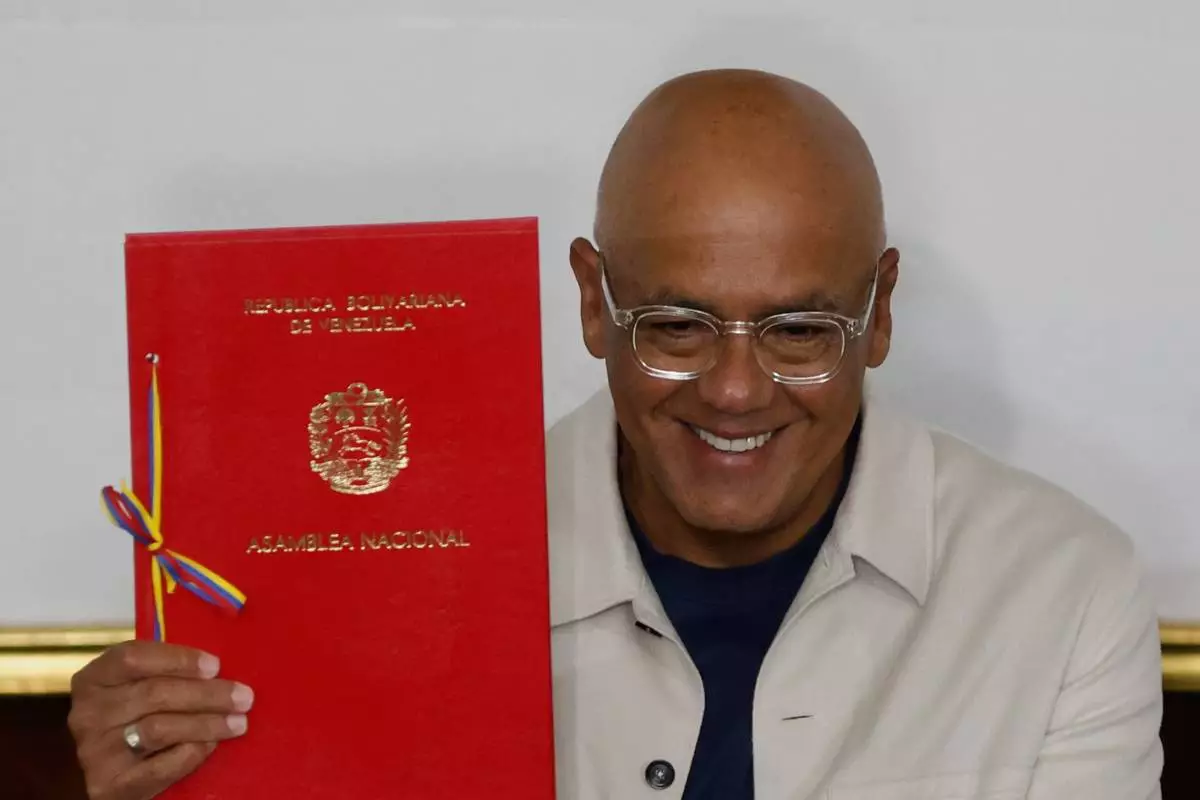
National Assembly President Jorge Rodriguez holds up a document during a debate on a mining bill at the National Assembly in Caracas, Venezuela, Monday, March 9, 2026. (AP Photo/Pedro Mattey)
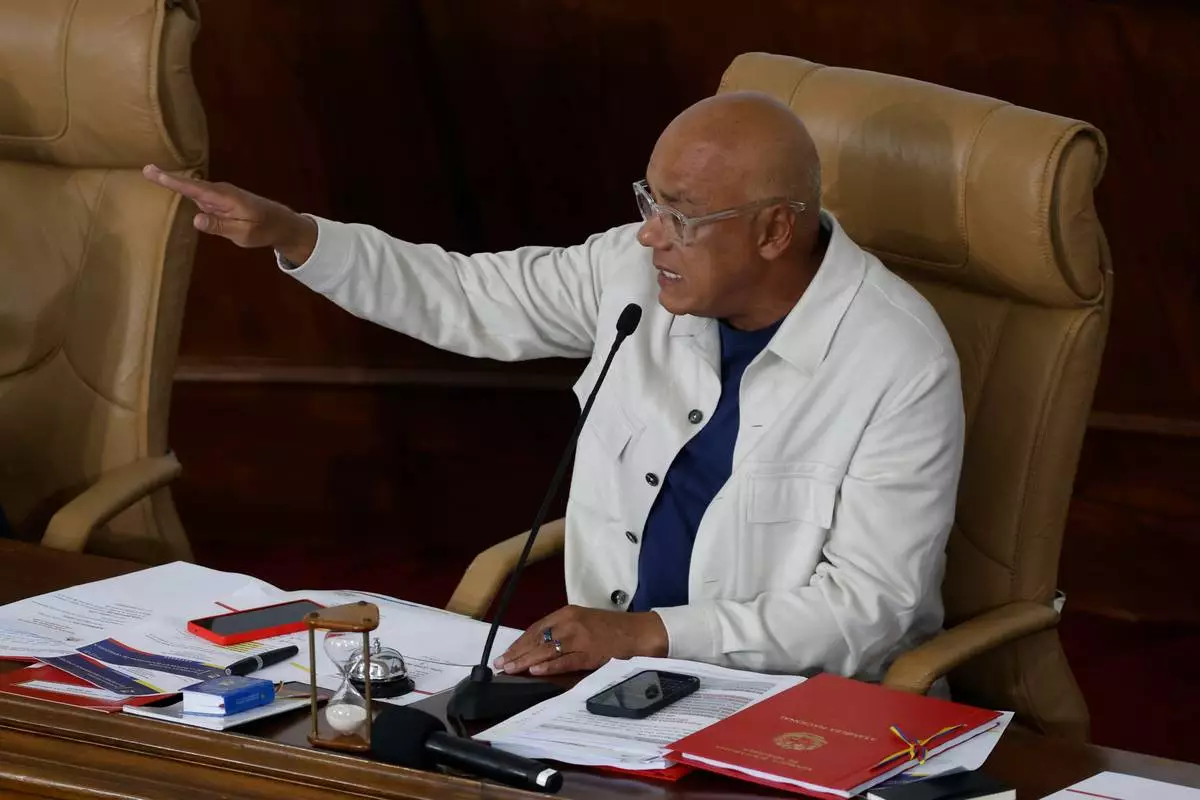
National Assembly President Jorge Rodriguez gestures during a debate on a mining bill at the National Assembly in Caracas, Venezuela, Monday, March 9, 2026. (AP Photo/Pedro Mattey)
DE SOTO, Iowa (AP) — Standing alongside his son’s Ford pickup truck at a central Iowa gas station off Interstate 80, Francisco Castillo was not happy.
He had voted for President Donald Trump in the last election. He believed Trump had strengthened the economy in his first term, and he wanted more of that.
“I thought that he was going to bring some of those things back,” said Castillo, a 43-year-old factory worker. And now? “He said he was going to bring gas down, but the war in Iran is now making everything worse.”
It seems a country divided on so many fronts is finding common ground in pain at the pump, where the cost of the Iran war is hitting Americans squarely in the wallet and aggravating people across the political spectrum.
For Castillo and many others filling their tanks on Monday at gas stations in Michigan, Pennsylvania, Florida, North Carolina and Iowa, it was a reminder that politicians’ promises aren’t going to pay the bills.
"They do what benefits them,” Castillo said. “I have to go to work every day no matter what.”
Some are optimistic that the sticker shock will be short-lived. Others blame corporate interests rather than the president. Electric vehicle owners are especially grateful about their decision as they cruise past gas stations with escalating prices.
The national average gas price was $3.48 a gallon on Monday, up from $2.90 a month ago, before the war, according to tracking by AAA.
The higher prices are a reminder of how Trump has veered from his campaign promises. Not only were Americans embroiled in a new war overseas, they were paying for it every time they filled up their tanks.
The Republican president insisted the conflict was worth it.
“We’re putting an end to all of this threat once and for all, and the result will be lower oil prices, oil and gas prices for American families," he said at a news conference Monday. The war, he said, is "just an excursion into something that had to be done.”
Robert Coon from Omaha, Nebraska, filled up on his way to Ames, Iowa. Though not a Trump voter, he believed the strikes in Iran needed to happen.
Even so, he fears U.S. involvement is not going to go the way he wants, which is “in, out, over.”
A Quinnipiac poll conducted over the weekend found about half of registered voters oppose the U.S. military action against Iran while about 4 in 10 support it. The vast majority of Democrats were against it (89%), the vast majority of Republicans for it (85%) and independents against it (60%).
Overall, three-quarters were concerned about the war raising gas and oil prices. Recent polling also suggests that the vast majority of voters expect the U.S. action against Iran to last months or longer, and many worry it is making the U.S. less safe.
For now, surging prices aren't keeping Ray Albrecht from hauling his 32-foot (11 meter) camper on his Silverado pickup truck around the country as he attended motorcycle festivals like Bike Week in Florida’s Daytona Beach.
However, he said he would stop traveling if the price reached $5 a gallon since he only gets 8 miles per gallon with his truck and camper. He stopped at a Speedway gas station off Interstate 4 in Winter Park, Florida, paying $3.59 per gallon for half a tank to keep him rolling toward his home in Wisconsin.
“I’ve been pretty grateful that the gas prices have been really reasonable” at least until the last week, said Albrecht, 67, who identified as an independent voter.
At the same gas station, Republican-leaning Tyler Nepple, 23, said the price of gas for his Toyota Tacoma may shape his vote in the midterm elections this fall but won't change his driving habits.
“You’ve just got to fill it up and bite the bullet and hope that the prices go back down — that's all I can really do," said Nepple, who runs a startup in the Orlando, Florida, area. “I still have to get from point A to point B, and I need gas to do that.”
Kathryn Price Engelhard, 70, gassed up her Subaru Forester at a Wawa in Morrisville, Pennsylvania, in the Philadelphia suburbs. A retired nonprofit executive director and “strong Democrat,” she said she had to stop at over a half a tank because she’s on a fixed income. Last week, she paid only $30 to top herself off.
Similarly, she cut her order for home heating oil by half because that cost is up, too. “I look at the prices of oil in the past and the stupid war, how did we — how did anybody — think that that was not going to impact oil?" she asked. “Of course it’s impacting oil.”
In Fairless Hills, Pennsylvania, Vivian Knight, 53, is hoping her fill-up last week will last her a month. She is a former exterminator out on disability. “If I had to go to work or something like that, gas prices would be ridiculous,” she said.
Speaking of Trump, she said “he kind of starts some problems that really don’t need to be started,” and she puts the Iran war in that category.
The saga will have no effect on how Joey Perillo, 74, will vote in November.
“The gas price could have gone down to two cents a gallon and I’d vote against him,” said the volunteer firefighter, retired actor and political independent from Yardley, Pennsylvania.
In the Detroit suburb of Livonia, Anthony Gooden, 57, sized up the plight of gas-powered vehicle owners while waiting for his Chevy Equinox EV to charge at a station.
“Whoa, they're going through it right now,” said Gooden, 57, from nearby Redford Township. “And it's only getting worse.”
Gooden ditched his internal combustion engine vehicle over a year ago and said days like these reinforce that decision. “You’re happier now,” he said. “No comparison.”
In Ann Arbor, Michigan, Elvana Hammoud, 55, a diversity strategist, drives a Mach-E electric SUV as well as a Ford Raptor truck that costs $100 to fill up when gas is over $3. It's an easy choice which to use more now.
“I mostly drive the EV, especially to work because I have a long commute,” she said. The Raptor is for snowy days, short errands or when moving something big. ”I used it more frequently just for fun when gas prices were lower.”
Trump has put up a number of roadblocks to rapid expansion of electric vehicles in favor of policies promoting gasoline-powered ones. Among them, his tax and spending bill passed by Congress last year eliminated federal tax credits that saved buyers up to $7,500 off new and used EV purchases.
Kevin Kertesz, 65, filled his pickup at a Shell station in Graham, North Carolina, where unleaded started at $3.34 per gallon, up from $2.59 in the area last week.
The Republican retiree asserted that “everyone who is selling fuel for these elevated prices is price gouging, and there’s nothing we can do about it because we all have to have gasoline to keep driving.”
Ken Shuttlesworth, a 70-year-old IT manager from Graham who described himself as an independent Democrat, said he can absorb higher gas costs but worries about his children and grandchildren and others who live closer to the financial margins.
Trump, he said, should have consulted Congress and had a more public discussion before taking the country to war.
“We have somebody who doesn’t follow the policy," he said. "He follows his instincts.”
Householder reported from Michigan, Schneider from Florida, Catalini from Pennsylvania and Barrow from Georgia. Associated Press writers Calvin Woodward and Linley Sanders contributed.
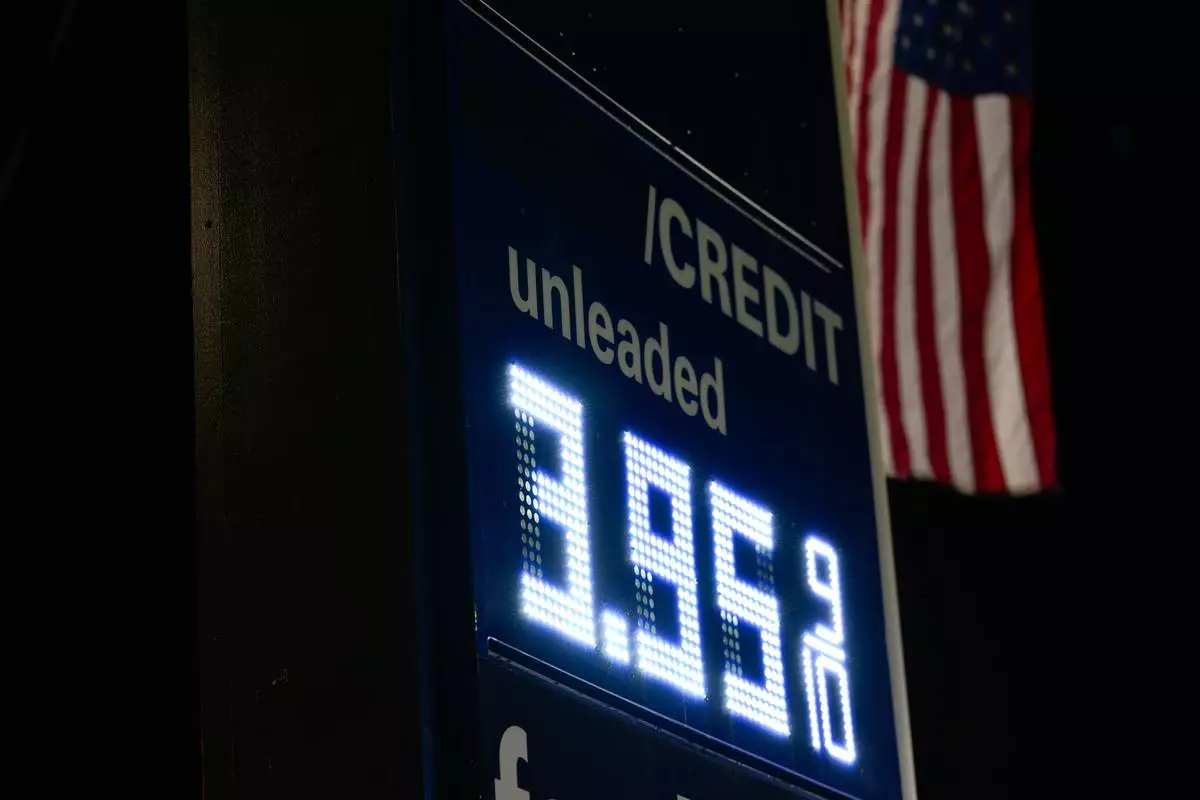
An American flag flies outside a gas station as gasoline prices are displayed on Sunday, March 8, 2026, in Portland, Ore. (AP Photo/Jenny Kane)
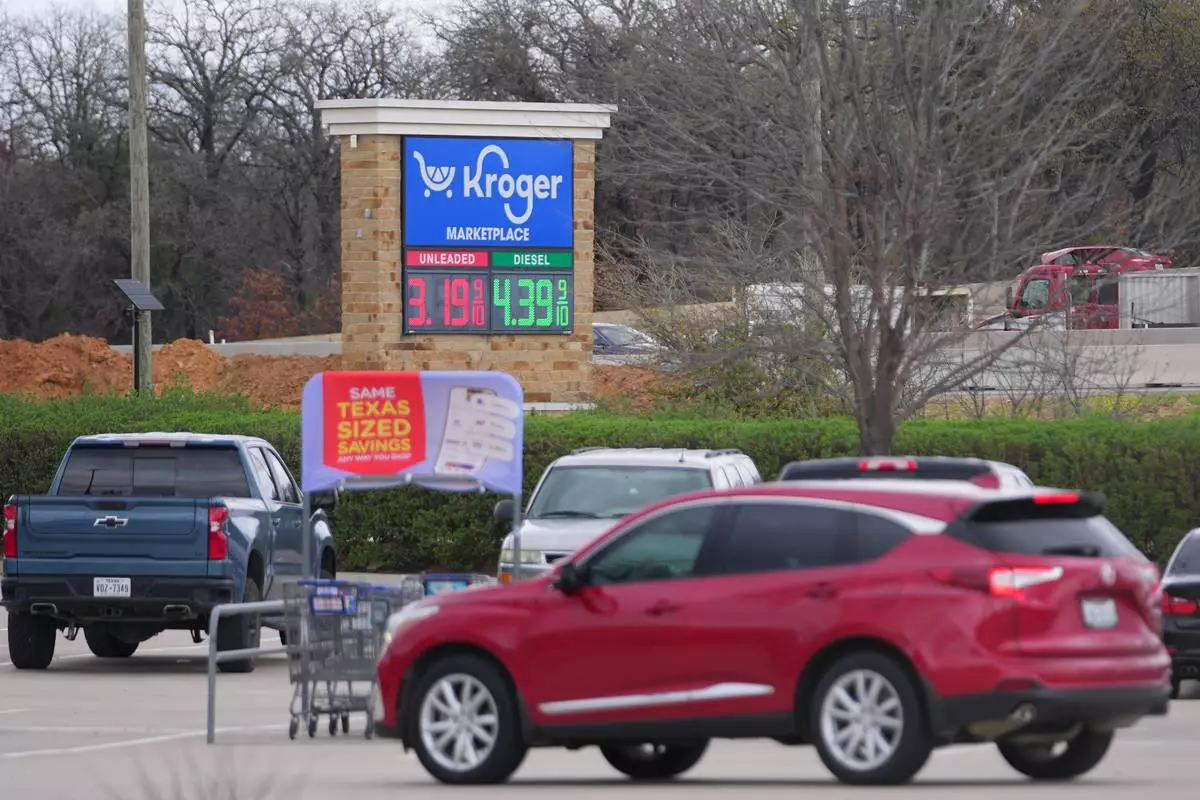
Gas prices are visible on a marquee outside of a Kroger grocery store Monday, March 9, 2026, in Arlington, Texas. (AP Photo/Julio Cortez)

Marcus Hopkins, a street performer, does a backflip in front of advertised gas prices Monday, March 9, 2026, in Los Angeles. (AP Photo/Damian Dovarganes)

Gas prices are displayed, Monday, March 9, 2026, in Los Angeles. (AP Photo/Damian Dovarganes)