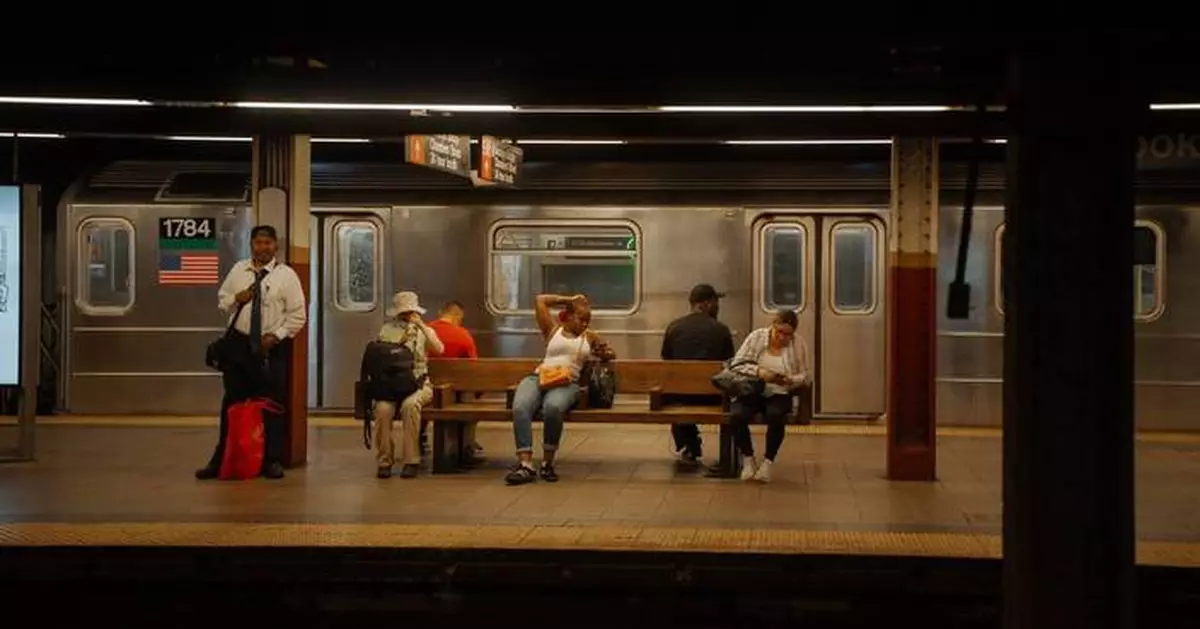
Commuters, residents and tourists who take to social media during warm months to complain about sweltering subway systems in New York, Boston and London should feel vindicated — new research says they aren't alone.
As temperatures rise aboveground, the number of subway riders reporting uncomfortable heat belowground increases, according to a new study in the journal Nature Cities on Tuesday. This could worsen as climate change, driven by the burning of fossil fuels, makes for a hotter planet.
Northwestern University researchers analyzed more than 85,000 crowdsourced social posts on the social platform X and Google Maps reviews from 2008 to 2024 in those three major cities’ subway systems. They searched for keywords related to being too hot — or what they called “thermal discomfort” — in those metropolises, which are some of the world’s oldest and busiest. The experts looked for terms such as “hot” and “warm” while filtering out results that did not seem to relate to temperature, such as “hot dog.”
The study’s authors said subway riders may expect temperatures to be naturally cooler underground. They found that a 1-degree Fahrenheit (0.56-degree Celsius) increase in outdoor temperature led to a 10% increase in complaints in Boston, 12% in New York and 27% in London. Earth’s average temperature warmed 1 degree F (0.56 degrees C) from 2008 to 2024, according to the National Oceanic and Atmospheric Administration.
The researchers analyzed posts across seasons, time of day and day of week.
“Interestingly, over the weekend, people complained less,” said Giorgia Chinazzo, assistant professor in Northwestern’s Department of Civil and Environmental Engineering, who co-authored the study with associate professor Alessandro Rotta Loria. Chinazzo speculated that one reason may be that people were dressing differently than on workdays.
Flavio Lehner, an assistant professor of Earth and atmospheric sciences at Cornell University who was not involved in the work, said the research “follows the template of previous studies that link environmental conditions to human behavior using social media data.” He has also studied how warm conditions trigger a stronger online reaction.
Lehner said limitations of the research include only monitoring three city transit systems, and it being difficult to control for other factors influencing social media behavior.
University of Washington public health and climate professor Kris Ebi, who was also not involved in the study, said the actual impact of subway heat is likely to be greater than researchers found because vulnerable groups are underrepresented on social media.
Ebi said the size of the study “provides compelling evidence that cities should be planning for measures to keep people safe during hot weather.”
Work such as this could certainly play a role in influencing how policymakers and subway operators adjust to heat extremes.
“We’re all experiencing rising temperatures. So those above will be reflected underground, and this will be reflected in people complaining more and more,” Chinazzo said. “Mitigation and adaptation strategies are things that will be much more implemented in the future.”
This could mean installing fans or operating cooling at more specific times of day. It could also mean offering drinking water at certain times.
“We need new technologies and tools, new methodologies that people can use to face these changes in temperatures that everyone is aware of and experiencing nowadays,” she added. “And it will be worse in the future.”
Alexa St. John is an Associated Press climate reporter. Follow her on X: @alexa_stjohn. Reach her at ast.john@ap.org.
Read more of AP’s climate coverage.
The Associated Press’ climate and environmental coverage receives financial support from multiple private foundations. AP is solely responsible for all content. Find AP’s standards for working with philanthropies, a list of supporters and funded coverage areas at AP.org.
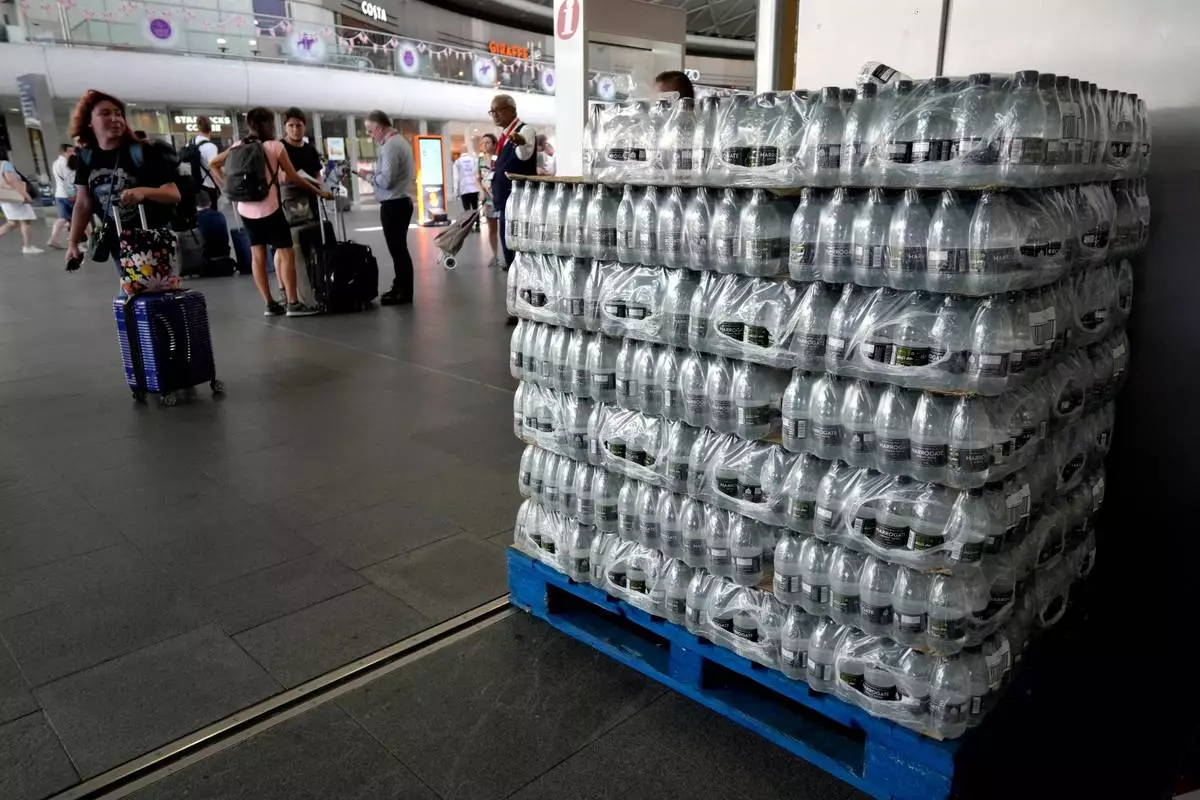
FILE - Bottles of water are piled up to give to passengers at King's Cross railway station where trains are cancelled due to the heat in London, July 19, 2022. (AP Photo/Kirsty Wigglesworth, File)
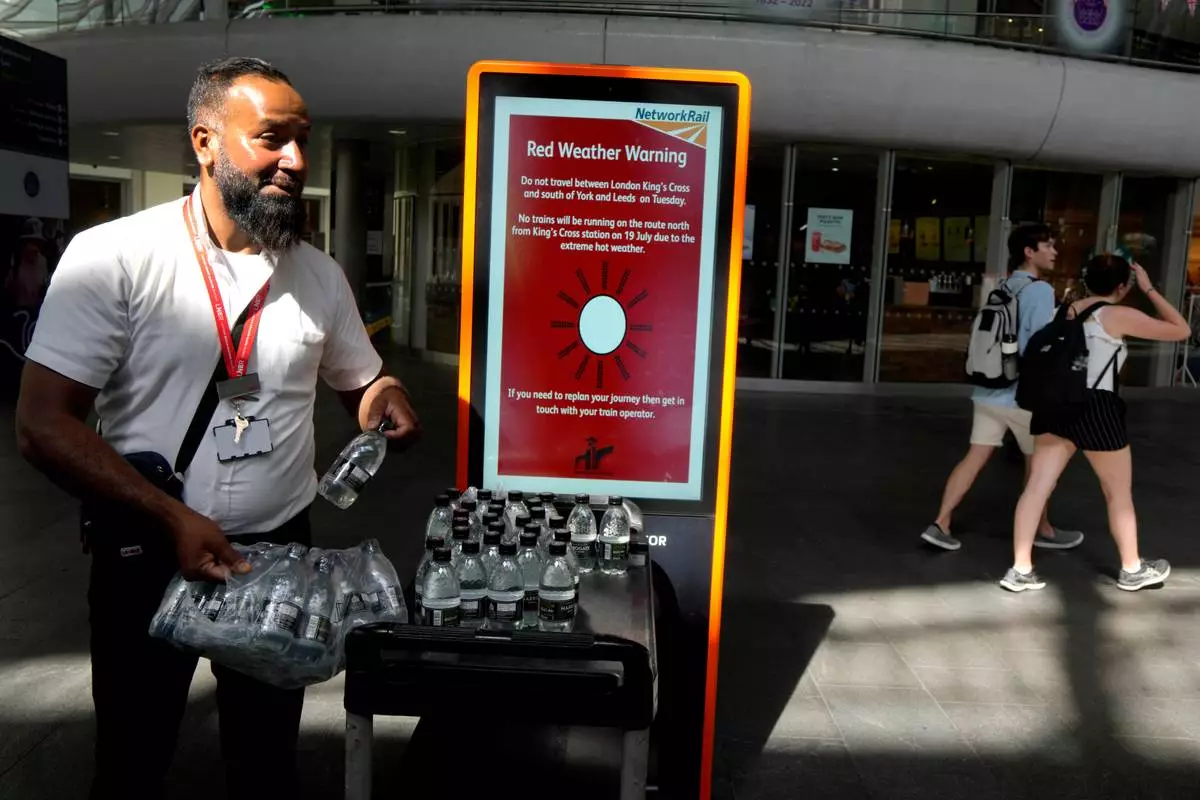
FILE - A railway worker hands out bottles of water to passengers at King's Cross railway station where there are train cancellations during a heat wave in London, July 19, 2022. (AP Photo/Kirsty Wigglesworth, File)
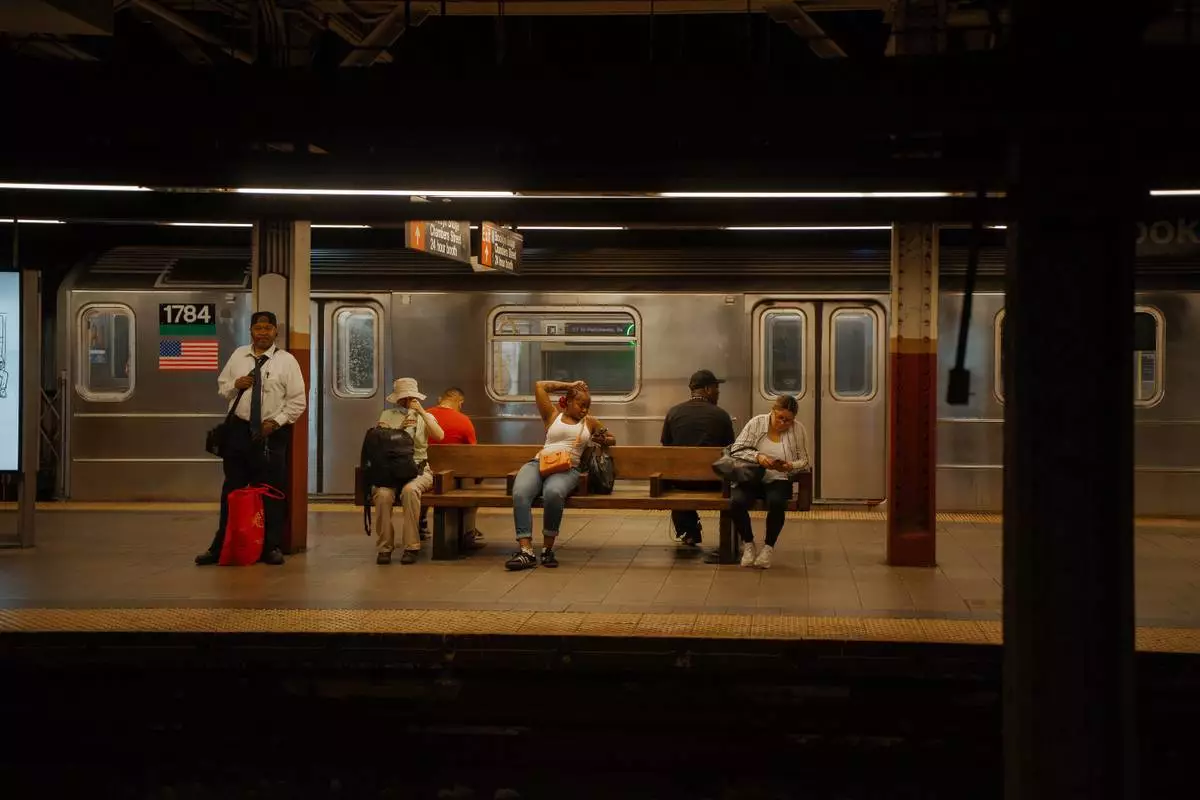
FILE - Passengers wait for the train on a subway platform during a heat wave on June 24, 2025, in New York. (AP Photo/Olga Fedorova, File)
ELIZABETHTOWN, Ky. (AP) — Vice President JD Vance joined the grieving family of a Kentucky man who was the seventh U.S. service member to die in combat during the Iran war as his remains were brought back to the U.S. Monday evening.
The dignified transfer, a solemn event that honors U.S. service members killed in action, took place at Dover Air Force Base in Delaware for Army Sgt. Benjamin N. Pennington, 26, of Glendale, Kentucky. He died Sunday after being wounded during a March 1 attack on the Prince Sultan Air Base, Saudi Arabia, a Pentagon statement said.
Vance and Defense Secretary Pete Hegseth saluted alongside high ranking military officials as the transfer case draped with the American flag was carried from the military aircraft and into an awaiting vehicle.
Mike Bell, retired pastor of Glendale Christian Church, said he’d known Pennington since he was a toddler and got a call from Pennington's father when the soldier was hurt.
“I talked to Tim Saturday morning, and he was doing a little better, and they were talking about maybe moving him to Germany,” Bell said. Tim Pennington called again that evening, Bell said, to ask for prayers as his son's condition was worsening, and then later told him the soldier had succumbed to his injuries.
“He was just a quiet person,” said Bell, noting that Pennington attended the church’s after-school program. “I mean, he never attracted attention because he was just steady doing what he needed to do to do it.”
Pennington was assigned to the 1st Space Battalion, 1st Space Brigade of the U.S. Army Space and Missile Defense Command based at Fort Carson, Colorado.
The unit’s mission focused on “missile warning, GPS, and long-haul satellite communications,” according to their website.
“This just breaks my heart,” Keith Taul, judge-executive of Hardin County, where Pennington was from, said in a statement emailed to The Associated Press. “I have known the family for at least 30 years. I can’t imagine the pain and suffering they are experiencing.”
Glendale is an unincorporated town of about 300 residents south of the Hardin County seat of Elizabethtown.
In a statement posted on social media, Kentucky Gov. Andy Beshear called Pennington “a hero who sacrificed everything serving our country.”
The other six service members killed since the conflict began on Feb. 28 were Army reservists killed in Kuwait when an Iranian drone struck an operations center at a civilian port.
President Donald Trump on Saturday joined grieving families at Dover Air Force Base at the dignified transfer for those six U.S. soldiers.
The dignified transfer is considered one of the most somber duties of any commander in chief. During his first term, Trump said bearing witness to the transfer was “the toughest thing I have to do” as president.
Pennington graduated in 2017 from Central Hardin High School, where he was enrolled in the automotive technology pathway, district spokesman John Wright told the AP. Former automotive tech instructor Tom Pitt, who taught Pennington in 2017 at Hardin County Early College and Career Center, called him “an American hero.”
“A lot of times as a teacher, you have students who are smart, you have students who are charismatic, who are likable, dare I say, enchanting,” said Pitt, who called Pennington Nate. “Rarely do you have students who are all of those. And Ben Pennington was all of those. He was basically the quintessential all-American.”
Photos on his and family members' Facebook pages show that Pennington achieved the rank of Eagle Scout in August 2017. His Eagle project was the demolition of some old baseball dugouts in Glendale, said Darin Life, former committee chairman for Troop 221.
“If you look up Eagle Scout, his picture’s probably there,” said Life, who knew Pennington throughout his scouting career. “He loved his country. I would have expected nothing less of him than to lose his life protecting his country.”
A month after his Eagle ceremony, Pennington posted a photo of himself taking the oath of enlistment. He entered the service as a unit supply specialist and was assigned to the Space and Missile Command on June 10, 2025, the Army said in a release.
Among his awards and decorations were the Army Commendation Medal, Army Achievement Medal, Army Good Conduct Medal, National Defense Service Medal, Global War on Terrorism Service Medal and the Army Service Ribbon.
“The U.S. Army Space and Missile Defense Command is deeply saddened by the loss of Sgt. Pennington,” said Lt. Gen. Sean A. Gainey, USASMDC commanding general. “He gave the ultimate sacrifice for the country he loved.”
Col. Michael F. Dyer, 1st Space Brigade commander, described Pennington as “a dedicated and experienced noncommissioned officer who led with strength, professionalism and sense of duty.”
Pennington will be posthumously promoted to staff sergeant, the Pentagon said.
Associated Press reporters Konstantin Toropin in Washington, Hallie Golden in Seattle and Adrian Sainz in Memphis, Tennessee, contributed to this report.

A U.S. Army carry team places the transfer case with the remains of U.S. Army Sgt. Benjamin N. Pennington, 26, of Glendale, Ky., the seventh U.S. service member to die in combat during the Iran war, in the the transfer vehicle during a dignified transfer Monday, March 9, 2026, at Dover Air Force Base, Del. (AP Photo/Julia Demaree Nikhinson)
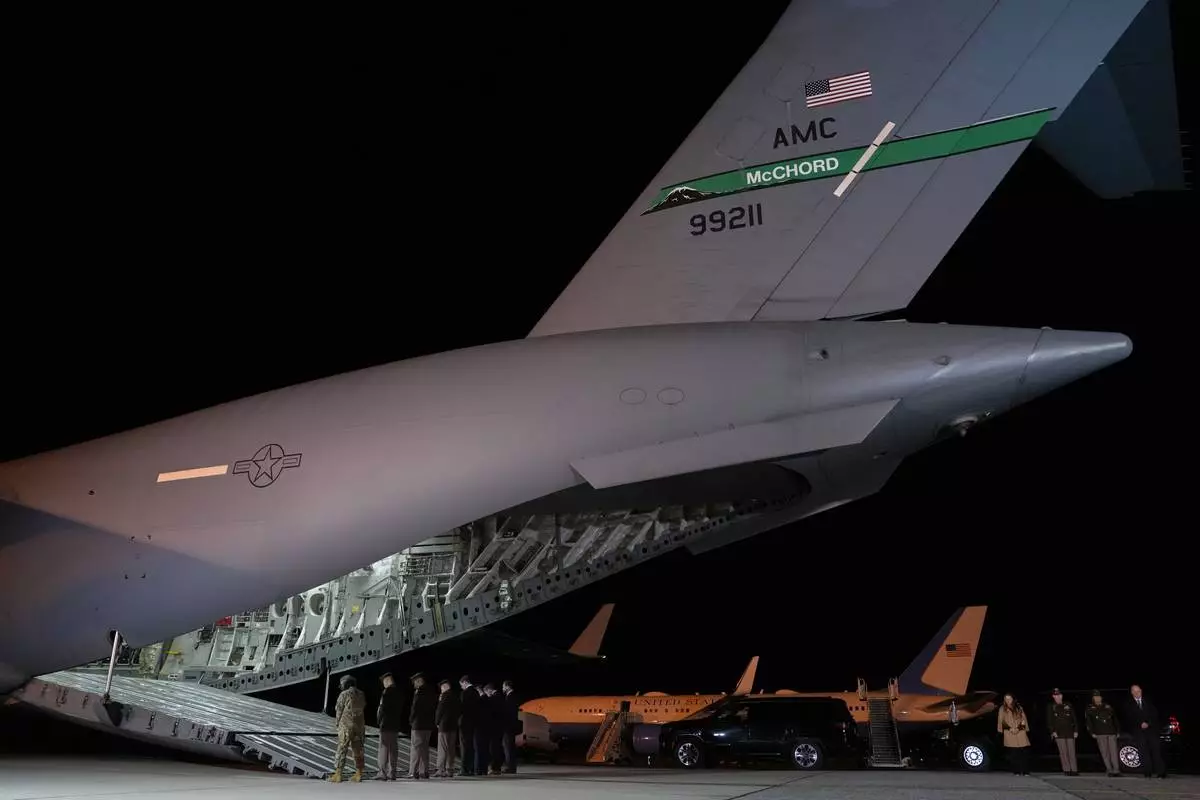
Vice President JD Vance, Defense Secretary Pete Hegseth, Chairman of the Joint Chiefs of Staff Gen. Dan Caine and other military leaders pray before a dignified transfer for U.S. Army Sgt. Benjamin N. Pennington, 26, of Glendale, Ky., the seventh U.S. service member to die in combat during the Iran war, Monday, March 9, 2026, at Dover Air Force Base, Del. (AP Photo/Julia Demaree Nikhinson)
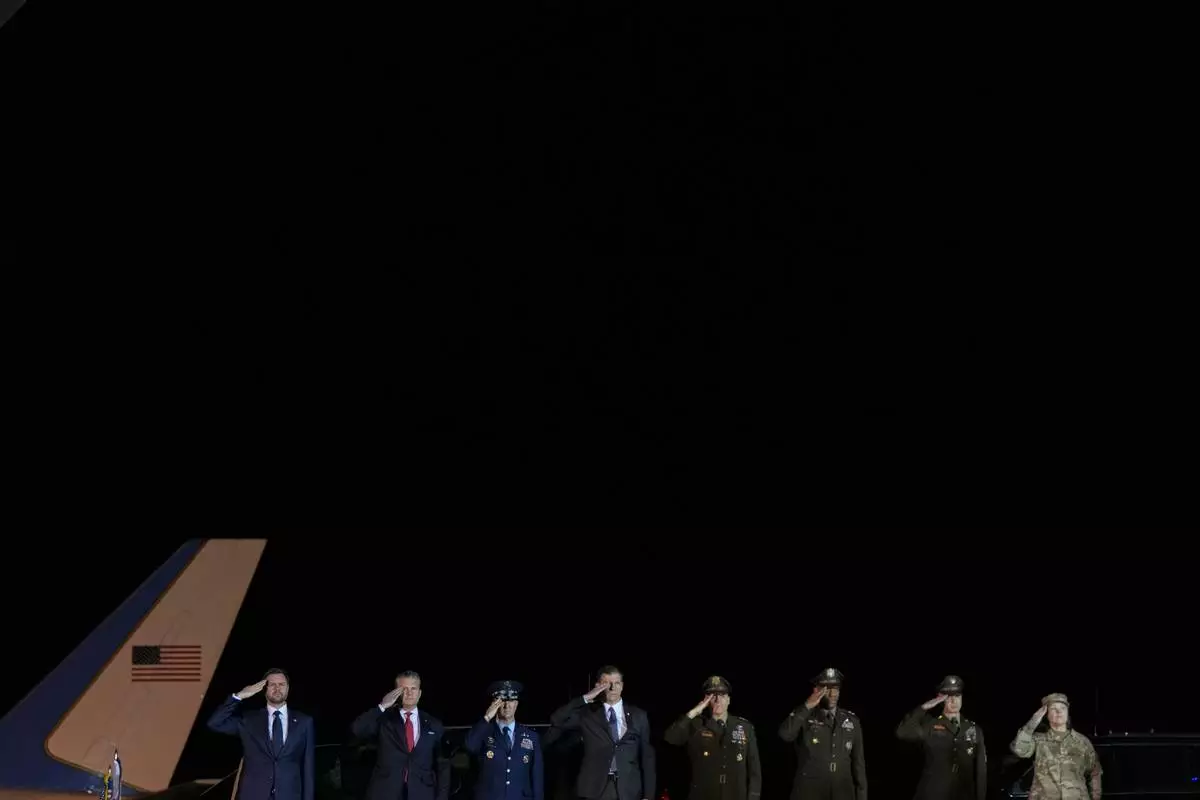
Vice President JD Vance, Defense Secretary Pete Hegseth, Chairman of the Joint Chiefs of Staff Gen. Dan Caine, and other military leaders, salute during a dignified transfer for Sgt. Benjamin N. Pennington, 26, of Glendale, Ky., Monday March 9, 2026, at Dover Air Force Base, Del. (AP Photo/Julia Demaree Nikhinson)

Defense Secretary Pete Hegseth salutes as an U.S. Army carry team moves the transfer case containing the remains of Sgt. Benjamin N. Pennington, 26, of Glendale, Ky., Monday March 9, 2026, at Dover Air Force Base, Del. (AP Photo/Julia Demaree Nikhinson)
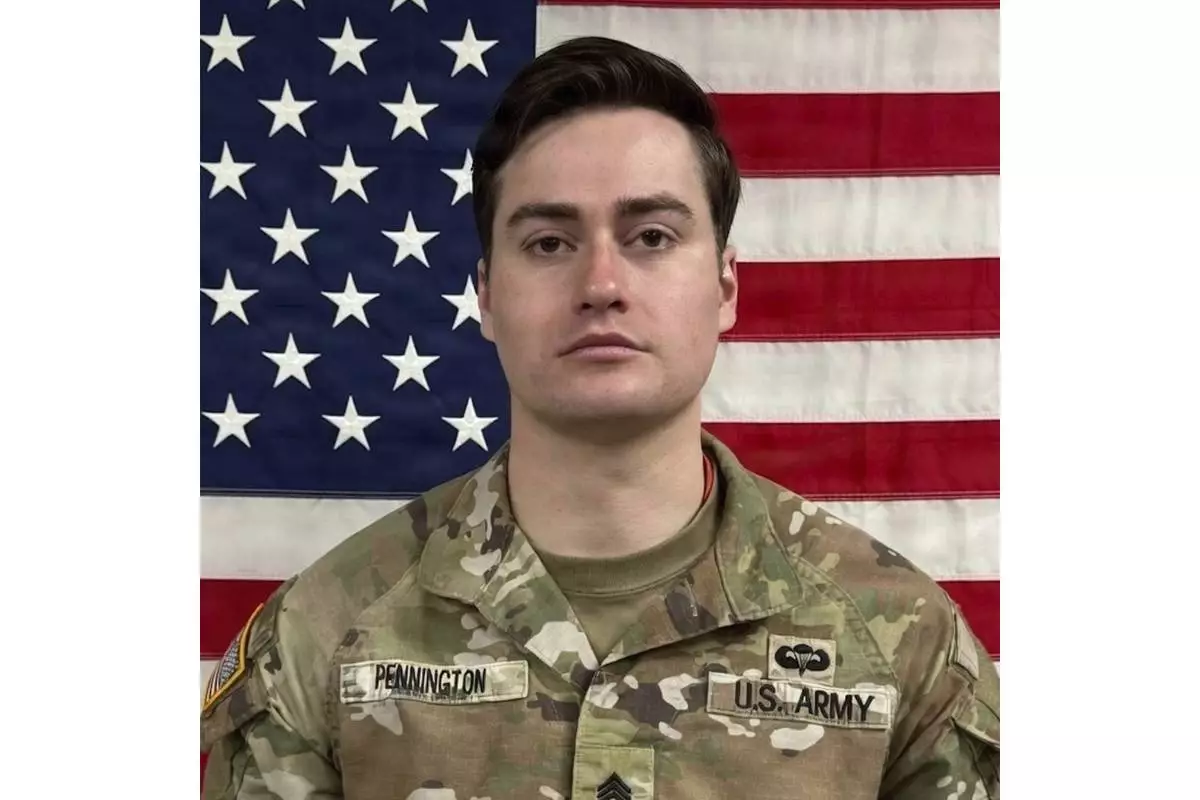
This image provided by the U.S. Army shows U.S. Army Sgt. Benjamin N. Pennington, 26, of Glendale, Ky. (U.S. Amy via AP)