China's Ministry of Industry and Information Technology (MIIT) has warned that the OpenClaw open-source AI assistant could pose security risks under default or improper configurations, exposing users to cyberattacks and data breaches.
OpenClaw, which is created by Austrian developer Peter Steinberger, is designed to allow large language models to operate computers autonomously, controlling files, executing commands and interacting through messaging applications such as WhatsApp and Telegram.
According to the National Vulnerability DataBase (NVDB) of the ministry, users become susceptible to security risks such as data leaks and devices subject to remote control when using OpenClaw in the absence of effective permission controls, auditing mechanisms and security reinforcement.
The AI agent's vulnerability lies in its operation within "blurred trust boundaries" during its deployment, and its features including continuous operation, autonomous decision-making and access to system and external resources.
Experts advise that relevant organizations and individuals disable unnecessary public network access when deploying OpenClaw applications, improve security mechanisms such as identity authentication, access control, data encryption and security auditing, and continuously pay attention to official security announcements and hardening recommendations.

Ministry warns of security risks in OpenClaw AI agent
Three people critically injured in the 7.0-magnitude earthquake that struck Baqen County in southwest China's Xizang Autonomous Region are in stable condition after a continuous relay of surgeries lasting 15 hours.
The patients suffered severe trauma in the quake, with complex injuries that made treatment difficult. They were transferred urgently from neighboring Sog County, in the rugged high-altitude terrain of the Qinghai-Tibet Plateau, to the region's main hospital in Nagqu City to the northwest.
The hospital quickly assembled a specialist team, bringing together medical experts from the aid-Xizang program with key doctors from its orthopedics, surgery and emergency departments.
"We worked closely with the hospital's own medical staff to treat the trauma patients, sparing no effort. As long as the injured can pull through, all the hard work is worth it. We will stay at our posts and continue to provide follow-up treatment," said Zhao Hengwu, a member of the Liaoning medical team aiding Xizang.
While the surgeries were underway, the hospital was also running a two-front rescue effort, dispatching medical personnel to the disaster zone to screen and treat survivors on the spot.
"After the earthquake, we immediately organized an 18-member rescue team and sent it to the front line in the disaster area. At the same time, the hospital opened a green channel so that all earthquake victims could receive priority consultation and treatment. We will certainly stay at our posts, do our utmost to treat every injured person, and protect the people's lives and health," said Sonam Phuntsok, vice president of the hospital.
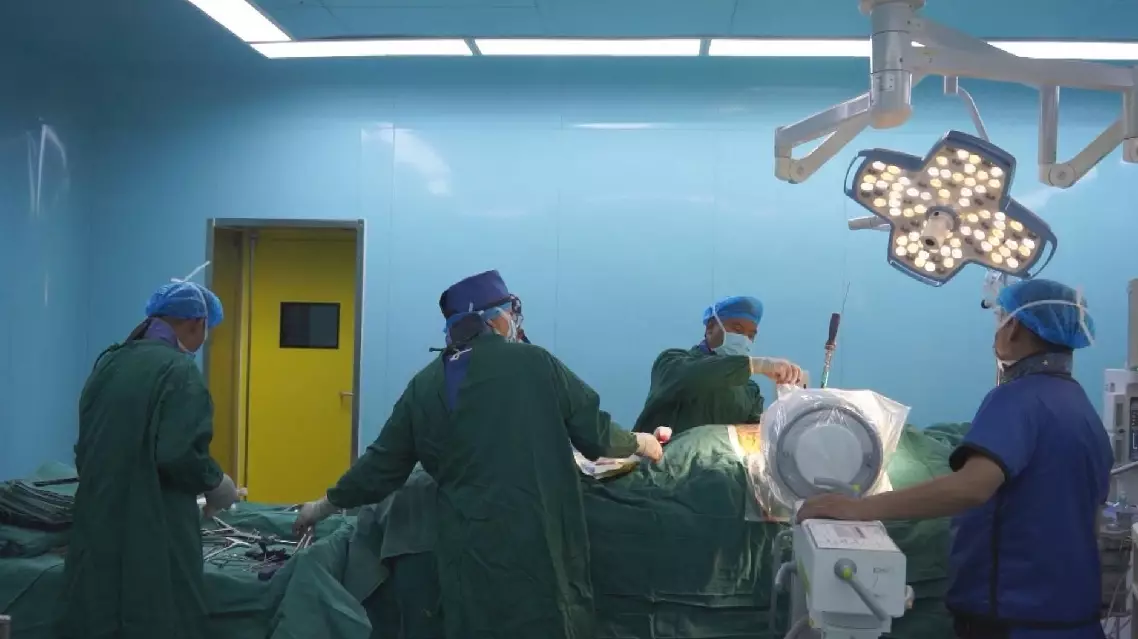
Three critically injured in Xizang earthquake in stable condition after 15-hour relay surgeries