Skip to Content Facebook Feature Image

Michael Bloomberg, biggest donor of 2025, tops Philanthropy 50 list for third year in a row

News

Michael Bloomberg, biggest donor of 2025, tops Philanthropy 50 list for third year in a row
News

News

Michael Bloomberg, biggest donor of 2025, tops Philanthropy 50 list for third year in a row

2026-03-10 22:20 Last Updated At:22:30

For the third consecutive year, Michael Bloomberg landed the No. 1 spot on the Chronicle of Philanthropy’s exclusive ranking of the 50 biggest donors of 2025. The founder of the Bloomberg financial-news empire and former New York mayor gave $4.3 billion to support arts, education, the environment, public health, and programs to improve city governments.

Bloomberg is followed on the Philanthropy 50 list by three donors who each gave $1 billion or more to charity last year. Bill Gates (No. 2) gave $3.7 billion to the Gates Foundation, and his former Microsoft colleague, the late Paul Allen (No. 3), left a $3.1 billion bequest to start a foundation focused on science and technology. Warren Buffett donated $1.3 billion to four family foundations that support a range of causes.

Together the donors on the Philanthropy 50 list contributed a total of $22.4 billion to charity in 2025. The median gift was $105 million.

The financial industry was the source of wealth for most donors on the list, with 20 philanthropists giving a total of $4.1 billion. Next was technology, with 12 tech donors contributing $10 billion, and then real estate, with four donors giving $466.7 million.

More donors live in New York and California than any other state, and nonprofits in those states received the most gifts.

For many of these donors, philanthropy brings them great meaning. Jon and Mindy Gray (No. 34, at $63.6 million) primarily support research on inherited cancers related to BRCA mutations — Mindy’s sister died of BRCA-related ovarian cancer at age 44 — and empowering young people in New York City. One of their initiatives, the Gray Scholars program, provides scholarships to 10 New York City students per year to attend a historically Black college or university. Every year, the Grays participate in a gathering for all the scholars.

“We’re very hands-on people — we enjoy it,” Mindy Gray says. “Other people often come to us and say, ‘I want to do something, but what should I do?’ And it really is what you feel in your heart. You should not be doing this work in areas that don’t move you.”

But few of the country’s wealthiest people are moved to give in the way that the Grays and other Philanthropy 50 donors do. Only 19 of the richest Americans on the Forbes 400 list donated enough to appear in this year’s rankings.

High-profile philanthropist MacKenzie Scott is not in the ranking, though she has donated some $26 billion to charities since 2020. It is likely that Scott made gifts to her donor-advised funds that would have earned her a spot in the ranking, but she and her representatives declined to provide information about how much money she is funneling to the grantmakers.

Not all donors on the Chronicle’s list grab headlines for their giving. Some lesser-known philanthropists who landed on the Philanthropy 50 include:

— Robert and Karen Hale (No. 25): The Granite Telecommunications founder and his wife gave nearly $111 million last year to dozens of nonprofits they have supported for years. They gave a $100 million gift to Boston Children’s Hospital and the remainder to education, human-service, social-justice, and youth groups throughout the greater Boston area.

— James and Patricia Anderson (No. 39): The automotive consultant and his wife gave $50 million to Wayne State University, his alma mater, and more than $8 million to charities that serve the elderly and people with special needs.

— Melanie and Richard Lundquist (No. 42): The Los Angeles real estate investors are longtime donors to Southern California nonprofits, primarily backing health care and the city’s public schools. Along with a $50 million donation they gave Torrance Memorial Medical Center, they also donated $3 million to nonprofits that help cancer patients and young people.

Though these billionaires and millionaires give away huge sums, they give for many of the same reasons that everyday donors do. They are drawn to groups that seek their input, understand their passions, are open to collaboration, and have effective programs. Most important, they give to people and charities they have known and trusted for years, if not decades.

The Chronicle found that more than 35 of 51 donors on the list had long-term relationships, often lasting five to 10 years or more, with the charities to which they gave the most in 2025.

“It’s about building relationships,” says Jeff Schreifels, a fundraising consultant at Veritus Group, which works with both large and small charities. “It’s being that bridge between the donor and their desire to change the world and matching that up with everything that the nonprofit does. That’s what everyone is trying to do.”

Foundations and donor-advised funds created by the donors and colleges and universities were the biggest recipients of last year’s gifts. But many donors also supported a diverse range of causes that included:

Science and technology, which received more than $3 billion, including Allen’s big bequest and a $60 million donation to support the quantitative science program at the University of Pennsylvania’s Wharton School.

Health care and medical research, which got a total of $1.5 billion, including a $500 million donation from Nike co-founder Phil Knight and his wife, Penny, for cancer research and treatment; a number of eight- and nine-figure gifts to back pediatric health care; and two gifts to support dementia research and care.

Athletics, which received a total of $871 million, including two donations of $300 million apiece for university athletics and a $100 million gift to provide financial aid to Olympic athletes.

Maria Di Mento and Ben Gose are senior editors at the Chronicle of Philanthropy, where you can read the full article. This article was provided to The Associated Press by the Chronicle of Philanthropy as part of a partnership to cover philanthropy and nonprofits supported by the Lilly Endowment. The Chronicle is solely responsible for the content. For all of AP’s philanthropy coverage, visit https://apnews.com/hub/philanthropy.

FILE - Michael Bloomberg prepares to speak at an Earthshot Prize Innovation Camp in London on June 27, 2024. (AP Photo/Kin Cheung, Pool, File)
FILE - Michael Bloomberg prepares to speak at an Earthshot Prize Innovation Camp in London on June 27, 2024. (AP Photo/Kin Cheung, Pool, File)
NEW YORK (AP) — U.S. stocks are drifting lower Tuesday as Wall Street waits for the next signal on when the war with Iran may end and oil prices could stop spiking.

The S&P 500 slipped 0.4% in morning trading, a day after its latest wild swing, this time careening from a sharp early loss to a solid gain by the end of trading. The Dow Jones Industrial Average was down 250 points, or 0.5%, as of 10 a.m. Eastern time, and the Nasdaq composite was 0.1% lower.

Moves were also modest in the oil market, which has been the center of action for financial markets because of worries about the potential for long-term disruptions to the energy industry in the Middle East.

The price for a barrel of Brent crude, the international standard, was sitting at $91.47. That’s down 7.6% from its settlement price the day before, but much of that decline happened before the end of the stock market's trading day on Monday. A barrel of benchmark U.S. crude was also sitting close to where it was during the last moments of Monday’s trading for U.S. stocks, at $87.49.

Oil prices plunged Monday from a high of nearly $120 per barrel, its most expensive level since 2022, after President Donald Trump told CBS News he thinks “the war is very complete, pretty much.” That raised hopes that the war may end sooner than later, which could allow oil to flow freely again from the Middle East to customers around the world.

But Trump’s comments later Monday, after the U.S. stock market finished trading, were not as clear. And a spokesperson for Iran’s paramilitary Revolutionary Guard said that “Iran will determine when the war ends.” Iran launched new attacks Tuesday at Israel and Gulf Arab countries, keeping pressure on the Middle East in a war started by Israel and the United States.

That has Wall Street waiting for the next clue about how long the war may last.

One point where Trump remained clear was his desire to keep the Strait of Hormuz open. The war has caused blockages in the a narrow waterway off Iran’s coast, where a fifth of the world’s oil sails on a typical day. That's been a central reason for oil prices' extreme swings recently, which have dominated other financial markets and raised worries about the global economy.

“If Iran does anything that stops the flow of Oil within the Strait of Hormuz, they will be hit by the United States of America TWENTY TIMES HARDER than they have been hit thus far,” Trump said in a posting on his social media network late Monday.

“The outlook for oil right now is about as binary as it gets,” according to Hakan Kaya, senior portfolio manager at Neuberger Berman.

“Either the Strait of Hormuz reopens and you see a massive unwind of the risk premium, or it stays shut and we are looking at the largest supply disruption in modern history. There is no middle ground, and that is why putting a number on it is almost irresponsible.”

The U.S. stock market has a history of bouncing back relatively quickly from past military conflicts, as long as oil prices don’t stay too high for too long. Uncertainty about whether that may happen again has led to stunning swings up and down in markets worldwide, often hour-to-hour.

If oil prices do stay high for long, household budgets already stretched by high inflation could break under the pressure. Companies would see their own bills jump for fuel and to stock items on their store shelves or in their data warehouses.

Stock markets in Asia and Europe jumped in their first chance to react to Trump’s comments from late Monday and the subsequent easing of oil prices. Indexes leaped 5.3% in South Korea, 2.2% in Hong Kong and 1.5% in France.

Tokyo’s Nikkei 225 rose 2.9% after the government released revised economic data that showed Japan’s economy grew faster than initially estimated in the final quarter of last year, boosted by solid business investments.

In the bond market, the yield on the 10-year Treasury held at 4.12%, where it was late Monday.

AP Business Writers Yuri Kageyama and Matt Ott and AP Videographer Ayaka McGill contributed.

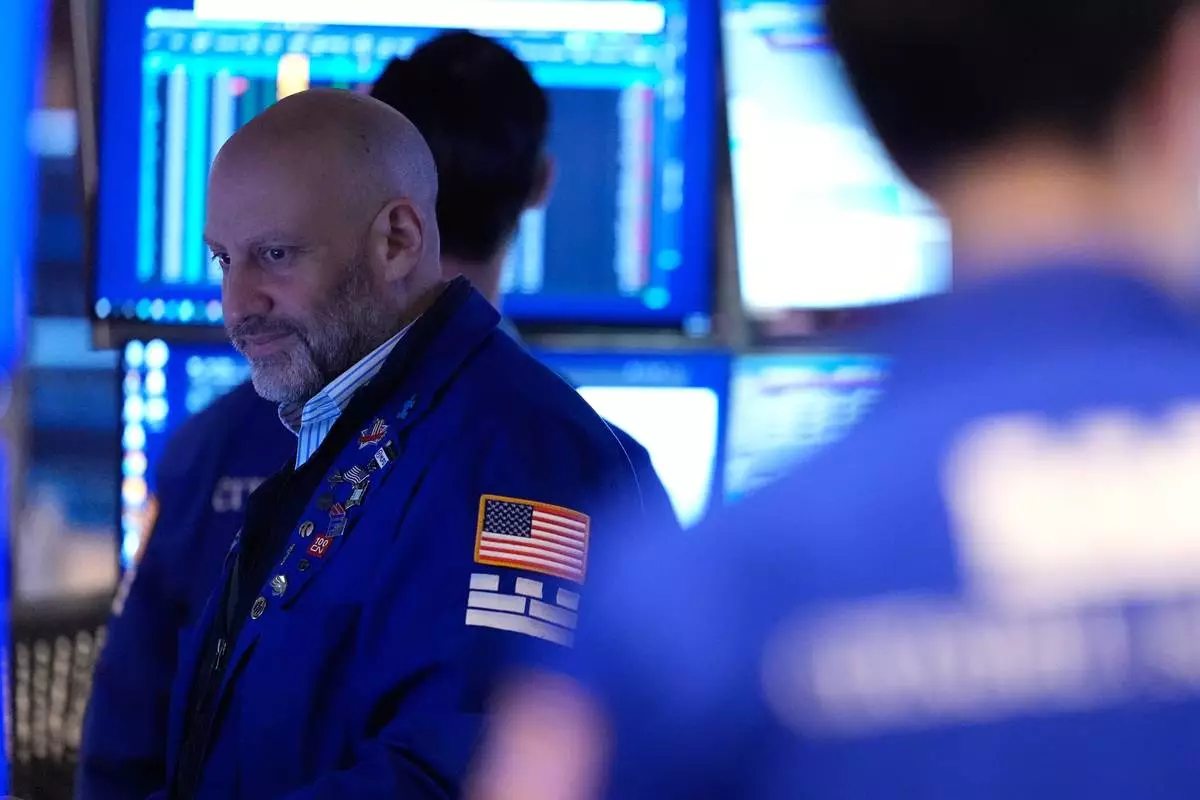
Meric Greenbaum works on the floor at the New York Stock Exchange in New York, Friday, March 6, 2026. (AP Photo/Seth Wenig)

Meric Greenbaum works on the floor at the New York Stock Exchange in New York, Friday, March 6, 2026. (AP Photo/Seth Wenig)

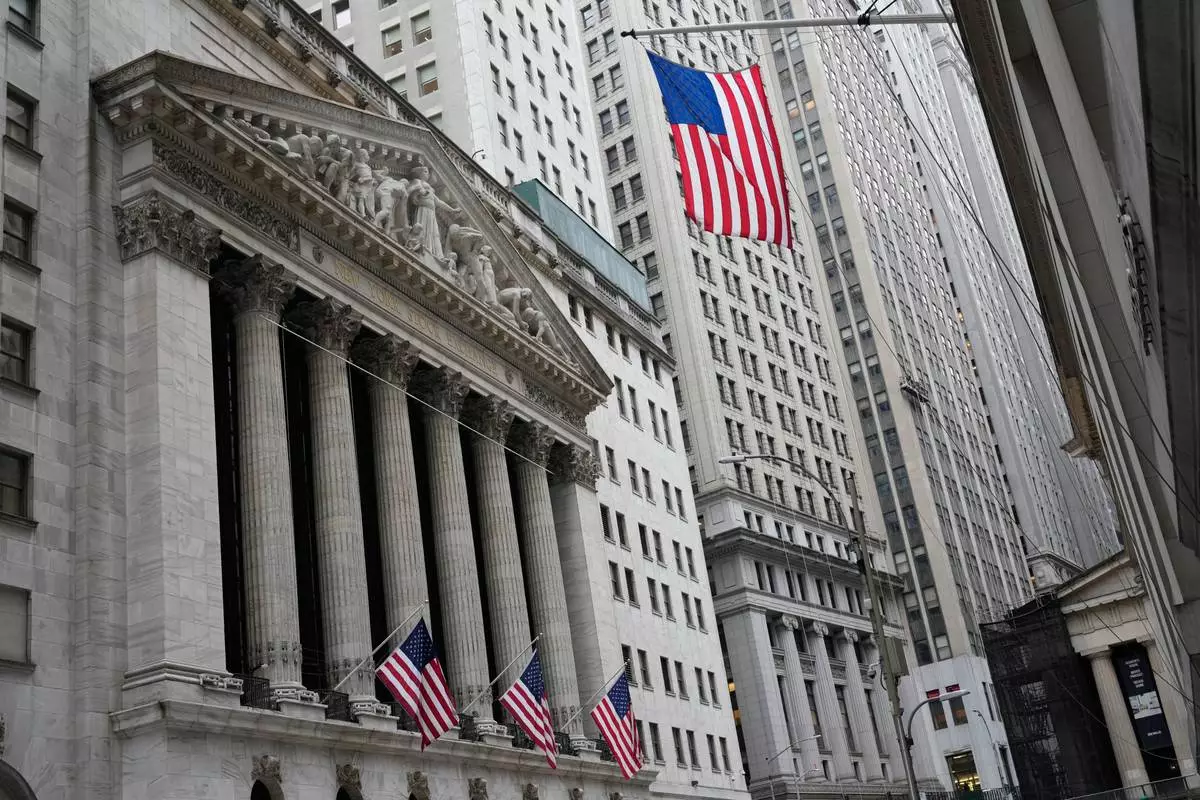
The New York Stock Exchange is seen in New York, Friday, March 6, 2026. (AP Photo/Seth Wenig)

The New York Stock Exchange is seen in New York, Friday, March 6, 2026. (AP Photo/Seth Wenig)

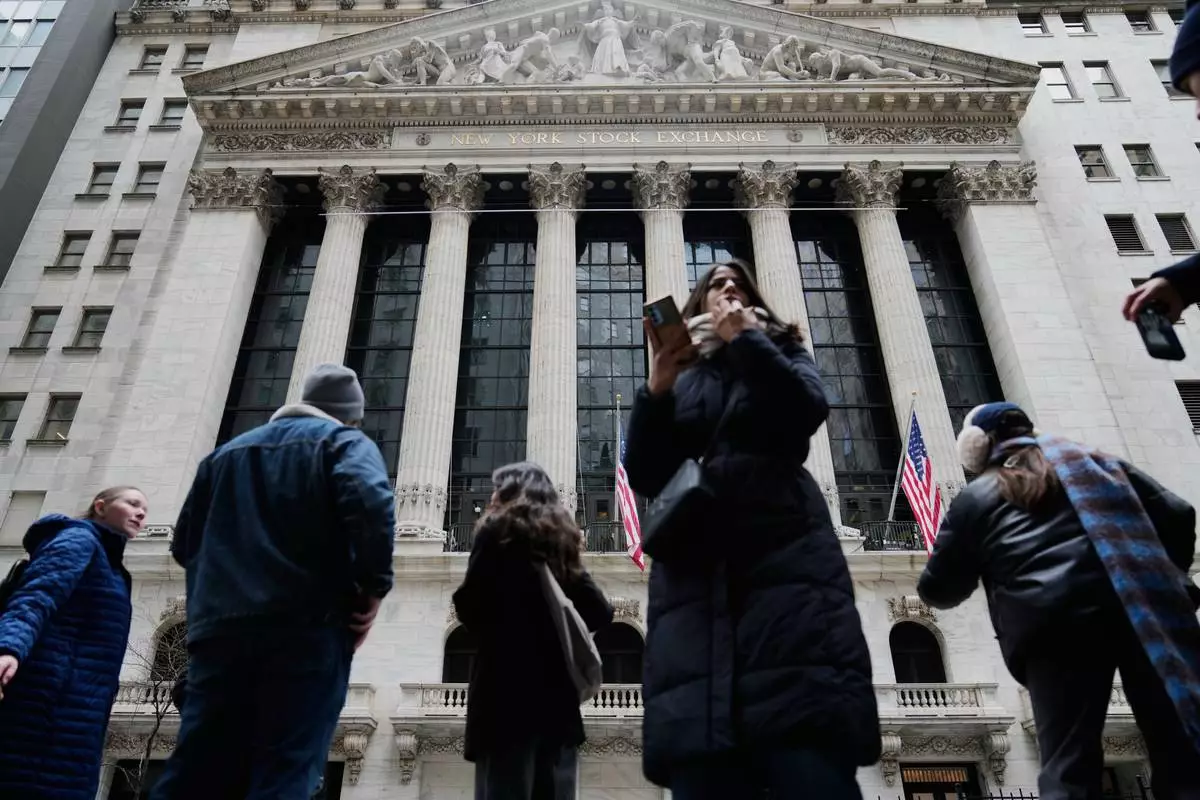
Pedestrians mill about outside the New York Stock Exchange in New York, Friday, March 6, 2026. (AP Photo/Seth Wenig)

Pedestrians mill about outside the New York Stock Exchange in New York, Friday, March 6, 2026. (AP Photo/Seth Wenig)

Currency traders watch monitors near a screen showing the Korea Composite Stock Price Index (KOSPI), right, and the foreign exchange rate between U.S. dollar and South Korean won at the foreign exchange dealing room of the Hana Bank headquarters in Seoul, South Korea, Tuesday, March 10, 2026. (AP Photo/Ahn Young-joon)

Currency traders watch monitors near a screen showing the Korea Composite Stock Price Index (KOSPI), right, and the foreign exchange rate between U.S. dollar and South Korean won at the foreign exchange dealing room of the Hana Bank headquarters in Seoul, South Korea, Tuesday, March 10, 2026. (AP Photo/Ahn Young-joon)

Currency traders work at the foreign exchange dealing room of the Hana Bank headquarters in Seoul, South Korea, Tuesday, March 10, 2026. (AP Photo/Ahn Young-joon)

Currency traders work at the foreign exchange dealing room of the Hana Bank headquarters in Seoul, South Korea, Tuesday, March 10, 2026. (AP Photo/Ahn Young-joon)

U.S. President Donald Trump is seen on a screen as traders work at the foreign exchange dealing room of the Hana Bank headquarters in Seoul, South Korea, Tuesday, March 10, 2026. (AP Photo/Ahn Young-joon)

U.S. President Donald Trump is seen on a screen as traders work at the foreign exchange dealing room of the Hana Bank headquarters in Seoul, South Korea, Tuesday, March 10, 2026. (AP Photo/Ahn Young-joon)

Currency trader react near a screen showing the Korea Composite Stock Price Index (KOSPI), rear left, at the foreign exchange dealing room of the Hana Bank headquarters in Seoul, South Korea, Tuesday, March 10, 2026. (AP Photo/Ahn Young-joon)

Currency trader react near a screen showing the Korea Composite Stock Price Index (KOSPI), rear left, at the foreign exchange dealing room of the Hana Bank headquarters in Seoul, South Korea, Tuesday, March 10, 2026. (AP Photo/Ahn Young-joon)

A currency trader passes by a screen showing the Korea Composite Stock Price Index (KOSPI), rear center, and the foreign exchange rate between U.S. dollar and South Korean won, rear left, at the foreign exchange dealing room of the Hana Bank headquarters in Seoul, South Korea, Tuesday, March 10, 2026. (AP Photo/Ahn Young-joon)

A currency trader passes by a screen showing the Korea Composite Stock Price Index (KOSPI), rear center, and the foreign exchange rate between U.S. dollar and South Korean won, rear left, at the foreign exchange dealing room of the Hana Bank headquarters in Seoul, South Korea, Tuesday, March 10, 2026. (AP Photo/Ahn Young-joon)

Recommended Articles