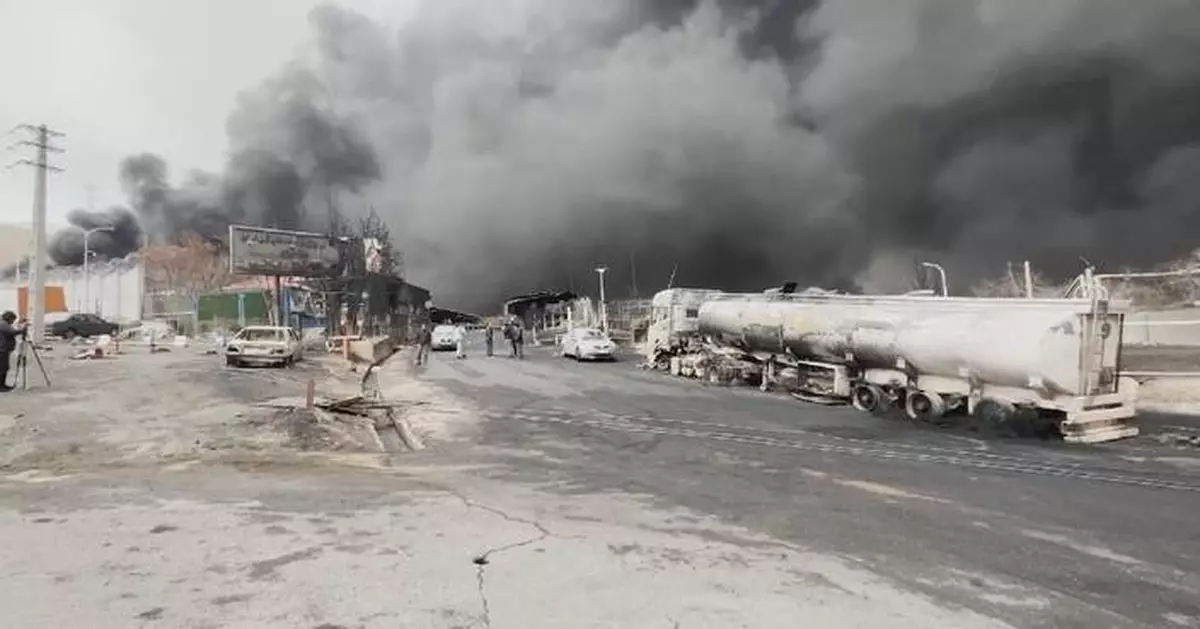
Iran has hit back sharply after Israel said on Tuesday it would coordinate with the United States to decide when to conclude military operations against Iran, with Iran's Islamic Revolutionary Guard Corp (IRCG) saying that Iran would be the one to determine the end of the war. The response came after Israeli Foreign Minister Gideon Sa'ar said that Israel is not seeking an "endless war" with Iran and will coordinate with the U.S. at an appropriate time to decide when to end its military operations.
Sa’ar did not provide a specific timetable for the current military actions, but said Israel will continue its strikes until Israel and its allies deem it "suitable to stop."
U.S. President Donald Trump had earlier said on Sunday that any decision to end the ongoing military operation against Iran would be made "at the right time" and in mutual consultation with Israeli Prime Minister Benjamin Netanyahu.
IRGC spokesman Ali Mohammad Naini on Tuesday dismissed the comments as "nonsense", saying that Iran now possesses missiles that are stronger and greater in number, and that the end of the war will be decided by Iran.
Iranian media reported that late on Tuesday night, the IRGC launched the 36th wave of its "Real Promise-4" operation, firing its Emad, Kheibar and Qader ballistic missiles at targets in Israel and at U.S. military bases across the Middle East.
The IRGC announced early on Wednesday that it had conducted a sustained attack on U.S. forces and Israel for over three hours in the 37th wave of its operation, using Khorramshahr-4 missiles and other weapons. The statement said that the latest round of strikes had hit a satellite communications center south of Tel Aviv, several Israeli military centers, and had struck the Fifth Fleet of the U.S. Navy in the region and a U.S. military base in Iraq's Erbil.
Meanwhile, Israel Defense Forces (IDF) announced early on Wednesday morning that it had detected and intercepted missiles launched by Iran towards Israel. The IDF said that its forces had began a new round of strikes against targets in the Iranian capital, Tehran, late the previous evening.
More than 1,300 civilians have been killed and 9,669 civilian sites destroyed in Iran in the military strikes launched by the U.S. and Iran since Feb. 28, Amir Saeid Iravani, Iran's ambassador and permanent representative to the United Nations, said on Tuesday.
The civilian sites included over 7,900 residential homes, more than 1,600 commercial and service centers, 32 medical and pharmaceutical facilities, 65 schools and educational institutions, 13 Red Crescent buildings, and several energy supply facilities, Iravani told the press in a statement.
U.S. Central Command said in social media post on Tuesday that U.S. forces had struck multiple Iranian naval targets including 16 mine-laying vessels near the Strait of Hormuz.
A video included in the post on the X platform showed munitions hitting nine of the vessels, most of which appeared to be moored at the time of the attack.
President Trump posted on his Truth Social platform on Tuesday, warning Iran against laying mines in the Strait of Hormuz. He said that "if for any reason mines were placed, and they are not removed forthwith, the military consequences to Iran will be at a level never seen before."
Iran dismisses US, Israel claims over timeline of conflict, saying it will determine end of war