AUSTIN, Texas--(BUSINESS WIRE)--Mar 11, 2026--
SolarWinds, a leading provider of simple, powerful, secure observability and IT management software, today released its 2026 SolarWinds State of Monitoring & Observability Report1, examining how IT teams are navigating increasingly fragmented hybrid environments, and in turn, how AI is reshaping modern observability. In partnership with UserEvidence, SolarWinds surveyed more than 750 IT professionals managing complex, distributed systems marked by tool sprawl, cross-team silos, and prolonged outages.
This press release features multimedia. View the full release here: https://www.businesswire.com/news/home/20260311870124/en/
Navigating Complex IT Environments
Key findings from the study identify a critical misalignment between modern IT architecture and the Monitoring & Observability (M&O) tools needed for full-stack visibility. As organizations balance legacy infrastructure with cloud-native architectures, many are discovering their monitoring and observability tools haven’t kept pace.
While these architecture options carry advantages, they can also add complexities to M&O.
Key findings from IT pros include:
“As IT environments grow more distributed and business-critical, visibility is no longer optional; it’s foundational,” said Cullen Childress, Chief Product Officer, SolarWinds. “Unified observability shifts teams from reactive firefighting to proactive resilience, enabling them to optimize performance, reduce risk, and keep the business running without disruption.”
Leveraging AI to Fill in M&O Gaps
Modern IT pros require this complete visibility to command peak efficiency and performance. In fact, almost two-thirds of respondents (64%) said unified observability across all layers of the IT stack is very important to their team’s success.
AI is quickly becoming central to modern observability. 90 percent of respondents express confidence in AI’s ability to improve monitoring and observability operations.
Respondents reported certain benefits from AI assistance in observability, which include cost reduction and faster mean time to resolve (MTTR). The data showed that IT pros are already using AI to:
Despite strong confidence, barriers remain to fully operationalizing AI:
The report outlines recommended steps teams can take to overcome these challenges and strategically integrate AI into their observability practice. Teams should identify where AI can immediately improve M&O tasks and enact strict access protocols for AI tooling. It's also vital for organizations to train and upskill their staff to promote effective and responsible AI use.
“Every organization’s path to full visibility looks different,” said Abigail Norman, Sr. Director of Product Marketing, SolarWinds. “Our platform cuts through the noise by unifying observability across the stack. AI should do more than reduce alerts — it should sharpen prioritization, streamline workflows, and give teams the space to focus on strategy instead of scrambling through dashboards.”
As observability evolves from monitoring to intelligent orchestration, organizations are increasingly prioritizing platforms that unify data, automate insight, and lay the foundation for autonomous operational resilience.
For the full version of the 2026 SolarWinds State of Monitoring & Observability Report, visit here.
Connect with SolarWinds
1 SolarWinds partnered with UserEvidence to survey more than 750 IT professionals across both the public and private sectors from North America, Europe, Latin America, Asia-Pacific, and Middle East/Africa between November 19 and December 19, 2025. The IT professionals spanned multiple roles including application and/or database management, network operations, and infrastructure (on-premises/cloud).
About SolarWinds
SolarWinds is a leading provider of simple, powerful, secure observability and IT management software built to enable customers to accelerate their digital transformation. Our solutions provide organizations worldwide—regardless of type, size, or complexity—with a comprehensive and unified view of today’s modern, distributed, and hybrid network environments. We continuously engage with IT service and operations professionals, DevOps and SecOps professionals, and database administrators (DBAs) to understand the challenges they face in maintaining high-performing and highly available hybrid IT infrastructures, applications, and environments. The insights we gain from them, in places like our THWACK community, allow us to address customers’ needs now and in the future. Our focus on the user and our commitment to excellence in end-to-end hybrid IT management have established SolarWinds as a worldwide leader in solutions for observability, IT service management, application performance, and database management. Learn more today at www.solarwinds.com.
The SolarWinds, SolarWinds & Design, Orion, and THWACK trademarks are the exclusive property of SolarWinds Worldwide, LLC or its affiliates, are registered with the U.S. Patent and Trademark Office, and may be registered or pending registration in other countries. All other SolarWinds trademarks, service marks, and logos may be common law marks or are registered or pending registration. All other trademarks mentioned herein are used for identification purposes only and are trademarks of (and may be registered trademarks of) their respective companies.
© 2026 SolarWinds Worldwide, LLC. All rights reserved.

State of Monitoring and Observability Report 2026
PARIS (AP) — Aryna Sabalenka's diamonds sparkled in the sun when she won her first-round match at the heat-soakedFrench Open on Tuesday.
Top-ranked Sabalenka looked light on her feet on Court Philippe-Chatrier, despite wearing two thick necklaces in a 6-4, 6-2 win against Jessica Bouzas Maneiro.
“Diamonds, I don’t really feel the heaviness, but I can imagine how it looks from the outside,” said Sabalenka, the tournament runner-up last year to Coco Gauff. “So I feel pretty comfortable. For me, it’s important to look good.”
The four-time major winner was initially going to wear three necklaces but said she thought that might be too much.
“It probably sounds a bit crazy, but when I feel good about what I’m wearing, how I look on court, I tend to perform much better,” she said. "I like to bring a little bit of a fashion on the tennis court. I know the dress that I will wear on the Grand Slam, and I just try to come up with something to match the outfit."
Sabalenka said she wasn't worried over her jewelry away from Roland Garros.
“I have my fiancé. He’s kind of like my security,” she said, smiling. “My physio does jujitsu, so I feel pretty secure walking around. If I go somewhere, I don’t go alone.”
Gauff began her title defense with a 6-4, 6-0 victory over fellow American Taylor Townsend, while four-time major winner Naomi Osaka beat Laura Siegemund 6-3, 7-6 (3) on Court Suzanne-Lenglen.
The fashion-conscious Osaka again caught the eye with a sequined gold playing dress.
Frenchwoman Lois Boisson, who made a surprise run to the semifinals last year when she was ranked 361st, lost 6-2, 6-2 to the 22nd-seeded Anna Kalinskaya.
For a third consecutive day, the temperature in Paris was forecast to rise to at least 32 degrees Celsius (90 Fahrenheit).
The unusually hot conditions made the courts faster than usual.
Daniil Medvedev usually thrives in such conditions but he struggled in a five-set loss to 97th-ranked Australian opponent Adam Walton.
Walton, who received a wild card invitation from tournament organizers, beat Medvedev 6-2, 1-6, 6-1, 1-6, 6-4. It was Medvedev's second straight first round exit here and third in four years.
“I know why I don’t really play my best in Roland Garros, but if I say it, it’s (making) excuses,” he said. “So I keep it to myself.”
Stefanos Tsitsipas, the 2021 runner-up to Novak Djokovic, was leading 6-2, 3-0 against Alexandre Muller when his French opponent retired. Muller injured his right calf, three months after injuring his left calf.
Alexander Blockx withdrew from the tournament with a right ankle sprain, making Alex de Minaur — his scheduled second round opponent — the first player into the third round.
Later, top-ranked Jannik Sinner looks to extend his 29-match winning streak when he opens against French wild card Clement Tabur in the night session.
French teenager Moïse Kouamé made the perfect start to his French Open career with a 7-6 (4), 6-2, 6-1 win over Marin Cilic.
The 17-year-old Kouamé won one day after 39-year-old Frenchman Gael Monfils made his last appearance at Roland Garros.
The teenager raised his arms in triumph after defeating the 37-year-old Cilic, who won the 2014 U.S. Open, finished runner-up at two other majors, and reached the French Open semifinals in 2022.
The ATP Tour said No. 318-ranked Kouamé became the first man born in 2008 or later to win a Grand Slam match.
In March, he became the youngest winner in Miami Masters history when he beat Zachary Svajda in the first round — earning a congratulatory message from Djokovic.
AP tennis: https://apnews.com/hub/tennis
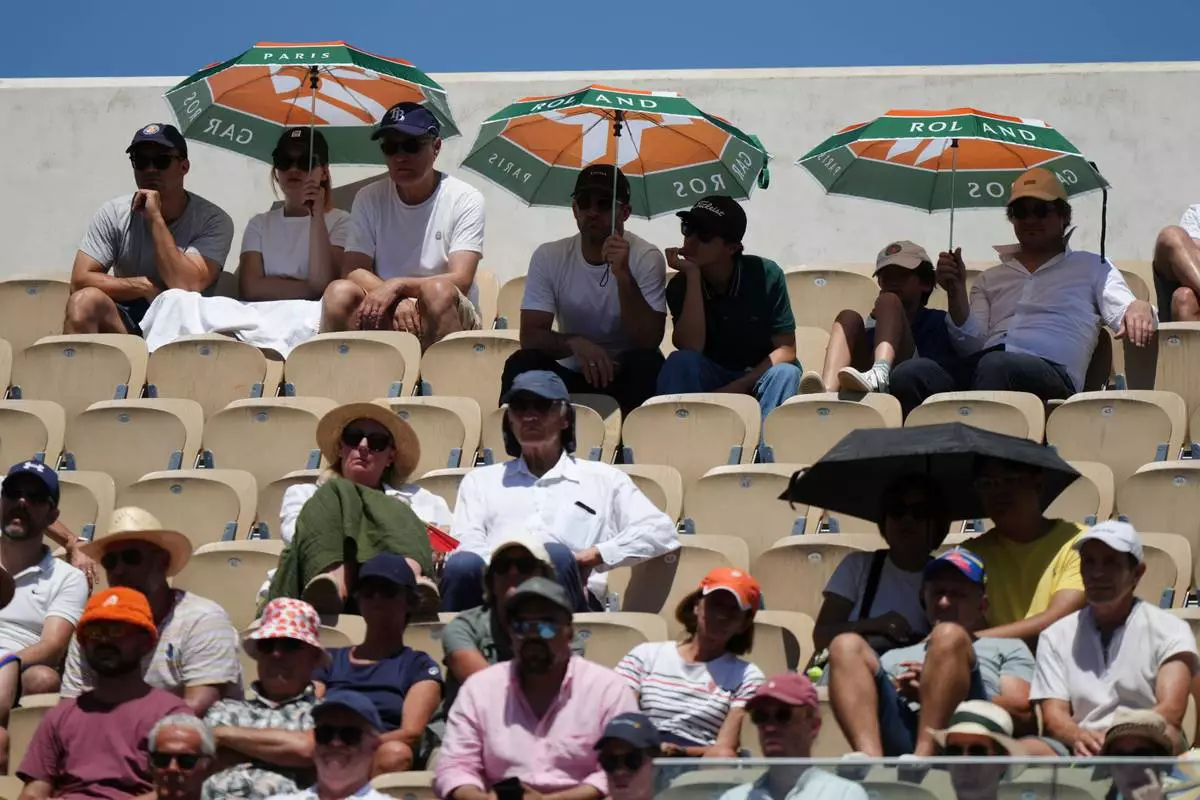
Spectators cover themselves from the sun with ab umbrella during the first round men's singles tennis match between Adam Walton of Australia and Daniil Medvedev of Russia at the French Open tennis tournament in Paris, Tuesday, May 26, 2026. (AP Photo/Aurelien Morissard)
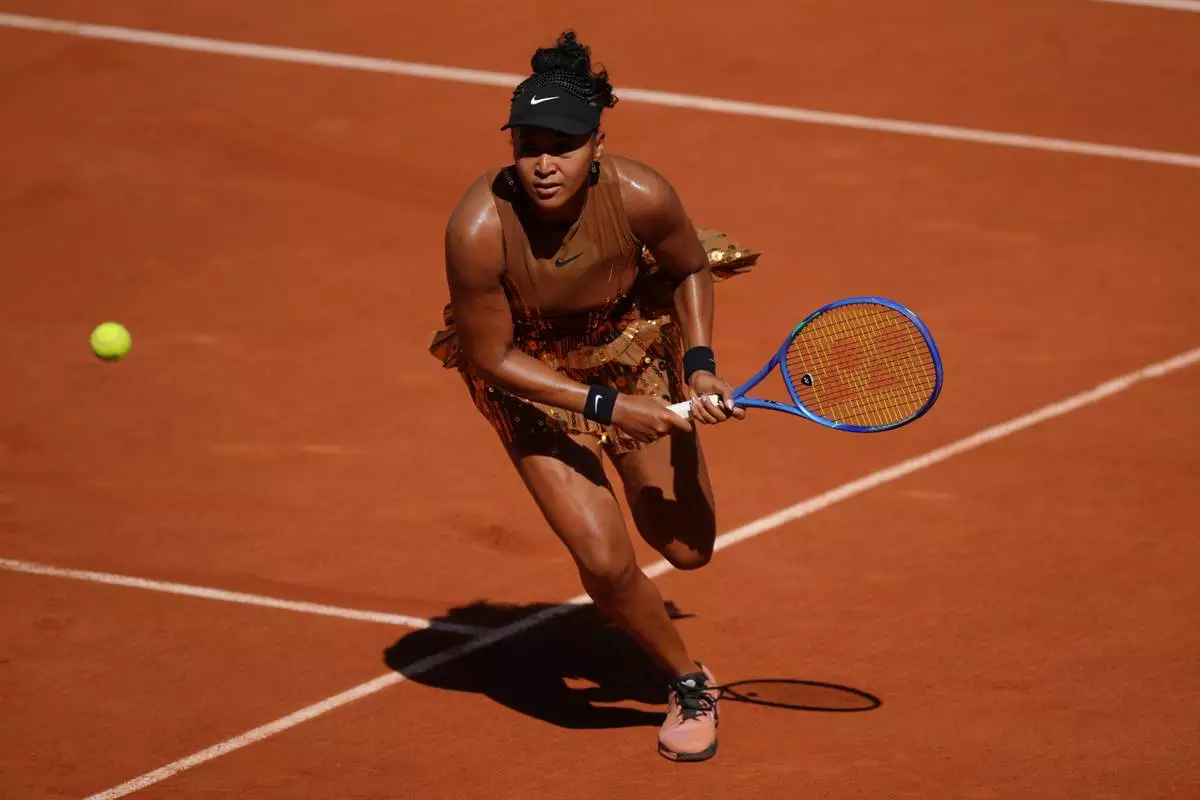
Naomi Osaka of Japan returns to Laura Siegemund of Germany during their first round women's singles tennis match at the French Open tennis tournament in Paris, Tuesday, May 26, 2026. (AP Photo/Aurelien Morissard)
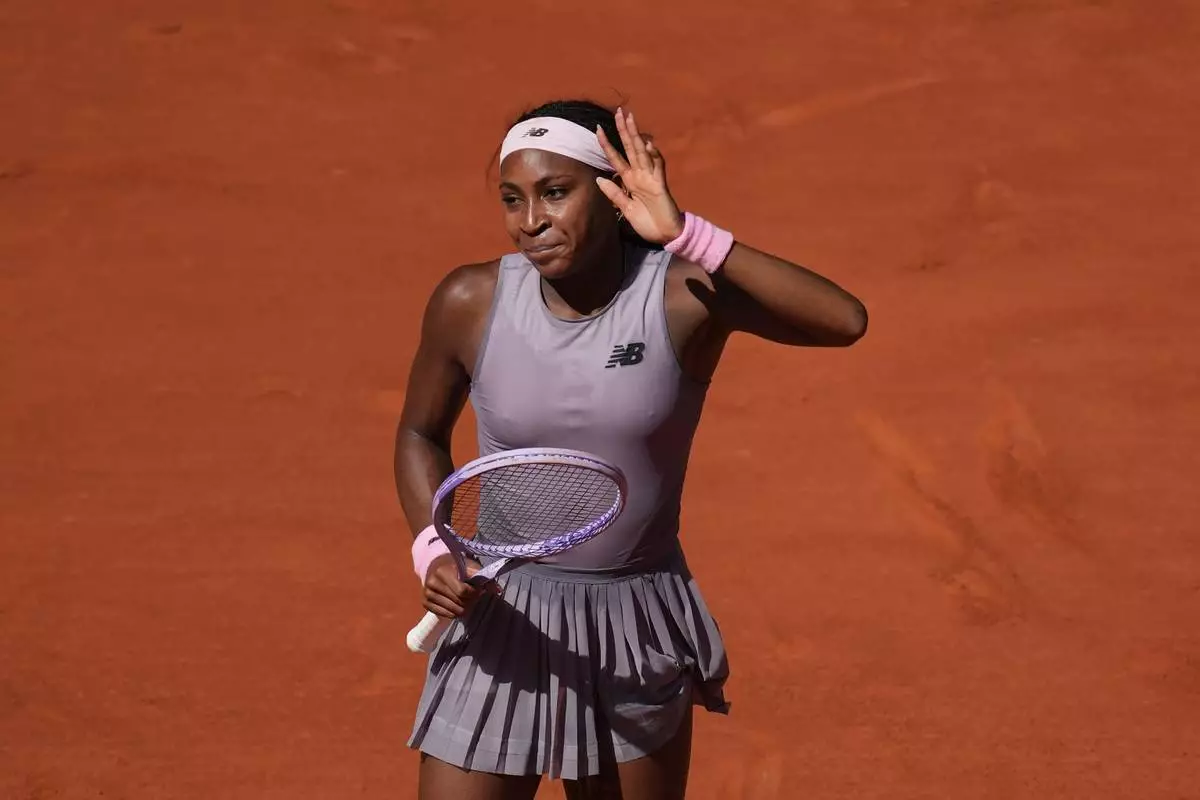
Coco Gauff of the U.S. celebrates after winning against Taylor Townsend of the U.S. during their first round women's singles tennis match at the French Open tennis tournament in Paris, Tuesday, May 26, 2026. (AP Photo/Christophe Ena)
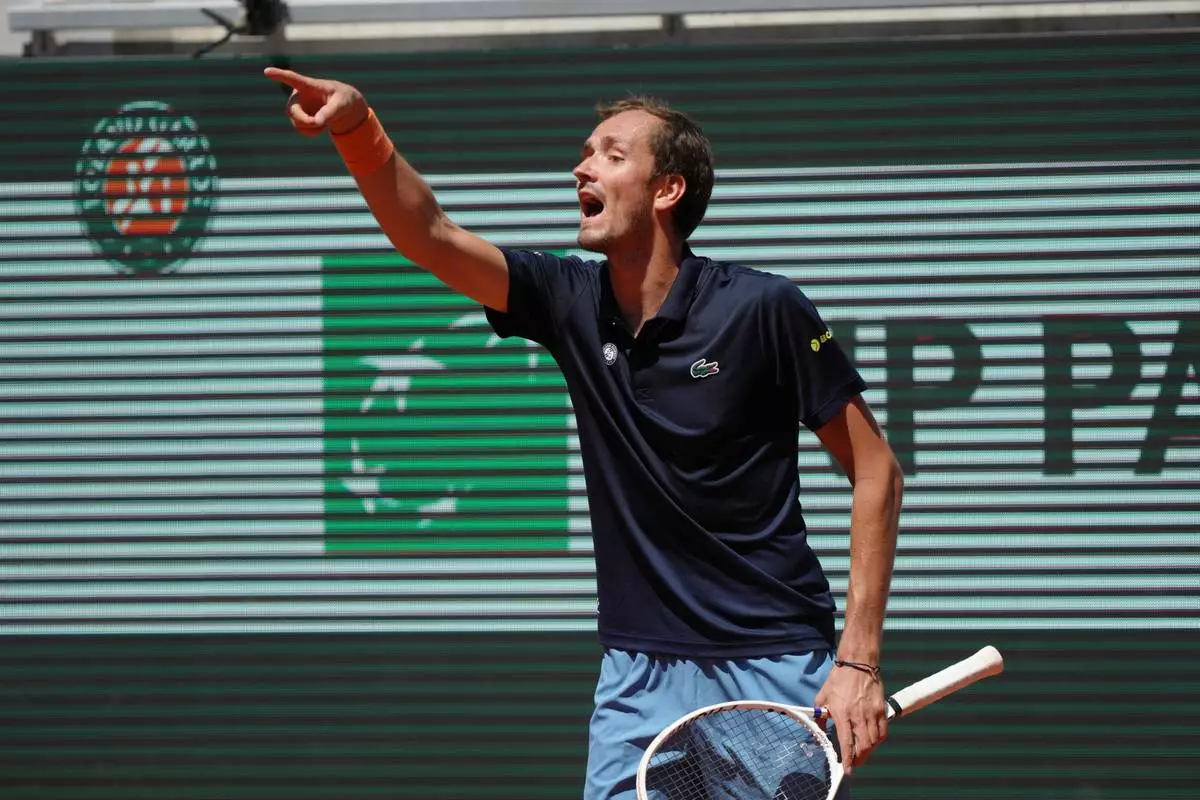
Daniil Medvedev of Russia reacts as he plays against Adam Walton of Australia during their first round men's singles tennis match at the French Open tennis tournament in Paris, Tuesday, May 26, 2026. (AP Photo/Aurelien Morissard)
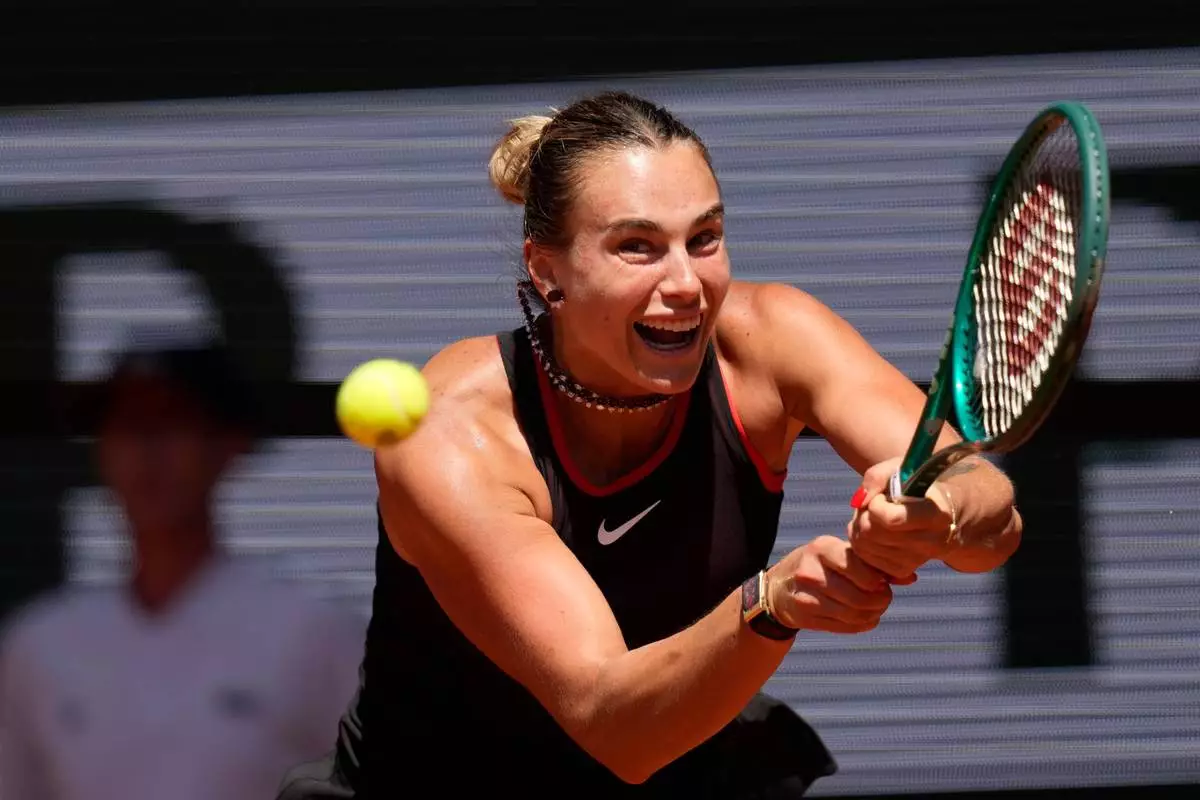
Aryna Sabalenka of Belarus returns to Jessica Bouzas Maneiro of Spain during their first round women's singles tennis match at the French Open tennis tournament in Paris, Tuesday, May 26, 2026. (AP Photo/Christophe Ena)
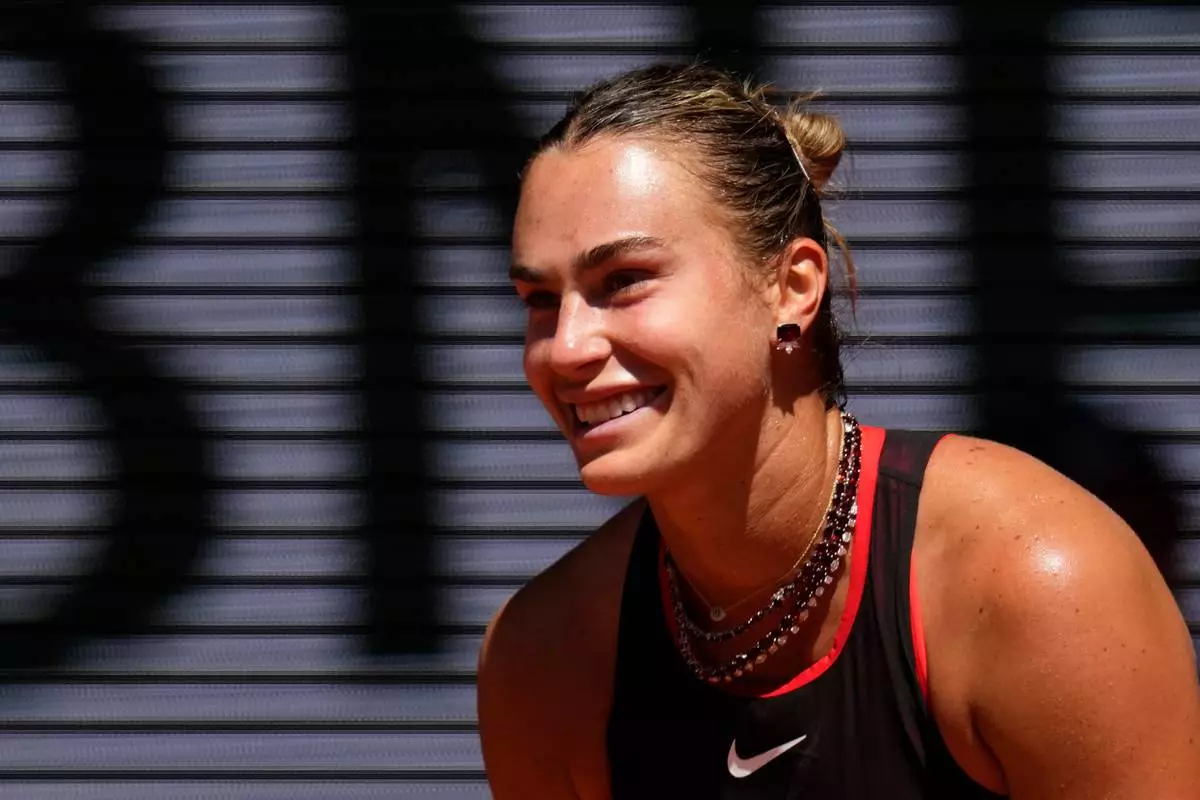
Aryna Sabalenka of Belarus reacts as she plays against Jessica Bouzas Maneiro of Spain during their first round women's singles tennis match at the French Open tennis tournament in Paris, Tuesday, May 26, 2026. (AP Photo/Christophe Ena)
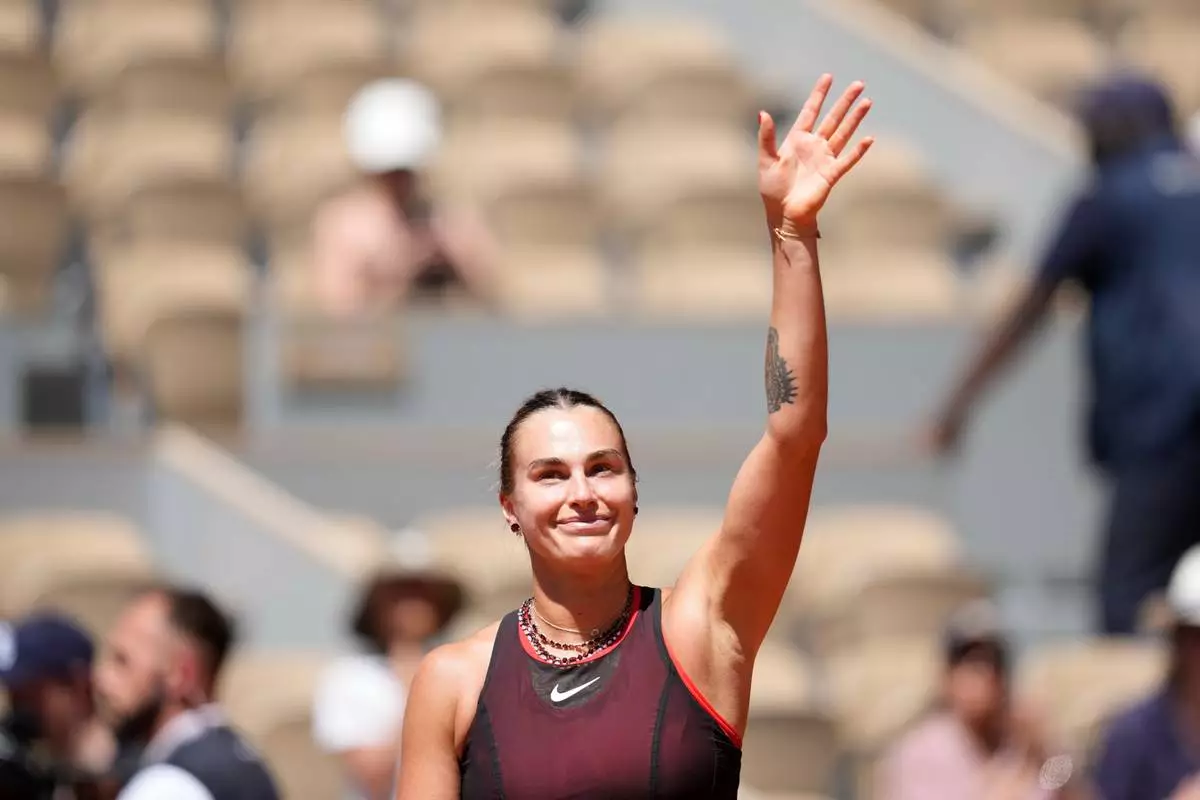
Aryna Sabalenka of Belarus celebrates after winning against Jessica Bouzas Maneiro of Spain during their first round women's singles tennis match at the French Open tennis tournament in Paris, Tuesday, May 26, 2026. (AP Photo/Christophe Ena)
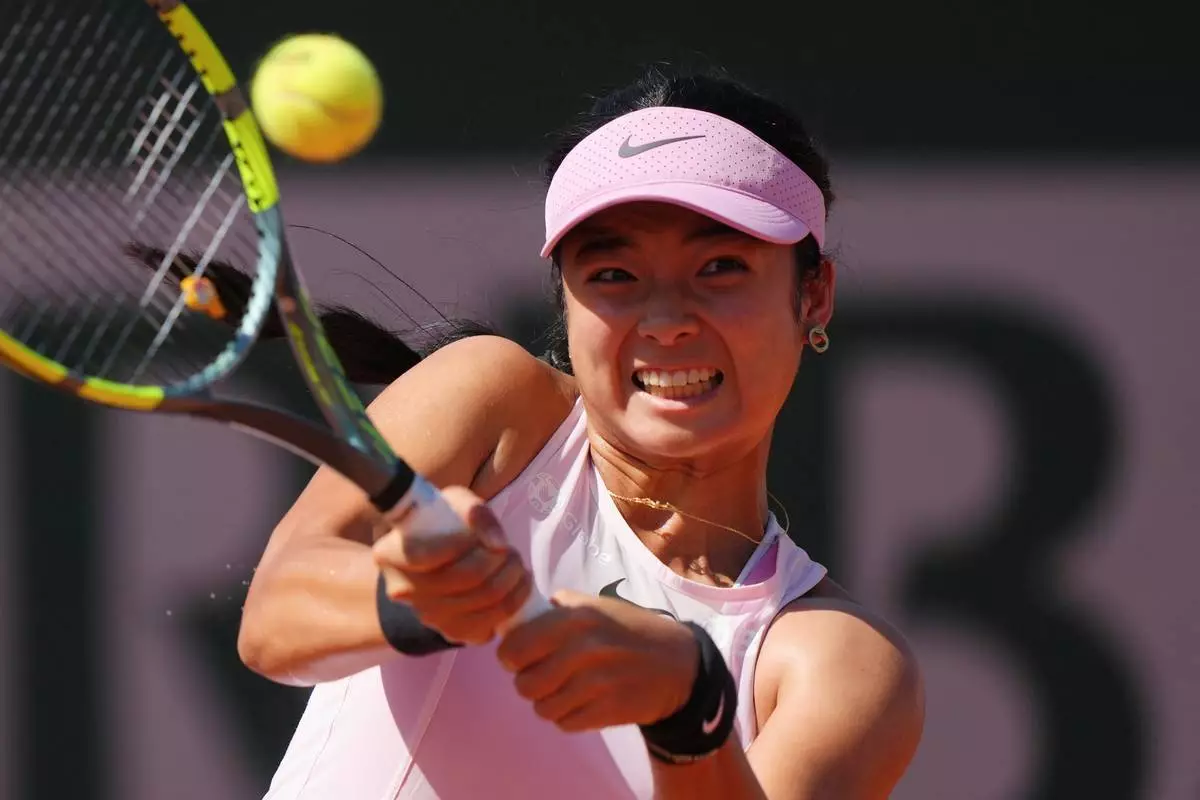
Alexandra Eala of Philippines returns to Iva Jovic of the U.S. during their first round men's singles tennis match at the French Open tennis tournament in Paris, Tuesday, May 26, 2026. (AP Photo/Aurelien Morissard)
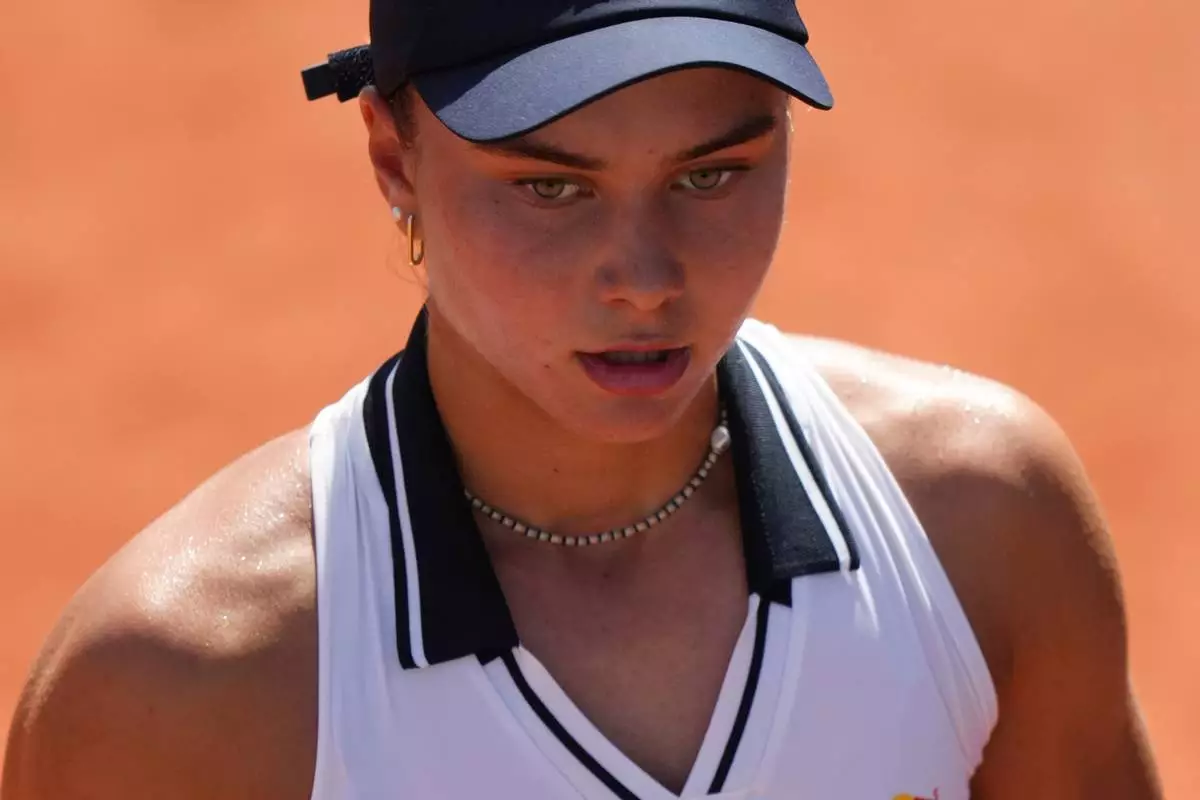
Iva Jovic of the U.S. reacts as she plays against Alexandra Eala of Philippines during their first round men's singles tennis match at the French Open tennis tournament in Paris, Tuesday, May 26, 2026. (AP Photo/Aurelien Morissard)
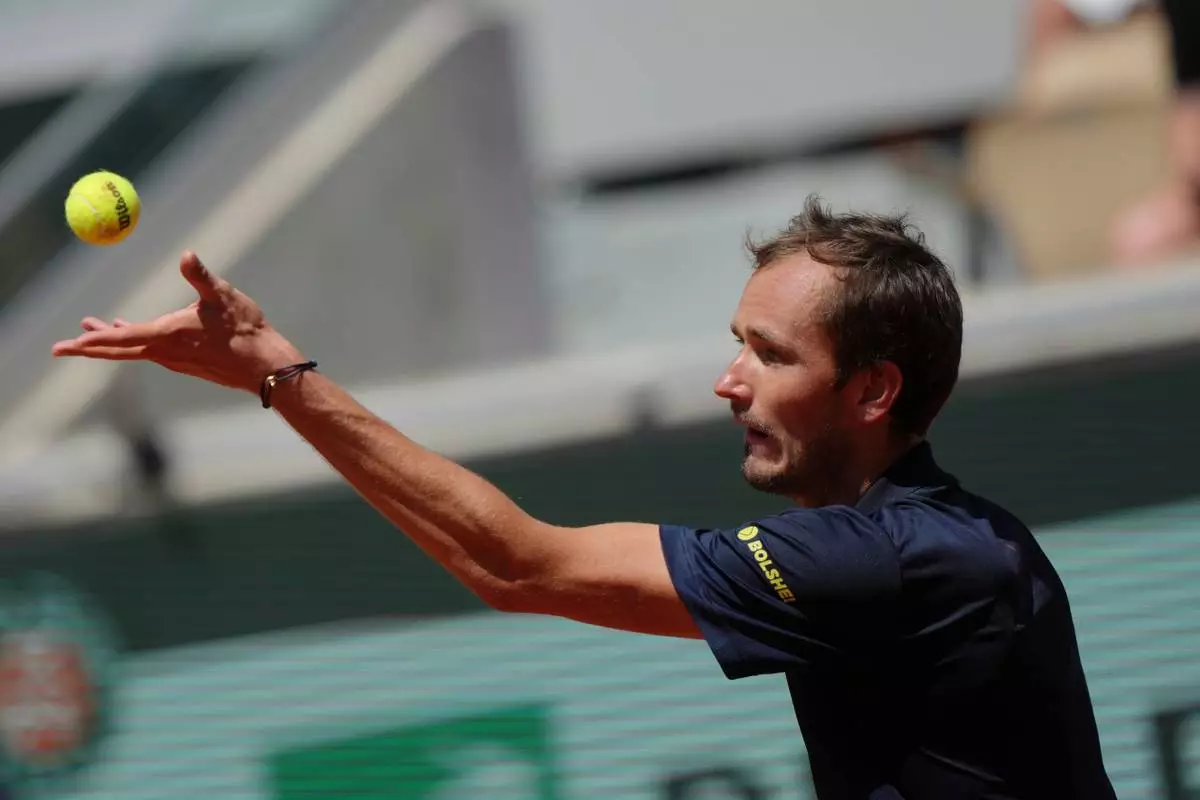
Daniil Medvedev of Russia serves to Adam Walton of Australia during their first round men's singles tennis match at the French Open tennis tournament in Paris, Tuesday, May 26, 2026. (AP Photo/Aurelien Morissard)
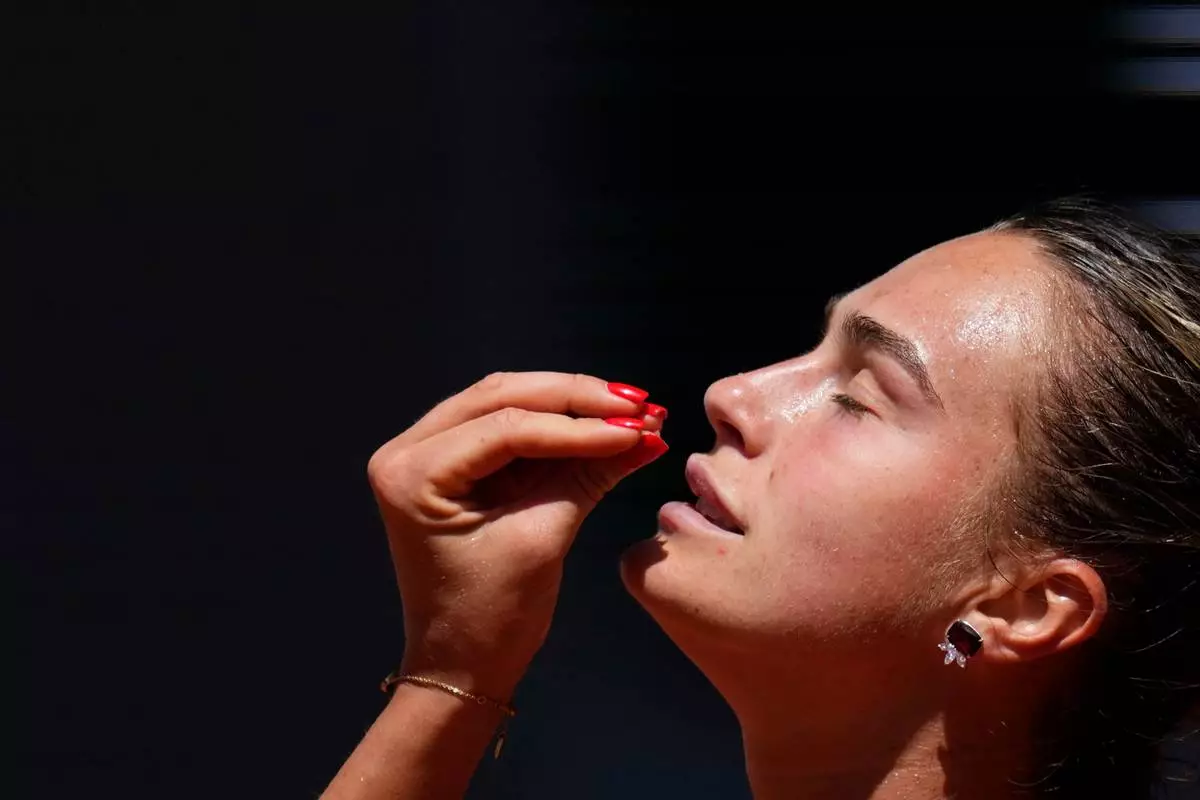
Aryna Sabalenka of Belarus reacts as she plays against Jessica Bouzas Maneiro of Spain during their first round women's singles tennis match at the French Open tennis tournament in Paris, Tuesday, May 26, 2026. (AP Photo/Christophe Ena)
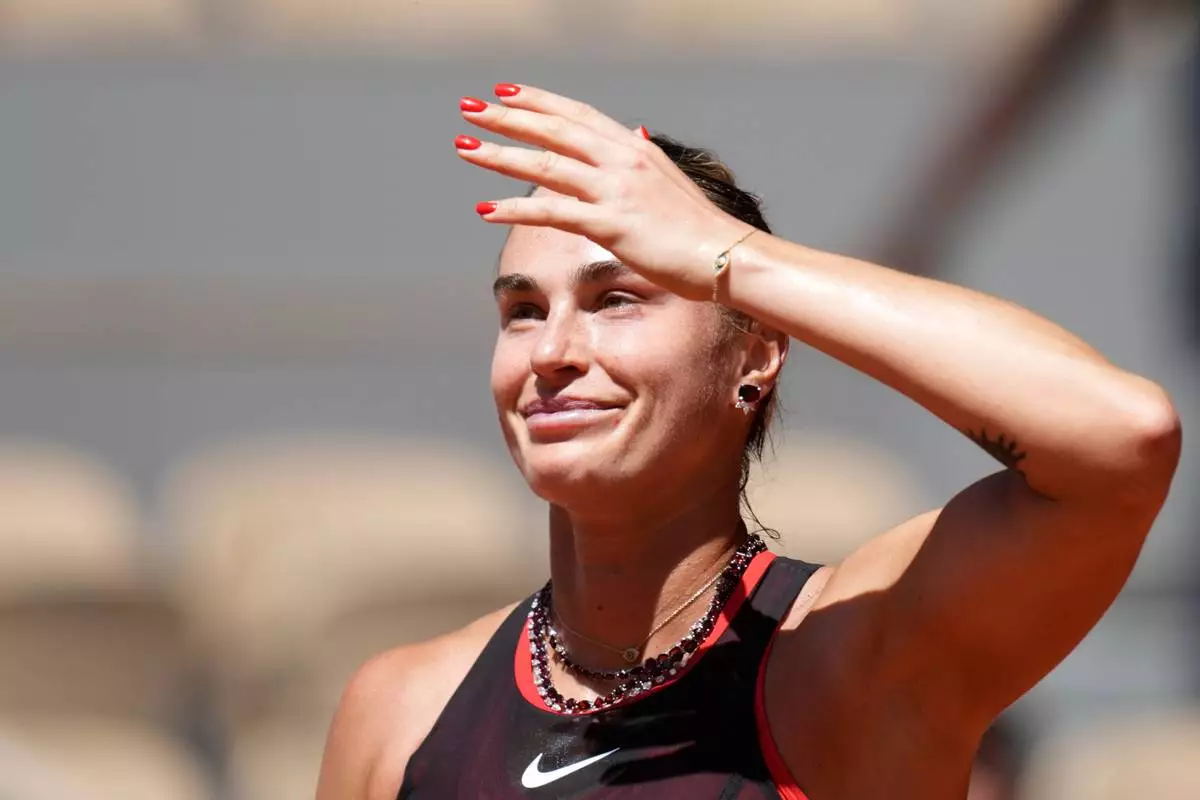
Aryna Sabalenka of Belarus celebrates after winning against Jessica Bouzas Maneiro of Spain during their first round women's singles tennis match at the French Open tennis tournament in Paris, Tuesday, May 26, 2026. (AP Photo/Christophe Ena)