MONTREAL (AP) — After receiving their first wake-up call of the playoffs, the Carolina Hurricanes have responded like the beasts of the East they have been all season.
Following a loss to open the Eastern Conference Final, the Hurricanes have won back-to-back games in overtime to take a 2-1 lead against Montreal in the best-of-seven series. They look like their old selves again, and it has them two games from reaching to the Stanley Cup Final.
“We’re feeling good about playing hockey again,” said winger Taylor Hall, who scored his fourth goal this postseason in Game 3 on Monday night. “Now the game is starting to slow down, and you’re making reads without even having to think about it.”
That spells trouble for the Canadiens, who registered just two shots on goal combined over the third period and OT. Carolina has outshot Montreal 64-26 over the past two games.
“They throw a lot to the net, so they’re going to outshoot you,” said Montreal's Cole Caufield, who scored 51 goals during the regular season. “I think everybody that plays them knows that, and you can’t look at it that way — that they kind of tilt the ice that much.”
Shot volume is something the Hurricanes have done consistently in the eight years since coach Rod Brind'Amour took over. What has changed in this series is preventing the young, skilled Canadiens from generating offense.
“You need everything working against a team like that,” Canadiens coach Martin St. Louis said. “I don’t think you can just rely on the power play.”
Caufield chalked up his team's struggles to Carolina's pace and aggressive play. That the brand of hockey Brind'Amour wants to play.
“It’s putting the stress on them,” defenseman Shayne Gostisbehere said. “It’s a hard system for us to play sometimes because you’ve got to be on your toes. You’re always skating. But you can see it’s pretty effective, and it’s probably not the best to play against.”
It did not look at all right in Game 1 last week, which the Canadiens won 6-2 after getting off to a hot start, finding long breakout passes and staying patient in solving Carolina's relentless forecheck to hand the Hurricanes their first loss of the playoffs.
“It’s definitely a turning point for us: a little adversity,” Gostisbehere said. “Having two sweeps the first two rounds — not a lot of adversity in that sense. For us, it was a good kick in the teeth.”
The Hurricanes are now as close to the final as they've been during this run of success under Brind'Amour, which included getting swept twice and losing in five games in their three previous trips to the East final. This spring, they are 5-0 on the road and 5-0 in overtime thanks to a consistent approach.
“We try to play our game home and away,” first-line center Sebastian Aho said. “The game’s the same, I feel like. Obviously the environment is a little bit different, whether you’re home or away. But I feel like the game stays the same.”
Game 4 at Bell Centre in Montreal on Wednesday night is Carolina's first chance to move to the verge of making the final. The Canadiens feel like they have another level to get to, and they need to find it quickly.
"We didn’t expect this to be easy, and we’re OK with that," St. Louis said. “There’s not one thing. We have to put it all together. You’re at this stage right now, you have to put it all together. Execution’s part of that. Jam is part of that. There’s not one thing. We’ve just got to put it all together, and I know we can.”
AP NHL: https://apnews.com/hub/stanley-cup and https://apnews.com/hub/nhl
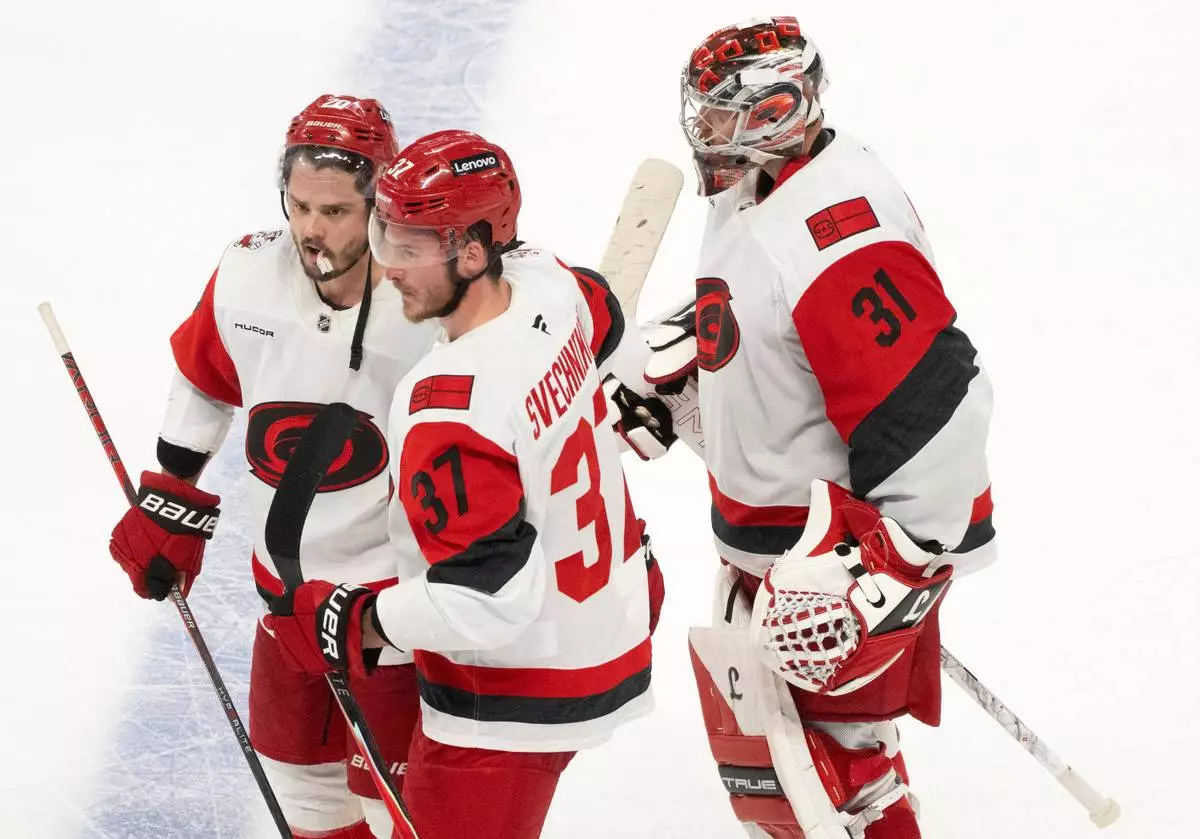
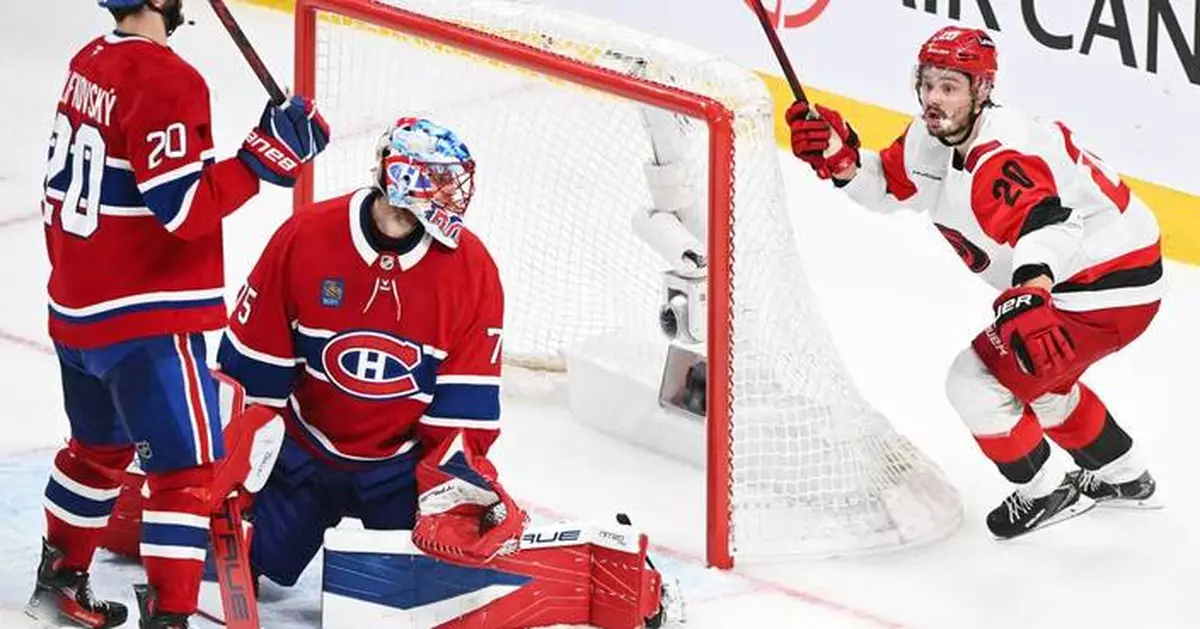
Carolina Hurricanes' Sebastian Aho (20) and Andrei Svechnikov (37) celebrate in front of Hurricanes goaltender Frederik Andersen (31) after the winning goal by Aho in overtime of Game 3 of the Eastern Conference finals NHL hockey Stanley Cup playoff series against the Montreal Canadiens in Montreal, Monday, May 25, 2026. (Christinne Muschi/The Canadian Press via AP)
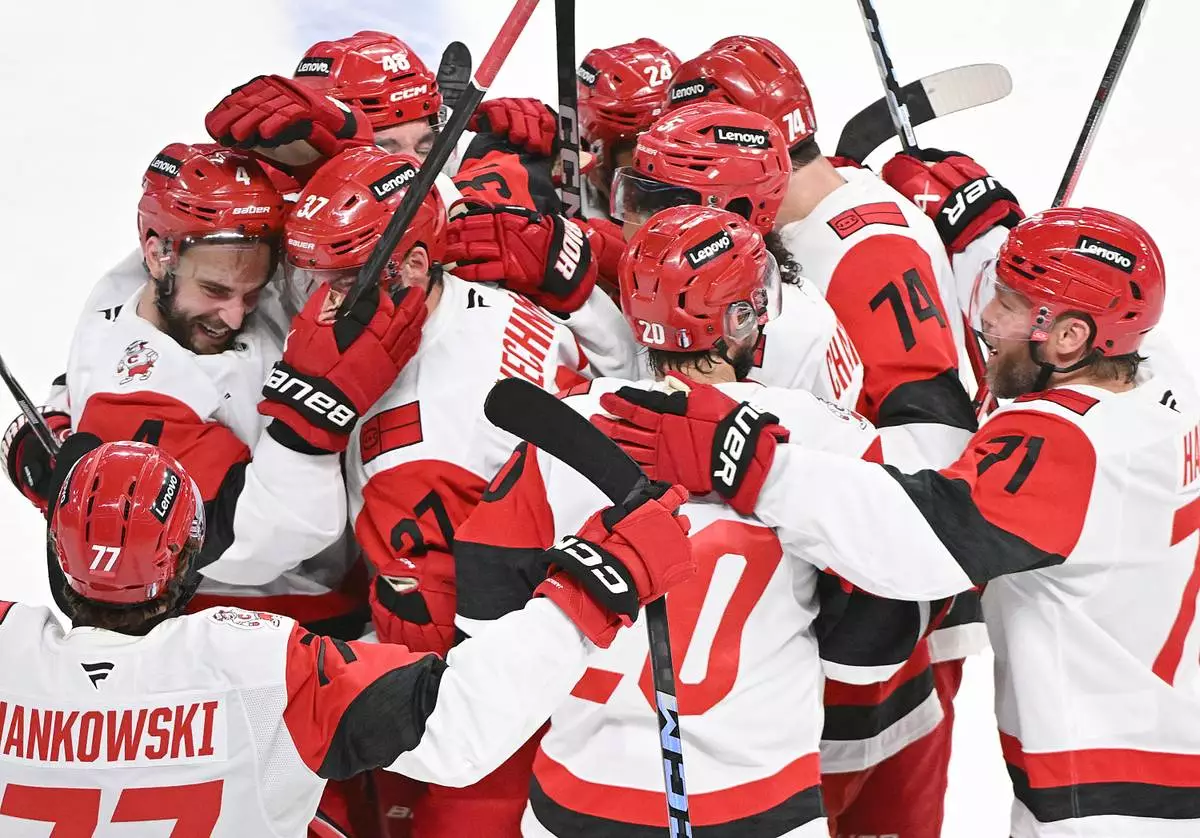
Carolina Hurricanes' Andrei Svechnikov celebrates his goal with teammates after an overtime period of Game 3 of the NHL Eastern Conference final Stanley Cup playoff series against the Montreal Canadiens, in Montreal, Monday, May 25, 2026. (Graham Hughes/The Canadian Press via AP) CORRECTION: Corrected the scorer to Andrei Svechnikov
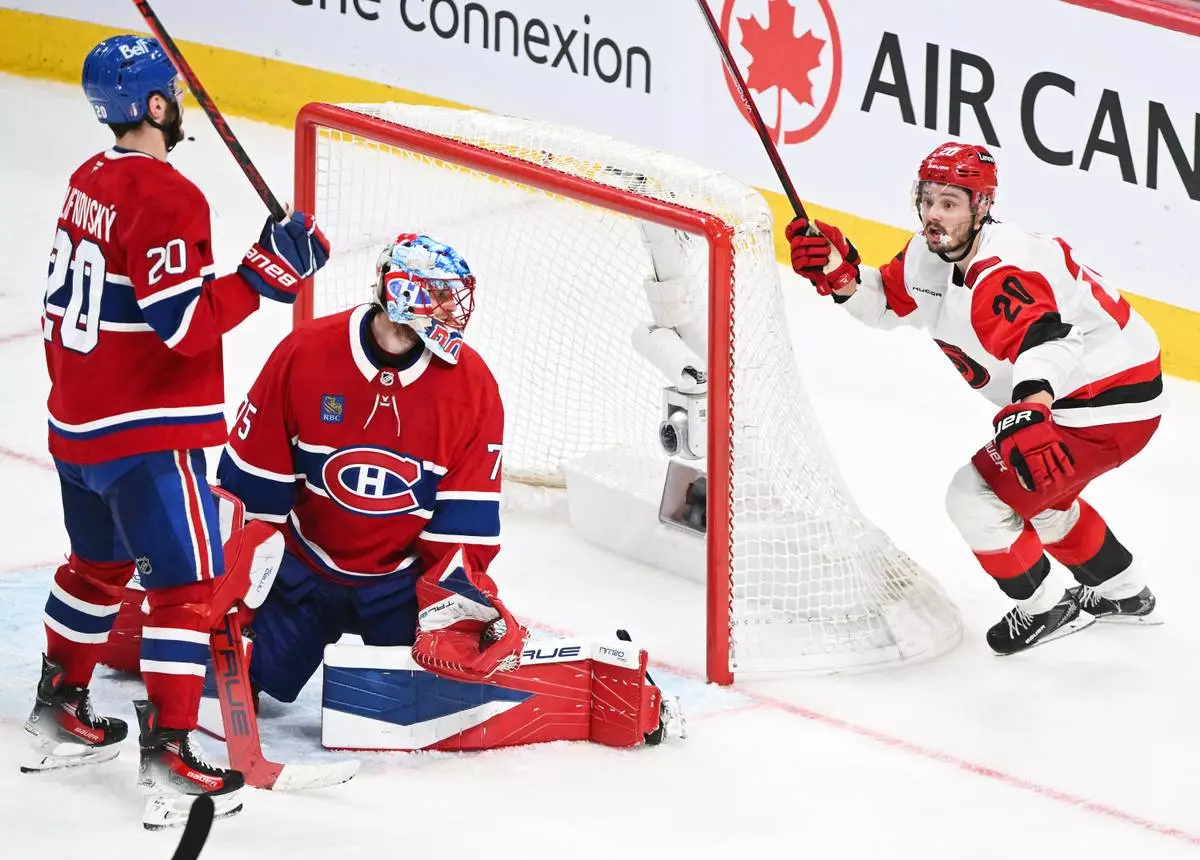
Carolina Hurricanes' Sebastian Aho (20) reacts after the teammate Andrei Svechnikov scored on Montreal Canadiens goaltender Jakub Dobes (75) as teammate Juraj Slafkovsky (20) looks on during an overtime period of Game 3 of the NHL Eastern Conference final Stanley Cup playoff series in Montreal, Monday, May 25, 2026. (Graham Hughes/The Canadian Press via AP) CORRECTION: Corrected the scorer to Andrei Svechnikov
DUBAI, United Arab Emirates (AP) — Iran on Tuesday denounced the most recent U.S. strikes as a sign of “bad faith and unreliability” as negotiations pressed on toward a possible deal to end the war, and the Islamic Republic began restoring internet access after one of the longest nationwide shutdowns ever.
The U.S. military characterized Monday's strikes in southern Iran as defensive, saying targets included missile launch sites and minelaying boats, and said the U.S. acted with “restraint" in light of the weekslong ceasefire.
Iran's foreign ministry called the strikes a ceasefire violation and warned that Washington would bear responsibility for “all consequences,” without elaborating.
“The Islamic Republic of Iran will leave no act of aggression unanswered,” it added in a statement.
Iran’s Revolutionary Guard said Tuesday that it shot down at least one drone and deterred another drone and a fighter jet that entered its airspace, according to Iran’s official Mizan news agency. It didn't specify when the incidents occurred.
Iran's supreme leader, Mojtaba Khamenei, used a statement about Islam's annual Hajj pilgrimage to herald his country's confrontation with the U.S. and Israel, declaring that other Mideast nations “will no longer serve as a shield” for U.S. military bases. Iran has previously complained about U.S. military facilities in the region and targeted them.
It was not immediately clear what the developments would mean for negotiations.
Iranian state TV reported Tuesday that Iranian Parliament Speaker Mohammad Bagher Qalibaf and Foreign Minister Abbas Araghchi left Qatar, where talks had been taking place. The report did not elaborate or point to any next steps. In Washington, U.S. Secretary of State Marco Rubio projected that talks on extending the ceasefire and reopening the crucial Strait of Hormuz will “take a few days."
Meanwhile, Iranian authorities eased a monthslong internet shutdown that they cast as a wartime necessity, but that has cost the country's economy an estimated $30 million to $40 million a day. Internet users reported that access was gradually being restored, at least in some places. State media reported that fixed broadband service was partially restored. Mobile internet wasn't yet working.
Iran has long enforced filters and policed content on platforms such as YouTube and Instagram. But before the war, Iranians could bypass restrictions with cheap virtual private networks, known as VPNs, and other easy workarounds.
Then authorities cut off internet access in January during massive anti-government demonstrations and maintained the restrictions after the U.S. and Israel attacked on Feb. 28.
The internet outage made it difficult for Iranians outside the country to maintain contact with loved ones, and the lack of connectivity devastated the country’s relatively vibrant online businesses, putting further pressure on an already battered economy.
In other developments, Iran hanged a man it convicted of spying for Israel, the latest of more than two dozen allegedly espionage- and security-related executions since the war intensified a crackdown on dissent.
The Iranian judiciary’s news outlet, Mizanonline, identified the man as Gholamreza Khani Shakarab, calling him “a ringleader” for operations for Israel’s intelligence agency, the Mossad, and accusing him of recruiting members inside and outside Iran to work against the nation’s security. He was involved in sports and traveled to neighboring countries, according to the news agency.
Activists and rights groups say Iran routinely holds closed-door trials in which defendants are unable to challenge accusations and often are forced to confess.
The official judiciary agency said the country’s Supreme Court had upheld Shakarab's death sentence.
The U.S. strikes were the latest flare-up in the fragile ceasefire that began April 7 and has largely held.
Negotiations center in part on the Strait of Hormuz, the crucial waterway off southern Iran through which a fifth of the world's crude oil and natural gas passed before the war began. Once the fighting started, Tehran retaliated by effectively closing the strait, stranding hundreds of ships, shocking the global economy, disrupting energy markets and squeezing fertilizer supplies worldwide.
The full effect of the fertilizer crunch might not become clear until harvests that are months away. U.N. Food and Agriculture Organization Director-General Qu Dongyu, warned Tuesday at an event in Rome that “the decisions we make now will determine whether this remains a manageable shock or evolves into a deeper global food security crisis in 2026 and 2027 and beyond."
The strait has become a powerful lever for Tehran in talks, joining the long-running issue of Iran's nuclear program and its highly enriched uranium. Iran wants the U.S. to lift its military blockade of Iranian ports that began on April 17.
In the nearby Gulf of Oman, an explosion was reported Tuesday aboard a tanker, according to the U.K. Maritime Trade Operations Center. No one was injured, and there was no immediate information on the cause.
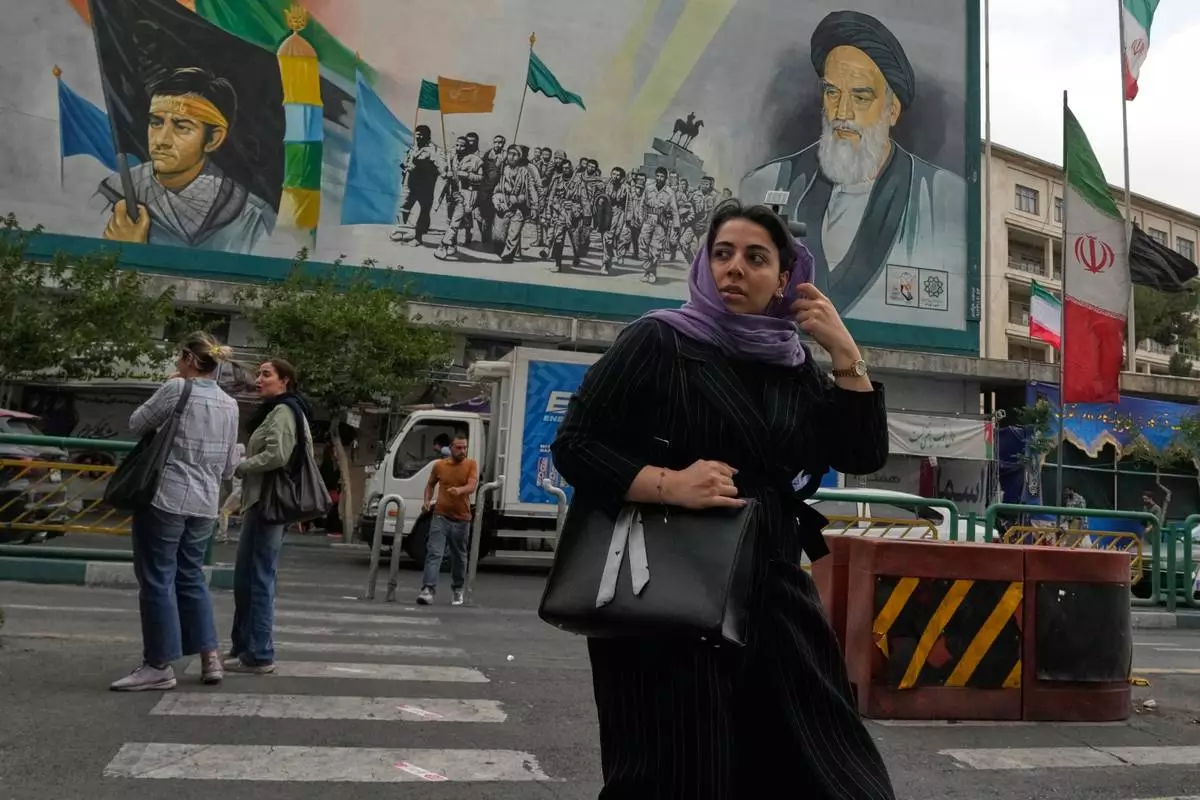
A woman crosses a street in front of a painting of the late Iranian revolutionary founder Ayatollah Khomeini and paramilitary Basij forces in downtown Tehran, Iran, Sunday, May 24, 2026. (AP Photo/Vahid Salemi)
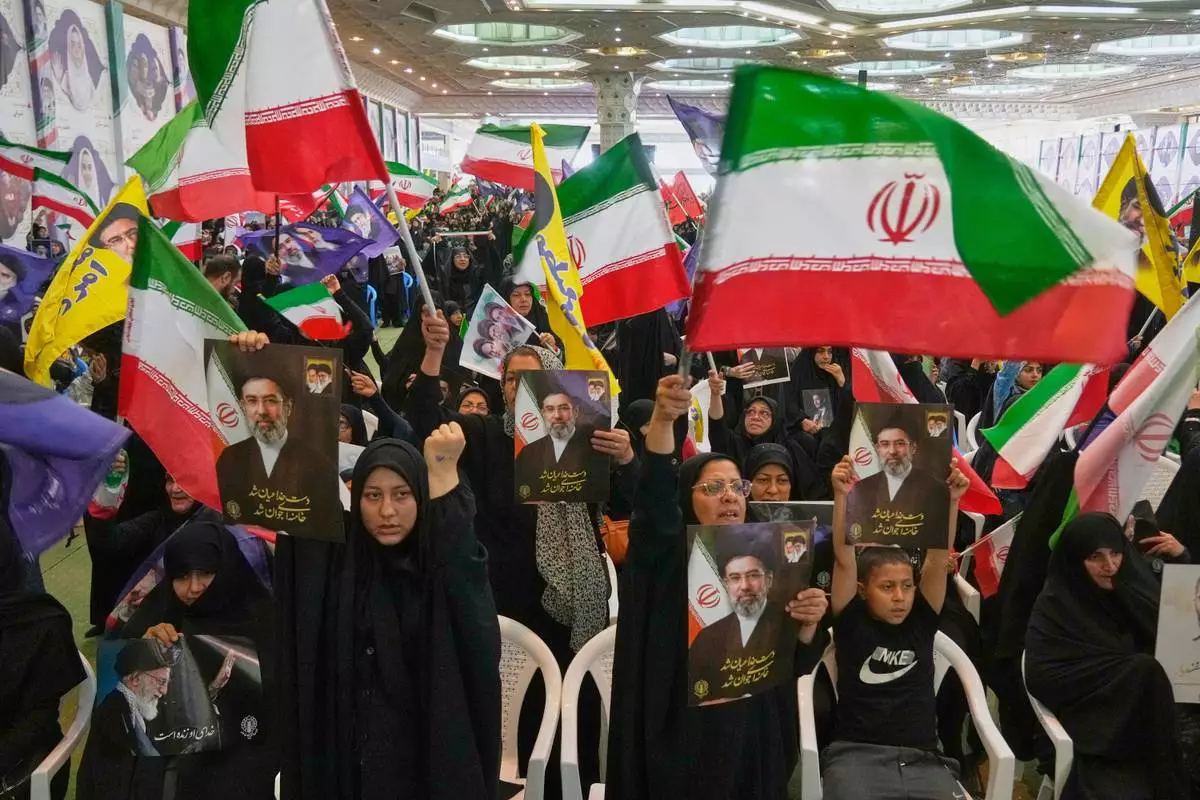
Government supporters hold Iranian flags and pictures of Iran's Supreme Leader, Ayatollah Mojtaba Khamenei, during a ceremony honoring the armed forces and those killed in the war with Israel and the U.S. at the Imam Khomeini Grand Mosque in Tehran, Iran, Sunday, May 24, 2026. (AP Photo/Vahid Salemi)
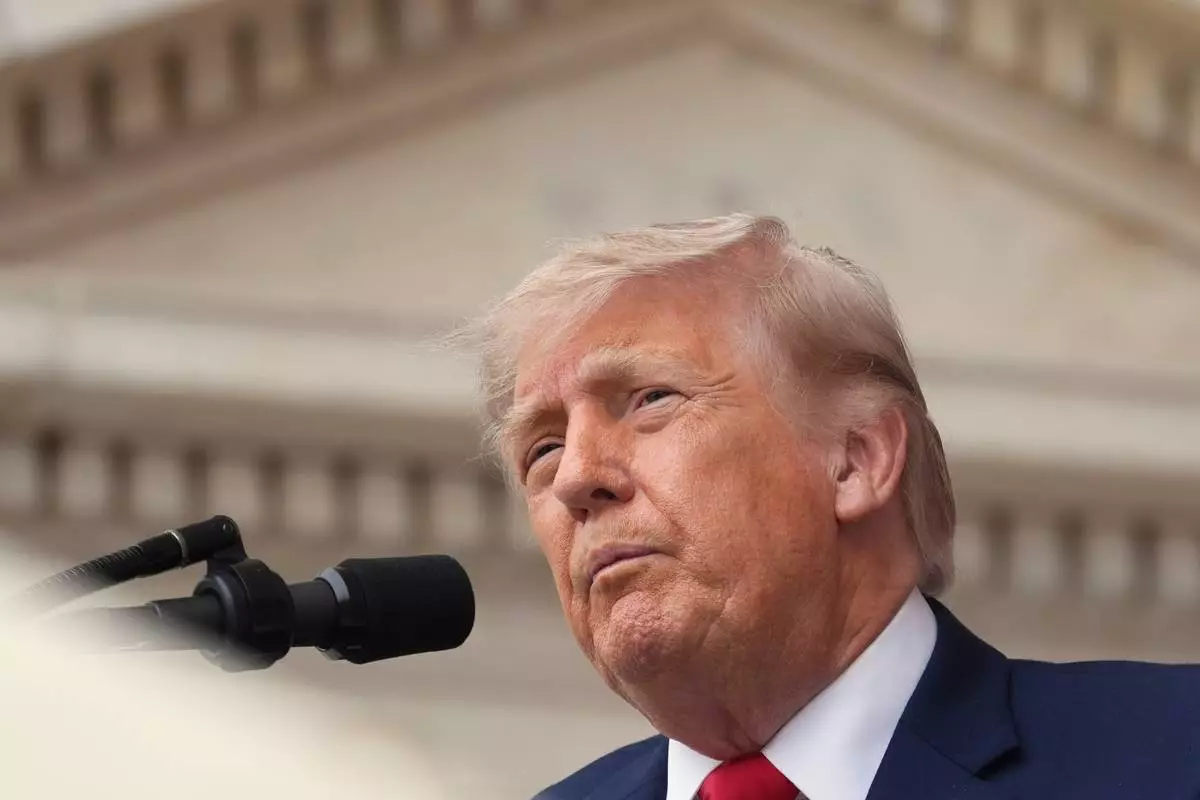
President Donald Trump speaks during the 158th National Memorial Day Observance coinciding with the nation's 250th anniversary, at the Memorial Amphitheater in Arlington National Cemetery, Monday, May 25, 2026, in Arlington, Va. (AP Photo/Alex Brandon)