Multinational firms are eying up fresh growth opportunities in China amid expanding domestic demand and an upgraded consumer market, highlighting how the stability of China's policies enables businesses to make better long-term decision-making amid a challenging global backdrop.
During this year's "two sessions" in Beijing, the strategic importance of domestic demand has been underscored in both the government work report and the draft outline of the 15th Five-Year Plan (2026-2030), a blueprint which maps out China's socioeconomic development priorities through to the end of the decade.
Amid a complex and challenging international environment, the government work report -- which was delivered by Chinese Premier Li Qiang last Thursday -- stressed the need to remain committed to expanding domestic demand, pledging a range of measures to stimulate consumption, which is seen as a pivotal pillar of domestic demand.
This focus is further reinforced in the 15th Five-Year Plan, which states that China aims to "achieve a notable increase in household consumption as a share of gross domestic product, making domestic demand a more prominent economic driver".
Last year, China's total retail sales of consumer goods exceeded 50 trillion yuan (about 7 trillion U.S. dollars) for the first time, with consumption contributing 52 percent to economic growth, up 5 percentage points from the previous year.
China's consumer market -- the world's second-largest -- is undergoing a profound shift from scale expansion to quality upgrading, with diverse measures being rolled out to unlock its immense potential.
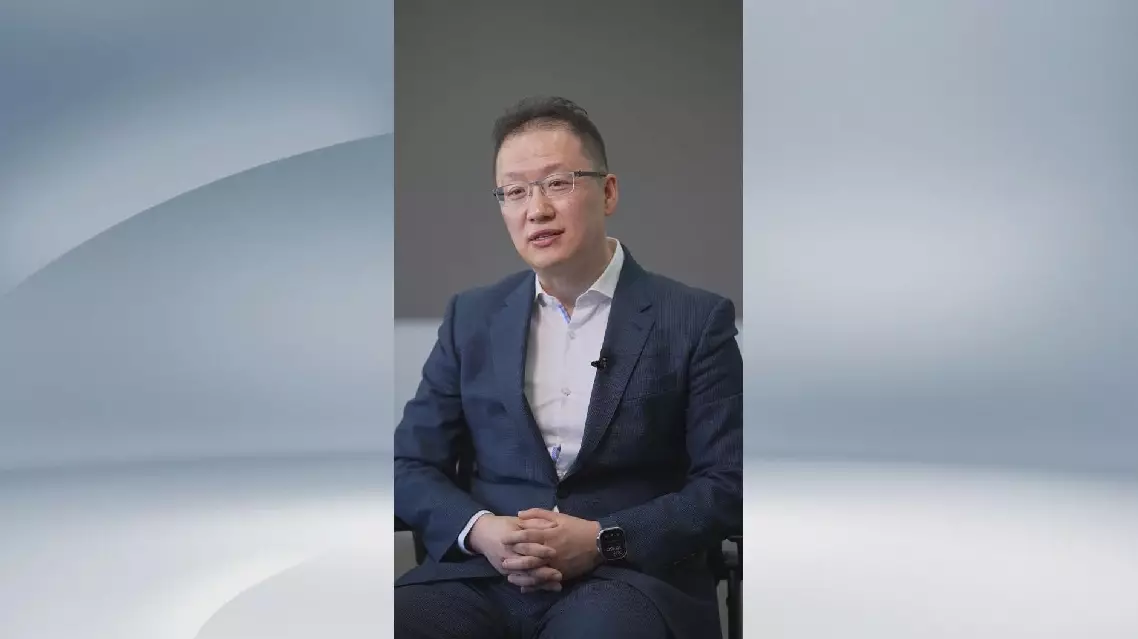
Shi Wang, president of the Great China division of French multinational pharmaceutical and healthcare company Sanofi, said China's vast consumer market and policy predictability are the key reasons multinational firms are willing to further expand investment in the country.
"Many times when I communicated with our global leadership team, two points they particularly appreciate are, first, the resilience of China's economy, supported by its huge population base and strong domestic demand. Second is the predictability of China's economy and its policies. For many multinational headquarters making medium- and long-term decisions, these two factors are the main reasons they are very willing to further increase investment in China," Shi said.
Shi also outlined the company's future development plans in China, and gave an update on a brand new plant which is being built in Beijing.
"At the end of 2024, our board decided to invest 1 billion euros (about 1.2 billion U.S. dollars) in Beijing to build a drug substance manufacturing facility for insulin active pharmaceutical ingredients. On Jan 7 this year, we officially broke ground on the project. We hope to complete the main structure of the plant by the end of this year and bring the final product to market around 2030," Shi said.
Fang Juntao, senior vice president of corporate affairs and sustainability at Nestle Greater China, said he feels optimistic by the policy signals which have been emerging from the "two sessions" and laid out in the government work report.
"We feel greatly encouraged, because China is continuing to expand reform and opening up and pursue high-standard opening up. For foreign-invested enterprises, this provides strong support and serves as a stabilizing force," he said.
Fang also expressed Nestle's commitment to further increasing investment and stepping up product development to meet the evolving needs of Chinese consumers.
"Nestle will continue to increase investment across the entire industrial chain. At the same time, in response to the rising expectations of Chinese consumers, particularly the growing demand for emotional consumption and emotional value in the past one or two years, we are incorporating these trends into our product research and development using artificial intelligence (AI) and other algorithms," Fang said.
Meanwhile, Tu Changming, senior director at Yihai Kerry Arawana Holdings, China's largest cooking oil processing company, also noted the need to respond to ever-changing consumer habits and tap into the market potential.
"Consumption scenarios are becoming increasingly diversified, which is pushing companies to upgrade their supply chains and posing greater challenges for businesses. Yihai Kerry will remain firmly committed to doing more in China, seizing the opportunities brought by consumption upgrading to achieve more sustainable growth," he said.
Kevin Chor, CEO of the AXA Tianping Property and Casualty Insurance Company, said his firm will accelerate the development of commercial health insurance and look to make the most of opportunities arising from the launch of island-wide special customs operations in the Hainan Free Trade Port (FTP) which came into force across the tropical island province last December.
"In the health insurance sector, we will accelerate the development of commercial health insurance, promote the implementation of medical innovation, enabling it to work in synergy with the basic medical insurance system to better safeguard people's health. At the same time, we will closely follow the historic opportunities brought by the launch of island-wide special customs operations in the Hainan FTP, continue to deepen our presence in the Chinese market, share in the country's development dividends and promote business innovation while growing together with China's economy," he said.
The "two sessions" are a major event in China's political calendar, being the annual meetings of the National People's Congress (NPC), the country's highest organ of state power, and the National Committee of the Chinese People's Political Consultative Conference (CPPCC), the top political advisory body.
Multinational firms eye growth opportunities in China's expanding consumer market