People in Yemen are struggling for survival as the country continues to grapple with a deepening labor crisis after more than a decade of war, with many lamenting the lack of opportunities which are leaving the livelihoods of many hanging in the balance.
As the world marks International Workers' Day on Friday, the situation in Yemen seems all the more poignant as millions of people are finding it increasingly hard to find any work at all.
In the crowded streets of the capital Sana'a, workers gather on street corners, waiting for jobs that may never come. Ahmed Muawadah is one of the many who are sitting here, watching passing cars, desperately hoping that one will stop and offer work.
"Our suffering is that we sit here without work. Sometimes we spend a whole month without working, except for one day, or just one day every two weeks. Work is very limited, almost non-existent. I have nine children, and I only work one day a month. I cannot support them. Jobs have completely disappeared. If opportunities were opened for us, I and all the workers would work," said Muawadah.
This individual story reflects a broader reality affecting an estimated eight million workers across Yemen. Many of them are hoping to receive a daily wage, but the challenges are mounting in an increasingly strained labor market.
Activity in key sectors such as construction and services has dropped sharply, largely due to the suspension of several international initiatives, including those backed by the World Bank. As a result, income opportunities have narrowed for those who rely primarily on daily wages.
Meanwhile, the widening impact of the U.S.-Israeli war on Iran and the disruption caused along the key Strait of Hormuz -- a key shipping route for global trade -- has brought more misery in recent weeks.
"There has been a significant decline in business activity as a result of the war, the blockade, and the disruption of work. Foreign capital has also left the country, and large companies have moved out of Yemen and stopped their operations. This is one of the main reasons," said Abdul Karim Al, secretary general of the General Federation of Trade Unions in Sana'a.
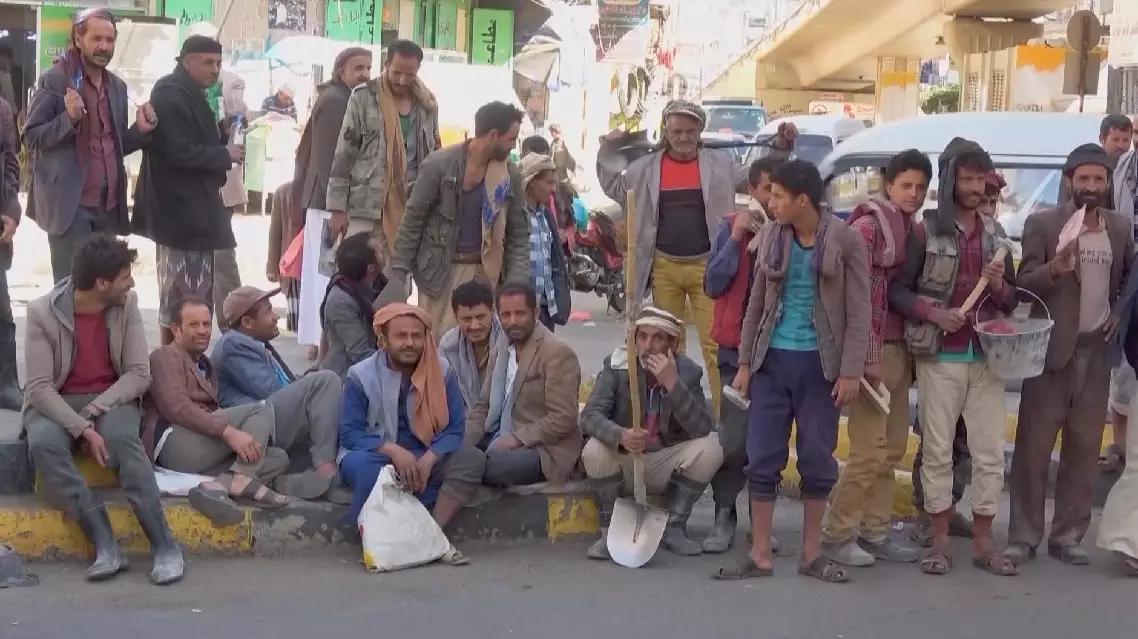
Yemen residents struggling to survive as work dries up amid deepening labor crisis
Chinese Premier Li Qiang has stressed efforts to accelerate the construction of the main framework of the country's water network to provide fundamental support and important guarantees for economic and social development.
Li, also a member of the Standing Committee of the Political Bureau of the Communist Party of China Central Committee, made the remarks during an investigation tour in south China's Guangxi Zhuang Autonomous Region from April 29 to May 1.
He also underscored coordinating the planning and building of water network projects at all levels, and enhancing the comprehensive utilization of water resources.
In Nanning, Li toured Guangxi's flood control system and water conservancy hub operations, and reviewed the comprehensive management work along both banks of the Yongjiang River. He pointed out that building a robust water network is a strategic measure to bolster flood prevention and disaster reduction capabilities, optimize water resource allocation, and ensure national water security.
Efforts should be accelerated to promote the development of the water network, coordinate existing and new projects, advance the upgrading and intelligent transformation of water infrastructure, and focus on improving network efficiency, he noted.
After visiting a canal construction site in Qinzhou City, the premier stressed the importance of high standards and high quality in canal and large hub construction to ensure smooth and timely navigation. While visiting the Qinzhou automated container terminal, Li called for efforts to further improve port facilities, enhance intelligent operation, and promote the deep integration of the water network with shipping.
At a mangrove ecological reserve in Beihai City, Li underscored that aquatic ecosystem protection is a vital component of water network construction, calling for strengthened mangrove wetland and coastal wetland protection and restoration. While visiting a pumping station of a water resources allocation project, Li stressed careful planning and construction of major water diversion projects, and improving water resource allocation patterns.
With southern regions like Guangxi entering flood season, Li urged comprehensive inspections to identify potential hazards and hidden dangers to ensure the safety of residents and their property.
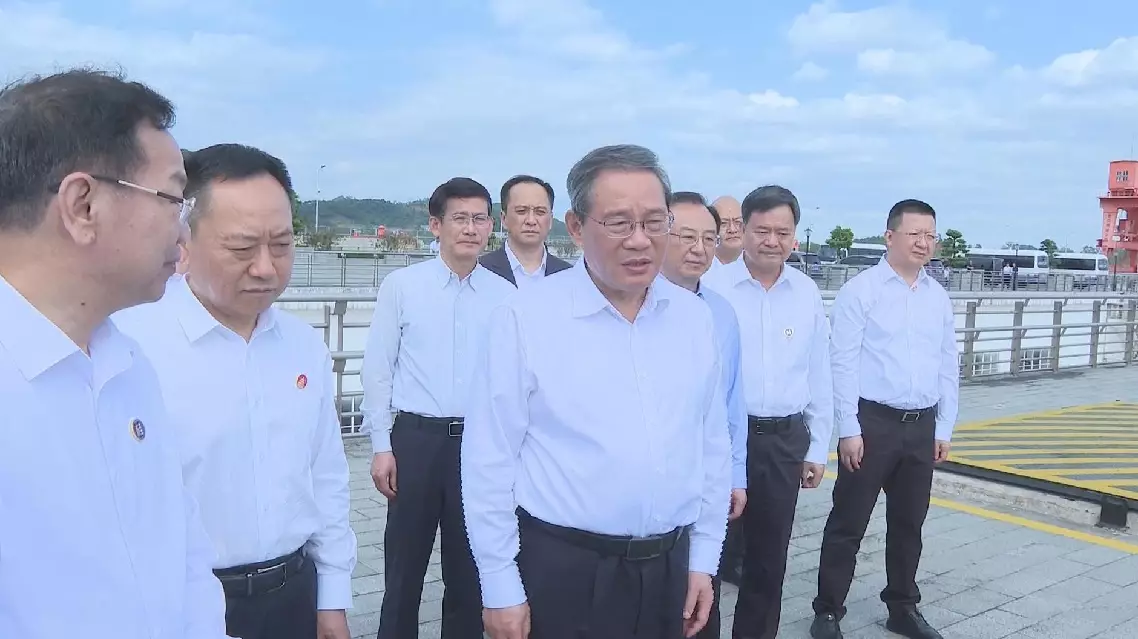
Chinese premier stresses advancing water network construction during Guangxi inspection