PHNOM PENH, Cambodia (AP) — Cambodia hopes to shut down all of the country’s notorious online scam centers by the end of next month, the head of the Southeast Asian nation's effort to combat the cybercrime said Wednesday.
Senior Minister Chhay Sinarith, in charge of the Commission for Combating Online Scams, told The Associated Press in an interview that the government since July had targeted 250 locations believed to be carrying out the lucrative criminal activity, and has shut down about 80%, or 200, of them.
Click to Gallery
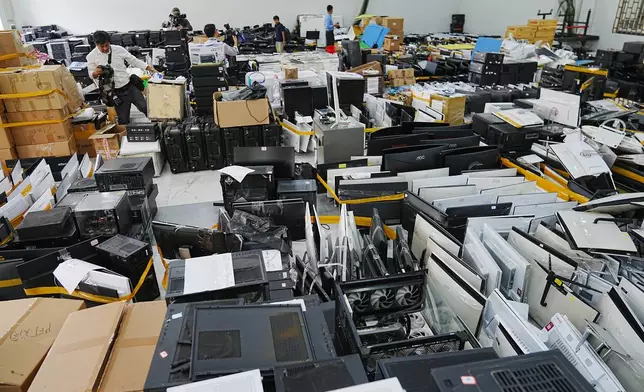
Journalists look at equipment confiscated in a raid by Cambodian police at a scam center in Phnom Penh, Cambodia, Wednesday, March 11, 2026. (AP Photo/Heng Sinith)
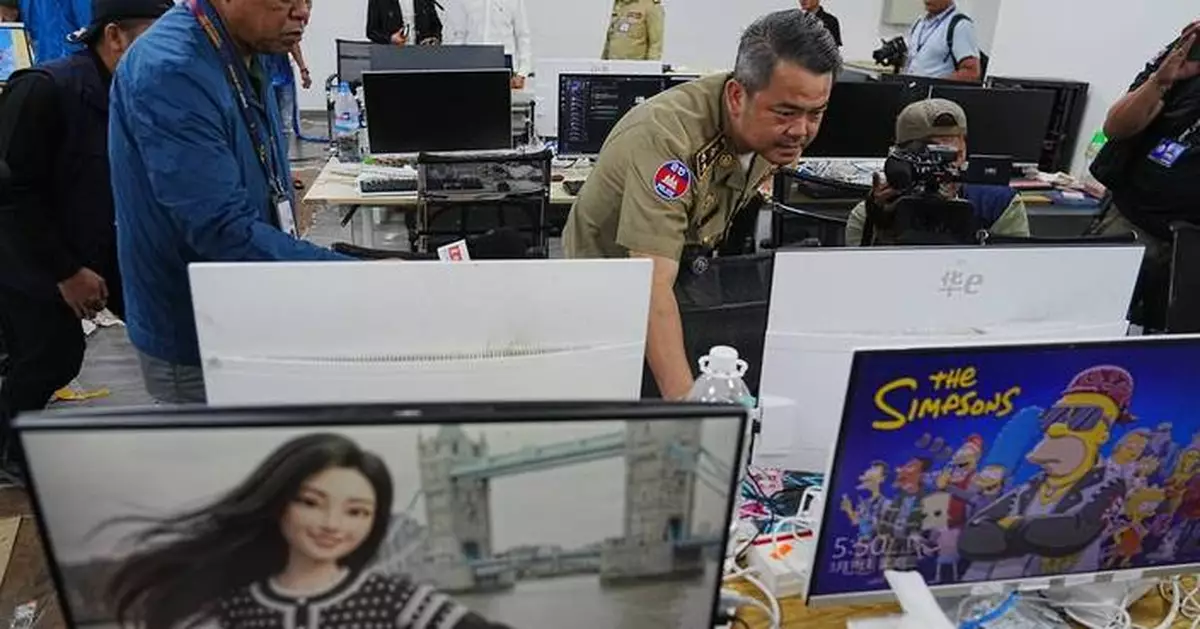
Journalists take a tour of a scam center in Phnom Penh, Cambodia, Wednesday, March 11, 2026. (AP Photo/Heng Sinith)
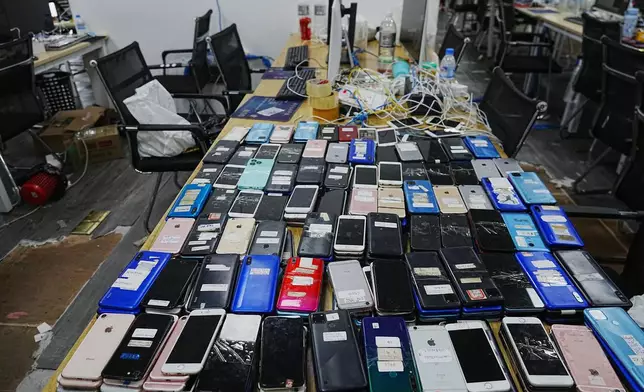
Equipment confiscated in a raid by Cambodian police are laid out on a table at a scam center in Phnom Penh, Cambodia, Wednesday, March 11, 2026. (AP Photo/Heng Sinith)
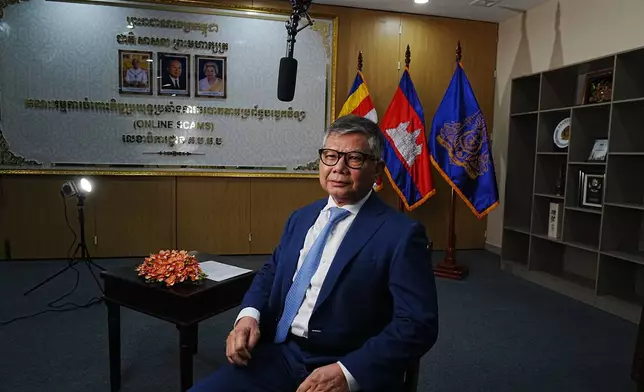
Senior Minister Chhay Sinarith, who is in charge of the Commission for Combating Online Scams, speaks to the Associated Press in Phnom Penh, Cambodia, Wednesday, March 11, 2026. (AP Photo/Heng Sinith)
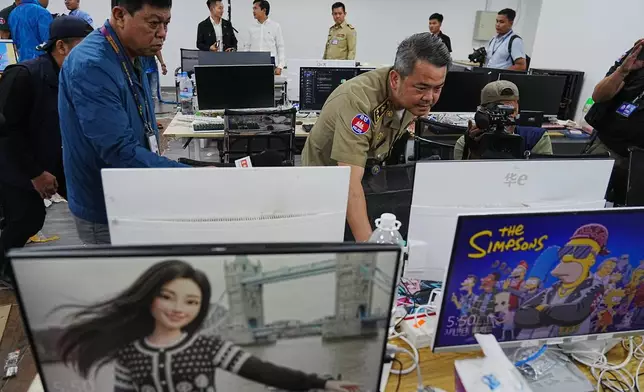
Bun Sosekha, Deputy Commissioner in charge of Security Unit, Phnom Penh Municipal Police, checks equipment confiscated in a raid by Cambodian police at a scam center in Phnom Penh, Cambodia, Wednesday, March 11, 2026. (AP Photo/Heng Sinith)
He said police would carry out suppression activities after April in an attempt to keep the scam centers from reemerging.
Cambodia has launched previous crackdowns against online scam centers but without major effect.
“The real question is whether this effort targets the system that enables the industry, not just the buildings where scams happen,” commented Jacob Sims, an expert on transnational crime. “Past crackdowns in Cambodia have often left the financial and protection networks intact, allowing operations to quickly reconstitute.”
“So far there are few signs the current round of enforcement is reaching the key perpetrators among the Cambodian ruling elite,” said Sims, a Visiting Fellow at Harvard University’s Asia Center. “Moreover, continued restrictions on independent reporting and civil society actors make the government’s claims difficult to verify.”
Cybercrime has flourished in Southeast Asia, particularly in Cambodia and Myanmar, with scam victims around the world being bilked out of tens of billions of dollars annually, according to United Nations experts and other analysts.
The industry is closely involved in human trafficking, as foreign nationals are employed to run romance and cryptocurrency scams, often after being recruited with false job offers and then forced to work in conditions of near-slavery.
Chhay Sinarith said that in the latest crackdown the government launched 79 legal cases involving 697 alleged scam ringleaders and their associates.
At the same time, it has repatriated almost 10,000 scam center workers from 23 countries, he said, with fewer than 1,000 awaiting official repatriation. Others who have escaped or been released from raided centers have gone home on their own.
Cambodia works closely with countries, especially China and the United States, to combat the problem, he said.
Cambodian police on Tuesday raided a suspected scam center in a high-rise building in the capital, Phnom Penh, arresting about 60 Cambodians and Chinese nationals at their desks.
“They did chat to convince people in Europe to invest the money with them, but their investment is fake and fraudulent. It is not real,” said Bun Sosekha, a deputy commissioner of the Phnom Penh Municipal Police.
Earlier Wednesday, journalists were shown equipment confiscated in raids elsewhere, including uniforms and fake identification cards used by scammers to pose online as Japanese police officers to trick and intimidate victims.
Cambodia has been plagued by the illicit activity since it began on a much smaller scale around 2012, when it was primarily carried out using voice-over-internet-protocol — VOIP — phones, with the callers disguising their location and identities, Chhay Sinarith said.
The scams proliferated during the COVID-19 pandemic, when casinos, many already engaged in the gray-area activity of online gambling, no longer had in-person customers and turned to online scams on an industrial scale.
Scam centers have since spread around the world, as far as Africa and Latin America.
Associated Press writer Grant Peck in Bangkok has contributed to this report.
This story is part of an ongoing collaboration between The Associated Press and FRONTLINE (PBS) that includes an upcoming documentary.
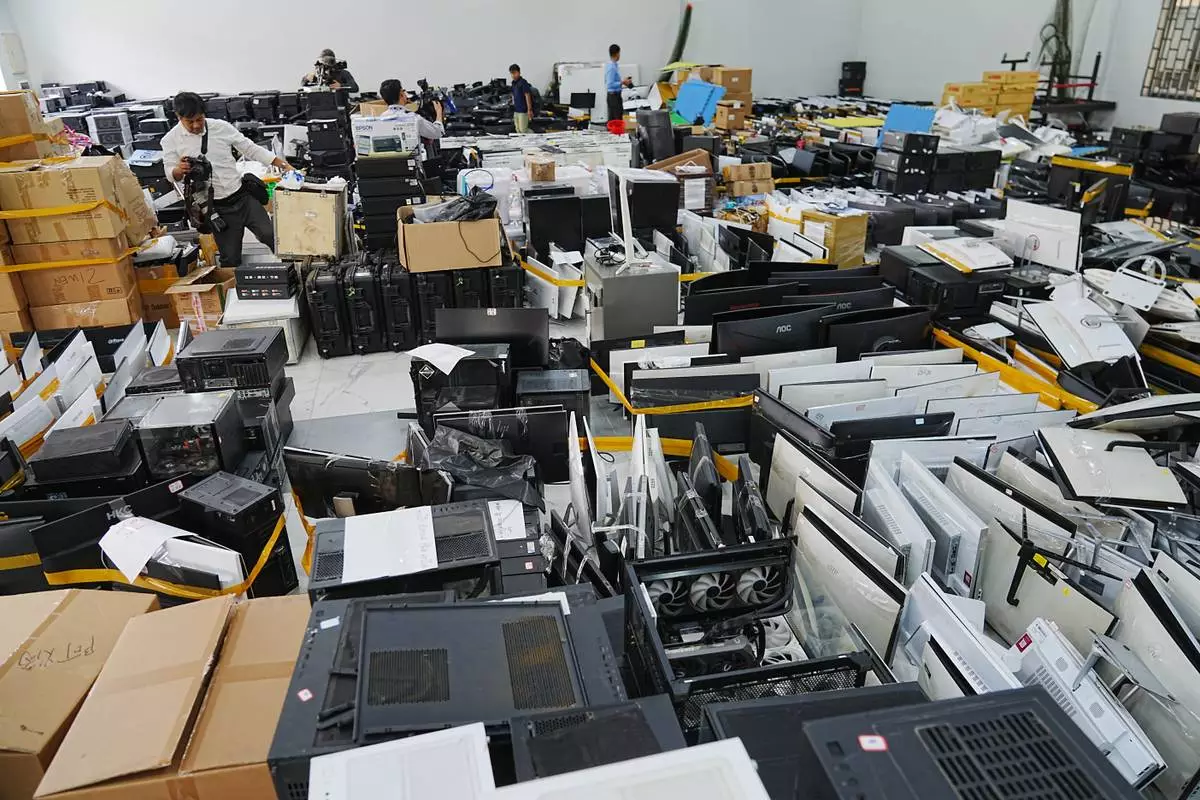
Journalists look at equipment confiscated in a raid by Cambodian police at a scam center in Phnom Penh, Cambodia, Wednesday, March 11, 2026. (AP Photo/Heng Sinith)
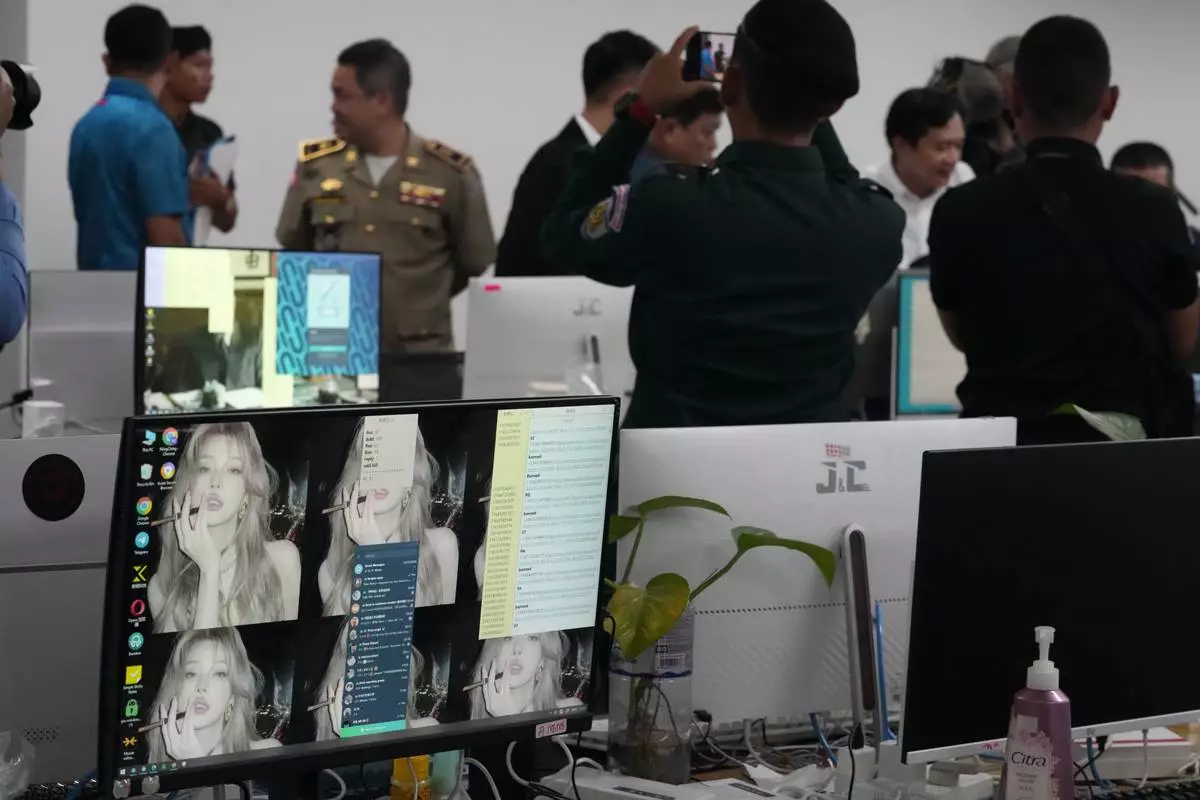
Journalists take a tour of a scam center in Phnom Penh, Cambodia, Wednesday, March 11, 2026. (AP Photo/Heng Sinith)
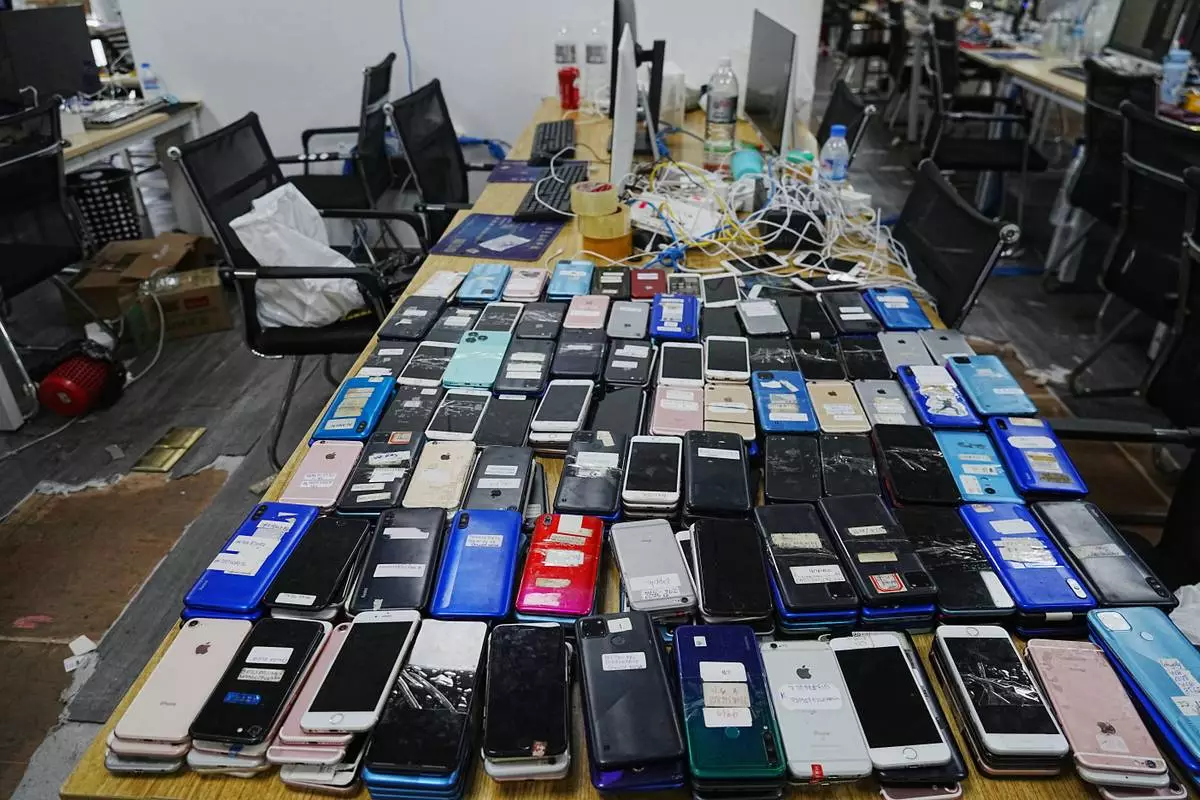
Equipment confiscated in a raid by Cambodian police are laid out on a table at a scam center in Phnom Penh, Cambodia, Wednesday, March 11, 2026. (AP Photo/Heng Sinith)
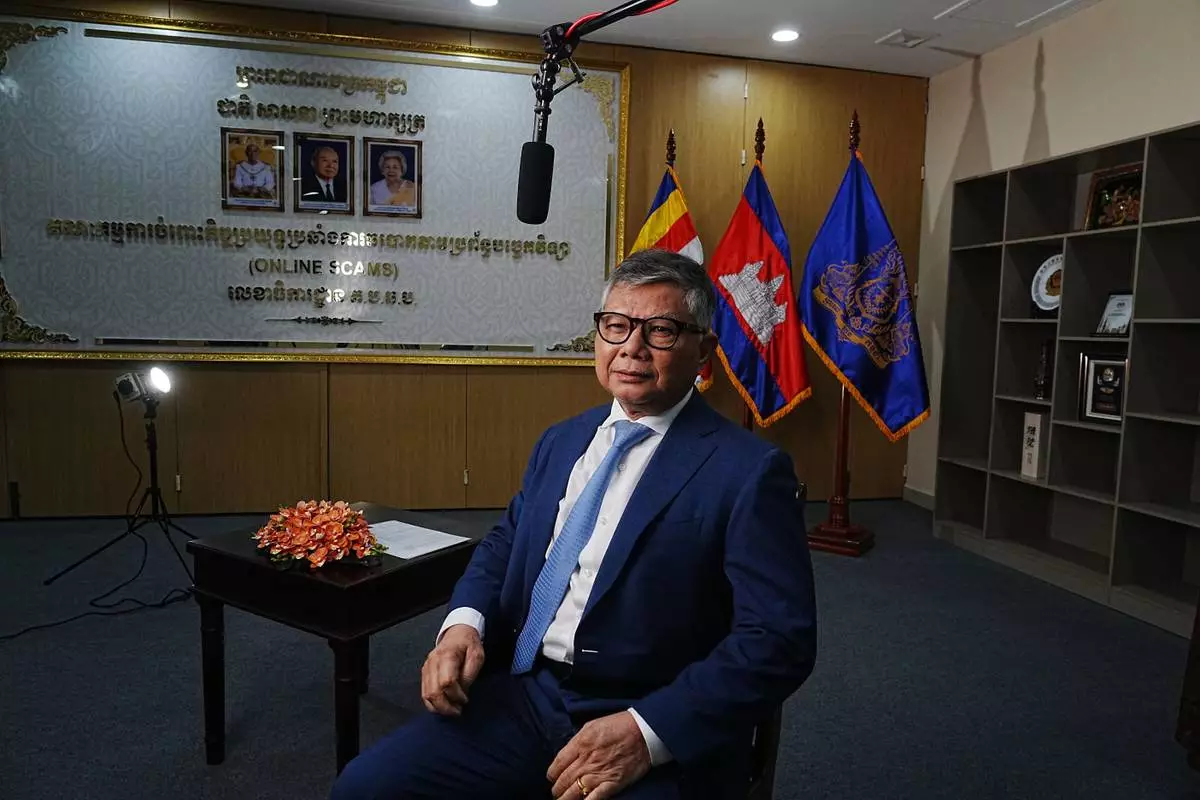
Senior Minister Chhay Sinarith, who is in charge of the Commission for Combating Online Scams, speaks to the Associated Press in Phnom Penh, Cambodia, Wednesday, March 11, 2026. (AP Photo/Heng Sinith)
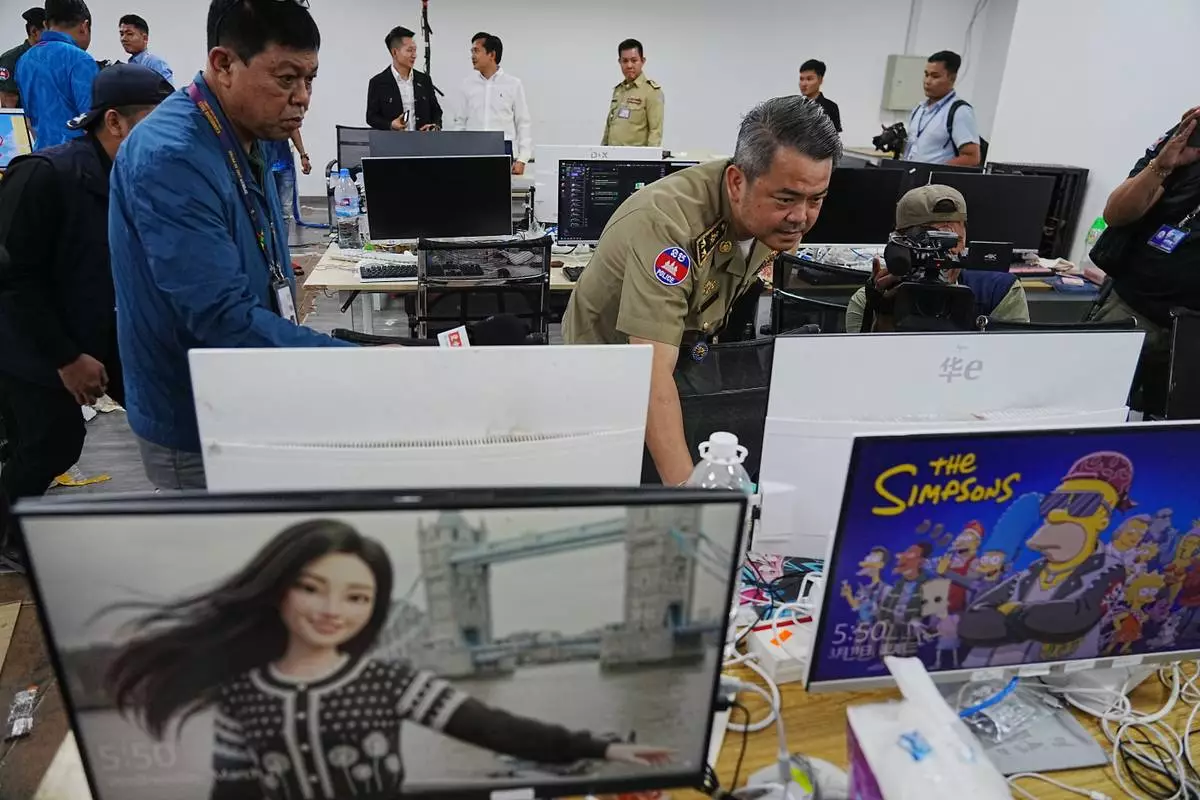
Bun Sosekha, Deputy Commissioner in charge of Security Unit, Phnom Penh Municipal Police, checks equipment confiscated in a raid by Cambodian police at a scam center in Phnom Penh, Cambodia, Wednesday, March 11, 2026. (AP Photo/Heng Sinith)
BUDAPEST (AP) — European leaders heaped praise on Péter Magyar after his stunning election victory in Hungary, not just for what the vibrant campaigner and the country's next premier might do but for who he is not — long-serving Prime Minister Viktor Orbán, who many saw as a direct threat to the continent's peace and prosperity.
The outpouring reflected a deep frustration with Orbán across the 27-nation European Union and its institutions.
“Today Europe wins and European values win,” said Spanish Prime Minister Pedro Sánchez in a post on X on Sunday night. Polish Prime Minister Donald Tusk exclaimed on social media: “Back together! Glorious victory, dear friends!”
Orbán's 16-year grip on power has tested the EU system of governance meant to ensure peace through economic and political integration after the ravages of the world wars. Claiming he sought to advance Hungarians’ national interests over strategy forged in Brussels, Orbán time and again vetoed collective action such as support for Ukraine following Russia's all-out invasion.
Recently, the far-right leader's government outraged EU leaders and officials when it admitted to providing a backchannel to Russia during summits.
In a recent interview, Magyar told The Associated Press that if elected, he would repair Hungary’s relationship with the EU. However, he has carefully avoided taking firm positions on a number of divisive issues during the election campaign — including Orbán’s anti-LGBTQ+ policies and whether Hungary should extend more support to Ukraine. “All Hungarians know that this is a shared victory. Our homeland made up its mind. It wants to live again. It wants to be a European country,” Magyar said during his victory speech from the banks of the Danube River in Budapest, the capital.
Magyar said he received calls on Sunday night — before he took the stage to announce his victory — from French President Emmanuel Macron, NATO Secretary-General Mark Rutte, German Chancellor Friedrich Merz and European Commission President Ursula von der Leyen.
Online, congratulations also flowed in from British Prime Minister Keir Starmer, Irish Prime Minister Micheál Martin, Swedish Prime Minister Ulf Kristersson and European Parliament Speaker Roberta Metsola. Danish Prime Minister Mette Frederiksen, Romanian President Nicușor Dan and European Council President António Costa also posted their well-wishes for Magyar.
“This is an historic moment, not only for Hungary, but for European democracy," Starmer said.
“France welcomes the victory of democratic participation, the Hungarian people’s commitment to the values of the European Union, and Hungary’s commitment to Europe,” Macron said.
Merz said, “Let’s join forces for a strong, secure and, above all, united Europe.”
Kristersson referenced both the EU and NATO in his congratulation note to Magyar: “I look forward to working closely with you — as Allies and EU Members. This marks a new chapter in the history of Hungary.”
Slovenia’s liberal Prime Minister Robert Golob congratulated Magyar, saying his “victory over right-wing populism is also a great victory for the EU and its future.”
“Only a more united and more effective EU will be able to respond to the extremely serious challenges of the times ahead,” Golob said.
Israeli opposition figure Yair Lapid, himself a descendent of Hungarian Jews who survived the Holocaust, also congratulated Magyar.
Former United States President Barack Obama sent his congratulations, too. “The victory of the opposition in Hungary yesterday, like the Polish election in 2023, is a victory for democracy, not just in Europe but around the world.”
Italian Prime Minister Giorgia Meloni congratulated Magyar but also thanked Orbán for “intense collaboration for these years."
Far-right French politician Jordan Bardella, seen as a nationally competitive politician in the 2027 French elections, praised Orbán's record on populist causes in a post on X. He made no mention of Magyar.
Even Orbán's staunchest allies in Europe congratulated Magyar.
Populist Czech Prime Minister Andrej Babiš said that in the election, "facing such a strong opponent as Viktor Orbán was never easy, yet he earned the trust of the majority of Hungarians and carries great hopes and expectations. He must not disappoint.”
Slovakia's populist Prime Minister Robert Fico congratulated Magyar and said he was “ready for intensive cooperation with the new Hungarian Prime Minister.”
Referencing the Druzhba pipeline shuttered since an attack in Ukraine — an issue Orbán campaigned on and one exacerbated by rising energy prices over the Iran war — Fico said Slovakia is “interested in friendly and mutually beneficial relations with Hungary and in the above-standard status of national minorities living on the territories of our countries.” Both Babiš and Fico vowed to work with Hungary's next leader.
Von der Leyen, who had like many EU officials avoided any public position on the Hungarian election, posted on X that "Hungary has chosen Europe. Europe has always chosen Hungary. Together, we are stronger. A country returns to its European path. The Union grows stronger.”
Orbán had vilified the Brussels-based EU executive and frequently stymied her agenda.
European People's Party President Manfried Weber, also a frequent Orbán target, said on social media that "Hungary is back at the heart of Europe."
German lawmaker Daniel Freund said that “Hungarians are sending a signal to the world" — and that Orbán’s ouster will reverberate among populist leaders world over.
“The icon of illiberal anti-European forces has now failed - brought down by a disastrous economy, corruption, and his own unfair electoral system," Freund said.
Orbán had long demonized Ukrainian President Volodymyr Zelenskyy, making his opposition to the leader in Kyiv central to his now-failed reelection campaign.
While congratulating Magyar on X, Zelenskyy said that "we are ready for meetings and joint constructive work for the benefit of both nations, as well as for the sake of Europe’s peace, security, and stability."
There is hope in Ukraine that Sunday's historic vote in Hungary will enable the EU to fast-track a much-needed mega loan of 90 billion euros that Orbán had blocked.
Ukraine posted congratulations to Magyar on its X account, referencing two historic rivers of Ukraine and Hungary.
“The Dnipro and the Tisza flow through a shared home — Europe,” it said.
Associated Press writers Jill Lawless in London and Karel Janicek in Prague contributed to this report.
A man wrapped in the European Union flag waves a Hungarian flag, backdropped by the parliament building, early Monday April 13, 2026 as people celebrate Peter Magyar ousting Prime Minister Viktor Orban after 16 years in power. (AP Photo/Sam McNeil)
Peter Magyar, leader of the opposition Tisza party, center, speaks to his supporters following the announcement of the partial results of the parliamentary election, in Budapest, Hungary, Sunday, April 12, 2026. (AP Photo/Denes Erdos)
Peter Magyar, the leader of the opposition Tisza party waves a national flag after claiming victory in a parliamentary election in Budapest, Hungary, Sunday, April 12, 2026. (AP Photo/Darko Bandic)
Peter Magyar, leader of the opposition Tisza party, waves the Hungarian flag following the announcement of the partial results of the parliamentary election, in Budapest, Hungary, Sunday, April 12, 2026. (AP Photo/Denes Erdos)
Supporters of Peter Magyar, the leader of the opposition Tisza party celebrate after a parliamentary election in Budapest, Hungary, Sunday, April 12, 2026. (AP Photo/Darko Bandic)
Peter Magyar, leader of the opposition Tisza party, center, celebrates with his party colleagues following the announcement of the partial results of the parliamentary election, in Budapest, Hungary, Sunday, April 12, 2026. (AP Photo/Denes Erdos)