Skip to Content Facebook Feature Image

Steve Tisch, siblings request transfer of their stakes in Giants to children's trusts, per NFL memo

Sport

Steve Tisch, siblings request transfer of their stakes in Giants to children's trusts, per NFL memo
Sport

Sport

Steve Tisch, siblings request transfer of their stakes in Giants to children's trusts, per NFL memo

2026-03-12 02:48 Last Updated At:03:11

NEW YORK (AP) — New York Giants co-owners Steve, Laurie and Jonathan Tisch want to transfer their shares of the NFL club to their children’s trusts, according to a league memo that was obtained by The Associated Press.

According to the memo, the Tisch siblings would move the remaining 23.1% of the Giants that they still own to the trusts after completing previous transfers in 2023 and ’24. The memo states, “Following the transactions, the sellers will no longer own any interest in the club.”

A Giants spokesperson said the team had no comment. ESPN was first to report the transfer request.

It was not clear if the transfer requests were in any way related to Steve Tisch’s name appearing in the Jeffrey Epstein files released by the U.S. Justice Department in January. Steve Tisch’s name came up more than 400 times in the files. Tisch at the time said he knew Epstein but denied going to his island.

“We had a brief association where we exchanged emails about adult women, and in addition, we discussed movies, philanthropy and investments,” Steve Tisch said in a statement on Jan. 31. “I did not take him up on any of his invitations and never went to his island. As we all know now, he was a terrible person and someone I deeply regret associating with.”

NFL Commissioner Roger Goodell in February said the league would look into Tisch's association with Epstein.

“Absolutely we will look at all the facts,” Goodell said at a news conference in San Jose, California, during Super Bowl week. “We’ll look at the context of those and try to understand that. We’ll look at how that falls under the (league personal conduct) policy. I think we’ll take one step at a time. Let’s get the facts first.”

The Tisch family has shared ownership of the Giants since 1991 with the Mara family, which founded the franchise in 1925. The Koch family agreed in September to purchase 10% of the team.

Maaddi reported from Tampa, Florida.

AP NFL: https://apnews.com/hub/NFL
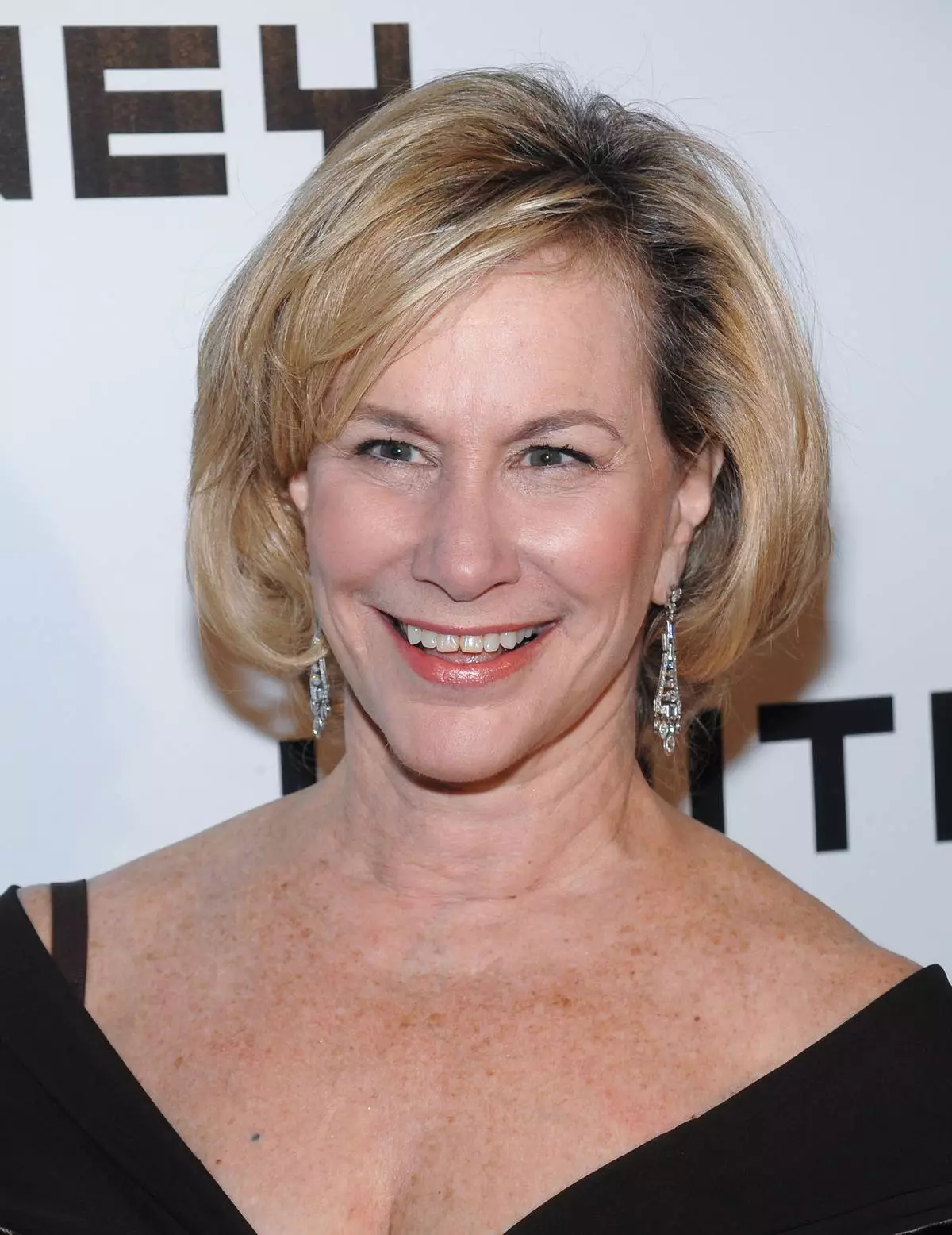
FILE - Laurie Tisch attends the Whitney Gala on Oct. 19, 2009, in New York. (AP Photo/Evan Agostini, File)
FILE - Laurie Tisch attends the Whitney Gala on Oct. 19, 2009, in New York. (AP Photo/Evan Agostini, File)

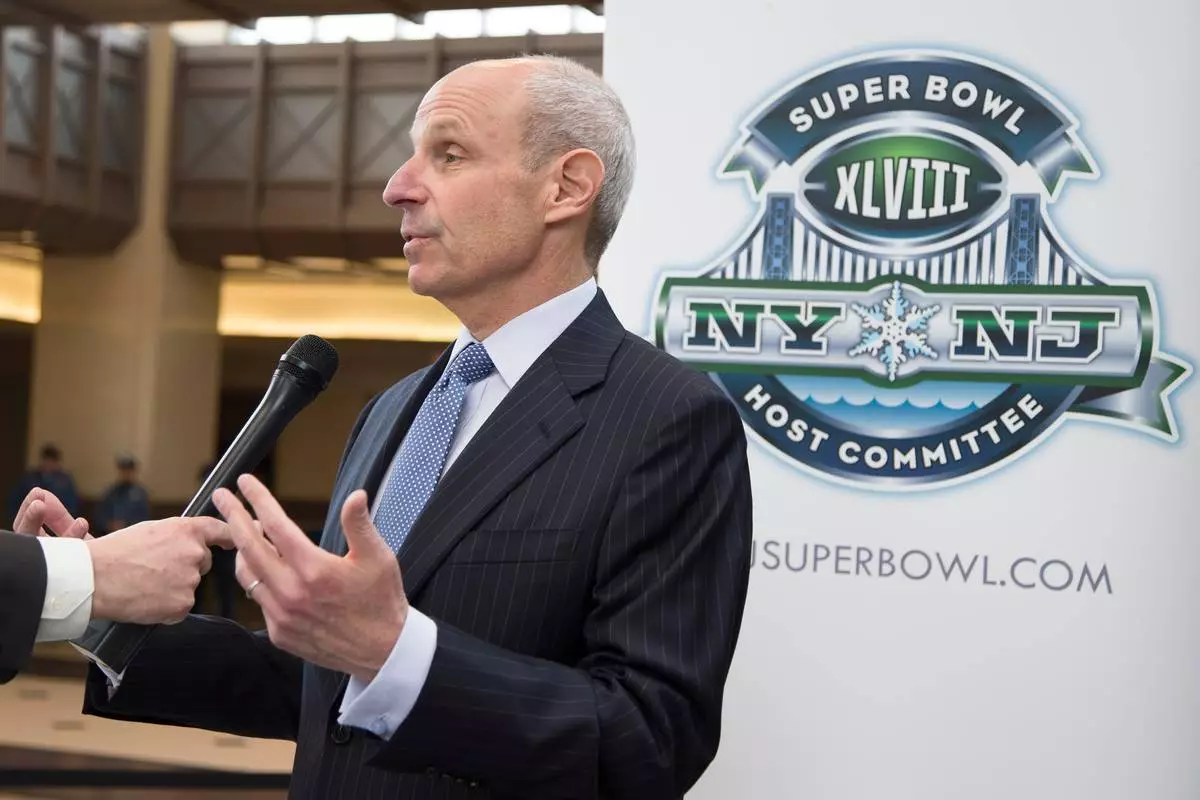
FILE - Jonathan Tisch, co-chairman of the Super Bowl Host Committee, speaks to the media following a news briefing concerning transportation to Super Bowl XLVIII, Dec. 9, 2013, at the Frank R. Lautenberg Secaucus Junction Station in Secaucus, N.J. (AP Photo/John Minchillo, File)

FILE - Jonathan Tisch, co-chairman of the Super Bowl Host Committee, speaks to the media following a news briefing concerning transportation to Super Bowl XLVIII, Dec. 9, 2013, at the Frank R. Lautenberg Secaucus Junction Station in Secaucus, N.J. (AP Photo/John Minchillo, File)

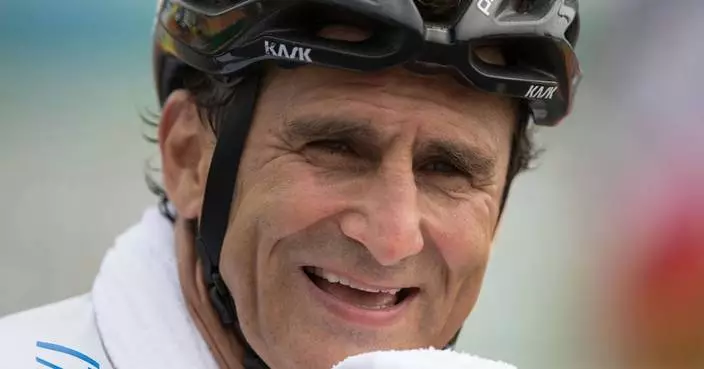
FILE - New York Giants co-owner Steve Tisch arrives for NFL owners meetings in New York, Oct. 21, 2025. (AP Photo/Seth Wenig, File)

FILE - New York Giants co-owner Steve Tisch arrives for NFL owners meetings in New York, Oct. 21, 2025. (AP Photo/Seth Wenig, File)
WASHINGTON (AP) — Democrats are struggling to come up for air after outside groups flooded their first round of midterm primaries with campaign cash.

As the party fights to regain control of Congress, organizations affiliated with the American Israel Public Affairs Committee, cryptocurrency and artificial intelligence have dominated the airwaves, sometimes leaving candidates on the sidelines of their own campaigns.

Democratic pollster Zac McCrary said the primaries have “become proxy wars, and the candidates are almost afterthoughts in larger skirmishes."

In an effort to push back, the Democratic National Committee voted at its spring meeting in New Orleans to condemn the surge in spending.

Members who opposed the package of resolutions wanted language to condemn specific groups, such as AIPAC, which was founded to foster stronger relations between Israel and the U.S. The organization has become especially controversial during the war in Gaza and because of its aggressive campaign tactics.

The flood of money from a variety of groups has exacerbated tensions within the party. Candidates who lost have pointed their fingers at special interests, blaming them for derailing their campaigns. Others who are still in the running are courting voters by denouncing deep-pocketed outside groups. Even those who have benefited from the spending have expressed concern.

“It’s definitely a brave new world,” McCrary said.

“We’re not talking about doubling of campaign expenditures,” he added. “We’re talking about 10 times or 20 times more.”

Dan Sena, a former executive director at the Democratic Congressional Campaign Committee, said party organizations are no longer the only ones with the clout to push favored candidates.

“All that’s been completely smashed now,” Sena said. Even if Democrats regain control of the U.S. House, he warned that outside spending could damage the party in the long run.

Referring to House Minority Leader Hakeem Jeffries, he said, “You’re going to hand Jeffries a caucus that is divided.”

So far this cycle, outside money in U.S. House races has largely targeted districts particularly friendly to Democrats, meaning the primaries will likely determine who will win the general election in November. After a record number of House members retired this year, many of those seats opened up for the first time in years, drawing dozens of Democratic hopefuls.

In Illinois, for example, there was more than $125 million in outside spending across five open Democratic primaries. In all but one of those congressional races, the outside spending exceeded candidate spending.

While it's still early in the calendar, there are indicators that many more races could see big spending. Almost 40 seats have already seen more than $1 million in outside spending, according to Federal Election Commission filings.

In Illinois, the top three spenders in U.S. House races were groups affiliated with AIPAC, according to AdImpact, which tracks ad buys in political races, followed by the cryptocurrency-affiliated Fairshake.

A resolution presented to a subcommittee at the DNC specifically named AIPAC, but that one didn't pass. Instead, members voted for a separate resolution that “condemns the influence of unregulated dark money in Democratic primary elections.”

“We had various resolutions that focused on different industries and groups, and instead of going one-by-one, we passed a blanket repudiation,” DNC Chair Ken Martin said in a statement.

The latest DNC meeting marked another chapter in longstanding disputes between progressives and the party establishment.

Some progressives want the party to adopt official language that all Democratic presidential contenders oppose money from dark-money groups, or super PACs that aren't required to disclose their donors.

“It’s necessary that we actually have the party do something on this issue, not just say something,” said Larry Cohen, co-chair of Our Revolution, a progressive group founded by independent Sen. Bernie Sanders of Vermont, who caucuses with Democrats.

The resolution passed at the DNC meeting in New Orleans is viewed by progressives as a step toward that goal. However, some Democrats warn against weakening their candidates when facing a Republican Party that's flush with cash.

“Provided that we don’t handcuff ourselves in the general elections — because if the Republicans are going to use dark money in general elections, we should be using our money in general elections, too — if you provide an even playing field, I think then that’s fine,” said Sen. Ruben Gallego, an Arizona Democrat. “But we just can’t be handcuffing ourselves in the general to lose races.”

DNC resolutions do not stop outside groups from surging funds into primary contests or general elections. But some Democrats believe the issue is core to the party's values.

“We should eliminate any super PAC in a Democratic primary. And I think every presidential candidate in 2028 should pledge that they will not have any super PAC spending in a Democratic primary,” said Rep. Ro Khanna, a progressive and possible Democratic presidential contender who co-chaired Sanders’ 2020 presidential campaign.

“That should be a litmus test,” Khanna argued. “If you’re not willing to take that pledge, then you’re part of the problem.”

Brown reported from New York.

FILE - Ken Martin speaks at the 2026 California Democratic Party State Convention in San Francisco, Feb. 21, 2026. (AP Photo/Jeff Chiu, File)

FILE - Ken Martin speaks at the 2026 California Democratic Party State Convention in San Francisco, Feb. 21, 2026. (AP Photo/Jeff Chiu, File)

Recommended Articles