Skip to Content Facebook Feature Image

China’s "two sessions" showcase openness with unprecedented media access

China

China

China

China’s "two sessions" showcase openness with unprecedented media access

2026-03-12 21:10 Last Updated At:22:37

China's annual "two sessions" concluded Thursday in Beijing with expanded media access, as lawmakers, advisers, and ministers fielded questions on economic growth, technology, and social policy, championing transparency in the country's legislative and consultative process.

China's annual "two sessions" convene the National People's Congress (NPC) and the Chinese People's Political Consultative Conference(CPPCC), the country's highest legislative and advisory organs. As the CPPCC wrapped up Wednesday and the NPC closed Thursday.

This year's openness, from press conferences to "passage" interviews, highlighted China's effort to project confidence and engage directly with domestic and international audiences.

During the meetings, 18 NPC deputies, 26 CPPCC members, and 9 ministers walked the "passage" -- designated group interview areas, where they addressed media. Topics ranged from grain security and artificial intelligence (AI) in education to healthcare and technology development.

"The Deputies' Passage feels like an open window. It allows us to respond promptly to issues the public cares about, offering better suggestions for high-quality development," said NPC deputy Ni Di.

"The Members' Passage lets us share grassroots stories with the world up close. This open format is excellent," said CPPCC member Cui Haiyang.

Ministers addressed economic and social challenges at the Ministers’ Passage, outlining immediate measures and long‑term plans for the new Five‑Year Plan period.

Their exchanges also unveiled more insights into the key policy goals of China's 15th Five‑Year Plan (2026‑2030), the blueprint mapping socioeconomic priorities for the coming years.

The sessions also held two spokesperson press conferences, as well as three press conferences on foreign policy, economy and people's livelihoods, which answered questions on GDP targets, China-U.S. relations, innovation, and welfare with data and policy details.

The openness of this year's "two sessions" drew notice beyond China's borders, with international observers highlighting the transparency and direct engagement between officials and the press.

"Just the opening up, allowing people to see what is really happening, and get a first-hand experience of the Chinese population and what the governance is like," said Marlon Samuels, a journalist from the Public Broadcasting Corporation of Jamaica.

"This is a very important, distinguished mark of the Chinese policy in terms of international engagement," said Sohail Khan, Deputy Secretary-General of the Shanghai Cooperation Organization Secretariat.
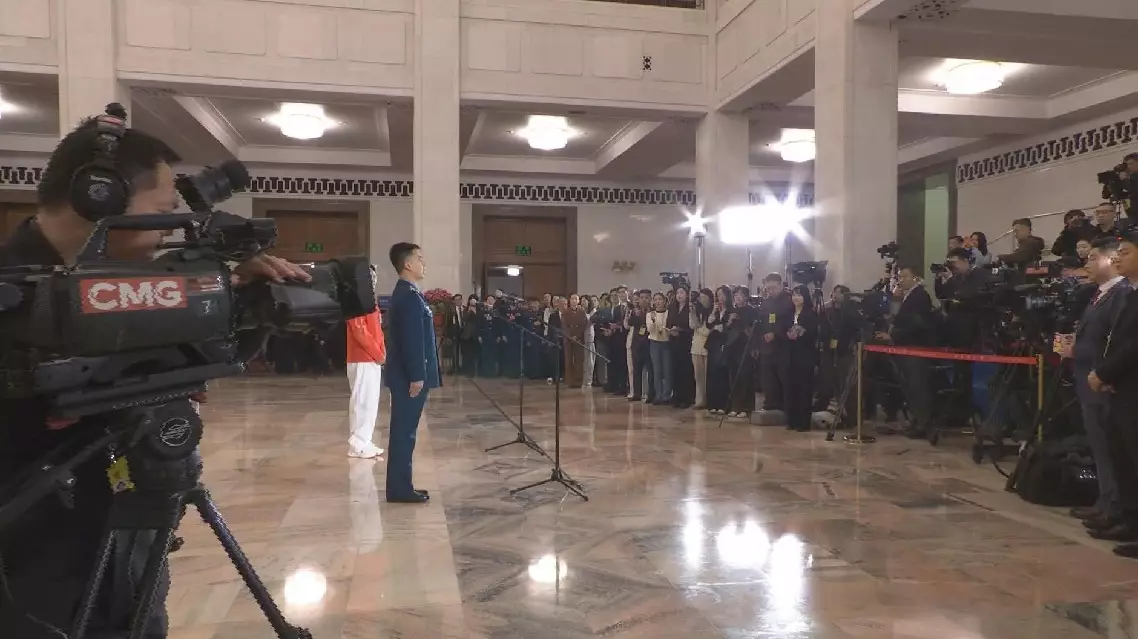
China’s "two sessions" showcase openness with unprecedented media access
China’s "two sessions" showcase openness with unprecedented media access
China will strive to further reduce the number of heavy pollution days and improve water quality in rural areas during the 15th Five-Year Plan period (2026-2030), Minister of Ecology and Environment Huang Runqiu said on Thursday.

While meeting the press following the closing meeting of the fourth session of the 14th National People's Congress (NPC), Huang outlined the main tasks of pollution control during the 2026-2030 period.

Although the national average proportion of heavy pollution days has dropped to less than one percent last year, said Huang, during autumn and winter seasons, such weather events still occasionally occur in certain regions, including the Beijing-Tianjin-Hebei region and surround areas, as well as urban clusters in the middle reaches of the Yangtze River.

Therefore, reducing the number of heavy pollution days will continue to be a major task for relevant authorities, he said.

"An important goal of pollution prevention and control during the 15th Five-Year Plan period is to continue reducing the number of heavy pollution days. We are quite confident in achieving this. We will adhere to the approaches of systematic and source-based management, addressing both symptoms and root causes, with a focus on the latter. In particular, we will seize the favorable opportunities brought by advancing the goal of peaking carbon emissions during the 15th Five-Year Plan period and the promulgation of the Ecological and Environmental Code today to promote green and low-carbon development of our industrial, energy, and transportation structures, as well as the development of new quality productive forces. Our fundamental solution is to reduce pollutant emissions at the source," he said.

Water quality improvement is another major task, according to Huang.

Over the years, China has seen significant progress in managing the water quality in major rivers and lakes, but in rural areas and urban-rural fringe areas, pollution problems, like black and odorous waters, remain quite prominent in small and micro water bodies, he said, adding that these pollution sources near people's homes may seem minor, they are actually directly related to the well-being of the people.

"This year, we will introduce relevant documents to deepen water pollution control, shifting our focus and efforts further towards rural areas, urban-rural fringe areas, and counties. At the same time, we'll set up over 200 national-level monitoring sites and a number of monitoring sites at the provincial level, in order to help local authorities to better manage small and micro water bodies," said Huang.

China will strive to further improve air, water quality in following five years: minister

China will strive to further improve air, water quality in following five years: minister

Recommended Articles