Iran's response to the latest U.S. proposed text for ending the war was sent on Sunday to the Pakistani mediator, Iran's official news agency IRNA reported.
According to the proposed plan, at this stage, negotiations will focus on ending the war in the region, the IRNA report said.
On Feb 28, Israel and the United States launched joint strikes on Tehran and other cities, killing Iran's then Supreme Leader Ali Khamenei, senior commanders, and civilians. Iran responded with waves of missile and drone attacks targeting Israel and U.S. interests in the region.
A ceasefire took effect on April 8, followed by talks between Iranian and U.S. delegations in Islamabad, Pakistan that failed to produce a deal.

Iran hands over response to US proposal to Pakistan
Humanoid robots took on a challenge of working throughout the process of tea-making in east China's Fujian Province on Sunday as part of a promotion campaign for the 2026 World Humanoid Robot Games in August.
After one week of training, robots that participated in the humanoid robot half-marathon in Beijing in April came to a tea production base in Fuding City of Fujiang to work alongside humans on leaves picking, transportation, withering, roasting, and cake pressing.
This marked the first time humanoid robots tested their training results in an actual tea production environment. Despite repeated failures, the humanoid robots ultimately finished their designated tasks.
Transporting tea on mountain roads improved robots' motion control capabilities on rough terrain, while in the roasting stage, robots' thermal imaging real time monitoring system helped them achieve precision temperature-control for the delicate process.
"This real-world challenge has enriched our robots' training scenarios. We have also seen more possibilities for dexterous robotic hands in the future. Of course, in this process we also noticed there is still much room for improvement. For example, the area of fingers used for pinching showed some problems. We will address them by constantly iterating and optimizing our products, and prepare humanoid robots for serving society," said Fang Hainan, representative of a robot engineering team.
Through motion capture technology, the engineering team collected a series of data, continuously optimizing and improving the flexible control of the five-finger dexterous hand.
The traditional tea making industry also revealed possibilities of using humanoid robots to solve labor shortages.
"It's my first time making tea with robots, which is very novel. There are areas where robots need improvement, but we believe they will become increasingly refined in the future," said Wang Chuanyi, a traditional Fuding white tea craftsman.
The tea making challenge marks the first stop of a Robot Games' promotion campaign, where robots attempt different tasks with regional characteristics, with the goal of examining their environmental adaptation, autonomous operation, and practical service capabilities and promoting technological iteration through scenario-based tasks.
The second World Humanoid Robot Games will be held in Beijing from August 22 to 26, featuring over 30 events that demonstrate the latest advancements in embodied intelligence and fine manipulation capabilities.
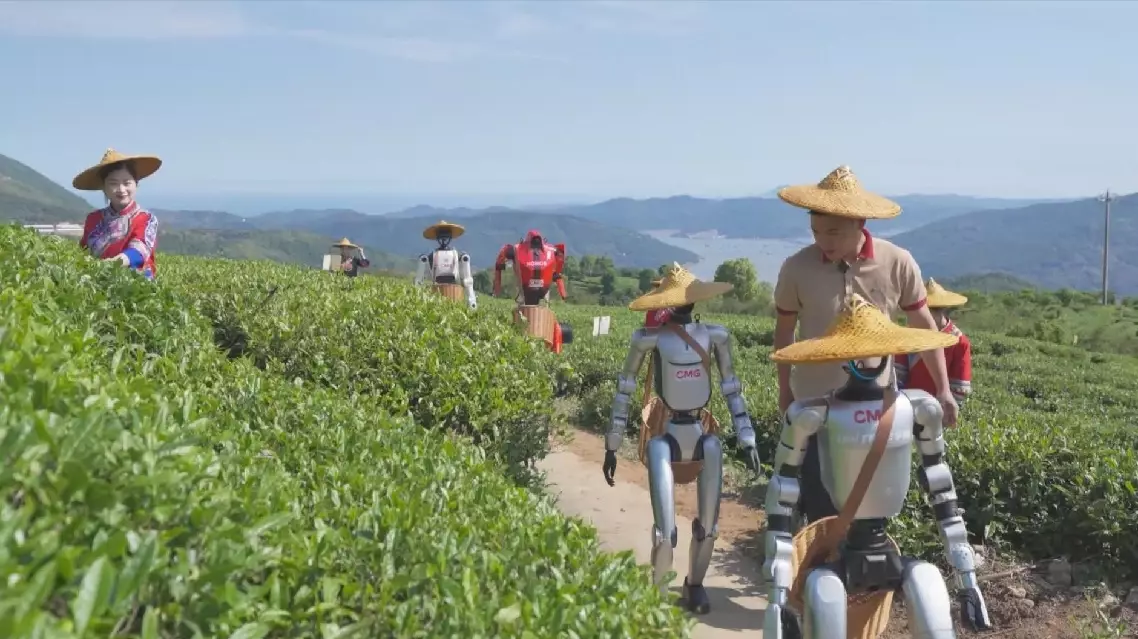
Humanoid robots engage in full tea-making process
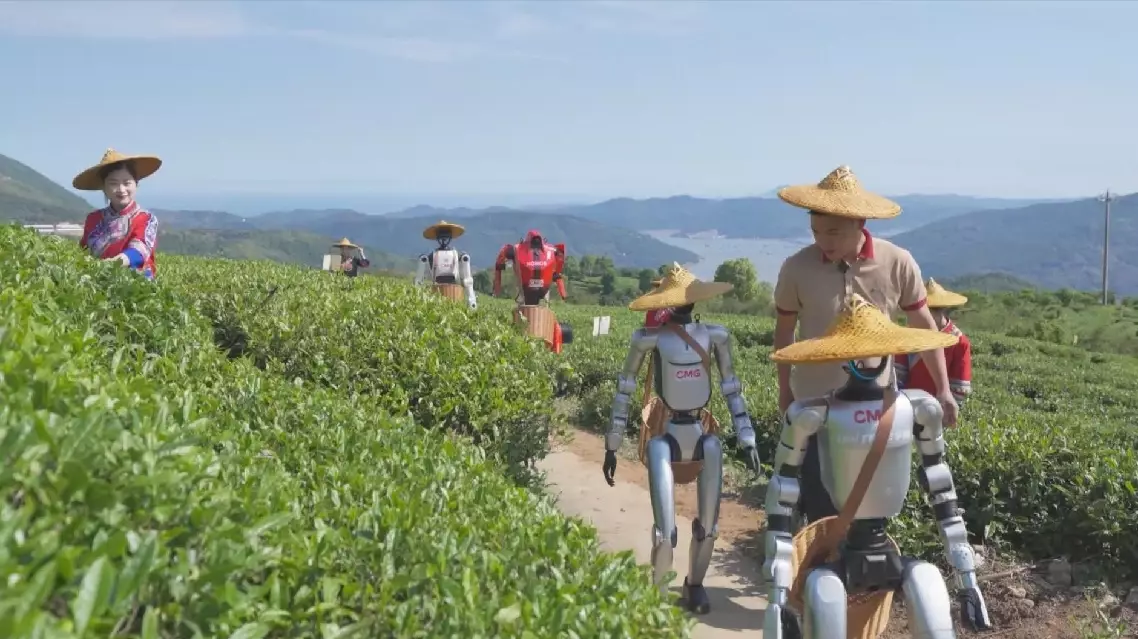
Humanoid robots engage in full tea-making process