WASHINGTON (AP) — Senate Democrats have filed legislation that would prevent the U.S. from attacking Cuba without congressional approval as they seek to force a vote on President Donald Trump's stated goal of a “takeover” of the Caribbean country.
Democrats have repeatedly used war powers resolutions to force debate on Trump's foreign policy moves, though Republicans have so far mostly backed the president. The resolution filed Thursday by Democratic Sens. Tim Kaine, Ruben Gallego and Adam Schiff would require the president to remove the military from any hostilities with Cuba and could potentially receive a vote by the end of the month.
"Only Congress has the power to declare war under the Constitution, but he operates with the belief that the U.S. military is a palace guard, ordering military action in the Caribbean, Venezuela, and Iran without Congress’ authorization or any explanation for his actions to the American people,” Kaine said in a statement.
Trump said earlier this week that Secretary of State Marco Rubio was negotiating with Cuba's leadership as the country faces a crippling energy crisis that has been exacerbated by a U.S. blockade of the island.
“It may be a friendly takeover, it may not be a friendly takeover,” Trump told reporters this week at a news conference in Florida. He added that he and Rubio would focus on that goal after the war with Iran.
The U.S. for decades has had a tense relationship with Cuba, but Trump's turn to using military action to take out foreign opponents has raised anticipations that the island could be next. Rubio, whose family immigrated to the U.S. from Cuba in the 1950s, has long pushed for the U.S. to aggressively oppose the Caribbean nation's leadership.
Rubio told senators earlier this year that the Trump administration would “love” to see a Cuban regime change, but cautioned that “does not mean we are going to provoke it directly." Republicans in Congress have mostly stood behind the Trump administration's aggressive foreign policy
However, Democrats have turned repeatedly to war powers resolutions in order to force debates over how Trump can use military force in foreign nations. They have not succeeded in passing any of the resolutions so far, but the tactic at times has compelled the Trump administration to explain its goals to Congress.
Democrats are also planning next week to potentially force votes on a series of war powers resolutions that apply to Iran unless Republicans agree to hold public hearings on the conflict.
“He ran on America First, but now it’s clear he’s become a puppet of the war hawks in his party,” Gallego said in a statement.
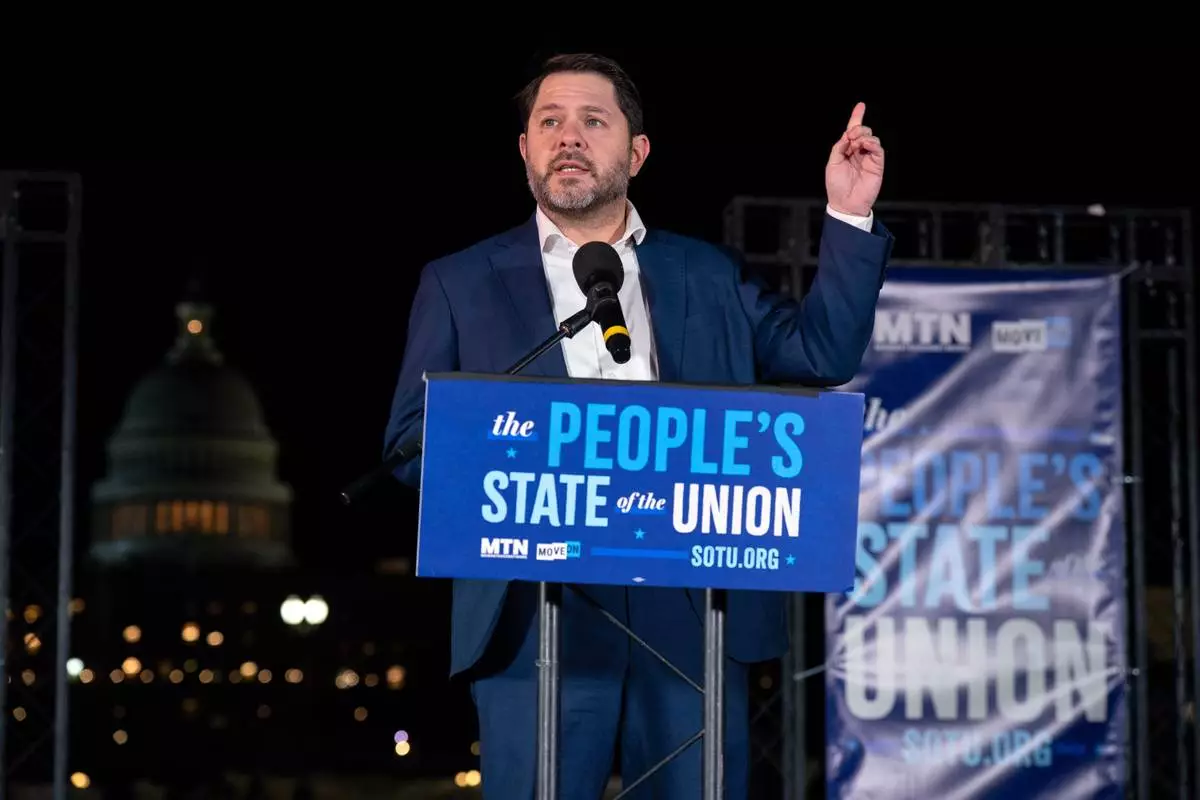
FILE - Sen. Ruben Gallego D-Ariz., speaks during the "People's State of the Union" rally outside of the U.S. Capitol Feb. 24, 2026, in Washington. (AP Photo/Jose Luis Magana, File)
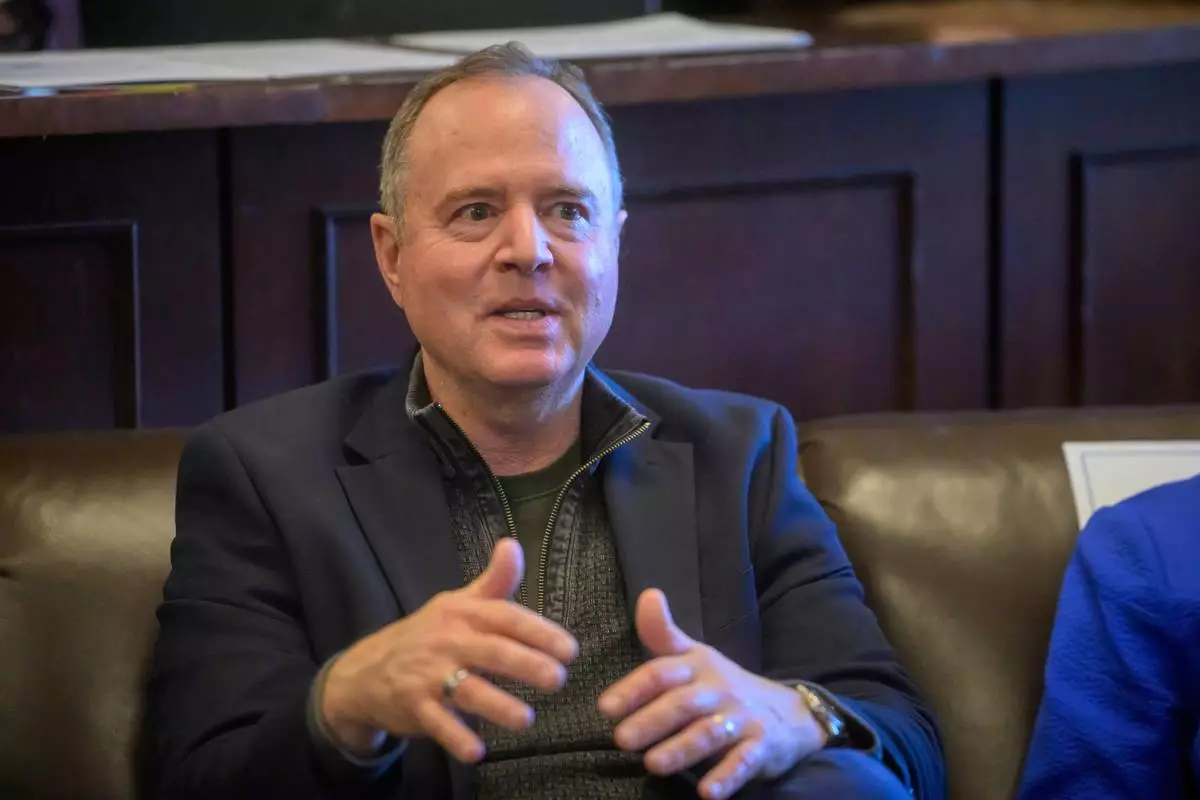
FILE - Sen. Adam Schiff, D-Calif., speaks during a press briefing on the Iran war powers resolution at the Capitol, March 9, 2026, in Washington. (AP Photo/Rod Lamkey, Jr., File)
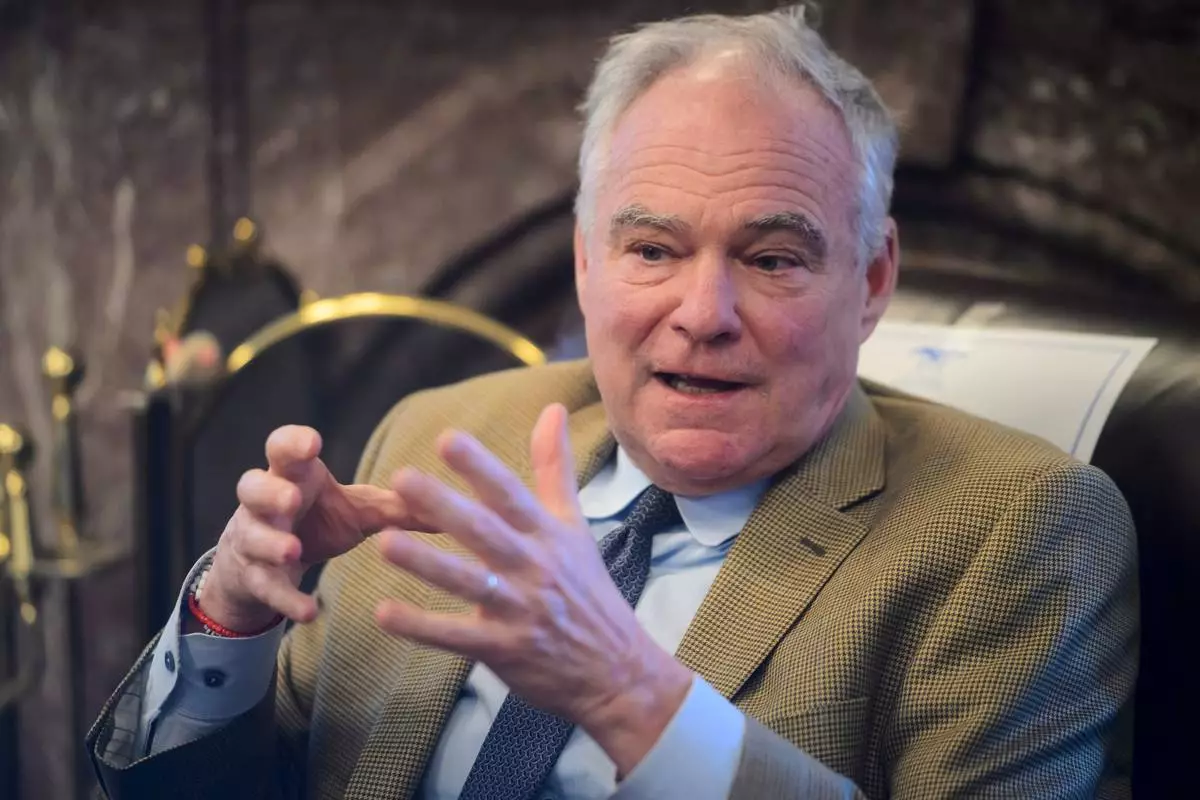
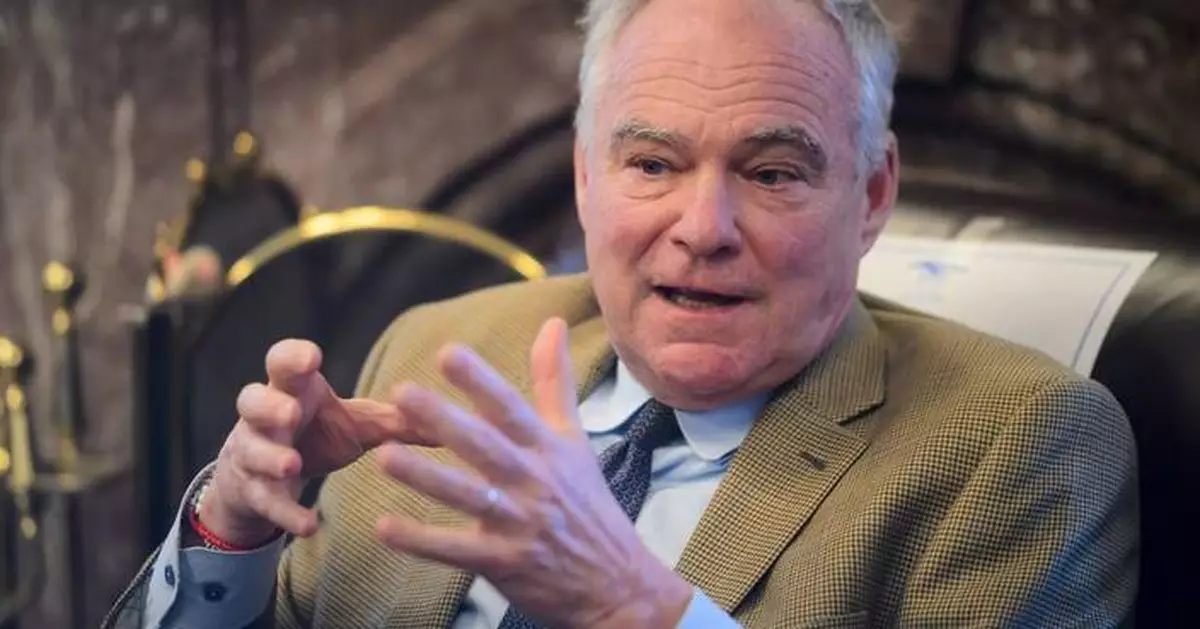
FILE - Sen. Tim Kaine, D-Va., speaks during a press briefing on the Iran war powers resolution at the Capitol, March 9, 2026, in Washington. (AP Photo/Rod Lamkey, Jr., File)
HAVANA (AP) — Cuba held recent talks with the U.S. government, President Miguel Díaz-Canel said Friday, marking the first time that the Caribbean country confirmed such speculation as it grapples with a severe energy crisis.
Díaz-Canel said in a speech that the talks “were aimed at finding solutions through dialogue to the bilateral differences between our two nations. International factors facilitated these exchanges.”
He didn't elaborate on those factors, or provide any details about the talks.
Asked for comment on Friday, the White House pointed to public comments from President Donald Trump, who has repeatedly alluded to discussions with Cuba and prodded the nation toward a deal, particularly to avoid a similar fate that Venezuela faced.
U.S. Secretary of State Marco Rubio and top aides met late last month in the Caribbean with the grandson of retired Cuban leader Raul Castro, two U.S. officials said Friday shortly after Díaz-Canel spoke.
The U.S. officials, who spoke on condition of anonymity because of the sensitivity of the discussions, said that Rubio had met secretly with Raúl Guillermo Rodriguez Castro on the sidelines of a Caribbean Community leaders meeting in St. Kitts and Nevis.
At the time, Rubio refused to say who, if anyone, he was speaking with in or close to the Cuban government.
Cuba's president said that no petroleum shipments have arrived on the island in the past three months, which he blamed on a U.S. energy blockade. He said that Cuba is running on natural gas, solar power and thermoelectric plants, and that the depletion of fuel oil and diesel forced two power plants to shut down and has limited the generation of power at solar parks.
Cuba’s western region was hit by a major blackout last week, leaving millions without power.
He said that Cuba, which produces 40% of its petroleum, has been generating its own power, but that it hasn’t been sufficient to meet demand. The lack of power has affected communications, education and transportation, and the government has had to postpone surgeries for tens of thousands of people as a result, he said.
“The impact is tremendous,” Díaz-Canel said.
More than 115 bakeries across the island have been converted to run on firewood or coal, he said. According to Díaz-Canel, 955 solar panels have been installed in rural homes and social centers, and more solar systems will come online before the end of March that will add 100 megawatts to Cuba’s crumbling electric grid.
“Even with everything we’re putting together, we still need oil,” he said, adding that production output also has dropped.
“Without energy, no country can produce at normal levels," he said. "All of this has meant making adjustments to employment.”
Last month, Cuba implemented austere fuel-saving measures.
Cubans were transfixed to TVs as they watched the president's announcement about the U.S. discussions, with some cheering the development.
“Cubans are desperate," said Elvis Hernández, 62. "You can’t live without water or electricity. That’s why we want a consensus to be reached. If there are talks, let them be productive. Let them achieve something good through those conversations.”
Díaz-Canel said that the purpose of the talks was to identify “bilateral problems that require solutions based on their severity and impact” and find solutions to them.
He said that the aim was “to determine the willingness of both parties to take concrete actions for the benefit of the people of both countries. And in addition, to identify areas of cooperation to confront threats and guarantee the security and peace of both nations, as well as in the region.”
He said that Cuba is willing to carry out the process on the basis of equality and respect for the countries’ political systems and for Cuba’s “sovereignty and self-determination.”
Miguel García, 65, was among those celebrating the news.
“If all of this leads to agreements and solutions that will improve our lives, then all the better, because the situation is quite difficult right now," he said.
In Mexico, President Claudia Sheinbaum was asked on Friday if her government played any role that led to the talks. Her response was cautious: “Let’s say we’ve promoted dialogue with both U.S. and Cuban authorities."
She said her government continues to explore alternatives for sending oil to Cuba and that “Mexico will continue to support the Cuban people in every way possible."
The U.S. State Department had no immediate comment on Díaz-Canel’s announcement.
The agency has weighed potentially drawing down staffing at the U.S. Embassy in Havana as the fuel shortages caused by the American blockade could affect day-to-day diplomatic operations, according to the U.S. officials.
The officials said the department could order the departure of nonessential staff if the mission isn’t able to improve the flow of diesel needed to keep generators running. The officials stressed that there is still time to solve the problem and that the embassy and the State Department were looking at potential solutions.
One official said a possible solution would be for the embassy to import the diesel on its own from a private company, which would require Cuban government approval.
A reduction in staffing at the Havana embassy would likely lead to a U.S. demand for a similar reduction in staffing at Havana’s embassy in Washington, the official said.
Critical oil shipments from Venezuela to Cuba were halted after the U.S. attacked the South American country and arrested then President Nicolás Maduro.
Since then, Trump and his top administration officials have been warning Cuba of a similar fate.
Trump told a gathering of Latin America leaders in Florida last week that Cuba is “very much at the end of the line” and that he was looking forward to “great change” coming soon to the island.
“They have no money, they have no oil. They have a bad philosophy. They have a bad regime that’s been bad for a long time,” Trump said. “And they used to get the money from Venezuela. They get the oil from Venezuela, but they don’t have any money from Venezuela.”
The most recent blackout was blamed on a broken boiler at a thermoelectric plant that forced the shutdown of Cuba's power grid.
Authorities have noted that some thermoelectric plants have been operating for more than three decades and receive little maintenance given the high cost. U.S. sanctions also have prevented the government from buying new equipment and specialized parts, officials say.
After his speech, Díaz-Canel took questions from a select group of state reporters.
The questions focused mostly on Cuba’s deepening crises, but one reporter asked about the recent shooting of a Florida-flagged boat in Cuban waters in which four of 10 Cubans from the U.S. were killed after the government accused them of opening fire on local troops.
A fifth suspect later died from his injuries, according to the Cuban government.
Díaz-Canel said that FBI officials would visit Cuba soon as both countries continue to share information on the incident.
The five other suspects have been detained and face terrorism charges.
Díaz-Canel spoke just a day after the Ministry of Foreign Affairs announced it would release 51 prisoners in a move that stems from a spirit of goodwill and close relations with the Vatican.
“It is a sovereign practice, no one imposes it on us,” Díaz-Canel said of the upcoming release. “It responds to our humanistic vocation."
Coto reported from San José, Costa Rica; Lee and Madhani from Washington. Ariel Fernández in Havana; Seung Min Kim in Washington; and María Verza in Mexico City, contributed to this report.
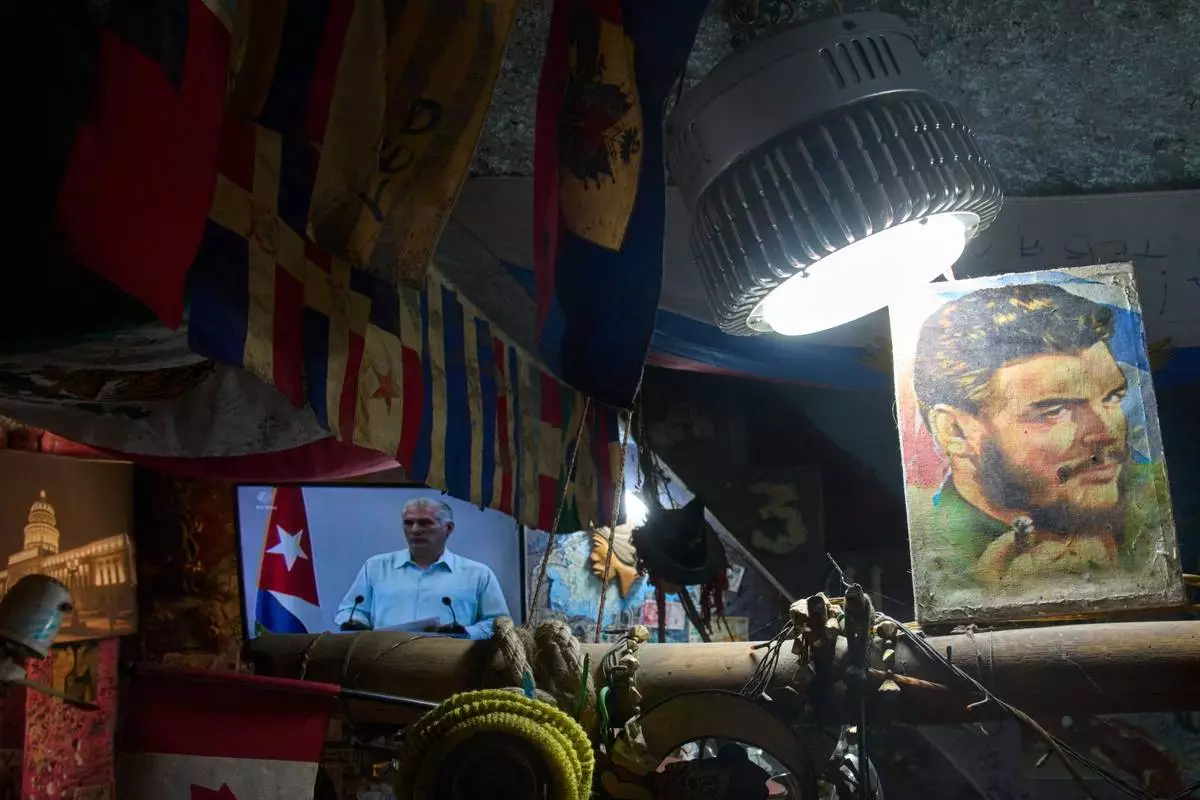
An image of Cuban Revolutionary hero Ernesto "Che" Guevara stands next to a TV showing Cuban President Miguel Diaz-Canel speaking, inside a souvenir shop in Havana, Cuba, Friday, March 13, 2026. (AP Photo/Ramon Espinosa)
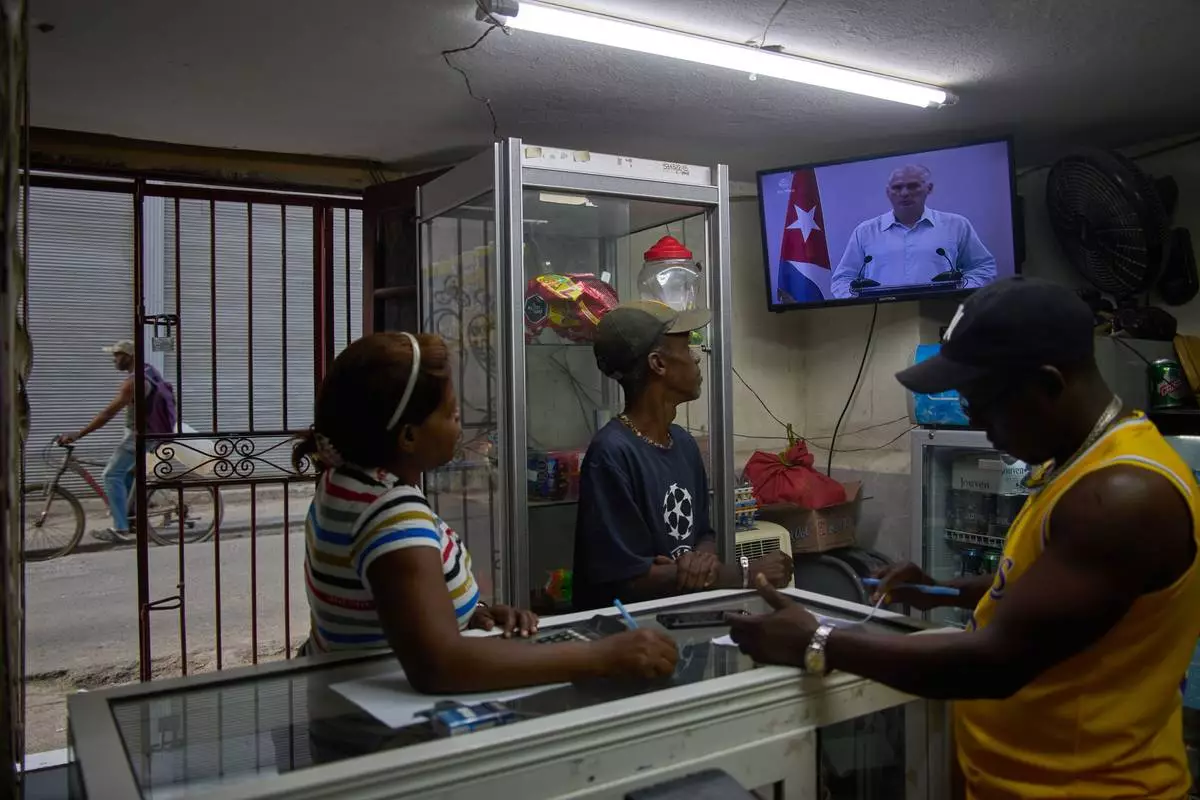
People inside a private convenience store see Cuban President Miguel Diaz-Canel speaking on TV in Havana, Cuba, Friday, March 13, 2026. (AP Photo/Ramon Espinosa)
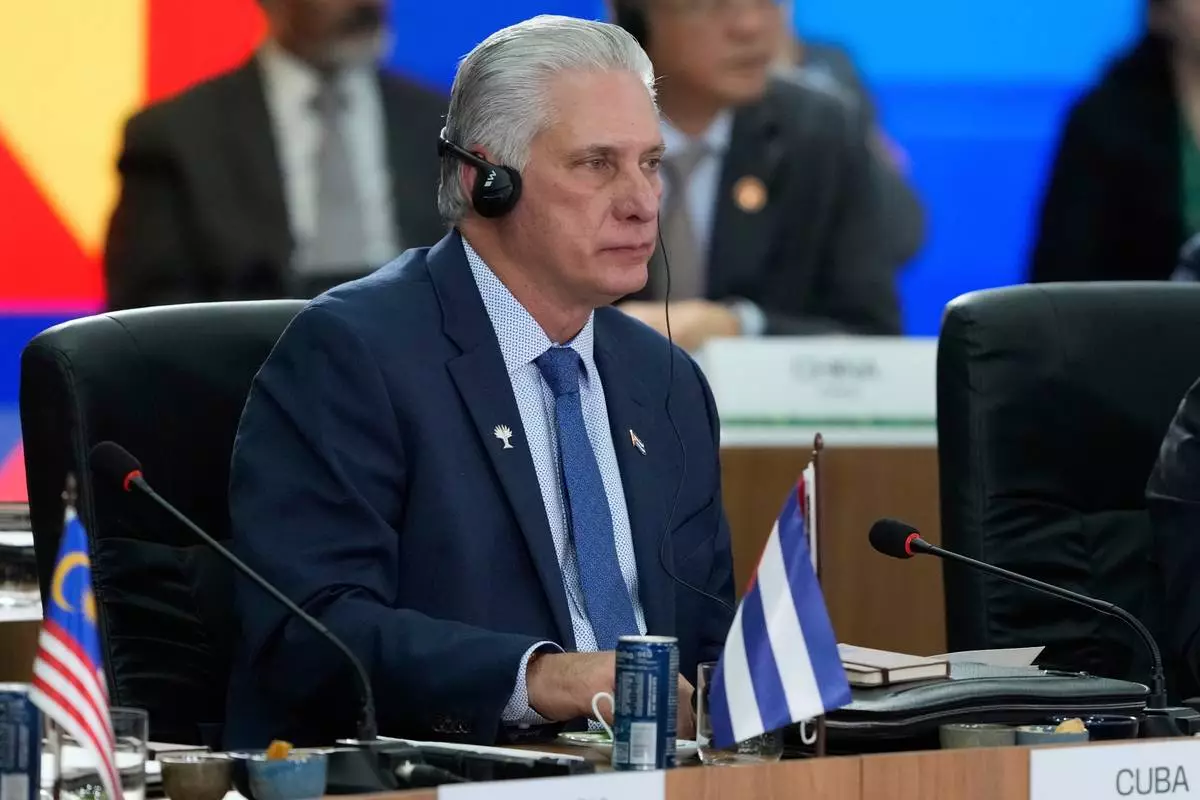
FILE - Cuba's President Miguel Diaz-Canel attends the 17th annual BRICS summit in Rio de Janeiro, July 6, 2025. (AP Photo/Eraldo Peres, File)