|
PROVIDENCIALES, Turks and Caicos Islands, March 13, 2026 /PRNewswire/ -- The global crypto derivatives market experienced a modest slowdown in February, even as competition among leading exchanges intensified, according to the latest CoinDesk Data Exchange Review – February 2026.
Conducted on a monthly basis, the report provides a comprehensive overview of the crypto exchange landscape, offering insights for crypto market participants, institutional investors, analysts, and regulators seeking to better understand market structure and exchange performance.
Derivatives Trading Volume Falls Amid Low Volatility
According to the report, derivatives trading volumes declined 2.41% in February to $4.11 trillion, marking the lowest monthly level since October 2024.
The decrease in derivatives activity coincided with relatively low market volatility, as most major digital assets traded within narrow price ranges throughout the month. Lower volatility typically reduces speculative trading and hedging activity, leading to softer derivatives volumes across exchanges.
Despite the overall decline in trading activity, the derivatives segment continued to dominate the crypto trading landscape, accounting for 73.2% of total market volume in February, slightly up from 73.1% in January.
Exchange Competition Intensifies in Derivatives Market Share
While overall derivatives activity softened, the report shows that competition among exchanges for derivatives market share continued to intensify. Among major platforms, KuCoin ranks among top exchanges in market share growth.
According to CoinDesk Data, KuCoin recorded a 0.20% increase in derivatives market share, placing it among the top-performing exchanges for derivatives growth during the month.
The gain highlights continued competition among mid-tier global exchanges to capture market share even during periods of reduced trading activity. Several other exchanges also saw moderate gains in derivatives market share during the month.
Market Structure Continues to Evolve
The February data reflects a broader structural trend in the crypto exchange sector: even during periods of subdued market volatility, exchanges continue competing through liquidity depth, product expansion, and derivatives infrastructure improvements.
As derivatives remain the dominant segment of crypto trading, shifts in market share are increasingly viewed as an indicator of platform competitiveness and trading ecosystem maturity.
With derivatives accounting for nearly three-quarters of overall trading activity, the exchange landscape continues to evolve as platforms seek to attract both retail and institutional traders through deeper liquidity, product innovation, and improved trading infrastructure.
Read the full report.
About KuCoin
Founded in 2017, KuCoin is a leading global crypto platform trusted by over 40 million users across 200+ countries and regions. The platform delivers innovative and compliant digital asset services, offering access to 1,000+ listed tokens, spot and futures trading, institutional wealth management, and a Web3 wallet.
Recognized by Forbes and Hurun, KuCoin holds SOC 2 Type II and ISO 27001:2022 certifications, underscoring its commitment to top-tier security. With AUSTRAC registration in Australia and a MiCA license in Austria, KuCoin continues expanding its regulated footprint under CEO BC Wong, building a reliable and trusted digital-asset ecosystem.
Learn more: www.kucoin.com
PROVIDENCIALES, Turks and Caicos Islands, March 13, 2026 /PRNewswire/ -- The global crypto derivatives market experienced a modest slowdown in February, even as competition among leading exchanges intensified, according to the latest CoinDesk Data Exchange Review – February 2026.
Conducted on a monthly basis, the report provides a comprehensive overview of the crypto exchange landscape, offering insights for crypto market participants, institutional investors, analysts, and regulators seeking to better understand market structure and exchange performance.
Derivatives Trading Volume Falls Amid Low Volatility
According to the report, derivatives trading volumes declined 2.41% in February to $4.11 trillion, marking the lowest monthly level since October 2024.
The decrease in derivatives activity coincided with relatively low market volatility, as most major digital assets traded within narrow price ranges throughout the month. Lower volatility typically reduces speculative trading and hedging activity, leading to softer derivatives volumes across exchanges.
Despite the overall decline in trading activity, the derivatives segment continued to dominate the crypto trading landscape, accounting for 73.2% of total market volume in February, slightly up from 73.1% in January.
Exchange Competition Intensifies in Derivatives Market Share
While overall derivatives activity softened, the report shows that competition among exchanges for derivatives market share continued to intensify. Among major platforms, KuCoin ranks among top exchanges in market share growth.
According to CoinDesk Data, KuCoin recorded a 0.20% increase in derivatives market share, placing it among the top-performing exchanges for derivatives growth during the month.
The gain highlights continued competition among mid-tier global exchanges to capture market share even during periods of reduced trading activity. Several other exchanges also saw moderate gains in derivatives market share during the month.
Market Structure Continues to Evolve
The February data reflects a broader structural trend in the crypto exchange sector: even during periods of subdued market volatility, exchanges continue competing through liquidity depth, product expansion, and derivatives infrastructure improvements.
As derivatives remain the dominant segment of crypto trading, shifts in market share are increasingly viewed as an indicator of platform competitiveness and trading ecosystem maturity.
With derivatives accounting for nearly three-quarters of overall trading activity, the exchange landscape continues to evolve as platforms seek to attract both retail and institutional traders through deeper liquidity, product innovation, and improved trading infrastructure.
Read the full report.
About KuCoin
Founded in 2017, KuCoin is a leading global crypto platform trusted by over 40 million users across 200+ countries and regions. The platform delivers innovative and compliant digital asset services, offering access to 1,000+ listed tokens, spot and futures trading, institutional wealth management, and a Web3 wallet.
Recognized by Forbes and Hurun, KuCoin holds SOC 2 Type II and ISO 27001:2022 certifications, underscoring its commitment to top-tier security. With AUSTRAC registration in Australia and a MiCA license in Austria, KuCoin continues expanding its regulated footprint under CEO BC Wong, building a reliable and trusted digital-asset ecosystem.
Learn more: www.kucoin.com
** This press release is distributed by PR Newswire through automated distribution system, for which the client assumes full responsibility. **

KuCoin Among Top Exchanges for Derivatives Market Share Growth in February: CoinDesk Data
HANGZHOU, China, March 12, 2026 /PRNewswire/ -- The eSignGlobal team has launched esign-automation, a new skill that allows eSignGlobal users to execute online electronic contract signings via natural language interaction with the OpenClaw assistant.
This skill equips global users with advanced workplace capabilities and is available by searching directly on ClawHub or GitHub.
What is esign-automation?
esign-automation is designed specifically for automated document signing, granting OpenClaw electronic signing capabilities. Users can delegate contract signing workflows to the system, effectively training OpenClaw as a highly skilled digital employee.
Four Steps to Automated Signing
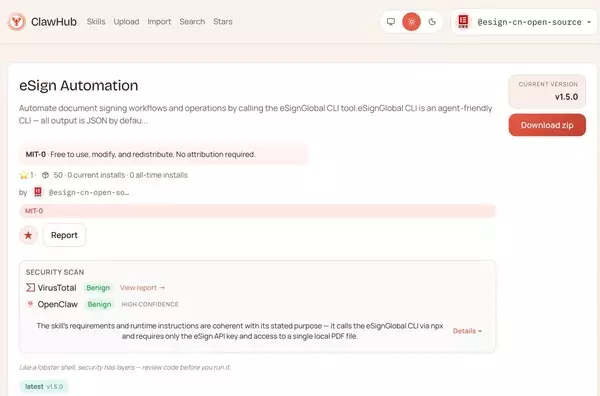
Step 1: Install the Skill
Instruct OpenClaw to install esign-automation and complete the basic configuration. It can be downloaded from ClawHub or installed via the GitHub repository(https://github.com/esign-cn-open-source/skills/tree/main/esign-automation).
Step 2: Configure the API Key
Obtain an exclusive API key from the eSignGlobal platform and configure it to enable secure communication with OpenClaw. Keep this key strictly confidential.
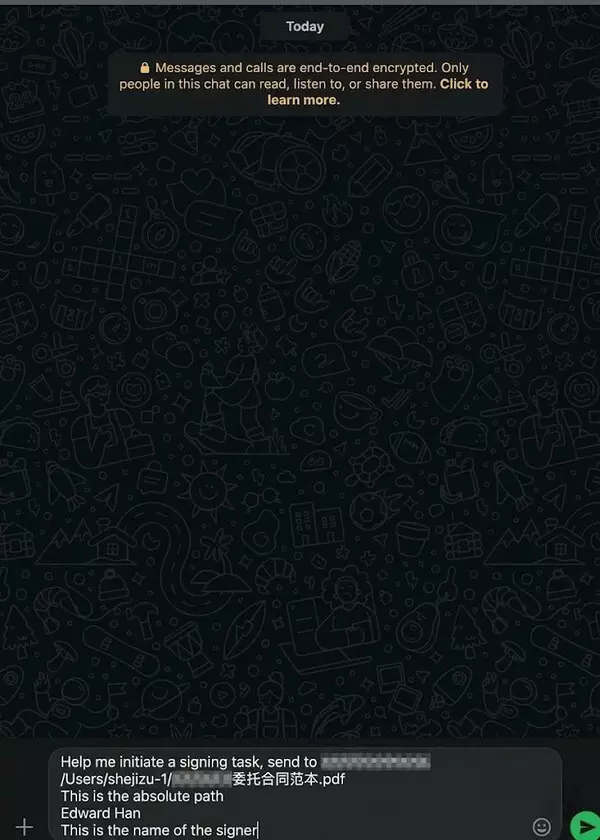
Step 3: Initiate a Task
Use natural language to specify the document path, participants, and signer emails to OpenClaw. The system will automatically call the eSignGlobal API to start the signing process.
Step 4: Retrieve Results Once signing is complete, esign-automation automatically synchronizes the results. Users can retrieve records directly through OpenClaw without manual polling. Developers can choose between the ClawHub or GitHub versions, which offer identical functionality.
Security Warning: OpenClaw Key Management Risks
While automation brings convenience, recent warnings from MIIT and CNCERT highlight that OpenClaw poses security risks regarding network attacks and data leaks. Skills relying on OpenClaw may expose sensitive user information, such as API keys, to third parties through logging, debugging, or exception-handling mechanisms.
We strongly advise OpenClaw users to:
- Ensure strict environmental isolation when configuring API keys, avoiding public or shared devices.
- Regularly monitor API key usage logs on the eSignGlobal platform.
- Conduct security audits on OpenClaw or adopt additional protections like encrypted storage.
- Search for esign-automation on ClawHub or GitHub to unlock a more efficient way to sign documents!
Note: Please ensure OpenClaw is deployed only with professional IT assistance and appropriate security measures.
** This press release is distributed by PR Newswire through automated distribution system, for which the client assumes full responsibility. **
eSignGlobal Empowers OpenClaw with Automated E-Signatures via New 'esign-automation' Skill

eSignGlobal Empowers OpenClaw with Automated E-Signatures via New 'esign-automation' Skill
eSignGlobal Empowers OpenClaw with Automated E-Signatures via New 'esign-automation' Skill