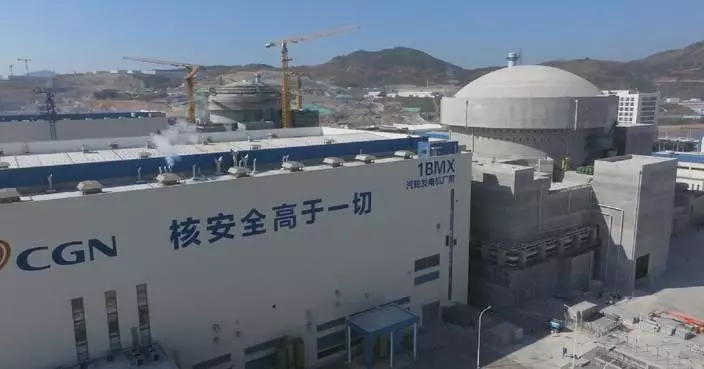
China is positioning "new quality productive forces" as the central pillar of its 15th Five-Year Plan (2026-2030), signaling what global business observers are calling a strategic shift toward high-end, sustainable, and innovation-driven development.
The concept, which emphasizes systemic industrial upgrades and technological self-reliance, is already attracting international investment and reshaping foreign perceptions of China's manufacturing landscape.
Chinese lawmakers on Thursday approved the outline of the 15th Five-Year Plan at the closing meeting of the fourth session of the 14th National People's Congress, wrapping up this year's "two sessions".
The plan lays out China's ambitious intentions find new applications for AI, drones and robotics, as well as to expand clean energy and advance next-generation technologies like advanced semi-conductors and quantum computing.
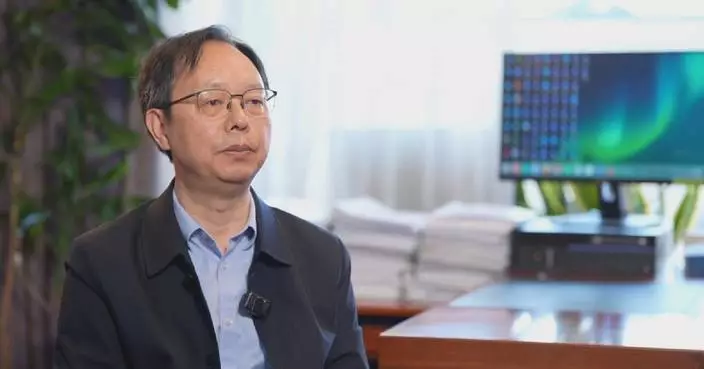
This wide-spanning list has given rise to expectations for integrated upgrading at every level in the country, according to Tom van Dillen, a Beijing-based consultant who helps organizations adapt.
"What you're seeing in China with the new quality productive forces is like a system-wide upgrade. How do we better society? How do we make the infrastructure more sustainable and resilient and everything around it? And if you do that at such a low level and at such a high level, it means that you go beyond optimization and you can really rethink industries and topics from the ground up," said van Dilen, Managing Partner at Greenkern.
In many ways, this rapid transformation is already underway, and multinational firms have rushed to gain a foothold out the outset.
Last year, Airbus opened its second assembly line for the A320 in north China's Tianjin municipality - with plans to produce more than 70 aircraft per month by 2028.
"Whether it's technology, whether it's support from the government, it's a thing which makes sense, it's a thing which makes sense to be here and to assemble a craft here. And that's why Airbus is here. And that's why, also, Airbus is extending the facility here," said Erik Buschmann, Global Senior Vice President at Airbus and Chief Operating Officer of Airbus China.
British medical firm Birmingham Biotech is also among those who have taken note of the transformation.
"People have thought about China as being somewhere that very high volumes of product are produced and that still is true of course. But what we're seeing now is that more high value manufacturing industries are opening up in China. And that's really because of the confidence that manufacturers have in the systems in China and the facilities that are available," said Liam Grover, the company's chief scientific officer.
China's annual "two sessions" convene the National People's Congress (NPC) and the Chinese People's Political Consultative Conference(CPPCC), the country's highest legislative and advisory organs. The CPPCC closed Wednesday, and the NPC wrapped up Thursday.
Int'l firms eye China's high-tech, sustainable growth goals in new five-year plan