PARIS (AP) — Ukrainian President Volodymyr Zelenskyy said Friday that the U.S. 30-day waiver on Russian oil sanctions amid the Iran war is “not the right decision” and won’t help bring a stop to Russia’s more than 4-year-old invasion of Ukraine.
“This easing alone by the United States could provide Russia with about $10 billion for the war,” Zelenskyy said. “This certainly does not help peace.”
“I believe that lifting sanctions will, in any case, lead to a strengthening of Russia’s position. It spends the money from energy sales on weapons, and all of this is then used against us,” Zelenskyy said at a news conference with French President Emmanuel Macron during a visit to Paris.
“Therefore, ultimately lifting sanctions only so that more drones will later be flying at you is, in my opinion, not the right decision,” he said.
The U.S. Treasury Department announced Thursday a 30-day waiver on Russian oil sanctions. The step aims to free up Russian cargoes stranded at sea and ease supply shortages caused by the Iran war.
Analysts say that spiraling oil prices due to Persian Gulf production blockages are benefiting the Russian economy. Moscow relies heavily on oil revenue to finance its invasion, and sanctions were a growing handicap.
U.S.-mediated talks between Moscow and Kyiv that seek to stop Europe’s biggest conflict since World War II are on hold due to the Iran war, though they could resume next week, according to Zelenskyy.
Macron noted that broad sanctions on Russia still stand despite the temporary U.S. waiver.
U.S. waivers announced in recent days are “limited” and “taken on an exceptional basis,” Macron said. “It does not broadly or permanently roll back the sanctions that they themselves decided to apply,” he added.
German Chancellor Friedrich Merz adopted a more critical stance. He said Friday that a meeting earlier this week of heads of state and government from the Group of Seven industrialized democracies discussed with U.S. President Donald Trump the issue of Russian oil and liquefied natural gas supplies.
“Six members of the G7 expressed a very clear view that this (waiving of Russia sanctions) is not the right signal to send,” Merz said during a visit to Norway. “We learned this morning that the U.S. government has apparently decided otherwise. Once again, we believe this is the wrong decision.”
Merz added: “There is currently a price problem, but not a supply problem. And in that regard, I would like to know what additional motives led the U.S. government to make this decision.”
Ukraine has become one of the world’s leading producers of drone interceptors, and Kyiv is offering its expertise to the United States and its Gulf partners for the war in the Middle East, hoping to receive in return the high-end weaponry it can’t manufacture at home.
Zelenskyy said that Ukraine has received requests from six countries for drone combat assistance. It has already sent expert teams to three countries, he said, without naming them.
Separate requests, which he didn’t detail, have also come from the United States and Jordan, he said.
Zelenskyy noted that providing interceptors was not enough to help fight drone attacks. The Ukrainian military has expertise in deploying the systems, he said.
“There must be proper, systematic work with radars and with the entire air defense system,” Zelenskyy said. “Ukraine is ready to share this experience for the sake of the security of those partners who are helping us.”
Ukraine is awaiting White House approval for an agreement on producing battle-tested drones, Zelenskyy said on Thursday.
Novikov contributed from Kyiv, Ukraine. Associated Press writer Kostya Manenkov in Tallinn, Estonia contributed to this report.
Follow AP’s coverage of the war in Ukraine at https://apnews.com/hub/russia-ukraine
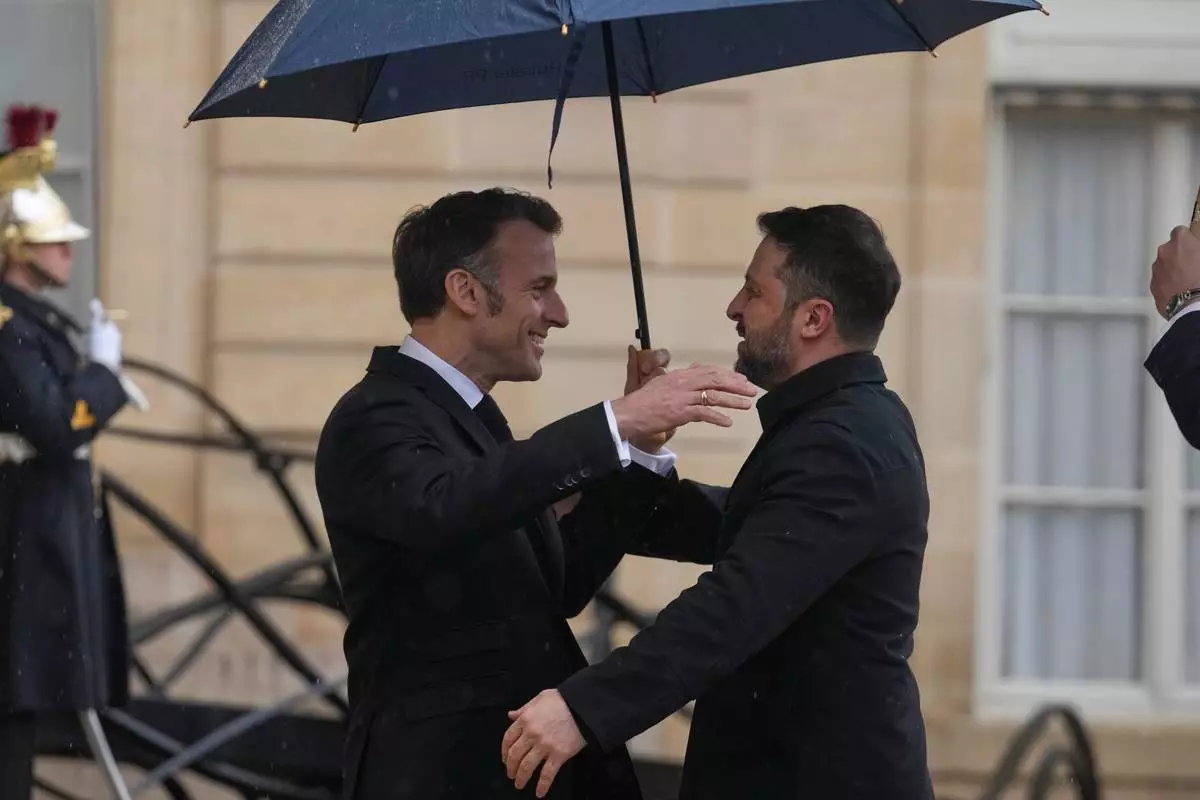
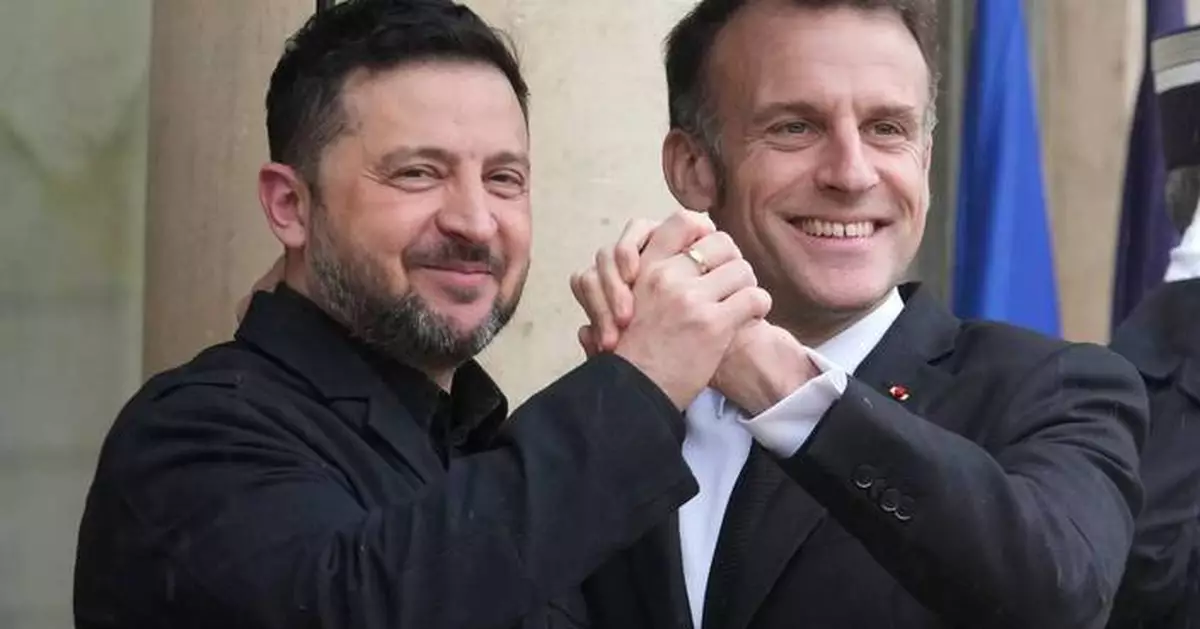
France's President Emmanuel Macron, left, welcomes Ukrainian President Volodymyr Zelenskyy prior to a meeting at the Elysee Palace, Friday, March 13, 2026, in Paris, France. (AP Photo/Michel Euler)
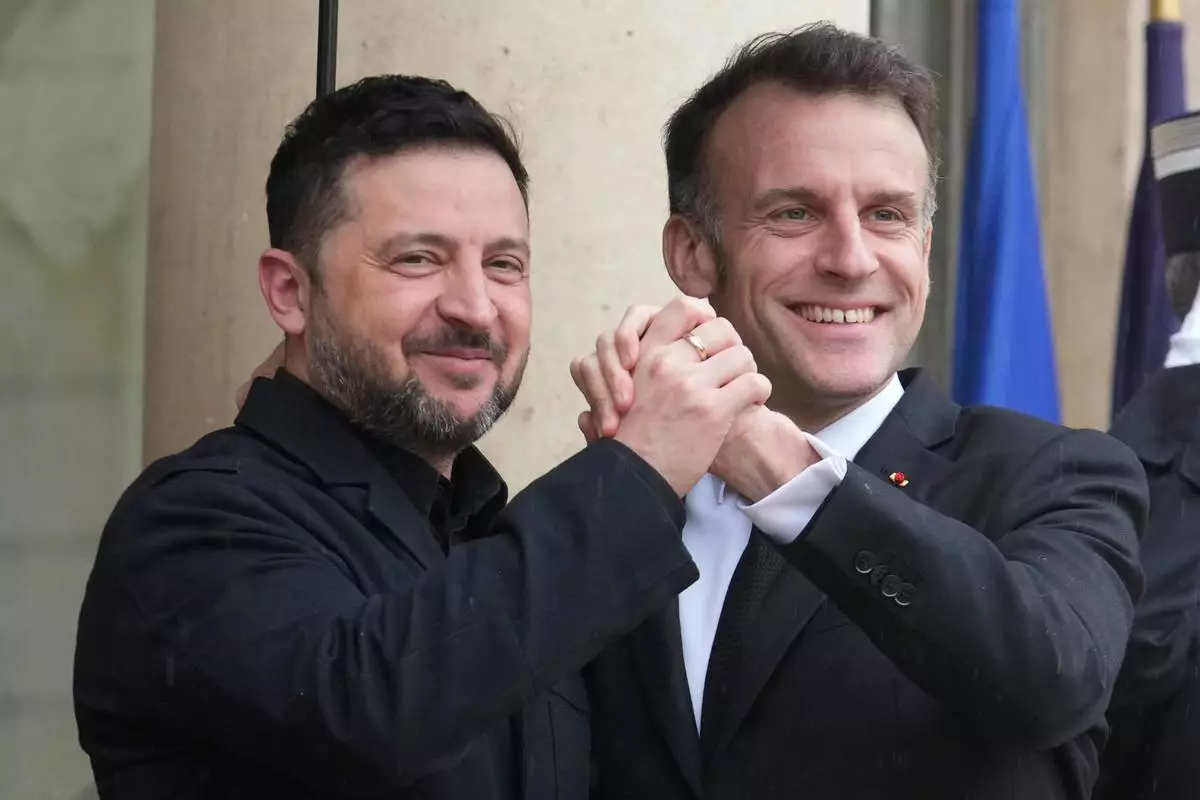
France's President Emmanuel Macron, right, welcomes Ukrainian President Volodymyr Zelenskyy prior to a meeting at the Elysee Palace, Friday, March 13, 2026, in Paris, France. (AP Photo/Michel Euler)
HAVANA (AP) — Cuba held recent talks with the U.S. government, President Miguel Díaz-Canel said Friday, marking the first time that the Caribbean country confirmed such speculation.
Díaz-Canel said in a speech that the talks “were aimed at finding solutions through dialogue to the bilateral differences between our two nations. International factors facilitated these exchanges.”
He didn't elaborate on those factors, or provide any details about the talks.
The White House didn't return an immediate request for comment on the talks with Cuba.
Díaz-Canel said that no petroleum shipments have arrived on the island in the past three months, which he blamed on a U.S. energy blockade. He said that Cuba is running on natural gas, solar power and thermoelectric plants, and that the depletion of fuel oil and diesel forced two power plants to shut down and has limited the generation of power at solar parks.
Cuba’s western region was hit by a major blackout last week, leaving millions without power.
He said that Cuba, which produces 40% of its petroleum, has been generating its own power, but that it hasn’t been sufficient to meet demand.
The Cuban leader said that the lack of power has affected communications, education and transportation, and that the government has had to postpone surgeries for tens of thousands of people as a result.
“The impact is tremendous,” Díaz-Canel said.
He said that more than 115 bakeries across the island have been converted to run on firewood or coal.
Díaz-Canel said that 955 solar panels have been installed in rural homes and social centers, and that more solar systems will come online before the end of March that will add 100 megawatts to Cuba’s crumbling electric grid.
“Even with everything we’re putting together, we still need oil,” he said.
Díaz-Canel noted that production output also has dropped.
“Without energy, no country can produce at normal levels," he said. "All of this has meant making adjustments to employment.”
Last month, Cuba implemented austere fuel-saving measures.
Díaz-Canel said that the purpose of the talks was to identify “bilateral problems that require solutions based on their severity and impact” and find solutions to them.
The president said that the aim was “to determine the willingness of both parties to take concrete actions for the benefit of the people of both countries. And in addition, to identify areas of cooperation to confront threats and guarantee the security and peace of both nations, as well as in the region.”
He said that Cuba is willing to carry out the process on the basis of equality and respect for the countries’ political systems and for Cuba’s “sovereignty and self-determination.”
Critical oil shipments from Venezuela were halted after the U.S. attacked the South American country and arrested then President Nicolás Maduro.
The most recent blackout was blamed on a broken boiler at a thermoelectric plant that forced the shutdown of Cuba's power grid.
Authorities have noted that some thermoelectric plants have been operating for more than three decades and receive little maintenance given the high cost. U.S. sanctions also have prevented the government from buying new equipment and specialized parts, officials say.
After his speech, Díaz-Canel took questions from a select group of state reporters.
The questions focused mostly on Cuba’s deepening crises, but one reporter asked about the recent shooting of a Florida-flagged boat in Cuban waters in which four of 10 Cubans from the U.S. were killed after the government accused them of opening fire on local troops.
A fifth suspect later died from his injuries, according to the Cuban government.
Díaz-Canel said that FBI officials would visit Cuba soon as both countries continue to share information on the incident.
The five other suspects have been detained and face terrorism charges.
Díaz-Canel spoke just a day after the Ministry of Foreign Affairs announced it would release 51 prisoners in a move that stems from a spirit of goodwill and close relations with the Vatican.
“It is a sovereign practice, no one imposes it on us,” Díaz-Canel said of the upcoming release. “It responds to our humanistic vocation."
Dánica Coto reported form San José, Costa Rica.
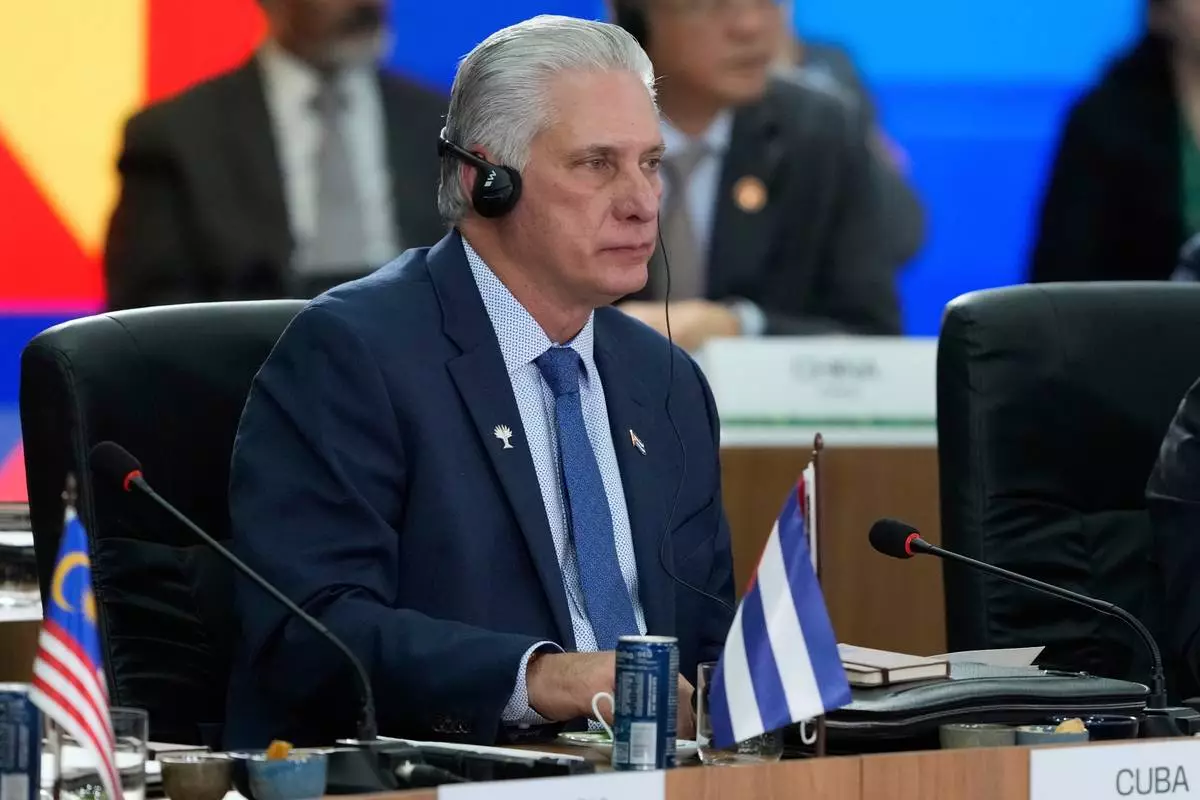
FILE - Cuba's President Miguel Diaz-Canel attends the 17th annual BRICS summit in Rio de Janeiro, July 6, 2025. (AP Photo/Eraldo Peres, File)