COLOGNE, Germany (AP) — A mirror room dappled with colored dots. Contorted, bright sculptures of flowers on a rooftop at the foot of Cologne’s famed cathedral. A vast showroom with giant octopus-like tentacles that offer up a mesmerizing meander through space and obstacles.
The renowned Museum Ludwig in the western German city is celebrating its 50th anniversary by opening a nearly five-month exhibit on Saturday, with more than 300 works of the famed Japanese artist Yayoi Kusama.
Click to Gallery
A woman views the artwork 'My Eternal Soul Series' during a preview of the new major exhibition of legendary Japanese artist Yayoi Kusama at the Museum Ludwig in Cologne, Thursday, March 12, 2026. (AP Photo/Martin Meissner)
A woman walks through the art installation 'Invisible Life" during a preview of the new major exhibition of legendary Japanese artist Yayoi Kusama at the Museum Ludwig in Cologne, Thursday, March 12, 2026. (AP Photo/Martin Meissner)
People view the art installation 'I'm here - but Nothing' during a preview of the new major exhibition of legendary Japanese artist Yayoi Kusama at the Museum Ludwig in Cologne, Thursday, March 12, 2026. (AP Photo/Martin Meissner)
A woman takes pictures of the artwork 'Flowers that speak all about my heart given to the sky' in front of the Cologne Cathedral during a preview of the new major exhibition of legendary Japanese artist Yayoi Kusama at the Museum Ludwig in Cologne, Thursday, March 12, 2026. (AP Photo/Martin Meissner)
People walk through the artwork 'Infinity Mirrored Room' during a preview of the new major exhibition of legendary Japanese artist Yayoi Kusama at the Museum Ludwig in Cologne, Thursday, March 12, 2026. (AP Photo/Martin Meissner)
The trek through the time and transformation of the now nonagenarian artist assembles works ranging from her first drawing in the mid-1930s to a newly commissioned “Infinity Mirror Room” made for the show.
Kusama, who turns 97 this month, has become a social media sensation with her use of bright colors and oozy shapes that reflect her feeling of awe about life. Her own life carried her from patriarchal postwar Japan to New York to the Flower Power and anti-Vietnam war movements in the 1960s. She returned home to Japan in 1973.
Curator Stephan Diederich says the exhibit, which runs through Aug. 2, is "very diverse, wide-ranging, and depicts an immensely rich, creative life spanning more than eight decades, still looking ahead.”
Works include her series “My Eternal Soul, 2009-2021,” including a patchwork of paintings, to “The Universe as Seen from the Stairway to Heaven” — made of mirror, glass and acrylic sheet. The museum entrance hosts her widely-recognized 2009 “Pumpkin” of fiber-reinforced plastic and polyurethane paint, belonging to Museum Voorlinden in the Netherlands.
The rooftop display features painted-bronze sculptures “Flowers That Speak All about My Heart Given to the Sky” from 2018, and “I’m Here, but Nothing,” whose origins date back to 2000, involves fluorescent stickers and ultraviolet fluorescent lights illuminating a room of household objects.
“Kusama is undoubtedly one of the most significant artists of our time," he said. “Her mirror rooms, balloon installations and polka dots have achieved cult status and are now iconic.”
Her multifaceted works often relate to the world of nature. She grew up in the greenhouses and fields of her family’s enormous seed nursery in Matsumoto, Japan. When Kusama was young, she began having vivid hallucinations, some of which involved polka dots or flowers spreading around her. She has fought through existential anxieties.
“In my more than 70 years as an artist, I have always been in awe of the wonder of life,” she said in a statement. “More than anything, this strong sense of the life force in artistic expression is what has supported me and gave me power to overcome feelings of depression, hopelessness and sadness.
“I have been guided by my belief in this power,” Kusama said.
Diederich said that Kusama has been living in relative seclusion in a Tokyo clinic for years, and communicated “indirectly” with the curatorial team. She still works every day, “as far as her health allows” and has taken an active interest in the show, he said.

A woman views the artwork 'My Eternal Soul Series' during a preview of the new major exhibition of legendary Japanese artist Yayoi Kusama at the Museum Ludwig in Cologne, Thursday, March 12, 2026. (AP Photo/Martin Meissner)

A woman walks through the art installation 'Invisible Life" during a preview of the new major exhibition of legendary Japanese artist Yayoi Kusama at the Museum Ludwig in Cologne, Thursday, March 12, 2026. (AP Photo/Martin Meissner)

People view the art installation 'I'm here - but Nothing' during a preview of the new major exhibition of legendary Japanese artist Yayoi Kusama at the Museum Ludwig in Cologne, Thursday, March 12, 2026. (AP Photo/Martin Meissner)

A woman takes pictures of the artwork 'Flowers that speak all about my heart given to the sky' in front of the Cologne Cathedral during a preview of the new major exhibition of legendary Japanese artist Yayoi Kusama at the Museum Ludwig in Cologne, Thursday, March 12, 2026. (AP Photo/Martin Meissner)

People walk through the artwork 'Infinity Mirrored Room' during a preview of the new major exhibition of legendary Japanese artist Yayoi Kusama at the Museum Ludwig in Cologne, Thursday, March 12, 2026. (AP Photo/Martin Meissner)
NEW YORK (AP) — No quick dispatching of disease investigators. No televised news conference to inform the public. No timely health alerts to doctors.
In the midst of a hantavirus outbreak that involves Americans and is making headlines around the world, the U.S. government's top public health agency, the Centers for Disease Control and Prevention, has been uncharacteristically missing in action, according to a number of experts.
To President Donald Trump, "We seem to have things under very good control," as he told reporters Friday evening.
To experts, the situation aboard a cruise ship has not spiraled because, unlike COVID-19 or measles or the flu, hantavirus does not spread easily. It has been health experts in other countries, not the United States, who have been dealing primarily with the outbreak in the past week.
“The CDC is not even a player," said Lawrence Gostin, an international public health expert at Georgetown University. “I've never seen that before.”
Not until late Friday did CDC actions accelerate.
Health officials confirmed the deployment of a team to Spain's Canary Islands, where the ship was expected to arrive early Sunday local time, to meet the Americans onboard. They said a second team will go to Offutt Air Force Base in Nebraska as part of a plan to evacuate American passengers from the ship to a quarantine center. Also, the CDC issued its first health alert to U.S. doctors, advising them of the possibility of imported cases.
The CDC's diminished role in this outbreak is an indicator the agency is no longer the force in international health or the protector of domestic health that it once was, some experts said.
The hantavirus outbreak is “a sentinel event” that speaks to “how well the country is prepared for a disease threat. And right now, I’m very sorry to say that we are not prepared,” said Dr. Jeanne Marrazzo, chief executive officer of the Infectious Diseases Society of America.
Early last month, a 70-year-old Dutch man developed a feverish illness on a cruise ship traveling from Argentina to Antarctica and some islands in the South Atlantic. He died less than a week later. More people became sick, including the man's wife and a German woman, who both died.
Hantavirus was first identified as a cause of sickness of one of the cases on May 2. The World Health Organization swung into action and by Monday was calling it an outbreak. About two dozen Americans were on the ship, including about seven who disembarked last month and 17 who remained on board.
For decades, the CDC partnered with the WHO in such situations. The CDC acted as a mainstay of any international investigation, providing staff and expertise to help unravel any outbreak mystery, develop ways to control it and communicate to the public what they should know and how they should worry.
Such actions were a large reason why the CDC developed a reputation as the world's premier public health agency.
But this time, the WHO has been center stage. It made the risk assessment that has told people the outbreak is not a pandemic threat.
“I don’t think this is a giant threat to the United States,” said Jennifer Nuzzo, director of Brown University’s Pandemic Center. But how this situation has played out “just shows how empty and vapid the CDC is right now,” she said.
The current situation comes after 16 tumultuous months during which the Trump administration withdrew from the WHO, has restricted CDC scientists from talking to international counterparts at times and embarked on a plan to build its own international public health network through one-on-one agreements with individual countries.
The administration has laid off thousands of CDC scientists and public health professionals, including members of the agency's ship sanitation program.
As this was playing out, Trump's health secretary, Robert F. Kennedy Jr., said he was working to “restore the CDC’s focus on infectious disease, invest in innovation, and rebuild trust through integrity and transparency.”
The CDC has not been completely silent on hantavirus.
The agency on Wednesday issued a short statement that said the risk to the American public is “extremely low,” and described the U.S. government as “the world’s leader in global health security.”
Said Nuzzo: “Not only was that not helpful, it actually does damage because a core principle of public health communications is humility.”
The CDC's acting director, Dr. Jay Bhattacharya, posted a message on social media that the agency was lending its expertise in coordinating with other federal agencies and international authorities. Arizona officials this week said they learned from the CDC that one of the Americans who left the ship — a person with no symptoms and not considered contagious — had already returned to the state. WHO officials said the CDC has been sharing technical information.
The CDC also is “monitoring the health status and preparing medical support for all of the American passengers on the cruise,” Bhattacharya wrote.
But federal health officials have mostly been tight-lipped, declining interview requests.
In interviews this week, some experts made a comparison with a 2020 incident involving the Diamond Princess, a cruise ship docked in Japan that became the setting of one of the first large COVID-19 outbreaks outside of China.
The CDC sent personnel to the port, helped evacuate American passengers, ran quarantines, shared genetic data on the virus, coordinated with the WHO and Japan, held public briefings and rapidly published reports “that became the world’s reference data on cruise ship COVID transmission,” said Dr. Tom Frieden, a former CDC director.
Some aspects of the international response to the Diamond Princess were criticized, and it did not halt the outbreak or stop COVID-19’s spread across the world. But some experts say it was not for the CDC's lack of trying.
“The CDC was right on top of it, very visible, very active in trying to manage and contain it,” Gostin said, while the agency's work now is delayed and subdued.
Instead of working with nearly all of the world's nations through the WHO, the Trump administration has pursued bilateral health agreements with individual nations for information sharing, public health support, and what it describes as “the introduction of innovative American technologies.” Roughly 30 agreements are currently in place.
That's not sufficient, Gostin said. “You can't possibly cover a global health crisis by doing one-on-one deals with countries here and there,” he said.
Associated Press writers Ali Swenson in New York, Darlene Superville in Washington and Susan Montoya Bryan in Albuquerque, New Mexico, contributed to this report.
The Associated Press Health and Science Department receives support from the Howard Hughes Medical Institute’s Department of Science Education and the Robert Wood Johnson Foundation. The AP is solely responsible for all content.
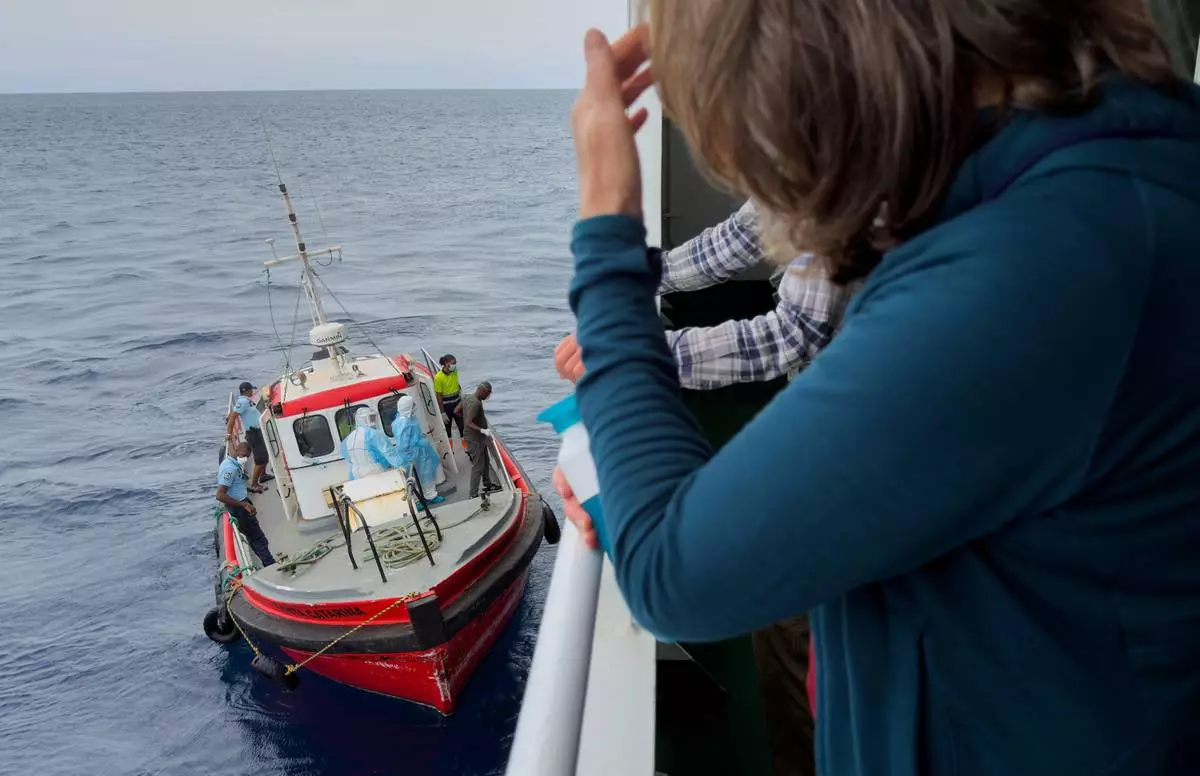
Passengers on the the hantavirus-stricken cruise ship, MV Hondius, watch epidemiologists board the boat in Praia, during their voyage to Spain's port of Tenerife, May 6, 2026. (AP Photo)
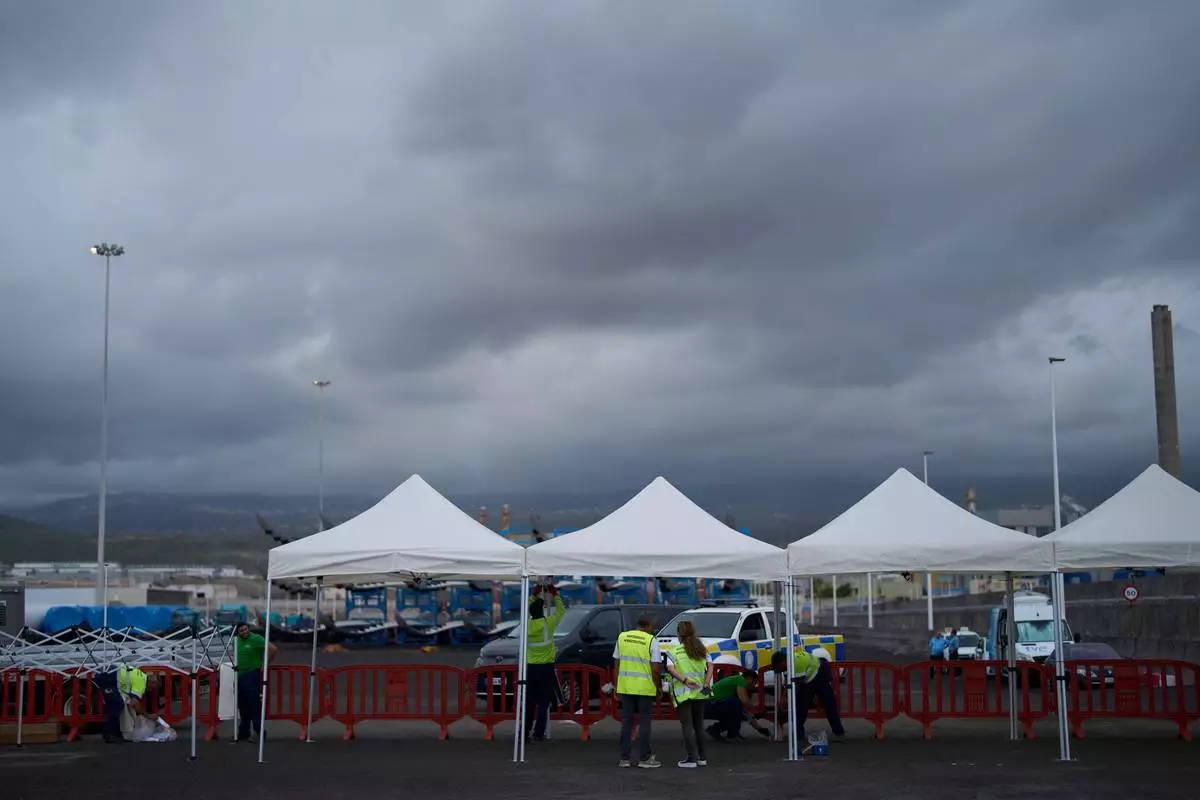
Workers set up temporary shelters in the area where passengers from the MV Hondius cruise ship are expected to arrive at the port of Granadilla in Tenerife, Canary Islands, Spain, Saturday, May 9, 2026. (AP Photo/Manu Fernandez)
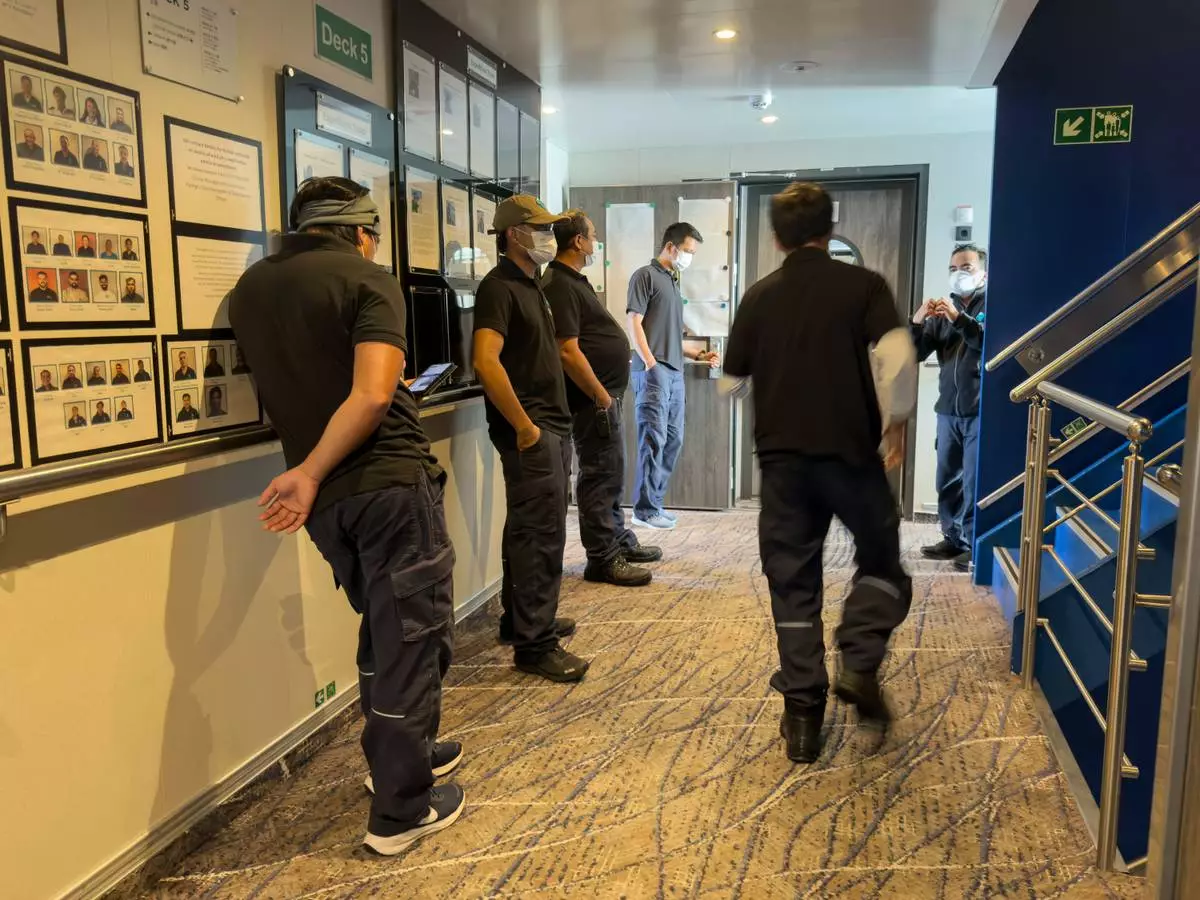
Crew members of the hantavirus-stricken cruise ship, MV Hondius, wait their turns for a first interview with epidemiologists, during the voyage to Spain's port of Tenerife, May 6, 2026. (AP Photo)
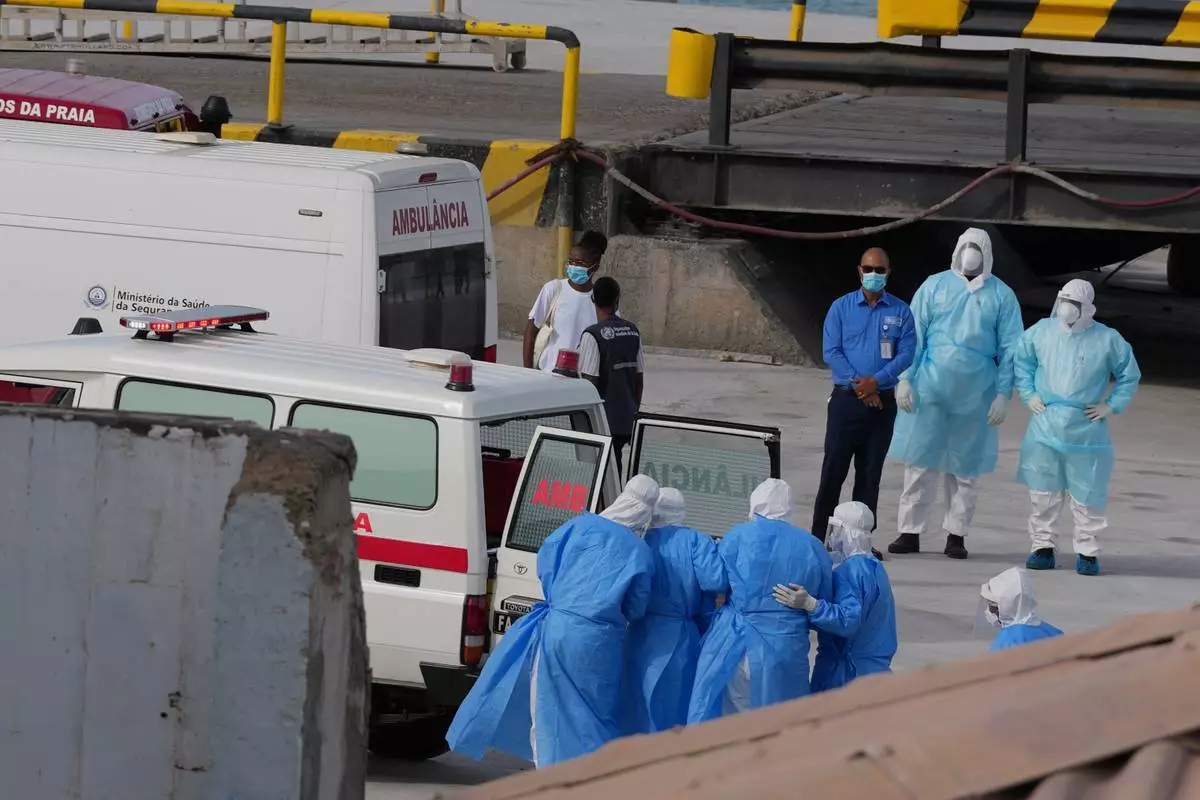
Health workers in protective gear evacuate patients from the MV Hondius cruise ship into an ambulance at a port in Praia, Cape Verde, Wednesday, May 6, 2026. (AP Photo/Misper Apawu)
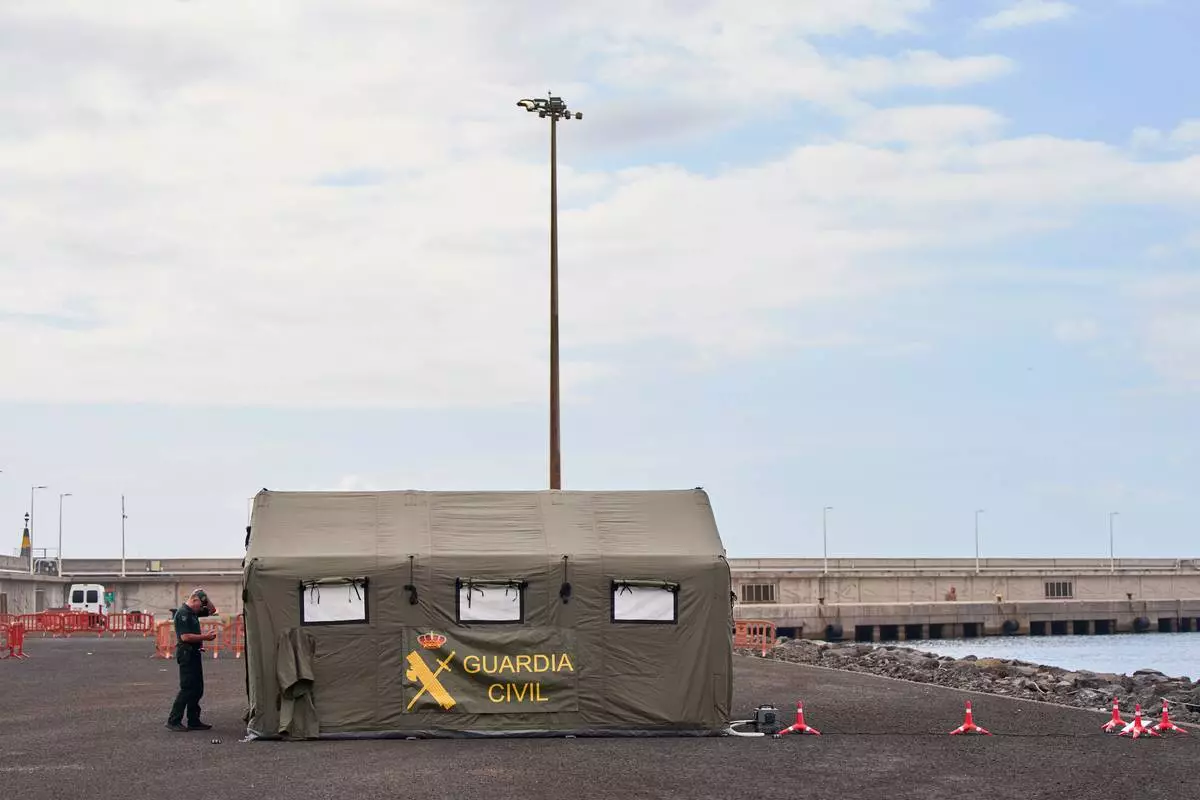
A Spanish Civil Guard officer inspects the area where passengers from the MV Hondius cruise ship are expected to arrive at the port of Granadilla in Tenerife, Canary Islands, Spain, Saturday, May 9, 2026. (AP Photo/Manu Fernandez)