People across Iran took to the streets on Friday to mark International Quds Day, an annual event expressing support for Palestinians and condemnation of Israeli actions.
Several high-ranking Iranian officials also took part in the rallies in Tehran, including President Masoud Pezeshkian, Secretary of the Supreme National Security Council (SNSC) Ali Larijani, Judiciary Chief Gholamhossein Mohseni-Ejei as well as cabinet ministers, such as Foreign Minister Seyed Abbas Araghchi.
The event, established by Iran in 1979, is observed on the final Friday of the fasting month of Ramadan. This year, it fell on March 13 and amid the ongoing U.S.-Israeli strikes against Iran.
In the capital, people marched from 10 different locations towards the iconic Enghelab Square in central Tehran, while waving Iran's flags and holding pictures of Iran's late Supreme Leader Ali Khamenei and his successor, Mojtaba Khamenei.
The marchers condemned the "crimes" committed by the United States and Israel, voiced their support for the Iranian armed forces, and pledged allegiance to the new supreme leader.
According to the official news agency IRNA, Tehran's central areas near the rally path came under U.S. and Israeli airstrikes in the early minutes of the gathering, killing at least one person. Addressing reporters after the strikes, Larijani said the attacks are "out of fear and desperation."
Araghchi said despite the attacks today, millions of people have taken part in the rallies across Iran, which shows "the Iranians' firm determination and will in supporting" the country.
On Feb 28, Israel and the United States launched joint attacks on Tehran and several other Iranian cities, killing Iran's then Supreme Leader Ali Khamenei, along with senior military commanders and civilians. Iran responded by launching waves of missile and drone strikes targeting Israel and U.S. bases and assets in the Middle East.
Iran's Assembly of Experts on Sunday announced the appointment of Mojtaba Khamenei as Iran's new supreme leader.
Iranians hold mass rallies to mark Quds Day amid U.S.-Israeli attacks
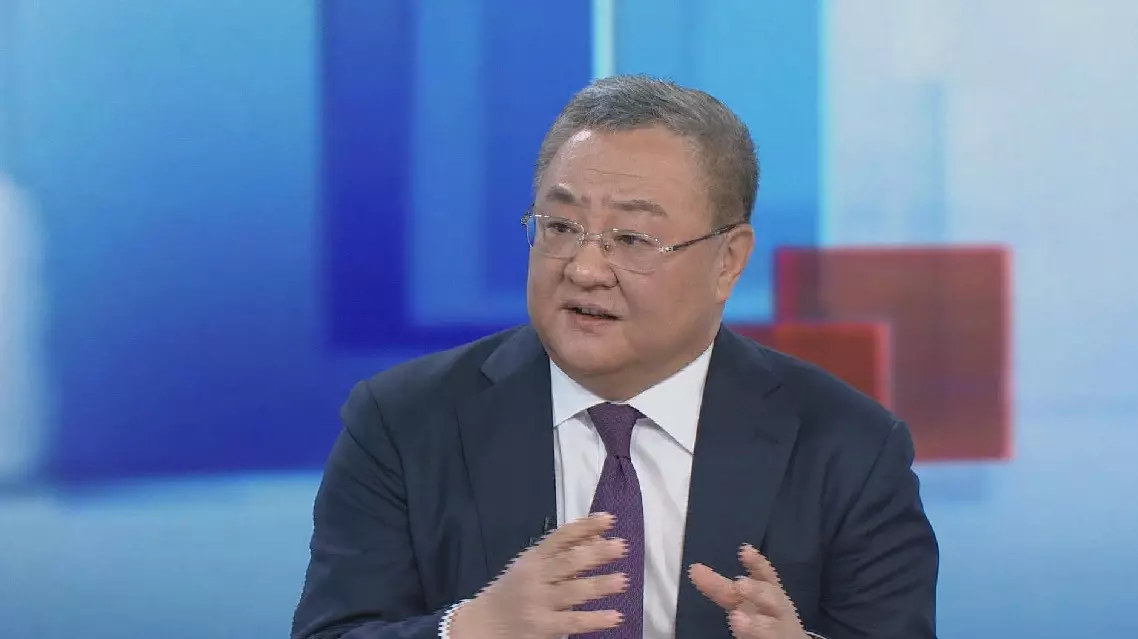
A Chinese mainland spokesperson on Wednesday slammed Taiwan leader Lai Ching-te over his latest remarks on cross-Strait relations, accusing him of promoting secessionism and escalating tensions across the Taiwan Strait.
Chen Binhua, spokesperson for the Taiwan Affairs Office of the State Council, said in a press release that Lai's speech marking his second anniversary in office was "filled with lies and deception, hostility and confrontation."
Chen accused Lai of stubbornly adhering to a secessionist stance in pursuit of "Taiwan independence," while exaggerating the so-called threats from the mainland and intensifying confrontation across the Strait.
Lai played an old trick of advocating the secessionist agenda on one hand and, on the other, calling insincerely for dialogue and exchanges with the mainland, attempting to mislead people in Taiwan and deceive the international community, he said.
Chen said that these common tricks have been seen through by more and more Taiwanese people. Their deceptive and provocative actions will be met with firm opposition from compatriots on both sides and the international community, and are doomed to fail.
Reaffirming the mainland's position on the Taiwan question, Chen said Taiwan has never been a country, is not one now, and will never become one in the future.
He described the Taiwan question as a historical issue left over from a Chinese civil war in the 1940s.
No election result in Taiwan could alter the fact that Taiwan is part of China or sever the historical and legal bonds linking the two sides of the Strait, according to Chen.
The mainland would never allow any person or force to pursue secessionist activities under any pretext, he added.
Calling secessionists "the chief culprit" who undermines cross-Strait peace, Chen said the mainland would continue to uphold the one-China principle and the 1992 Consensus, unite broadly with Taiwan compatriots, combat secessionist activities, and safeguard peace and stability across the Strait.
Central government spokesperson refutes Lai Ching-te's latest remarks, warns against secessionist moves