SAO PAULO (AP) — Brazilian President Luiz Inácio Lula da Silva on Friday revoked the visa of a U.S diplomat who sought to visit a high-profile rival of the administration in prison, with Lula calling it a reciprocal measure after Brazilian officials had their visas revoked in the U.S. last year.
The decision came a day after U.S. State Department official Darren Beattie was denied a request to visit a prison to see former Brazilian President Jair Bolsonaro — a fierce rival of the current president. Lula tied his visa decision to a move in August by U.S. Secretary of State Marco Rubio to revoke visas of Brazilian officials said to have links to a Cuban program that sends doctors overseas.
On Thursday, Brazilian Supreme Court Justice Alexandre de Moraes denied a request by Beattie, a conservative author who became an under secretary for public diplomacy and public affairs under the Trump administration, to visit the prison in Brasilia.
“That American fellow who said he had come here to visit Jair Bolsonaro was forbidden to do so,” Lula said, adding that Beattie would be blocked from Brazil until the visas for Brazil’s health minister and his family are reinstated.
Moraes, who sentenced Bolsonaro to 27 years in prison for leading a coup attempt in 2023, said in his ruling that Beattie had requested a visa to attend the Brazil–US Critical Minerals Forum in São Paulo on Wednesday. The ruling cited the Brazilian Foreign Ministry's view that Beattie’s planned visit to Bolsonaro would have represented “undue interference" in Brazil's politics.
The 80-year-old Lula is running for reelection later this year, with Sen. Flávio Bolsonaro, one of the sons of the right-wing leader, expected to be his main opponent in his bid for a fourth term.
A Brazilian government official told The Associated Press on Friday that Beattie’s visa was revoked because of “the omission of information and lies about the purpose of the visit upon his visa request.” The official spoke under condition of anonymity for lack of authorization to discuss the matter publicly.
Neither the White House nor the U.S. embassy in Brasilia made comments on Lula’s decision or the Brazilian Supreme Court ruling about Beattie, a former speechwriter and political strategist who has been a critic of both Lula and de Moraes.
The Brazilian judge had agreed on Tuesday with a request by Bolsonaro lawyers for Beattie to visit the former president, but then changed his mind after he received new information from the Foreign Ministry.
In his ruling Thursday, de Moraes cited a dispatch from the ministry advising him that such a visit by a foreign official to a former president “in an electoral year might be undue interference in internal affairs of the Brazilian state.” The dispatch also told the justice that Beattie had not made any request with the ministry to visit Bolsonaro.
U.S. President Donald Trump has been a supporter of Bolsonaro, calling the case against him politically motivated, and had imposed tariffs on Brazil citing what he called the unfair treatment of the former president. But he has loosened the tariffs since then, including in November as part of his effort to lower consumer costs for Americans.
Lula has repeatedly suggested he wants to meet Trump in Washington to discuss tariffs, security cooperation and other topics, but no date has been set.
Follow AP’s coverage of Latin America and the Caribbean at https://apnews.com/hub/latin-america

Sen. Flavio Bolsonaro, son of former President Jair Bolsonaro and a candidate in Brazil's October presidential election, gestures to supporters during a protest against President Luiz Inacio Lula da Silva in Sao Paulo, Sunday, March 1, 2026. (AP Photo/Andre Penner)
Wall Street's losses deepened Friday as the ongoing fallout from the war in Iran keeps pushing oil prices higher, ratcheting up inflationary pressure on the global economy.
The S&P 500 fell 0.6% after having been up as much as 0.9% in the early going. The benchmark index is now down 3.1% so far this year.
The Dow Jones Industrial Average lost 0.3%, and the Nasdaq composite finished 0.9% lower. The indexes also ended the week with their third straight weekly loss.
After briefly easing early Friday, crude oil prices rose again, bringing the benchmark oil price back above $100 a barrel. Brent crude, the international standard, closed 2.7% higher at $103.14 per barrel. It's up about 40% for the month.
A barrel of U.S. crude oil rose 3.1% to settle at $98.71. It’s risen around 46% this month.
“Everything’s just trading with crude oil at this point,” said Michael Antonelli, market strategist at Baird. “We’re basically in a holding pattern until we get kind of the hour-by-hour, day-by-day news about the conflict in the Middle East.”
Oil prices have been volatile since the start of the war. Iran’s actions have effectively stopped cargo traffic through the narrow Strait of Hormuz, where a fifth of the world’s oil typically sails. That has oil producers cutting production because their crude has nowhere to go.
In just over a week since the closure of the Strait of Hormuz, more than 12 million barrels of oil equivalent per day have been taken offline, according to independent research firm Rystad Energy.
If the war continues to hamper the production and transportation of oil from the Persian Gulf, it could cause a surge in inflation that could hurt the global economy.
President Donald Trump signaled earlier this week that he would take more action to address the squeeze on oil flows. The move follows the administration’s decision to grant temporary permission for India to buy Russian oil.
While the International Energy Agency said Wednesday its members would make a record 400 million barrels of oil available from their emergency reserves, some economists believe that would do little to reassure markets.
Long-term bond yields continued to rise Friday as bond market traders reacted to the latest rise in oil prices, a key driver of inflation.
The yield on the 10-year Treasury rose to 4.28% from 4.26% late Thursday. It was just 3.97% before the war started.
When bond yields rise they can push up interest rates on consumer loans, such as mortgages for prospective U.S. homebuyers and bond offerings for companies looking to expand. They also push down on prices for all kinds of investments, from stocks to crypto.
“Higher inflation expectations means higher yields, and then as the higher inflation expectations go, rate cuts start to be priced out,” Antonelli said. “And that’s the whammy that we’re seeing right now.”
A Fed rate cut could give the economy and job market a boost, but also potentially worsen inflation. The Federal Reserve is scheduled to hold its next interest rate policy meetings next week. However, Wall Street traders put the odds of a rate cut at less than 1%, according to CME Group.
A new snapshot of consumer spending Friday shows inflation crept higher in January, even before the Iran war caused oil and gas prices to spike.
The Commerce Department said prices rose 2.8% in January compared with a year earlier. But excluding the volatile food and energy categories — which the Federal Reserve pays closer attention to — core prices rose 3.1%, up from 3% in the prior month and the highest in nearly two years.
Even so, consumers still lifted their spending at a solid 0.4% pace in January, with their incomes rising at the same pace, according to the report.
The University of Michigan's latest gauge of consumer sentiment on Friday showed consumer sentiment declined slightly to its lowest reading of the year as gasoline price hikes since the start of the war in Iran.
Wall Street also got an update on how U.S. economic growth fared in the October-December quarter. The economy, hobbled by last fall’s 43-day government shutdown, grew at a sluggish 0.7% annual rate, a downgrade from its initial estimate last month.
Ulta Beauty slid 14.2% for the biggest decline among S&P 500 stocks after the beauty and makeup retailer's latest quarterly results fell short of analysts’ profit targets. Ulta’s profit was dinged by a 23% increase in selling, general and administrative expenses, which jumped to $1 billion in the period.
All told, the S&P 500 fell 40.43 points to 6,632.19. The Dow lost 119.38 points to finish at 46,558.47, and the Nasdaq dropped 206.62 points to 22,105.36.
In stock markets abroad, indexes in Europe closed mostly lower after falling in Asia.

Ryan Falvey works on the floor at the New York Stock Exchange in New York, Tuesday, March 10, 2026. (AP Photo/Seth Wenig)
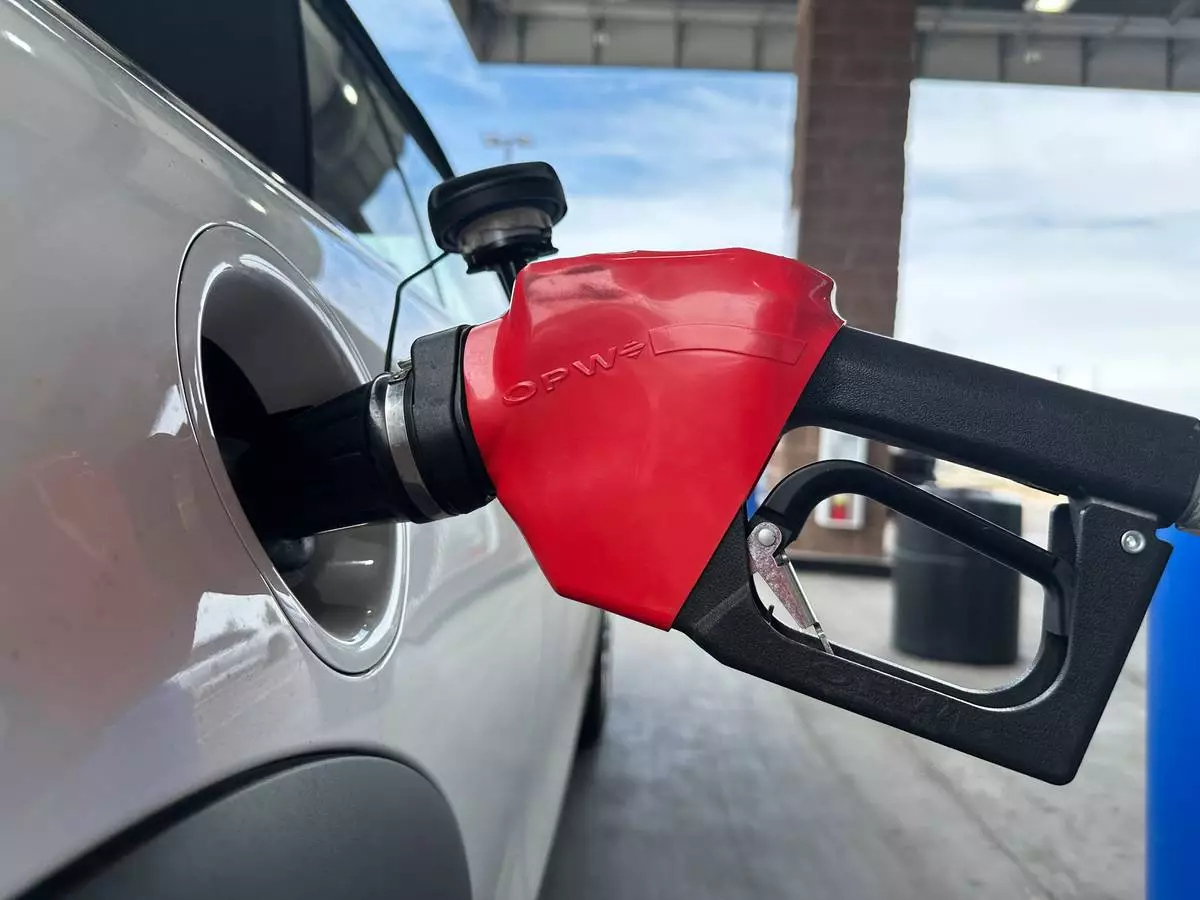
A motorist fills up the tank of a vehicle at a Coscto gasoline station Thursday, March 12, 2026, in east Denver. (AP Photo/David Zalubowski)
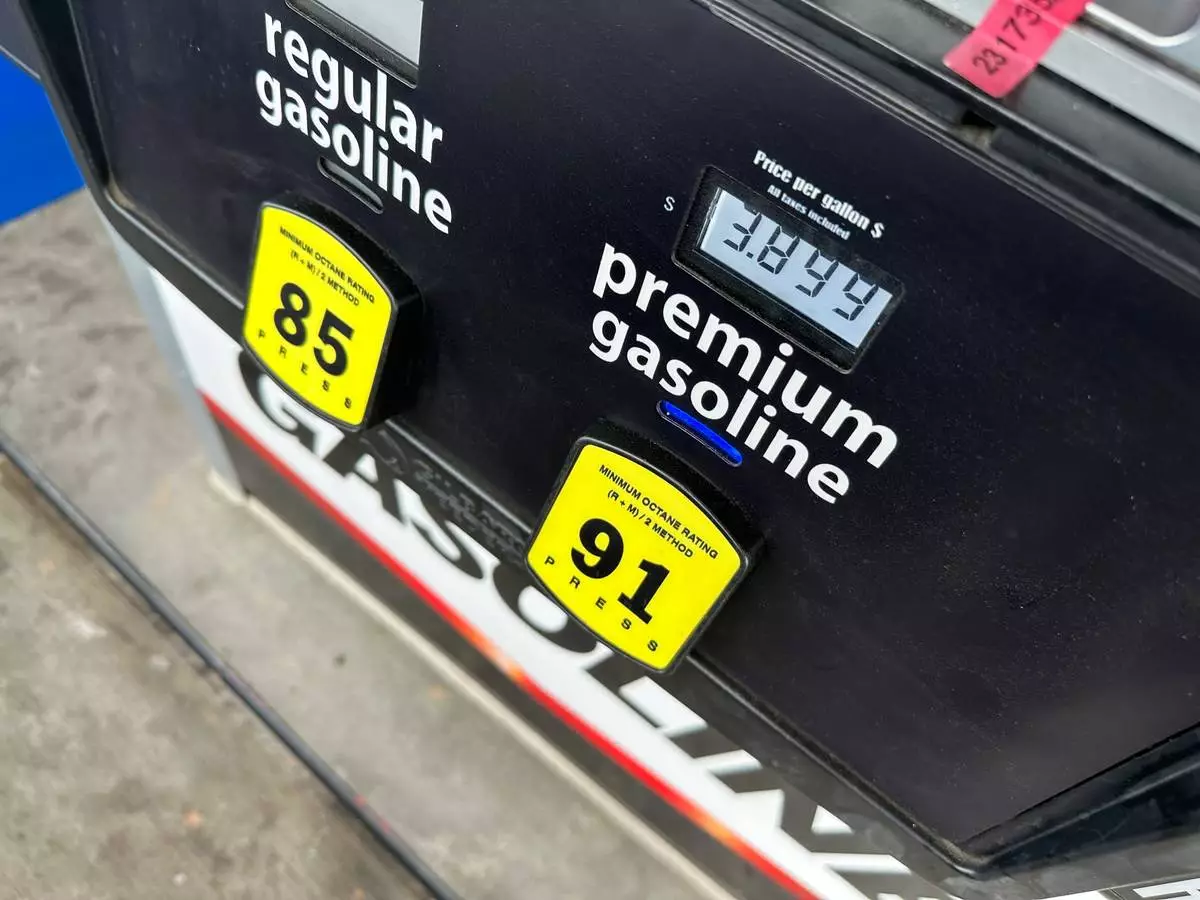
The per-gallon price for premium unleaded fuel is displayed electronically on a pump at a Costco gosoline station Thursday, March 12, 2026, in east Denver. (AP Photo/David Zalubowski)
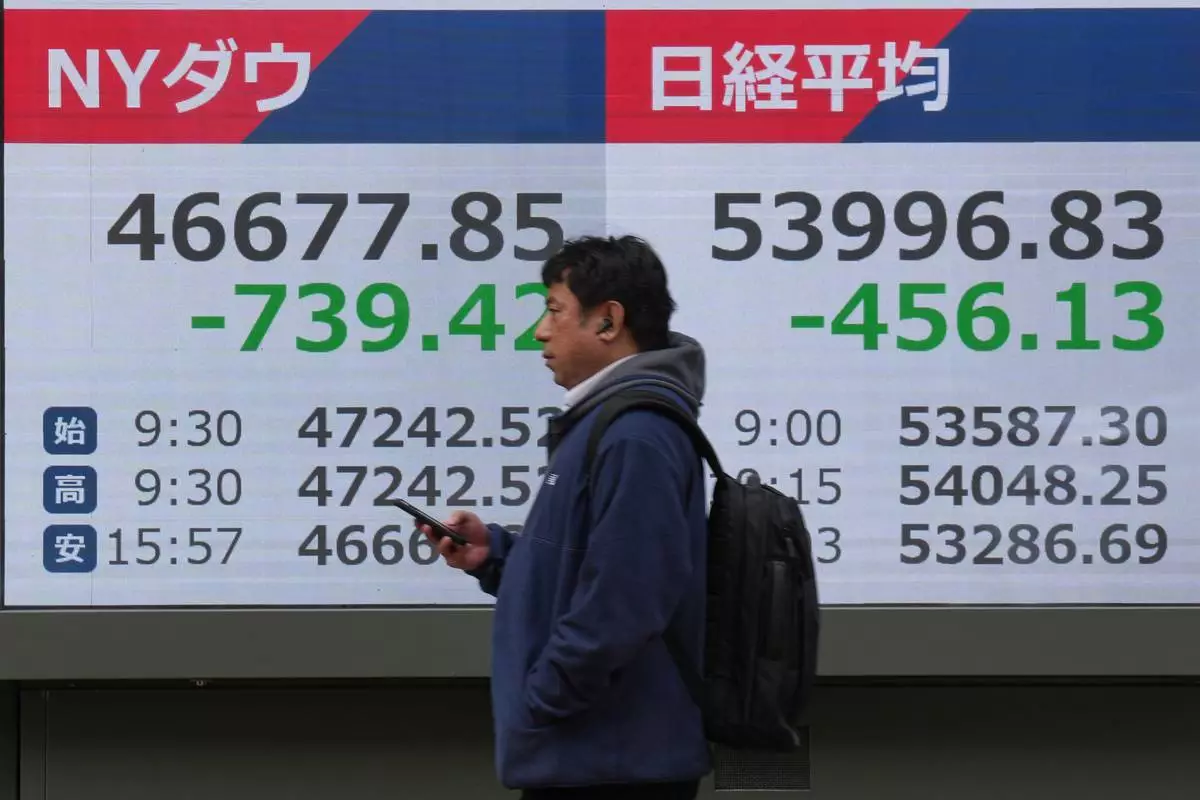
A person walks in front of an electronic stock board showing Japan's Nikkei index at a securities firm Friday, March 13, 2026, in Tokyo. (AP Photo/Eugene Hoshiko)
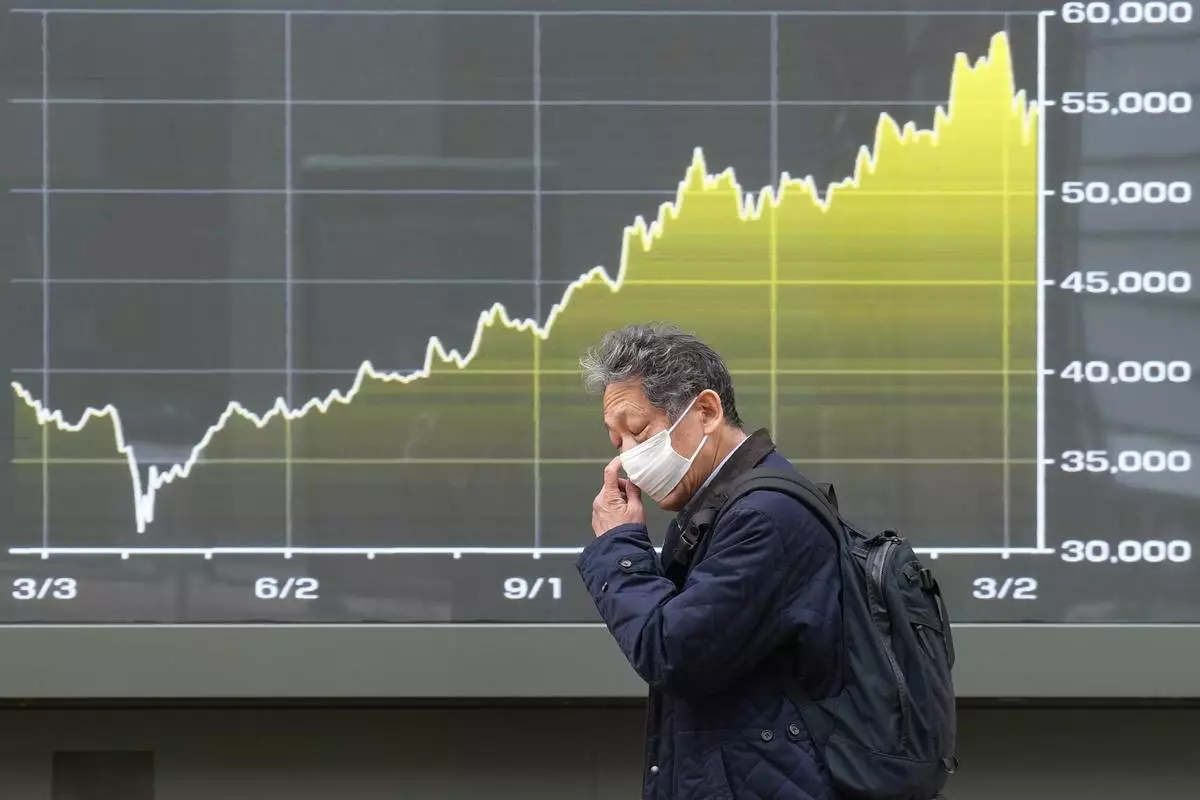
A person walks in front of an electronic stock board showing Japan's Nikkei index at a securities firm Friday, March 13, 2026, in Tokyo. (AP Photo/Eugene Hoshiko)

Gregg Maloney works on the floor at the New York Stock Exchange in New York, Tuesday, March 10, 2026. (AP Photo/Seth Wenig)