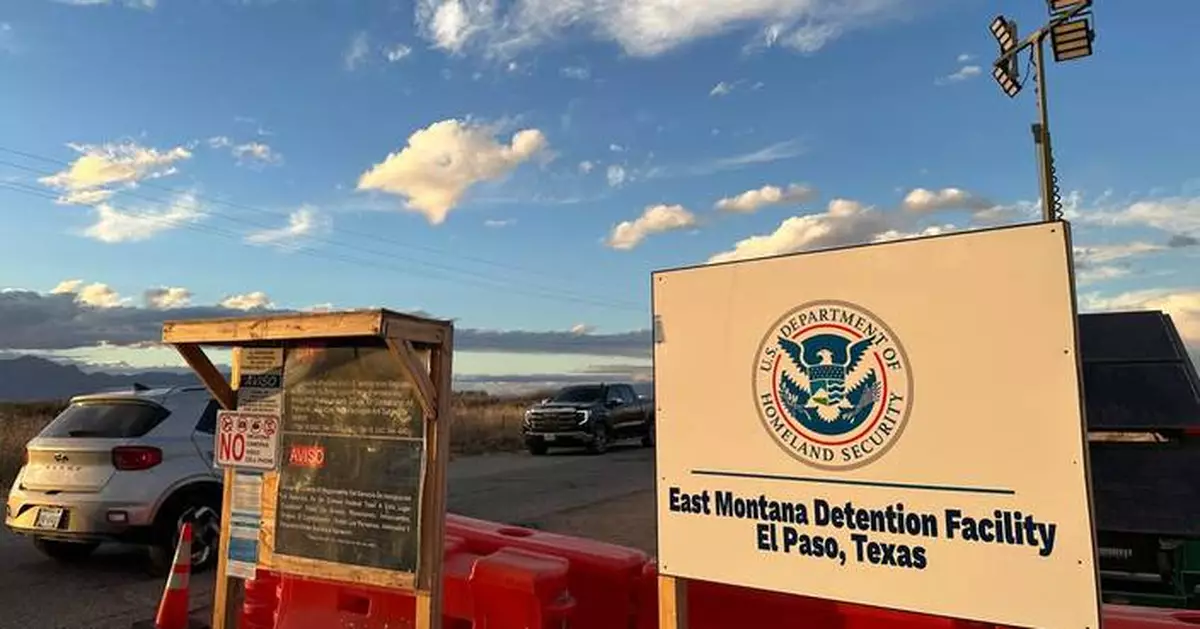
Skip to Content Facebook Feature Image

ICE replaces contractor at largest detention camp after scrutiny of living conditions

News

ICE replaces contractor at largest detention camp after scrutiny of living conditions
News

News

ICE replaces contractor at largest detention camp after scrutiny of living conditions

2026-03-14 01:18 Last Updated At:01:31

U.S. Immigration and Customs Enforcement is terminating the contractor running its largest detention facility and replacing it with a more experienced firm that will work to improve medical care and other services, the agency said Friday.

The contractor switch at Camp East Montana in El Paso, Texas, comes as it faces scrutiny over living conditions that detainees have described as inhumane since its hasty construction and opening last year.

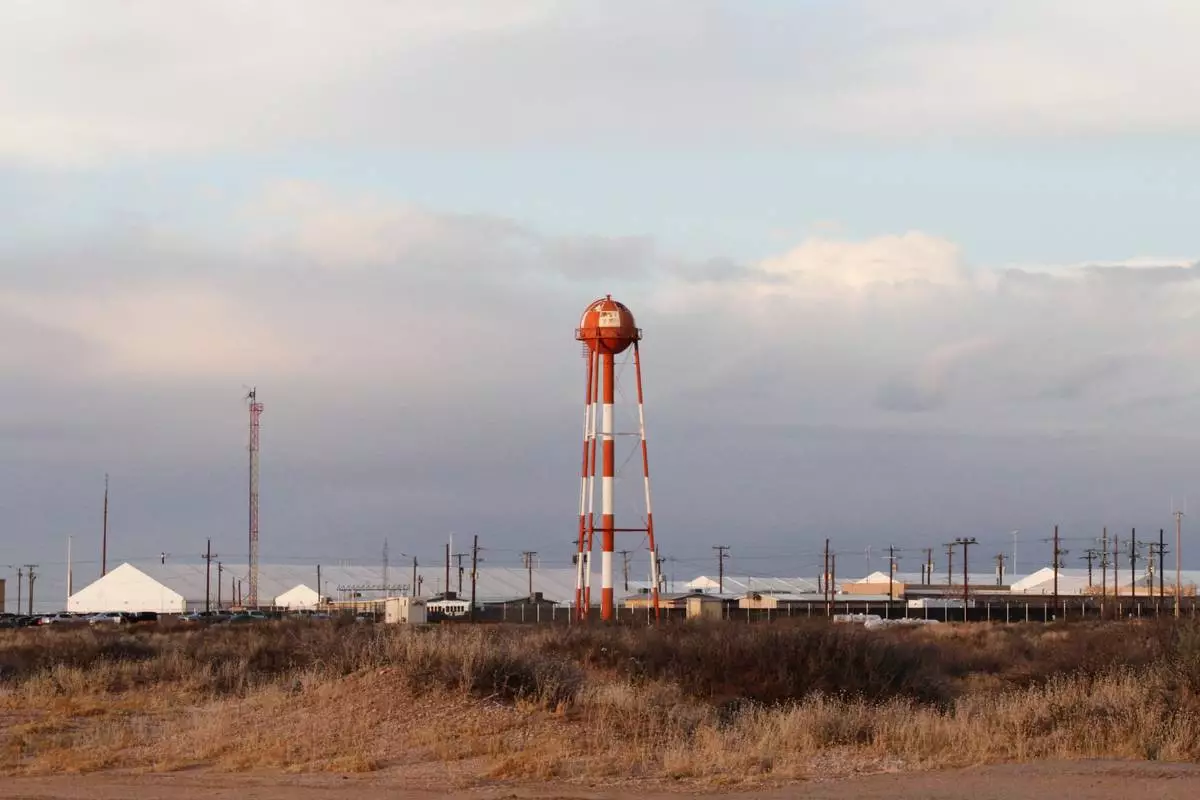
With an average of nearly 3,000 detainees in six long tent encampments, evidence has mounted to support claims of overcrowding, medical neglect, malnutrition and emotional distress. An outbreak of measles also recently hit the camp, which several Democratic members of Congress have called for closing.

Detainees say they struggle to obtain medication and health care, have lost significant amounts of weight because of a lack of food, and live in fear of security guards known to use force. At least 130 calls to 911 were made in the camp’s first five months, which included two deaths, several suicide attempts, fights and medical emergencies, The Associated Press reported last week.

Acquisition Logistics, LLC, the ousted prime contractor, had been awarded a deal last year worth up to $1.3 billion to build and manage the camp at U.S. Army base Fort Bliss. It had no prior experience running an ICE detention facility, had never won a federal contract worth more than $16 million and lacked a functioning website.

ICE has selected Amentum Services, Inc., which has worked as a subcontractor at Camp East Montana, as the new prime contractor, according to a federal notice published Wednesday and an agency spokesperson who did not provide their name. The Washington Post reported the switch of contractors on Wednesday.

The spokesperson did not say what prompted the termination of Acquisition Logistics’ contract, which records show had been set to run until Sept. 30, 2027, and has caused the government to commit nearly $600 million so far.

ICE has said it recently completed an inspection of conditions at Camp East Montana, but the findings have not been made public. Acquisition Logistics and its president and CEO Ken Wagner didn’t immediately return messages seeking comment.

ICE said Amentum, known for its work with the military and intelligence agencies, was best suited to take over and improve operations.

“Amentum’s size, maturity and pedigree make them the right partner at the right time,” the spokesperson said. “We will work closely with them in their implementation of higher standards of medical care, more thorough case processing and intake procedures, and delivery of performance requirements according to well-defined accountability measures.”

Rep. Veronica Escobar, an El Paso Democrat whose district includes the camp, expressed relief Friday that Acquisition Logistics had been replaced. She reiterated her calls for the facility to be shut down and for the contractors involved to be investigated for “the fraud they’ve perpetrated on the American taxpayer.”

“Whether the new contractor is an improvement remains to be seen, and I remain deeply concerned about the chronic substandard conditions that exist at Camp East Montana,” said Escobar, who has toured the facility seven times.

Based in Chantilly, Virginia, Amentum's parent company describes itself as a “global advanced engineering and technology solutions provider” serving U.S. government agencies and other customers. The company has provided services for ICE and other Department of Homeland Security divisions in the past.

The notice published in a contracting database said ICE was negotiating a no-bid contract with Amentum to run Camp East Montana, including providing secure housing, medical care and transportation. It indicated the contract would last 180 days, and it's unclear what would happen to Camp East Montana after that period.

“The contractor must demonstrate the capacity for rapid operational transition and sustained adherence to all regulatory and performance requirements, thereby safeguarding public safety and supporting national enforcement priorities,” the notice said.

Citing the “proprietary nature” of the camp’s infrastructure, the notice said no vendor other than Amentum could provide uninterrupted services there.

The facility is intended for short-term stays before detainees are shipped out, and the average stay has been nine days, according to ICE data. But some detainees have been kept for weeks or months while they challenge their detention or experience logistical problems related to their pending deportations.

The switch comes as ICE plans to operate warehouses across the country to hold far more detainees at single locations than Camp East Montana, with plans calling for some sites to have up to 8,500. Escobar called on ICE not to open the warehouses, including one planned near El Paso, that she said would “serve only as tools for the administration's inhumanity.”
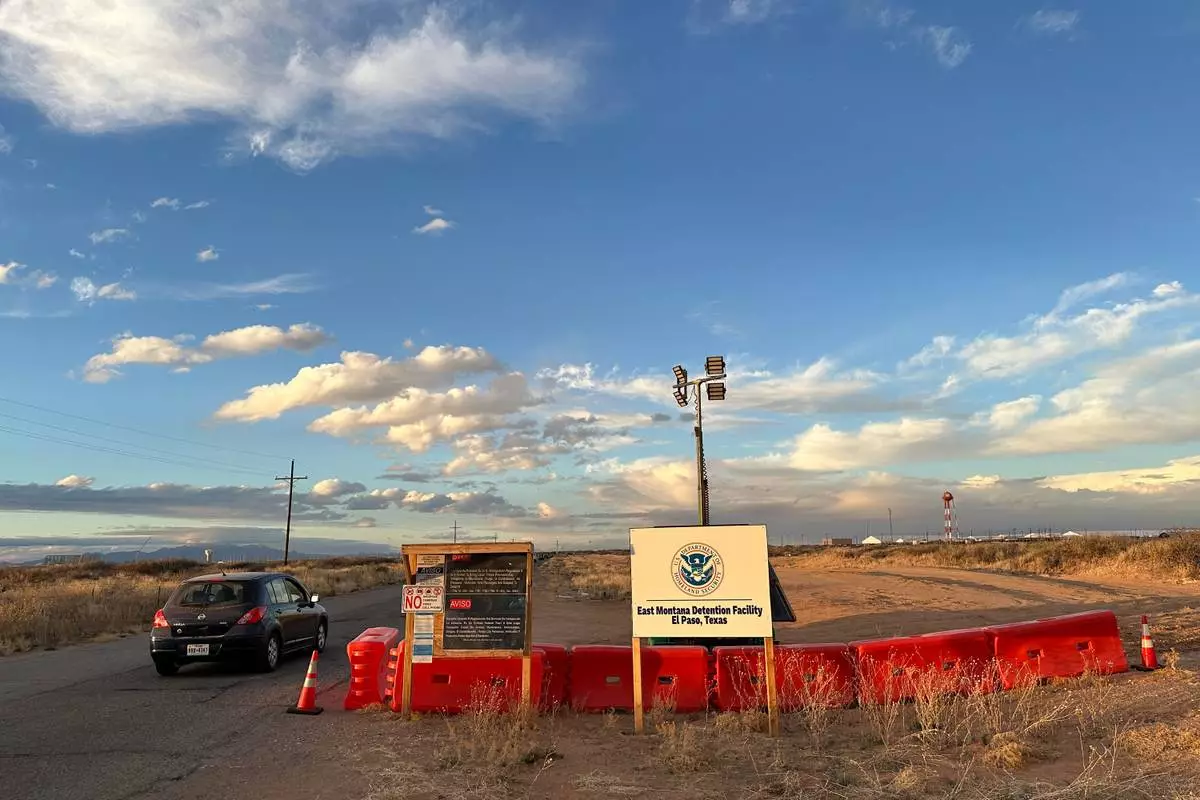
A sign marks the entrance to a series of hardened tents at the Camp East Montana immigrant detention center in the desert at a U.S. Army base on the outskirts of El Paso, Texas, Friday, Feb. 13, 2026. (AP Photo/Morgan Lee)
A sign marks the entrance to a series of hardened tents at the Camp East Montana immigrant detention center in the desert at a U.S. Army base on the outskirts of El Paso, Texas, Friday, Feb. 13, 2026. (AP Photo/Morgan Lee)
A series of hardened tents at the Camp East Montana immigrant detention center loom large in the desert at a U.S. Army base on the outskirts of El Paso, Texas, Friday, Feb. 13, 2026. (AP Photo/Morgan Lee)

A series of hardened tents at the Camp East Montana immigrant detention center loom large in the desert at a U.S. Army base on the outskirts of El Paso, Texas, Friday, Feb. 13, 2026. (AP Photo/Morgan Lee)

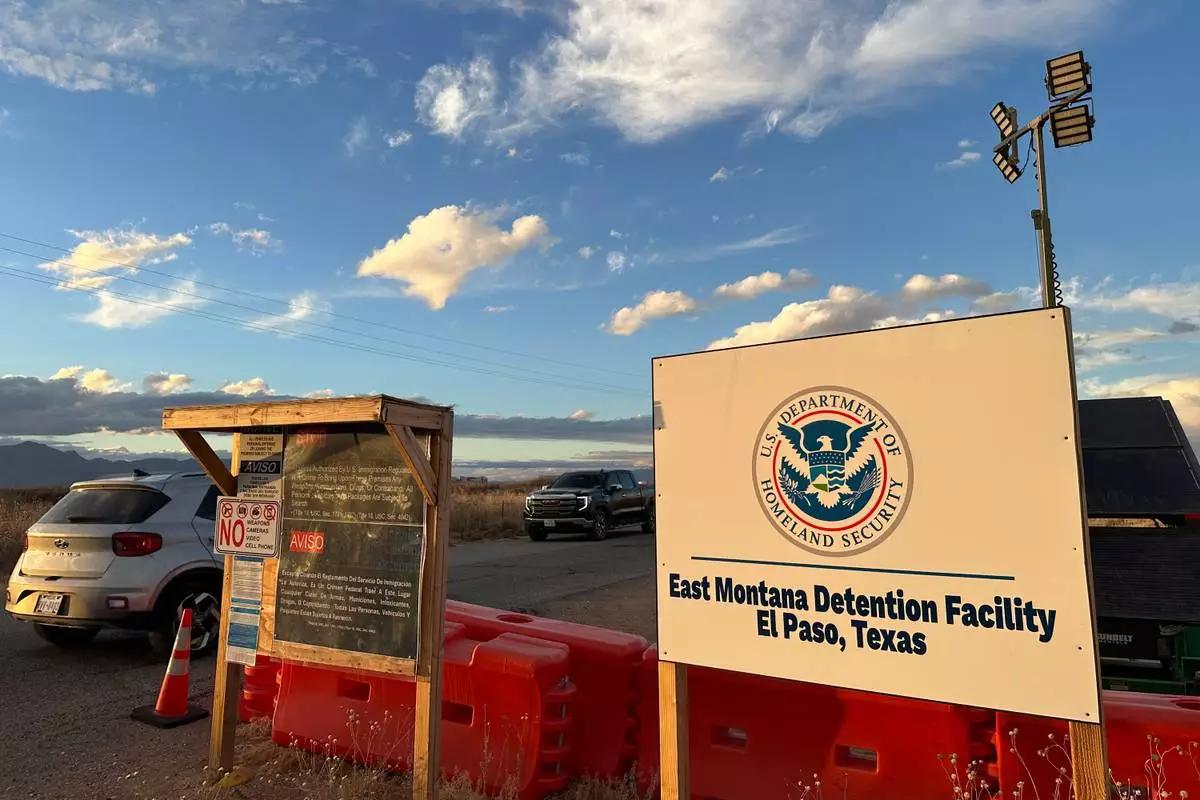
A sign marks the entrance to a series of hardened tents at the Camp East Montana immigrant detention center in the desert at a U.S. Army base on the outskirts of El Paso, Texas, Friday, Feb. 13, 2026. (AP Photo/Morgan Lee)
A sign marks the entrance to a series of hardened tents at the Camp East Montana immigrant detention center in the desert at a U.S. Army base on the outskirts of El Paso, Texas, Friday, Feb. 13, 2026. (AP Photo/Morgan Lee)

PROVO, Utah (AP) — The man accused of killing Charlie Kirk on a Utah college campus was back in court Friday as a state judge weighs whether certain documents and proceedings should be open to the public.

The outcome will set the stage for an April hearing in which attorneys for Tyler Robinson will make their case to exclude TV cameras, microphones and photographers from the courtroom.

Judge Tony Graf has been weighing the public’s right to know details about the case against concerns by defense attorneys that the media attention could undermine Robinson’s right to a fair trial. Prosecutors, Kirk’s widow and attorneys for news organizations have urged Graf to keep the proceedings open.

Prosecutors intend to seek the death penalty for Robinson, 22, who is charged with aggravated murder in the Sept. 10 shooting of the conservative activist on the Utah Valley University campus in Orem. Robinson has not yet entered a plea.

Attorneys on Friday debated whether the defense's written request to exclude cameras, which was classified by the court as private, should be made public.

Staci Visser, an attorney for Robinson, told the judge that the defense is not arguing in the court of public opinion.

“There seems to be an idea that flooding the public sphere with information from this courtroom will somehow dispel conspiracy theories or shift public narratives. That, in and of itself, is concerning to the defense,” Visser said. “All we should be worried about is protecting what happens in this courtroom.”

Robinson’s defense team went on to say that an upcoming hearing will involve discussions about prejudicial pretrial publicity — for example, evidence that has yet to be admitted, confessions, personal opinions about guilt or public statements that would otherwise be inadmissible in court.

“We don’t want to be in that position of bringing in front of the court all of this prejudicial information and having the press regurgitate it yet one more time, and reinflicting a wound that we’re seeking to avoid,” defense attorney Michael Burt said.

Christopher Ballard, a prosecutor with the Utah County Attorney’s Office, dismissed those arguments. He said careful questioning during jury selection and tools like expanding the jury pool can ensure a defendant gets a fair trial.

“So just saying that this a content tornado or there's been a barrage of media coverage doesn't necessarily mean that there is going to be prejudice to the defendant,” Ballard said.

Ballard also said most of the evidence that will be discussed at the April 17 hearing is already public, so most of it should be open. But he agreed with the defense that parts of the hearing concerning personal privacy should be closed.

The judge will decide whether the hearing will be open or partially closed.

Media access has been a focal point of several recent hearings, with the judge placing temporary restrictions on local TV stations for showing Robinson's shackles in violation of a court order and filming close-up shots that might allow viewers to interpret what he was discussing with his attorneys.

The judge also has prevented full video recordings of Kirk’s shooting from being shown in court after defense attorneys argued the graphic footage would interfere with a fair trial. An estimated 3,000 people attended the outdoor rally to hear Kirk, a co-founder of Turning Point USA who helped mobilize young people to vote for President Donald Trump.

Prosecutors have said DNA evidence connects Robinson to the killing.

At a hearing in February, the judge declined to disqualify the local county attorney’s office from prosecuting the case after the defense argued there was a conflict of interest because a prosecutor’s daughter was present when Kirk was shot.

Prosecuting and defense attorneys and defendant Tyler Robinson, right, accused in the fatal shooting of conservative activist Charlie Kirk, attend a hearing in 4th District Court, Friday, March. 13, 2026, in Provo, Utah. (Laura Seitz/The Deseret News via AP, Pool)

Prosecuting and defense attorneys and defendant Tyler Robinson, right, accused in the fatal shooting of conservative activist Charlie Kirk, attend a hearing in 4th District Court, Friday, March. 13, 2026, in Provo, Utah. (Laura Seitz/The Deseret News via AP, Pool)

Prosecutor Chad Grunander, center, listens, Friday, March. 13, 2026, in 4th District Court in Provo, Utah, during a hearing for Tyler Robinson, who is accused in the fatal shooting of conservative activist Charlie Kirk. (Laura Seitz/The Deseret News via AP, Pool)

Prosecutor Chad Grunander, center, listens, Friday, March. 13, 2026, in 4th District Court in Provo, Utah, during a hearing for Tyler Robinson, who is accused in the fatal shooting of conservative activist Charlie Kirk. (Laura Seitz/The Deseret News via AP, Pool)

Attorney Richard Novak, left, and defendant Tyler Robinson, accused in the fatal shooting of conservative activist Charlie Kirk, attend a hearing, in 4th District Court, Friday, March. 13, 2026, in Provo, Utah. (Laura Seitz/The Deseret News via AP, Pool

Attorney Richard Novak, left, and defendant Tyler Robinson, accused in the fatal shooting of conservative activist Charlie Kirk, attend a hearing, in 4th District Court, Friday, March. 13, 2026, in Provo, Utah. (Laura Seitz/The Deseret News via AP, Pool

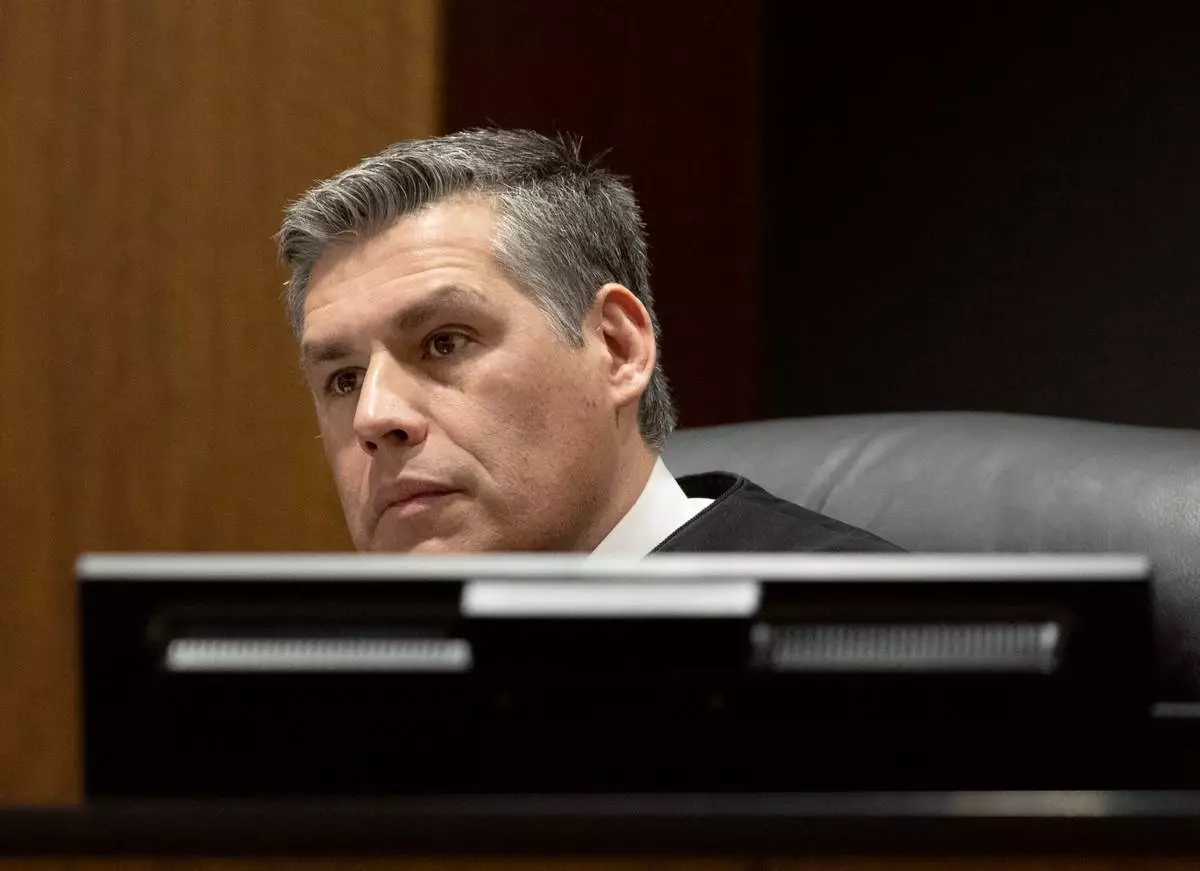
Fourth District Court Judge Tony Graf presides, Friday, March. 13, 2026, in 4th District Court in Provo, Utah, during a hearing for Tyler Robinson, who is accused in the fatal shooting of conservative activist Charlie Kirk. (Laura Seitz/The Deseret News via AP, Pool)

Fourth District Court Judge Tony Graf presides, Friday, March. 13, 2026, in 4th District Court in Provo, Utah, during a hearing for Tyler Robinson, who is accused in the fatal shooting of conservative activist Charlie Kirk. (Laura Seitz/The Deseret News via AP, Pool)

FILE - Tyler Robinson, who is accused of fatally shooting Charlie Kirk, appears during a hearing in Fourth District Court, in Provo, Utah, Dec. 11, 2025. (Rick Egan/The Salt Lake Tribune via AP, Pool, File)

FILE - Tyler Robinson, who is accused of fatally shooting Charlie Kirk, appears during a hearing in Fourth District Court, in Provo, Utah, Dec. 11, 2025. (Rick Egan/The Salt Lake Tribune via AP, Pool, File)

FILE - Fourth District Court Judge Tony Graf presides over a hearing for Tyler Robinson, accused in the fatal shooting of conservative activist Charlie Kirk, in 4th District Court, Feb. 3, 2026, in Provo, Utah. (Trent Nelson/The Salt Lake Tribune via AP, Pool, File)

FILE - Fourth District Court Judge Tony Graf presides over a hearing for Tyler Robinson, accused in the fatal shooting of conservative activist Charlie Kirk, in 4th District Court, Feb. 3, 2026, in Provo, Utah. (Trent Nelson/The Salt Lake Tribune via AP, Pool, File)

Recommended Articles