Skip to Content Facebook Feature Image

Cracks emerged in a resilient US economy before war in Iran sent oil prices rocketing

News

Cracks emerged in a resilient US economy before war in Iran sent oil prices rocketing
News

News

Cracks emerged in a resilient US economy before war in Iran sent oil prices rocketing

2026-03-14 01:31 Last Updated At:01:40

WASHINGTON (AP) — The highly resilient U.S. economy was already showing signs of strain even before the launch of the Iran war, data released Friday showed, underscoring the risks that rising gasoline and energy prices may pose.

The economy barely grew in the final three months of last year, the Commerce Department said, as it cut its estimate of fourth-quarter growth in half. Consumer spending, after adjusting for inflation, was anemic in January, as inflation remained sticky-high. Hiring has also ground largely to a standstill. And Americans' outlook for the economy tumbled after the U.S. and Israel attacked Iran, according to a survey of consumer sentiment also released Friday.

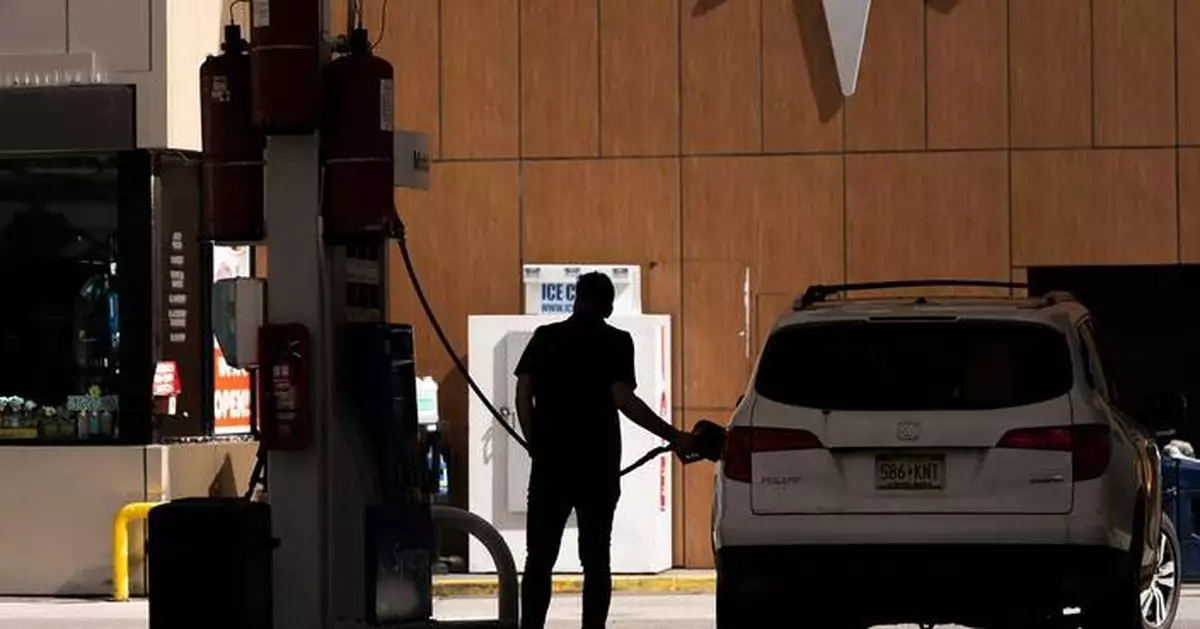
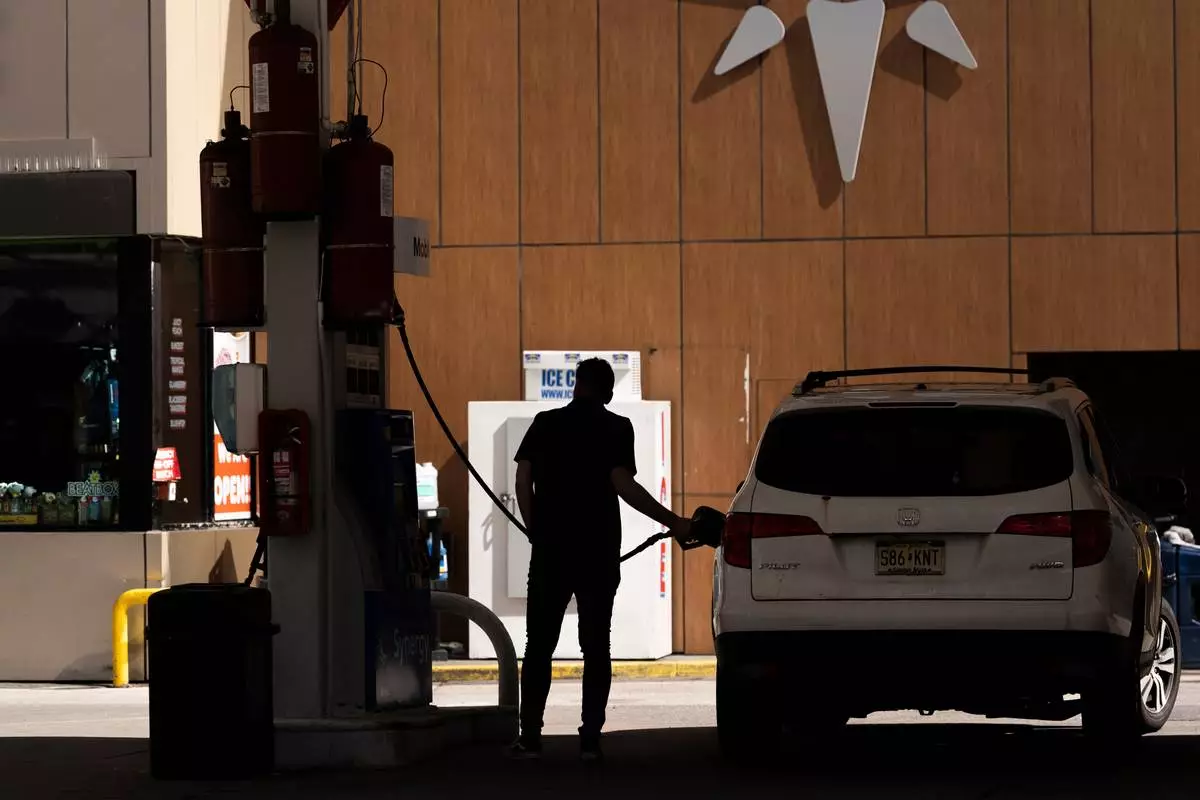
Gasoline prices have raced closer to $4 per gallon during the war, squeezing many household budgets that are already under pressure. Many Americans will receive larger-than-usual tax refunds in March and April because of the passage of President Donald Trump's tax cut law last year, but higher gas costs, if they persist, could soak up much or even all of those gains.

What's more, the Dow Jones has now fallen for three weeks straight, possibly impacting the wealthier U.S. households that have helped prop up overall consumer spending as lower-income families pull back.

“Underlying inflation pressures were already rising ahead of the war in the Middle East and are set to intensify,” Diane Swonk, chief economist at KPMG, said. Some Federal Reserve officials could even push for a hike in interest rates at its meeting next week, she added, though the central bank will probably stand pat.

Mortgage rates have been rising since the conflict began, likely because investors expect inflation will remain high. That could further weigh on the U.S. housing market, which has been in a slump dating back to 2022, when mortgage rates began to climb from pandemic-era lows.

Last fall’s 43-day government shutdown also hobbled growth at the end of last year. The economy advanced at an unexpectedly sluggish 0.7% annual rate from October through December, the Commerce Department reported Friday in a big downgrade from its initial estimate of 1.4%.

Growth in gross domestic product — the nation’s output of goods and services — was down sharply from 4.4% in last year’s third quarter and 3.8% in the second.

Federal government spending and investment, clobbered by the shutdown, plunged at a 16.7% rate, hacking 1.16 percentage points off fourth-quarter growth.

“Following two consecutive strong readings for the second and third quarters, the economy was expected to soften heading into year-end. It’s now increasingly clear that the economy not only slowed but stumbled into the finish line,” Jim Baird, chief investment officer at Plante Moran Financial Advisors, said in a commentary. “The government shutdown was certainly a major factor in the loss of momentum, but a sharp decline in consumption growth also played a role.″

Separately, consumer spending grew modestly in January, rising 0.4%, but just 0.1% after adjusting for inflation. Incomes, after adjusting for taxes and transfers, jumped 0.9% as tax withholding fell because of 2025 tax changes. Yet wage growth has been cooling compared with a year ago.

New data shows that Americans have saved less in the past few months and lower-income families in particular have run up more debts. Weak hiring — the economy barely added jobs last year — has also weighed on consumer confidence.

Overall sentiment only declined slightly in March, according to the University of Michigan's consumer sentiment, but the survey was only half completed when the attack was launched on Iran. Those responding after Feb. 28, the start of the war, were much gloomier.

“Interviews completed prior to the military action in Iran showed an improvement in sentiment from last month, but lower readings seen during the nine days thereafter completely erased those initial gains,” Joanne Hsu, director of the sentiment survey, said.

Separately, a measure of inflation closely watched by the Federal Reserve rose 2.8% in January from a year earlier. Yet that figure could top 3.5% in the coming months, economists have said, as gas prices have jumped to $3.63 a gallon on average nationwide, up from $2.94 a month ago, according to AAA.

For all of last year, the economy grew 2.1%, solid but down from 2.8% in 2024 and 2.9% in the year before that.

In the fourth quarter, consumer spending grew at a 2% clip, down from 3.5% in the third quarter and the 2.4% the government had initially estimated. Business investment, excluding housing, increased at a solid 2.2% pace, likely reflecting money being poured into artificial intelligence, but the increase was down from 3.2% in the third quarter.

A category within the GDP data that measures the economy’s underlying strength came in weaker than previously reported, growing at a 1.9% clip, down from 2.9% in the third quarter. This category includes consumer spending and private investment, but excludes volatile items like exports, inventories and government spending.

Meanwhile, the American job market is in a slump. Last month, companies, nonprofits and government agencies cut 92,000 jobs. In 2025, they added fewer than 10,000 jobs a month, the weakest hiring outside recession years since 2002.

A report Friday showed that companies posted nearly 7 million open jobs in January, a welcome increase from 6.6 million in December. Yet overall hiring was essentially unchanged, suggesting companies are reluctant to fill open positions, perhaps because of uncertainty around the impact of artificial intelligence.

Such reluctance may intensify if the war drags on and weighs on consumer confidence and spending.

Friday’s GDP was the second of the three estimates of fourth-quarter growth. The final report is due April 9.
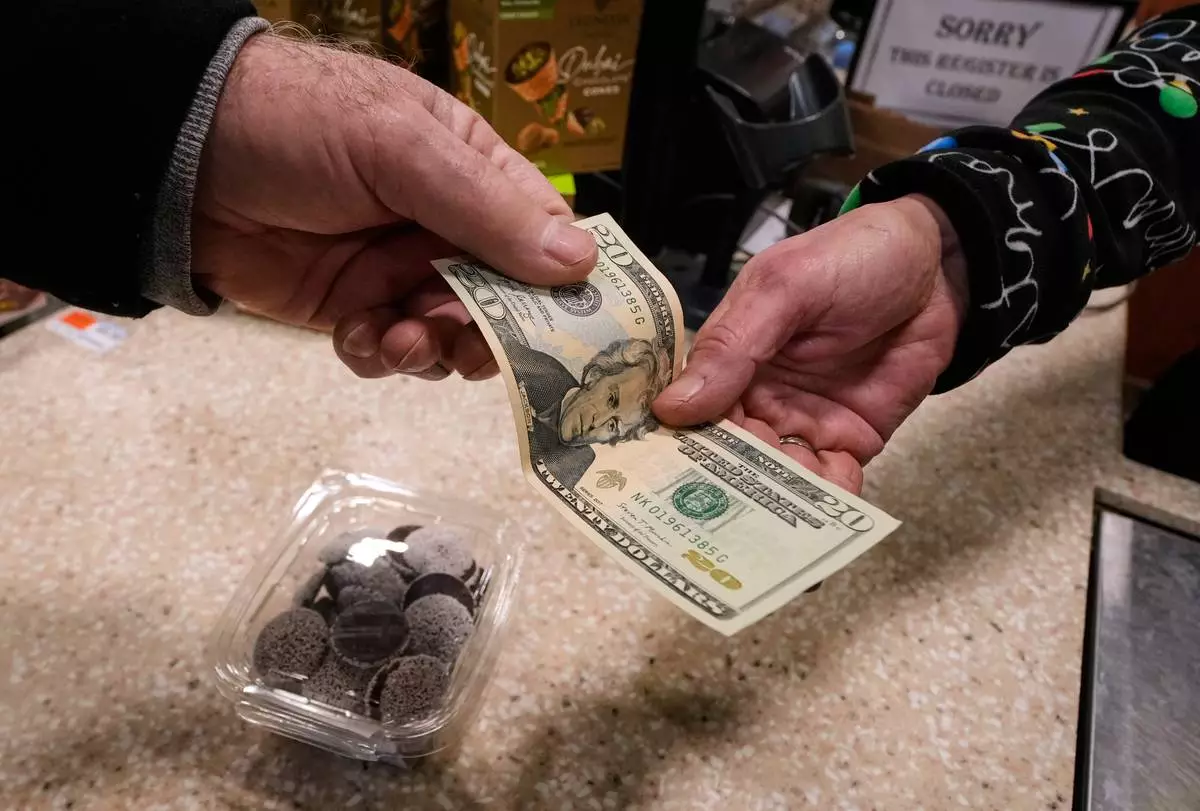
FILE - A shopper pays with cash for a container of candy at a store, Thursday, Dec. 11, 2025, in Salem, N.H. (AP Photo/Charles Krupa, File)
FILE - A shopper pays with cash for a container of candy at a store, Thursday, Dec. 11, 2025, in Salem, N.H. (AP Photo/Charles Krupa, File)

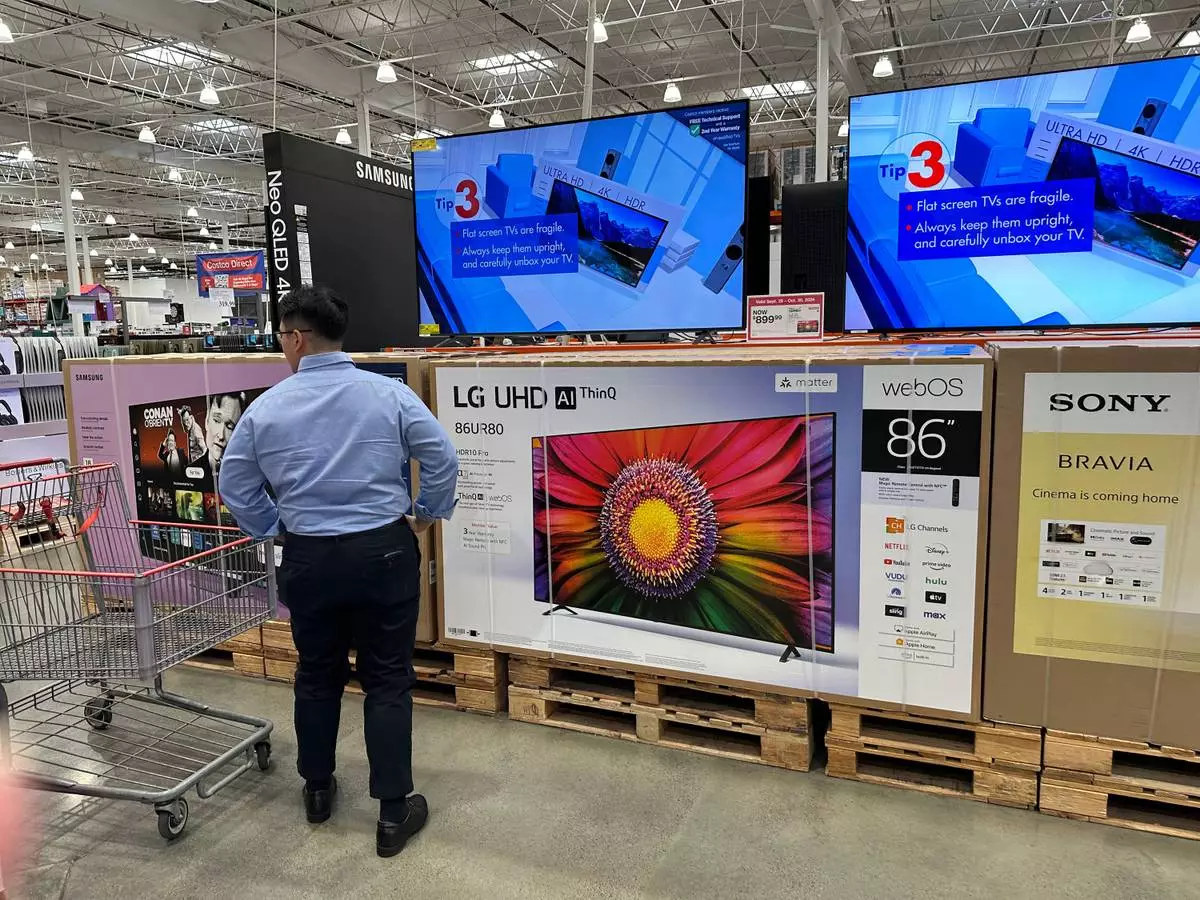
FILE - A shopper considers large-screen televisions on display in a Costco warehouse Oct. 3, 2024, in Timnath, Colo. (AP Photo/David Zalubowski, File)
FILE - A shopper considers large-screen televisions on display in a Costco warehouse Oct. 3, 2024, in Timnath, Colo. (AP Photo/David Zalubowski, File)

FILE - A person fuels up a vehicle at a gas station, Tuesday, March 10, 2026, in New York. (AP Photo/Yuki Iwamura, File)
FILE - A person fuels up a vehicle at a gas station, Tuesday, March 10, 2026, in New York. (AP Photo/Yuki Iwamura, File)
PROVO, Utah (AP) — The man accused of killing Charlie Kirk on a Utah college campus was back in court Friday as a state judge weighs whether certain documents and proceedings should be open to the public.

The outcome will set the stage for an April hearing in which attorneys for Tyler Robinson will make their case to exclude TV cameras, microphones and photographers from the courtroom.

Judge Tony Graf has been weighing the public’s right to know details about the case against concerns by defense attorneys that the media attention could undermine Robinson’s right to a fair trial. Prosecutors, Kirk’s widow and attorneys for news organizations have urged Graf to keep the proceedings open.

Prosecutors intend to seek the death penalty for Robinson, 22, who is charged with aggravated murder in the Sept. 10 shooting of the conservative activist on the Utah Valley University campus in Orem. Robinson has not yet entered a plea.

Attorneys on Friday debated whether the defense's written request to exclude cameras, which was classified by the court as private, should be made public.

Staci Visser, an attorney for Robinson, told the judge that the defense is not arguing in the court of public opinion.

“There seems to be an idea that flooding the public sphere with information from this courtroom will somehow dispel conspiracy theories or shift public narratives. That, in and of itself, is concerning to the defense,” Visser said. “All we should be worried about is protecting what happens in this courtroom.”

Robinson’s defense team went on to say that an upcoming hearing will involve discussions about prejudicial pretrial publicity — for example, evidence that has yet to be admitted, confessions, personal opinions about guilt or public statements that would otherwise be inadmissible in court.

“We don’t want to be in that position of bringing in front of the court all of this prejudicial information and having the press regurgitate it yet one more time, and reinflicting a wound that we’re seeking to avoid,” defense attorney Michael Burt said.

Christopher Ballard, a prosecutor with the Utah County Attorney’s Office, dismissed those arguments. He said careful questioning during jury selection and tools like expanding the jury pool can ensure a defendant gets a fair trial.

“So just saying that this a content tornado or there's been a barrage of media coverage doesn't necessarily mean that there is going to be prejudice to the defendant,” Ballard said.

Ballard also said most of the evidence that will be discussed at the April 17 hearing is already public, so most of it should be open. But he agreed with the defense that parts of the hearing concerning personal privacy should be closed.

The judge will decide whether the hearing will be open or partially closed.

Coalitions of national and local news organizations, including The Associated Press, are fighting to preserve media access in the case.

Media access has been a focal point of several recent hearings, with the judge placing temporary restrictions on local TV stations for showing Robinson's shackles in violation of a court order and filming close-up shots that might allow viewers to interpret what he was discussing with his attorneys.

The judge also has prevented full video recordings of Kirk’s shooting from being shown in court after defense attorneys argued the graphic footage would interfere with a fair trial. An estimated 3,000 people attended the outdoor rally to hear Kirk, a co-founder of Turning Point USA who helped mobilize young people to vote for President Donald Trump.

Prosecutors have said DNA evidence connects Robinson to the killing.

At a hearing in February, the judge declined to disqualify the local county attorney’s office from prosecuting the case after the defense argued there was a conflict of interest because a prosecutor’s daughter was present when Kirk was shot.

Prosecuting and defense attorneys and defendant Tyler Robinson, right, accused in the fatal shooting of conservative activist Charlie Kirk, attend a hearing in 4th District Court, Friday, March. 13, 2026, in Provo, Utah. (Laura Seitz/The Deseret News via AP, Pool)

Prosecuting and defense attorneys and defendant Tyler Robinson, right, accused in the fatal shooting of conservative activist Charlie Kirk, attend a hearing in 4th District Court, Friday, March. 13, 2026, in Provo, Utah. (Laura Seitz/The Deseret News via AP, Pool)

Prosecutor Chad Grunander, center, listens, Friday, March. 13, 2026, in 4th District Court in Provo, Utah, during a hearing for Tyler Robinson, who is accused in the fatal shooting of conservative activist Charlie Kirk. (Laura Seitz/The Deseret News via AP, Pool)

Prosecutor Chad Grunander, center, listens, Friday, March. 13, 2026, in 4th District Court in Provo, Utah, during a hearing for Tyler Robinson, who is accused in the fatal shooting of conservative activist Charlie Kirk. (Laura Seitz/The Deseret News via AP, Pool)

Attorney Richard Novak, left, and defendant Tyler Robinson, accused in the fatal shooting of conservative activist Charlie Kirk, attend a hearing, in 4th District Court, Friday, March. 13, 2026, in Provo, Utah. (Laura Seitz/The Deseret News via AP, Pool

Attorney Richard Novak, left, and defendant Tyler Robinson, accused in the fatal shooting of conservative activist Charlie Kirk, attend a hearing, in 4th District Court, Friday, March. 13, 2026, in Provo, Utah. (Laura Seitz/The Deseret News via AP, Pool

Fourth District Court Judge Tony Graf presides, Friday, March. 13, 2026, in 4th District Court in Provo, Utah, during a hearing for Tyler Robinson, who is accused in the fatal shooting of conservative activist Charlie Kirk. (Laura Seitz/The Deseret News via AP, Pool)

Fourth District Court Judge Tony Graf presides, Friday, March. 13, 2026, in 4th District Court in Provo, Utah, during a hearing for Tyler Robinson, who is accused in the fatal shooting of conservative activist Charlie Kirk. (Laura Seitz/The Deseret News via AP, Pool)

FILE - Tyler Robinson, who is accused of fatally shooting Charlie Kirk, appears during a hearing in Fourth District Court, in Provo, Utah, Dec. 11, 2025. (Rick Egan/The Salt Lake Tribune via AP, Pool, File)

FILE - Tyler Robinson, who is accused of fatally shooting Charlie Kirk, appears during a hearing in Fourth District Court, in Provo, Utah, Dec. 11, 2025. (Rick Egan/The Salt Lake Tribune via AP, Pool, File)

FILE - Fourth District Court Judge Tony Graf presides over a hearing for Tyler Robinson, accused in the fatal shooting of conservative activist Charlie Kirk, in 4th District Court, Feb. 3, 2026, in Provo, Utah. (Trent Nelson/The Salt Lake Tribune via AP, Pool, File)

FILE - Fourth District Court Judge Tony Graf presides over a hearing for Tyler Robinson, accused in the fatal shooting of conservative activist Charlie Kirk, in 4th District Court, Feb. 3, 2026, in Provo, Utah. (Trent Nelson/The Salt Lake Tribune via AP, Pool, File)

Recommended Articles