MOSCOW (AP) — Many foreign websites were blocked Friday on mobile phones in central Moscow under restrictions that have gripped the Russian capital for more than a week, derailing the routine of millions of residents and slamming businesses that rely on cellphone internet.
Russian authorities have said the restrictions are part of security measures to fend off Ukrainian drone attacks, but many industry experts suspect they are part of preparations by the authorities to block Russians' access to the global web if the Kremlin decides to do so.
Click to Gallery
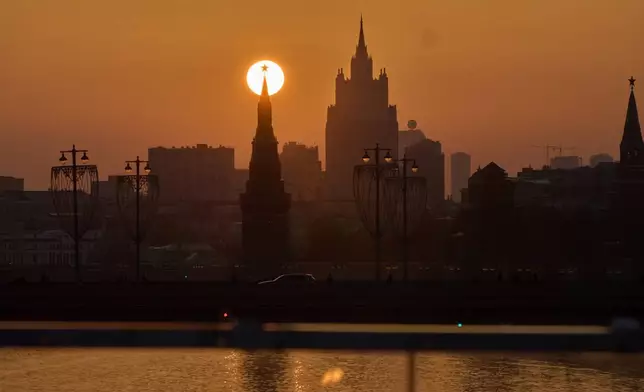
The sun is seen behind a Red Star atop of a Kremlin Tower during sunset in Moscow, Thursday, March 12, 2026, backdropped by a Stalin's style skyscraper. (AP Photo/Alexander Zemlianichenko)
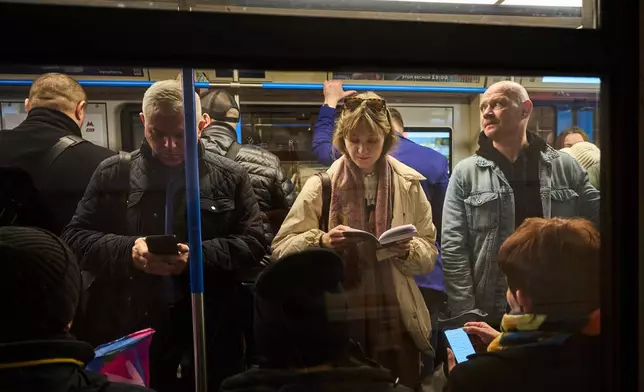
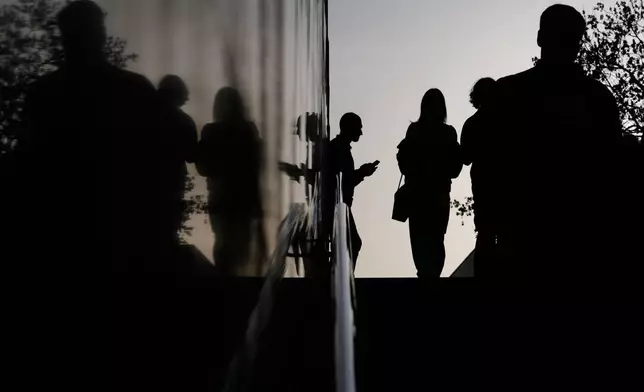
A man looks at his smartphone as a woman reads a book while on the subway in Moscow Thursday, March 12, 2026. (AP Photo/Alexander Zemlianichenko)
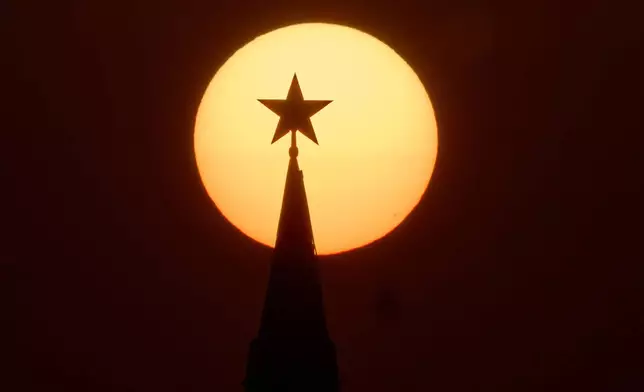
The sun is seen behind a Red Star atop of a Kremlin Tower during sunset in Moscow, Thursday, March 12, 2026. (AP Photo/Alexander Zemlianichenko)
People enter an underpass during sunset in Moscow, Thursday, March 12, 2026. (AP Photo/Pavel Bednyakov)
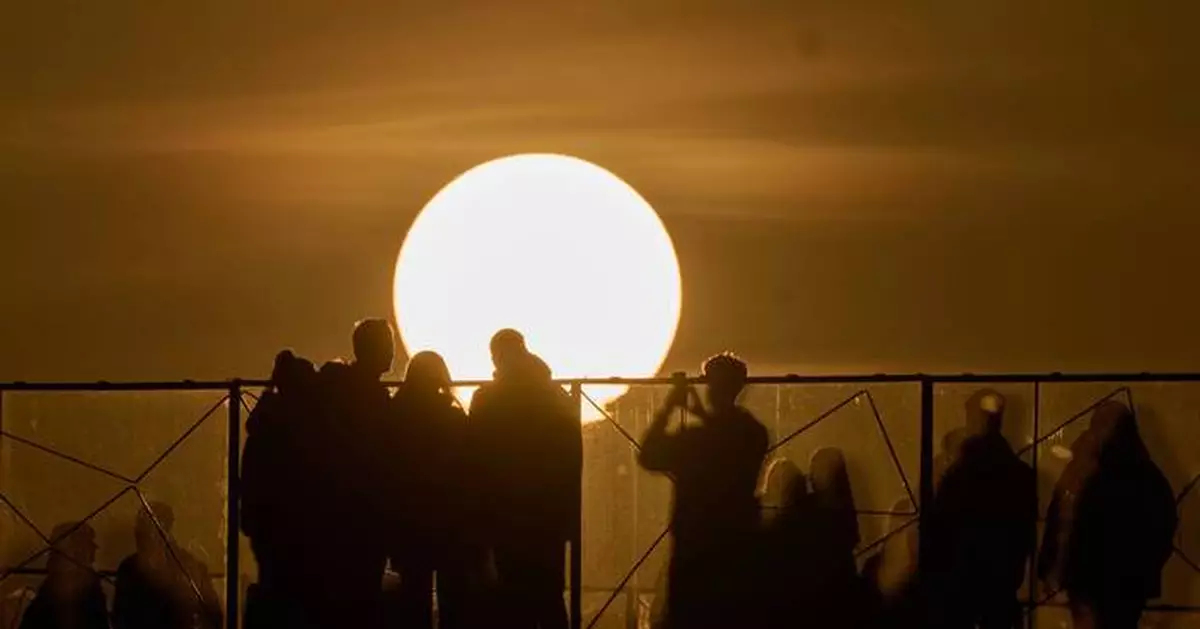
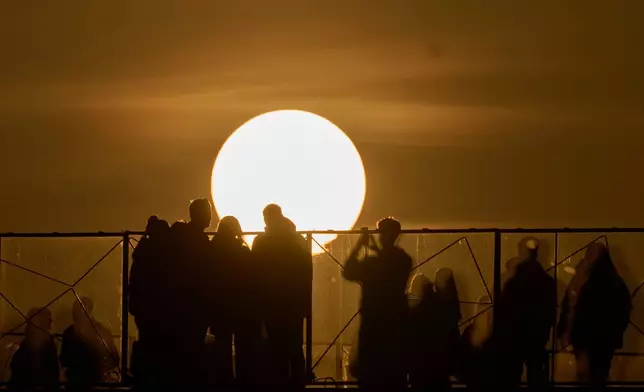
People watch and take photos during sunset in Moscow, Thursday, March 12, 2026. (AP Photo/Alexander Zemlianichenko)
The intermittent shutdowns, which had previously been recorded in dozens of Russia’s regions for months, have prompted some Moscow residents to turn to long-forgotten gadgets like walkie talkies, pagers and media players.
The shutdowns are part of multipronged efforts by the authorities to rein in the internet. They have adopted restrictive laws and banned websites and platforms that don’t comply. Technology also has been perfected to monitor and manipulate online traffic.
After President Vladimir Putin sent troops into Ukraine in February 2022, the government has blocked major social media sites like Twitter, Facebook and Instagram. Last year, Russia’s communications watchdog announced it was restricting popular messaging apps WhatsApp and Telegram.
At the same time, authorities have actively promoted a “national” messenger app called MAX, which critics see as a surveillance tool.
The mobile internet shutdowns in Moscow, which were first reported on March 5 on some of the capital's outskirts, swept through the downtown area earlier this week. Many other regions have been hit with connectivity blackouts since May.
During the outages, a number of government-approved Russian websites and online services have been designated as being on “white lists” and have been available. But during this week's cellphone internet disruptions in Moscow, even white-listed government services, top banks and taxi apps stopped functioning.
Businesses with broadband access, and residents with broadband at home, have not been affected.
However, owners of Moscow cafes, restaurants and shops that rely on mobile internet have suffered massive losses as customers have been unable to pay for the services. The ATMs and parking meters that rely on cellphone internet stopped working.
Taxi apps have offered clients the option of calling a taxi by phone and paying cash.
During some moments, not only cellphone internet but cellphone coverage for making calls was halted completely.
Earlier this week, members of the Kremlin-controlled parliament reported that mobile internet was almost entirely missing in the lower house building located just a few hundred meters (yards) from Red Square.
On Friday, Russian websites and some mobile apps were available in central Moscow, but foreign websites were blocked in what some observers saw as part of dress rehearsals for cutting off access to the Web.
The business daily Kommersant published an estimate earlier in the week that Moscow businesses lost between 3 and 5 billion of rubles (about $38 million to $63 million) in five days of shutdowns. Other estimates ran significantly higher.
Media reports said that as shutdowns gripped Moscow, retailers recorded a quick surge in demands for pagers, portable radios, stationary phones and media players.
Kremlin spokesman Dmitry Peskov said on Wednesday that latest cellphone internet shutdown in Moscow was in “strict conformity with the law” and would last “as long as additional measures to ensure security of our citizens are necessary.”
Recently approved legislation has obliged Russian internet providers to shut down mobile internet when the authorities declare it necessary for security reasons.
Asked why the shutdowns in Moscow were taking place now, Peskov responded that as Ukraine launches “increasingly sophisticated methods of attack, the more technologically advanced measures are needed to ensure public security.”
He said that the government will look at ways to compensate businesses for the losses resulting from the shutdowns, but offered no specifics.
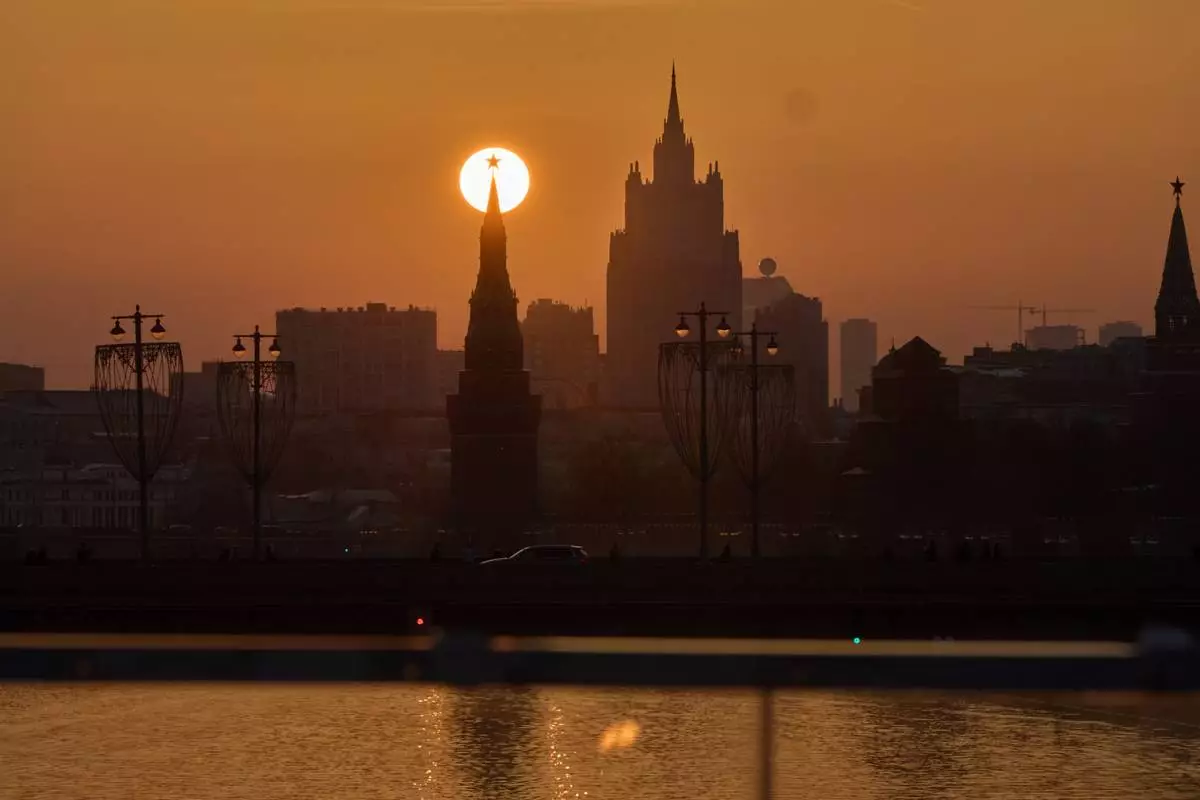
The sun is seen behind a Red Star atop of a Kremlin Tower during sunset in Moscow, Thursday, March 12, 2026, backdropped by a Stalin's style skyscraper. (AP Photo/Alexander Zemlianichenko)
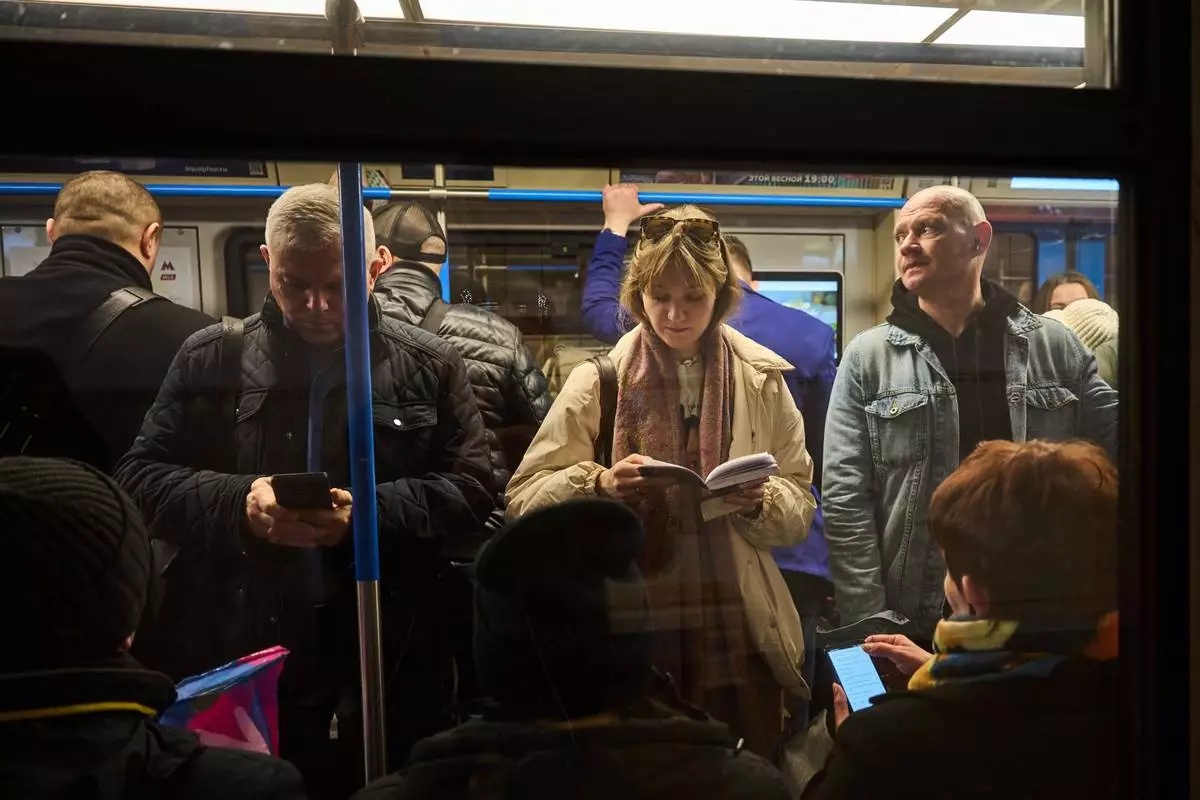
A man looks at his smartphone as a woman reads a book while on the subway in Moscow Thursday, March 12, 2026. (AP Photo/Alexander Zemlianichenko)
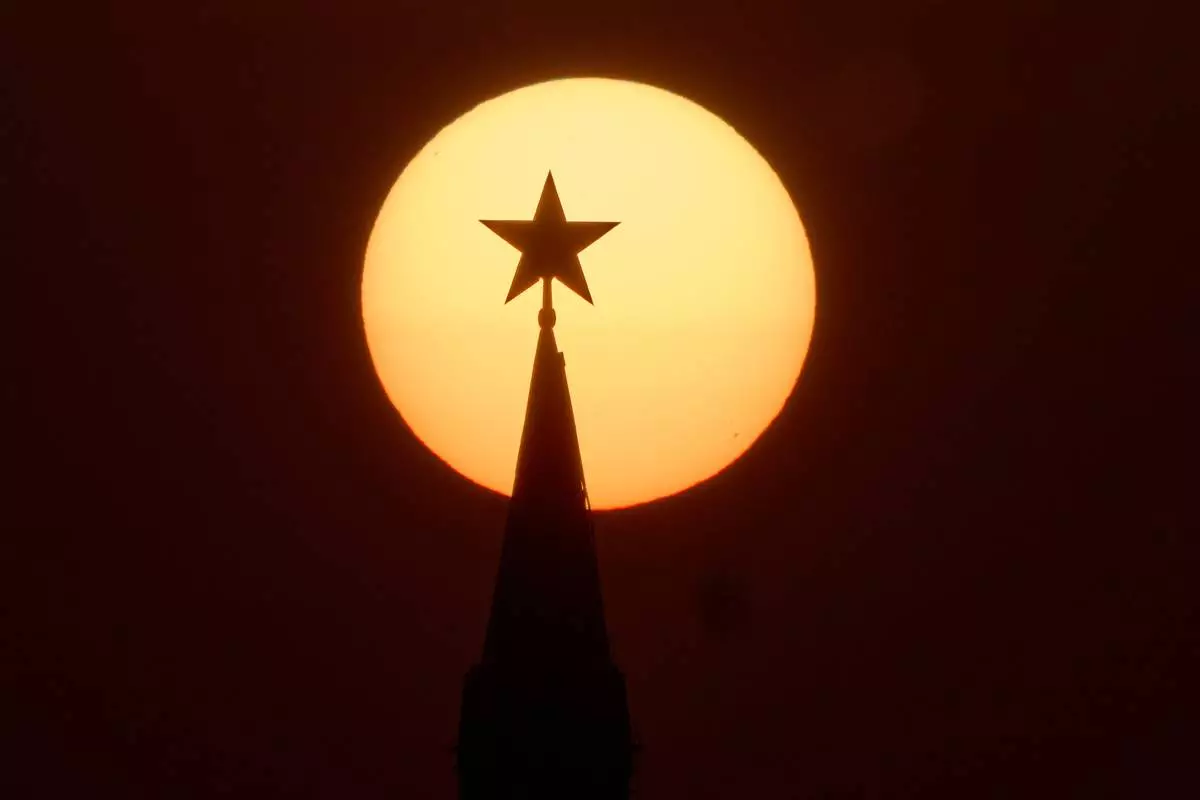
The sun is seen behind a Red Star atop of a Kremlin Tower during sunset in Moscow, Thursday, March 12, 2026. (AP Photo/Alexander Zemlianichenko)
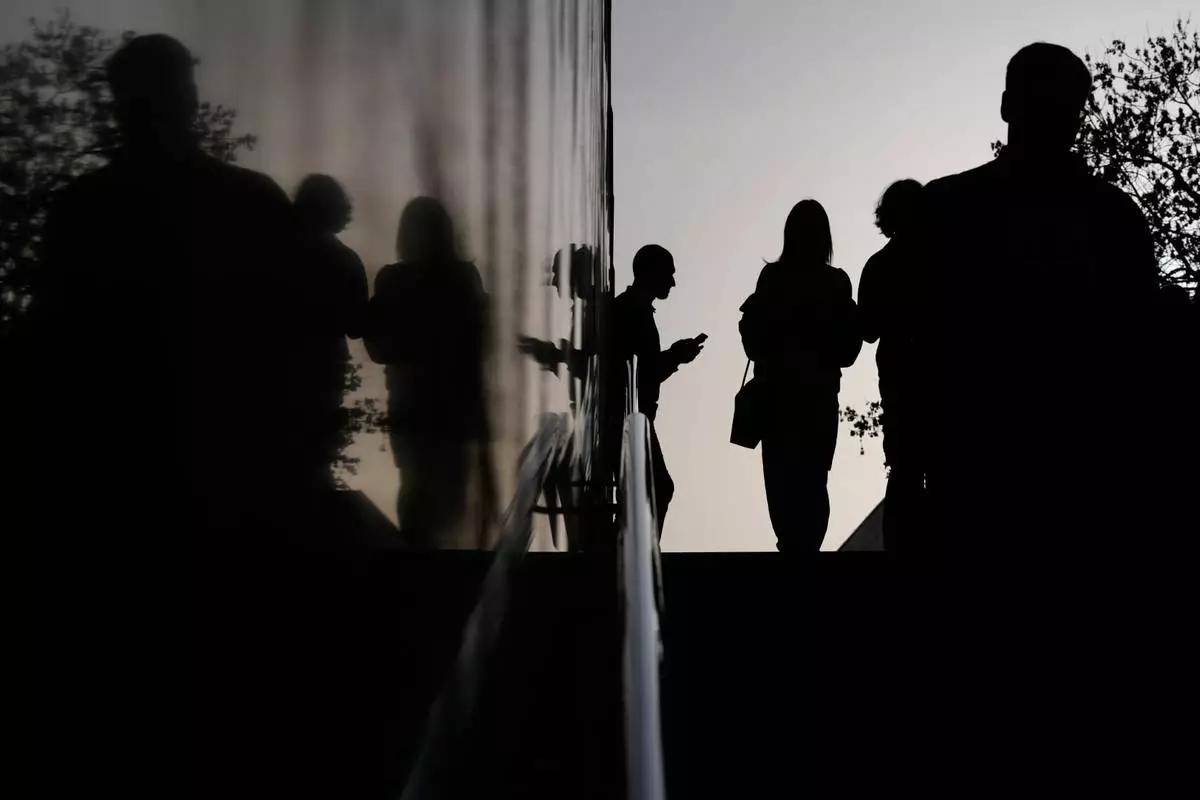
People enter an underpass during sunset in Moscow, Thursday, March 12, 2026. (AP Photo/Pavel Bednyakov)
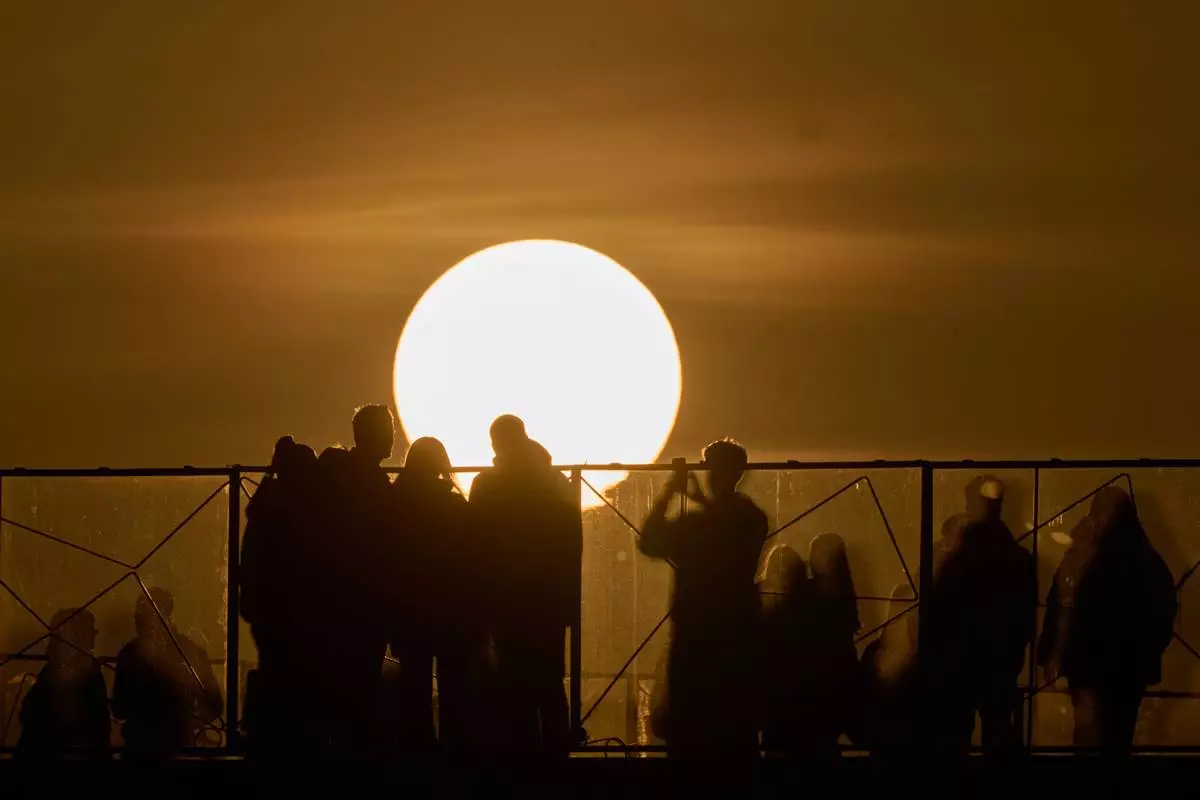
People watch and take photos during sunset in Moscow, Thursday, March 12, 2026. (AP Photo/Alexander Zemlianichenko)
JEFFERSON CITY, Mo. (AP) — Missouri is poised to hold its November election with congressional districts passed after the last census, after the U.S. Supreme Court on Thursday again rejected a new map backed by President Donald Trump that Republicans hoped could help them win an additional seat in the pivotal midterms.
The Supreme Court's decision marked a defining moment in a pitched legal battle that has lasted nearly a year and caused confusion for voters. Citing the court's latest action, Missouri's chief election official directed local authorities to use U.S. House districts passed in 2022, as the state’s highest court had ordered.
Trump wanted courts to allow the use of his preferred map, which lawmakers approved last year at his urging.
The decision means Missouri could run the November general election with different U.S. House districts than were used in the August primary — an extremely rare situation that could switch the candidate choices for more than a million potential voters, or nearly 1 in 4 voters statewide, according to an Associated Press estimate.
No Supreme Court justices publicly dissented from the brief order. It did not detail the court’s legal reasoning, as is typical in emergency appeals.
The White House did not immediately respond to a request for comment on the U.S. Supreme Court decision.
Earlier Thursday, Missouri's top court convened a hearing on whether to hold Republican Secretary of State Denny Hoskins in contempt for not following its orders to use the districts passed after the last census. Hoskins had instead told local election authorities to use the new Trump-backed map, pointing to a competing order from a federal judge on Tuesday that forbade him from using anything other than the new districts.
Missouri Supreme Court judges, while questioning a state attorney representing Hoskins, repeatedly pressed for Hoskins to send out guidance Thursday to use the 2022 version of the congressional districts.
“We’re in a precarious situation,” Chief Justice W. Brent Powell said.
Hoskins later released a statement acknowledging the U.S. Supreme Court decision, saying “my Office is directing local election authorities to use the 2022 congressional map.”
The court then reconvened, finding Hoskins in contempt for violating its order not to use the Trump-backed map but then quickly declaring that he had corrected the problem with his latest order to use the 2022 map. The court imposed no consequences on Hoskins.
Outside the court, progressive activist Keith Rose stood in the rain protesting Hoskins’ legal maneuverings to try to use the Trump-backed map. Rose, who helped gather petition signatures to put the new map to a statewide vote, said he hopes the U.S. Supreme Court’s decision Thursday ends the uncertainty.
“We need some finality. We need to focus on the real issues that Missourians care about,” Rose said.
Candidates who won Missouri’s August primary already have been certified for the November ballot according to the number of the district they won. But those districts could substantially change shape.
The 5th Congressional District encompasses only the Kansas City area under the 2022 map that Republican lawmakers passed after the last census. Under the revised map backed by Trump, portions are shed to neighboring districts and the remainder is stretched into rural Republican areas. About 59% of the potential voters are new to the district under that version, according to an AP estimate.
Some other states that have switched congressional districts after their primaries have redone their primary votes. Alabama held a new primary in August under revised districts when the U.S. Supreme Court allowed a change to occur after voting in the original May primary.
In Missouri’s case, however, no court has suggested redoing the primary.
Missouri’s battle over its congressional districts has spanned more than a year and spawned confusion over which districts will be in place for voters.
It was the second Republican-led state, after Texas, to enact new districts after Trump urged Republicans last year to redraw House districts to their advantage ahead of the midterm elections.
The revised districts target a Kansas City-based seat held by Democratic Rep. Emanuel Cleaver of Kansas City, aiming to help Republicans win seven of the state’s eight House seats in the midterm elections.
Redistricting opponents collected hundreds of thousands of petition signatures seeking to force a statewide vote on the new districts. They submitted the signatures in December. But Hoskins waited until August — on the same day as Missouri’s primary — to reject the petition. Hoskins asserted that a referendum petition could not be used for congressional redistricting.
The delay allowed Missouri to use the new districts in its August primary. Cleaver was unopposed for the Democratic nomination. State Sen. Rick Brattin won the Republican primary for the right to challenge Cleaver. Brattin was among those suing in federal court to try to prevent the state from reverting to the prior districts.
Republican U.S. Rep. Bob Onder, who was also among those suing, said Thursday: “This isn’t over.” He noted that the 8th U.S. Circuit Court of Appeals will hear arguments on the merits of his case.
Republican state officials have argued that it would violate voters’ federal rights to switch districts before the general election.
But the Missouri Supreme Court last week ordered Hoskins to put the redistricting referendum on the November ballot, which he did. It also ruled that the new districts never became law and instead were suspended retroactively to the December petition submission. The court barred Hoskins from using the new map and said the old map — passed by Republican lawmakers in 2022 after the last census — must be used in the November election.
The state then appealed to the U.S. Supreme Court to block the state court decision. Justice Brett Kavanaugh rejected the request.
The group People Not Politicians Missouri, which sponsored the redistricting referendum, applauded the Supreme Court decisions that left the state court ruling in place.
“The law is the law, the Missouri constitution is clear as was the Missouri Supreme Court,” said Executive Director Richard von Glahn. “The courts have settled this, now it’s up to Missouri voters to finish the job and vote NO on Proposition A.”
Whitehurst reported from Washington. Associated Press journalist Hannah Recht in Washington contributed.
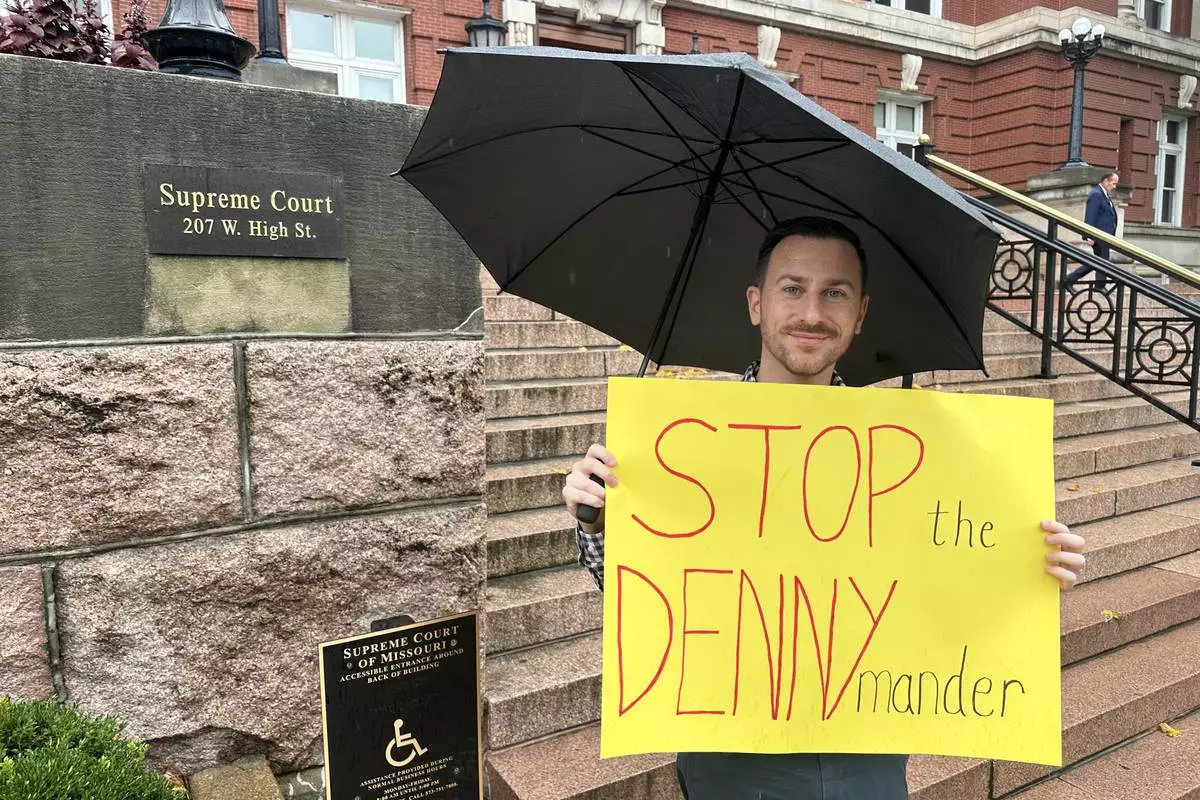
This photo taken with a smartphone shows Keith Rose holding a sign opposed to new Missouri congressional districts supported by Secretary of State Denny Hoskins outside the Missouri Supreme Court in Jefferson City, Mo., Thursday, Sept. 10, 2026. (AP Photo/David A. Lieb)
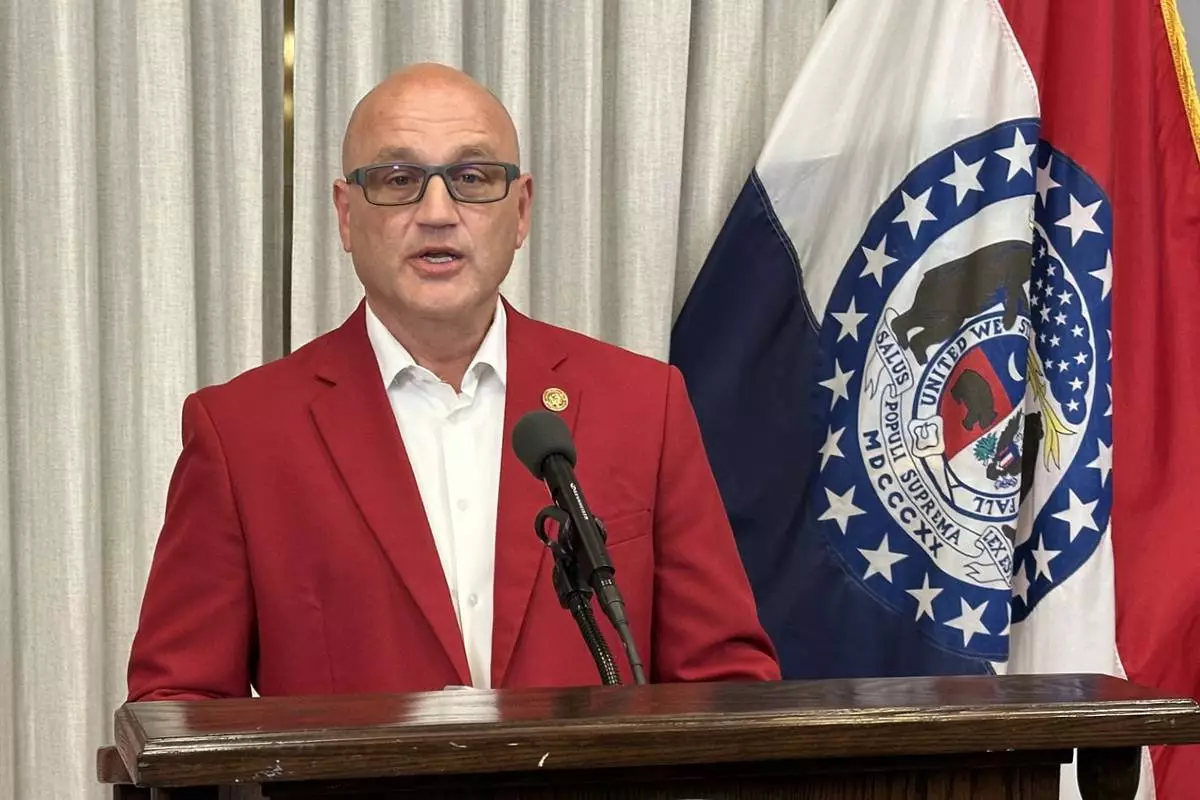
FILE - Missouri Secretary of State Denny Hoskins talks to reporters Tuesday, Aug. 4, 2026, at his office in the state Capitol in Jefferson City, Mo. (AP Photo/David A. Lieb, File)
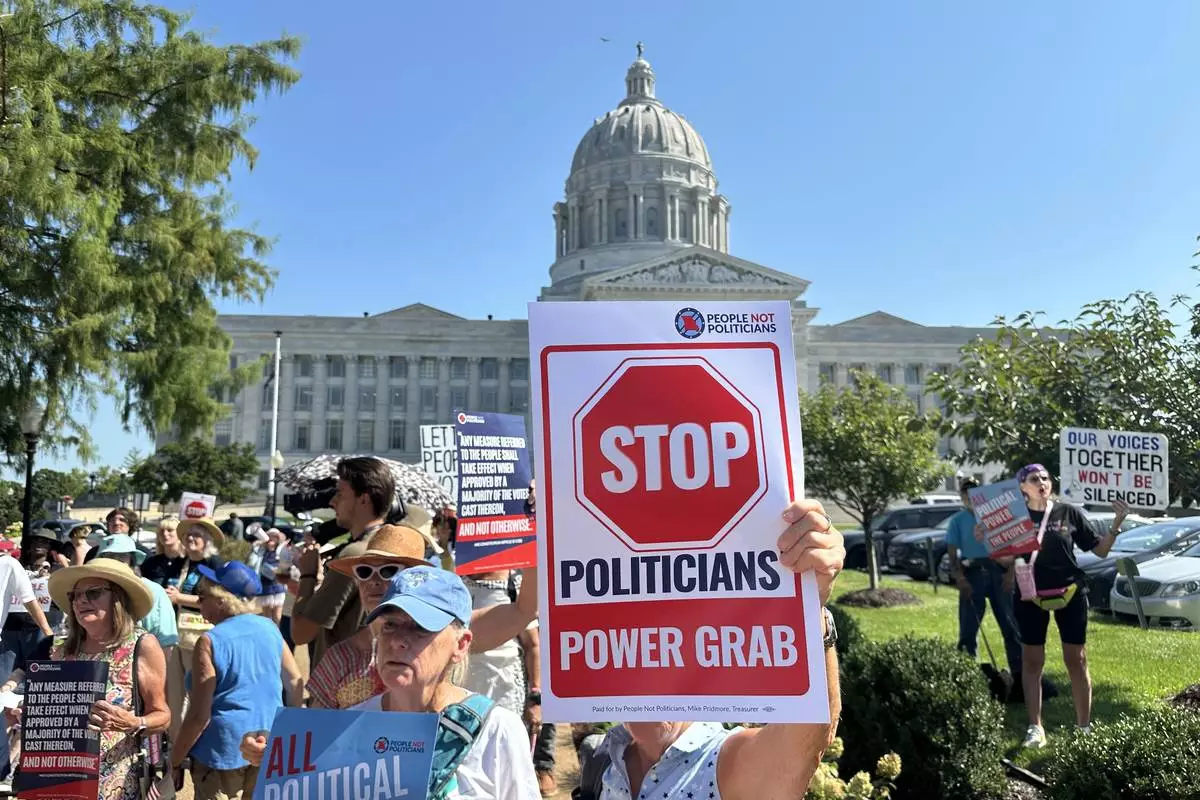
In this photo taken with a smartphone, people opposed to a congressional redistricting plan rally outside the Missouri Capitol in Jefferson City, Mo., Wednesday, Sept. 2, 2026. (AP Photo/David A. Lieb)