TOKYO & KAWASAKI, Japan--(BUSINESS WIRE)--May 27, 2026--
Sumitomo Mitsui Banking Corporation (“SMBC”) and Toshiba Corporation (“Toshiba”) today announced the joint development of the SMBC/TOSHIBA Quantum Driven Diversified Japan Equity Index and the SMBC/TOSHIBA Quantum Driven Diversified U.S. Equity Index, new equity indices realized with advanced quantum-driven technologies. Collectively, the indices are referred to as “SMBC/TOSHIBA Quantum Diversified” (the “Indices”).
This press release features multimedia. View the full release here: https://www.businesswire.com/news/home/20260519448161/en/
1. Background and Objectives
Equity investment is central to asset management, but it also carries the ever-present risk of abrupt and substantial market fluctuations driven by geopolitical developments, changes in economic policy, and other external factors. In uncertain markets, investors are constantly seeking innovations in risk diversification that can protect their assets from unexpected market shocks.
SMBC and Toshiba have together developed new Indices that combine SMBC’s expertise in financial markets with Toshiba’s advanced quantum-driven technologies. These Indices use solutions to large-scale combinatorial optimization problems to realize well diversified equity portfolios that are difficult to construct with traditional methodologies. They aim to maintain the benefits of diversification even during times of market volatility, and to contribute to effective risk mitigation.
2. Overview of the Indices
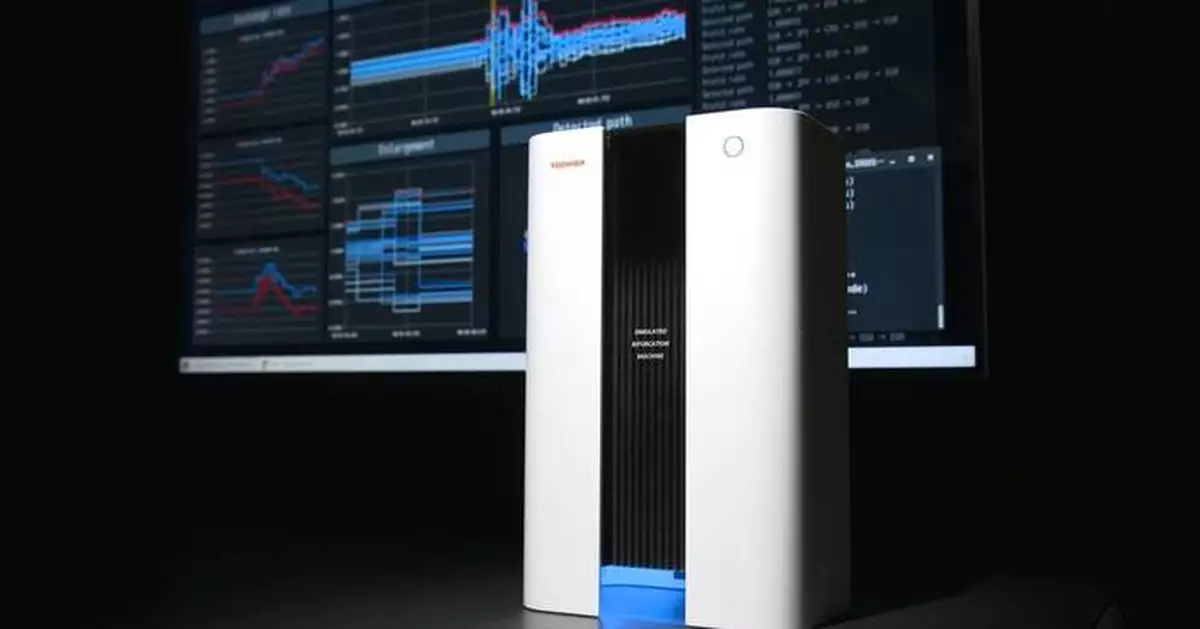
The Indices use the constituent stocks of existing Japanese and U.S. equity indices as their pools of candidate securities, the universes they explore. Individual components for the Indices are selected quarterly through calculations made by the Simulated Bifurcation Machine, Toshiba’s quantum-driven optimization computer. The weight given to an individual stock is determined based on its historical price volatility. Calculation of the Indices has started, with the end of 2015 as the base date.
3. Key Features of the Indices
(1) Risk diversification through rigorous selection of low correlation stocks
The Indices are constructed through an optimization process that selects a subset of stocks from the universe so as to keep correlations across constituent pairs low. By building a portfolio of stocks whose price movements are less likely to move in tandem, the Indices aims to preserve the benefits of diversification even during broad market downturns.
(2) Large-scale combinatorial optimization enabled by advanced quantum-driven technology
Executing these calculations across a large universe is a challenge for conventional classical computers, due to the immense scale of potential combination patterns. However, it can be done with Toshiba’s Simulated Bifurcation Machine, the technology underpinning the Indices.
(3) Practical Index design for real-world implementation
The methodology powering the Indices is geared to actual fund management, and the aim is to use the capabilities of advanced technologies to provide investors with a diversified equity portfolio. This is done by adopting proprietary and practical calculation rules that consider the liquidity of constituent stocks, the need to contain the transaction costs of periodic rebalancing and other factors (joint patent application pending).
4. Roles of Each Company
SMBC led the development of the Indices, using financial engineering expertise cultivated within its global market and treasury divisions to develop the calculation methodology. It will now promote diversified investment strategies based on the Indices to asset management companies.
Toshiba provides the Indices with a customized version of the quantum-driven optimization technology of the Simulated Bifurcation Machine. It also handles system maintenance and will execute the quarterly rebalancing calculations.
Daily calculation and distribution of the Indices will be done by S&P Dow Jones Indices (S&P DJI), one of the leading independent providers of global indices. S&P DJI manages accurate adjustments of market data that provides the basis for corporate actions such as stock splits and dividend payments, and delivers transparent, reliable index data to the market.
5. Outlook
Publication of the Indices marks the start of a collaborative initiative by SMBC and Toshiba. They will now move forward by promoting proposal activities that aim for broad utilization of the Indices in financial markets.
As a first step, they will start exploratory discussions with management firms on index funds, ETFs and other investment vehicles linked to the Indices. While the Indices are built on advanced computational technologies, value to investors can only be realized when they are used to develop financial products that offer investors in Japan and overseas practical diversification options.
Alongside new indices derived from the current methodology, SMBC and Toshiba will continue to pursue the application of advanced technologies in the financial sector, including quantum and quantum-driven technologies.
About SMBC Group
SMBC Group is a top-tier global financial group. Headquartered in Tokyo and with a 400-year history, SMBC Group offers a diverse range of financial services, including banking, leasing, securities, credit cards, and consumer finance. The Group has more than 150 offices and 120,000 employees worldwide in nearly 40 countries. Sumitomo Mitsui Financial Group, Inc. (SMFG) is the holding company of SMBC Group, which is one of the three largest banking groups in Japan. SMFG’s shares trade on the Tokyo, Nagoya, and ADRs on the New York (NYSE: SMFG) stock exchanges.
About Toshiba
For over 150 years, guided by its corporate philosophy, “Committed to People, Committed to the Future.,” Toshiba Group has contributed to society through its business activities. Today, the Group continues to enhance its management structure, streamline operations, and invest in forward‑looking businesses in the energy, digital infrastructure, and electronic devices domains.
Annual sales in fiscal year 2025 were 3.7 trillion yen, with 94,000 employees worldwide.
Find out more on our website or follow us on LinkedIn.
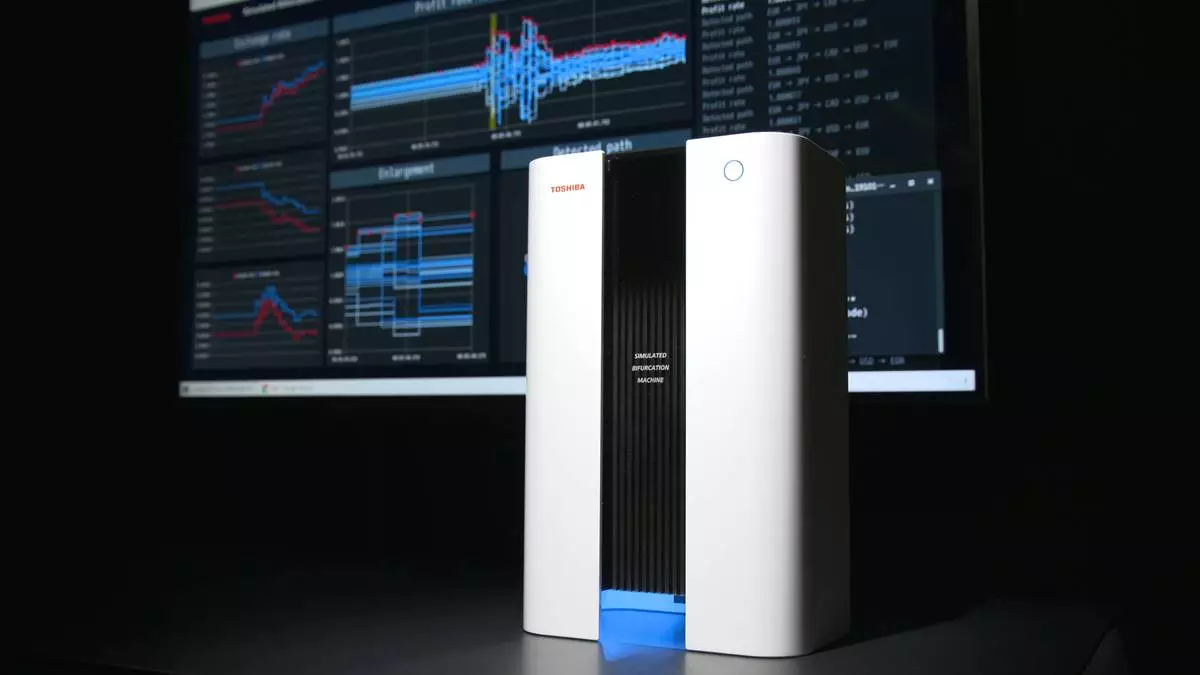
Toshiba’s Simulated Bifurcation Machine
WASHINGTON (AP) — U.S. forces carried out new defensive strikes on Wednesday on an Iran military facility after downing Iranian attack drones, according to U.S. officials.
The officials, who were not authorized to comment publicly and spoke on the condition of anonymity, said U.S. Central Command forces shot down four Iranian one-way attack drones that posed a threat around the Strait of Hormuz.
U.S. forces also struck an Iranian ground control station in Bandar Abbas that was about to launch a fifth drone, according to the officials.
The strikes came after President Donald Trump asserted Wednesday that Iran is “negotiating on fumes” and insisted that November's midterm elections won't make him rush into a deal to end the nearly three-month-old conflict that's spurred unease across the global economy.
Speaking at the start of a Cabinet meeting, Trump expressed confidence that a deal is near. Over the weekend, he even declared that his administration and Tehran had “largely negotiated” a settlement, though the talks are still in flux.
The president is looking for a settlement that will reopen the Strait of Hormuz and provide him with a credible argument that Iran’s nuclear capability has been diminished enough to declare victory, winding down a conflict that's been politically unpopular for Republicans.
But as things stand, Trump also risks finding that closure to his war of choice comes with an unsatisfactory ending.
The emerging deal puts off many critical issues to be resolved later and has already exposed the Republican president to fierce criticism — even from some of his own supporters — that Iran's hardline leaders will emerge from the conflict battered but emboldened. It all comes to a head just as the midterm elections to determine control of Congress come into focus and as Republicans worry that rising costs and fuel prices are darkening the American electorate's mood.
But Trump on Wednesday dismissed the idea that the upcoming elections would shape his Iran strategy.
“They thought they were gonna outwait me. You know, 'We’ll outwait him. He’s got the midterms,'” Trump said. “I don’t care about the midterms.”
Trump acknowledged there's still work to do, but he spoke with a measure of certainty that the two sides would get there.
“They want very much to make a deal,” Trump said. “So far, they haven’t gotten there. We’re not satisfied with it, but we will be — either that or we’ll have to just finish the job.”
Talks were further complicated after U.S. forces carried out what the Pentagon called “defensive” strikes on missile launch sites and minelaying boats in southern Iran on Monday. The U.S. said it acted with “restraint” in light of the weekslong ceasefire, while Iran decried the action as a sign of “bad faith and unreliability.” Wednesday's strikes are likely to cause more complications.
While Trump insists a deal is within reach, there appears to be daylight between the U.S. and Iran on several key issues. The president is also facing scrutiny from Republican allies, including Sens. Roger Wicker of Mississippi, Lindsey Graham of South Carolina and Ted Cruz of Texas, who have said the terms seem too favorable to Tehran.
They're balking at aspects of the deal that have emerged publicly that they say too closely resemble the nuclear agreement reached with Iran by Democratic President Barack Obama, which Trump scrapped during his first term.
Under the potential deal, Tehran would agree to give up its stockpile of highly enriched uranium — a key Trump demand — in return for sanctions relief. That's according to two regional officials and one senior Trump administration official, all of whom spoke on the condition of anonymity to discuss the sensitive negotiations.
One regional official, with direct knowledge of the negotiations, said how Iran would give up the uranium would be subject to further talks during a 60-day period. Some would likely be diluted, while the rest would be transferred to a third country, the official said.
Trump said that he “wouldn’t be comfortable” with either Russia or China taking Iran’s stockpile of highly enriched uranium. The two countries have the closest relations with Tehran, and nuclear analysts have said they could be a potential acceptable third party to the Iranian Republic to take possession of the enriched uranium as part of a potential deal.
Iran has 440.9 kilograms (972 pounds) of uranium that is enriched up to 60% purity, a short, technical step from weapons-grade levels of 90%, according to the International Atomic Energy Agency. Iran has not publicly committed to giving up its uranium.
Another key issue unresolved is whether the ceasefire will also cover Israel’s operations against Hezbollah, the Iranian-backed militant group in Lebanon. Iran has insisted that Lebanon must be covered by any ceasefire agreement negotiated with the United States.
The administration appears to leave some wiggle room on the Lebanon question. The emerging memorandum of understanding calls for a ceasefire between the U.S. and its allies against Iran and its proxies, such as Hezbollah, but also underscores Israel's right to act against imminent threats and in self-defense.
Prime Minister Benjamin Netanyahu on Tuesday announced that the Israeli military is “deepening its operation” in Lebanon. Overnight, Israel's military clashed with the Iran-backed militant Hezbollah group along a strategic river in southern Lebanon as Israeli troops pushed farther north.
Jonathan Conricus, a former spokesperson for the Israel Defense Forces, said Israel expects that Iran would quickly move to direct any sanctions relief to restore its military capability and boost proxy groups, including Hezbollah and Hamas in Gaza.
“We’re not done fighting, because the Iranian regime isn’t done,” said Conricus, who is a senior fellow with the Foundation for Defense of Democracies, a hawkish Washington think tank.
Trump on Wednesday also reinforced his call that the deal should include a requirement for several additional countries, including Kuwait, Saudi Arabia, Qatar and Pakistan, to join the Abraham Accords, the U.S.-brokered agreements from Trump’s first term aimed at normalizing diplomatic and economic relations with Israel.
“We’re, you know, requesting strongly that they join,” Trump said.
Trump’s optimism that the other Middle Eastern and majority-Muslim countries could soon sign on to the accords might be overly ambitious.
For example, Saudi Arabia, the most significant power in the Arab world and long seen as the biggest prize for the normalization effort, has insisted that establishing a guaranteed path to a Palestinian state remains a precondition. It's something that Israel vehemently opposes.
Trump pushed for the Abraham Accords during a call with leaders of Mideast allies over the weekend.
Barbara Leaf, a retired U.S. ambassador to the United Arab Emirates and senior State Department official during President Joe Biden's Democratic administration, said officials from Gulf countries who were on the call told her that Trump's pitch was greeted by “stunned silence.” A person familiar with the call disputed that characterization and said that some regional allies responded positively to the president’s call to join the accords. The person spoke on the condition of anonymity about the private conversation.
Leaf, a distinguished diplomatic fellow at the Middle East Institute, said that Middle Eastern allies of the United States recognize that Iran will likely use any money from sanctions relief to bolster its military capabilities. Still, they have been supportive of Trump’s efforts to end the conflict.
“They see no other way out,” Leaf said of American allies in the region. “And they see no other way out because of many of these early mistakes that the president and the administration made in conducting the war.”
AP writers Matthew Lee, Michelle L. Price and Darlene Superville in Washington, Bill Barrow in Atlanta, Meg Kinnard in Columbia, S.C., Samy Magdy in Cairo and Melanie Lidman in Jerusalem contributed to this report.
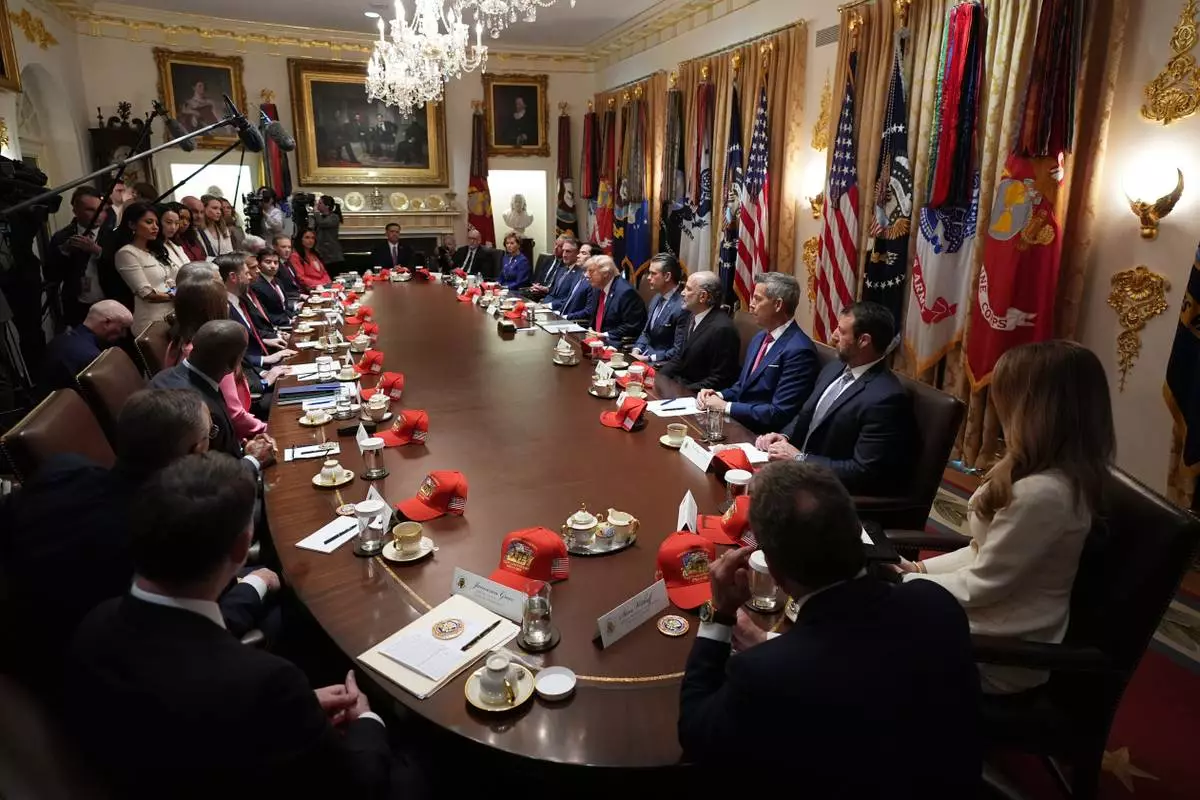
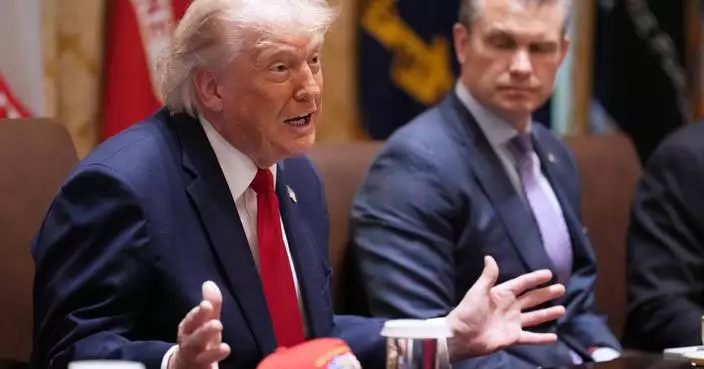
President Donald Trump, center right, attends a Cabinet meeting in the Cabinet Room, at the White House, Wednesday, May 27, 2026, in Washington. (AP Photo/Jacquelyn Martin)
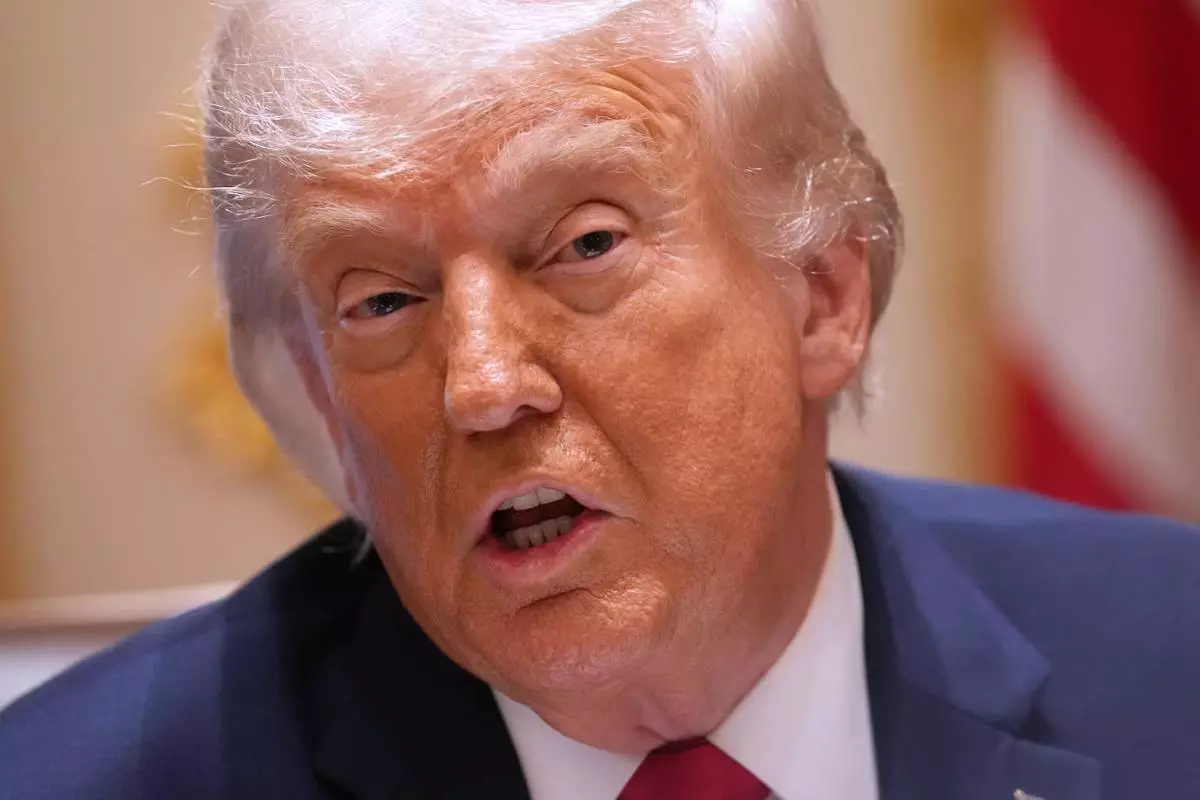
President Donald Trump speaks during a Cabinet meeting at the White House, Wednesday, May 27, 2026, in Washington. (AP Photo/Jacquelyn Martin)
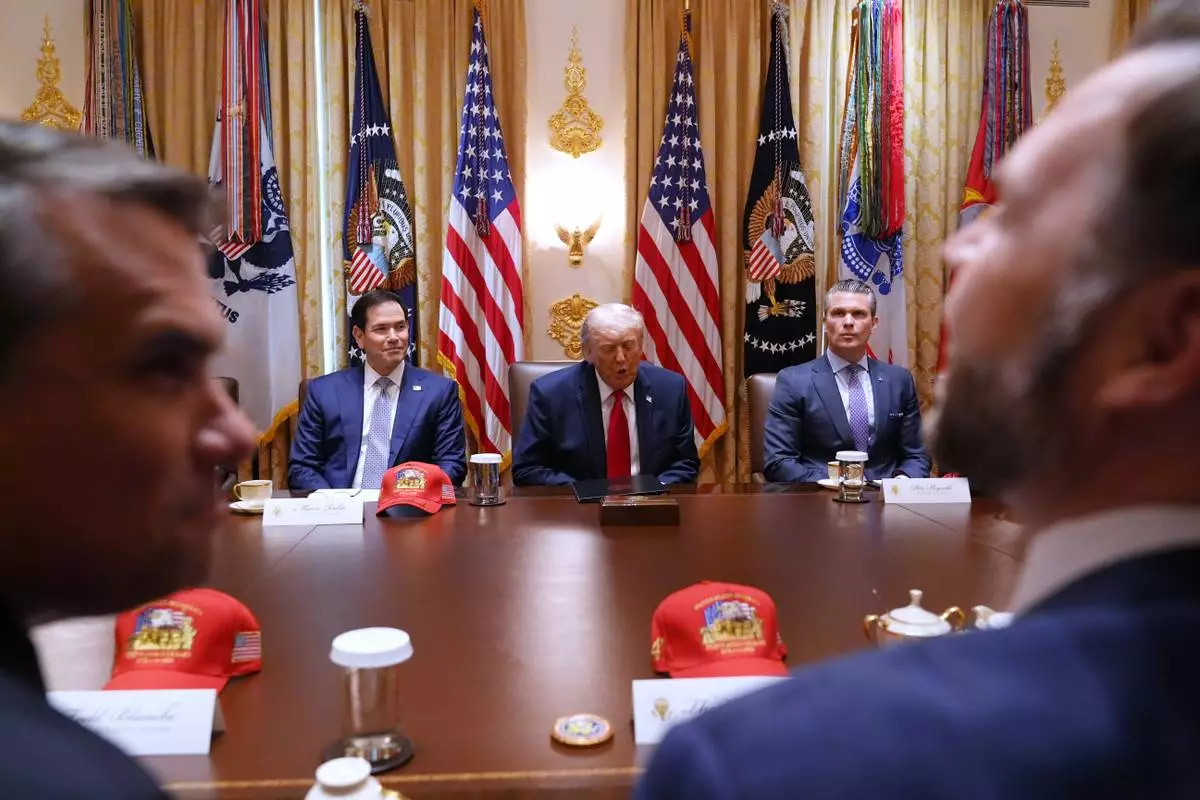
President Donald Trump, next to Secretary of State Marco Rubio, left, and Secretary of Defense, Pete Hegseth, right, speaks during a Cabinet meeting at the White House, Wednesday, May 27, 2026, in Washington, as Acting Attorney General Todd Blanche, front left, and Vice President JD Vance, front right, look on. (AP Photo/Jacquelyn Martin)
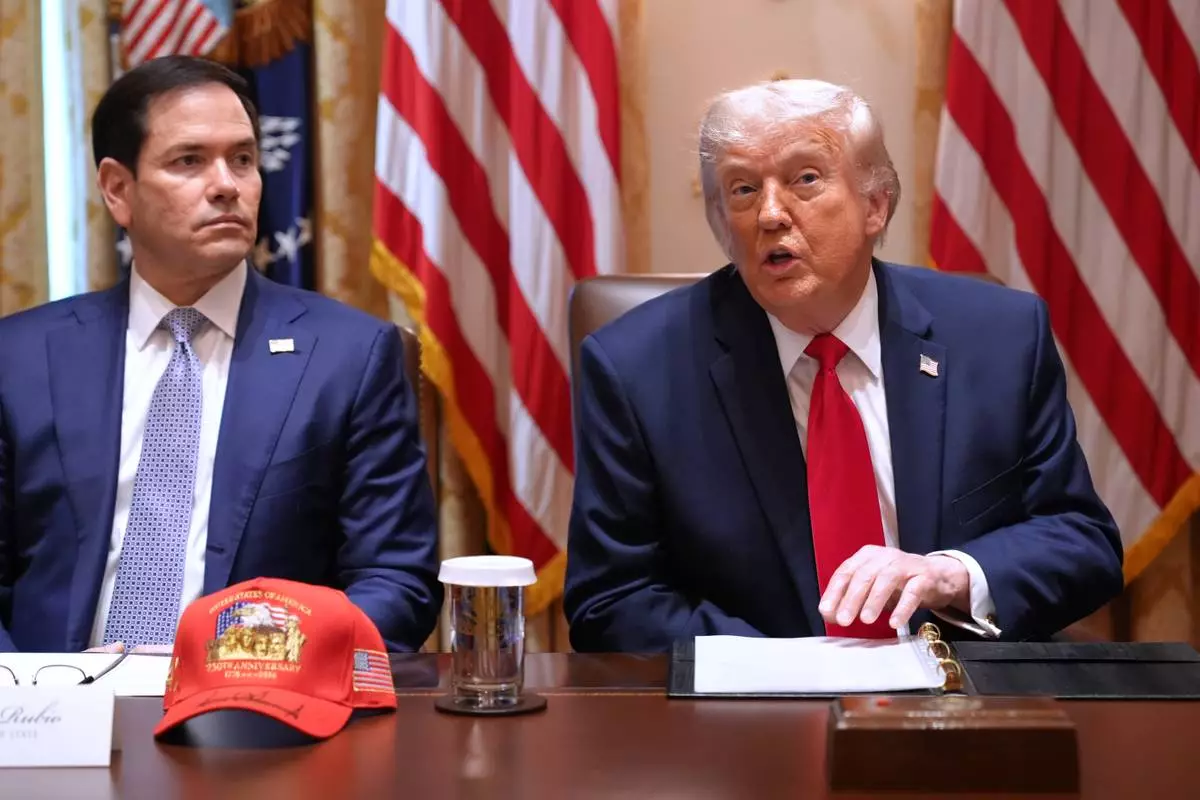
President Donald Trump, next to Secretary of State Marco Rubio, speaks during a Cabinet meeting at the White House, Wednesday, May 27, 2026, in Washington. (AP Photo/Jacquelyn Martin)
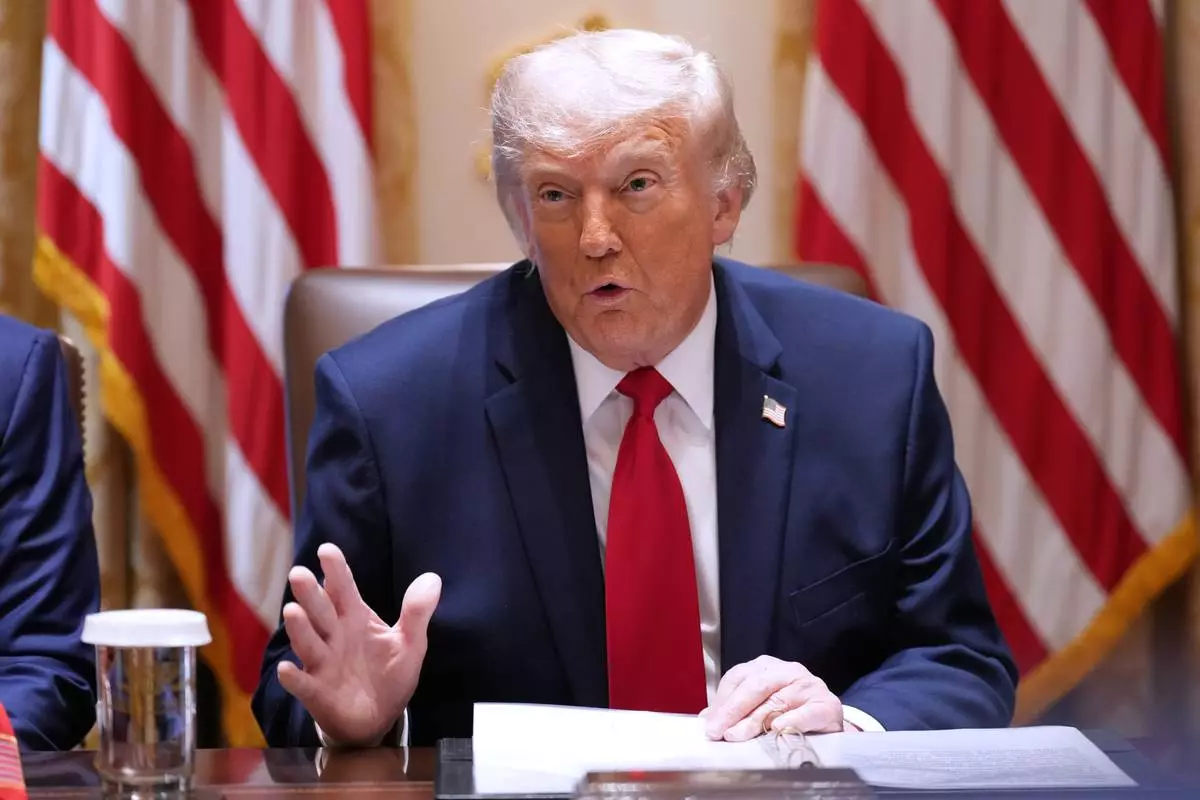
President Donald Trump speaks during a Cabinet meeting at the White House, Wednesday, May 27, 2026, in Washington. (AP Photo/Jacquelyn Martin)
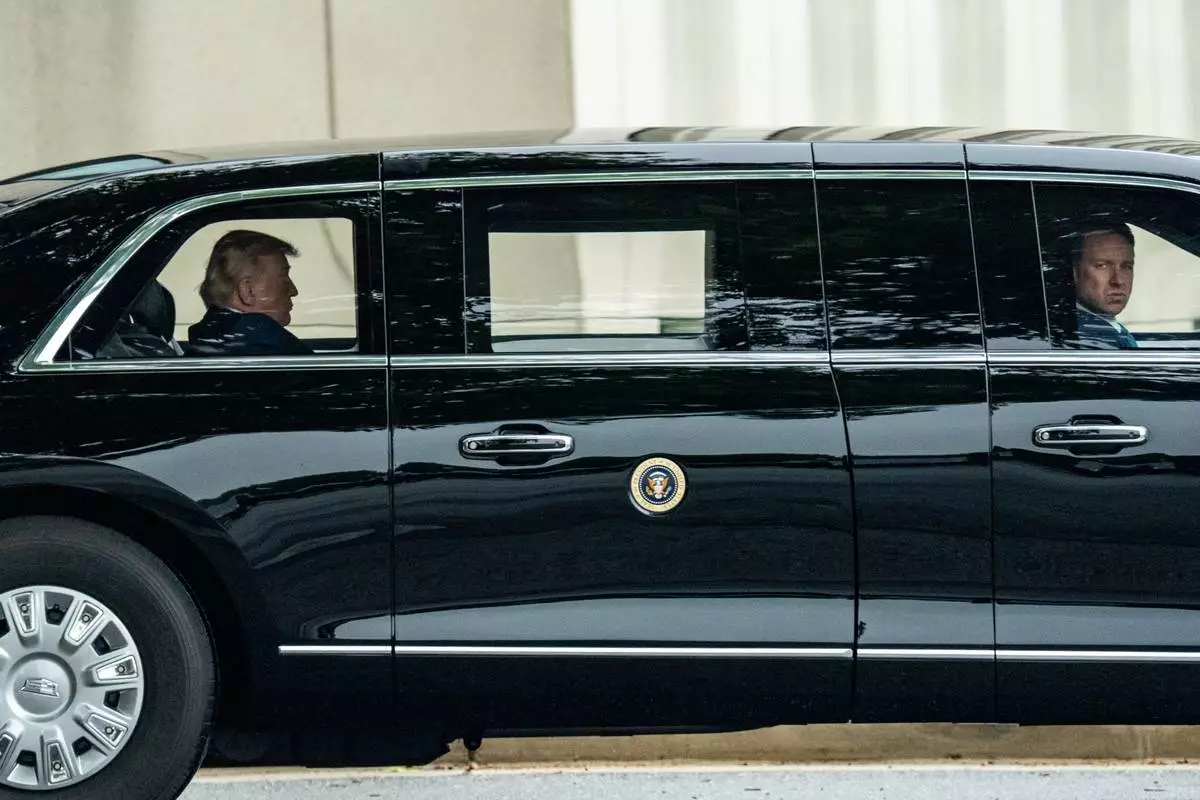
President Donald Trump departs Walter Reed National Military Medical Center, Tuesday, May 26, 2026, in Bethesda, Md. (AP Photo/Alex Brandon)