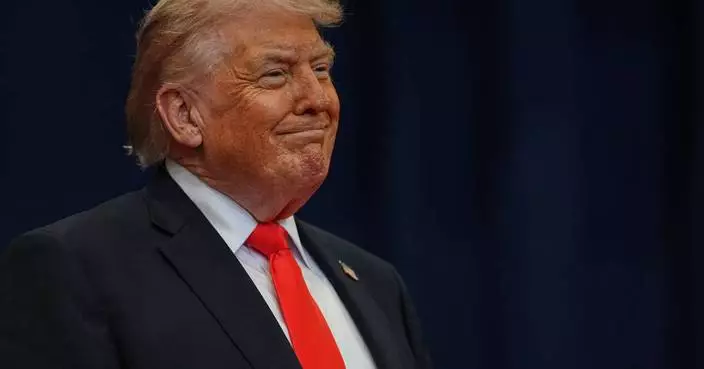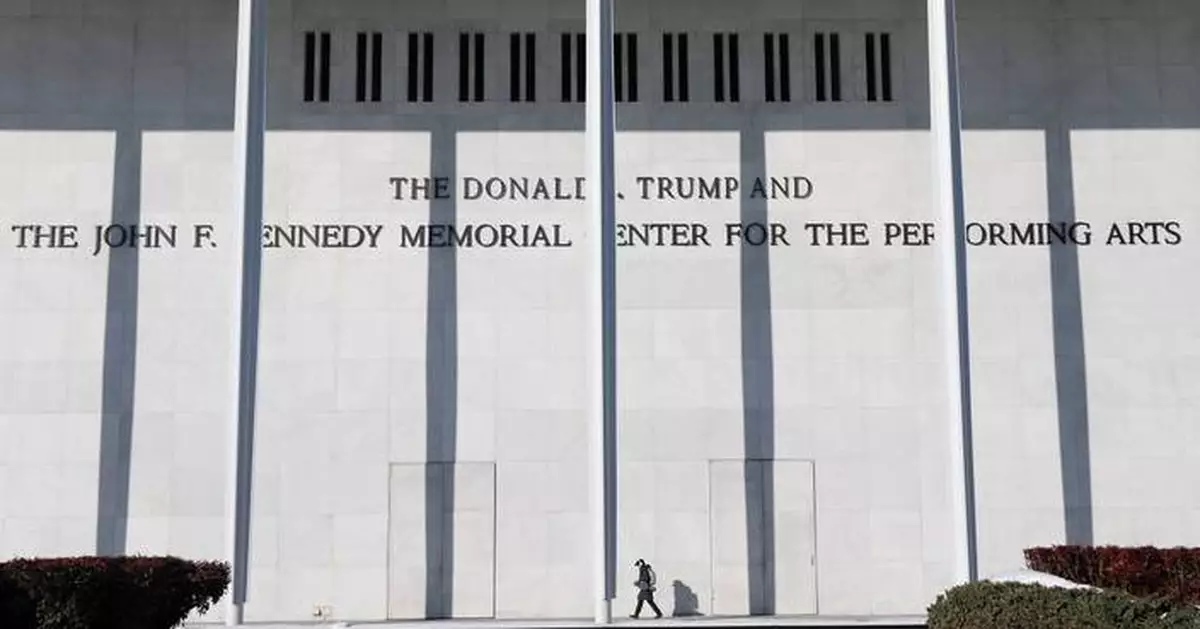
WASHINGTON (AP) — Richard Grenell, an ally of President Donald Trump who oversaw far reaching changes at the Kennedy Center that prompted many artists to abandon the iconic performing arts venue, will step down as the institution's president.
Trump announced the change in a social media post on Friday after it was first reported by Axios. The president said Matt Floca, who manages the Kennedy Center's facilities operations, will succeed Grenell. The moves are expected to be finalized at a board meeting scheduled for Monday at the White House, according to a person familiar with the matter who requested anonymity to discuss plans that are not yet public.
Grenell’s departure comes as the Kennedy Center prepares to close this summer for a two-year renovation.
“Ric Grenell has done an excellent job in helping to coordinate various elements of the Center during the transition period, and I want to thank him for the outstanding work he has done,” Trump said online. “THE TRUMP KENNEDY CENTER will be, at its completion, the finest facility of its kind anywhere in the World!”
Grenell was a central player in Trump's push to dramatically overhaul the Kennedy Center following the president's return to office. After mostly ignoring the center during his first term, Trump made it a focal point in his war against “woke” culture. He ousted the Kennedy Center’s previous leadership and replaced it with a hand-picked board of trustees who voted to rename the facility the Trump Kennedy Center, a change scholars and lawmakers say must be initiated by Congress.
More recently, Trump's name was physically added to the building's iconic facade.
The fallout from the arts community was swift and intense, with prominent musicals, such as “Hamilton,” canceling performances. Actor Issa Rae and author Louise Penny also withdrew from appearances while consultants such as musician Ben Folds and singer Renée Fleming resigned. Last week, the executive director of the National Symphony Orchestra, Jean Davidson, left to head the Los Angeles-based Wallis Annenberg Center for the Performing Arts.
Perhaps best known for its annual honors program, the Kennedy Center was long one of the few places in Washington where political differences were put aside. Supreme Court Justices Antonin Scalia and Ruth Bader Ginsburg — ideological opposites — famously attended the opera together.
But the venue became something of an extension of Trump's White House during his second term. The president was instrumental in convincing FIFA President Gianni Infantino to hold the World Cup draw there in December. Just a few days later, Trump himself hosted the Kennedy Center honors, the first for a president.
Since then, Trump has addressed House Republicans at the Kennedy Center. The documentary of first lady Melania Trump also premiered there.
Grenell is a longtime Republican foreign policy adviser. During Trump's first term, he was the U.S. ambassador to Germany and special presidential envoy for Serbia and Kosovo peace negotiations. He also served as acting director of national intelligence and was considered a contender for secretary of state in Trump's second term, a post that ultimately went to Marco Rubio.
In his position at the Kennedy Center, Grenell emphasized what he called “common sense” programming, aiming to steer the venue toward events that appealed to a broad audience and didn't lose money. But his moves prompted criticism from many Democrats on Capitol Hill.
Sen. Sheldon Whitehouse, the top Democrat on the Environment and Public Works Committee, released documents in November showing the Kennedy Center entered into an agreement giving FIFA “exclusive” use of the facility from Nov. 24 through Dec. 12 at no cost, arguing that the venue was at risk of losing millions in potential revenue because of the arrangement.
The Kennedy Center told the AP at the time that it was being paid $7.4 million to host the draw, including a $2.4 million donation from FIFA, as well as sponsorship opportunities and expenses. In a response to Whitehouse, Grenell said he raised $117 million last year.
But the wave of cancellations proved difficult to sustain. Without mentioning the abandoned performances, Trump said in February he would close the Kennedy Center for two years after this summer's July Fourth celebrations to repair what he has described as a dilapidated building.
Ahead of the closure, Grenell warned staff about impending cuts that will leave “skeletal teams.”
According to Floca’s LinkedIn page, he joined the Kennedy Center in January 2024, during the Biden administration.
A center press release from the time describes him as “an experienced facilities management professional with a construction management background and an appreciation for whole building design principles.”
Previous experience for Floca listed on LinkedIn includes a handful of positions with the District of Columbia government, among them associate director of sustainability and energy and director of facilities management. He graduated from Louisiana State University in 2009 with a Bachelor of Science degree in construction management.
Associated Press journalist Hillel Italie in New York contributed to this report.
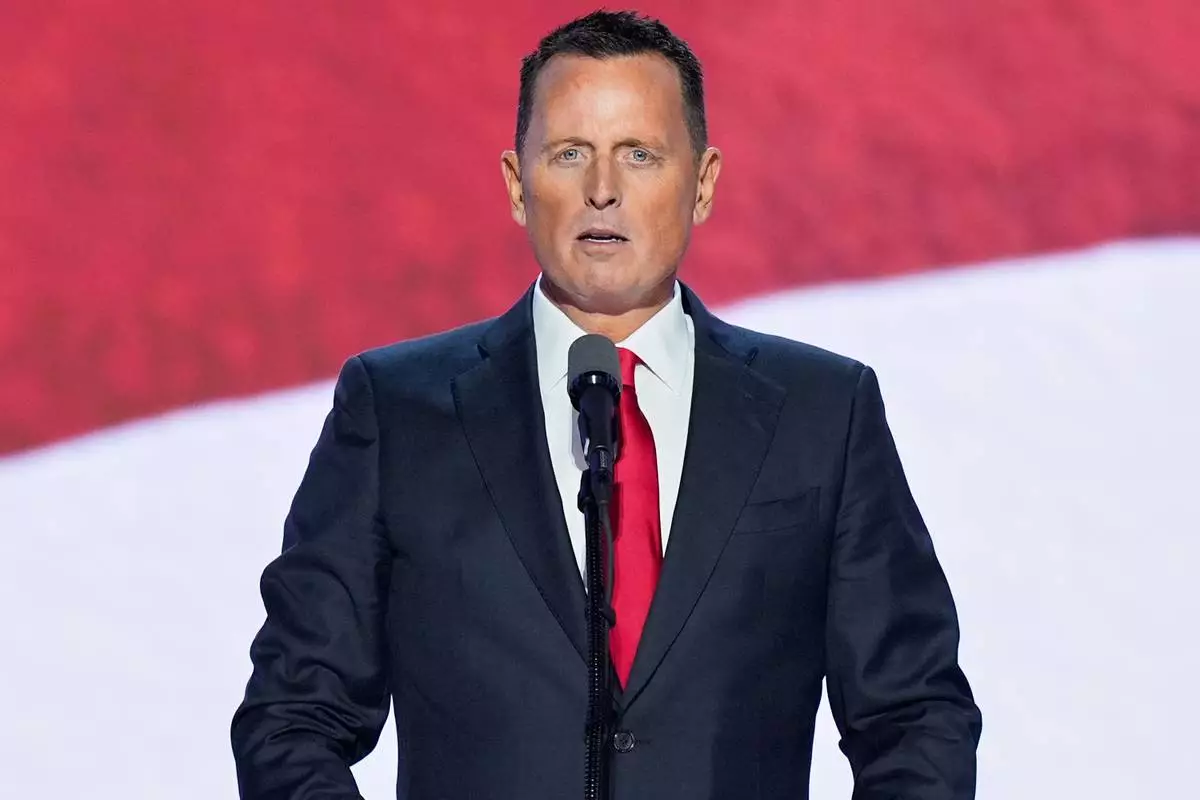
FILE - Ric Grenell, former Acting Director of National Intelligence, speaks during the Republican National Convention on July 17, 2024, in Milwaukee. (AP Photo/J. Scott Applewhite, File)
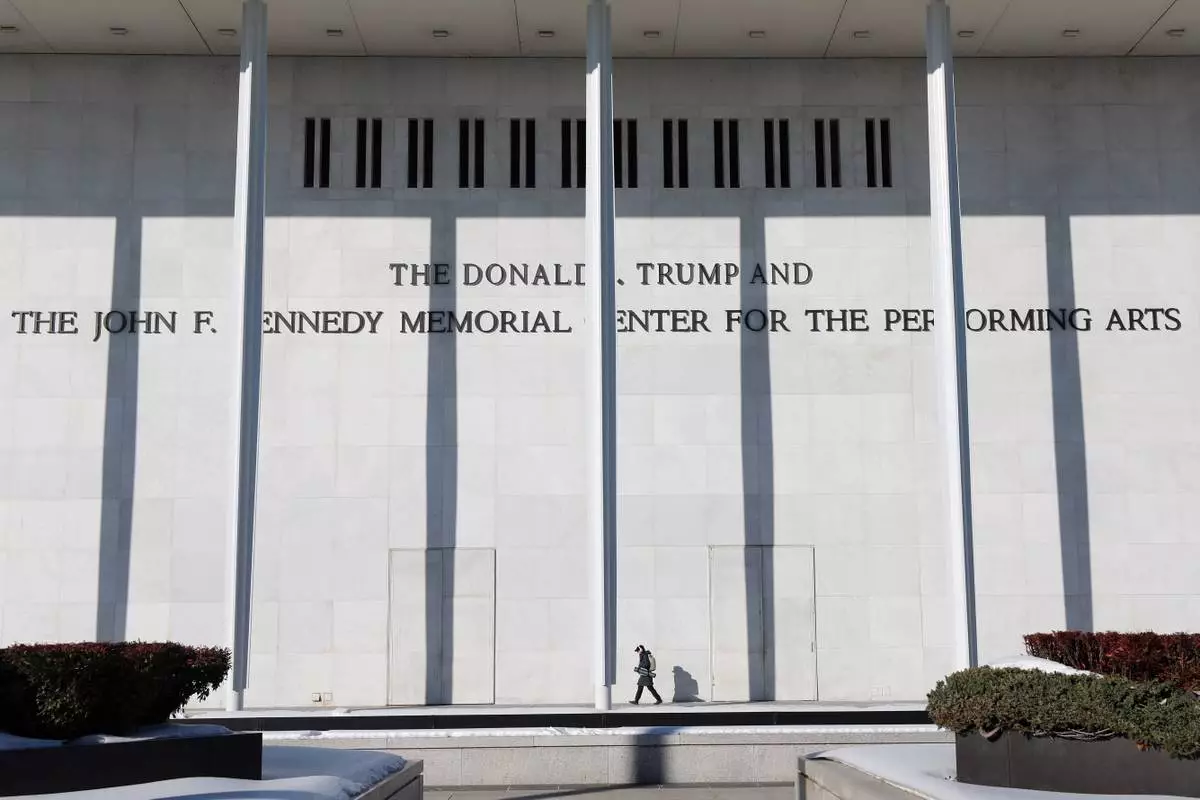
FILE - A woman walks outside The John F. Kennedy Memorial Center For The Performing Arts on Feb. 2, 2026, in Washington. (AP Photo/Rahmat Gul, File)

WASHINGTON (AP) — Anti-Muslim rhetoric from some Republicans in Congress intensified this week against the backdrop of the Iran war, with multiple lawmakers — including one who said “Muslims don’t belong in American society” — drawing condemnation from Democrats for their remarks but little pushback from GOP leaders.
The derogatory language has been percolating among Republican officials for months, often prominent when criticizing New York Mayor Zohran Mamdani, who is Muslim. But against the backdrop of the Iran war, a country with an overwhelmingly Muslim population, and attacks at a synagogue in Michigan and a college in Virginia, the tone sharpened this week.
“The enemy is inside our gates,” Alabama Sen. Tommy Tuberville wrote Thursday in response to a photo of Mamdani sitting on the ground during an iftar dinner at New York City Hall. The photo was juxtaposed with a picture of the Sept. 11 attacks.
Hours later, Tuberville doubled down: “To be clear, I didn’t ‘suggest’ Islamists are the enemy. I said it plainly.”
The rhetoric intensified Friday as GOP lawmakers responded to the attacks in Michigan and Virginia by urging a halt to all immigration into the United States. Some singled out Muslims specifically.
For many Muslims, it's a political moment that carries echoes from the early 2000s, when the 9/11 attacks and the Afghanistan and Iraq wars generated hostility toward Muslim communities in the United States, often accompanied by discrimination and racist violence.
“When members of Congress speak, it’s not just words,” said Iman Awad, the national director for policy and advocacy for the Muslim American advocacy group Emgage Action. “It shapes public perception. It legitimizes prejudice.”
Tennessee Rep. Andy Ogles in his social media post stated flatly that Muslims don't belong in the United States. He stood behind it after criticism mounted, later writing that “paperwork doesn’t magically make you American” and that “Muslims are unable to assimilate; they all have to go back.”
Asked about Ogles’ post on Tuesday, House Speaker Mike Johnson said he had spoken to members “about our tone and our message and what we say.” He said Ogles used “different language than I would use,” but added that he believes the issue raised by the comments is “serious.”
“There’s a lot of energy in the country, and a lot of popular sentiment that the demand to impose Sharia law in America is a serious problem," Johnson said. "That’s what animates this.”
Sharia is a religious framework that guides many Muslims’ moral and spiritual conduct. References to “Sharia law” have often been invoked by officials to suggest Muslims are attempting to impose religious practices on communities in the United States.
Many Republicans point to a Muslim-centered planned community near Dallas as proof of “Sharia law” — though the developers have denied the allegations and said they are being targeted because they are Muslim.
With Johnson not condemning Ogles’ remarks — or to recent comments from Florida Rep. Randy Fine that “the choice between dogs and Muslims is not a difficult one” — the anti-Muslim rhetoric grew louder. After the photo circulated of Mamdani at the iftar dinner, several Republicans responded with critical posts.
Democrats broadly condemned the GOP messages. Chuck Schumer, the leader of Senate Democrats, called Tuberville's post “mindless hate.”
“Islamophobic hate like this is fundamentally un-American and we must confront and overcome it whenever it rears its ugly head,” Schumer said.
Mamdani — in response to Tuberville's post that “the enemy is inside our gates" — said: "Let there be as much outrage from politicians in Washington when kids go hungry as there is when I break bread with New Yorkers.”
Federal officials identified a man who rammed his vehicle into a hallway at Temple Israel in West Bloomfield Township, Michigan, this week as a naturalized citizen born in Lebanon. Officials have said that the man had lost four family members in an Israeli airstrike in his native Lebanon last week, just after sunset as they were having their fast-breaking meal during the Muslim holy month of Ramadan
In Virginia, Mohamed Bailor Jalloh opened fire in a classroom at Old Dominion University before ROTC students subdued and killed him. Court documents showed that he had previously served time for attempting to aid the Islamic State and was released less than two years ago.
Some Republican lawmakers claimed vindication for their views. Others pushed for legislation. Minnesota Rep. Tom Emmer, the House GOP’s whip, said “the security of our nation hinges on our ability to denaturalize and deport terrorists.”
West Virginia Rep. Riley Moore said he would introduce a bill to denaturalize and deport any naturalized citizen who “commits an act of terrorism, plots to commit an act of terrorism, joins a terrorist organization or otherwise aids and abets terrorism against the American people.”
Similar rhetoric and policy pushes have surfaced before and drawn controversy. Last year, protesters connected to demonstrations over the Israel-Hamas war were arrested and targeted by authorities, including former Columbia University graduate student Mahmoud Khalil, a Palestinian activist the government has sought to detain and deport.
Middle East conflicts bringing domestic tensions is nothing new. With the war in Gaza, both Muslim and Jewish communities have faced faith-based discrimination and attacks.
Mamdani said the posts invoking the 9/11 attacks are problematic not just because of the words, but because of "the actions that often accompany them.”
“I think too of the smaller indignities, the indignities that many New Yorkers face, but that Muslims are expected to face in silence,” Mamdani said. “Of the exhaustion of having to explain yourself to those who are not interested in understanding. Of the men who introduce themselves by their given name only to be called Muhammad for years on end.”
The stark silence from Republican leaders, including President Donald Trump, reflects a broader change in the party. After the Sept. 11 attacks in 2001, Republican President George W. Bush visited the Islamic Center of Washington, D.C., to explicitly warn against Muslim discrimination.
“America counts millions of Muslims amongst our citizens, and Muslims make an incredibly valuable contribution to our country,” Bush said during the visit, adding: “They need to be treated with respect. In our anger and emotion, our fellow Americans must treat each other with respect.”
“Those who feel like they can intimidate our fellow citizens to take out their anger don’t represent the best of America, they represent the worst of humankind, and they should be ashamed of that kind of behavior,” Bush said.
New York City Mayor Zohran Mamdani speaks during a Rental Ripoff Hearing at Fordham University on Wednesday, March 11, 2026, in New York. (AP Photo/Andres Kudacki)
Police tape hangs outside the Temple Israel synagogue Friday, March 13, 2026, in West Bloomfield Township, Mich. (AP Photo/Paul Sancya)
FILE - Rep. Andy Ogles, R-Tenn., arrives for a meeting with Speaker of the House Mike Johnson, R-La., at the Capitol in Washington, Dec. 20, 2024. (AP Photo/J. Scott Applewhite, File)
FILE - The U.S. Capitol is seen at sunrise March 9, 2026, in Washington. (AP Photo/Jose Luis Magana, File)