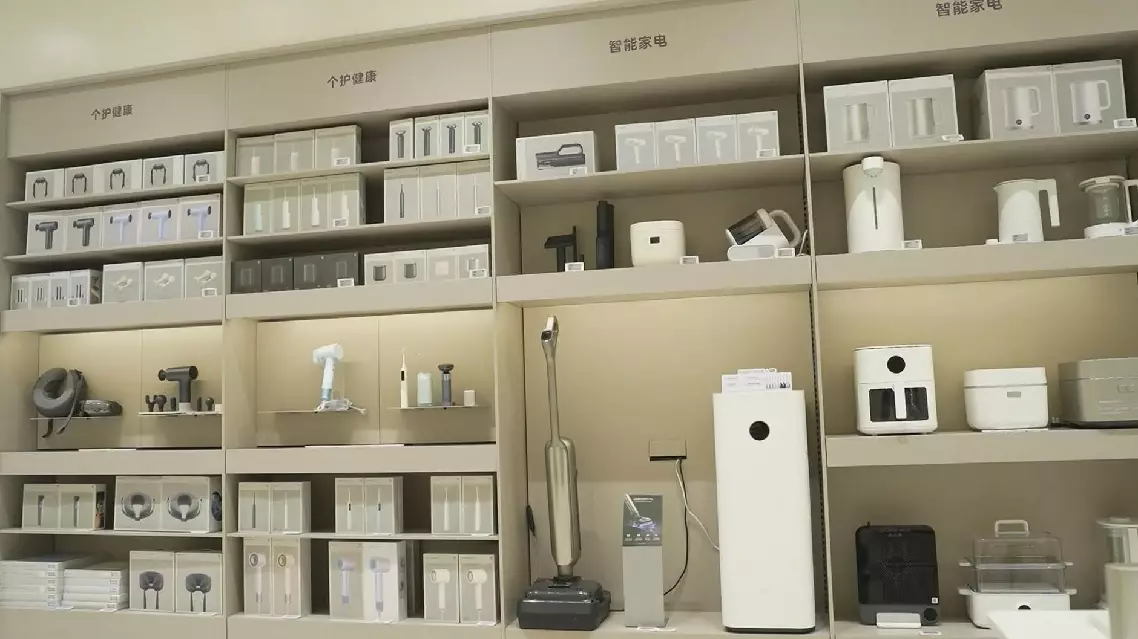
China's home appliance industry well weathered market pressures in 2025 and maintained a stable and high-level industrial scale, according to official data. Data of the National Bureau of Statistics show that in 2025, the sector's annual main business revenue reached 1.97 trillion yuan (nearly 286.7 billion U.S. dollars). China's home appliance exports totaled 111.41 billion U.S. dollars, with exports to the United States declining year on year due to high tariffs, while exports to the European Union and the United Kingdom continued to grow.
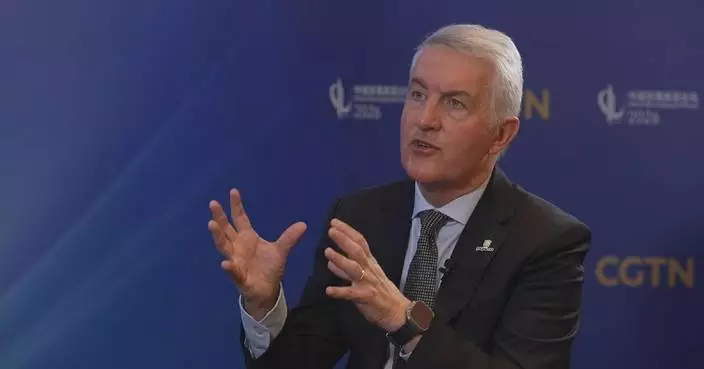
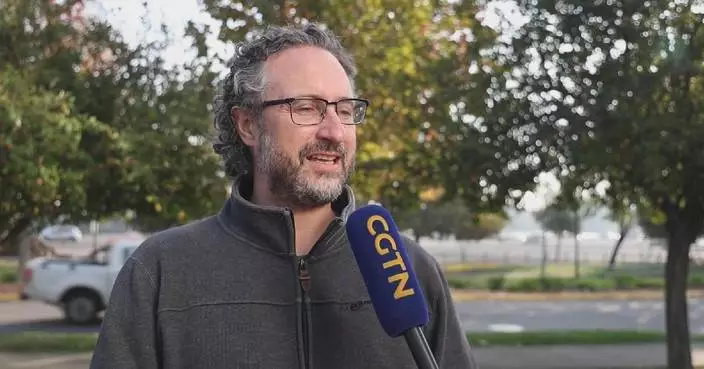
In an interview with China Central Television at the 2026 Appliance and Electronics World Expo (AWE2026) which kicked off in Shanghai on Thursday, Jiang Feng, president of the China Household Electrical Appliances Association, said China will follow through on the path of globalization.
"The future of China's home appliance market will be driven, on the one hand, by replacement demand bolstered by the government's trade-in policies aimed at stimulating new consumption, and on the other hand, by new product categories. Therefore, our focus extends beyond product exports to global manufacturing. Currently, 40 percent of China's products serve international markets, and we will steadfastly pursue this path of globalization," she said.
The year 2026 marks a pivotal year for the home appliance industry as artificial intelligence (AI) transitions from concept popularization to large-scale implementation.
AI technologies centering on large models are fundamentally reshaping the form and value of home appliances.
China's AI competitiveness in this sector is shifting from isolated technological breakthroughs to coordinated evolution across the entire industrial chain and ecosystem.
He Yaqiong, director of the Department of Consumer Goods Industry under the Ministry of Industry and Information Technology, said the country will draw on its advantages to tap the full potential of AI to better serve the people's life.
"Leveraging China's unique advantages in data and application scenarios, we should harness the rich troves of data resources across 666 specialized industrial sectors. Focusing on emerging scenarios like smart homes, smart travel and smart health, we will transform AI from a showcase of technical prowess into a form of tangible, perceptible, and unobtrusive companion which delivers emotional value. Accelerating the transition of AI technology from functional overlaying to deep empowerment will better meet people's aspirations for better life," he said when speaking at the opening ceremony of the AWE2026.
China's home appliance sector retains stable industrial scale in 2025: data
Leveraging its unique role as a crossroads of Chinese and Western cultures, Macao is building itself into a vibrant exchange hub through a diverse array of world-class events and broad public participation, unlocking fresh momentum for its growth.
Since early this year, the Macao Special Administrative Region (MSAR) has actively aligned itself with the nation's 15th Five-Year Plan, positioning itself as a base for exchange and cooperation where Chinese culture is mainstream and diverse cultures coexist.
From a Chinese New Year parade and gourmet carnival to a spectacular street procession, an international comedy festival and a sailing regatta, a dazzling lineup of events has drawn enthusiastic crowds and showcased the city's distinctive East-West charm.
"This parade is really interesting, because it's a mix of cultures, showing the multiculturality of Macao. As you can see, it's very fun and enjoyable to be here," said Marietta, a foreign tourist who visited the 2026 Macao International Parade in March, where troupes from Macao and around the globe put on a cultural spectacle with a variety of performance styles.
The city's growing openness to cultural fusion is also felt by event organizers.
"We believe Macao is becoming more and more open, with ever greater cultural integration. As we connect more with local audiences and the global market, we've come to see Macao as a true meeting point of East and West. We often talk about mutual learning among civilizations. In our words, it's a 'two-way embrace', " said Cheng Le'er, assistant president of Mahua FunAge and an organizer of the third Macao International Comedy Festival.
Since April, the MSAR government has launched a brand-new Cultural and Sports Carnival. Flash mob performances, including traditional Cantonese opera, martial arts and Portuguese folk dance, have popped up at historic landmarks and in local communities, showcasing Macao's rich heritage and vibrant energy.
"With 'connection' and 'synergy' as our core concepts, we are breaking away from traditional frameworks to blend profound cultural traditions with dynamic sports, delivering visually stunning and vibrant cultural and sports performances that expand from the main venue to different heritage sites and communities," said Leong Wai Man, president of Macao's Cultural Affairs Bureau.
By weaving together culture, sports and tourism, Macao has boosted its businesses in these sectors. In the first quarter of this year, inbound visitor arrivals exceeded 10 million. During the recent May Day holiday, daily arrivals hit an all-time high of nearly 250,000.
Meanwhile, the MSAR government is aligning with the national 15th Five-Year Plan by drafting its own five-year plan to drive high-quality economic and social development.
"The 15th Five-Year Plan has dedicated chapters on Hong Kong and Macao, clarifying their roles and directions. This brings major opportunities for Macao's development into an international tourism center, a cooperation platform between China and Portuguese-speaking countries, and a pivotal base for multicultural coexistence," said Lam Fat Iam, a member of the MSAR Legislative Assembly.
"Moving forward, Macao must leverage its unique strengths, step up exchanges and cooperation with the mainland and overseas, and strive to bring in more national cultural resources and international projects, building itself into a key gateway for opening up and mutual learning among civilizations," said the lawmaker.
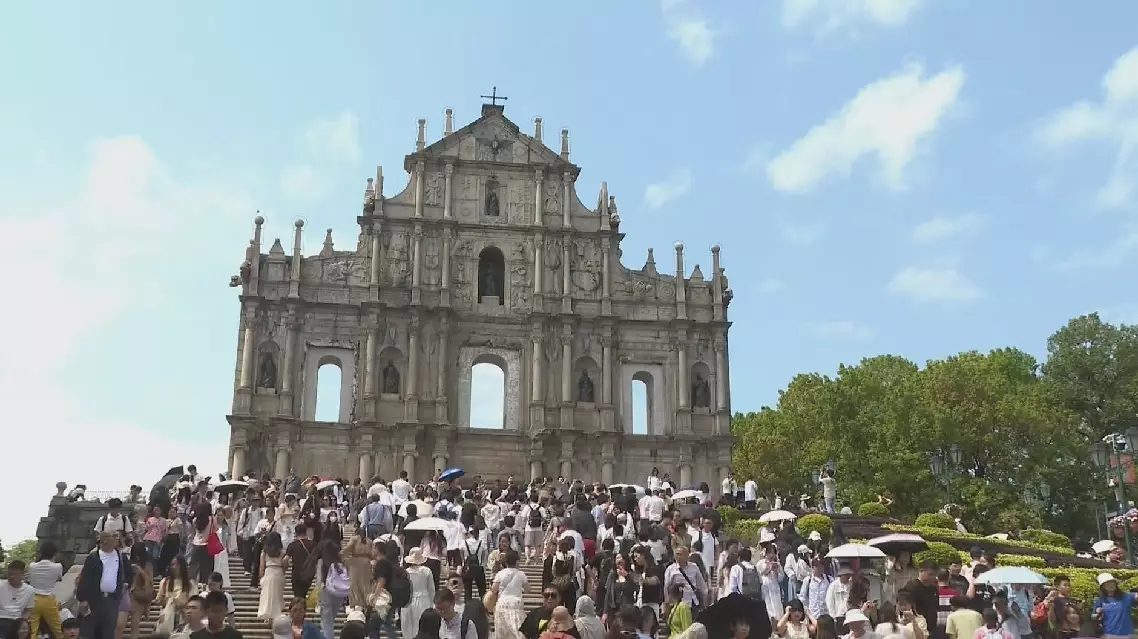
Diverse cultural events fuel Macao's rise as East-West exchange hub